By Carlos “Carlito” Rovira
In the days following the massive devastation caused by Hurricane Maria in 2017, news reports emphasized the “American citizenship” of Puerto Ricans. But why were Puerto Ricans suddenly projected as American citizens when, traditionally, this was not the case?
The same media outlets discovered that most people in the U.S. did not know that Puerto Ricans hold U.S. citizenship. For many North Americans—who often suspect that people who speak Spanish and come from a territory in Latin America are “illegal”—the concept of Puerto Ricans as “citizens” must be baffling indeed. The contradictions of that relationship have been vividly captured in the savagely unequal deployment of relief to other hurricane devastated areas, like Puerto Rico.
We now see a return of this “cultural shock” when it was announced that Puerto Rican/Latino music superstar Benito Antonio Martinez Ocasio, aka Bad Bunny would be the highlight at the 2026 Super Bowl halftime. It became even more of a surprise when it was made clear that the Boricua mega entertainer would sing his tunes exclusively in Spanish.
Far-right, MAGA racists went into a feverish mode of hatred which motivated them to launch a campaign to condemn the National Football League’s decision to have the world-famous singer take the stage in the traditional entertainment show. The far-right pursued arguing that Bad Bunny is not an “all American,” etc.
What is needed to clear up the confusion is a discussion of the origins of Puerto Rico’s relationship with the United States and the peculiarities of Puerto Rican “citizenship.” Unfortunately, the underlying reason for the different responses—the colonial relationship between the U.S. and Puerto Rico—has not been clearly understood.
Puerto Rico was one of four countries colonized by the U.S. in the aftermath of the Spanish-American War of 1898. In 1917, then U.S. President Woodrow Wilson signed the Jones–Shafroth Act. Commonly known today as the “Jones Act” it imposed a second-class version of citizenship on Puerto Ricans living in Puerto Rico.
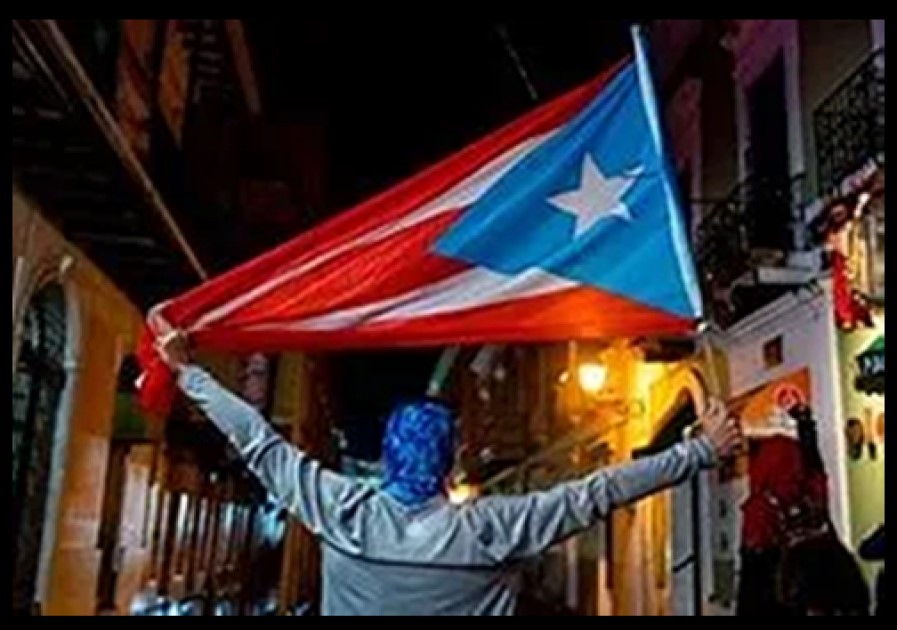
The U.S. government expressed its imperial arrogance by ignoring the unanimous opposition to the law by the Legislative Assembly, a long-existing political body in Puerto Rico, including outspoken figures like Luis Muñoz Rivera and Jose De Diego. But because Puerto Ricans were under a foreign military occupation, U.S. citizenship was not up for negotiation but blatantly imposed on March 2, 1917.
The law identified the people of the island as “statutory citizens,” a new concept never before applied to anyone, anywhere, which means that certain rights and benefits of citizenship do not apply. Puerto Ricans residing on the island are denied the right to vote in Federal elections and the ability to declare bankruptcy, among other rights and benefits.
The double standard in the supposed “American citizenship” for Puerto Ricans was fueled by the same racist logic of the not-so-hidden second-class citizenship status this country maintains for Indigenous and African American people. Only in the case the Puerto Rican second-class status was actually spelled out in the Jones Act itself, instead of just existing de-facto.

The U.S. rulers concocted a way of disguising the fact that they had conquered and colonized a distinct nation, in a separate territory, with a separate economy and a distinct history, culture, language and national identity. In short, the Jones Act allowed U.S. rulers to disguise their colonizing intent and undermine the existence and identity of another people.
At first many Puerto Ricans believed that “U.S. citizenship” would benefit them. But they soon discovered the opposite.
Statutory Citizenship and World War I
On April 6, 1917, barely a month after the imposition of “U.S. citizenship” on Puerto Ricans, the U.S. declared war on Germany. This was a war like none that came before. It engulfed all the industrialized capitalist countries of the world. Their aim was the seizure of each other’s colonial possessions in order to obtain new commercial markets, new sources of raw materials and the labor of already conquered people which the victorious imperialist powers could then exploit for profits.
It was a struggle of global proportions facilitated by the most ruthless capitalists of the various imperialist countries. U.S. rulers did not want to be left out of the expected lucrative feeding frenzy, and so they sought ways to persuade the broader U.S. public to support corporate America’s desires to join one side in the conflict.
By November 1917, just 8 months after the imposition of citizenship, the military draft was applied to Puerto Rico. This came after government and military officials realized that Puerto Ricans were reluctant to voluntarily join the U.S. Armed Forces. About 20,000 young men were taken and sent to various U.S. military bases and installations around the world.

Many of these soldiers died or were maimed as a result of highly lethal chemical weapons used in this war. But the death toll among these soldiers is still unknown because U.S. military officials kept no records of Puerto Rican battle casualties. This was the case with the now dissolved 65th Infantry Division, also known as the Borinqueneers.
It was of no concern to the warmongers in Washington that these Puerto Rican men did not have the slightest clue what the war was about in the first place. If we consider the chronology of events, it becomes clear that the Jones–Schafroth Act, which imposed “U.S. citizenship,” was simply designed to use young Boricuas as cannon fodder.
2nd Class “Citizenship” and Life in Puerto Rico
Today it has become indisputably clear that all of the facets of the Jones Act, especially its economic component, are designed to destroy the Puerto Rican nation—as Puerto Rican Nationalist leader Dr. Pedro Albizu Campos predicted.

Giant U.S. corporations are now the sole beneficiaries of the imposed American “citizenship” in Puerto Rico. While it is true that Puerto Rico receives limited benefits from the colonial relationship it has also been historically subjected to a range of laws that benefit only the billionaires of Wall Street, and this is the primary effect.
Not only are these avaricious capitalist enterprises exempt from paying taxes to Puerto Rico, they also extract from the country an annual average of $30 billion in profits. For an island with a population less than 4 million this is one of the highest rates of colonial exploitation per capita in the world.
And President Barrack Obama’s austerity measure known as the Puerto Rico Oversight, Management, and Economic Stability Act (PROMESA), which had aimed to forcibly collect an imposed $73 billion dollar hedge fund debt by shutting down public schools, libraries, hospitals, and other public services, as well as reducing the minimum wage, revealed what the aims of U.S. colonizers have always been, since the military invasion of 1898.
Such draconian measures, combined with the fact that Puerto Ricans residing in the United States constitute the second poorest nationality (Native Americans are the poorest), makes “American citizenship” for Puerto Ricans meaningless.
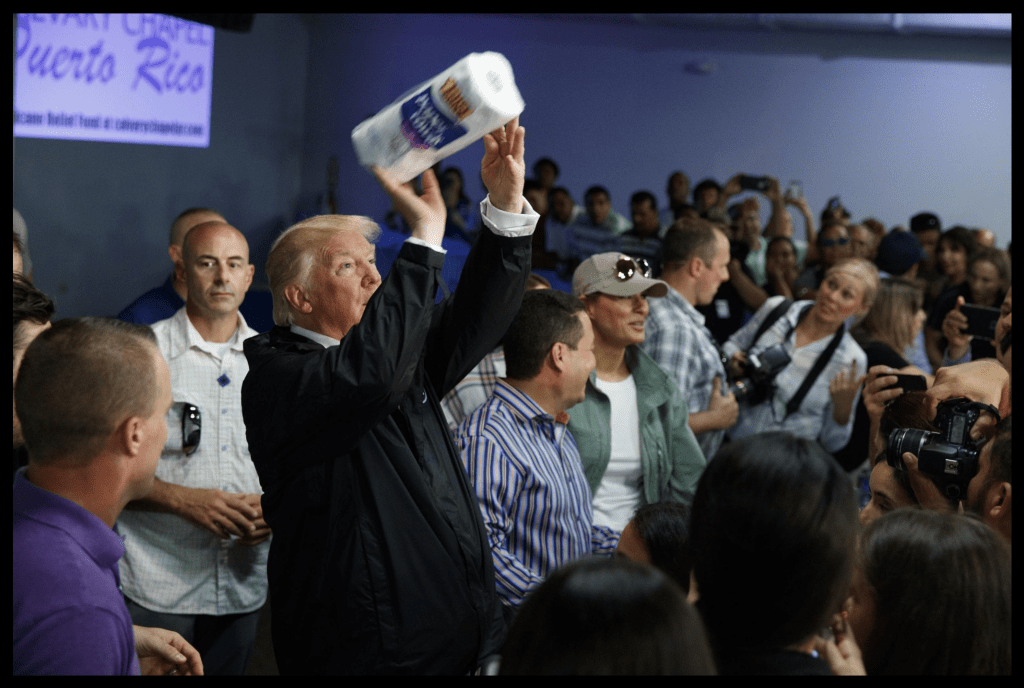
When Donald Trump came to Puerto Rico following Hurricane Maria it was not to assess the damage caused to property and human life. Despite his stupid behavior of throwing paper towels at a Puerto Rican audience and offending them with false claims of how much money Puerto Rico was “costing the federal treasury,” etc., he was consistent by expounding the traditional racist views of U.S. colonialism.
Trump was insidiously reminding Puerto Ricans, in his own crude and malicious style, how worthless “U.S. Citizenship” really is for Puerto Ricans. But in actuality Trump was honestly expressing the disposition of U.S. colonial policy in Puerto Rico, under every Democratic and Republican president.
Another blatant and well-hidden example of the hypocrisy in U.S. citizenship for Puerto Ricans was in an April 2022 Supreme Court decision. The high court ruled that people residing in Puerto Rico and other “territories” are not eligible for Supplemental Security Income, a program that provides desperately needed benefits for low-income residents who are older than 65, blind and disabled. Colonialism is blunt and will remind us of its inhumanity, among other things.
Citizenship, in the truest meaning of the word can only come about when the Puerto Rican people achieve freedom to exercise their human rights, that is, to exercise the right to independence and self-determination, and free from the domination of U.S. Colonialism. The U.S. rulers shall then be brought before justice and forced to provide Puerto Ricans with the Reparations due to them.
QUE VIVA PUERTO RICO LIBRE!

 carlitoboricua
Like I said on Facebook.
This was a Masterful-Piece of writing to illustrate the historical accounting of Puerto Rico and its people & it’s relationship with the United States !
LikeLike
a good basic primer on the U.S. colonial relationship with Puerto Rico
LikeLike