Cuba’s Best New Year’s Eve Bash: The 1959 REVOLUTION!

Para la versión en español: https://carlitoboricua.blog/?p=7128&preview=true&_thumbnail_id=7129

By Carlos “Carlito” Rovira

On New Year’s Eve, December 31, 1958, the revolutionary guerilla army of the July 26 Movement, under the leadership of Comandante Fidel Castro Ruz, entered the capital city of Havana, Cuba.  This was the final act in the overthrow of the notorious U.S.-sponsored Fulgencio Batista regime.

The closer the guerilla army approached the city on foot, horseback and vehicles, the more frantic the oppressors of the Cuban people became. Their world of lavishness with cocktails drinks on hand was abruptly disrupted.

Mafia gangsters, prostitution pimps, drug peddlers, casino club owners, CIA operatives and other imperialist agencies, military and police officials as well as top bureaucrats of Batista’s government, were all crowding Havana’s airport in a desperate rush to leave Cuba, in order to avoid capture by the guerillas.

This event marked the dawn of a new era in that country’s history while at the same time posing a threat to U.S. imperialism’s predatory intentions throughout the Western Hemisphere.

The Cuban Revolution had a tremendous impact on political circumstances in Latin America, the Caribbean and most especially in the United States, where a mass upsurge was erupting. In every sense, Cuba followed the examples of its neighbor, the glorious 1804 Haitian Revolution.

Comandantes Camilo Cienfuego (left), Fidel Castro Ruz and fellow combatants entering the City of Havana.

Ever since the revolution’s military victory, and despite the criminal economic blockade it continues to endure, Cuba has been fiercely outspoken about the bullying foreign policies of the United States that keeps the Haitian people in a downtrodden colonial existence.

After the seizure of power, Cuba has also been a consistent advocate for Puerto Rico’s right to independence. The Cuban revolutionary government has brought to light at the world stage the horrendous nature of U.S. colonialism in Puerto Rico.

In 1980, Fidel Castro Ruz invited to Cuba the newly released Puerto Rican Nationalists political prisoners, Lolita Lebron, Rafael Cancel Miranda, Irvin Flores, Andres Figueroa Cordero, and Oscar Collazo. The Puerto Rican patriots came to Cuba to receive that country’s highest honor, the Medal of the Order of the Bay of Pigs.
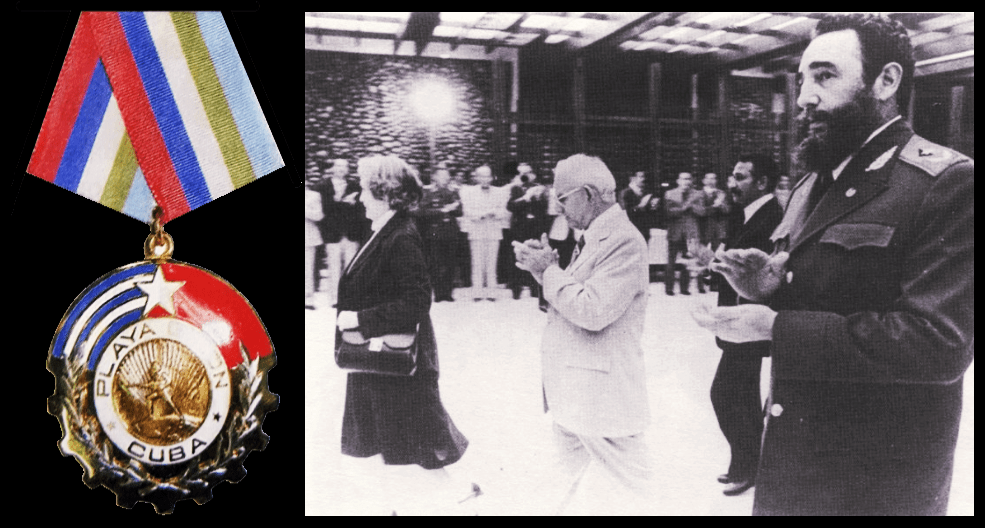
Puerto Rican Nationalists being welcomed by Fidel Castro Ruz at a ceremony of honor, 1980.

Revolutionary Cuba provided political and logistical support to the Palestinian liberation struggle. And it sent thousands of Cuban troops to Africa in an effort to assist freedom fighters there in their quest.
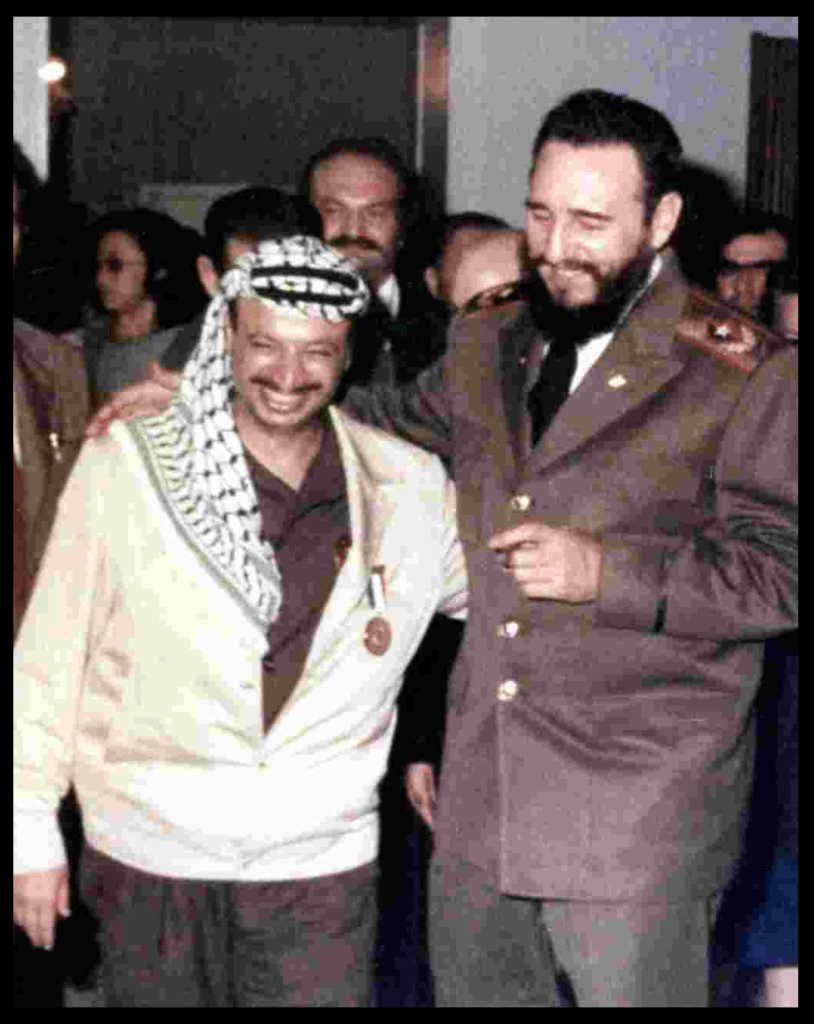
Cuban President Fidel Castro Ruz welcoming Palestine’s Yasser Arafat.
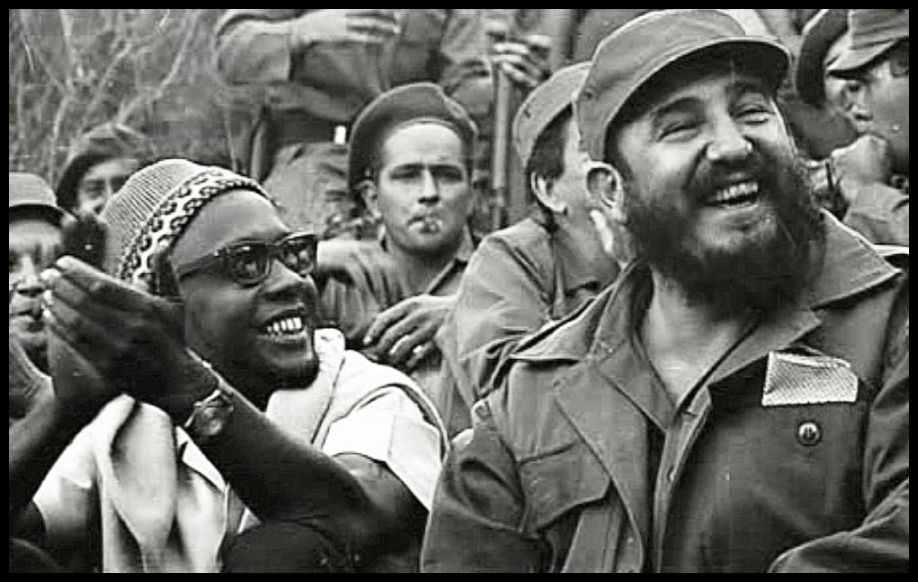
Cuban President Fidel Castro Ruz visiting Amica Cabral during the revolution in GuineaBissau.

The most notable example of Cuba’s solidarity with Africa’s freedom struggle is the Battle of Cuito Cuanavale. In a combined effort with the Angolan military the Cuban Army surrounded and smashed the racist apartheid South African Army. It was this event that caused the gradual demise of Apartheid rule in South Africa, thus facilitating favorable political circumstances which brought about the release from prison of Nelson Mandela.
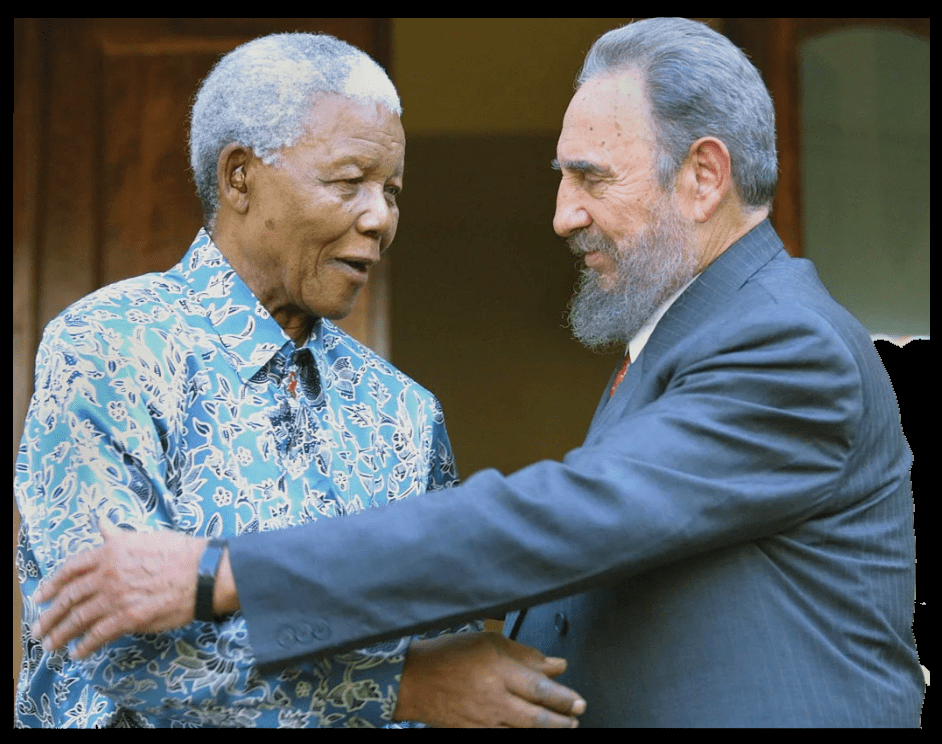
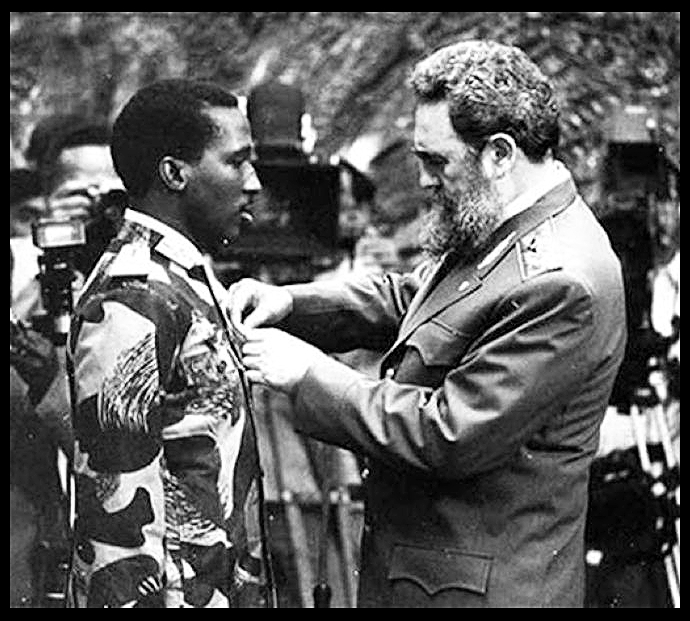
South Africa’s Nelson Mandela and President Fidel Castro Ruz.

Of the most notable of Cuba’s acts of humanitarianism is its creation of the Latin American School of Medicine. Students from poor and oppressed communities from the United States and Third World countries, who otherwise could not financially afford it, are provided with a free education to become medical doctors, paid for by the Cuban government.
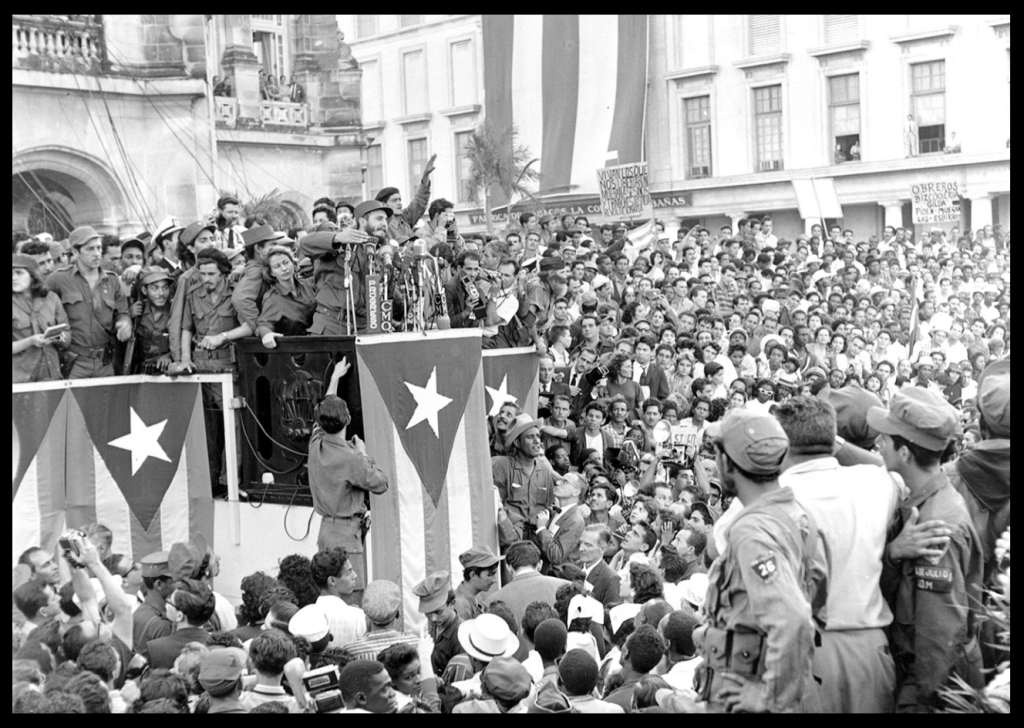
Comandante Fidel Castro Ruz addressing a crowd of tens of thousands.

And to demonstrate how serious the Cuban Revolution is about its convictions and sense of humanity, many people in poor countries have received medical attention for the first time thanks to Cuba’s well-known international medical program. In addition, Cuba has sent thousands of trained medical professionals to the poorest communities throughout the globe to heal and prevent deceases, even under the most dangerous circumstances.

Women in Cuba’s Revolutionary Armed Forces.

Cuba has also provided a safe haven to many political refugees sought by the agencies of imperialism, like Puerto Rican freedom fighter William Morales and Black Panther Party/Black Liberation Army (BLA) sister Assata Shakur. Cuba has also been a firm supporter for the release of political prisoners in the U.S., like Mumia Abu-Jamal.
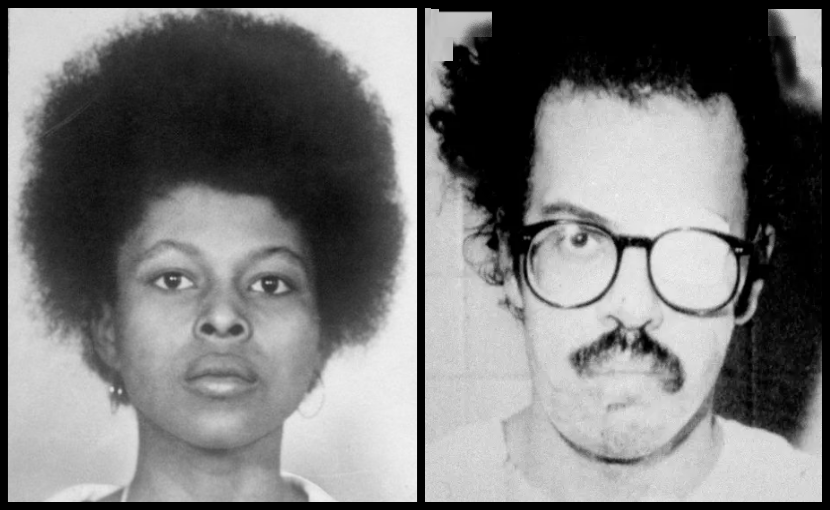
Assata Shakur and William Morales were granted political asylum by the Cuban government.

Justice now had a new meaning, defined by the revolutionary aspirations of the oppressed. Uniformed villains of the Batista military and police who once tortured, murdered and raped the people were rounded up and brought to face criminal charges. Tribunals were held throughout the country for all to witness and participate in a completely new form of justice — People’s Justice — in which victims partook by providing testimony and in deciding the fate of overthrown government officials.

Batista government officials facing criminal charges at a Revolutionary Tribunal.

Thanks to the Cuban Revolution the people were no longer deprived of free healthcare, free education, and access to food. Such are the vital necessities denied to the working poor here in the United States.

It has been more than six decades since the military defeat of the U.S. puppet Batista government and the Cuban people remain firm on defending their right to self-determination. They have been exemplary in their resilience in the face of repeated U.S. attempts to undermine their sovereignty.

These attempts include terrorist actions on Cuba’s tourist industry, CIA subversive attempts to incite counterrevolutionary activities within the country, 600 known attempts on the life of the late Fidel Castro Ruz, and a criminal economic blockade that continues to this day.
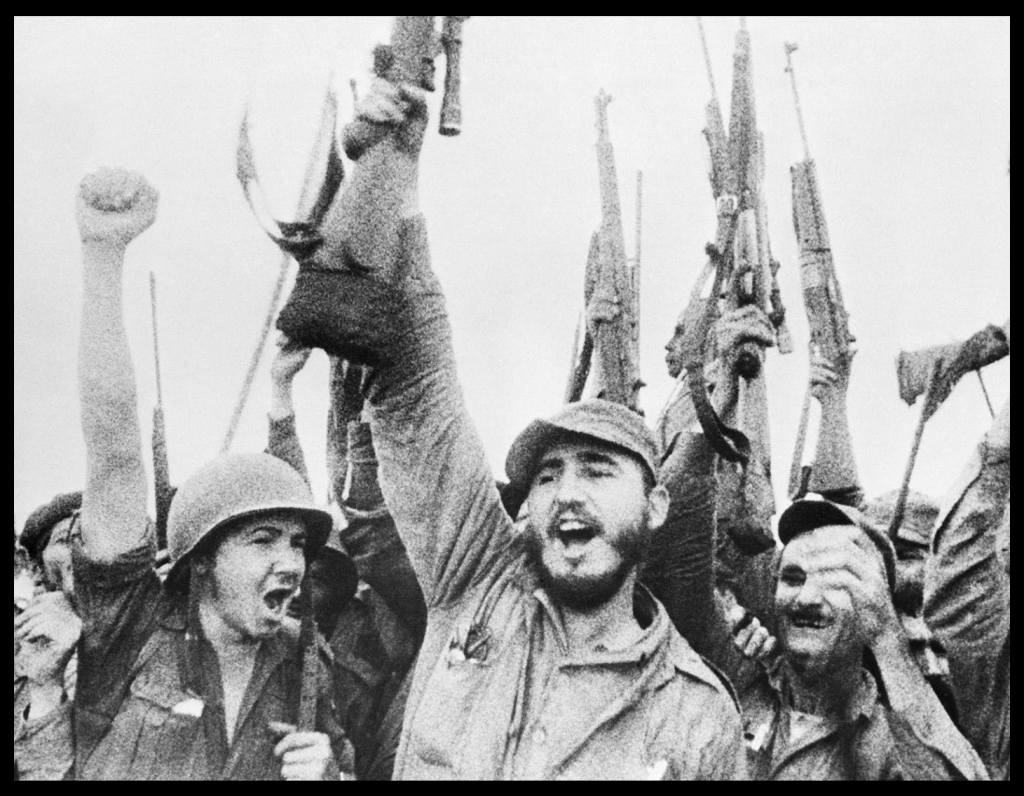
Raul and Fidel Castro among others overwhelmed by the jubilant moment.

Despite these acts of aggression and Washington’s 65 years propaganda war aimed to demonize the revolution, no one can deny Cuba’s achievements in eradicating illiteracy, advancements in medical science, food production & agriculture, housing development and the infrastructure.

Cuba’s revolutionary leadership has prioritized the needs of the people and continues to make good on its pledge never to allow returning the country back to the domination of the United States. So, as we celebrate the coming of the new year, we should salute the Cuban people on their glorious anniversary. And may the year 2025 bring us a step closer to a world without exploitation, deprivation, oppression and racist violence.

LONG LIVE THE CUBAN REVOLUTION!

Andy McInerney – PRESENTE! Nov 27, 1966 – Dec 10, 2018

By Carlos “Carlito” Rovira

It saddens me to announce that on the evening of Monday, December 10, 2018, long time revolutionary activist Andy Mcinerney passed away after losing a long battle with cancer. As if it wasn’t enough losing my sweetheart & love of my life, Ana Lopez Betancourt, in the month of May 2018, I now grieve another major loss, my very best friend, brother and comrade, Andy Mcinerney.

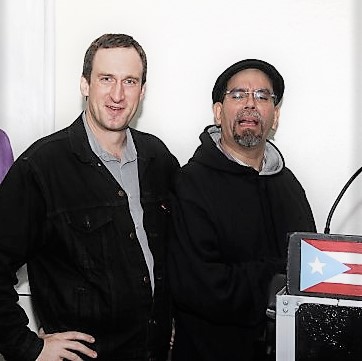
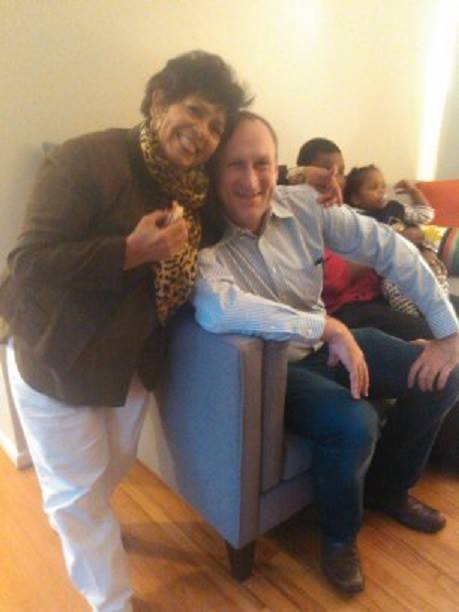
Andy with DJ Carlito.jpg
Andy and I at a Free Puerto Rico event 2011

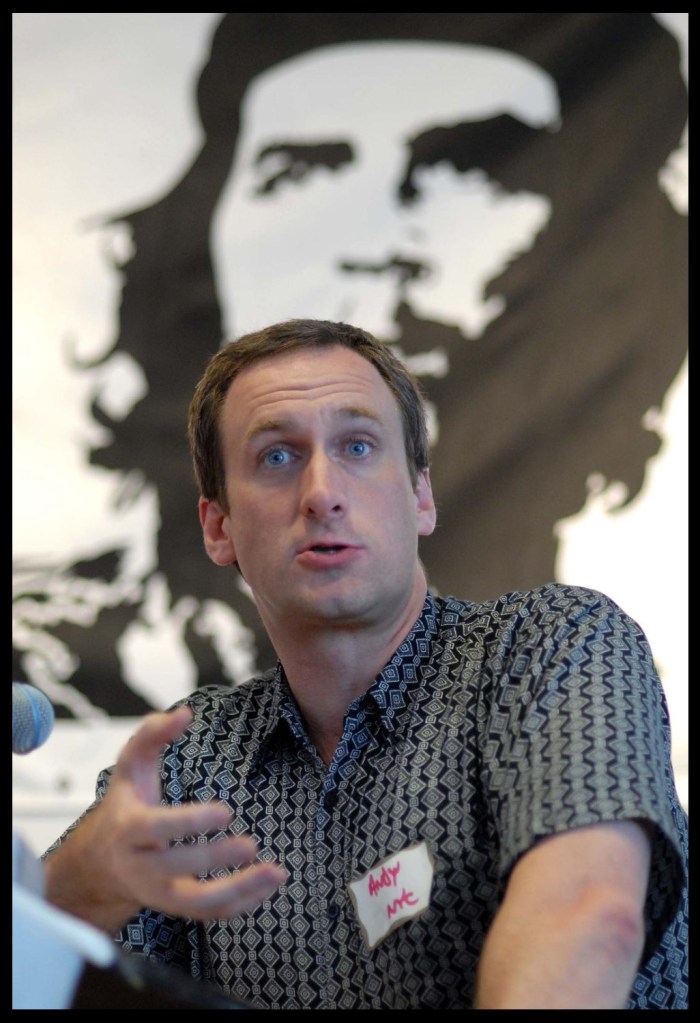
Andy was a professor at Bronx Community College in New York. He will surely be missed by the many whom he taught as well as his colleagues who partook in struggles for bettering college level education and for increasing the benefits and salaries of professors.

Andy was a communist. He was always fascinated when learning about the liberation struggles of oppressed people. He was adamant about white progressives today requiring having the same disposition John Brown once had against African chattel slavery, if they sincerely claim being anti-racist. I always had respect for Andy, since I envisioned him fighting alongside John Brown if he were to live during the 1859 attack on Harpers Ferry.

As a person of white origin himself, Andy was critical of white leftists who tended to show inconsistencies of conviction, by being soft and evasive of criticizing white privilege and white entitlement. He viewed that kind of behavior unforgiving and a not-so-hidden expression of white supremacist ideology.

Andy and I became good friends during our mutual experience in Workers World Party and in the Party for Socialism & Liberation. It was in our experiences in these entities where our collaboration first grew to the finest pitch, which later on continued.

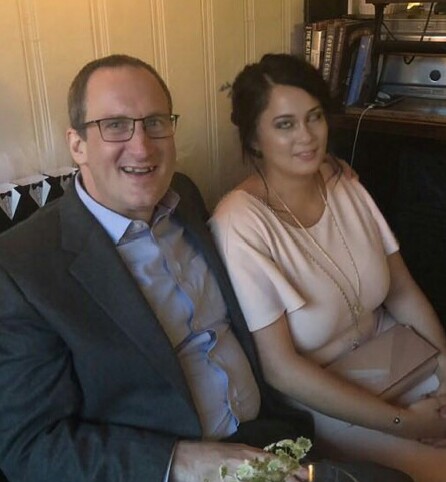
Effect_20181211_033653.jpg
Andy McInerney with his loving partner and spouse, Eline Elara.

Wherever Andy found himself, whether organizing events on campus or mobilizing for mass demonstrations, he always sought ways to promote and apply Marxist-Leninist theory. He recognized that his moral obligation was to build in the present in preparation for the future battle for socialism in the United States.

Andy was indeed a revolutionary who also contributed to my own political development. In 1991 when I first met him the world revolutionary movement went into disarray, resulting from the impact the collapse of the Soviet Union was having everywhere.

Effect_20181211_035225.jpg
Andy and his daughter Arlen McInerney.
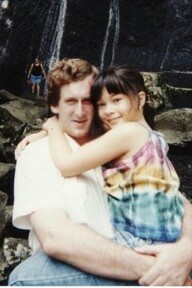
Effect_20181211_035827.jpg
Andy & the very young Arlen McInerney.

He was an optimist, even under dim circumstances. He always told me that the collapse of the Soviet Union was only a temporary victory for imperialism and that we should maintain our course in building for revolution in this country regardless.

Andy understood that throughout history such phenomenon also occurred with other social & economic systems. It was Andy who told me “Not to worry” and enlightened me to how the rise of Napoleon Bonaparte in France was equivalent to the restoration of capitalism in Russia. Bonaparte restored the political power of the monarchy that was defeated by the 1789 French Revolution.

Andy was of Irish descent. He demonstrated the utmost respect to me when he discovered that I was a Young Lord and a Puerto Rican revolutionary nationalist. In our exchanges we strengthened each other’s understanding of the Irish-Puerto Rican connection. It was Andy who first made me aware that Irish revolutionary James Connolly had asked Puerto Rican Nationalist leader Dr. Pedro Albizu Campos to draw up a draft for the Constitution of a free Irish republic.

Ana & Andy
Ana Lopez Betancourt and Andy McInerney

There is much more that can be said about Andy Mcinerney. He touched the hearts of so many people. His greatest trait which describes his finest qualities as a human being was his incredible love and respect for teaching and learning, a fundamental requirement for what it takes to be a revolutionary. Andy’s disposition came with an eagerness to learn and pass the knowledge on to others.

I will miss you my dear brother and comrade, Andy McInerney. You were always there for me during the thick and thin. There is much about you that I will cherish and feel honored that you were in my life. And above all, I shall eternally be grateful to you for helping me strengthen my resolve to keep fighting until this social system of oppression is finally smashed by the will of the vast majority of oppressed and exploited people.

Andy Mcinerney – PRESENTE!

Remember FRED HAMPTON & MARK CLARK, Black Panther leaders murdered by police on December 4, 1969

______________________________________________________________________

“We say you don’t fight racism with racism. We’re going to fight racism with solidarity. We say you don’t fight capitalism with no black capitalism; you fight capitalism with socialism.” -BPP Chairman Fred Hampton

______________________________________________________________________

By Carlos “Carlito” Rovira

In a coordinated effort between the Illinois State Attorney’s Office, Cook County Police Department, the Chicago Police Department and the Federal Bureau of Investigation (FBI), in the morning hours of December 4, 1969, a heavily armed assault team launched a heinous attack on the residence of Black Panther Party, Illinois Chairman Fred Hampton.

With a vicious sense of racist hatred and no regard for human life, these law enforcement officials fired a single shotgun blast through the entrance door of the apartment instantly killing Mark Clark, by striking him to the chest. These murderers then fired their weapons at will through a wall separating the hallway from the apartment, critically wounding Fred Hampton as he laid in bed. 

According to accounts, after the police smashed through the front door entering the apartment, one of the police officers who entered Hampton’s bedroom was overheard saying “He’s still alive.” At that point the handcuffed occupants can hear from another room the kill-shot that ended the Panther leader’s life. In a matter of minutes, two inspiring revolutionaries were maliciously murdered.

MARK CLARK WAS A LOYAL PANTHER

Mark Clarke was 22 years old, an enthusiastic youth with talents in the arts. He was eager to fight against the racist oppression Black people endured since chattel slavery. That became the motive why Clark joined the Black Panther Party soon after he met Chairman Fred Hampton during a visit to the BPP national office in Oakland, California. From then on Hampton and Clark became good friends and comrades until the tragic end of their lives.

Once he embraced the BPP ideology and discipline, specifically it’s Ten Point Program and Platform, Clark organized the Peoria, Illinois chapter of the BPP with 50 recruits, including two of his siblings. Under Clark’s leadership a Free Breakfast Program was established which drew support from many residents from Peoria’s Black community. Clark was appointed by the BPP’s Central Committee the rank of Defense Captain, which he accepted and took seriously.

Mark Clark and Fred Hampton

In the days that followed, law enforcement officials were quick to reinvent the facts. They claimed that the occupants of the apartment fired guns at police. Their story never held water. Evidence gathered from the forensic investigation and other inquiries pointed exclusively to police savagery in the attack.

The shaping of Fred Hampton’s leadership

Like millions of African Americans, Hampton’s parents left the South during the Great Migration of the 1930’s to look for a better life and flee the constant threat of racist terror. They settled in Maywood, Ill., a suburb of Chicago where they worked at the Argo Starch Company.

Hampton was attracted to books and took it upon himself to read the speeches and writings of Marcus Garvey, W.E.B. Dubois, Joan Elbert, Martin Luther King Jr.,Malcolm X as well as MarxistLeninist classics. He gained a reputation for his knowledge of Black and world history which helped develop his sense of the need for struggle.

As a student at Proviso East High School, he noticed that most of the students who failed were Black. Hampton began to speak out against the school administration for not providing tutoring and remedial programs for students. He was also critical of the fact that the faculty and administration were all white when one-fourth of the student body was Black.

Hampton challenged the school’s exclusive racist practice of nominating only white girls to compete for “Miss Homecoming Queen.” He organized a protest, walk-out and school boycott. As a result, the following year Black female students were included in this contest.

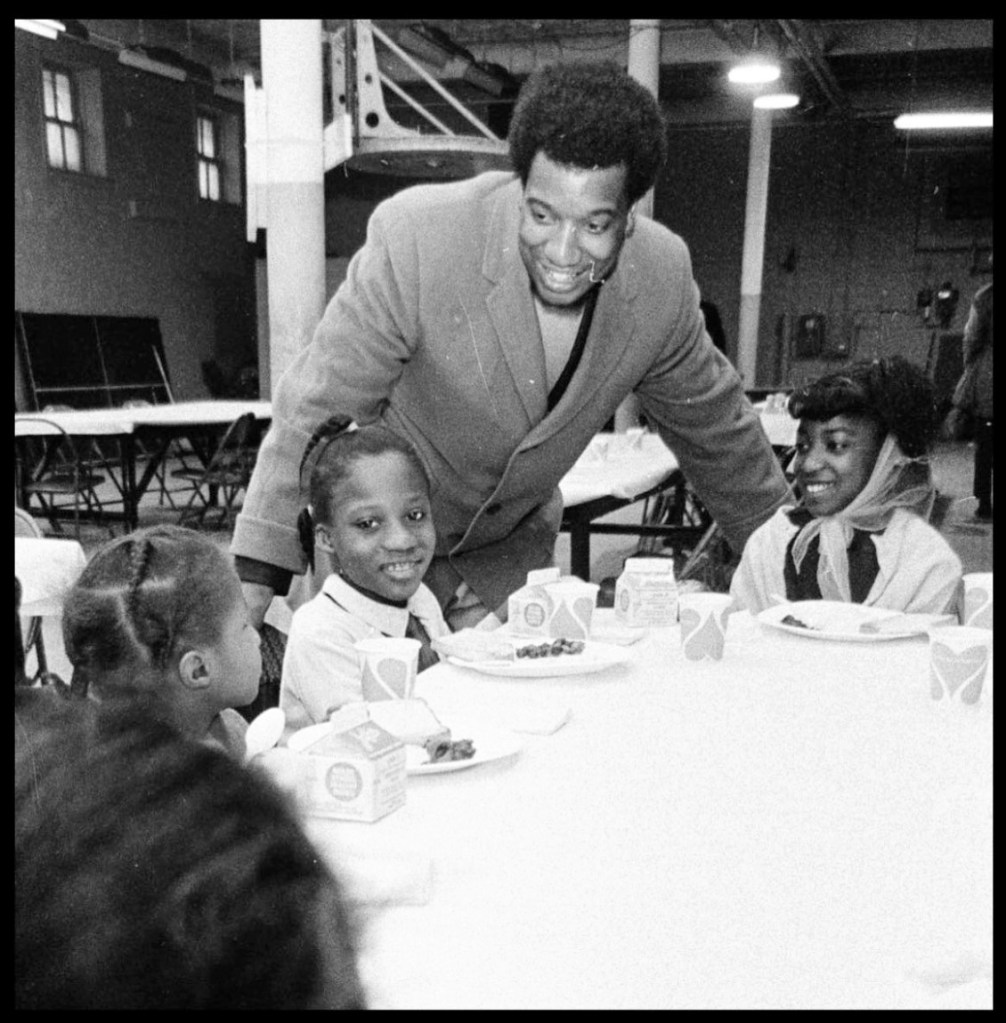
Chairman Fred Hampton speaking with children at the Free Breakfast Program.

Fred Hampton was respected by white and Black students alike. The year after he graduated from Proviso East, a school administrator requested his help to calm racial tensions among students.

An event that likely affected the young Fred Hampton, much as it affected most of Chicago’s Black community, was the 1955 gruesome lynching of Emmett Till. The 14-year-old Till was visiting family in Mississippi when he was abducted and killed for allegedly whistling at a white woman. Till was the son of family friends and neighbors of the Hamptons.

While Hampton was in the NAACP, the Black Panther Party was opening chapters across the country and becoming a prominent force in the Black liberation struggle. Hampton began to absorb and understand the revolutionary content of the Panthers’ political perspective and joined. He soon demonstrated his leadership abilities and became deputy chairman of the party’s Illinois chapter.

His disposition and skills as a speaker earned Hampton a moral authority. His political achievements included brokering peace with the supposed “street gangs” of Chicago, amongst them the Puerto Rican group the Young Lords. Hampton was instrumental in transforming the Young Lords into a revolutionary political organization.

BPP Chairman Fred Hampton and Young Lords Chairman Jose Cha-Cha Jimenez.

The white, racist U.S. ruling class was appalled. How dare the descendants of African slaves call themselves Socialists and aim to achieve Black people’s right to reparations! Even more daring was the Black Panther Party’s call for the overthrow of capitalism—a demand the ruling class could never tolerate. Their ability to forge unity in struggle was a threat in itself.

All this was happening while resentment for the war in Vietnam was on the rise. The men of privilege and wealth, with a stake in preserving the imperialist system, grew apprehensive the more it became apparent that a mass revolutionary movement was arising.

Hampton valued the need for a multinational revolutionary struggle, and organized the original Rainbow Coalition comprised of the I Wor Kuen of the Asian community, the Brown Berets of the Chicano-Mexican community, the poor white workers of the Young Patriots, the Young Lords and the Black Panthers. The Black Panther Party set standards for waging struggle. Their enthusiastic projection of socialism allowed many to envision its relevance to African Americans and other oppressed nationalities.

Operation COINTELPRO, an acronym for Counterintelligence Program, was established in the mid-1950’s to deter the development of any movement deemed a threat to the existing social, economic and political order. It remained secret until 1971, when courageous anti-repression/anti-war activists broke into an FBI field office in Media, Pa., and confiscated files revealing the hidden operation.

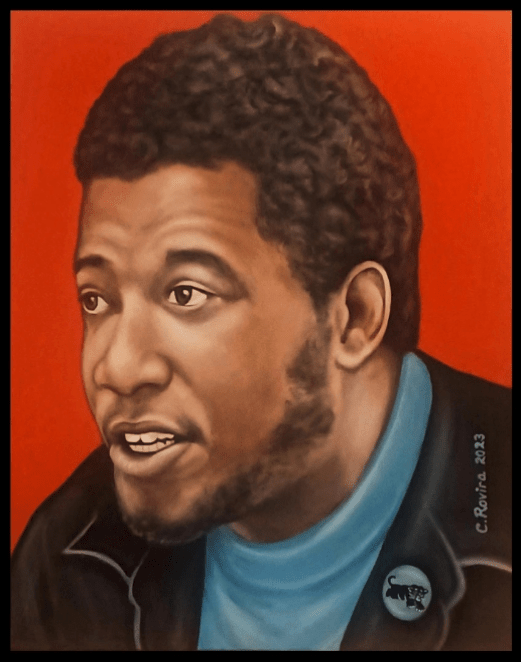
My portrait of Chairman Fred Hampton. 20″ X 24″, acrylic paint on canvas.

As the Civil Rights movement advanced—galvanizing strength from all sectors of the population, breaking the despicable Jim Crow laws and compelling the U.S. Congress to pass other progressive legislation—the FBI increasingly turned its attention to the Black liberation struggle.

The slanderous editorials against the Panthers in the capitalist-owned mass media, combined with Hoover’s frequent verbal attacks, reflected the wishes of the ruling class who sought the complete destruction of the Black Panther Party and the ideals it embodied. Internal FBI memos show that the government had a special interest in Hampton’s political activities and his associations; Chicago police were encouraged by the FBI to find a way to lock up Hampton, if not worse.

These circumstances compelled the government to carry out the horrible attack on Fred Hampton as part of their strategy to destroy the Black Panther Party and ultimately the entire revolutionary movement.

“The greatest threat to national security”

The Black Panther Party openly advocated for socialist revolution, and openly supported the Chinese and Cuban revolutions. The Panthers’ breakfast program for children, among other social programs, underlined their commitment to meet the needs of communities that received nothing but oppression and neglect from the government.

Prior to Hampton’s death, police raided the Panthers’ Chicago office on three separate occasions. William O’Neal, Fred Hampton’s bodyguard, was a police informant who was instructed to draw up a floor plan of the targeted apartment weeks earlier. Law enforcement used the information gathered by O’Neal to murder Hampton.

The staunch anti-capitalist stance of these young revolutionaries who declared themselves Marxist-Leninists made them the target of the most ruthless, racist elements in power. On numerous occasions, the notorious FBI Director J. Edgar Hoover expressed a special disdain for the Black struggle, particularly towards Dr. Martin Luther King Jr. and Malcolm X. Many were not surprised when Hoover declared the Black Panther Party “the greatest threat to national security.”

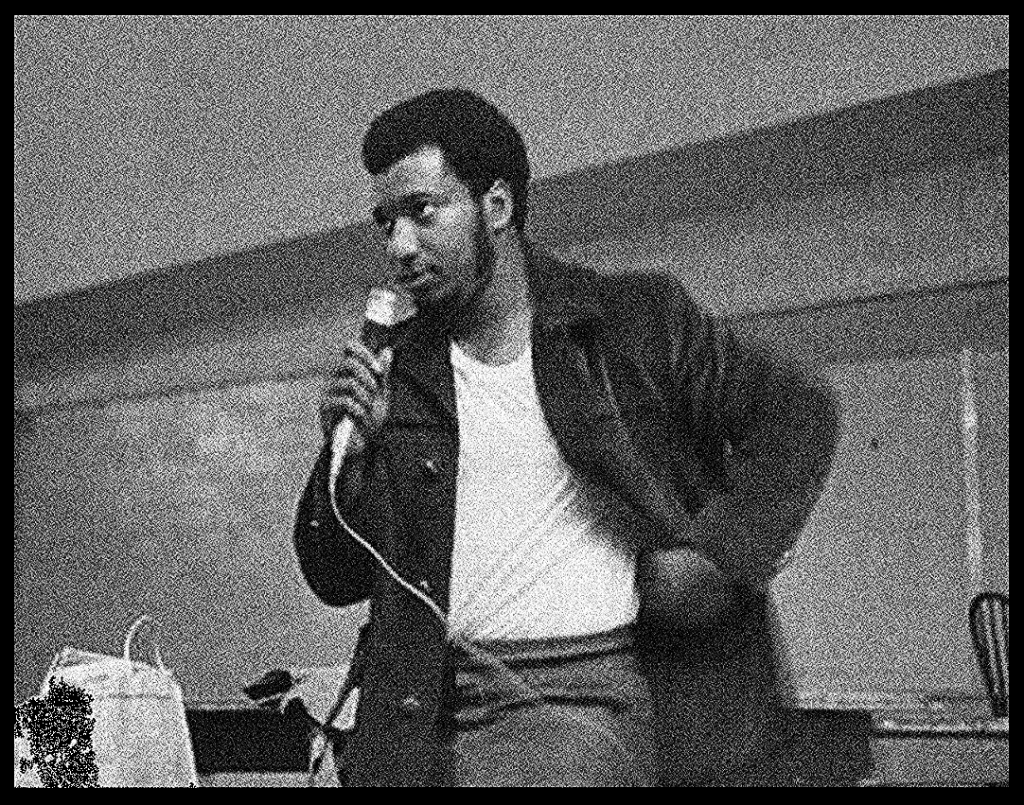
Chairman Fred Hampton was a widely respected orator.

Hampton’s murder was part of a pattern of police raids, false imprisonment and executions of Black Panthers. COINTELPRO documents proved that assassination of Black leaders was among its aims. Fred Hampton and the Black Panther Party had to be eliminated simply because they had touched upon capitalism’s greatest weakness—the decisiveness and strength that a multi-national movement has in a battle against this system.

The Black Panther Party arose from the struggles of the African American people, historically the most oppressed and exploited group in the United States. They symbolized hope and received the greatest affection. They attributed Black oppression to the capitalist system, and dared to pick up arms against the state. The militancy and defiance of these young revolutionaries deeply impacted the Civil Rights and socialist movements.

Hampton and the Black Panthers believed all would benefit if the struggle against racist oppression was taken up by the whites as their own. Hampton knew that it was possible to smash the racial barriers created by capitalism to divide and conquer the working class. His confidence was based on the strong belief that this system provides motivation for all to unite and engage in revolutionary struggle.

Long live the Legacies of Fred Hampton & Mark Clark!

Long live the Legacy of the Black Panther Party!