The author is an original member of the New York Young Lords.
Para ver la versión en español : Los “Young Lords”, Pa’lante: Lecciones de Lucha – carlitoboricua
By Carlos “Carlito” Rovira
In the late 1960’s and early 1970’s, news headlines focused on a group of Puerto Rican youth in New York City who used daring tactics and unusual forms of protest against racist oppression. These defiant and militant youths called themselves the Young Lords.
Their examples, and the mass movement from which they arose, continue to inspire young people, especially today as we see greater proof that the only solution to oppression is organization and struggle.
The Young Lords developed in Chicago in the late 1950s. Its founder and leader was the late Jose “Cha-Cha” Jimenez, April 8, 1948-January 10, 2025.
The Young Lords were unemployed students and working-class youth, who were among many street-youth organizations targeted by police and demonized as “gangs” by the capitalist-owned mass media.
These youths came from families compelled to leave Puerto Rico between the 1940s and 1960s as a result of economic hardships caused by U.S. colonialism. They continued to experience oppression but under new social circumstances, as victims of extreme exploitation in factories, greedy slumlords, police brutality and by the viciousness of racist white gangs.

The Puerto Rican migration occurred during the same years the Civil Rights movement arose. The newly arrived Puerto Rican immigrants were impacted by African Americans who also experienced the vile nature of racism in this country since chattel slavery. In many instances, Puerto Ricans identified with the demands of the Black Power movement.
In 1966, the Black Panther Party was formed. Panther leader Fred Hampton of Chicago sought to politicize the street organizations, particularly the Puerto Rican youths. The BPP’s efforts were successful when, in 1968, under the leadership of Jose Cha-Cha Jimenez, the Young Lords became a revolutionary political entity; they then became part of a fraternal alliance known as the Rainbow Coalition (unrelated to Jessie Jackson’s later Rainbow/PUSH Coalition). The Rainbow Coalition also included the Brown Berets, I Wor Kuen, Young Patriots and the Black Panthers.
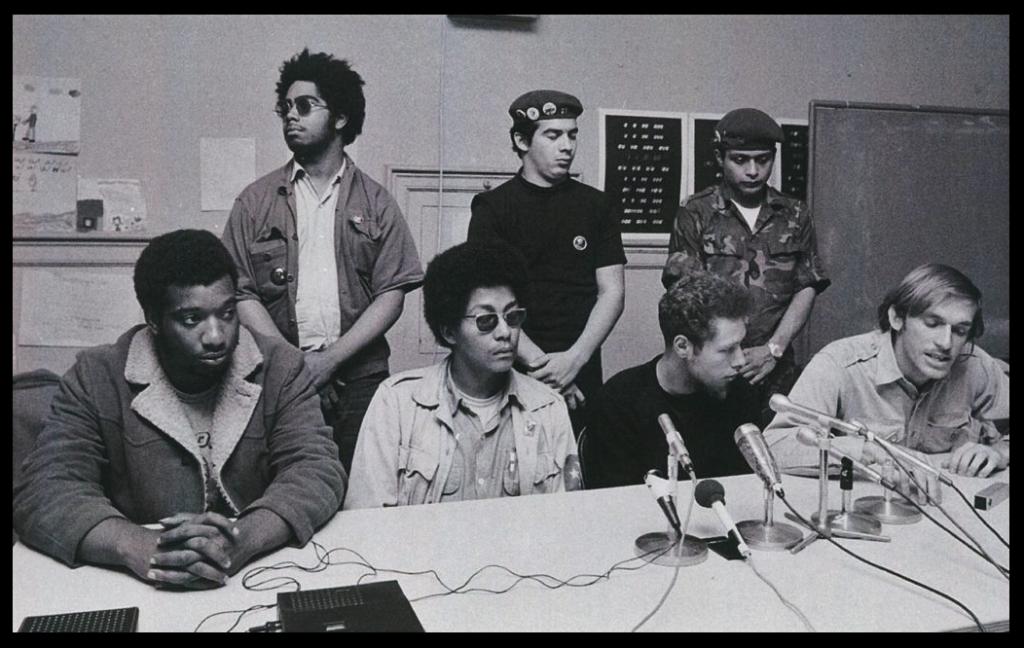
Young Lords in New York
On July 26, 1969, the Young Lords made their debut in New York City at the 10th anniversary celebration of the Cuban Revolution held at Tompkins Square Park in Loisaida (Lower East Side). The Young Lords admired and supported the Cuban Revolution, led by Fidel Castro Ruz, Camilo Cienfuego, Celia Sanchez, Vilma Espin, Ernesto Che Guevara, and Raul Castro.
For many years, Black and Latino people complained about the New York Sanitation Department’s double standards in trash pick-up. White affluent areas were serviced properly, while Black and Puerto Rican neighborhoods were left in unhealthy conditions.
In the summer of 1969, the Young Lords in New York began sweeping the streets and amassing large piles of garbage that were a nuisance to the community of East Harlem. Many people wondered about what the young, seemingly “good Samaritans” were up to. But the mystery did not last long.
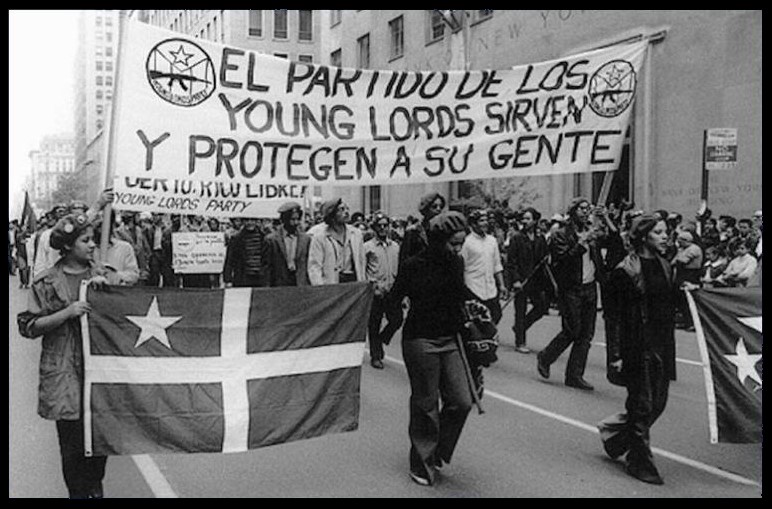
In August 1969, the Young Lords used the garbage they had collected as the means to execute a political offensive with military tactics. Tons of trash were dumped and set ablaze across the main arteries of Manhattan to disrupt traffic, including on the affluent 5th Avenue. The Lords demanded an end to New York City’s racist municipal policies on sanitation.
In neighborhoods where the “garbage offensive” was launched, the Lords galvanized community support; many joined the organization. Two months later the Lords opened an office on Madison Avenue and 111th Street, in the East Harlem, “El Barrio” community.
The mass media’s attacks on the Lords only worked in their favor. Within months, YLP chapters appeared in Philadelphia, Bridgeport, Jersey City, Boston and Milwaukee—cities with concentrations of Puerto Ricans. While mainly composed of Puerto Ricans, the organization also allowed members of other oppressed nationalities to join the Young Lords, specifically African Americans.
The Young Lords Party had a military-type structure with a process for recruitment and rules of discipline that were strictly enforced. The YLP believed that in order to defeat a politically and militarily sophisticated foe oppressed people had to prepare for their liberation by developing greater sophistication.
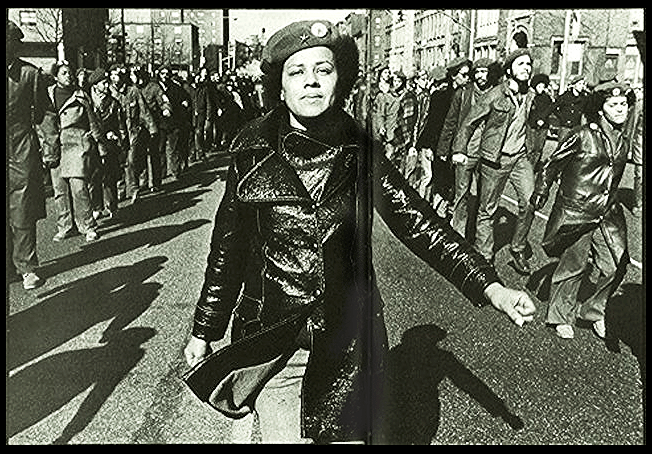
In the years following the Garbage Offensive, the Young Lords engaged in numerous campaigns that involved bold actions that drew widespread attention. One example was the physical takeover of the First Spanish Methodist Church on 111th Street and Lexington Avenue, which the Lords named The People’s Church.
The Lords repeatedly pleaded with parishioners for space in order to feed hungry children, but to no avail. This church was closed throughout the week and only opened for a few hours for worshiping by a congregation that mostly lived out of town.
Backed by community sentiment, the Young Lords entered the church during a Sunday mass and expelled the congregation. Using the church as a base, the Young Lords operated a free childcare service, breakfast program and legal clinic. Medical services were also provided.
Disease and poor healthcare have long been an issue in the Puerto Rican community. Other actions taken by the YLP included the seizure of an unused tuberculosis testing truck, equipped with X-ray technology. After the truck was seized, the city was compelled to provide technicians to run the machine. The truck was then taken to East Harlem, where many people were tested for the lung ailment prevalent in Black and Brown communities.
The Lords demanded that Lincoln Hospital, which served the people of the South Bronx, expand its services. Because this facility originated in the mid-1800s, when it also treated enslaved Black people who escaped the Southern states, its facilities were outdated and did not meet current needs. An infestation of rats and roaches in the hospital further exacerbated the deplorable conditions.
In the early morning hours of July 14, 1970, about 120 members of the Young Lords boldly seized control of Lincoln Hospital. For 12 hours, the Young Lords and progressive medical professionals in the Health Revolutionary Unity Movement provided free medical services to the community. Today’s modern Lincoln Hospital—with its newer facilities—is the result of a community struggle of which the Young Lords were in the leadership.
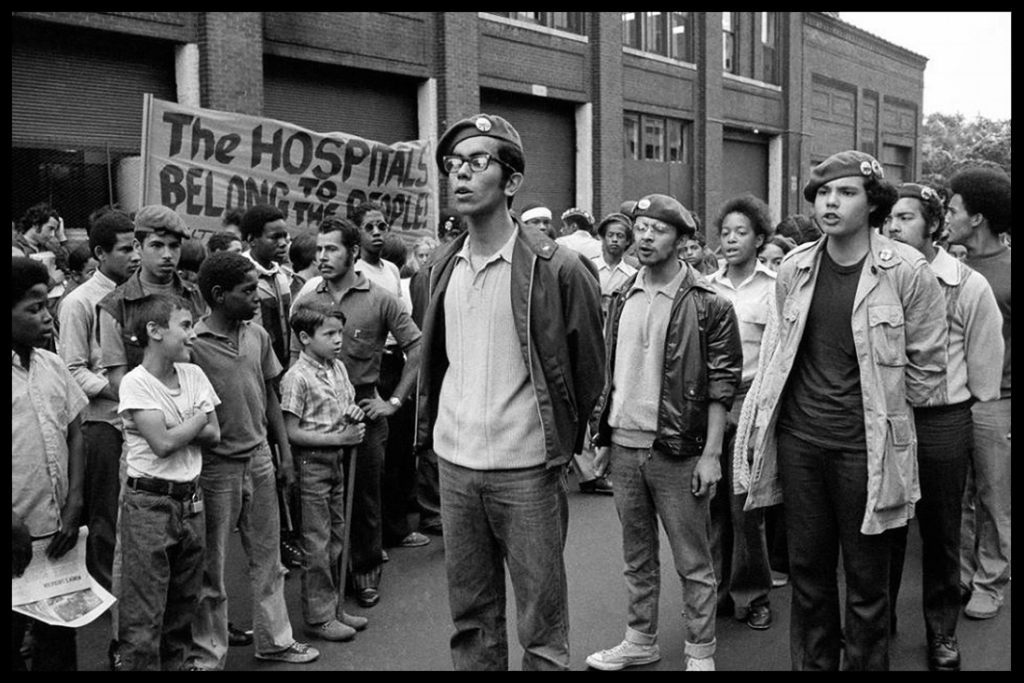
The Puerto Rican Revolutionary Workers Organization
In the summer of 1972, the Young Lords Party held its First Party Congress (and its last) in New York City. The event highlighted a new energy and direction for the organization. At this time, the membership voted to change the name from Young Lords Party to Puerto Rican Revolutionary Workers Organization (PRRWO). Moreover, the changes solidified Marxism-Leninism as the entity’s ideological and political premise.
However one may view this stage in the organization’s development, many things proved to be certain years later — the Young Lords/PRRWO was undergoing a process of deterioration unseen by its members. The attempts made to rejuvenate its existence with a new line of march at the 1972 Congress came a bit too late. Making an erroneous decision to establish chapters in Puerto Rico, losing its base of mass support in the community, aggravated by internal hostilities instigated by COINTELPRO activities, eventually sealed the death of the once powerful organization.
El Frente Unido – The United Front
One of the least talked about areas of work of the Young Lords/PRRWO was the collaborative relationship it had with other organizations in the Puerto Rican diaspora; These organizations were the Puerto Rican Socialist Party (PSP), El Comite-MINP, Resistencia Puertorriqueña, and the Puerto Rican Students Union.
A great amount of the collaborative work these groups did jointly was centered around burning issues in Puerto Rico, such as the struggle to end the U.S. military’s practice bombings on the island of Culebra. Other issues compelling the joint work was the demand for the release of Puerto Rican political prisoners, such as Carlos Feliciano, Edwardo “Pancho” Cruz and the 5 Puerto Rican Nationalists.
Other actions El Frente Unido committed work towards were protest demonstrations against injustices inflicted against Puerto Ricans and opposing the U.S. War in Vietnam. Grave mistakes were indeed made of a sectarian nature that eventually made the coalition vulnerable to the divide & conquer tactics by Operation COINTELPRO. But nevertheless, the attempts made by El Frente Unido provided the Puerto Rican struggle with a wealth of experience to benefit the long-range fight for national liberation.
The Second People’s Church Takeover
In late 1970, YLP member Julio Roldan, who had been arrested at a demonstration in the Bronx and was pending arraignment, was found hung to death in his cell at the “Tombs” prison facility in lower Manhattan. During this period, many prisoners were found mysteriously dead in their cells, but prison officials always labeled them “suicides.”
The Young Lords responded to Roldan’s death with militancy, accusing the state of murder. Following a procession with Roldan’s coffin through El Barrio, the YLP returned to the People’s Church, which they had seized a year earlier—but this time, they came armed with shotguns and automatic weapons. They demanded an investigation into Roldan’s death.
Deeply entrenched community support for the Young Lords prevented a gun battle, as government officials knew there would be an enormous political fallout if they initiated a police onslaught. The Young Lords held the church for three months.
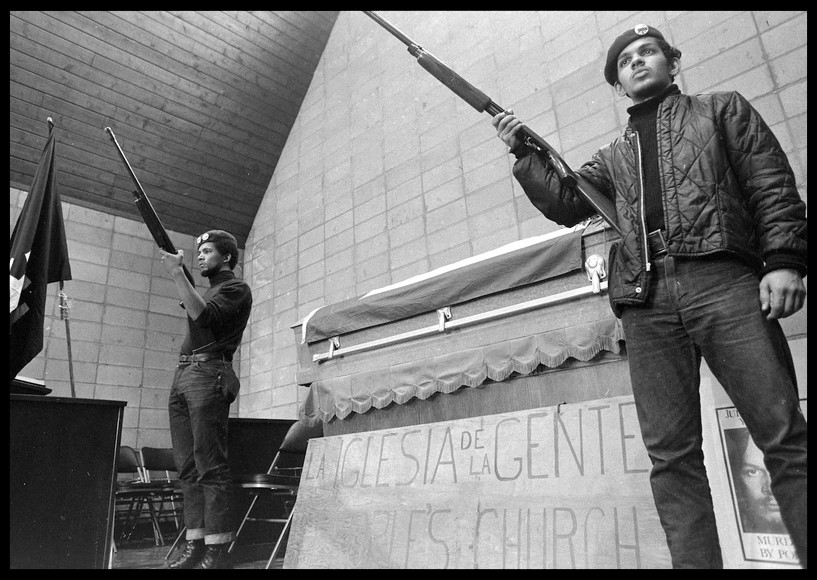
There are many examples of heroism among these young revolutionaries—not only in New York or Chicago, but also in chapters formed in other cities where the Puerto Rican people rose up in struggle.
From YLO to YLP
Consequently, internal differences that festered for a while between the New York and Chicago leaderships, ended in an unfortunate organizational split by the middle of 1970. The lack of political experience and maturity necessary to cope with those dynamics, added to factors that resulted in a separation.
It was my personal observation as a member of the Young Lords during this critical time that leads me to conclude today that the differences between the Chicago and New York did not merit a breakaway. The decision to split was initiated exclusively by the New York Central Committee and had absolutely no input from rank & file members. What the lack of process reveals are questionable motives held by certain YLP leaders.
The differences between the Young Lords in Chicago and New York were not critical enough to call for a split. With a little effort the dispute could have been resolved without hurrying up to dissolve adherence to the organizational structure under Jose “Cha-Cha” Jimenez’s leadership. What comes to mind when recalling these events are habitual patterns that led to the complete dismissal of democracy in the organization, as well as the divide and conquer tactics of COINTELPRO.
Similarly, the total absence of a democratic process also occurred when a decision was made unilaterally by the leadership to establish chapters in Puerto Rico. Once that decision was made, offices were established in Aguadilla and El Caño. As a result, YLP resources were then used to maintain the two Puerto Rico chapters. Thus put a strain on the organization which aggravated other problems that caused its deterioration.
Ideology of the Young Lords Party
The New York Young Lords moved on and drew up what became known as the YLP 13-Point Program. This document outlined the organization’s political objectives. It included independence for Puerto Rico, as well as liberation for all Latinos and other oppressed people, like African Americans and Palestinians. The Young Lords upheld the struggle against women’s oppression and eventually voiced support for the rights of LGBTQ people.
These young revolutionaries believed that the power of the people would eventually overwhelm the power of the oppressors. In that spirit, the YLP believed in the right to armed self-defense. This became evident in actions they took while patrolling the streets in areas they organized. Whenever the Young Lords witnessed the police arresting community residents, they would intervene to confront the racist cops and often liberated the prisoners.
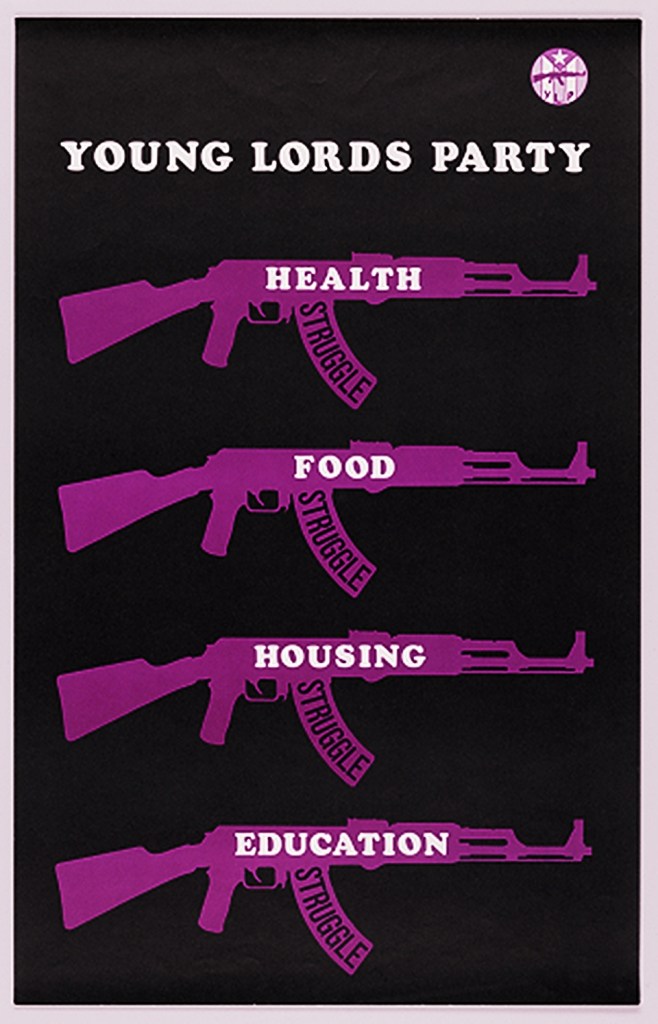
The Young Lords Aspired to Socialist Ideas
Shamefully, because that movement no longer exist, diluted, non-revolutionary and opportunistic interpretations of that history persist today, by former members who gradually drifted to the treacherous politics of the Democratic Party. In addition, some have also expressed their affinities for the police state.
Let’s set the record straight, the YLP openly denounced the capitalist system and called for a socialist society. They increasingly gravitated towards the ideals of Marxism, by conducting mandatory study of revolutionary-Marxist literature, such as Mao Zedong’s “Red Book,” The Communist Manifesto by Marx & Engels, Imperialism, the Highest Stage of Capitalism by Vladimir Lenin, Wretched of the Earth by Frantz Fanon, and so on.
Historical revisionism currently depicts the Young Lords and other frontline groups of the 1960’s-70’s as harmless to the capitalist system and irrelevant to the struggle for socialism today. In other words, despite historical versions from authors that seek approval by publishing houses and other parts of the mainstream the Young Lords were fundamentally revolutionaries that sought to smash the present social, economic and political order.
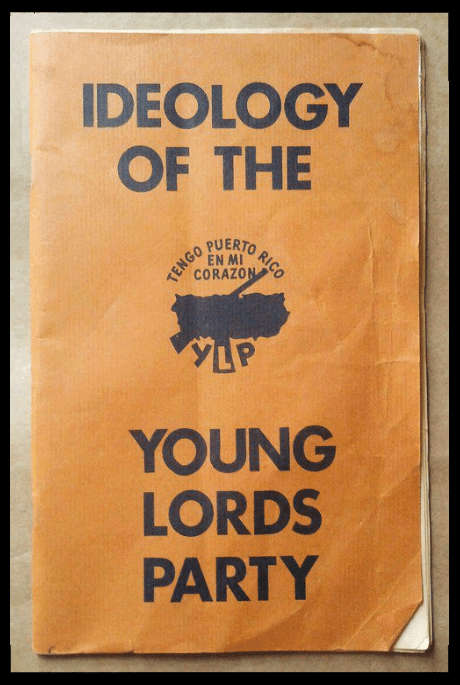
Regardless of what may be argued, the Young Lords openly called for the demise of the capitalist system and establishment of socialism in the United States. This is made indisputably clear in the YLP’s 13-Point Program and Platform, as well as in the pamphlet titled “The Ideology of the Young Lords“.
Women of the Young Lords
As with all movements of importance, it was the women of the Young Lords who served as the political backbone and spirit of the organization. At the height of the YLP’s development women comprised at least 40 percent of the membership. Their nobility and courageous leadership among the ranks was beyond exemplary.
However, respect and acceptance of their roles as leaders was met with resistance and obstacles often rooted in the oppressive traditions of male dominance. But the sisters were steadfast and formed the Women’s Collective, an internal organizational vehicle to enable launching the necessary fight against sexism in the Young Lords.
Yet, despite many internal battles, these sisters used the persuasiveness of politics and education to move forward the entire entity. We owe a debt of deep gratitude to all of these women.
As a result of their determination and work, many groups of women from international movements recognized them for their contributions against capitalism and its many forms of oppression.

The Young Lords, like the Black Panther Party, attempted to build a highly disciplined organization. They understood that without the organizational sophistication of a vanguard political party, revolution is impossible. It is precisely this lesson that revolutionaries today should embrace and emulate in order to realize the future victory of socialism.
LONG LIVE THE REVOLUTIONARY EXAMPLES OF THE
YOUNG LORDS!

 carlitoboricua