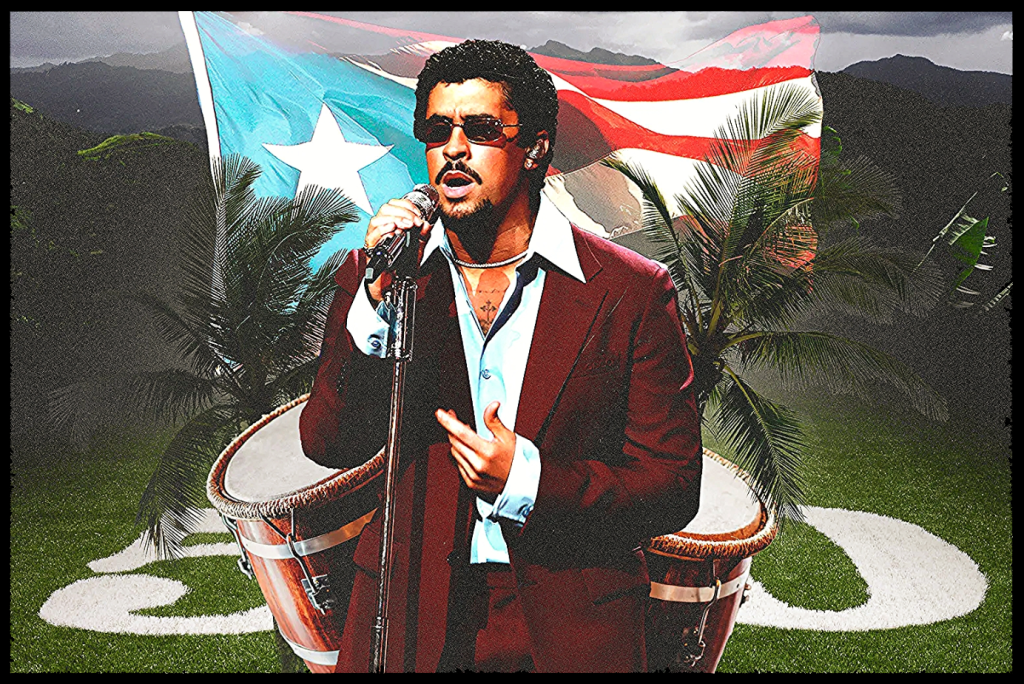
Tribute to My Mother, Rosa Maria Barretto-Rovira

Tribute to my mother, Rosa Maria Barretto-Rovira

December 11, 1931 – February 20, 2008

By Carlos “Carlito” Rovira

I have enjoyed painting the portraits of revolutionary figures for several decades, as well as images of loved-ones family members commission me to paint. But in 2024, when I decided to paint a 24” X 30” acrylic canvas portrait of my mother, Rosa Maria Barretto-Rovira, it was a completely different experience for me as a visual artist. Painting my mother’s portrait was not easy, it was emotionally challenging.
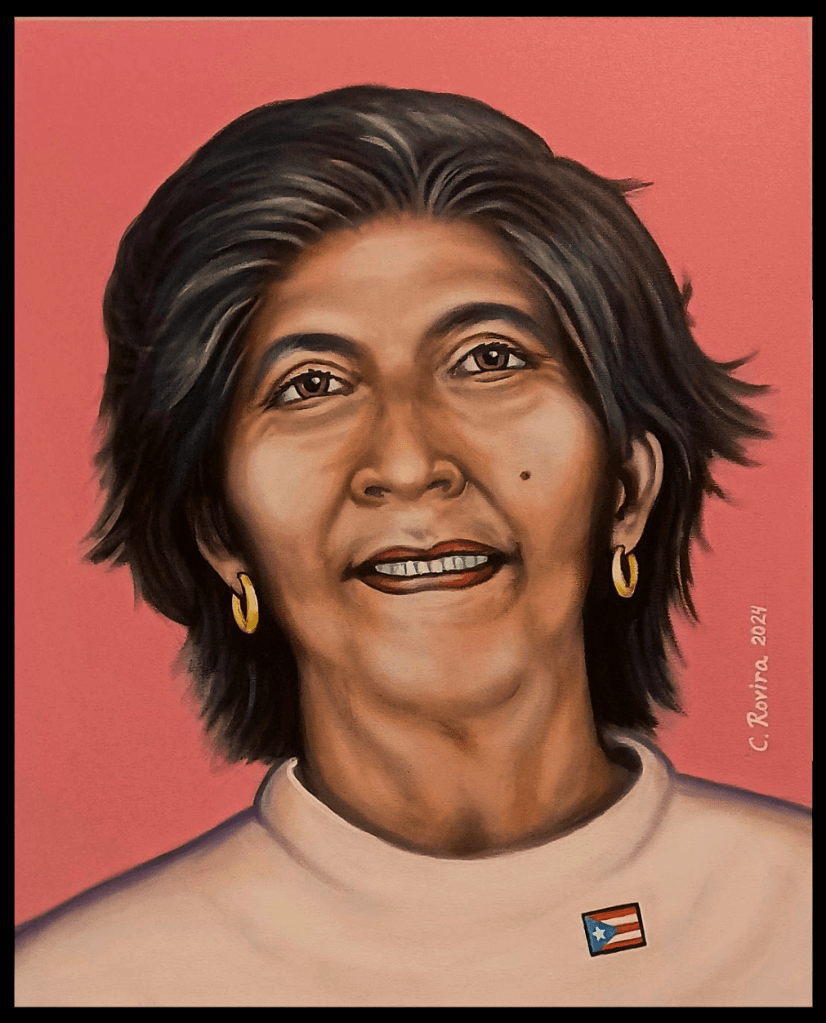
A 20″ X 24″ acrylic on canvas portrait I painted of my mother.

My mother was a proud Boricua woman who was never mistaken about our identity as Puerto Ricans. Nor was she ever confused about what was the correct side to be on in the anti-colonial struggle.

In 1949, my mother was compelled to leave Puerto Rico in search of a better life. She was among the 63,000 people per year forced to migrate due to economic hardships created by U.S. colonial policy. This exodus took place between the end of World War II and the 1960’s.

Doña Rosa, as what many community folks called her, worked as a stitcher in NYC’s Garment District. She was a member of the International Ladies Garment Workers Union (ILGWU). When having chats with her friends she would brag about work stoppages she partook.
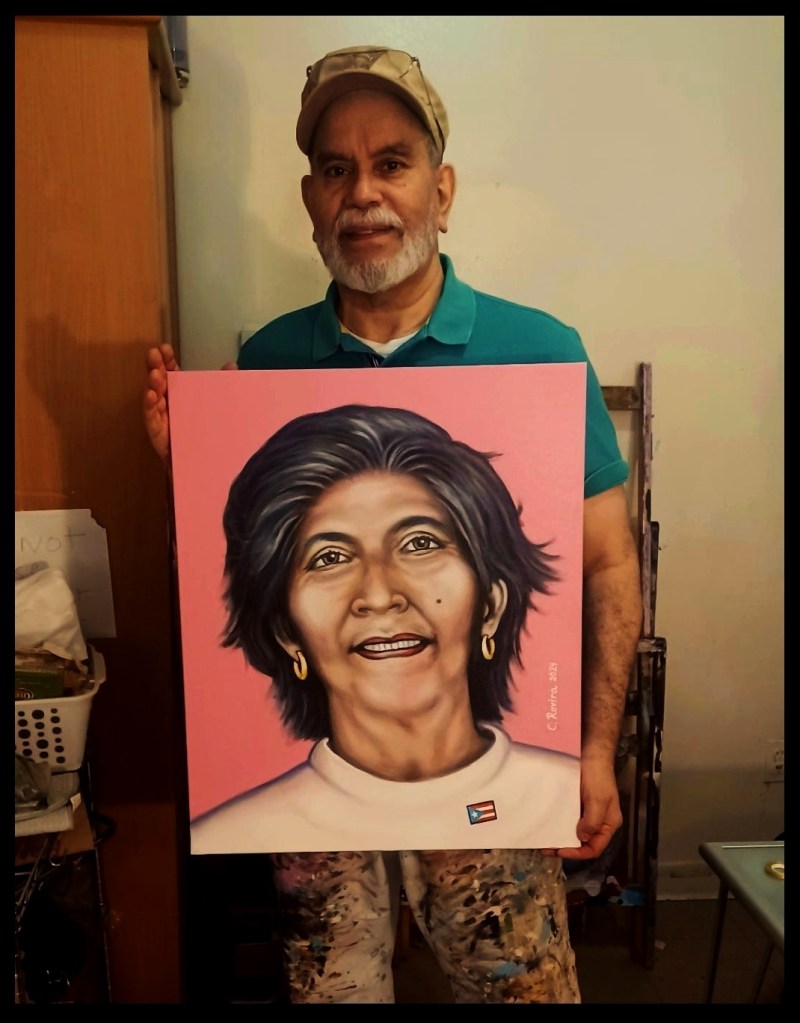
Painting my mother’s portrait was the most emotionally challenging project I ever did.

I remember when at just 8 years old hearing my mother tell one of my schoolteachers: “We want our independence.” She referred to Puerto Rico. Eventually, that conversation had a profound impact on me.

At the height of the repressive McCarthy Era and the 1948 Puerto Rico Law 53, also known as the Gag Law, my mother, my father, Carlos M. Rovira, Sr., and aunt, Anjelica Rovira-Nieves, were members of a New York City-based secret committee of the banned Nationalist Party.

This committee served as a rear guard to support the Party politically and financially. It functioned under the leadership of Don Julio Pinto Gandia, a confidant of the Nationalist leader, Dr. Pedro Albizu Campos.

My parents were superintendents of a tenement building on Broom Street in the Lower East Side, NYC where quite often they held fundraising events in the basement. The money raised was used to provide whatever necessary to benefit the efforts of the Nationalist Party.

This well-hidden story was not revealed to me until I became an adult decades later, by elders who were also members of this secret committee.

It is no wonder why Doña Rosa wholeheartedly supported the Young Lords and my decision to join them at just 14 years of age. In 1969 during the Young Lords takeover of the First Spanish Methodist Church in El Barrio (East Harlem), she was among supporters who mobilized to provide us with food and other necessities during the occupation.

Today, I’m proud knowing who my mother was. I shall always cherish the contributions she made to my personal development, as well as for having stood by me during the years I unfortunately served six years in prison for committing a regrettable stupidity. Doña Rosa was a mother in the truest sense of the word.

From the time I was a young child she taught me never to allow myself being bullied by anyone and to strike back hard with full force whenever someone laid their hands on me. If my mother were to hear the opposite as what she instructed I was punished, with the belt or her flip-flop slippers (chancletas). My siblings and I grew up in a supposed “rough neighborhood”, NYC’s Alphabet City during the 1960s, Doña Rosa did not want her children becoming pushovers or “chumps” for bullies to treat as easy prey.
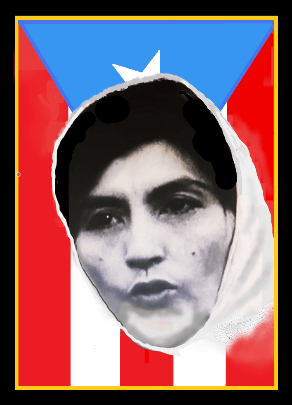
Her sacrifices as a mother, under the difficult circumstances of poverty and cultural shock are unforgettable. Her life was not easy due to harsh experiences in Puerto Rico’s colonial reality and the racism she encountered in the U.S. as an immigrant woman of color who spoke very little English.

My dear mother’s examples of character and conviction are reasons why I vowed to always pay homage to her by continuing to raise the banner of Puerto Rican national liberation. If there is such a thing as “life after death,” I want her to know that I will always love her very much.

Rosa Maria Barretto-Rovira – PRESENTE!

When the mere thought of Black emancipation “Offended” white privilege at the SUPER BOWL

By Carlos “Carlito” Rovira

Super Bowl 50 of February 7, 2016, in Levi Stadium, Santa Clara, California, when the Denver Broncos beat the Carolina Panthers 24-10, will be remembered for generations to come as the setting for another outburst of anti-Black racist hatred. This event will certainly be monumental in the history of race relations in this country.

For the most part, no one ever expected such a barrage of condemnation against the super-star African American singing artist Beyonce for her performance during halftime. The Super Bowl is an institutionalized extravagant sport event viewed by tens of millions of people annually throughout the United States.

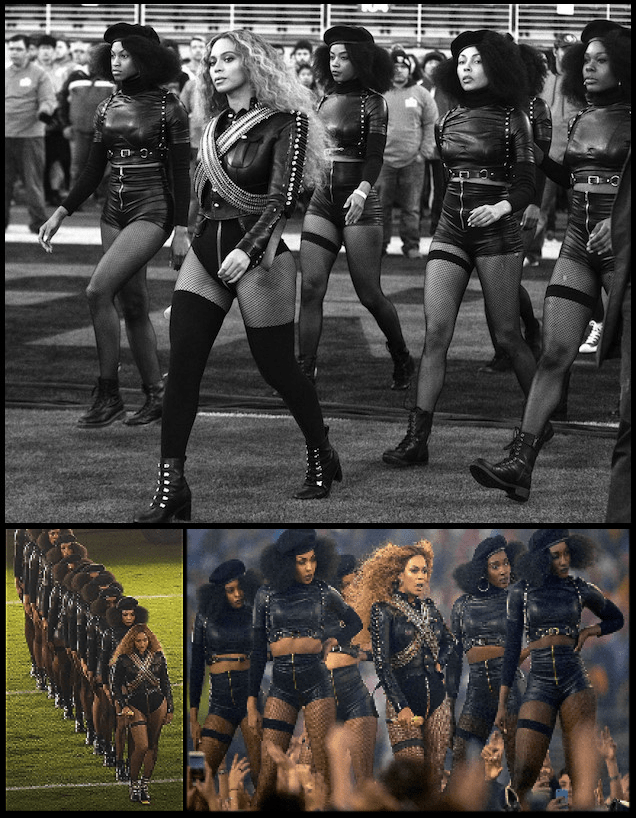
The controversy began immediately after a dance troupe of about 50 Black women, with Beyonce at the helm, took center stage in a beautifully choreographed arrangement and dress attire that made references to the legendary Black Panther Party and Malcolm X.

To many people nothing could have been a better tribute to the annual tradition of Black History Month (February) than to depict figures so symbolic, especially on the 50th anniversary of the Black Panther Party’s founding by Huey P. Newton and Bobby Seale.

Beyonce and performing dancers beautifully simulating Black Panthers’ disciplined formation.

But in order to understand why this performance became such a controversy we must first explore the causes that triggered it. Anyone who closely examines the norms of this violent “sport” will easily see how it tends to present itself as a feverish gladiator ritual. The definition of “sport” has been changed to mean inflicting bodily harm among high priced members of opposing teams and in some cases with permanent damage.

With military music bands playing and jet fighters flying high above the airspace, the Superbowl has become an event that insidiously promotes a peculiar version of militarism. It accentuates sexism, white supremacy, big nation chauvinist arrogance, war – all of the not-so-hidden ideas that prevail in the general thinking of capitalist culture.

With this kind of historically rooted setting, it came as no surprise when arch racists and notorious figures like New York State Representative Peter King and the disgraced former New York City Mayor Rudolph Giuliani, launched a barrage of attacks against the prominent Black female performer.

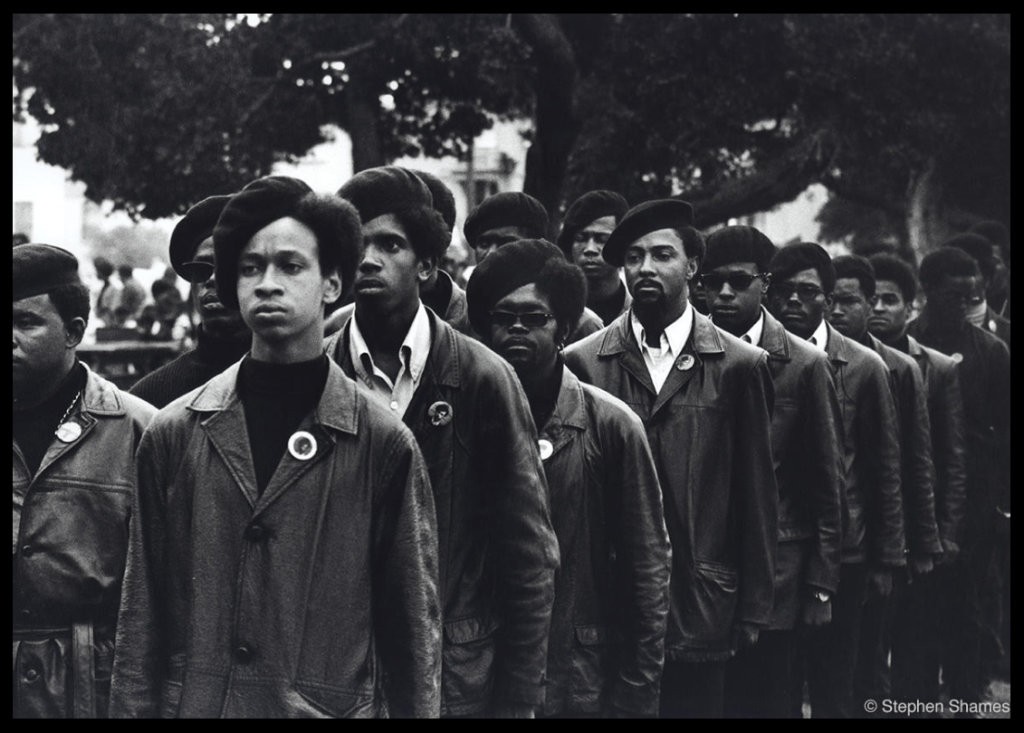
Black Panther Party members in a drill exercise.

Every moronic die-hard white racist consumed by the militarized sports culture most likely had something derogatory to say about Beyonce’s Super Bowl performance and the freedom struggle of Black people.

They were appalled that Beyonce would dare pay homage to heroic African American revolutionaries, even in the most minimized implicit manner. The vindictive outcry by these and other white supremacists has little to do with Beyonce or what they perceived as “offensive” during the halftime performance.

Malcolm X, the Black Panther Party and the mass upsurge that occurred during the 1960’s – 70’s, the height of the Civil Rights movement, continues to haunt the imagination of our oppressors to this day. Their apprehensions are attributed to the militant traditions of the African American masses which brought about the rise of Malcolm X and the Black Panther Party.

The lessons that came as a result of those experiences are indisputably applicable in our reality today – and that is precisely what these villains fear. Blacks, Latinos, Indigenous and other people of color continue to be brutalized and murdered by the police across the United States.

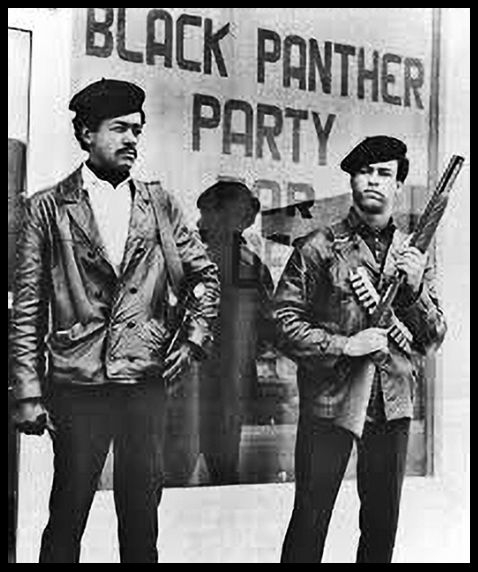
Black Panther Party co-founders Bobby Seale and Huey P. Newton.

Unlike the lies asserted by Guilliani and King it was the police who attacked, imprisoned and murdered Black Panthers in a criminal campaign organized by the Federal Bureau of Investigation (FBI) known as COINTELPRO. However, both Malcolm X and the BPP boldly advocated and practiced the right to use armed self-defense against the racist terror of the police in the Black community.

What the representatives of the ruling class are most upset about at Beyonce is that her Superbowl halftime performance reminded everyone of a period in U.S. history when Black people defiantly posed a threat to this racist system by galvanizing many sectors of the general population. This phenomenon presented the potential for revolution in this country under the impact of the Black liberation struggle.

The role Black people played in the events of that period in history is something the ruling class cannot forget or forgive. They will naturally dread the mere thought of a revolutionary upheaval until their final day of doom.

The Black Panther Party believed in the building a sophisticated revolutionary organization.

This is why former Black Panther and political prisoner Mumia Abu-Jamal has stated: “The tyrants, oppressors and racists who continue to hold political power in this country by using the most ruthless means cannot afford a repeat of the 1960’s.”

The plight of Black people, from the nearly 400 years of slavery, Jim Crow discrimination, mass incarceration and police brutality today, are facts that our oppressors and those who benefit from white privilege and entitlement would like us to ignore and forget.

Regardless, what Beyonce’s motives were, she touched upon a vulnerability of white supremacist America. If Beyonce’s halftime performance were a projection of jingoism, militarism or a glorification of white supremacy she would not have been targeted with condemnation.

Beyonce without a doubt merits our applause and praises for paying tribute through her performance to a historic symbol of African American defiance – the Black Panther Party.

LONG LIVE THE LEGACY OF THE BLACK LIBERATION STRUGGLE!