________________________________________________________________________
“We rebels… get far too much credit for winning the Revolution. Our enemies deserve most of the credit, for being greedy cowards and idiots.” -Celia Sanchez
____________________________________________________________________
By Carlos “Carlito” Rovira
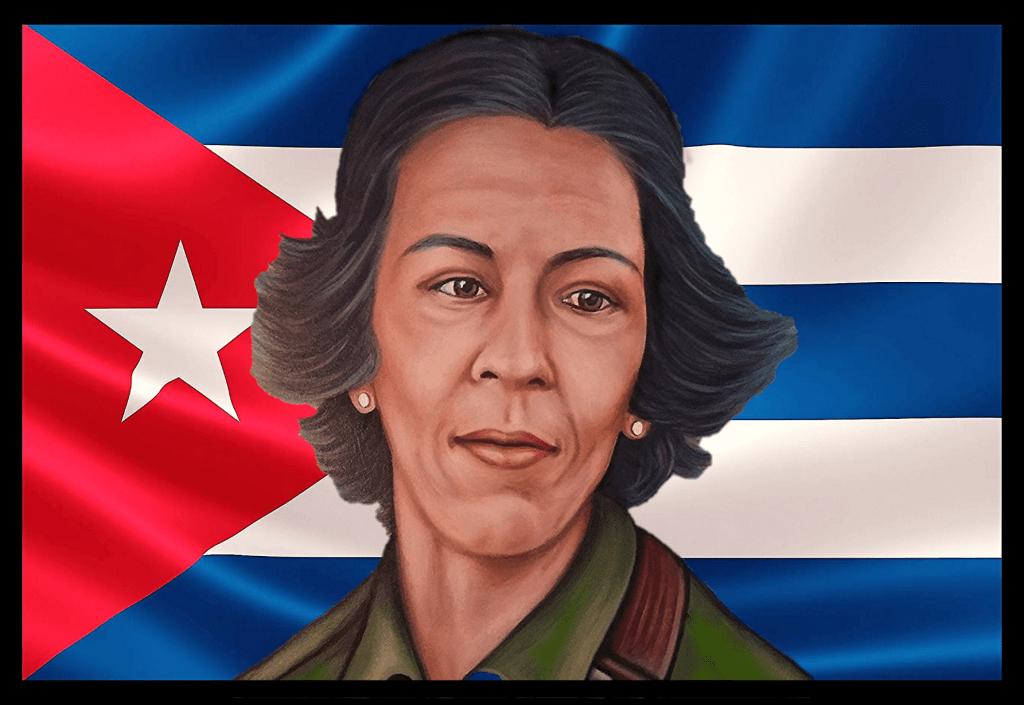
One of the greatest heroines and leader of the 1959 Cuban Revolution was Celia Sánchez. This historic figure played a pivotal role in the revolutionary struggle that resulted in the overthrow of the notorious U.S.-puppet Fulgencio Batista.
Celia Sanchez was born on May 9, 1920, in the municipality of Media Luna, Oriente, Cuba. She grew up in a relatively affluent household and raised by her father, Dr. Manuel Sanchez, who practiced medicine. Celia’s mother died when she was a very young child.
During her early adulthood, Sanchez worked assisting her father’s medical clinic until she became inspired to be politically active, a change that came about in her life in response to Batista’s military coup on March 10, 1952. Celia’s political involvement led her to organize the July 26th Movement in the municipality of Manzanillo, Cuba in 1955.
Fidel Castro Ruz named the new entity the “JULY 26 MOVEMENT” to honor the martyrs that courageously attempted to seize the Moncada Barracks by force on July 26, 1953. Although the attack ended in failure with many revolutionaries killed by torture, the event sparked the Cuban Revolution.

Celia never hesitated to voluntarily take on tasks, including such that posed danger and required risking her life. This heroine’s passionate energy and uncompromising commitment to the revolution made her one of the most trusted comrades of Fidel Castro Ruz’s and Ernesto Che Guevara.
Cuba was militarily invaded and colonized by the United States, along with the Philippines, Guam and Puerto Rico, the consequence of the 1898 Spanish-American War. Although the United States gave Cuba the political status “Protectorate”, with cleverly disguised semblances of “independence”, it was actually another form of outright colonial domination.
What replaced Spain’s tyrannical rule in Cuba was a system exclusively serving the interest of U.S. monopoly capitalism which aimed to super-exploit the Cuban people. Cuba’s sugar, tobacco, textiles, and tourism was the target of U.S. billionaires while the people went further into the depths of poverty and despair.
And because U.S. rulers were motivated by malicious intent it was natural for their less significant junior partners in the Mafia to behave like scavengers and turn Cuba into a haven for every kind of criminal activity. Havana became the epicenter of capitalist decadence endorsed by the native white elite.
While Batista government officials catered to the comforts of U.S. financial investors they viewed the Cuban people with disdain. Their disposition resulted in the deaths of 20,000 Cuban men, women and children, who were mercilessly shot, tortured and raped by police and soldiers of the Batista regime.
Celia Sanchez was a staunch Marxist–Leninist who desired to teach the doctrine she embraced and strived to embed its principles as the guiding light of the Communist Party of Cuba. She was among many in that experience who wanted to ensure the revolution’s anti-capitalist direction.
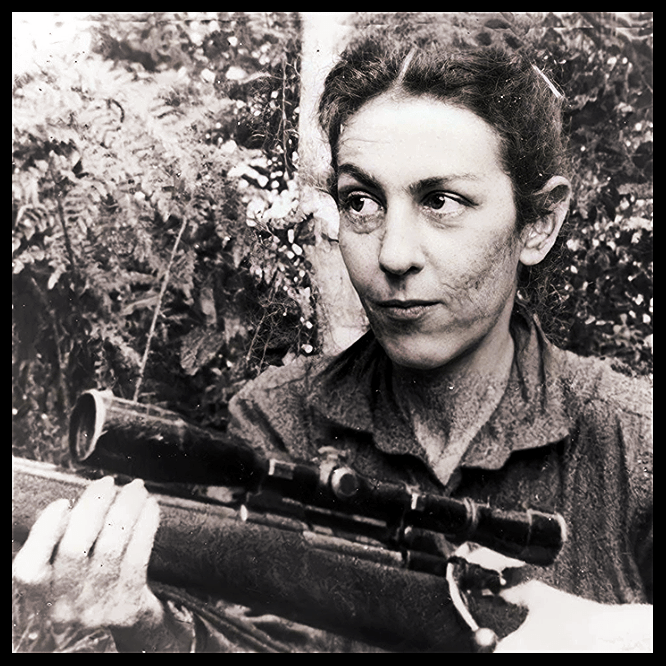
In December 1956, Sanchez shared the responsibility for deciding the location where the Granma boat would land on Cuba’s coastal shores once it arrived from Mexico, filled with combatants ready to fight. She also took responsibility for recruiting and training from among the poor peasants and workers to provide reinforcements for the Rebel Army.
As the guerillas intensified their actions Batista responded by increasing repression on the populace to tighten his grip on power. The frenzy Batista demonstrated with terror only served to inspire mass support for the Rebel Army.

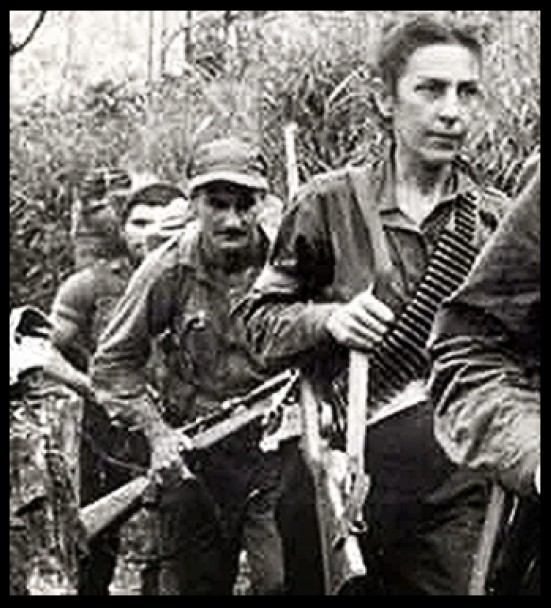
Along with other women combatants like Vilma Espin and Haydee Santamaria, Celia Sanchez play a pivotal role in organizing a broad network for smuggling weapons, food and medical supplies to the growing Rebel Army in the mountains.
These warrior women were compelled to fight on two fronts, against the ruthless Batista army on the one hand, and sexist traditions manifesting in paternalistic behavior from male comrades. However, through example the Cuban Revolution took many steps forward towards achieving women’s equality. This is a continuous ideological struggle in which Celia Sanchez played a big role initiating, as a leading combatant at first, then a government official.
Sanchez was the first woman to join the July 26 Rebel Army. And because of her experiences and courage under gunfire from enemy troops she earned a leadership role in the Rebel Army’s General Staff.
After the overthrow of U.S. and Mafia controlled Batista’s regime, it was of the utmost importance for the revolution to consolidate in order to guard against a counterrevolution and retain political power. Washington officials were furious in disbelief of what had occurred in “their backyard.” The more extreme elements of the U.S. ruling class were itching to call for military intervention.
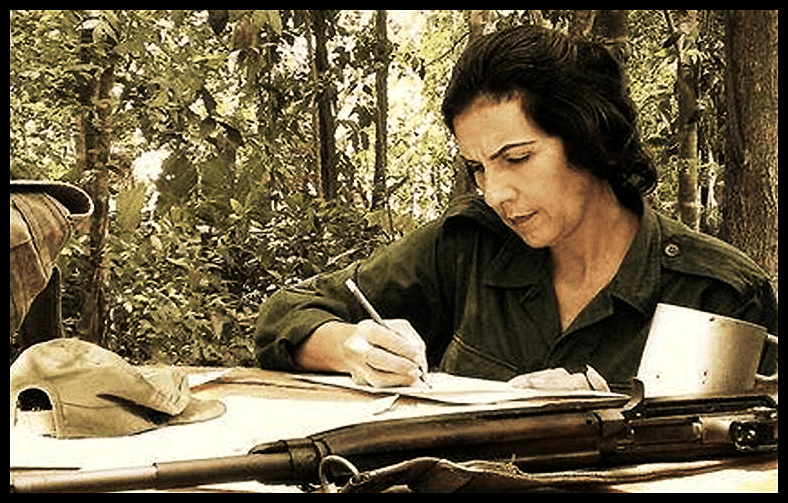
Celia Sanchez’s leadership during this period was instrumental for consolidating the new revolutionary state. She served the Cuban Government as Secretary to the Presidency of the Council of Ministers and in the Department of Services of the Council of State. Her many examples of valor served to inspire and galvanize support for the revolution among the youth.

Sadly, on January 11, 1980, Celia Sanchez died after a long battle with lung cancer. Her death saddened many in Cuba and supporters of the revolution throughout the world, familiar with her feats. President Fidel Castro Ruz was known to be devastated having lost someone with whom he had developed a strong personal and political bond.
Sanchez always demonstrated selflessness and a passion for the emancipation of humanity. Her contributions to the revolution’s achievements are cardinal. She has secured a very special place for her legacy in the archives of the Cuban Revolution and the struggles for women’s equality throughout the world.
LONG LIVE THE CUBAN REVOLUTION!
LONG LIVE THE LEGACY OF CELIA SANCHEZ!

 carlitoboricua