¡Que viva el heroico ataque al cuartel Moncada en el 26 de julio de 1953!

For English version: https://carlitoboricua.blog/2025/07/21/long-live-the-heroic-july-26-1953-attack-on-the-moncada-barracks/

______________________________________________________________________

“Los demagogos y los políticos profesionales quieren hacer el milagro de ser buenos en todo y con todos, engañando necesariamente a todos en todo. Los revolucionarios proclamarán sus ideas con valentía, definirán sus propios principios y expresarán su intención de no engañar a nadie, ni a amigos ni a enemigos.” – Fidel Castro Ruz, de La historia me absolverá.

______________________________________________________________________

Por Carlos “Carlito” Rovira

En la madrugada del 26 de julio de 1953, aproximadamente 160 rebeldes, liderados por Fidel Castro Ruz, atacaron simultáneamente dos puestos militares del régimen títere estadounidense de Fulgencio Batista. El Cuartel Moncada, en Santiago de Cuba, y el Cuartel Carlos Manuel de Céspedes, en Bayamo, Cuba, fueron los objetivos. El Cuartel Moncada era la segunda guarnición más grande del país.

Entre los notables luchadores por la libertad que participaron en los ataques se encontraban el hermano de Fidel Castro, Raúl Castro, junto con Haydée Santamaría y Melba Hernández, las únicas mujeres del grupo.

Melba Hernández (izquierda) y Haydee Santamaría después de su captura.

Fidel Castro se vio motivado a organizar estas audaces acciones en respuesta al descontento en Cuba por la destitución ilegal del presidente saliente Carlos Prío Socarrás. Fue depuesto por Fulgencio Batista, quien dio un golpe militar el 10 de marzo de 1952.

Aunque Batista era candidato a la presidencia según las encuestas no parecía que ganaría las elecciones debido a su impopularidad desde un período anterior cuando se desempeñó como Presidente de Cuba del 10 de octubre de 1940 al 10 de octubre de 1944.

Durante este periodo, las elecciones presidenciales y parlamentarias programadas se cancelaron abruptamente. Castro estaba entre los candidatos que se postulaban para un escaño en el parlamento.

Como resultado de la Guerra Fría, una parte esencial de la estrategia global de Estados Unidos fue la organización encubierta de golpes militares por parte de la Agencia Central de Inteligencia (CIA), como los de Cuba en 1952, Paraguay en 1954, Guatemala en 1954, Argentina en 1955, Honduras en 1956, Colombia en 1957, Venezuela en 1958, El Salvador en 1960, Perú en 1962, Ecuador en 1963, Honduras en 1963, Brasil en 1964, Argentina en 1966, Perú en 1968 y Panamá en 1968.
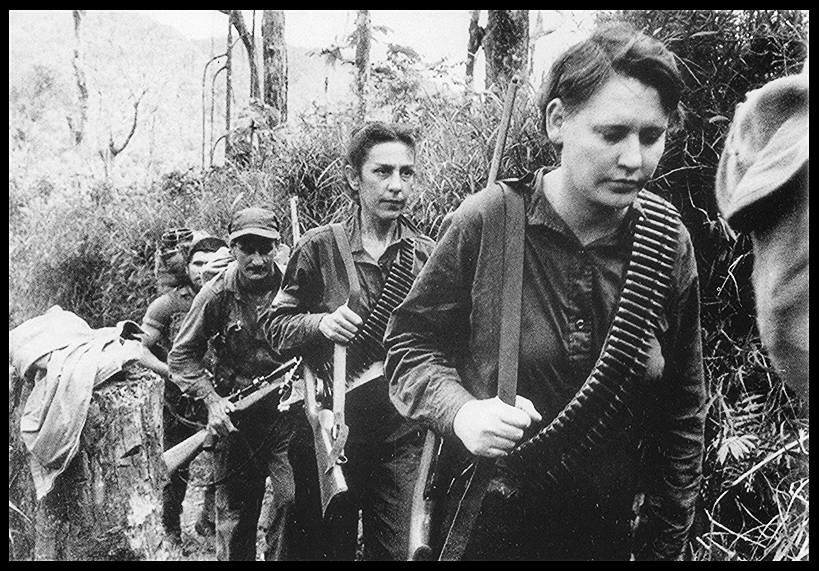
Haydee Santamaria, Celia Sanchez among other members of the Rebel Army in the Sierra Maestra.

Aunque los rebeldes estaban deseosos de luchar por sus convicciones a pesar del peligro que implicaba, su determinación definió el valor y el sacrificio. En medio de disparos y un intenso caos, la Revolución Cubana comenzó en el Cuartel Moncada en ese día inolvidable.

Los combatientes inexpertos sufrieron la falta de preparación para enfrentarse a tropas gubernamentales mejor entrenadas y equipadas. Como resultado de errores tácticos, muchos fueron capturados, torturados y asesinados.
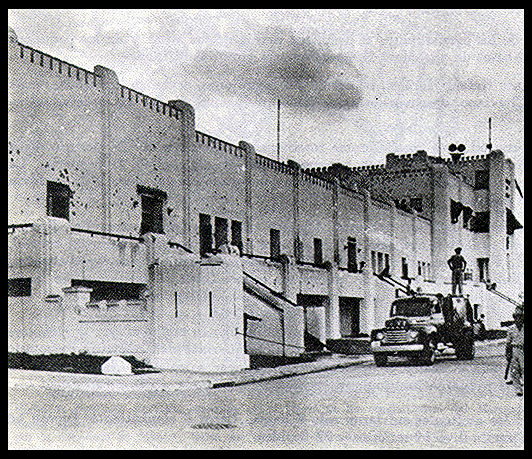
Cuartel Moncada después de la batalla.

Fidel Castro logró escapar y esconderse en el bosque durante varios días hasta que pudo negociar su rendición a través de un intermediario en los alrededores.

Sin embargo, lo que inicialmente pareció una derrota devastadora para los rebeldes resultó ser todo lo contrario. Fidel Castro acertó al predecir que los ataques desencadenarían una tormenta revolucionaria irreversible que consumiría a todos los sectores de la población.

Una auténtica revolución, independientemente de su origen, tendrá ciertos patrones comunes. La valiente acción de Castro y su equipo recordó el ataque de 1859 que fue lanzado en Estados Unidos a Harpers Ferry, Virginia Occidental, liderado por el legendario abolicionista antiesclavista John Brown. Aunque ambas batallas fracasaron con la pérdida de muchos valientes combatientes, cada uno de estos eventos encendió las llamas de una revolución.
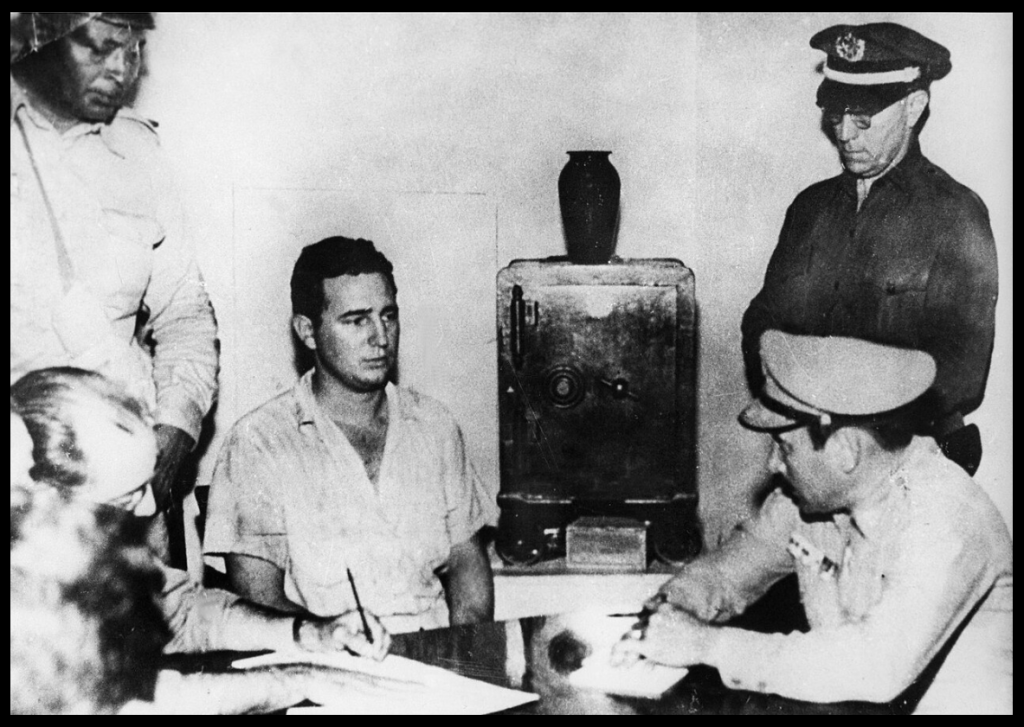
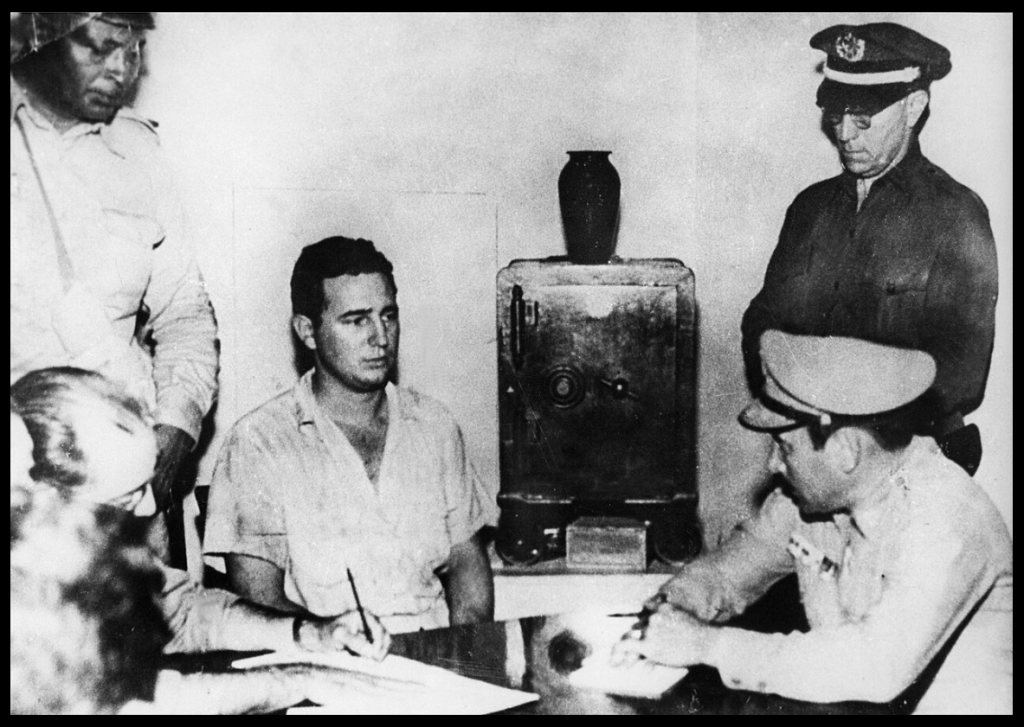
Fidel Castro Ruz siendo interrogado por oficiales militares de Batista.
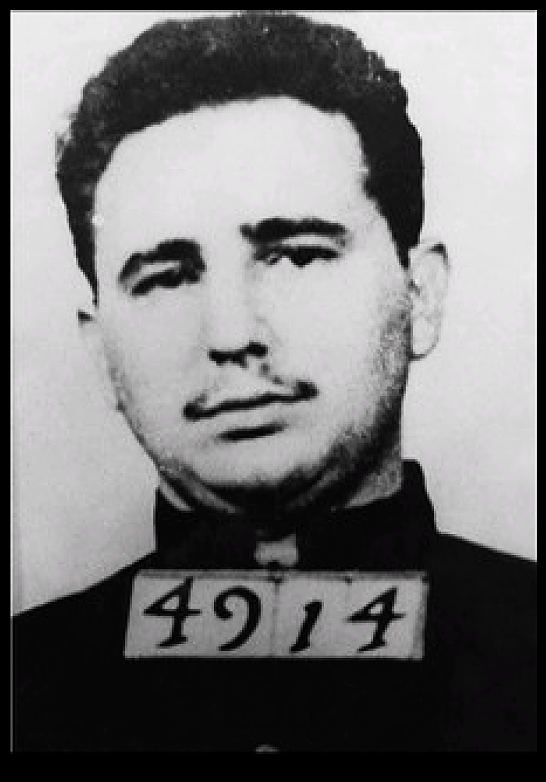
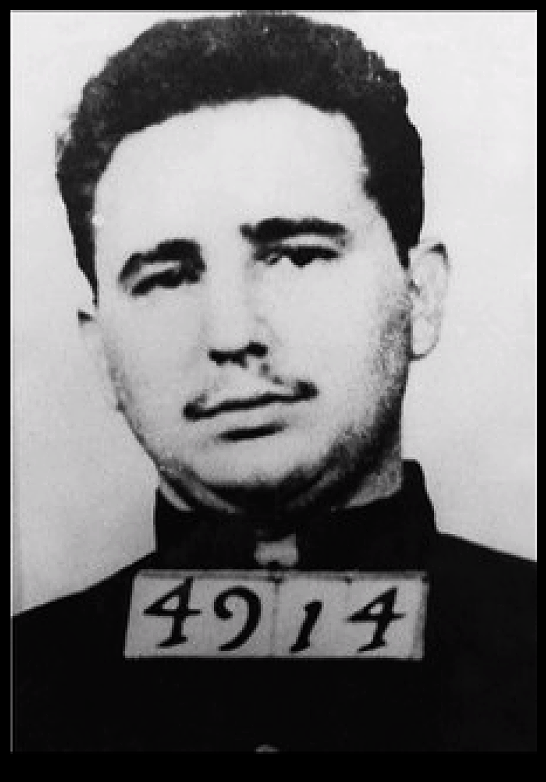
Foto de la prisión de Fidel Castro Ruz.

La policía y el ejército de Batista cometieron numerosos abusos contra los derechos humanos, lo que provocó que muchos cubanos aplaudieran favorablemente el audaz ataque al Moncada. Los ciudadanos vivían bajo la constante amenaza de encarcelamiento, palizas y muerte por el simple hecho de expresar su desaprobación hacia Batista, especialmente la población afrocubana más oprimida.

Esta situación fue debilitándose poco a poco al régimen, sobre todo después de que Fidel, abogado de formación, presentara como testimonio uno de los discursos más famosos del siglo XX, como parte de su propia defensa titulado “La historia me absolverá“.

Las palabras de Castro perjudicaron a Batista. A pesar de la censura gubernamental, los medios de comunicación no pudieron ocultar su espíritu militante y desafiante. Utilizó el escenario de un tribunal para desacreditar detalladamente las prácticas corruptas y fascistas del régimen contra el pueblo.

Tras la condena de Castro a quince años de prisión por parte del tribunal, su discurso fue filtrado página por página para su publicación y amplia circulación en forma de panfleto. Como resultado, surgió un amplio movimiento de masas que exigía la liberación de los presos políticos y el derrocamiento del régimen de Batista.

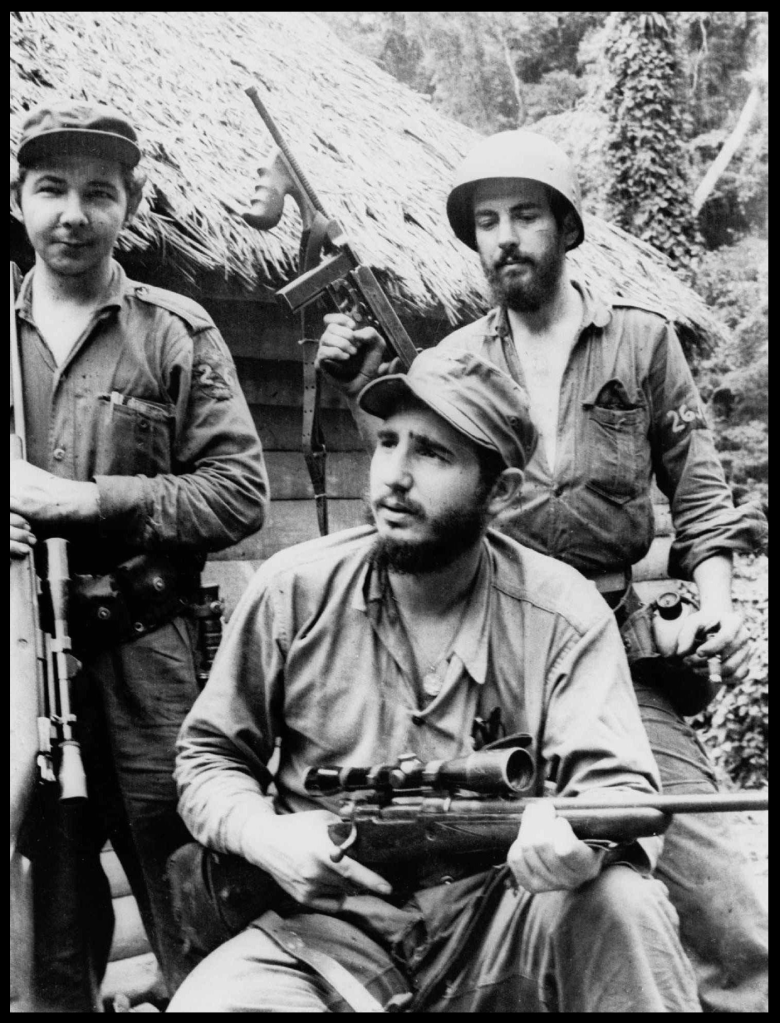
Fidel Castro en la Sierra Maestra.

Fue Fidel Castro quien acuñó el nombre “Movimiento 26 de Julio” para conmemorar a los mártires que sacrificaron sus vidas durante el fallido intento de tomar el Moncada.

La agitación y la intranquilidad son la mejor descripción de la situación en Cuba durante este período histórico. A medida que la frustración y la desesperación del pueblo aumentaban, las manifestaciones espontáneas, que solían desembocar en enfrentamientos violentos con las tropas gubernamentales, también afectaron al pueblo.

Aunque obligados a hacer una concesión táctica a los luchadores por la libertad ante la opinión pública, Batista y sus compinches no se percataron de que las semillas de la revolución ya estaban sembradas.
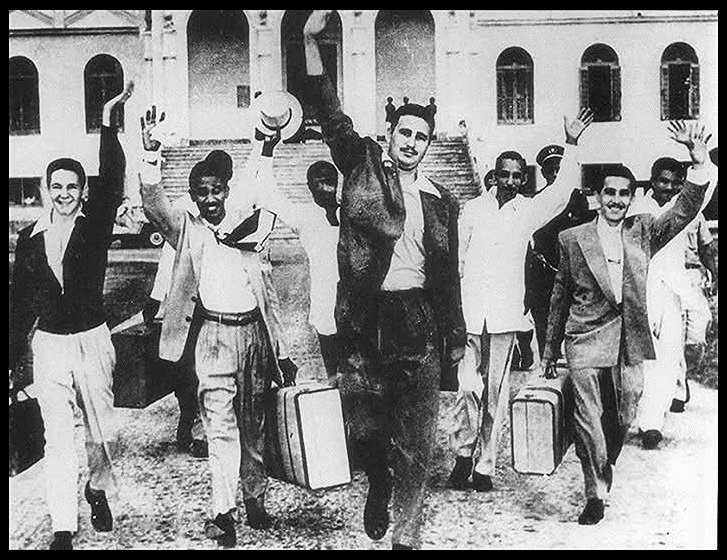
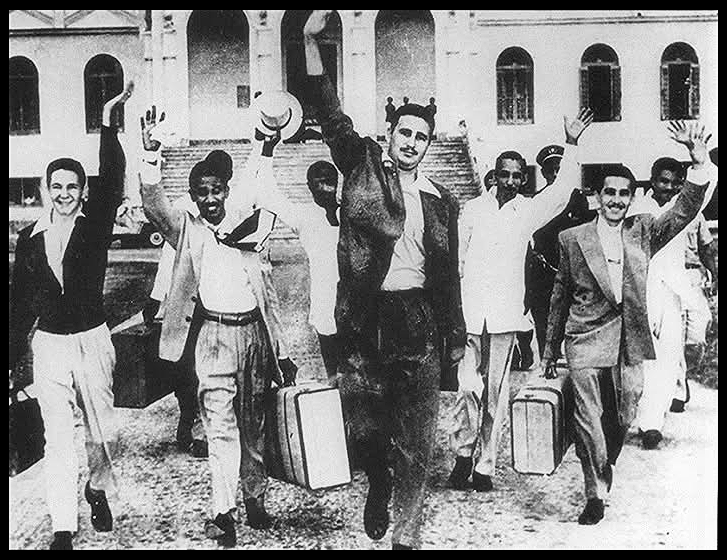
Fidel Castro y sus compañeros fueron liberados de prisión después de recibir una amnistía general.

Además, Castro y la mayoría de los presos políticos recién liberados fueron a México para planificar la siguiente fase de la lucha. En México, Fidel Castro conoció por primera vez a Ernesto Che Guevara y Camilo Cienfuegos, dos figuras que se convirtieron en líderes del Ejército Rebelde.

Durante su estancia en México, las tareas del movimiento fueron llevadas a cabo por Celia Sánchez, Vilma Espín, Haydée Santamaría, Melba Hernández, Frank País, Raúl Castro y Juan Almeida Bosque.

Establecieron comités de propaganda en toda Cuba; una red de inteligencia; contrabandearon armas al Ejército Rebelde en la Sierra Maestra; desarrollaron las comunicaciones entre los luchadores por la libertad en México y Cuba, etc.

En mayo de 1955, dos años después del asalto al Moncada, Batista fue presionado para conceder una amnistía general a Fidel Castro y sus camaradas. Un poderoso movimiento de masas se estaba volviendo cada vez más abrumador para la clase dominante cubana.

La sofisticación organizativa de estos revolucionarios ha permitido que la Revolución Cubana sobreviva hasta nuestros días en circunstancias opresivas causadas por el imperialismo estadounidense. Sin embargo, la Revolución Cubana ha demostrado más allá de toda duda que la tiranía imperialista no es invencible.

Lo que comenzó con el ataque al Cuartel Moncada, la toma del poder el 1 de enero de 1959 y más allá, seguirá inspirando futuras luchas revolucionarias por la emancipación completa de la humanidad.

¡VIVA LA REVOLUCIÓN CUBANA!

Long Live the Heroic July 26, 1953, Attack on the Moncada Barracks!

Para la versión en español: https://carlitoboricua.blog/?p=14812&preview=true&_thumbnail_id=14826

_________________________________________________________________________

“Demagogues and professional politicians want to make the miracle of being good in everything and with everybody, necessarily fooling everyone in everything. Revolutionaries will proclaim their ideas bravely, define their own principles, and express their intentions to deceive no one, neither friends nor foes.” – Fidel Castro Ruz, from History will absolve me.

_________________________________________________________________________

By Carlos “Carlito” Rovira

In the early morning hours of July 26, 1953, approximately 160 rebels led by the 27 years old Fidel Castro Ruz, simultaneously attacked two military outposts of the U.S.-puppet regime of Fulgencio Batista. The Moncada Barracks in Santiago, Cuba and the Carlos Manuel de Cespedes Barracks in Bayamo, Cuba were targeted. The Moncada Barracks was the second largest garrison in the country.

Among the notable freedom fighters who partook in the attacks were Fidel Castro’s brother, Raul Castro, along with Haydee Santamaria and Melba Hernandez – the only women of the group.

Melba Hernandez (left) and Haydee Santamaria after their capture.

Fidel Castro was motivated to organize these bold actions in response to the discontent felt throughout Cuba for the illegal ouster of outgoing President Carlos Prio Socarras. He was deposed by Fulgencio Batista, who staged a military coup on March 10, 1952.

Although Batista was a candidate for the presidency, according to polls it did not appear as if he would win the election due to his unpopularity from a previous term he served as President of Cuba from October 10, 1940 to October 10, 1944.

Due to the military coup, scheduled elections for the presidency and Parliament were abruptly cancelled. Castro was among the candidates running for a seat in parliament.

As a result of the Cold War, an essential part of the U.S. global strategy was the Central Intelligence Agency (CIA) covertly organizing military coups, such as Cuba in 1952, Paraguay 1954, Guatemala 1954, Argentina 1955, Honduras 1956, Colombia 1957 Venezuela 1958, El Salvador 1960, Peru 1962, Ecuador 1963, Honduras 1963, Brazil 1964, Argentina 1966, Peru 1968, and Panama 1968.

Haydee Santamaria, Celia Sanchez among other members of the Rebel Army in the Sierra Maestra.

Although the rebels were eager to fight for their beliefs despite the danger involved, their determination defined courage and sacrifice. In the midst of gunfire and intense chaos of battle at the Moncada Barracks is where the glorious Cuban Revolution was born.

The inexperienced combatants suffered from being ill-prepared to challenge better trained and equipped government troops. As a result of tactical mistakes, many were tortured and killed after their capture. Amongst the martyrs were Haydee Santamaria’s brother, Abel Santamaria who had his eyes gouged out, and her fiancé, Boris Luis Santa Coloma who had his genitalia dismembered. The two revolutionaries were heinously tortured to death by Batista’s henchmen.

Moncada Barracks in the aftermath of the battle.

Fidel Castro managed to escape and hide in the forest for several days until he was able to negotiate his surrender through an intermediary in the vicinity.

However, what initially appeared to be a devastating defeat for the rebels eventually proved to be the opposite. Fidel Castro was correct by predicting the attacks would trigger an irreversible revolutionary storm consuming all sectors of the population.

Authentic revolution, regardless of its origin, will have certain shared patterns. The courageous action taken by Castro and his team was reminiscent of the 1859 attack on Harpers Ferry, West Virginia, led by the legendary anti-slavery abolitionist John Brown. Although both battles ended in failure with the loss of many courageous lives, each of these events ignited the flames of a revolution in the respective countries.

Fidel Castro Ruz being interrogated by Batista’s military officials.
Fidel Castro Ruz prison photo.

Batista’s police and military committed many human rights abuses causing many Cubans to favorably cheer the daring Moncada attack. Citizens lived under the constant threat of incarceration, beatings, and death for merely voicing disapproval for Batista, especially the most oppressed Afro-Cuban population.

This situation gradually weakened the regime, especially after Fidel Castro, a trained lawyer, presented as testimony one of the most famous speeches made in the 20th Century as part of his own defense entitled History will absolve me.” 

Castro’s words were very damaging to Batista. Despite government censorship, the news media was unable to hide Castro’s defiant militant spirit. He used the setting of a courtroom to discredit in detail the regime’s corrupt and fascistic practices on the people.

After the court sentenced Castro to fifteen years imprisonment, his speech was smuggled out page by page to be published and widely circulated in pamphlet form. Consequently, a broad mass movement emerged demanding the release of the political prisoners and removal of the Batista regime.

Fidel Castro in the Sierra Maestra Mountains.

It was Fidel Castro who originated the name “July 26 Movement” to commemorate the martyrs who sacrificed their lives during the failed attempt to seize control of the Moncada compound.

Turmoil and unrest can best describe the situation in Cuba during this historic time. As the frustration and desperation of the people rose, spontaneous demonstrations that usually resulted in violent clashes with government troops took its toll on the people as well.

In May 1955, two years after the Moncada attack, Batista was pressured to grant Fidel Castro and his comrades a general amnesty. A powerful mass movement was becoming increasingly overwhelming for Cuba’s ruling class.

Fidel Castro and his comrades were released from prison after receiving a general amnesty.

While compelled to make a tactical concession to the freedom fighters in the face of public opinion, Batista and his cronies that included the Mafia, did not realize that the seeds of revolution had already been planted and were now taking root among the Cuban people.

Moreover, Castro and most of the newly released political prisoners went to Mexico to plan the next phase of the struggle. In Mexico, Fidel Castro met for the first time Ernesto Che Guevara and Camilo Cienfuegos-two figures that became leaders of the Rebel Army.

While Fidel Castro was in Mexico, the tasks of the movement were carried out by Celia Sanchez, Vilma Espin, Haydee Santamaria, Melba Hernandez, Frank Pais, Raul Castro, and Juan Almeida Bosque.

They established propaganda committees throughout Cuba; an intelligence network; smuggled weapons to the Rebel Army in the Sierra Maestra Mountains; developed communications between the freedom fighters in Mexico and Cuba, and so on.

The organizational sophistication of these revolutionaries has made it possible for the Cuban Revolution to survive to this day under the most oppressive circumstances caused by U.S. imperialism. However, the Cuban Revolution has proven beyond any doubt that imperialist tyranny is not invincible.

What began with the attack on the Moncada Barracks, the seizure of power on January 1, 1959, and beyond, will continue to inspire future revolutionary struggles for the complete emancipation of humanity.

LONG LIVE THE CUBAN REVOLUTION!

Remember the Cuban People’s Victory at the Bay of Pigs

REMEMBER THE CUBAN PEOPLE’S VICTORY AT THE BAY OF PIGS

April 17 – April 20, 1961

By Carlos “Carlito” Rovira

The ruling class of the United States was never happy about the triumphant 1959 Cuban Revolution, especially after Comandante Fidel Castro Ruz announced the Socialist direction Cuba would pursue. And as the leadership of the July 26 Movement demonstrated to embrace MarxismLeninism and began implementing anti-capitalist policies like the nationalization of multinational companies and expropriation of wealthy families, Washington officials became alarmed.

And as diplomatic relations with the United States deteriorated Cuba sought greater ties with the Soviet Union. Havana and Moscow discussed making numerous trade agreements that also included the supply of weapons. Washington officials viewed these developments with extreme disdain.

U.S. President Dwight D. Eisenhower secretly authorized the Central Intelligence Agency (CIA) to prepare right-wing Cubans in exile, formerly of Fulgencio Batista’s Army, for a future invasion of Cuba. By the time John F. Kennedy became President the CIA had drawn up plans for eventual intervention, focusing on storming Cuba’s southern coast.

The objective was to overthrow the Cuban government and punish the revolution for daring to break away from the U.S. colonial stranglehold. To this day U.S. rulers adamantly take to heart the 1823 Monroe Doctrine, which staked out the Western Hemisphere as the “backyard” of the United States.

Washington officials became obsessed with Cuba and dreaded the idea of other countries in Latin American and the Caribbean becoming inspired by the Revolution. Eisenhower and Kennedy engaged in every effort to isolate Cuba, using the Organization of American States (OAS) and making the Green Berets, Army Special Forces, officially operational to deter revolutionary insurgencies.

Ernesto Che Guevara and Fidel Castro Ruz, led the defeat of the CIA at the Bay of Pigs.

Two days before the invasion, air strikes were launched by the CIA with B-26 bombers disguised as Cuban aircrafts. The mission of these pilots was destroying Cuba’s airfields and war planes. The goal was to cripple the Revolutionary Armed Forces’ (RAF) capability to counterattack from the air. However, the CIA’s Aireal operation failed with most of Cuba’s combat planes remaining intact.

When the CIA onslaught began in the early morning hours of April 17, 1961, it was met by a local militia, mostly peasant farmers who were part of the RAF. The counterrevolutionary force known as Brigade 2506, was kept at bay until reinforcements arrived. At that point, about 200,000 troops of the RAF and militias arrived with Fidel Castro Ruz in command.

Comandante Fidel Castro Ruz directing the logistics of the battle from a Soviet made SU-100 tank.
The Revolutionary Armed Forces charging the CIA-sponsored invaders at the Bay of Pigs.
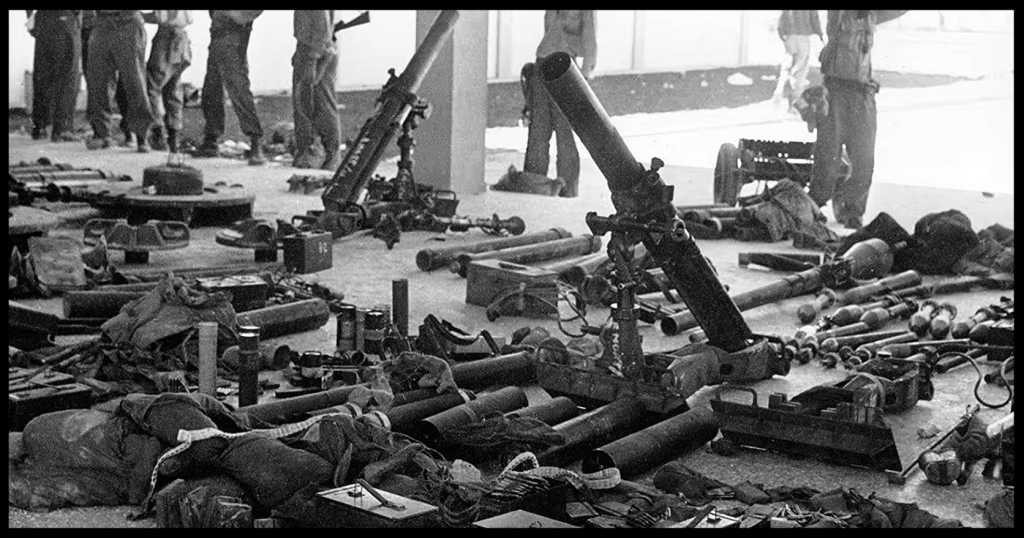
These weapons were confiscated from the CIA-sponsored Brigade 2506.

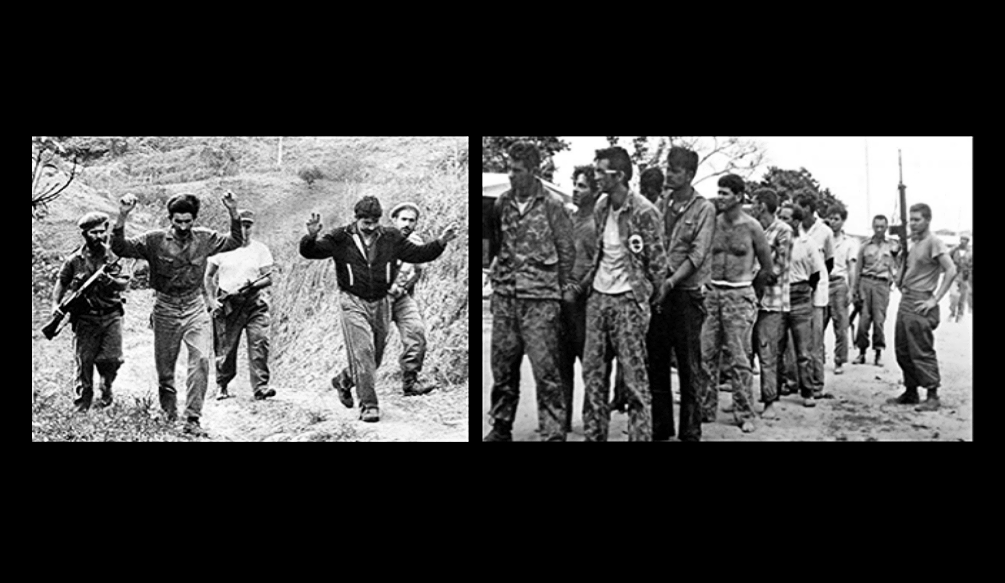
The armed conflict was intense and lasted until April 20th. In less than a day of fighting about 1500 CIA-trained exiled Cubans surrendered, some were overwhelmed by the unexpected heavy gunfire and fled on boats. In addition, 114 were killed in combat.

The CIA plan to establish a beachhead to be followed by a full-scale U.S. military invasion ended in complete disaster. Cuba’s Revolutionary Air Force managed to drop bombs and destroy two ships filled with ammunition and medical supplies for the counterrevolutionaries. Pockets of Brigade 2506 were pinned down and surrounded by superior numbers of revolutionary troops.

Days before the assault was launched Cuba’s RAF intelligence discovered precisely where the U.S.-backed counterrevolutionaries would land. Cuba had a sophisticated spy network long established by the July 26 Movement.

Thanks to the leadership of Comandante Fidel Castro Ruz, Ernesto Che Guevara, Vilma Espin, Celia Sanchez, and Cuba’s mass organizations like the Federation of Cuban Women, the Committees for the Defense of the Revolution, and People’s Militias, which prevented the re-colonization of their homeland.

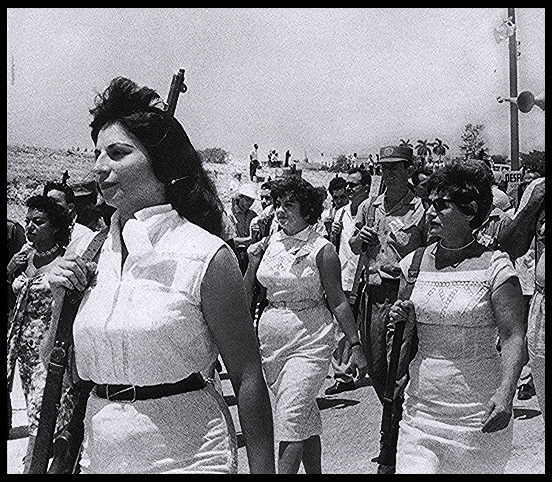
Members of the Federation of Cuban Women..
Members of the Committees for the Defense of the Revolution.

The U.S. government was humiliated. The Cuban government forced Washington officials to negotiate for the release of their 1,100 captured puppet combatants. Numerous parties, including the American Red Cross, played a role as go-between in the public and closed negotiations.

Mainstream figures and the capitalist mass media attempted to defame Fidel Castro Ruz because of his insistence that retribution for the invasion was justified. Cuba was accused of demanding a “ransom” for the release of the prisoners of war as if they were kidnapped victims.

But Cuban diplomats remained firm stating that it was Cuba’s sovereignty that was violated by the captives. In the end, due to pressure from the families of prisoners as well as several international organizations, the U.S. government was politically pressured to an agreement.

Watch video footage of the Bay of Pigs battle.

At first, President Fidel Castro Ruz demanded tractors for heavy construction needed to industrialize the country. But at the end, the U.S. and Cuban governments agreed on $53 million worth of baby food and medicines, in exchange for the prisoners.

The Bay of Pigs incident caused major political embarrassment for the Kennedy Administration. U.S. officials have never recovered from the shock brought upon them by the CIA’s defeat at the Bay of Pigs. The imperial arrogance of U.S. rulers led them to underestimate the collective consciousness and revolutionary ferment that was occurring in Cuba.

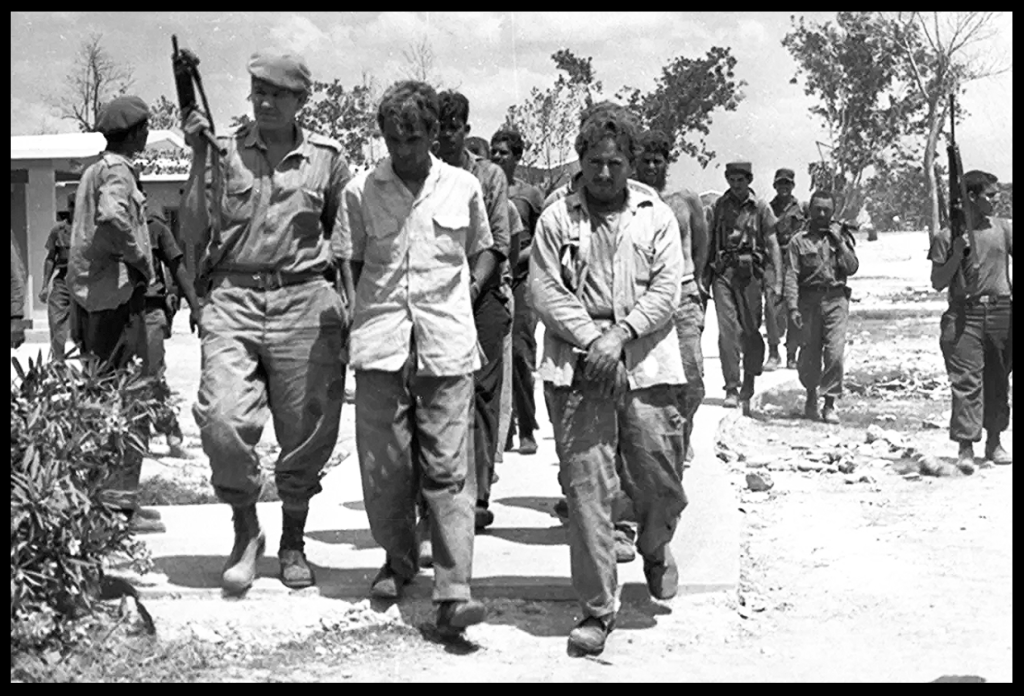
Surrounded by security and staff, Fidel Castro walks pass combatants captured at the Bay of Pigs.

Since Cuba’s initial break with U.S. domination in 1959, the majority of the population have been organized for the country’s defense. Overlooking that particular detail, an essential aspect of the revolution, was the greatest mistake made by U.S. imperialism at the Bay of Pigs.

What this historic battle reaffirms is that no tyrant is invincible. Oppressed people can meet any challenge, no matter how difficult and win. That includes pushing back on continued attempts to undermine Cuba’s right to self-determination and strive to end the more than six decades old economic blockade.

LONG LIVE THE CUBAN REVOLUTION!