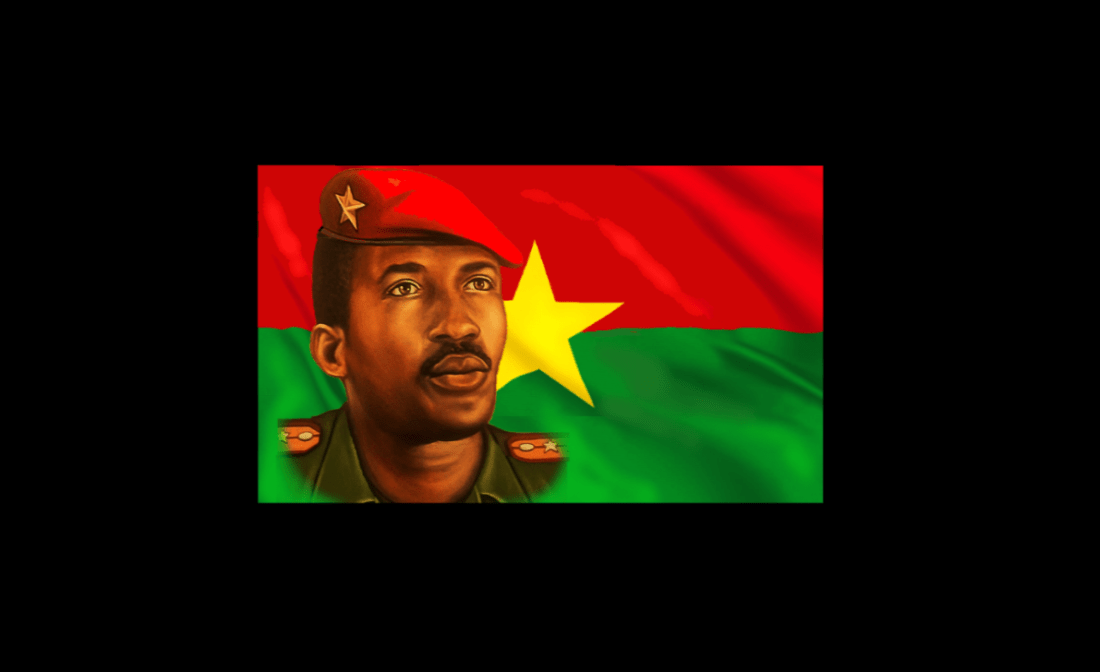
Tribute to one of Africa’s greatest revolutionary fighters THOMAS SANKARA

_______________________________________________________________________

“Imperialism is a system of exploitation that occurs not only in the brutal form of those who come with guns to conquer territory. Imperialism often occurs in more subtle forms, a loan, food aid, blackmail. We are fighting this system that allows a handful of men on Earth to rule all of humanity.” ― Thomas Sankara

________________________________________________________________________

By Carlos “Carlito” Rovira

Thomas Sankara is one of Africa’s greatest iconic figures who continues to inspire millions throughout the world and is remembered as an example of resistance. This revolutionary lived from December 21, 1949, until his assassination on October 15, 1987. He lived to fight for a free Burkina Faso from the viciousness of colonial rule.

Sankara became President of Burkina Faso on August 4, 1983, at 33 years old, following a popular uprising in the country that overthrew the corrupt and brutal regime of Major Jean-Baptiste Ouédraogo, who maintained questionable ties with the former French colonizers of the country.
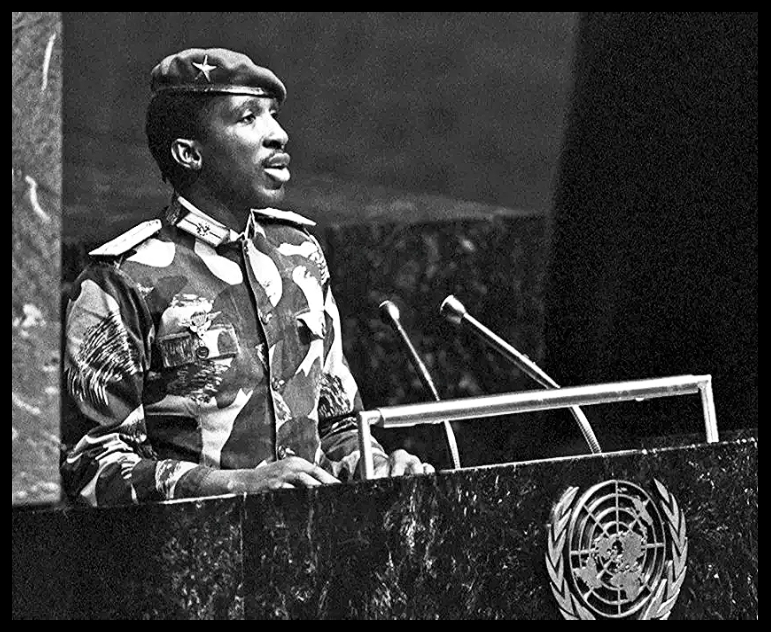
Thomas Sankara speaking at the United Nations General Assembly on October 4, 1984,

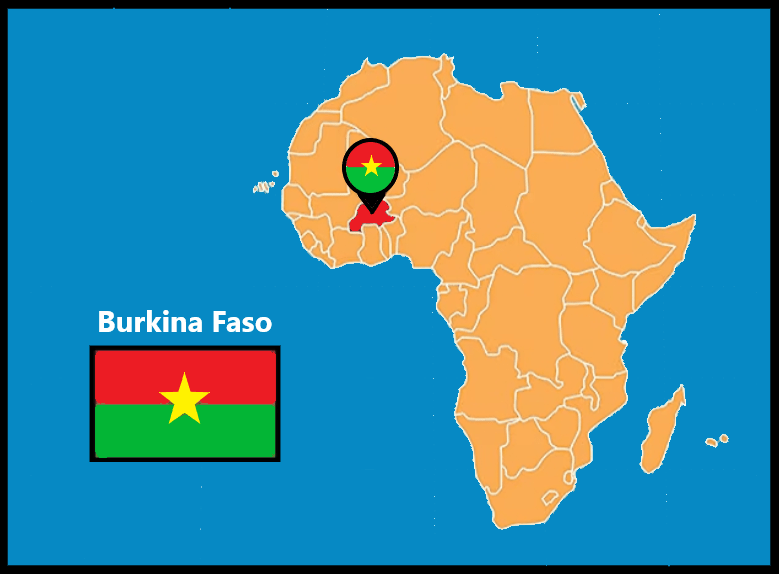
At the Berlin Conference of 1884-1885, imperialist European powers divided Africa exclusively among themselves without the presence of African people. French colonialism named a region they appropriated the “Upper Volta.” After Sankara led a successful liberation struggle and he became head of state, by decree the country was given the name Burkina Faso.

In the short period of four years of his presidency, Sankara surprised many by transforming the country in a positive direction on a socialist basis. The social, economic and cultural reality of his people were introduced to groundbreaking measures unseen in their history.

For the first time a government existed that prioritized transforming the infrastructure by constructing roads, railways, building waterways, schools, medical clinics, pharmacies, and housing. Sankara also aimed to eradicate illiteracy by launching a campaign throughout Burkina Faso as an essential part of his Socialist economic goals.

Standing on the left side of Thomas Sankara is South Africa’s iconic singer Miriam Makeba, in a photo op with other outspoken African women.

Sankara supported the struggle for women’s equality. Laws were enacted aimed to advance the position of women in the country. The new decrees outlawed young women being forced into pre-arraigned marriages, banning female genital mutilation (FMG) “customs”, polygamy practices, as well as other backward tribal traditions that perpetuate women’s oppression. 

Despite the disapproval of those who sought to preserve patriarchal dominance, by government decree it was mandated that every female receive a free education as well as be given the opportunity to prove their ability for appointment to decision-making government posts, even if pregnant. Sankara was the first African leader to appoint women for the highest government cabinet positions and recruit into the ranks of the country’s military.

To the displeasure of imperialist exploiters of Africa, foreign-owned enterprises were nationalized by revolutionary decree. Although private ownership of industries was not fully eliminated Burkina Faso did undergo a complete break with foreign control of its vital natural resources, thus allowing the country the freedom to develop economically.
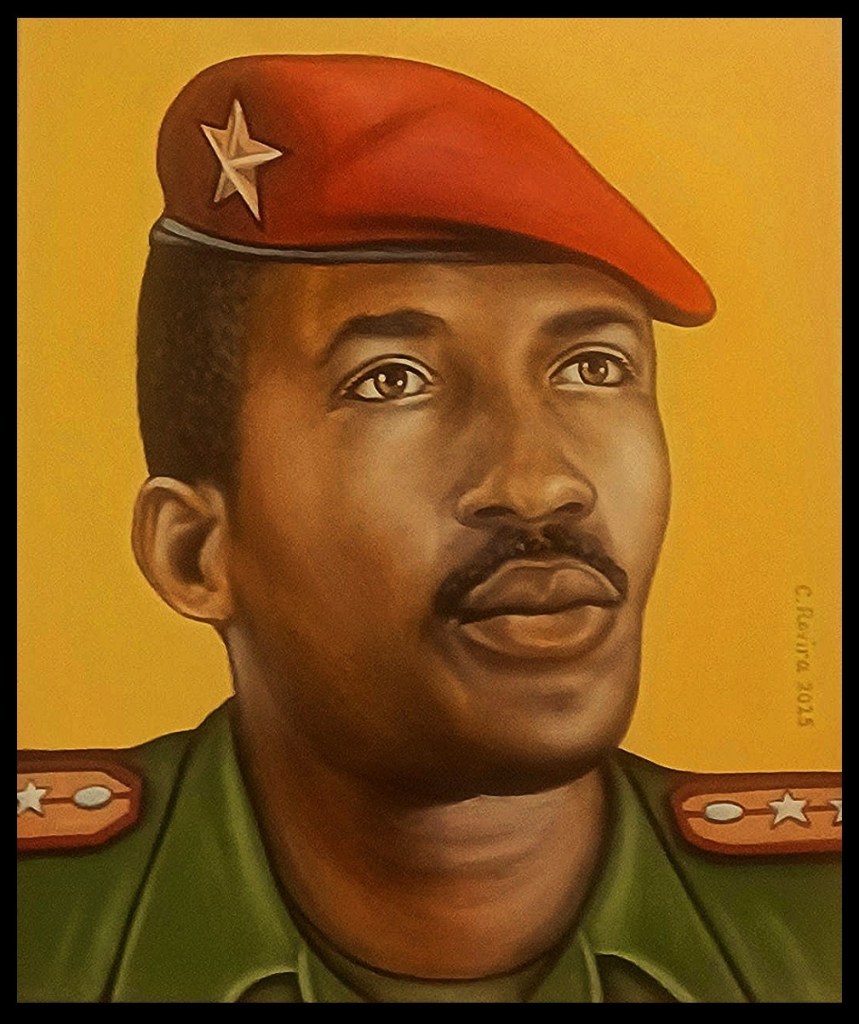
My portrait of Thomas Sankara. 20″ X 24″, acrylic paint on canvas.

Sankara’s dream was to transform the country by making it self-sufficient. Without hesitation, he adamantly refused loan offers made by the International Monetary Fund (IMF) and World Bank (WB) knowing the manipulative schemes they use to keep poor countries in debt and subjugated on behalf of leading imperialist powers.

The economic infrastructure of Burkina Faso was deliberately kept backward, and its people remained downtrodden for decades due to France’s extreme colonial plunder of the country since 1896.

Under Sankara’s leadership the government established land reforms that benefited the poorest landless peasants of the country. He collectivized agriculture and industries following the model of the Cuban Revolution. Every effort was made to involve the broadest number of the population in an endeavor aimed to achieve economic self-reliance thus safeguarding the people’s right to self-determination from imperialist predators.

In September 1984, Cuban President Fidel Castro Ruz awarded Thomas Sankara with the Order of Jose Marti for
his role in the liberation struggle of his people and upholding internationalist solidarity.

But as Burkina Faso intensified its nationalization process of land and mineral wealth French and U.S. officials at the highest level began sensing a threat to their strategic interest in the region, especially after Sankara called for a series of social, ecological, and economic reforms of socialist content.

Imperialism’s contempt of Burkina Faso’s revolutionary leadership intensified when Sankara’s relationship with Cuba and the Soviet Union became official, at the height of the “Cold War.” The two socialist states provided Burkina Faso with military advisers and training, weapons, technical and agricultural equipment, medical supplies, education and so on, despite Sankara’s open criticisms of the Soviet occupation in Afghanistan.

Sankara was first introduced to the writings of Karl Marx and Vladamir Lenin in the early 1970s while undergoing officer training in Madagascar. He was able to advance the legitimacy of Marxism-Leninism and Pan-Africanism by combining the principles of the two revolutionary doctrines, which have historically been complimentary. And when the intelligence agencies of imperialism observed with alarm how a Socialist like Sankara sought ways to unite Pan-Africanists on the continent and beyond, they launched an aggressive campaign to undermine and ultimately overthrow his government.
Sadly, in a blatant example of betrayal, on October 15, 1987, Thomas Sankara was assassinated as part of a coup d’état led by Blaise Compaoré, a close ally, friend, and key partner in the 1983 revolution that overthrew Jean-Baptiste Ouédraogo. A unit of Compaoré’s rogue forces systematically killed Sankara and 12 members of his cabinet while they were having an official meeting. Compaoré served as Minister of State and Minister of Justice, essentially the second-in-command.

Compaoré was against Sankara’s radical Pan-Africanist and Marxist-Leninist views. He was opposed to the socialist path the country was on and preferred that the government institute pro-Western policies. Compaoré was also hostile to the developing relationship Burkina Faso had with Cuba and the Soviet Union. What at first appeared as mere differences eventually evolved to open antagonism.

As if Compaore’s actions were not sinister enough, he pronounced himself President of the country immediately after Sankara’s assassination. The chronology of events leading up to Sankara’s death indisputably demonstrate that Compaoré was a mole of Burkina Faso’s former colonizers.
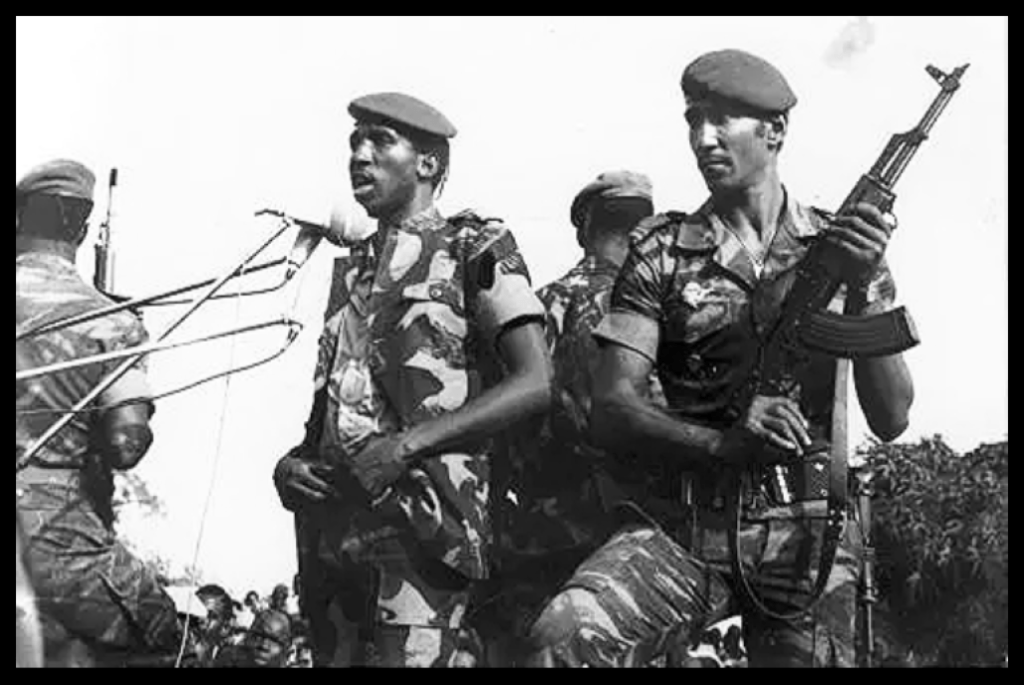
Although concrete evidence of U.S. and French involvement in Sankara’s assassination doesn’t exist it would be extremely naive to overlook their history of subversion against governments unfavorable to the strategic interests of imperialist states. The U.S. Central Intelligence Agency (CIA) and France’s Direction générale de la sécurité extérieure (DGSE) were created specifically to carry out the necessary secret work for preserving their respective empires.

Hopefully, the emergence of Captain Ibrahim Toare as President of Burkina Faso today shall serve the ongoing resistance to imperialism of that country and inspire revolution in the entire African continent. Weakening and ultimately removing imperialism’s stranglehold is the only true act that will bring about justice for the assassination of Sankara and other African warriors.

Thomas Sankara shall forever be remembered as a Pan-Africanist because he sincerely loved his people. And he will also be remembered as a Socialist because he wanted what he strongly believed was best for his people. His legacy is part of traditions long established by many seeking ways to free Africa and inspire future generations of revolutionaries to be like Chris Hani, Amilcar Cabral, Patrice Lumumba, Steve Biko, Kwame Nkrumah, Nelson Mandela, and so many others.

Long Live the Revolutionary Legacy of Thomas Sankara!
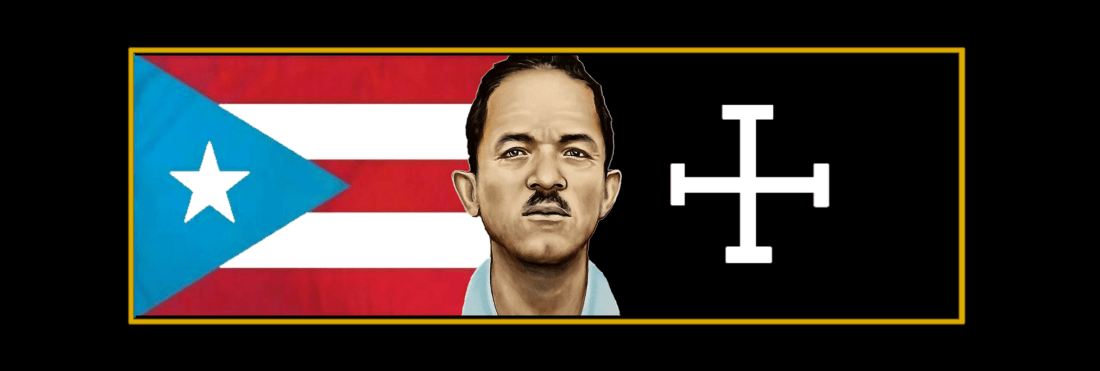
DON JULIO PINTO GANDIA & the Nationalist Party of Puerto Rico

By Carlos “Carlito” Rovira

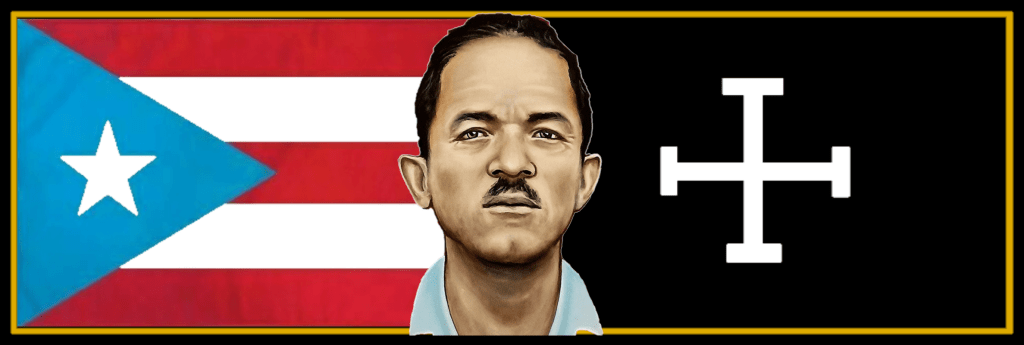
Julio Pinto Gandia was someone whom I remember during my childhood visiting our family home on the Lower East Side, New York City. I knew him as Don Pinto. My parents and other family members were affiliated with a secret committee of the Nationalist Party of Puerto Rico that operated in New York City, of which Don Pinto was leader.

Born in Manati, Puerto Rico on July 9, 1908, Gandia was one of the most outspoken advocates for the independence of Puerto Rico from U.S. colonialism throughout most of his life. He became a close and trusted confidant of the iconic Nationalist leader Dr. Pedro Albizu Campos and became known as his “right-hand man.”

Pedro Albizu Campos, Gilberto Concepción de Gracia and lawyer Julio Pinto Gandía, in the San Juan courthouse, Puerto Rico (1936)

When Campos was incarcerated in the 1930s for seditious conspiracy to overthrow the U.S. government in Puerto Rico, Gandia was asked to fill in as Interim President of the Nationalist Party.

And because Don Pinto Gandia was a legal attorney himself he worked closely with the Socialist Congressman Vito Marcantonio who represented New York’s East Harlem community. They both collaborated for several years to fight for Campos’ release from prison while using his legal case to expose the criminality of U.S. colonialism in Puerto Rico.

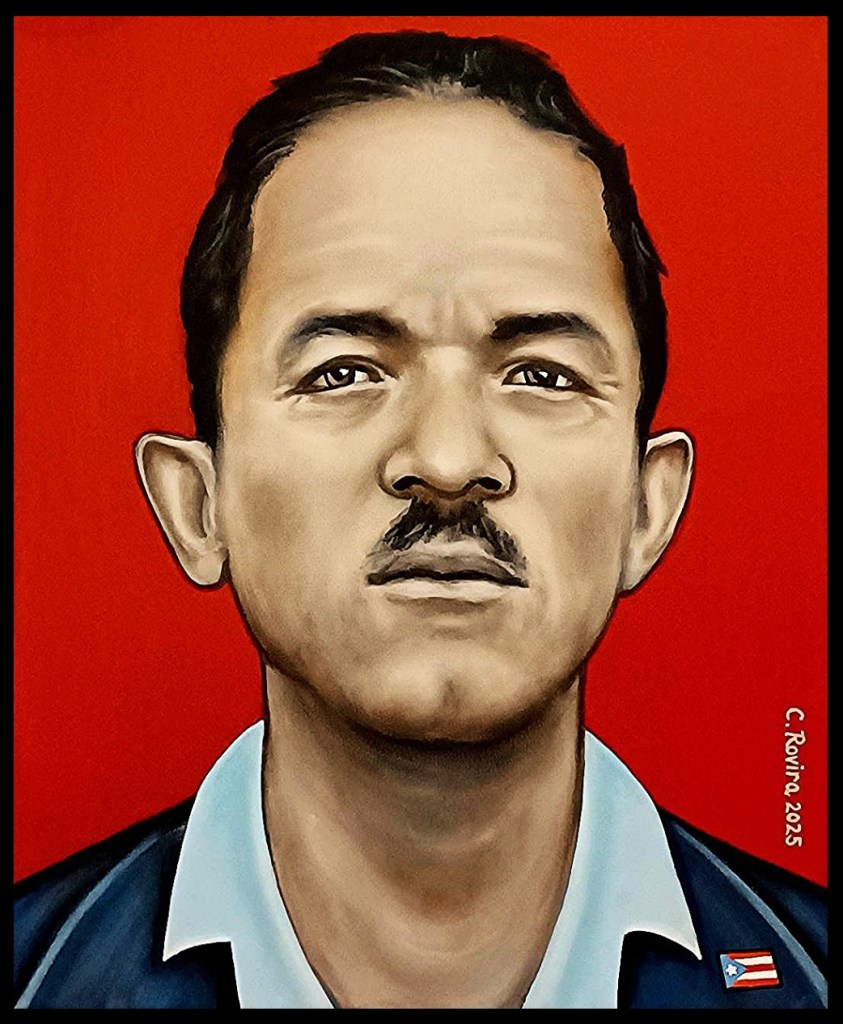
My portrait of Don Julio Pinto Gandia. 20″ X 24″, acrylic paint on canvas.

But Gandia was himself under the watchful eye of the Federal Bureau of Investigation (FBI), especially during the repressive McCarthy Era (1947-1957) of which in Puerto Rico it was more fascistic. He was constantly arrested by the FBI and other colonial authorities. And to interfere with his livelihood and cause further personal harm, in 1937 Gandia was disbarred from the practice of law in Puerto Rico.

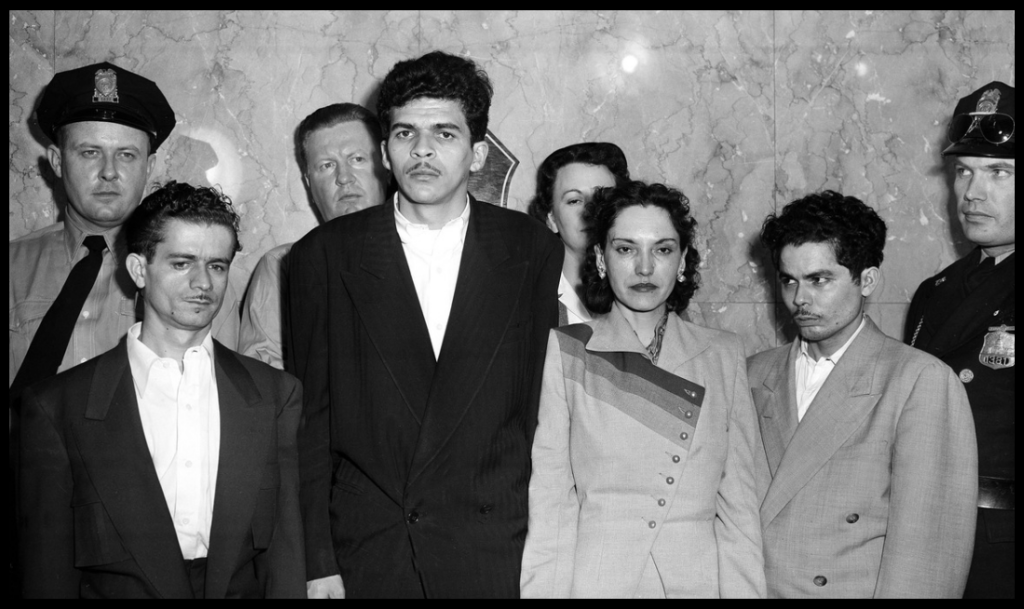
Gandia was also accused of being the “mastermind” of the March 1, 1954, Nationalist armed attack on the U.S. House of Representatives. Lolita Lebron, Rafael Cancel Miranda, Irvin Flores Rodriguez, and Andres Figueroa Cordero staged that daring act to bring attention to the plight of the Puerto Rican people. From that point on Gandia was frequently arrested for questioning.

His refusal to answer questions by FBI and court judges about the attack on the U.S. Congress usually landed Gandia jail time for contempt of court. His stubbornness and complete loyalty to the Puerto Rican cause was recognized by his comrades and enemies of the independence movement alike.

In many of his conversations with Dr. Pedro Albizu Campos, Don Pinto Gandia raised the importance of aggressively bringing the case of Puerto Rico before the United Nations. Pinto Gandia was then assigned the task of meeting with delegates of countries belonging to the United Nations Special Committee on Decolonization to discuss Puerto Rico’s status.

Gandia’s skillful diplomatic work paid off when in 1978 the U.N. Special Committee officially declared Puerto Rico an occupied colony, despite infuriating outbursts made by U.S. delegates and the mainstream mass media. Washington officials reacted by launching a campaign that falsely showcased Puerto Rico as a success story of U.S. imperialism in Latin America.

However, two years prior to the political embarrassment the U.S. Government faced at the United Nations, in September 1976, after leaving his apartment in Puerto Rico, Julio Pinto Gandia vanished forever without a trace.

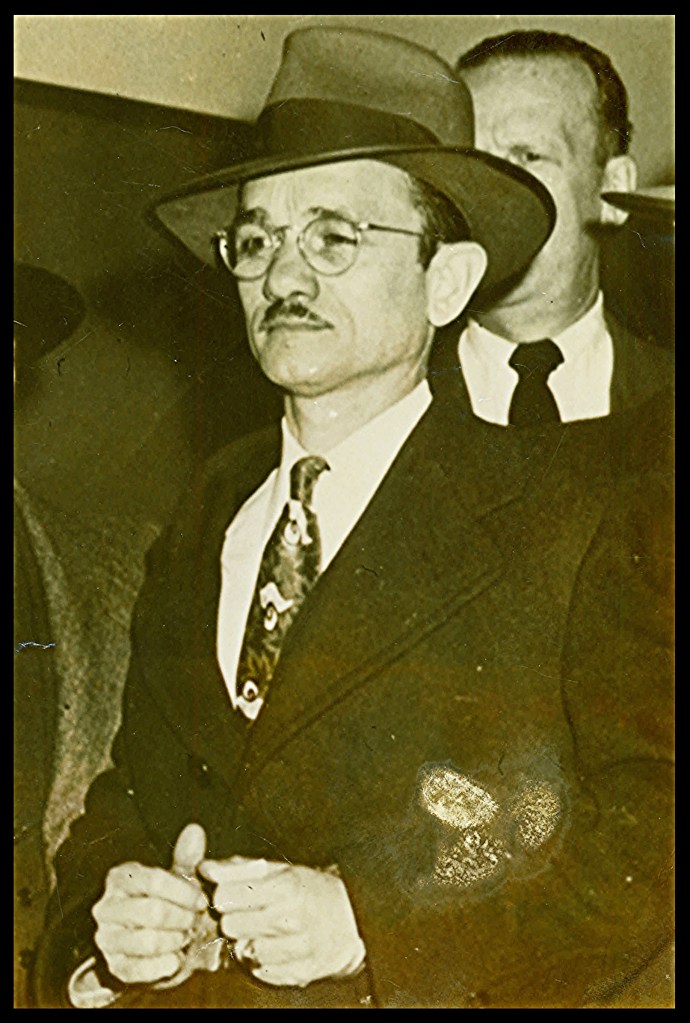
Don Julio Pinto Gandia in FBI custody.

Considering that Operation COINTELPRO was taking place with the Puerto Rican independence movement as one of its main targets, it is believed by many that the U.S. government was directly responsible for Gandia’s disappearance. The work this revolutionary was perceived as a threat to U.S. interest in its highly valued colonial possession.

Although we will never know what tragedy occurred to Julio Pinto Gandia his legacy has secured a special place in the archives of that historic liberation struggle. His resilience, sacrifice, and courageousness, under the most difficult circumstances reflect the moral strengths of the Puerto Rican people.

¡QUE VIVA PUERTO RICO LIBRE!

General Vo Nguyen Giap, and the Vietnamese people’s defeat of U.S. imperialism

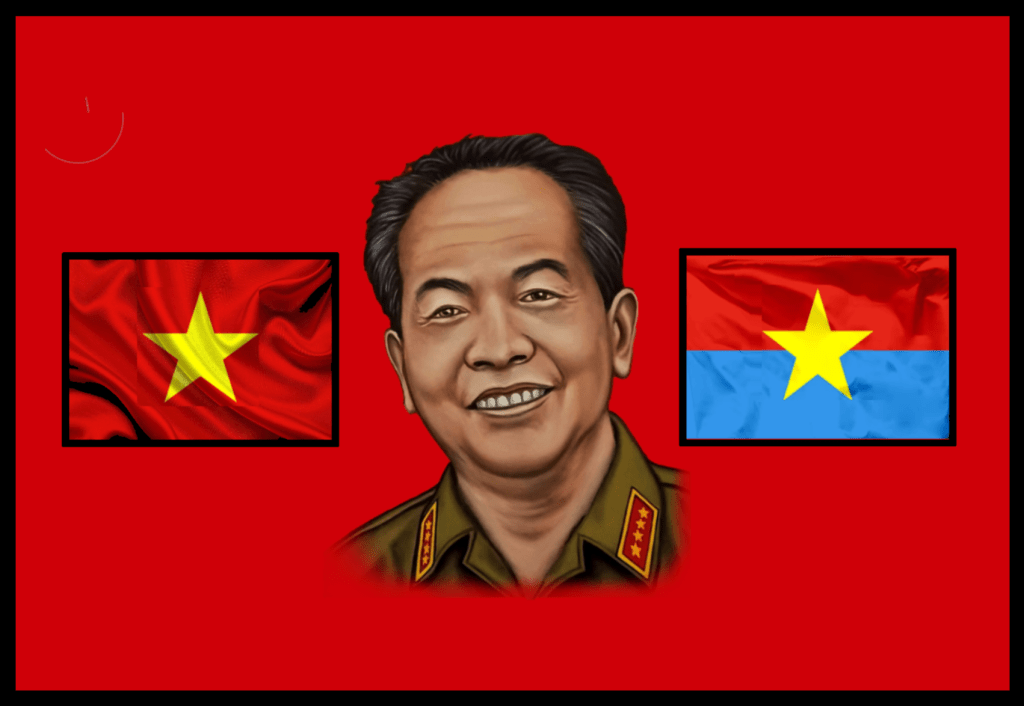
General Vo Nguyen Giap, August 25, 1911 – October 4, 2013

_______________________________________________________________________

“It wasn’t me, but the Vietnamese people who won the Vietnam war. You call me a legendary general, but I think I’m no different from my soldiers”.

– General Võ Nguyên Giáp

_______________________________________________________________________

By Carlos “Carlito” Rovira

Vietnam’s General Võ Nguyên Giáp is one of the most outstanding revolutionary figures in history to provide military leadership in modern times. Thanks to Giáp’s superior strategy, poor village peasants were transformed into a formidable guerilla army called the Viet Minh which became the People’s Army of Vietnam (PAVN). Against often seemingly insurmountable odds, the PAVN went on to defeat two imperialist powers, France in 1954 and the United States in 1975.

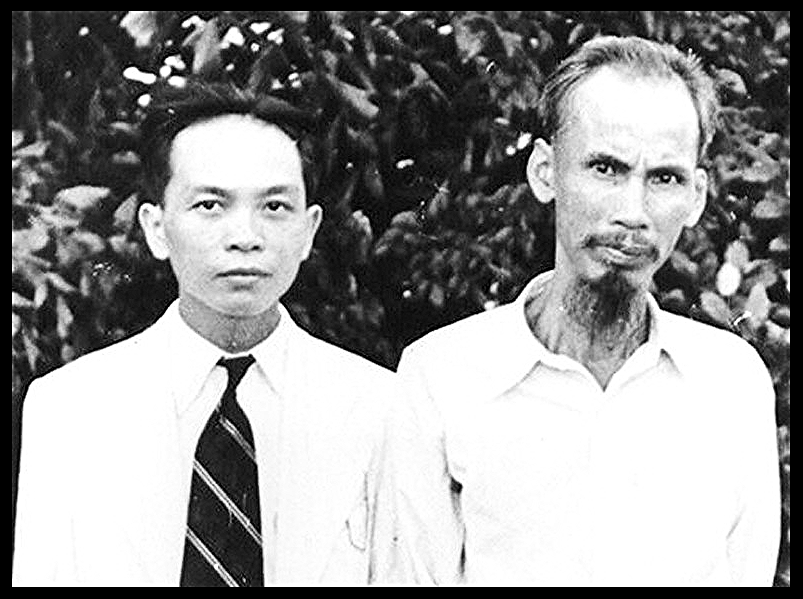
The young Võ Nguyên Giáp and Ho Chi Minh.

General Giáp was a most trusted confidant of the iconic Vietnamese leader Ho Chi Minh. Giáp was a firm believer that doing the impossible was not impossible, when it came to waging struggle to end tyranny and human suffering.

In May 1941, under the occupation of both French and Japanese imperialism, Giáp became leader of the Viet Minh, the military component of the League for the Independence of Vietnam, organized by Ho Chi Minh. Giáp’s leadership in the tactics of conventional and guerilla warfare was decisive in defeating Japanese, French, and U.S. imperialism.

Personal tragedies resulting from horrors caused by French colonialism profoundly affected Giáp which played a big role in molding his fury, resilience and revolutionary disposition. In 1938, he fled North to China to avoid arrest by pursuing colonial authorities.

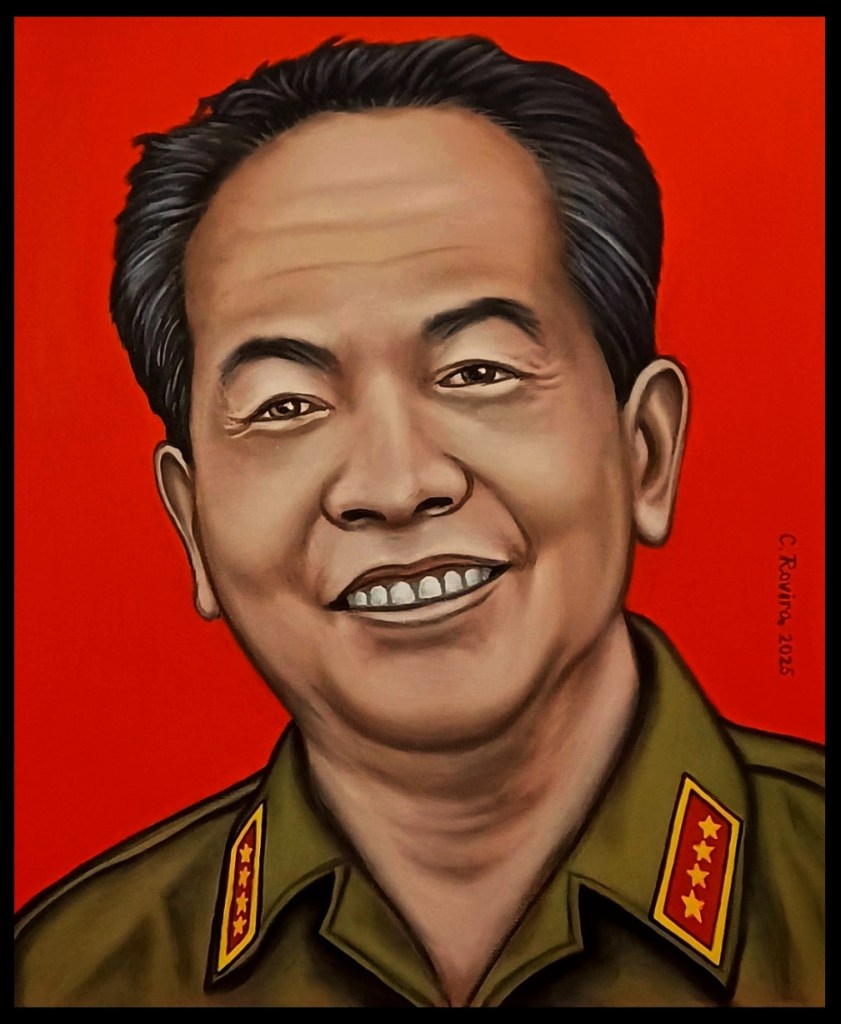
My portrait of General Võ Nguyên Giáp. 20″ X 24″, acrylic paint on canvas.

In 1940, his wife Nguyen Thi Quang Thai, also a leader in the Communist Party of Vietnam, was arrested. She experienced extreme torture including being forced to watch the murder of her parents and other family members. Nguyen eventually died while in the Hoa Lo Prison. Her sister also arrested was tortured and guillotined.

General Giáp’s military talents and skill were developed without any formal military schooling or training. He became attracted to military science by studying the history of warfare in different countries, the military writings of China’s Communist leader Mao Zedong and the classic Art of War by Sun Tzu.

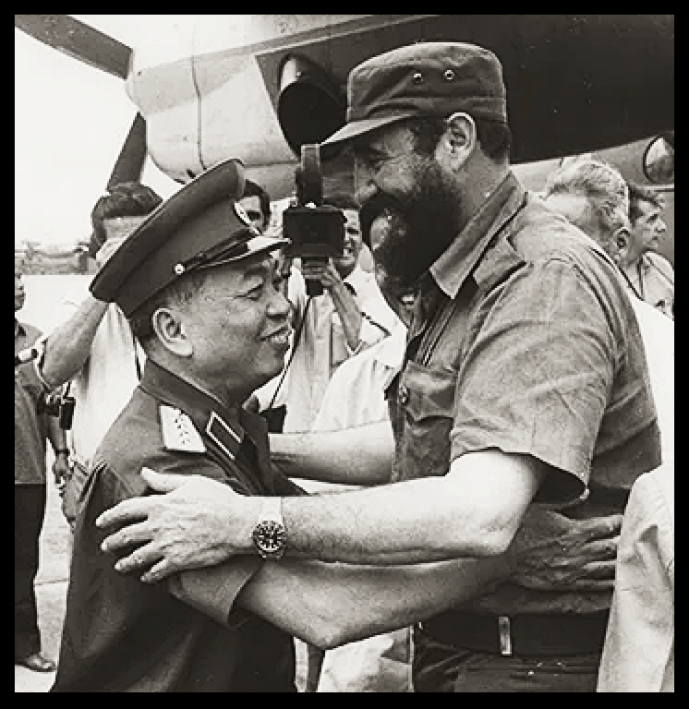
In September 1973, Cuba’s President Fidel Castro Ruz made a secret and symbolic trip to Vietnam where he was warmly greeted by General Giap. Fidel Castro was the only head of state to visit Vietnam during the war.

General Giáp’s skillfulness in strategy and tactics proved decisive on March 13, 1954, at the Battle of Dien Bien Phu. Vietnamese combatants humiliated and painfully stunned the better trained and equipped French Army by smashing their ability to fight.

Giáp masterfully developed guerilla tactics which he passed on to other leading combatants for applicability like the iconic Nguyễn Thị Định, an exemplary fighter who became the country’s first female ranking military general.

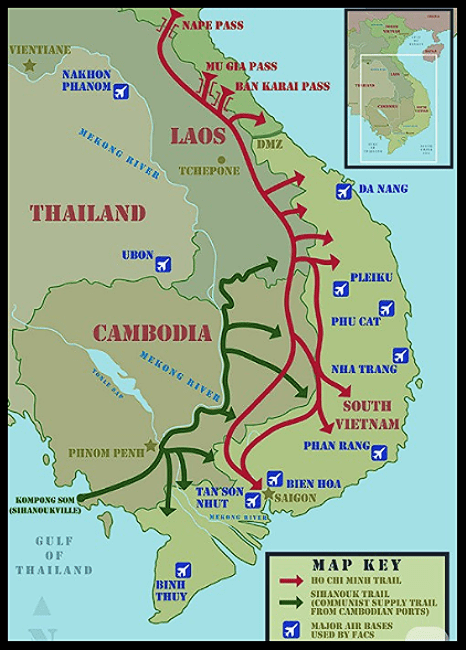
General Giáp was the leading figure of the People’s Army during the war against U.S. imperialism and their South Vietnamese puppets. He was the architect and organizer of the famous Ho Chi Minh Trail which served as a secret supply route for guerilla fighters in the Southern occupied portion of the country.

The Ho Chi Minh Trail.

The Ho Chi Minh Trail went through the jungles and tunnels of neighboring countries Laos and Cambodia. This network was used as a secret thruway to transport weapons and supplies. The engineering of this project was so sophisticated that the U.S. Air Force and Special Forces failed to detect its locations in order to destroy them.

In 1968, General Giáp masterminded the famous Tet Offensive. Under Giap’s command this military offensive achieved the desirable political outcome. The revolutionary Vietnamese forces created extreme turmoil to counter false claims made by Washington officials that the National Liberation Front of Vietnam (NLF) was losing the war.

However, the opposite proved to be the case when U.S. casualties increased dramatically as a result of the fury the NLF unleashed with immense firepower throughout Vietnam. The growing number of body bags containing remains of American G.I.s could no longer be concealed from the mass media.

And when Dr. Martin Luther King, Jr. presented his famous speech at Riverside Church in New York City, titled Beyond Vietnam: A Time to Break Silence it added to a major shift in public opinion. Opposition to the war ignited everywhere in society, especially among the youth who were distressed about being drafted for military service. Once the Tet Offensive began young men of age were increasingly refusing to enlist or evading the draft.

The country was consumed in protests. Many people who never attended a demonstration were now compelled to take a stance against the hypocritical politics of the War in Vietnam, especially in Black and Brown communities who were disproportionally the ones to be killed.

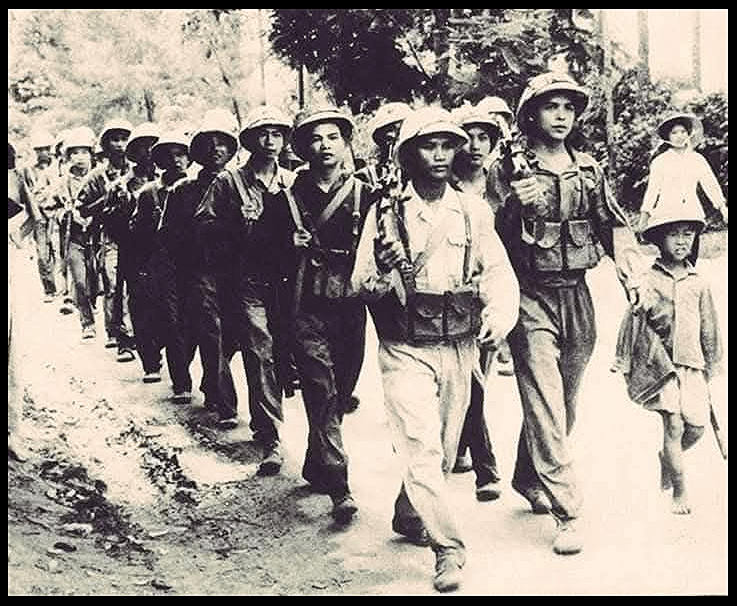
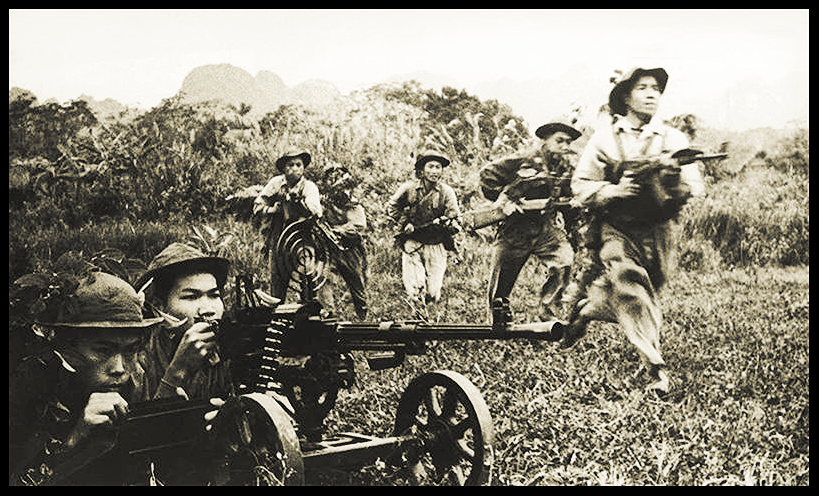
Units of the People’s Army of Vietnam (PAVN).

The Tet Offensive caused havoc for war planners at the Pentagon, as U.S. military forces became demoralized and resentful to the military brass. Many who were already in uniform serving in Vietnam staged acts of insubordination or rebellion. The Tet Offensive had a psychological affect on combat soldiers there and U.S. military personnel everywhere.

General Giap’s achievements for the liberation of his people are tremendous and continue to inspire millions throughout the world. His wisdom in strategy and tactics also serve as inspiring lessons for other oppressed people. Giap’s leadership in battle against a more powerful foe reaffirmed that colonizers, tyrants and white supremacists are not invincible.

Long live the legacy of General Vo Nguyen Giap and the heroic Vietnamese people!