___________________________________________
“Artists are the gatekeepers of truth. We are civilization’s radical voice.” – Paul Robeson
___________________________________________
By Carlos “Carlito” Rovira
Paul Robeson was an African American revolutionary historic figure who lived an outstanding and remarkable life from April 9, 1898, to January 23, 1976. He was a singer, actor, athlete, a professional football player for the NFL, lawyer, scholar, civil rights activist, and an unapologetic defender of Marxist–Leninist doctrine.
No one can ever doubt that Paul Robeson’s fury of character was inherited from his father, the Reverend William Drew Robeson, who once lived as a chattel slave. He escaped from a North Carolina plantation and fought as a soldier in the Union Army during the Civil War. Later in life he became a Presbyterian minister. Paul Robeson’s mother, Maria Louisa Bustill, was a schoolteacher from a prominent Philadelphia free Black family.
Robeson’s mesmerizing artistic renditions reflects Black people’s traditions of courage, resilience and defiance to oppression. His passion for creativity revealed the humanity and dignity that he was filled with. Robeson’s legacy shall always symbolize the very best qualities of the African American masses.
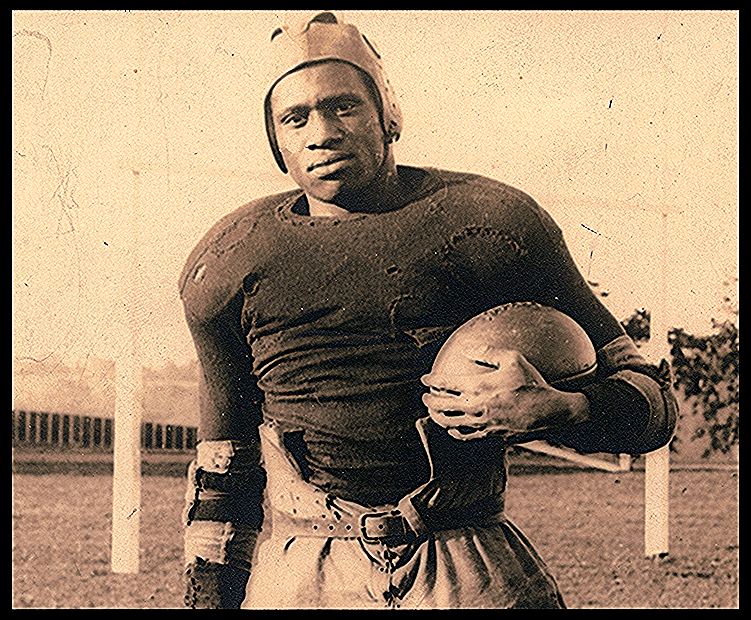
first Black athlete to play for Rutgers, challenging racism by proving to be the best.
Robeson became a central figure in the Harlem Renaissance. He rose to fame when he starred in Eugene O’Neill’s The Emperor Jones and All God’s Chillun Got Wings, while popularizing Negro spirituals with pianist Lawrence Brown.
The Harlem Renaissance came about from Marcus Garvey‘s call for Black people to be profound with their identity in all areas of dignified expression. It was a cultural movement that highlighted Black talent in the performing, literary and visual arts. While unveiling the beauty of African American culture the Harlem Renaissance served to politically discredit white supremacy’s assertions about “inferior” Black intellectuality and all its racist myths.
Although Robeson was anti-militarism, he supported the U.S. involvement in World War II due to him being anti–fascist and because of Nazi Germany’s invasion of the Soviet Union. During the war Robeson sang for military on the radio and at live performances in Europe to entertain Allied troops.
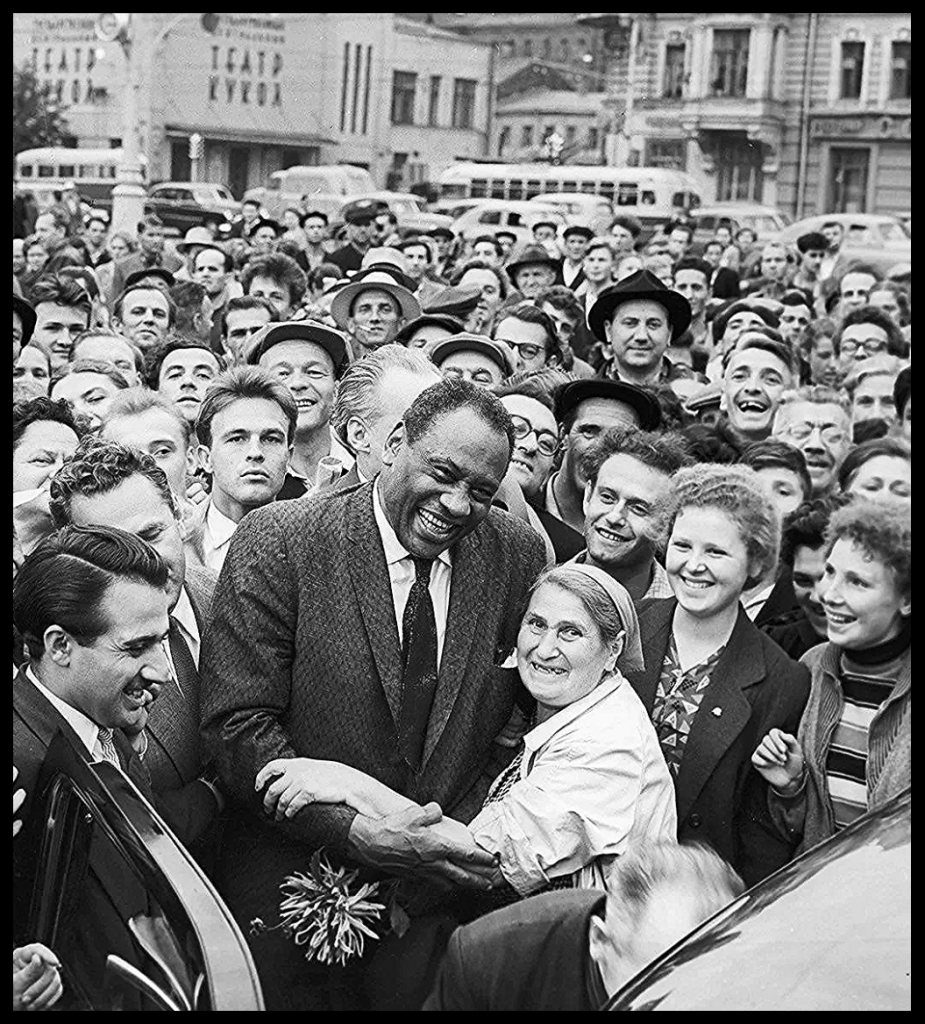
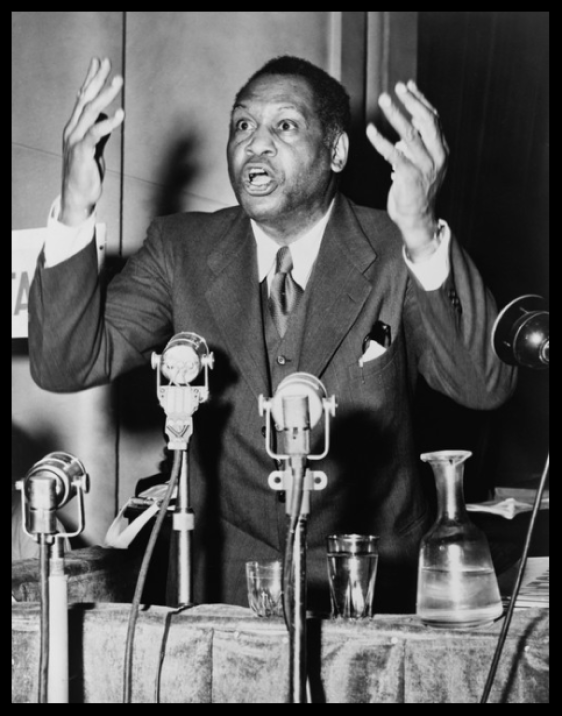
During the anti-Communist McCarthy Era witch hunt (1947-1959), Paul Robeson was harshly scrutinized for advocating civil rights for African Americans and supporting the Soviet Union. The Kremlin officially invited Robeson to the U.S.S.R. where he was warmly greeted by enthusiastic Russian audiences.
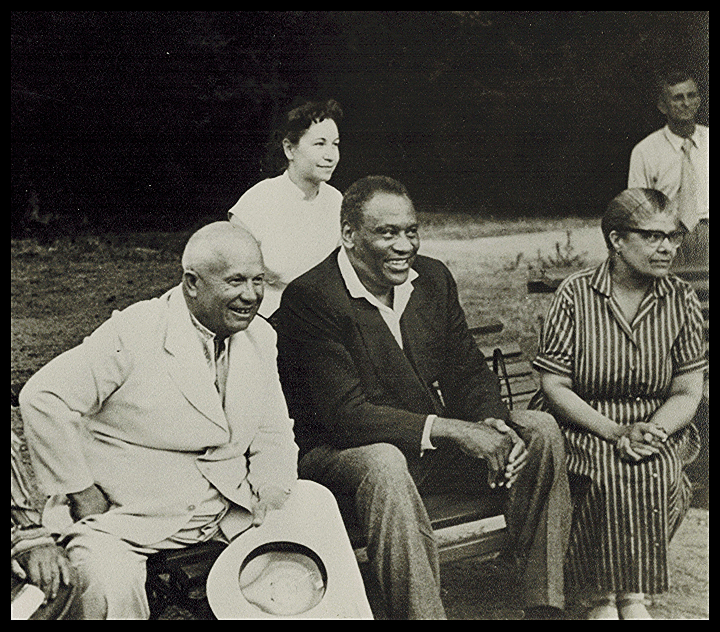
Robeson’s affinities with the Soviet Union were due to what he witnessed there, the potential for an equitable society, and Russia’s consistent condemnation since 1917 of racist Jim Crow laws in the United States. Paul Robeson believed that socialism could provide the material basis for eradicating racism and other forms of oppression.
Washington officials intensified their scrutiny against Robeson when he became an outspoken critic of the U.S. role in the Korean War (1950–1953). He never hesitated to condemn the U.S. intervention as imperialist at “Hands Off Korea” rallies and wherever he spoke publicly. Robeson argued that China’s involvement on the side of the Democratic People’s Republic of Korea (DPRK)was justified to counter U.S. aggression.
Robeson was empathetic towards the liberation struggles of oppressed people, specifically the Irish republican cause against British imperialism, and Puerto Rico’s historic fight for independence from U.S. colonialism.
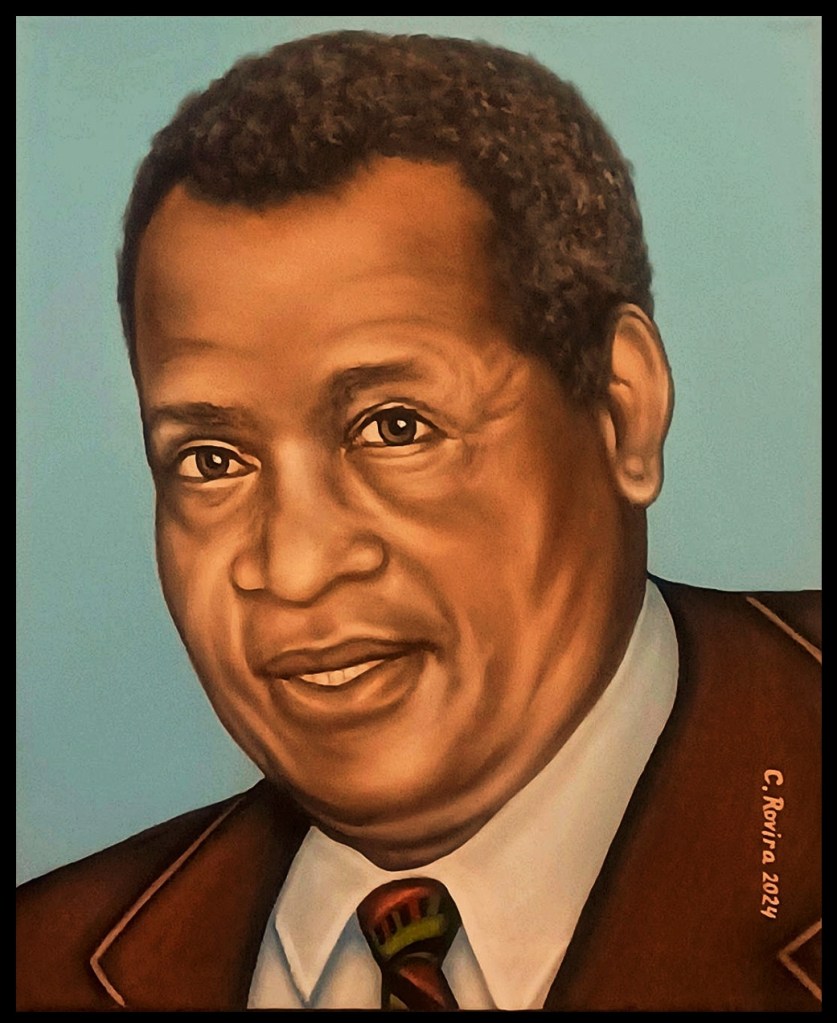
As a show of solidarity, at many of his public performances, Robeson requested from his audience a moment of silence for the incarcerated Puerto Rican Nationalist leader, Dr. Pedro Albizu Campos.
Despite many attempts by the U.S. government to shatter his spirit, Robeson was a giant amongst giants. He became friends and political collaborator with prominent Black Communist figures, Lorraine Hansberry, W.E.B. Debois, Clauda Jones, Harry Heywood, William L. Patterson, Benjamin Davis Jr., Ferdinand Smith and others in New York City’s Harlem community.
Paul Robeson’s outspokenness and rise to prominence came at a time when U.S. imperialism was most vulnerable. The defeat of the Axis Powers ushered in new Socialist states in Europe, the triumphant Chinese Revolution in 1949, with an eruption of anti-colonial struggles in Africa, Asia, and Latin America.
The new political environment caused Washington officials to have grave concerns. They feared the global revolutionary ferment would impact the hearts and minds of people in the United States.
The House Un-American Activities Committee, scrutinized Robeson and pressured him to renounce the freedom struggle, Socialism, and the Soviet Union, which he adamantly refused. In April 1948, Robeson traveled to Paris to attend a Soviet-sponsored peace conference, where he made controversial, anti-imperialist comments. Upon returning to the U.S. his passport was revoked by the U.S. State Department, as part of persecution.
His most admirable trait was that he stood firmly consistent with his beliefs, even when his career was under the constant threat of being completely ruined by the powers-that-be. Paul Robeson will surely be remembered for being courageous and a man of moral strength and firm convictions.
LONG LIVE THE REVOLUTIONARY LEGACY OF PAUL ROBESON

 carlitoboricua