Julio Pinto Gandia was someone whom I remember during my childhood visiting our family home on the Lower East Side, New York City. I knew him as Don Pinto. My parents and other family members were affiliated with a secret committee of the Nationalist Party of Puerto Rico that operated in New York City, of which Don Pinto was leader.
Born in Manati, Puerto Rico on July 9, 1908, Gandia was one of the most outspoken advocates for the independence of Puerto Rico from U.S. colonialism throughout most of his life. He became a close and trusted confidant of the iconic Nationalist leader Dr. Pedro Albizu Campos and became known as his “right-hand man.”
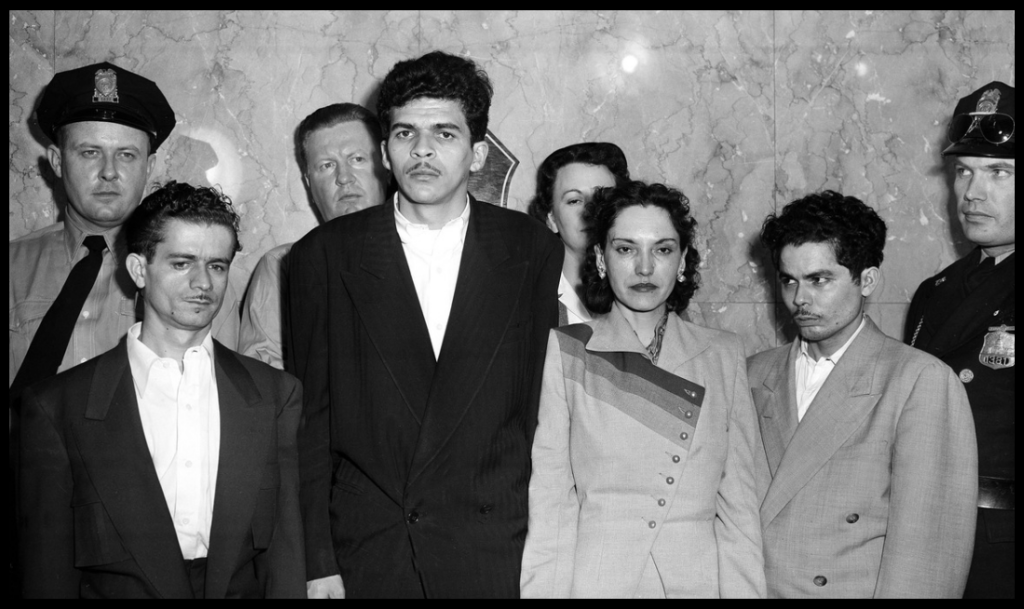
Pedro Albizu Campos, Gilberto Concepción de Gracia and lawyer Julio Pinto Gandía, in the San Juan courthouse, Puerto Rico (1936)
When Campos was incarcerated in the 1930s for seditious conspiracy to overthrow the U.S. government in Puerto Rico, Gandia was asked to fill in as Interim President of the Nationalist Party.
And because Don Pinto Gandia was a legal attorney himself he worked closely with the Socialist Congressman Vito Marcantonio who represented New York’s East Harlem community. They both collaborated for several years to fight for Campos’ release from prison while using his legal case to expose the criminality of U.S. colonialism in Puerto Rico.
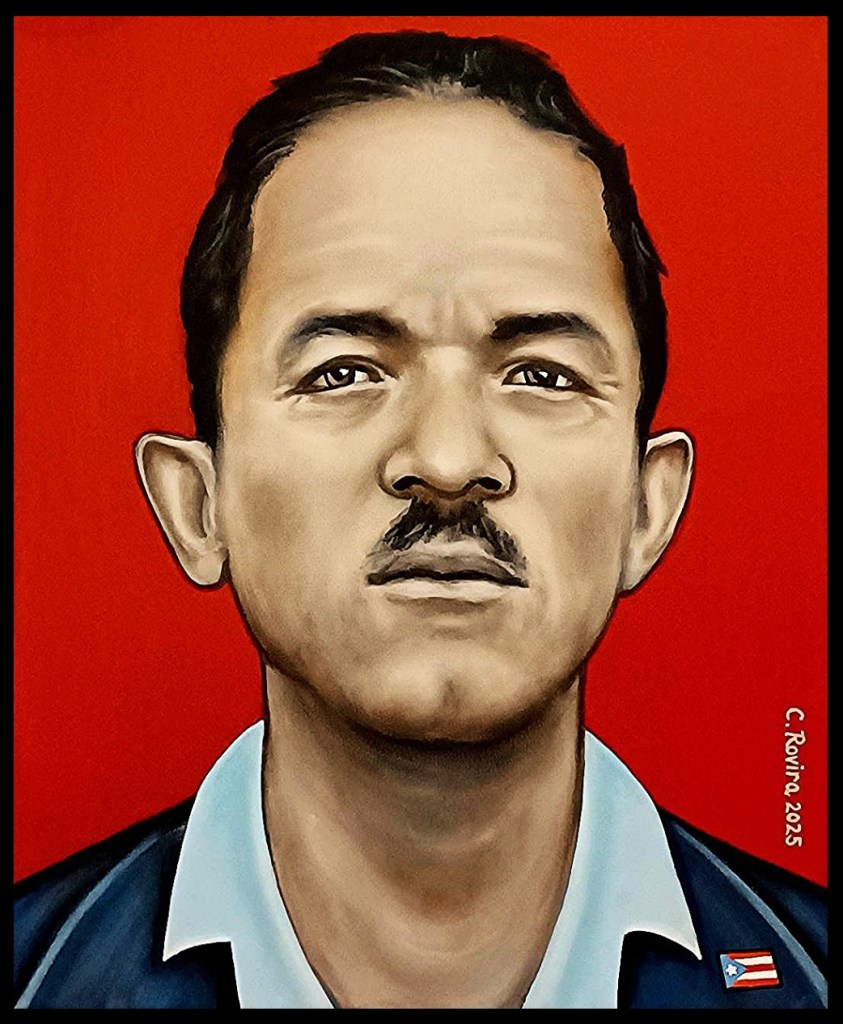
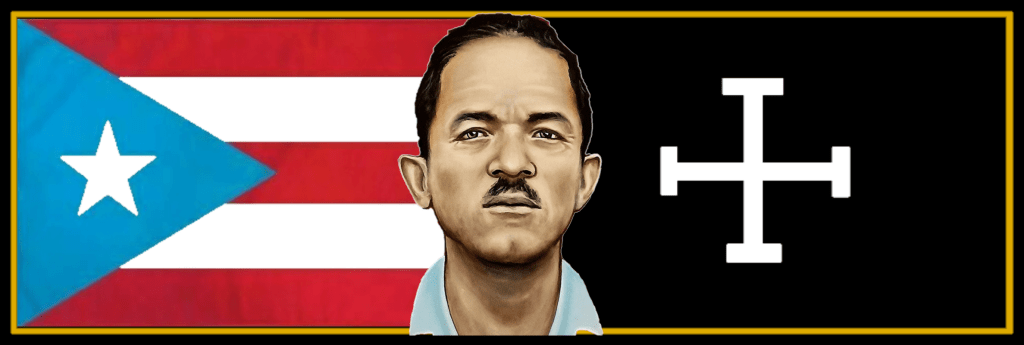
My portrait of Don Julio Pinto Gandia. 20″ X 24″, acrylic paint on canvas.
But Gandia was himself under the watchful eye of the Federal Bureau of Investigation (FBI), especially during the repressive McCarthy Era (1947-1957) of which in Puerto Rico it was more fascistic. He was constantly arrested by the FBI and other colonial authorities. And to interfere with his livelihood and cause further personal harm, in 1937 Gandia was disbarred from the practice of law in Puerto Rico.
Gandia was also accused of being the “mastermind” of the March 1, 1954, Nationalist armed attack on the U.S. House of Representatives. Lolita Lebron, Rafael Cancel Miranda, Irvin Flores Rodriguez, and Andres Figueroa Cordero staged that daring act to bring attention to the plight of the Puerto Rican people. From that point on Gandia was frequently arrested for questioning.
His refusal to answer questions by FBI and court judges about the attack on the U.S. Congress usually landed Gandia jail time for contempt of court. His stubbornness and complete loyalty to the Puerto Rican cause was recognized by his comrades and enemies of the independence movement alike.
In many of his conversations with Dr. Pedro Albizu Campos, Don Pinto Gandia raised the importance of aggressively bringing the case of Puerto Rico before the United Nations. Pinto Gandia was then assigned the task of meeting with delegates of countries belonging to the United Nations Special Committee on Decolonization to discuss Puerto Rico’s status.
Gandia’s skillful diplomatic work paid off when in 1978 the U.N. Special Committee officially declared Puerto Rico an occupied colony, despite infuriating outbursts made by U.S. delegates and the mainstream mass media. Washington officials reacted by launching a campaign that falsely showcased Puerto Rico as a success story of U.S. imperialism in Latin America.
However, two years prior to the political embarrassment the U.S. Government faced at the United Nations, in September 1976, after leaving his apartment in Puerto Rico, Julio Pinto Gandia vanished forever without a trace.
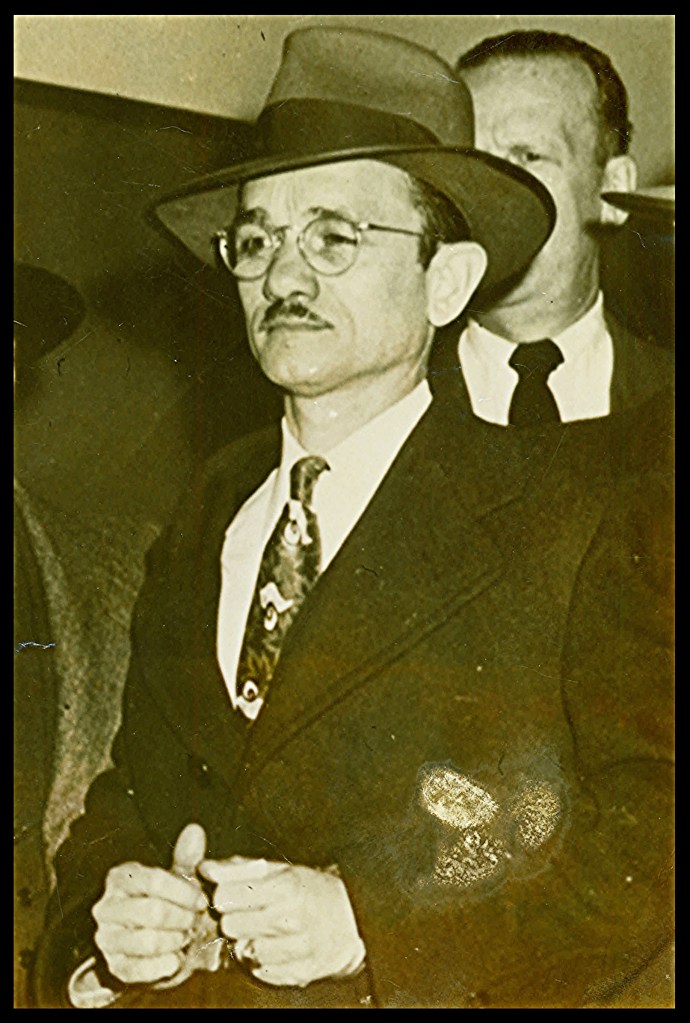
Don Julio Pinto Gandia in FBI custody.
Considering that Operation COINTELPRO was taking place with the Puerto Rican independence movement as one of its main targets, it is believed by many that the U.S. government was directly responsible for Gandia’s disappearance. The work this revolutionary was perceived as a threat to U.S. interest in its highly valued colonial possession.
Although we will never know what tragedy occurred to Julio Pinto Gandia his legacy has secured a special place in the archives of that historic liberation struggle. His resilience, sacrifice, and courageousness, under the most difficult circumstances reflect the moral strengths of the Puerto Rican people.
Vietnam’s General Võ Nguyên Giáp is one of the most outstanding revolutionary figures in history to provide military leadership in modern times. Thanks to Giáp’s superior strategy, poor village peasants were transformed into a formidable guerilla army called the Viet Minh which became the People’s Army of Vietnam (PAVN). Against often seemingly insurmountable odds, the PAVN went on to defeat two imperialist powers, France in 1954 and the United States in 1975.
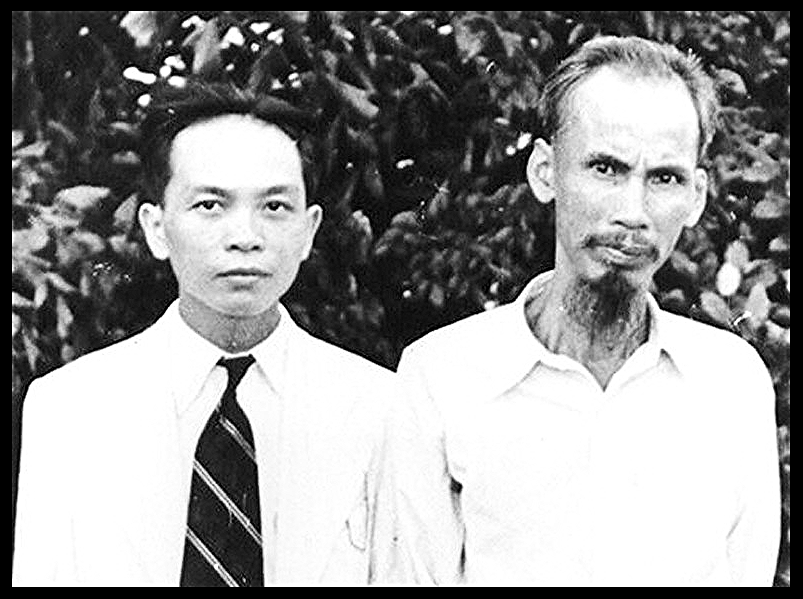
The young Võ Nguyên Giáp and Ho Chi Minh.
General Giáp was a most trusted confidant of the iconic Vietnamese leader Ho Chi Minh. Giáp was a firm believer that doing the impossible was not impossible, when it came to waging struggle to end tyranny and human suffering.
In May 1941, under the occupation of both French and Japanese imperialism, Giáp became leader of the Viet Minh, the military component of the League for the Independence of Vietnam, organized by Ho Chi Minh. Giáp’s leadership in the tactics of conventional and guerilla warfare was decisive in defeating Japanese, French, and U.S. imperialism.
Personal tragedies resulting from horrors caused by French colonialism profoundly affected Giáp which played a big role in molding his fury, resilience and revolutionary disposition. In 1938, he fled North to China to avoid arrest by pursuing colonial authorities.
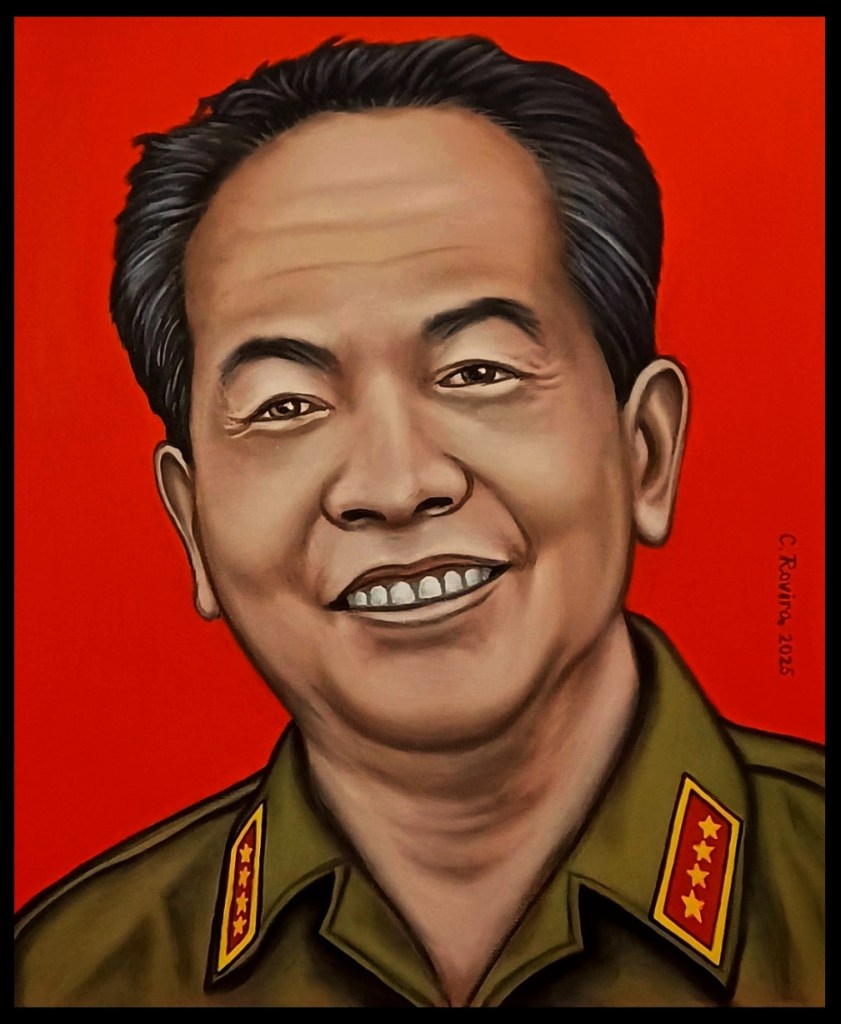
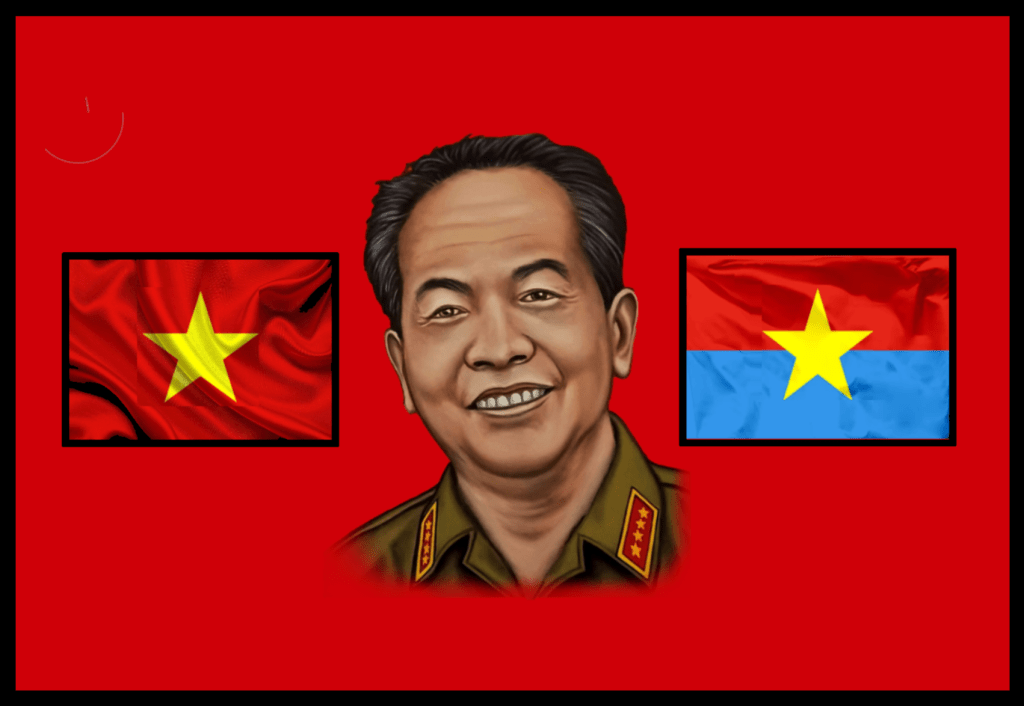
My portrait of General Võ Nguyên Giáp. 20″ X 24″, acrylic paint on canvas.
In 1940, his wife Nguyen Thi Quang Thai, also a leader in the Communist Party of Vietnam, was arrested. She experienced extreme torture including being forced to watch the murder of her parents and other family members. Nguyen eventually died while in the Hoa Lo Prison. Her sister also arrested was tortured and guillotined.
General Giáp’s military talents and skill were developed without any formal military schooling or training. He became attracted to military science by studying the history of warfare in different countries, the military writings of China’s Communist leader Mao Zedong and the classic Art of War by Sun Tzu.
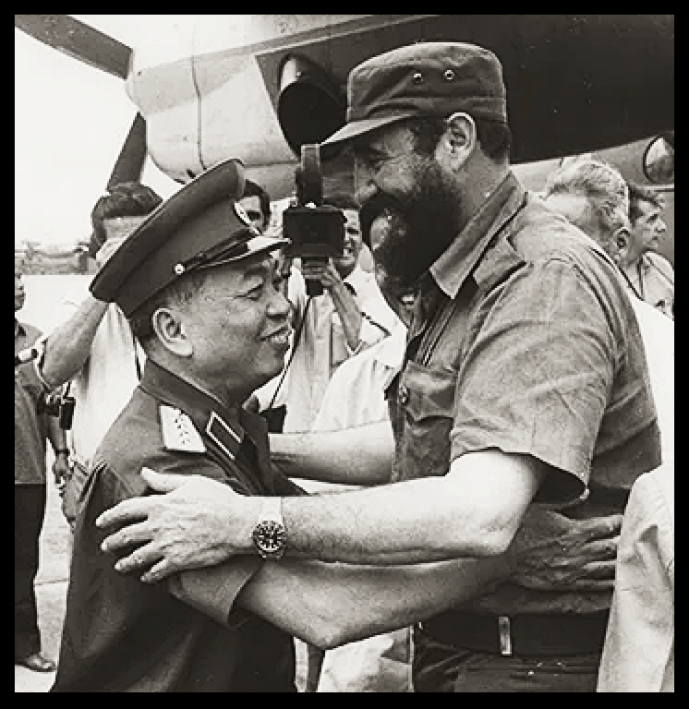
In September 1973, Cuba’s President Fidel Castro Ruz made a secret and symbolic trip to Vietnam where he was warmly greeted by General Giap. Fidel Castro was the only head of state to visit Vietnam during the war.
General Giáp’s skillfulness in strategy and tactics proved decisive on March 13, 1954, at the Battle of Dien Bien Phu. Vietnamese combatants humiliated and painfully stunned the better trained and equipped French Army by smashing their ability to fight.
Giáp masterfully developed guerilla tactics which he passed on to other leading combatants for applicability like the iconic Nguyễn Thị Định, an exemplary fighter who became the country’s first female ranking military general.
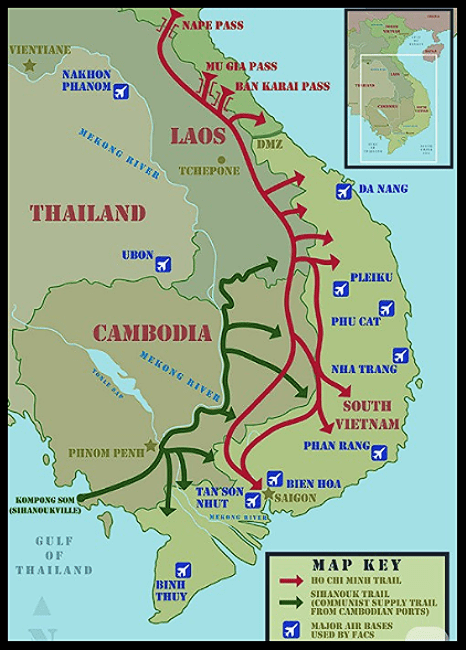
General Giáp was the leading figure of the People’s Army during the war against U.S. imperialism and their South Vietnamese puppets. He was the architect and organizer of the famous Ho Chi Minh Trail which served as a secret supply route for guerilla fighters in the Southern occupied portion of the country.
The Ho Chi Minh Trail.
The Ho Chi Minh Trail went through the jungles and tunnels of neighboring countries Laos and Cambodia. This network was used as a secret thruway to transport weapons and supplies. The engineering of this project was so sophisticated that the U.S. Air Force and Special Forces failed to detect its locations in order to destroy them.
In 1968, General Giáp masterminded the famous Tet Offensive. Under Giap’s command this military offensive achieved the desirable political outcome once it was launched on January 30, 1968. The revolutionary Vietnamese forces created extreme turmoil to counter false claims made by Washington officials that the National Liberation Front of Vietnam (NLF) was losing the war.
However, the opposite proved to be the case when U.S. casualties increased dramatically as a result of the fury the NLF unleashed with immense firepower throughout Vietnam. The growing number of body bags containing remains of American G.I.s could no longer be concealed from the mass media.
And when Dr. Martin Luther King, Jr. presented his famous speech at Riverside Church in New York City, titled “Beyond Vietnam: A Time to Break Silence“ it added to a major shift in public opinion. Opposition to the war ignited everywhere in society, especially among the youth who were distressed about being drafted for military service. Once the Tet Offensive began young men of age were increasingly refusing to enlist or evading the draft.
The country was consumed in protests. Many people who never attended a demonstration were now compelled to take a stance against the hypocritical politics of the War in Vietnam, especially in Black and Brown communities who were disproportionally the ones to be killed.
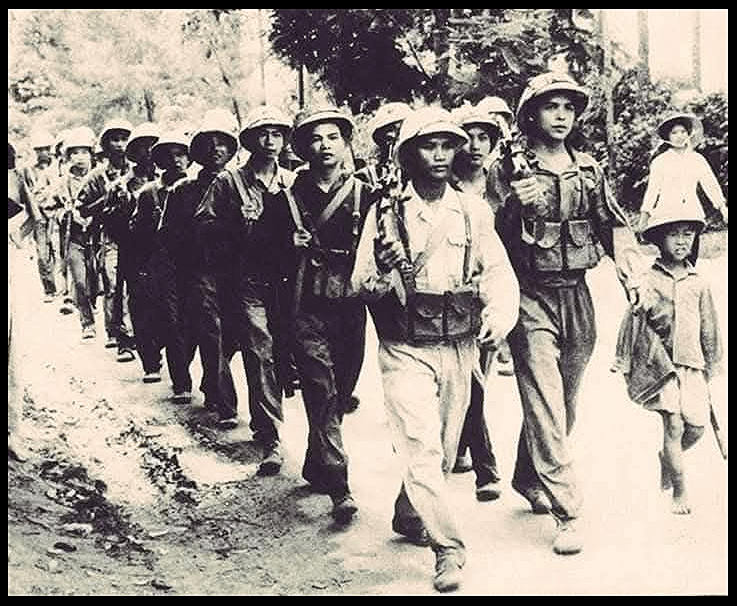
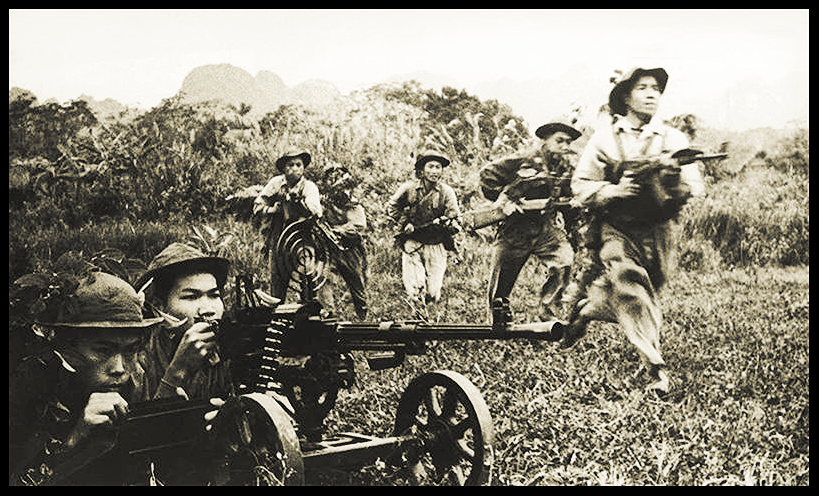
Units of the People’s Army of Vietnam (PAVN).
The Tet Offensive caused havoc for war planners at the Pentagon, as U.S. military forces became demoralized and resentful to the military brass. Many who were already in uniform serving in Vietnam staged acts of insubordination or rebellion. The Tet Offensive had a psychological affect on combat soldiers there and U.S. military personnel everywhere.
General Giap’s achievements for the liberation of his people are tremendous and continue to inspire millions throughout the world. His wisdom in strategy and tactics also serve as inspiring lessons for other oppressed people. Giap’s leadership in battle against a more powerful foe reaffirmed that colonizers, tyrants and white supremacists are not invincible.
Long live the legacy of General Vo Nguyen Giap and the heroic Vietnamese people!
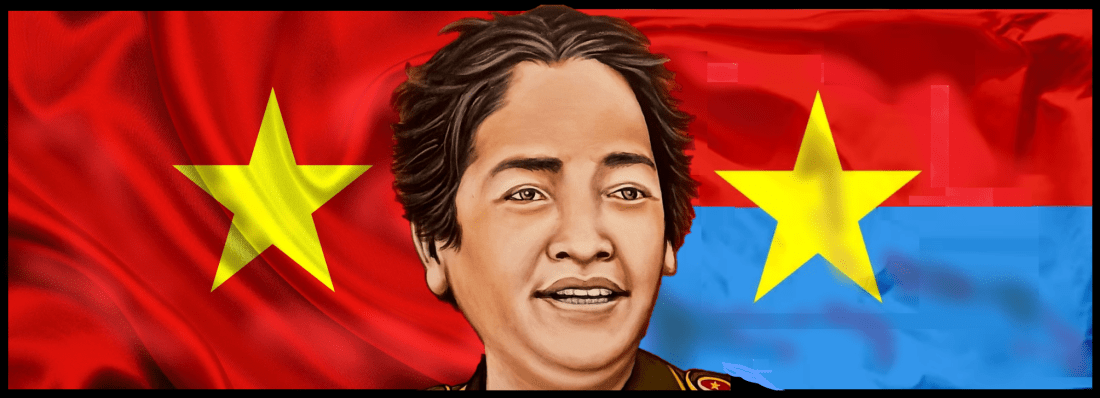
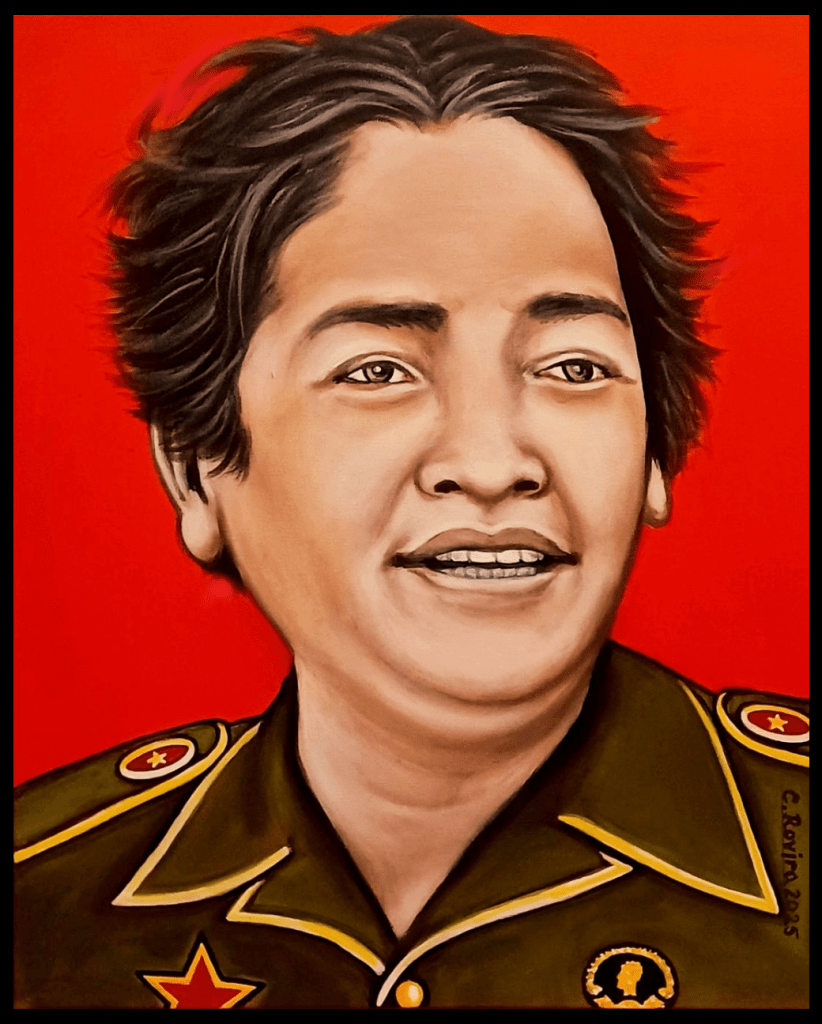
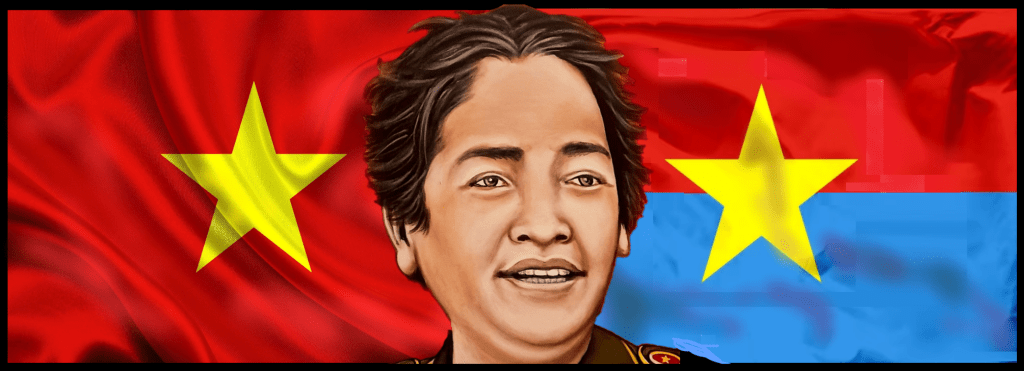
As a salute to the 50th anniversary of Vietnam’s triumph over U.S. imperialism, I was inspired to paint a 20” X 24”, acrylic paint canvas portrait of Major General Nguyễn Thị Định. Her legacy symbolizes the resilience of the heroic Vietnamese people, first against the French and then the United States.
Nguyễn Thị Định joined Vietnam’s liberation struggle by coming into the ranks of the Viet Minh at just 16 years of age. In 1938 she joined the Indochinese Communist Party which eventually became the Communist Party of Vietnam.
A piece I made to honor General Nguyễn Thị Định. 20″ X 24″, acrylic paint on canvas.
She was arrested by the French colonizers and imprisoned between 1940-1943. Dinh’s husband was also captured by French authorities and sent to a torturous facility in Con Dao Island. It was there where he was killed. Dinh always promised to avenge his death.
During the Vietnam War Định commanded the all-women guerilla force which became known as the “Long-Haired Army”. She is remembered for her brilliant leadership in the 1960 Dong Khoi uprising in the Ben Tre Province, the turning point in the Vietnam War.
General Nguyễn Thị Định and Comandante Fidel Castro Ruz in a visit to Cuba.
As the conflict intensified Dinh developed necessary strategies and tactics in guerilla warfare that resulted in inflicting many casualties on U.S. military personnel and their puppet soldiers in the South Vietnamese Army.
Nguyễn Thị Định was a co-founder of the National Front for the Liberation of Vietnam (also known as the Viet Cong). She became a prominent political figure in the People’s Liberation Armed Forces of South Vietnam.
General Nguyễn Thị Định cherishing a moment with her comrades at a guerilla base.
In April 1974, due to her unique leadership capabilities, Dinh was promoted to become Vietnam’s first female military general, earning her the rank of Major General.
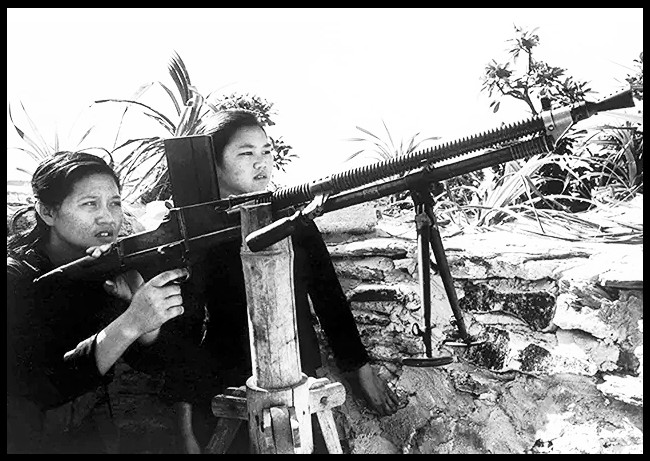
This significant development in Vietnamese history reflects the pivotal role women played during that country’s liberation struggle. Most combatants of the NLF were women.
Vietnamese women played a significant role as combatants during the military struggle.
Men and women comprised the guerilla fighters of the National Liberation Front.
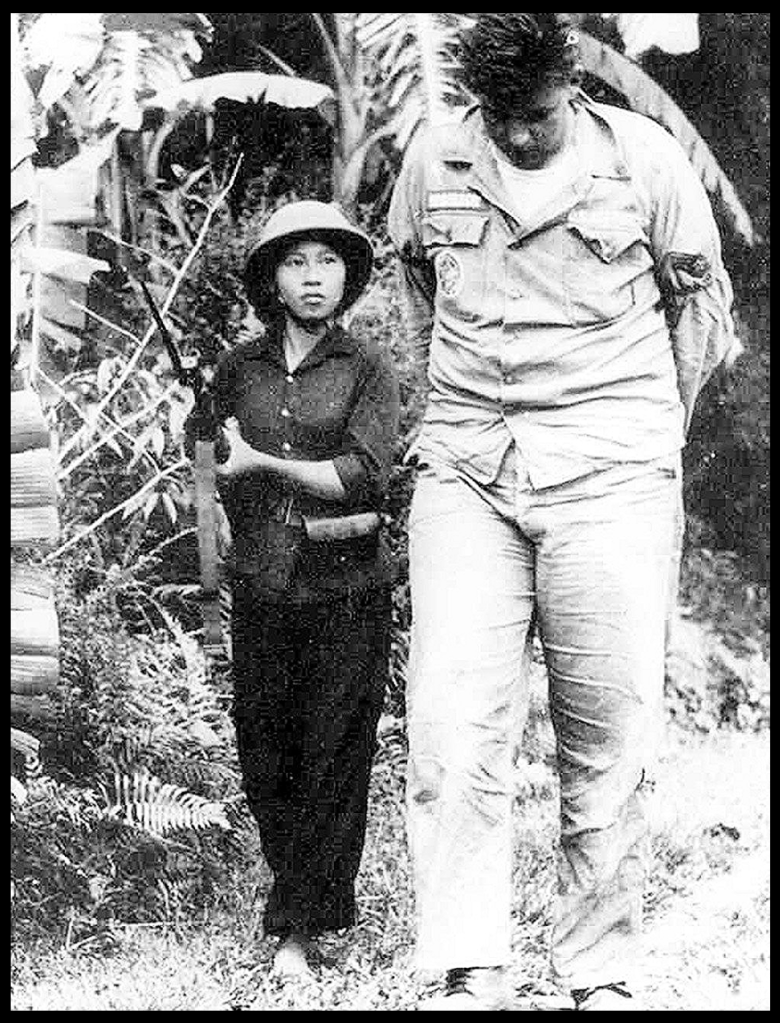
The gender of these fully capable women combatants became psychologically disturbing for imperialist troops trained to further adopt the views of male dominance. Many of these U.S. troops were guilty of terrorizing the Vietnamese civilian population.
A U.S. combat pilot shot down and taken as prisoner of war.
The lessons the Vietnamese struggle provided the world are numerous. The steadfast and courage of the Vietnamese people impacted the intensity of the 1960s-70s mass upsurge in this country. Thanks to the Vietnam’s war for liberation Black and Brown people in the U.S. were given another point of reference for their own struggles.
And when a mighty anti-war movement rose up in this country it became decisive with its opposition to stop the colonial war the U.S. was waging in Vietnam.
Today, Nguyễn Thị Định is remembered for inspiring the Vietnamese people to do the impossible, defeating in battle the greatest tyrant ever known in human history. What this heroine proved is that oppressors are never invincible.
LONG LIVE THE HEROIC EXAMPLE OF THE VIETNAMESE PEOPLE!
LONG LIVE THE LEGACY OF MAJOR GENERAL NGUYEN THI DINH!
“Los demagogos y los políticos profesionales quieren hacer el milagro de ser buenos en todo y con todos, engañando necesariamente a todos en todo. Los revolucionarios proclamarán sus ideas con valentía, definirán sus propios principios y expresarán su intención de no engañar a nadie, ni a amigos ni a enemigos.”– Fidel Castro Ruz, de La historia me absolverá.
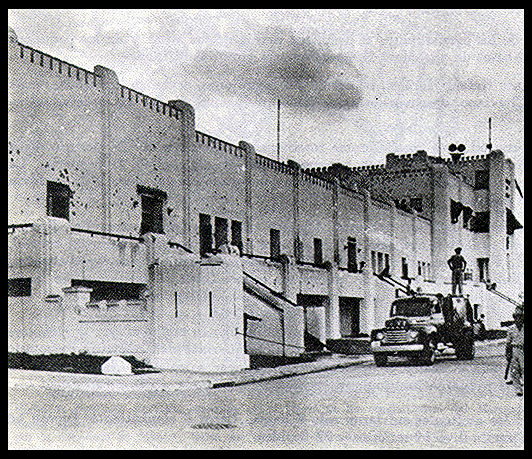
En la madrugada del 26 de julio de 1953, aproximadamente 160 rebeldes, liderados por Fidel Castro Ruz, atacaron simultáneamente dos puestos militares del régimen títere estadounidense de Fulgencio Batista. El Cuartel Moncada, en Santiago de Cuba, y el Cuartel Carlos Manuel de Céspedes, en Bayamo, Cuba, fueron los objetivos. El Cuartel Moncada era la segunda guarnición más grande del país.
Entre los notables luchadores por la libertad que participaron en los ataques se encontraban el hermano de Fidel Castro, Raúl Castro, junto con Haydée Santamaría y Melba Hernández, las únicas mujeres del grupo.
Melba Hernández (izquierda) y Haydee Santamaría después de su captura.
Fidel Castro se vio motivado a organizar estas audaces acciones en respuesta al descontento en Cuba por la destitución ilegal del presidente saliente Carlos Prío Socarrás. Fue depuesto por Fulgencio Batista, quien dio un golpe militar el 10 de marzo de 1952.
Aunque Batista era candidato a la presidencia según las encuestas no parecía que ganaría las elecciones debido a su impopularidad desde un período anterior cuando se desempeñó como Presidente de Cuba del 10 de octubre de 1940 al 10 de octubre de 1944.
Durante este periodo, las elecciones presidenciales y parlamentarias programadas se cancelaron abruptamente. Castro estaba entre los candidatos que se postulaban para un escaño en el parlamento.
Como resultado de la Guerra Fría, una parte esencial de la estrategia global de Estados Unidos fue la organización encubierta de golpes militares por parte de la Agencia Central de Inteligencia (CIA), como los de Cuba en 1952, Paraguay en 1954, Guatemala en 1954, Argentina en 1955, Honduras en 1956, Colombia en 1957, Venezuela en 1958, El Salvador en 1960, Perú en 1962, Ecuador en 1963, Honduras en 1963, Brasil en 1964, Argentina en 1966, Perú en 1968 y Panamá en 1968.
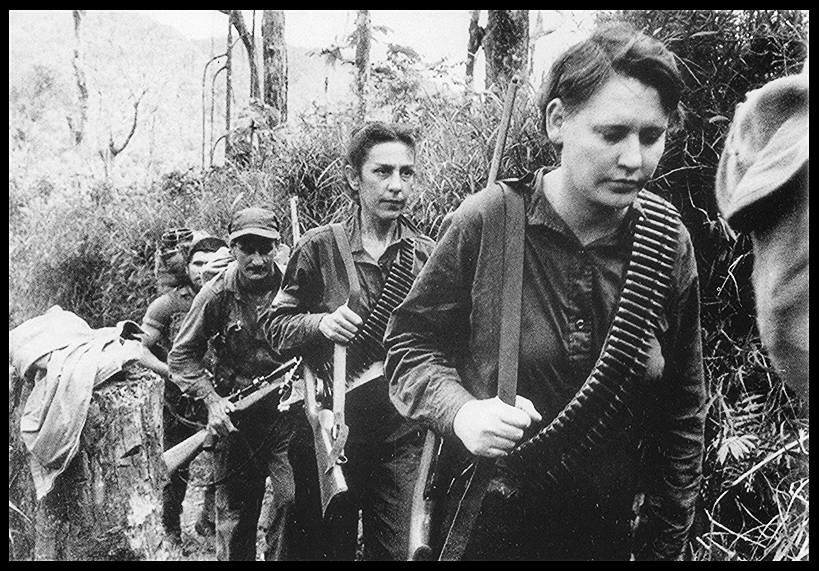
Haydee Santamaria, Celia Sanchez among other members of the Rebel Army in the Sierra Maestra.
Aunque los rebeldes estaban deseosos de luchar por sus convicciones a pesar del peligro que implicaba, su determinación definió el valor y el sacrificio. En medio de disparos y un intenso caos, la Revolución Cubana comenzó en el Cuartel Moncada en ese día inolvidable.
Los combatientes inexpertos sufrieron la falta de preparación para enfrentarse a tropas gubernamentales mejor entrenadas y equipadas. Como resultado de errores tácticos, muchos fueron capturados, torturados y asesinados.
Cuartel Moncada después de la batalla.
Fidel Castro logró escapar y esconderse en el bosque durante varios días hasta que pudo negociar su rendición a través de un intermediario en los alrededores.
Sin embargo, lo que inicialmente pareció una derrota devastadora para los rebeldes resultó ser todo lo contrario. Fidel Castro acertó al predecir que los ataques desencadenarían una tormenta revolucionaria irreversible que consumiría a todos los sectores de la población.
Una auténtica revolución, independientemente de su origen, tendrá ciertos patrones comunes. La valiente acción de Castro y su equipo recordó el ataque de 1859 que fue lanzado en Estados Unidos a Harpers Ferry, Virginia Occidental, liderado por el legendario abolicionista antiesclavista John Brown. Aunque ambas batallas fracasaron con la pérdida de muchos valientes combatientes, cada uno de estos eventos encendió las llamas de una revolución.
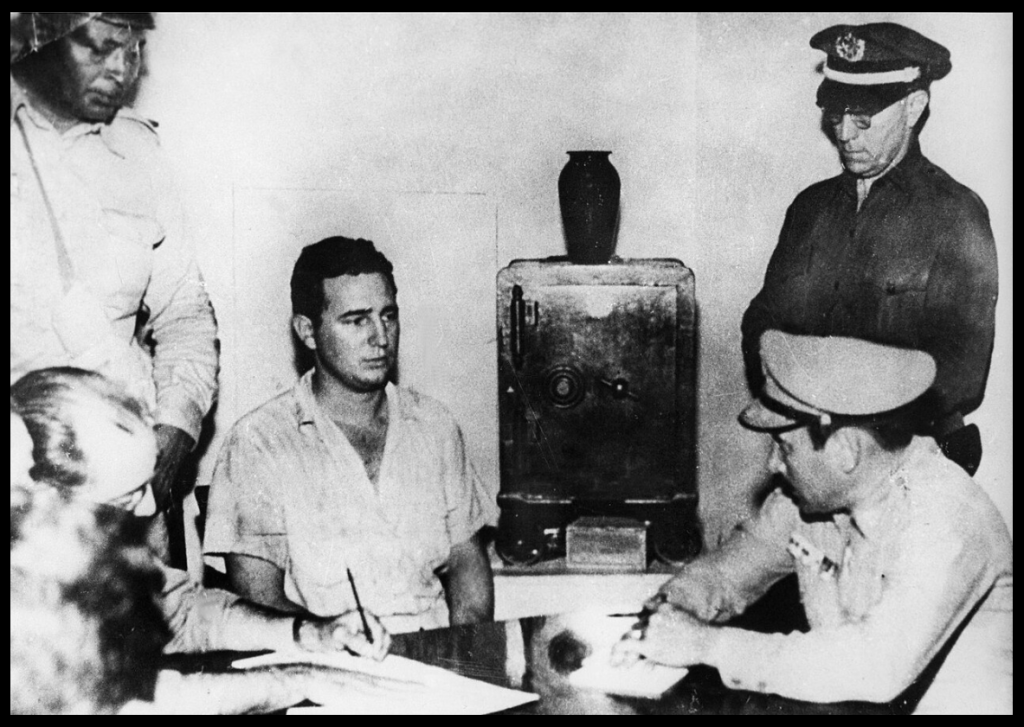
Fidel Castro Ruz siendo interrogado por oficiales militares de Batista.
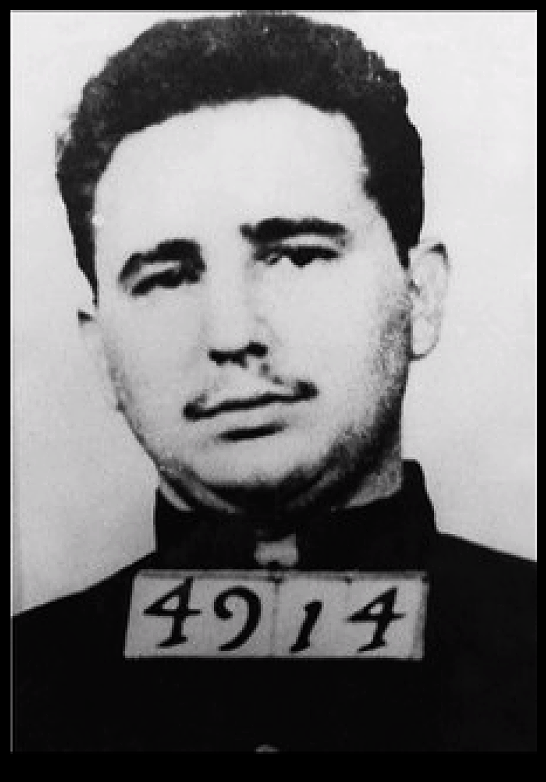
Foto de la prisión de Fidel Castro Ruz.
La policía y el ejército de Batista cometieron numerosos abusos contra los derechos humanos, lo que provocó que muchos cubanos aplaudieran favorablemente el audaz ataque al Moncada. Los ciudadanos vivían bajo la constante amenaza de encarcelamiento, palizas y muerte por el simple hecho de expresar su desaprobación hacia Batista, especialmente la población afrocubana más oprimida.
Esta situación fue debilitándose poco a poco al régimen, sobre todo después de que Fidel, abogado de formación, presentara como testimonio uno de los discursos más famosos del siglo XX, como parte de su propia defensa titulado “La historia me absolverá“.
Las palabras de Castro perjudicaron a Batista. A pesar de la censura gubernamental, los medios de comunicación no pudieron ocultar su espíritu militante y desafiante. Utilizó el escenario de un tribunal para desacreditar detalladamente las prácticas corruptas y fascistas del régimen contra el pueblo.
Tras la condena de Castro a quince años de prisión por parte del tribunal, su discurso fue filtrado página por página para su publicación y amplia circulación en forma de panfleto. Como resultado, surgió un amplio movimiento de masas que exigía la liberación de los presos políticos y el derrocamiento del régimen de Batista.
Fidel Castro en la Sierra Maestra.
Fue Fidel Castro quien acuñó el nombre “Movimiento 26 de Julio” para conmemorar a los mártires que sacrificaron sus vidas durante el fallido intento de tomar el Moncada.
La agitación y la intranquilidad son la mejor descripción de la situación en Cuba durante este período histórico. A medida que la frustración y la desesperación del pueblo aumentaban, las manifestaciones espontáneas, que solían desembocar en enfrentamientos violentos con las tropas gubernamentales, también afectaron al pueblo.
Aunque obligados a hacer una concesión táctica a los luchadores por la libertad ante la opinión pública, Batista y sus compinches no se percataron de que las semillas de la revolución ya estaban sembradas.
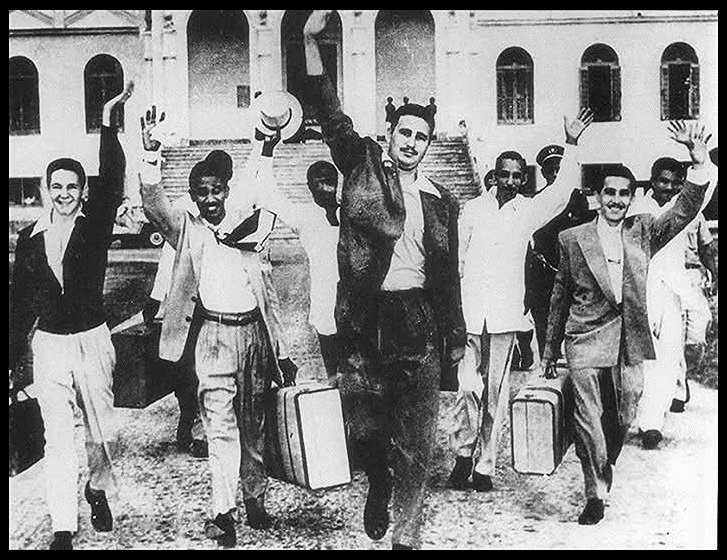
Fidel Castro y sus compañeros fueron liberados de prisión después de recibir una amnistía general.
Además, Castro y la mayoría de los presos políticos recién liberados fueron a México para planificar la siguiente fase de la lucha. En México, Fidel Castro conoció por primera vez a Ernesto Che Guevara y Camilo Cienfuegos, dos figuras que se convirtieron en líderes del Ejército Rebelde.
Durante su estancia en México, las tareas del movimiento fueron llevadas a cabo por Celia Sánchez, Vilma Espín, Haydée Santamaría, Melba Hernández, Frank País, Raúl Castro y Juan Almeida Bosque.
Establecieron comités de propaganda en toda Cuba; una red de inteligencia; contrabandearon armas al Ejército Rebelde en la Sierra Maestra; desarrollaron las comunicaciones entre los luchadores por la libertad en México y Cuba, etc.
En mayo de 1955, dos años después del asalto al Moncada, Batista fue presionado para conceder una amnistía general a Fidel Castro y sus camaradas. Un poderoso movimiento de masas se estaba volviendo cada vez más abrumador para la clase dominante cubana.
La sofisticación organizativa de estos revolucionarios ha permitido que la Revolución Cubana sobreviva hasta nuestros días en circunstancias opresivas causadas por el imperialismo estadounidense. Sin embargo, la Revolución Cubana ha demostrado más allá de toda duda que la tiranía imperialista no es invencible.
Lo que comenzó con el ataque al Cuartel Moncada, la toma del poder el 1 de enero de 1959 y más allá, seguirá inspirando futuras luchas revolucionarias por la emancipación completa de la humanidad.
Remember when the heroic Cuban people defeated U.S. Imperialism at the Bay of Pigs on April 17-20, 1961
By Carlos “Carlito” Rovira
The ruling class of the United States was never happy about the triumphant 1959 Cuban Revolution, especially after Comandante Fidel Castro Ruz announced the Socialist direction Cuba would pursue. And as the leadership of the July 26 Movement demonstrated to embrace Marxism–Leninism and began implementing anti-capitalist policies like the nationalization of multinational companies and expropriation of wealthy families, Washington officials became alarmed.
And as diplomatic relations with the United States deteriorated Cuba sought greater ties with the Soviet Union. Havana and Moscow discussed making numerous trade agreements that also included the supply of weapons. Washington officials viewed these developments with extreme disdain.
U.S. President Dwight D. Eisenhower secretly authorized the Central Intelligence Agency (CIA) to prepare right-wing Cubans in exile, formerly of Fulgencio Batista’s Army, for a future invasion of Cuba. By the time John F. Kennedy became President the CIA had drawn up plans for eventual intervention, focusing on storming Cuba’s southern coast.
The objective was to overthrow the Cuban government and punish the revolution for daring to break away from the U.S. colonial stranglehold. To this day U.S. rulers adamantly take to heart the 1823 Monroe Doctrine, which staked out the Western Hemisphere as the “backyard” of the United States.
Washington officials became obsessed with Cuba and dreaded the idea of other countries in Latin American and the Caribbean becoming inspired by the Revolution. Eisenhower and Kennedy engaged in every effort to isolate Cuba, using the Organization of American States (OAS) and making the Green Berets, Army Special Forces, officially operational to deter revolutionary insurgencies.
Ernesto Che Guevara and Fidel Castro Ruz, led the defeat of the CIA at the Bay of Pigs.
Two days before the invasion, air strikes were launched by the CIA with B-26 bombers disguised as Cuban aircrafts. The mission of these pilots was destroying Cuba’s airfields and war planes. The goal was to cripple the Revolutionary Armed Forces’ (RAF) capability to counterattack from the air. However, the CIA’s Aireal operation failed with most of Cuba’s combat planes remaining intact.
When the CIA onslaught began in the early morning hours of April 17, 1961, it was met by a local militia, mostly peasant farmers who were part of the RAF. The counterrevolutionary force known as Brigade 2506, was kept at bay until reinforcements arrived. At that point, about 200,000 troops of the RAF and militias arrived with Fidel Castro Ruz in command.
Comandante Fidel Castro Ruz directing the logistics of the battle from a Soviet made SU-100 tank.
The Revolutionary Armed Forces charging the CIA-sponsored invaders at the Bay of Pigs.
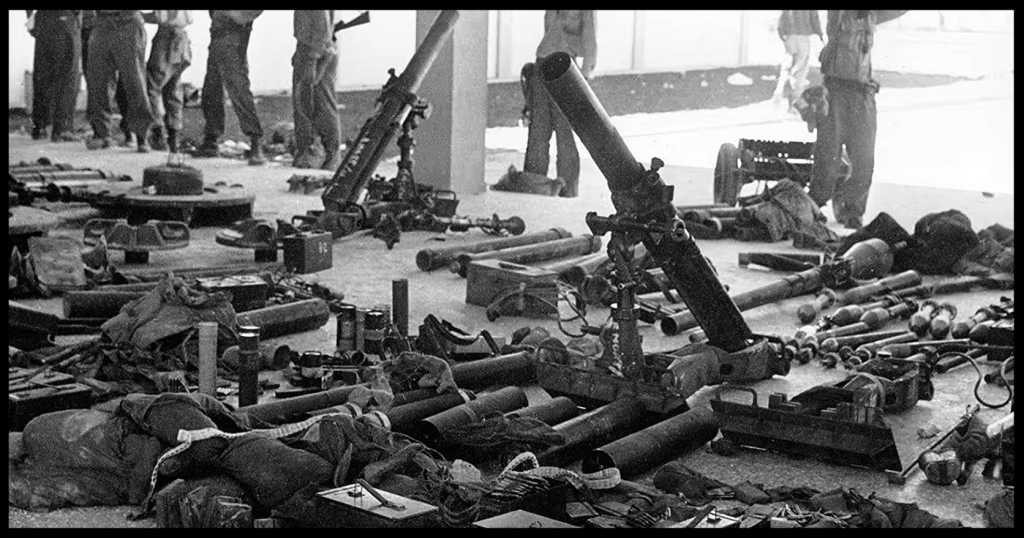
These weapons were confiscated from the CIA-sponsored Brigade 2506.
The armed conflict was intense and lasted until April 20th. In less than a day of fighting about 1500 CIA-trained exiled Cubans surrendered, some were overwhelmed by the unexpected heavy gunfire and fled on boats. In addition, 114 were killed in combat.
The CIA plan to establish a beachhead to be followed by a full-scale U.S. military invasion ended in complete disaster. Cuba’s Revolutionary Air Force managed to drop bombs and destroy two ships filled with ammunition and medical supplies for the counterrevolutionaries. Pockets of Brigade 2506 were pinned down and surrounded by superior numbers of revolutionary troops.
Days before the assault was launched Cuba’s RAF intelligence discovered precisely where the U.S.-backed counterrevolutionaries would land. Cuba had a sophisticated spy network long established by the July 26 Movement.
Thanks to the leadership of Comandante Fidel Castro Ruz, Ernesto Che Guevara, Vilma Espin, Celia Sanchez, and Cuba’s mass organizations like the Federation of Cuban Women, the Committees for the Defense of the Revolution, and People’s Militias, which prevented the re-colonization of their homeland.
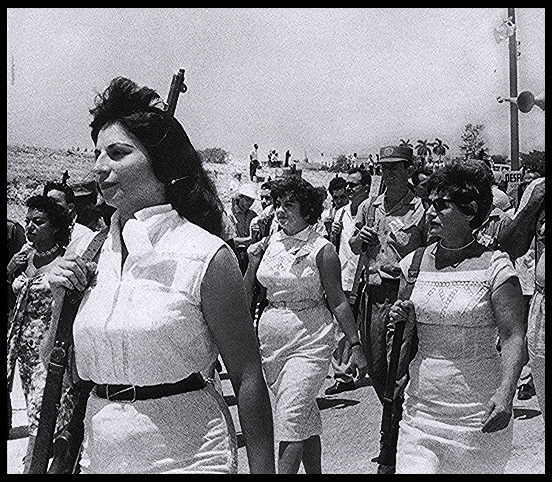
Members of the Federation of Cuban Women..
Members of the civilian organization Committees for the Defense of the Revolution.
The U.S. government was humiliated. The Cuban government forced Washington officials to negotiate for the release of their 1,100 captured puppet combatants. Numerous parties, including the American Red Cross, played a role as go-between in the public and closed negotiations.
Mainstream figures and the capitalist mass media attempted to defame Fidel Castro Ruz because of his insistence that retribution for the invasion was justified. Cuba was accused of demanding a “ransom” for the release of the prisoners of war as if they were kidnapped victims.
But Cuban diplomats remained firm stating that it was Cuba’s sovereignty that was violated by the captives. In the end, due to pressure from the families of prisoners as well as several international organizations, the U.S. government was politically pressured to an agreement.
Watch video footage of the Bay of Pigs battle.
At first, President Fidel Castro Ruz demanded tractors for heavy construction needed to industrialize the country. But at the end, the U.S. and Cuban governments agreed on $53 million worth of baby food and medicines, in exchange for the prisoners.
The Bay of Pigs incident caused major political embarrassment for the Kennedy Administration. U.S. officials have never recovered from the shock brought upon them by the CIA’s defeat at the Bay of Pigs. The imperial arrogance of U.S. rulers led them to underestimate the collective consciousness and revolutionary ferment that was occurring in Cuba.
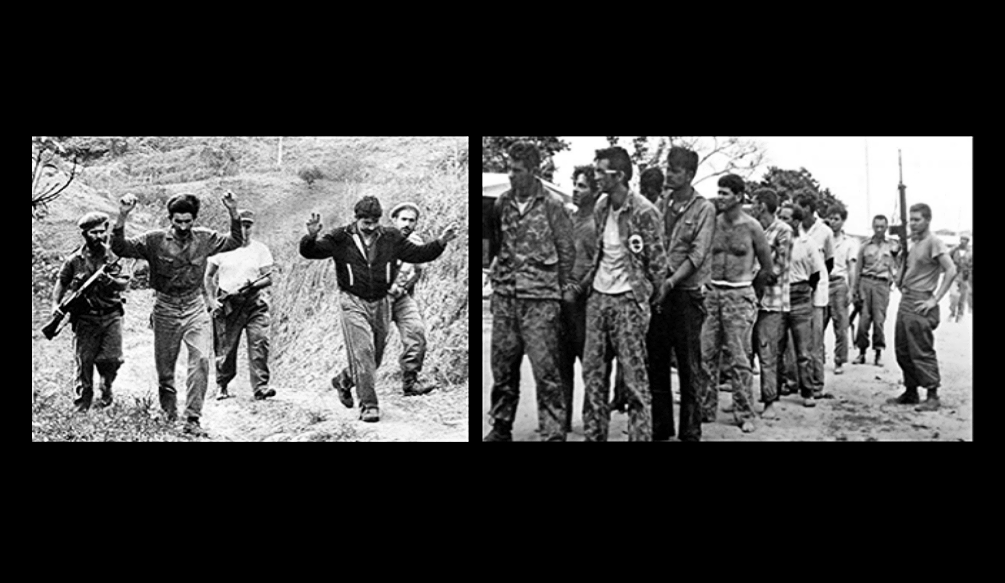
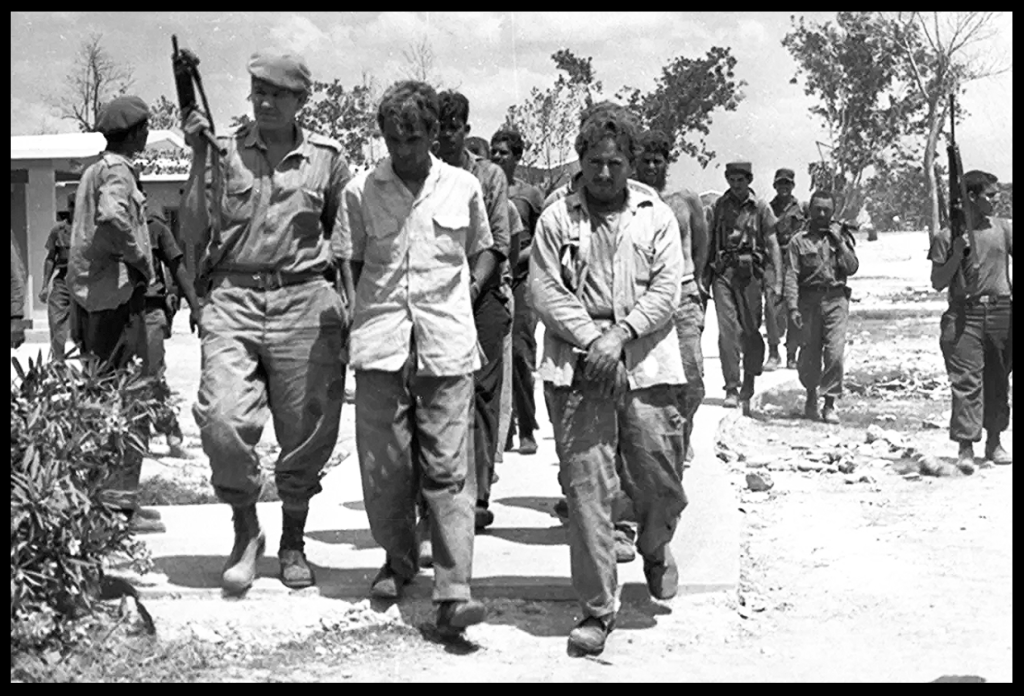
Counterrevolutionary troops captured during the battle.
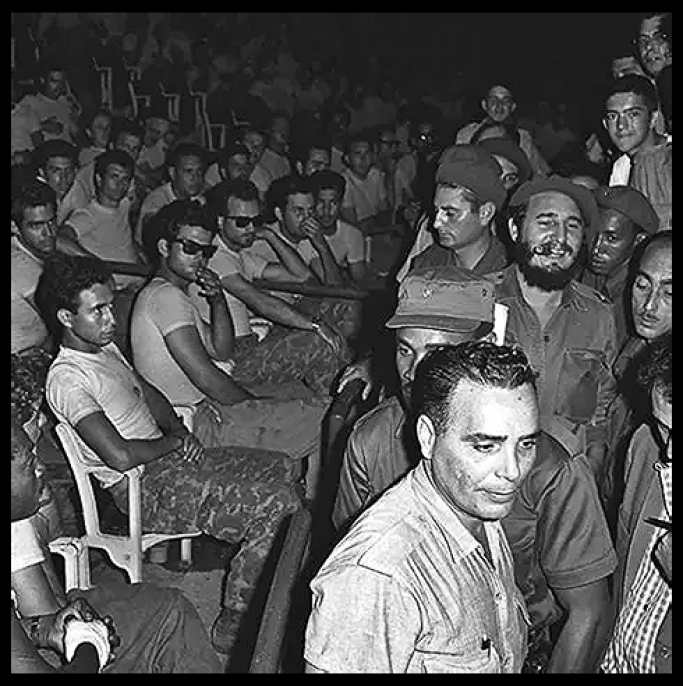
Surrounded by security and staff, Fidel Castro walks pass combatants captured at the Bay of Pigs.
Since Cuba’s initial break with U.S. domination in 1959, the majority of the population have been organized for the country’s defense. Overlooking that particular detail, an essential aspect of the revolution, was the greatest mistake made by U.S. imperialism at the Bay of Pigs.
What this historic battle reaffirms is that no tyrant is invincible. Oppressed people can meet any challenge, no matter how difficult and win. That includes pushing back on continued attempts to undermine Cuba’s right to self-determination and strive to end the more than six decades old economic blockade.
So, whatever ambitious ideas the Trump administration is contemplating on implementing, there are lessons from the Bay of Pigs experience on April 17–20, 1961, for U.S. imperialism to take seriously into consideration. The Cuban people will undoubtedly wage a vigorous struggle to prevent the re-colonization of their homeland.
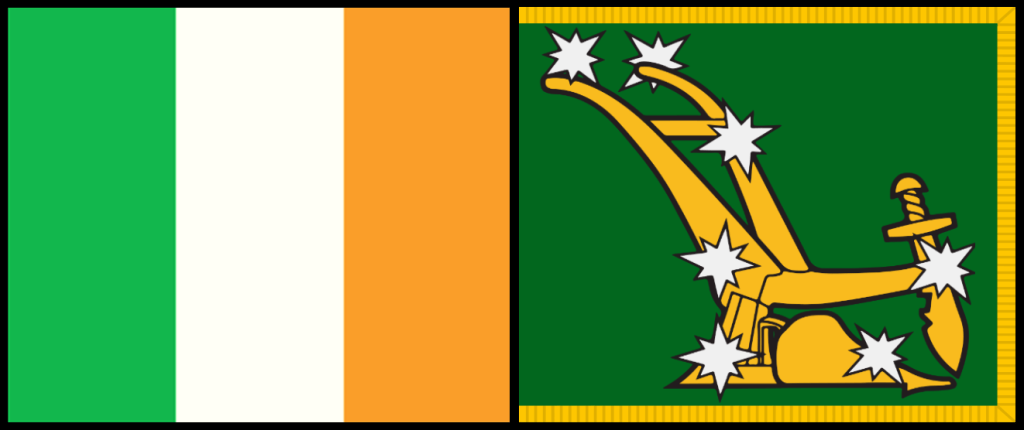
“If you remove the English Army tomorrow and hoist the green flag over Dublin Castle., unless you set about the organization of the Socialist Republic your efforts will be in vain. England will still rule you. She would rule you through her capitalists, through her landlords, through her financiers, through the whole array of commercial and individualist institutions she has planted in this country and watered with the tears of our mothers and the blood of our martyrs.” ― James Connolly
On Saint Patrick’s Day I do not recognize the Leprechaun or four-leaf clover as symbols of the Irish people’s culture, as the mainstream and corporate world likes to project. What merits recognition and salute is Ireland’s centuries-long history of struggle against British colonialism.
We must honor Irish Republican revolutionaries, like the legendary James Connolly (June 5, 1868 – May 12, 1916), who sacrificed life and limb for the freedom of his people.
Connolly was born to immigrant parents from Ireland who settled in the mostly Irish community of Cowgate, Scotland. In his adult life, Connolly became a labor organizer, trade union leader, journalist, historian, soldier, and military tactician. In addition, he was a devoted husband and father of six children.
James Connolly lived adhering to Marxist doctrine. He attributed the plight of the Irish people to the exploitative nature of capitalist rulers. For many centuries, Ireland was brutally colonized by England, the forerunner of that global savage system.
James Connolly was widely known as a political thinker and leader of a national liberation movement. His exemplary deeds were referred to by revolutionaries throughout the Twentieth Century, like Dr. Pedro Albizu Campos, Vladamir Lenin, Marcus Garvey, Rosa Luxemburg, Fidel Castro Ruz, Ernesto Che Guevara, and so many others.
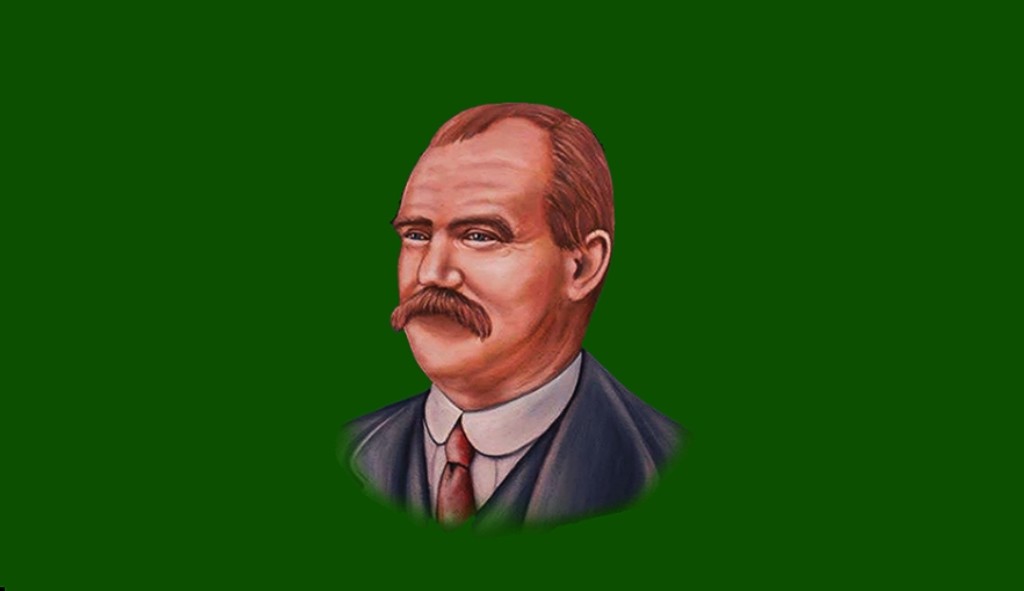
A portrait I made in honor of James Conolly. 24″ X 30″, acrylic paint on canvas.
While in the United States between 1905 to 1910, Connolly was a full-time organizer for the Industrial Workers of the World, also known as the Wobblies. It was there where he was impressed meeting and collaborating with two legendary women, working-class warriors, Mother Jones also from Ireland, and Lucy G. Parsons.
The Wobblies were a militant component of the worker’s movement in the United States that resorted to direct action and armed forceful tactics whenever necessary. They were concentrated in the coal mines and railroad. The Wobblies’ motto was “One Big Union.” They envisioned the creation of a single union comprising of workers throughout the globe.
No one can ever dispute that James Connolly played a significant role in the achievements of the U.S. working-class movement with his militant leadership and actions, fighting for the eight-hour day, the weekend and workers right to organize unions.
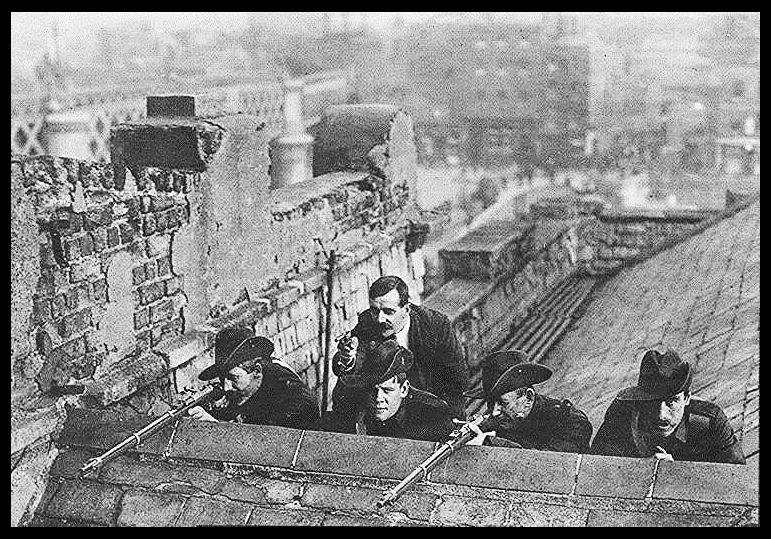
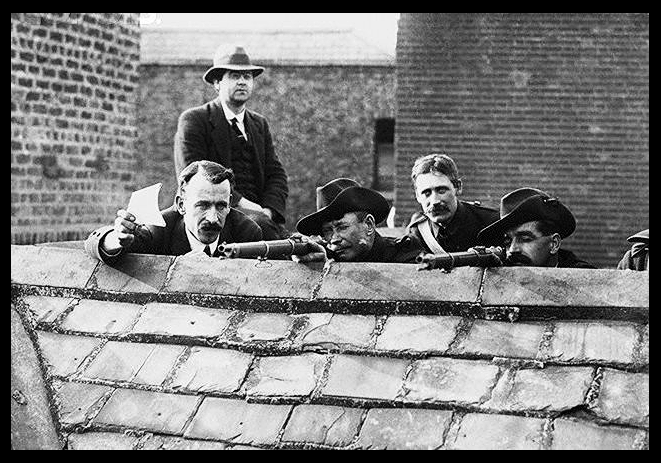
Connolly was one of the founders of the Irish Citizen Army (ICA), an armed force of well-trained patriots, and predecessor of the Irish Republican Army (IRA). He was also one of the leaders and combatants of the 1916 Easter Uprising in Dublin, a bloody event in Irish history that revealed to the world the criminality of England’s presence in Ireland.
It was in that battle where James Connolly was severely wounded. The British Army managed to apprehend the Irish leaders of the uprising and held them until it was decided what punitive action they would face. With no regard for Connolly’s physical condition of having been shot several times, the murderous British higher rank officers decided to have Connolly bound to a chair where he would be executed by firing squad. Many of Connolly’s comrades also captured met the same fate.
Photos above: Members of the Irish Citizen Army preparing for battle with British Army on Easter Rising.
Despite the military failure of the Easter Uprising, it was a tremendous political victory. This event triggered a chain of resistance in India, Africa, and wherever else British imperialism reigned. The Irish moment of fury also inspired revolutionary movements in Russia, Mexico, and Puerto Rico.
In the United States, James Connolly and the Irish cause gained tremendous support from the Black community. At a massive public meeting in Harlem, New York City, on July 27, 1919, renowned Pan-Africanist leader Marcus Garvey defiantly expressed solidarity for the people of Ireland by praising the Irish Citizen Army (ICA) who courageously battled the British Army during the Easter Rising, in an attempt to free Ireland. Marcus Garvey was always an outspoken supporter of the Irish cause and condemned the brutality of British imperialism, a close U.S. ally.
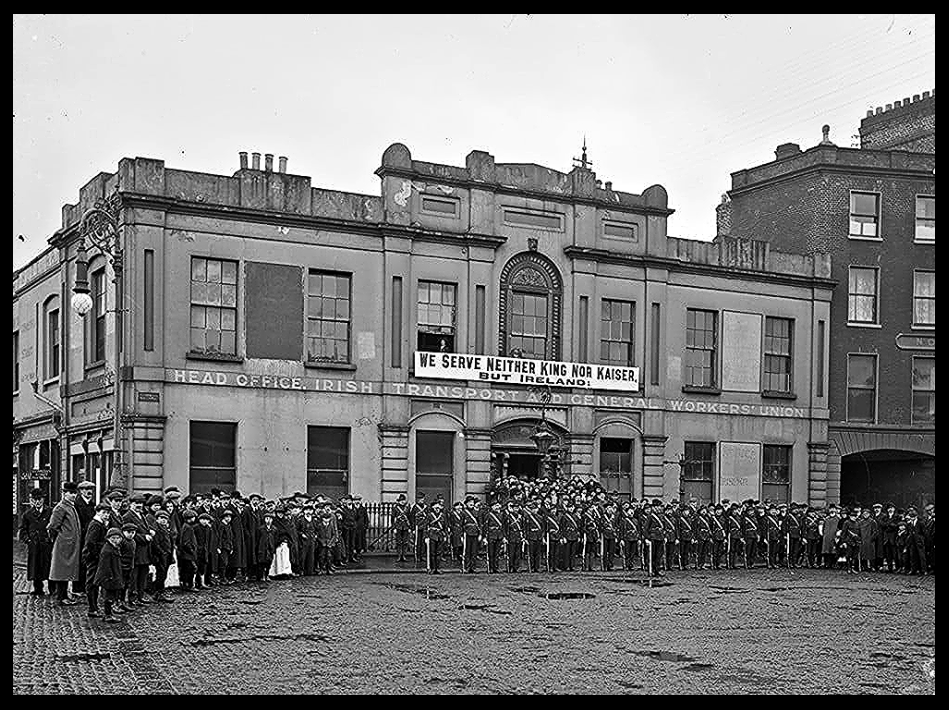
In addition, Garvey’s UNIA’s gathering/meeting place in Harlem was renamed to “Liberty Hall” in honor of ICA and Sinn Fein, whose political headquarters in Dublin also had that name. Sinn Fein was the political entity of Ireland’s struggle for independence from British colonialism.
Liberty Hall in Dublin, Ireland. The banner reads: “WE SERVE NEITHER KING NOR KAISER, BUT IRELAND.”
James Connolly collaborated and became friends with the man who would become Puerto Rico’s iconic revolutionary figure, Dr. Pedro Albizu Campos. This relationship came about due to Campos’ solidarity work for the Irish struggle while a student at Harvard University in Boston from 1913 to 1916. In many ways, James Connolly and the Irish freedom struggle are an important part of Puerto Rican history.
This experience was one of the factors that influenced and introduced Pedro Albizu Campos to revolutionary politics. Campos’ heartfelt revolutionary sincerity resulted in a developed trust with Connolly. The future Puerto Rican Nationalist leader was eventually asked by Éamon de Valerato submit a written draft for what would become the Constitution of a free Irish Republic. This was an outstanding honor for the young Pedro Albizu Campos.
James Connolly will be remembered, not just as an Irish freedom fighter but also as an internationalist. His empathetic disposition for the suffering of the oppressed was consistent with being a Communist and having contempt for the capitalist system. His conception of a victorious struggle against British tyranny was part of his steeled belief that the Irish people will ultimately contribute to the final overthrow of imperialism.
LONG LIVE THE REVOLUTIONARY LEGACY OF JAMES CONNOLLY!
“A nation that continues year after year to spend more money on military defense than on programs of social uplift is approaching spiritual death.” – Dr. Martin Luther King, Jr.
______________________________________________
By Carlos “Carlito” Rovira
Dr. Martin Luther King, Jr. was among a number of significant Black religious figures whose actions and leadership in the 1950s-1960s propelled the fury of the Civil Rights movement. The Southern Baptist Church for the most part served as a vehicle for expressing the wishes of Black people. But with the advent of the 1960s mass upsurge nothing was exempt from the political storm that created a potential for revolution in the United States, including the Black Church.
The momentum consumed most of society, as the outcry for Black emancipation gained support even outside the African American community. This phenomenon provided favorable conditions for the Black struggle to play an exemplary and leadership role in the intensifying political climate.
Other oppressed sectors of the population yearning for freedom as well began to follow suit. The Civil Rights movement which started as an expression for Black freedom was now a factor in a mass upsurge which had a profound impact on the spectrum of politics in this country.
Photos taken of Dr. King while in custody by Birmingham, Alabama police.
Dr. Martin Luther King’s empathy for the historic suffering of Black people, heightened his contempt for the legacy of slavery, racist Jim Crow laws. It instilled in his character a defiance and resilience that would inspire millions of people from all nationalities and races to take part in his quest.
Figures like Evelina Antonetty and Gerena Valentin from the Puerto Rican community as well as Cesar Chavez and Dolores Huerta, representing Mexican/Chicano migrant workers, aligned with Dr. King, thus adding to the strength of the Civil Rights movement.
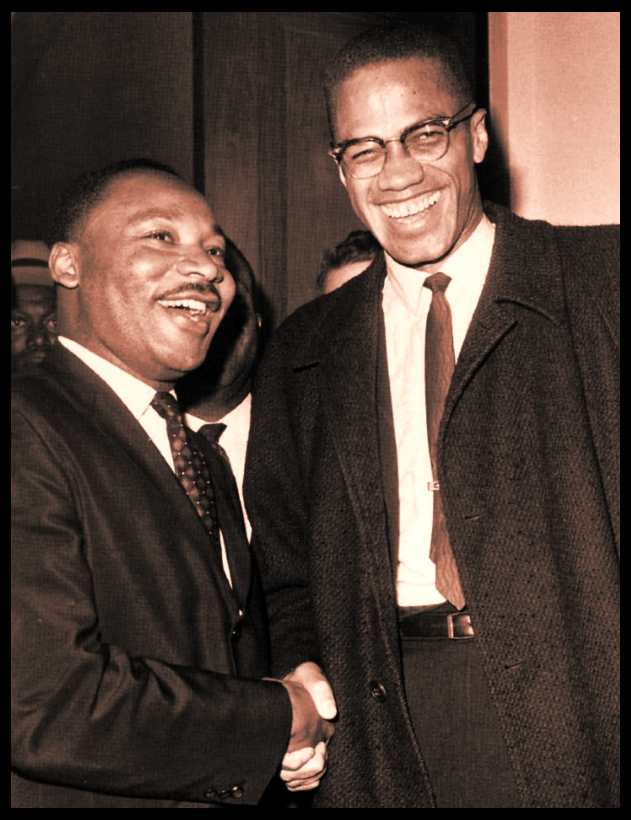
Dr. Martin Luther King, Jr. and Malcolm X, March 26, 1964, in Washington, DC.
Despite differences among Black leaders, the February 21, 1965, assassination of Malcolm X impacted Dr. King. There is indisputable evidence in his speeches that he was becoming radicalized, a reflection of the political militancy that was evolving among Black and Brown people in this country. Malcolm X’s assassination naturally brought to the open what was already being felt in the hearts and minds of millions of people, including Dr. Martin Luther King, Jr., himself.
Contrary to assertions made by bourgeois historians, which depict MLK as nonaggressive and passive, he supported and boldly encouraged civil disobedience. He was also an outspoken critic of the U.S. political and economic system.
Civil Rights activists demonstrated dignity and were not afraid of white supremacist attacks.
Although MLK never identified himself as revolutionary, by traditional definition, objective circumstances compelled him to side with radical views. Towards the end of his life, Dr. King showed signs of gravitating towards an anti-capitalist analytical conclusion to the human suffering he witnessed.
During a speech he gave on August 16, 1967, at a Southern Christian Leadership Conference in Atlanta, Georgia, Dr. King boldly stated: “The evils of capitalism are as real as the evils of militarism and evils of racism.”
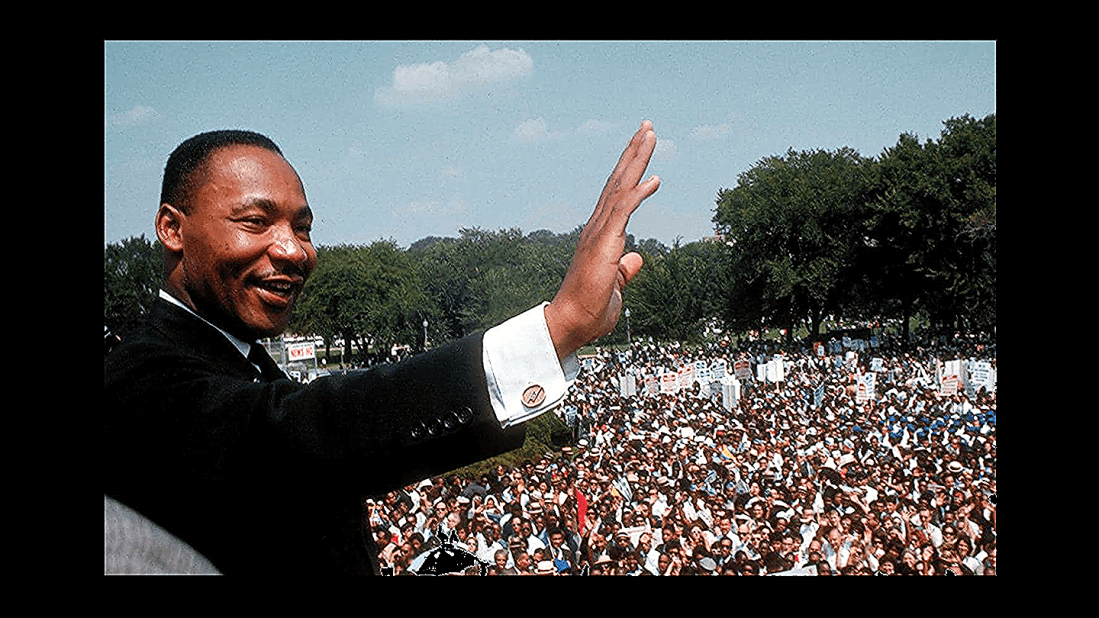
And when Dr. King gave his April 4, 1967, speech at Riverside Church in Harlem, New York City, titled: “Beyond Vietnam: A Time to Break Silence” the rulers of this country became infuriated. Considering the history of political reaction and racist hatred in the United States, it cannot be ruled out that delivering this speech sealed Dr. King’s death.
Washington officials were defensive due to the Vietnamese anti-colonial struggle gaining momentum while receiving massive support throughout the world, as the U.S. anti-war movement added to the pressure.
When Dr. Martin Luther King, Jr. articulated the relevance of Civil Rights with the fight to end the war in Vietnam U.S. officials experienced political embarrassment on a global scale. It was no coincidence or surprise that the notorious J. Edgar Hoover had ordered intensifying COINTELPRO activities against Dr. King to seek ways to ruin his reputation and discredit the politics of the movement.
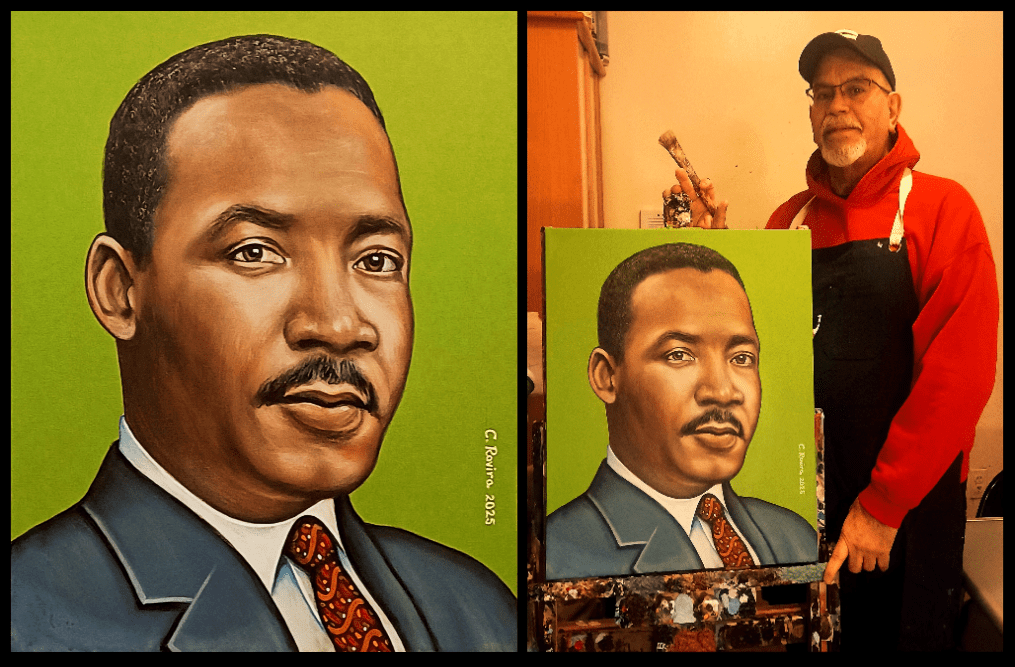
My portrait of Dr. Martin Luther King, Jr. 20″ X 24″, acrylic paint on canvas.
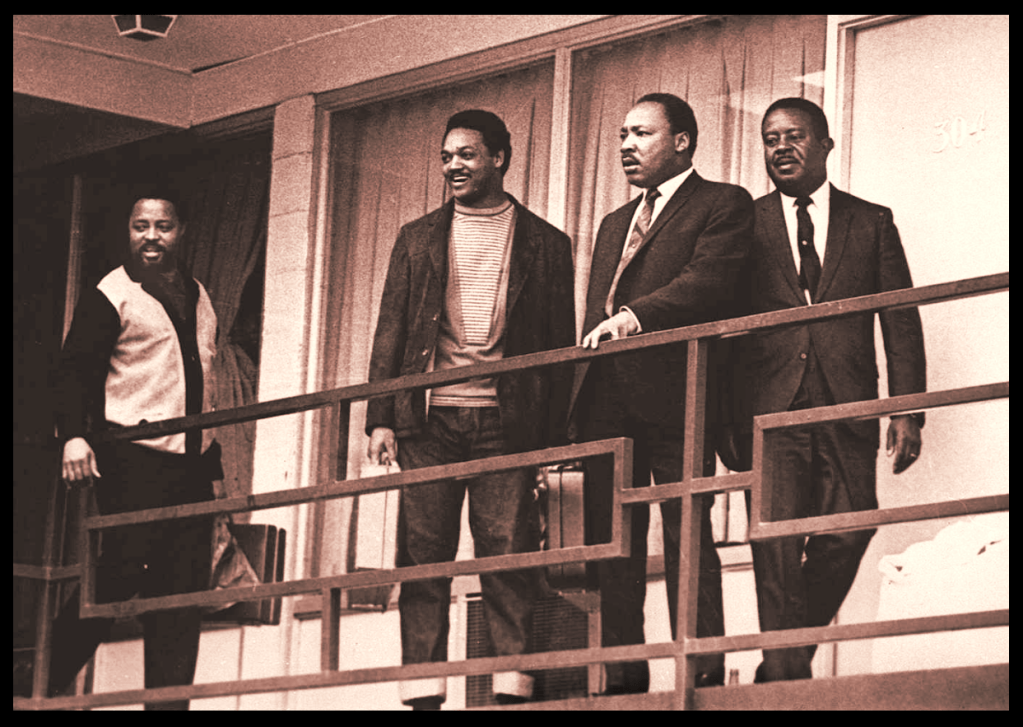
Exactly a year after the Riverside Church speech, Dr. King was assassinated. He was shot while speaking to an audience from a hotel balcony in Menphis, Tennessee. The assailant was a white supremacist named James Earl Ray, who used a high-power rifle from a distance away to kill the renown Black leader.
African Americans reacted justifiably with indignation and rebelled on the streets of major cities throughout the country. The killing of Dr. King was reminiscent of the terror Black people experienced throughout the history of this country since chattel slavery.
Moments before Dr. Martin Luther King, Jr. was fatally shot by sniper.
There are many apologists in the mainstream who will distort the critical role Dr. Martin Luther King, Jr. played in the Civil Rights movement. They will also present sanitized narratives that focus solely on his “peaceful, non-violent” tactics while avoiding mention of the vicious police terror unleashed on Dr. King and that entire movement.
What we today must always raise is the tenacious resistance Black and Brown people demonstrated then and will continue until freedom prevails, as Dr. King and the Civil Rights movement had envisioned.
LONG LIVE THE LEGACY OF DR. MARTIN LUTHER KING, JR.
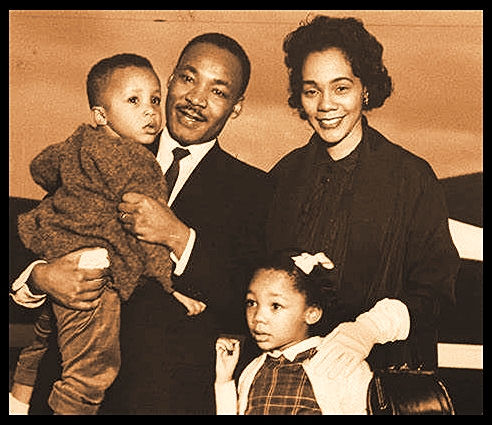
Dr. Martin Luther King, Jr., Coretta Scott-King and their children.
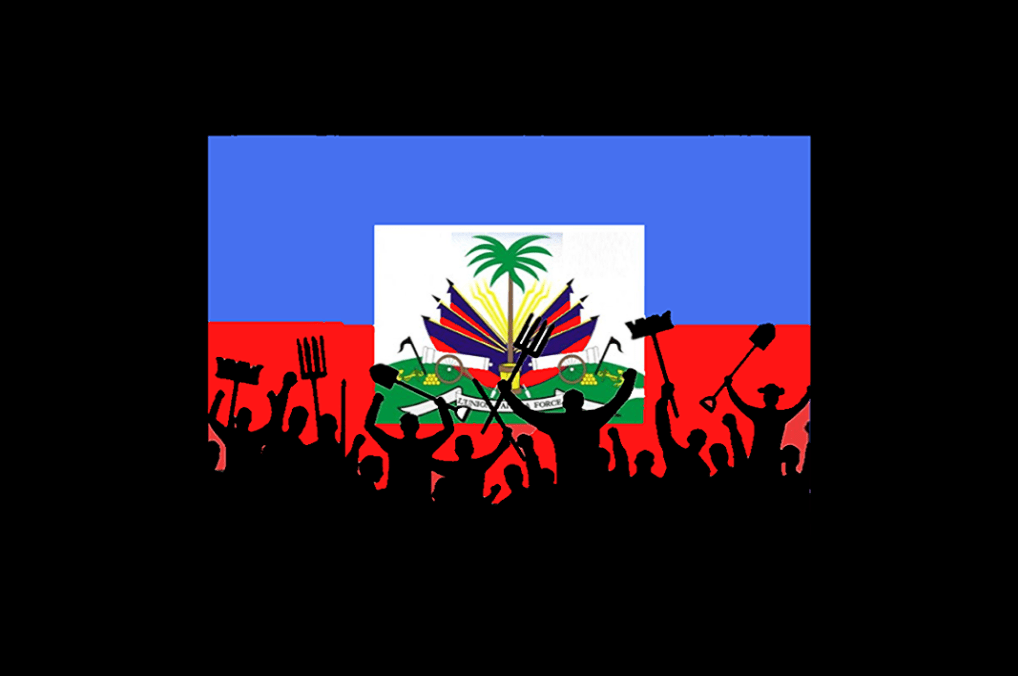
The Haitian Revolution is among the most spectacular events in Western Hemispheric history. It was a revolt executed by enslaved Africans on the island of Española. This rebellious storm which began on August 21, 1791, and lasted to January 1, 1804, marked the beginning of the end for the vile system of chattel slavery in the Americas.
Bourgeois historians tend to automatically distort facts and formulate narratives that overshadow the Haitian Revolution by overly glorifying the French and so-called American “revolution”, two monumental events in capitalism’s development.
Moreover, these mainstream scholars will falsely assert that what sparked anti-colonial struggles in the Western Hemisphere was the “War for Independence” of 1776. However, a close examination of the history of race relations in the United States will contradict such claims.
An artist depiction of the Haitian Revolution’s fury.
For its own reasons of interest, England was leaning towards prohibiting the trans-Atlantic slave trade. It also disapproved its Thirteen settler colonies expanding further westward.
The British Empire was apprehensive of overextending itself in unfamiliar regions of the Americas. It feared becoming vulnerable to the organized resistance of Indigenous tribal people and competitive aggressiveness of its Spanish and French rivals.
It was England’s colonial policy and line of march in foreign affairs that placed its interest in direct conflict with that of the rising capitalist class in the Thirteen Colonies. The contradictions between English rulers and their “American” birth child became antagonistic and irreconcilable.
Expanding African slavery and pushing further west to engage in the theft of Indigenous lands was the sole motive for “Independence” from England. Whereas the Haitian Revolution was motivated by enslaved people desperately seeking an end to their plight.
Haiti was the most lucrative colony France possessed in its empire due to the untold horrors the Black population experienced under extreme circumstances of exploitation. The amount of wealth generated from commodity goods shipped to France, mainly sugar, coffee, cacao, cotton, and indigo, amazingly surpassed commodities exported to England from the Thirteen Colonies combined.
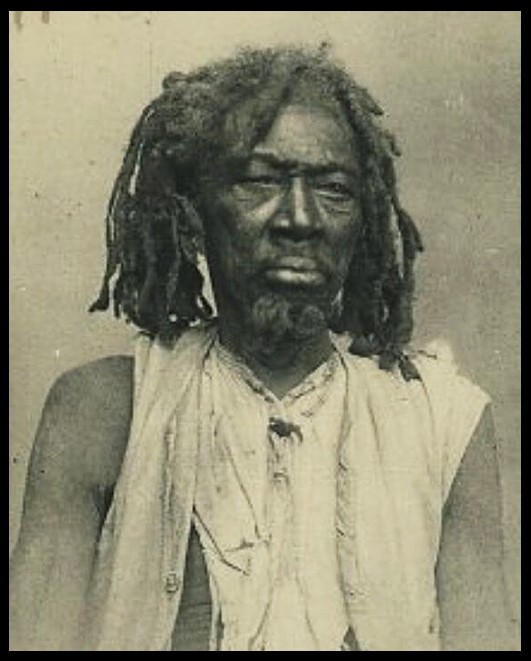
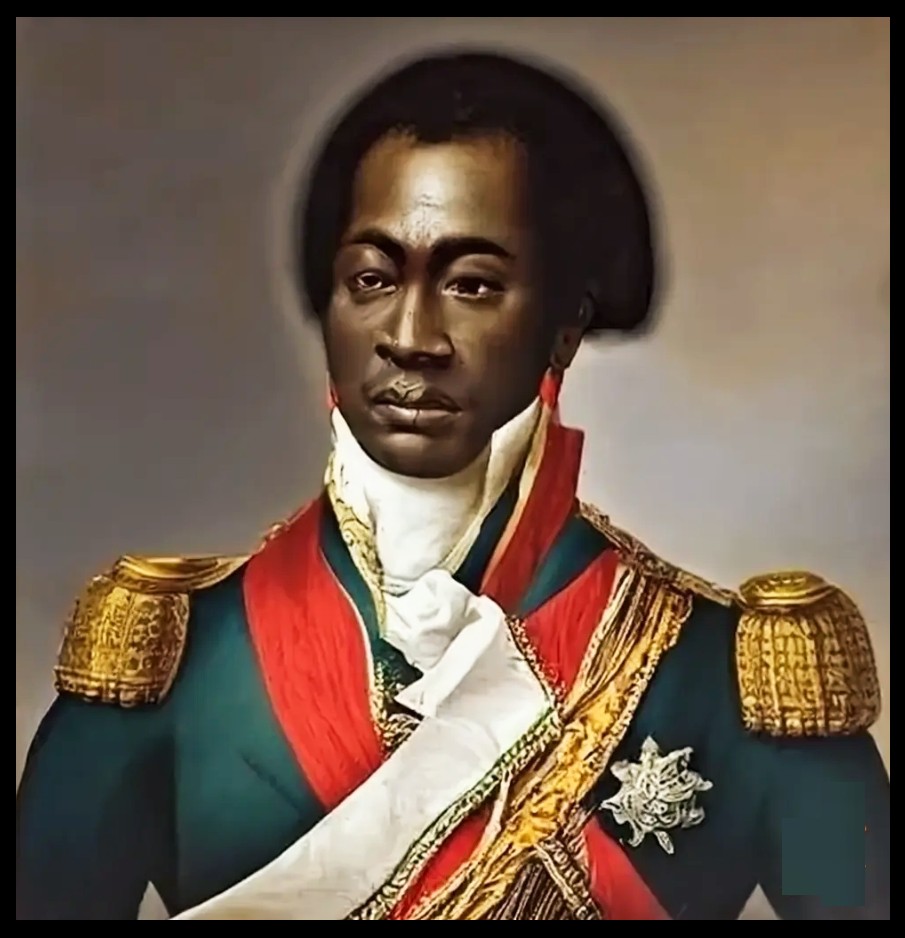
The Legendary Dutty Boukman
Dutty Boukman, a priest of African religions was captured by slave traders in the region known today as Senegal and Gambia. He was brought to Jamaica and then to Haiti. Boukman was boldly rebellious and frequently defied slavers by escaping. He acquired his name (Boukman for book man) because he always traveled with a Koran, which he used to teach fellow slaves how to read.
Artist’s depiction of Dutty Boukman.
According to many contemporary accounts, Boukman was selfless and a compassionate human being, but he was also known to be extremely ruthless with slave owners as well as Blacks who betrayed their own people.
Boukman was a respected and feared maroon leader, with a large following that frequently ambushed individual French officials. They attacked settlements and homes of wealthy elite figures to avenge what was done to Black people.
But on November 7, 1791, Boukman was killed while leading a slave uprising in the township of Le Cap-Francais. Today, Boukman is remembered as the Catalyst of the Haitian Revolution.
Women in the Haitian Revolution
The success of the Haitian Revolution would not have been possible without the participation of free and enslaved Black women, most of whom picked up arms willingly against the French. Their desire to serve as combatants and spies was in response to the degradation they experienced through beatings and rapes at the hands of their slave masters.
An artist’s depiction of triumphant Haitian women in battle.
A famous example is Marie-Jeanne Lamartinière, who served as a Lieutenant in Toussaint Louverture’s army. She courageously gave leadership to combatants that shocked French soldiers at the Battle of Crête-à-Pierrot.
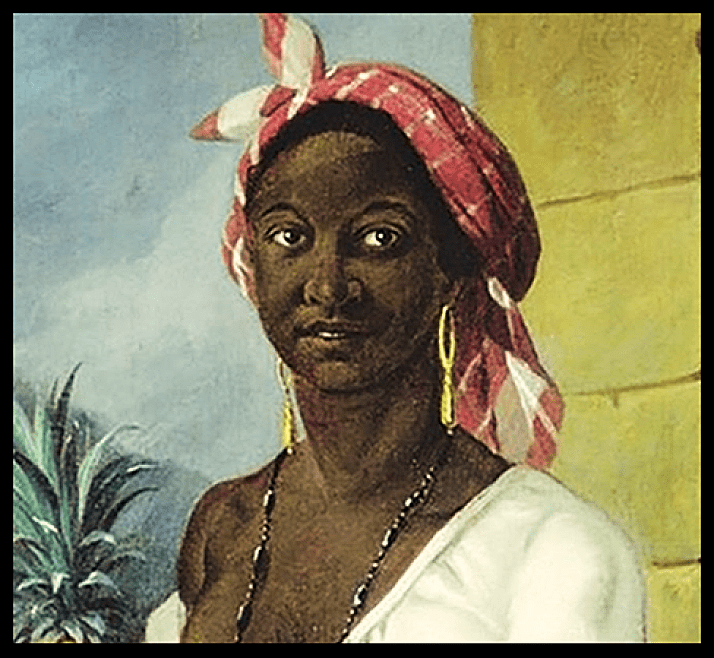
Artist’s depiction of Marie-Jeanne Lamartinière.
There were no limits to what these women did in the interest of the revolution. In many cases, these heroines weaponized sexuality to disorient and fool enemy troops in order to obtain intelligence vital to the operations of insurgents.
The heroic acts of these women highlight their commitment to a noble cause. Their sacrifices are usually downplayed or dismissed by the dominant male perspective of bourgeois historians.
Haitian Defeat of the French
Although most combatants were formerly enslaved Black men and women, the liberation army included free Blacks, Tainos, Mulatos, as well as Polacks and Germans, whites serving in the French Army who defected to the revolution. French tyranny was despised by various sectors of Haitian society.
After the revolutionary triumph, non-French Europeans who supported the abolitionist cause were allowed to remain in Haiti and granted citizenship. However, French citizens who upheld the slave system and refused to leave Haiti were immediately killed.
The savage treatment enslaved Black Haitians received from their French captors fully justify the rage and ruthlessness of this revolt.
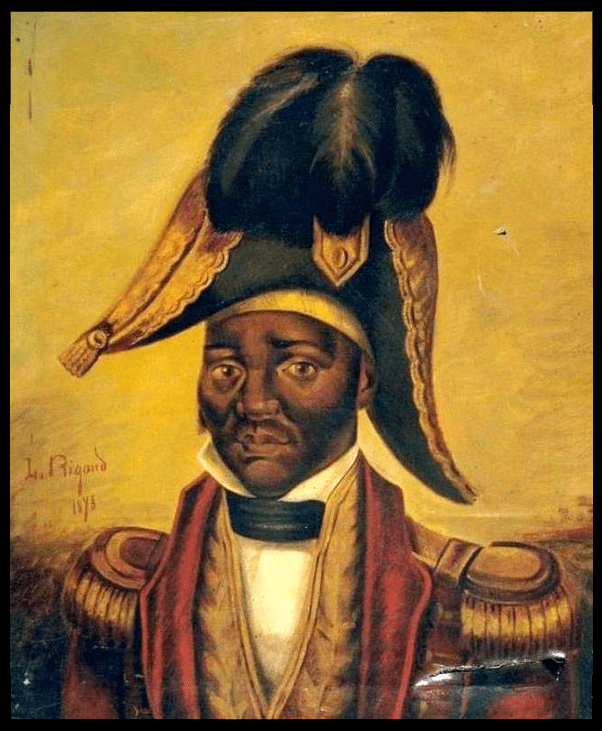
Formerly enslaved Jean-Jacques Dessalines, who was second-in-command and one of Toussaint L’Ouverture’s generals, brilliantly led the revolutionary army at the decisive Battle of Vertieres on November 18, 1803, where the French Army suffered many casualties causing humiliation with defeat.
Jean-Jacques Dessalines (1758-1806)
The French were exhausted and demoralized by the prolongation of the conflict. They were shocked by the tenacity of Black people determined to win their freedom. After thirteen years of fighting, on January 1, 1804, the Haitian people jubilantly rejoiced when Dessalines declared Haiti’s independence from foreign domination.
Artist depiction of the Battle of Vertieres, November 18, 1803.
After the military struggle ceased, the newly formed Haitian government focused on seeking allies by establishing relations with revolutionary movements of neighboring countries. Haitian leaders understood quite well the necessity and benefits for oppressed people of different lands to forge unity, if they were to survive the onslaught of colonizing powers.
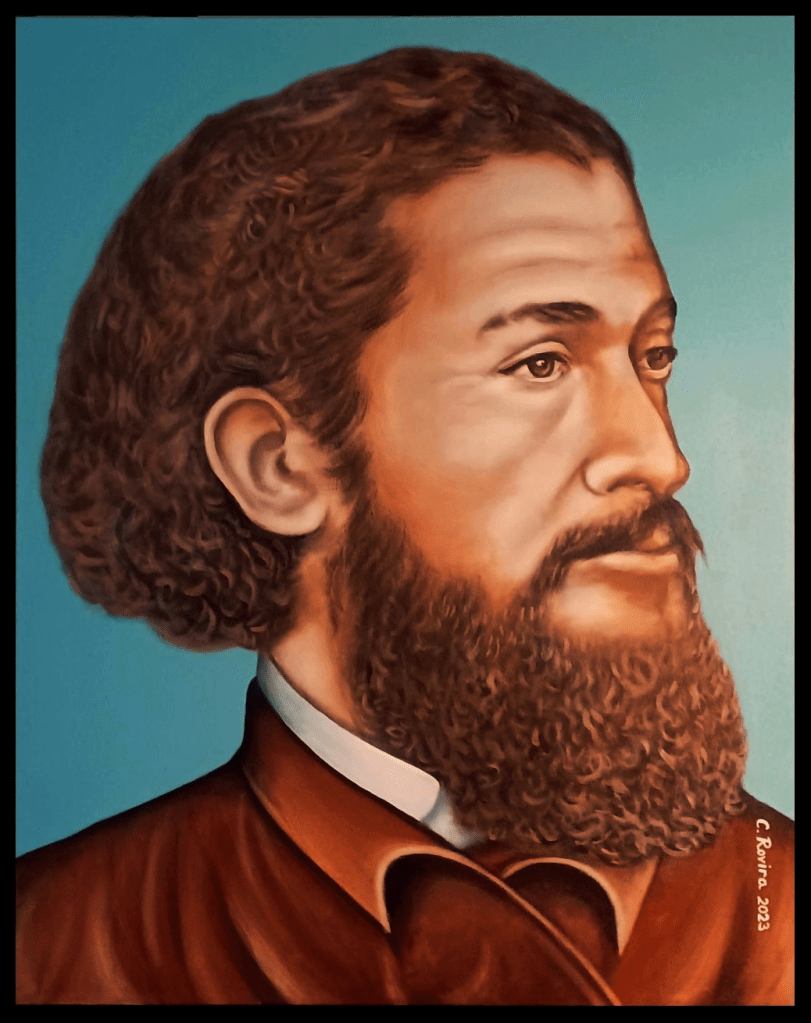
This was a feature of the Haitian perspective that impacted Puerto Rico’s iconic revolutionary leader, Dr. Ramon Emeterio Betances. Following in the footsteps of his father, a Dominican businessman who supported the Haitian Revolution, Betances travelled to Haiti with his most trusted comrade, Jose A. Basora, to have collaborative discussions with Haitian leaders on the ideas of a trans-Caribbean federation.
My portrait of Dr. Ramon Emeterio Betances. 24″ X 30, acrylic paint on canvas.
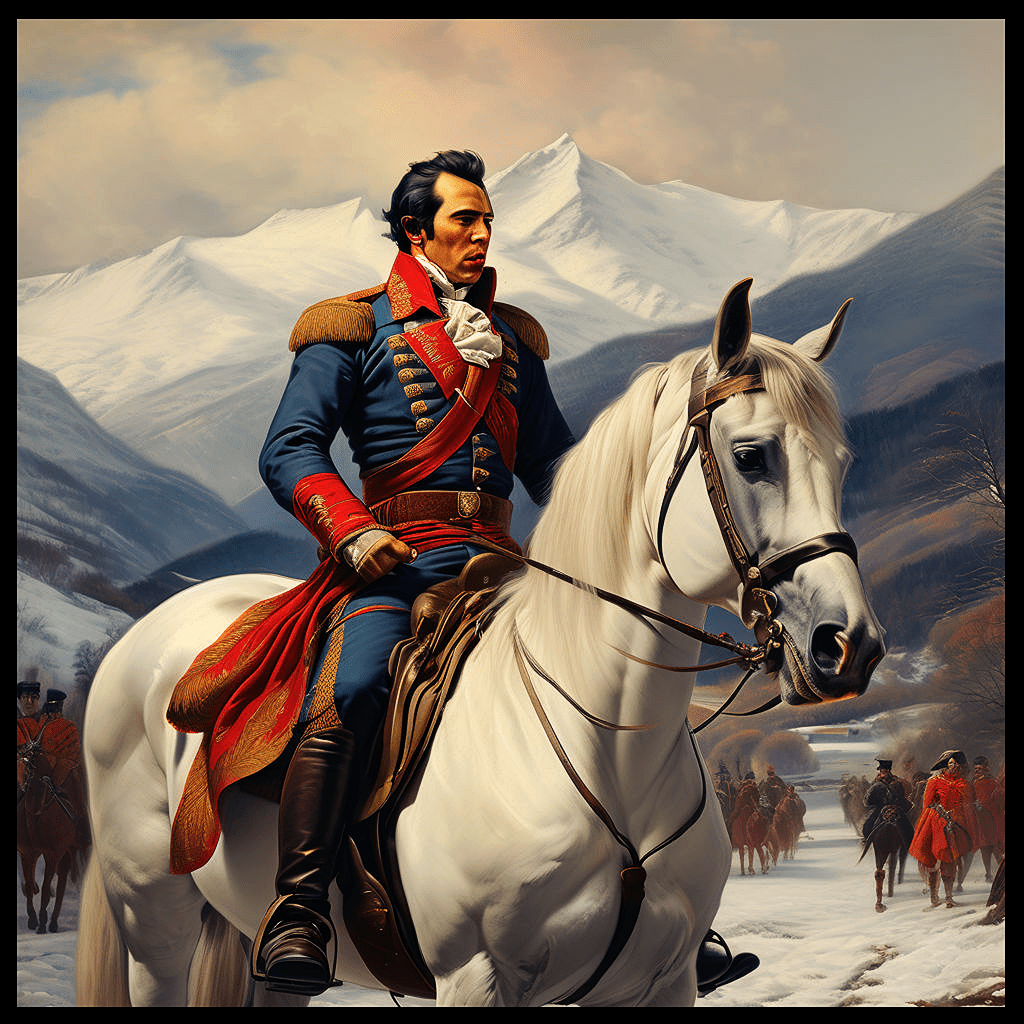
Many weapons seized from the defeated French Army were then given as gestures of solidarity to revolutionaries in Cuba, Jamaica, Puerto Rico, Mexico, and Simón Bolivar’s liberation army in South America. Haiti also provided combatant volunteers to assist in some of these liberation struggles.
An artist oil depiction of the legendary revolutionary Simón Bolivar.
Haiti became a beacon of hope and inspiration for enslaved and colonized people throughout the Caribbean, Latin America, Africa, and the United States, similarly to how the Soviet Union was viewed with awe in the early part of the Twentieth Century.
Imperialism punishes Haiti for 1804
Soon after the victory, Haiti sought to normalize relations with France and the United States on equal terms through diplomacy, but to no avail. Instead, Toussaint L’Ouverture was brutally murdered while supposedly travelling to Paris on a French warship to make peace.
The U.S. refused to recognize Haiti’s independence until 1862. And due to pressure, Haiti was forced to cede to France’s demand for reparation – 150 francs for the “loss of property”, (meaning slaves) in exchange for recognizing the newly formed Haitian state.
The legendary Haitian revolutionary leader Toussaint L’Ouverture.
Haitian leaders always struggled to retain political power under the pressure of mounting hostilities by countries eager to re-colonize Haiti.
Between 1915 to 1934, The United States militarily invaded and occupied Haiti. The excuse Washington officials used was to “restore order and stability” after the assassination of Haitian President Jean Vilbrun Guillaume Sam. A puppet government was then installed which agreed to have the U.S. take control of Haiti’s treasury.
The U.S. also invaded Haiti in 1993 under the guise of United Nations “Peacekeepers” and intervened again in 1994.
U.S. and French racist arrogance never respected the sovereignty of the first Black republic that dared to challenge white supremacy. This is why Haiti is punished to this day by being held in a continual colonial existence.
Despite how imperialism has suppressed the Haitian people in modern times, the revolutionary ferment of demonstrated by the Haitian people cannot be removed from hearts and minds. Tyrants and colonial oppressors of every kind continue to dread the Haitian people for the fury they unleashed that triggered the downfall of African chattel slavery.
It is for this reason why the Revolution of 1804 shall forever inspire and have a special place in the archives of the class struggle, alongside the 1917 Russian Socialist Revolution, Mexican Agrarian Revolution, 1949 Chinese Revolution, Cuban Revolution, Vietnamese Revolution, Congolese Revolution, Angolan Revolution, South Africa, and others yet to come.
“Debemos luchar por una nación árabe, por la unidad, por la libertad, por el socialismo. Debemos derrotar al enemigo número uno, Estados Unidos, el proveedor de misiles Hawk de Israel, y debemos apoderarnos de nuestros propios recursos petroleros. Debemos aprender a emular a nuestros hermanos argelinos para poder liberar a Palestina”. -Leila Khaled
______________________________________________
Por Carlos “Carlito” Rovira
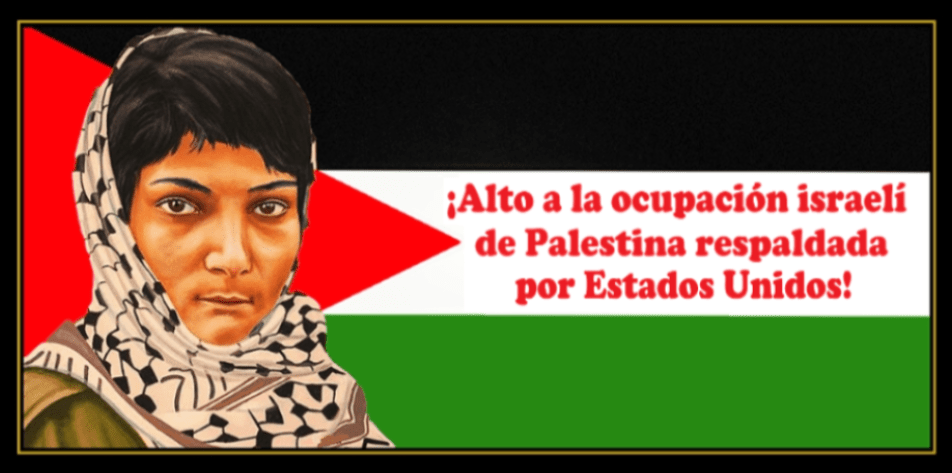
El 9 de abril de 1944, en el municipio palestino de Haifa, nació Leila Khaled. Ella es una figura simbólica que representa la lucha de liberación del heroico pueblo palestino, que lucha contra la cruel ocupación israelí respaldada por Estados Unidos.
La militancia de Leila Khaled se desarrolló debido a los horrores que ella y su familia experimentaron cuando era niña debido a los abusos israelíes. Estas aterradoras experiencias ocurrieron durante la Nakba (catástrofe en árabe) de 1947-1948, cuando todos los palestinos se vieron afectados por la flagrante criminalidad de los sionistas.
Con todo el sufrimiento y la muerte infligidos al pueblo palestino durante la infancia de Leila Khaled debería explicarse por qué creció desarrollando el deseo de ser parte de la resistencia armada. Finalmente, se unió al Frente Popular para la Liberación de Palestina (FPLP).
Leila Khaled con un compatriota mayor.
Históricamente, la mayoría de los movimientos de resistencia amplifican las habilidades de lucha de unos pocos luchadores varones seleccionados. Sin embargo, cuando mujeres como Leila demuestran la misma furia y convicción ardiente que sus camaradas masculinos, tiene un poderoso efecto psicológico en la oposición.
Los opresores de todo el mundo son conscientes de que su mayor vulnerabilidad es la unidad entre los oprimidos, especialmente si implica que ejerzan el derecho a utilizar cualquier medio de lucha por la liberación.
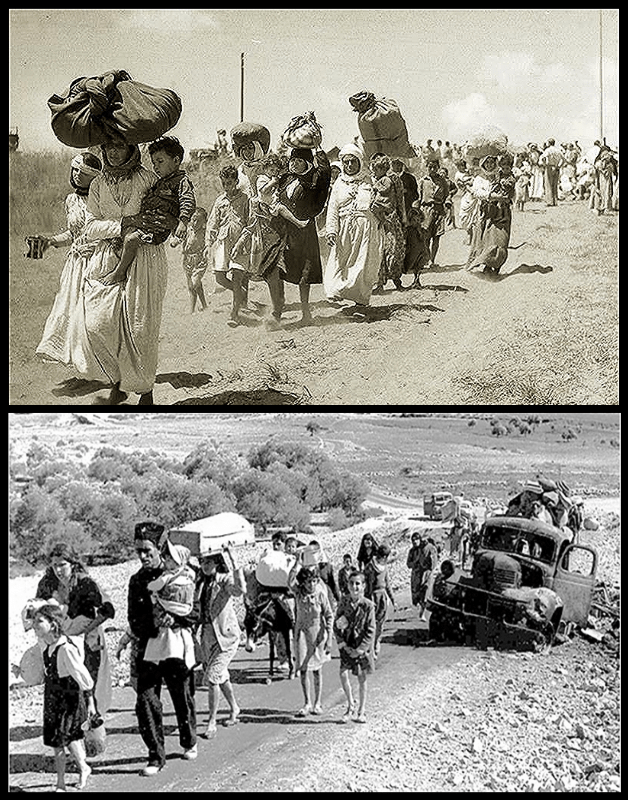
Familias palestinas siendo conducidas a campos de refugiados en su propio país durante la Nakba.
Durante la Nakba, un millón de palestinos fueron desplazados y desposeídos tras la confiscación de sus hogares, propiedades y tierras. Unas 600 aldeas fueron quemadas, destruidas o atacadas con armas biológicas para dar paso al Estado de Israel. Además, hombres, mujeres y niños fueron golpeados, asesinados y violados impunemente por cobardes matones armados israelíes.
La expulsión forzada de palestinos de su patria por la complicidad combinada de la mayoría de las potencias imperialistas es uno de los mayores crímenes de guerra de la historia. Los gobernantes de Gran Bretaña, Francia y Estados Unidos estaban ejecutando descaradamente este plan abiertamente para que el mundo fuera testigo.
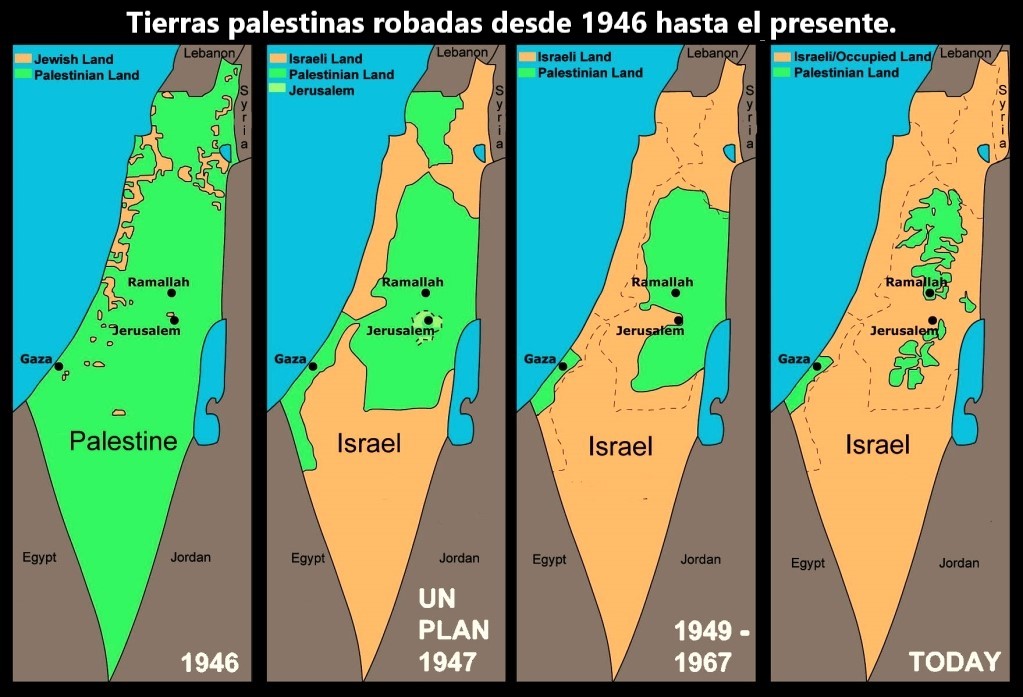
El genocidio cometido por soldados israelíes fue avalado por potencias extranjeras que manipularon una votación de la Asamblea General de las Naciones Unidas el 29 de noviembre de 1947 para aprobar la Resolución 181. Este documento adoptó el llamado Plan de Partición de Palestina, que dividió el territorio en dos estados, uno judío y otro árabe. Es decir, utilizar la legitimidad de esta organización internacional para realizar robos de tierras.
Como sabemos hoy, esta partición fue el paso inicial de un plan diseñado por el fundador del sionismo moderno, Theodor Herzl, que había previsto la eliminación gradual de los árabes de la tierra “prometida a los judíos por Dios”.
Aunque Herzl no era judío ni un líder religioso, era un admirador de las potencias imperialistas en ascenso en la segunda mitad del siglo XIX, cuando Inglaterra, Francia, Bélgica, Alemania, Italia, Japón y Estados Unidos competían febrilmente por establecer colonias en todo el mundo.
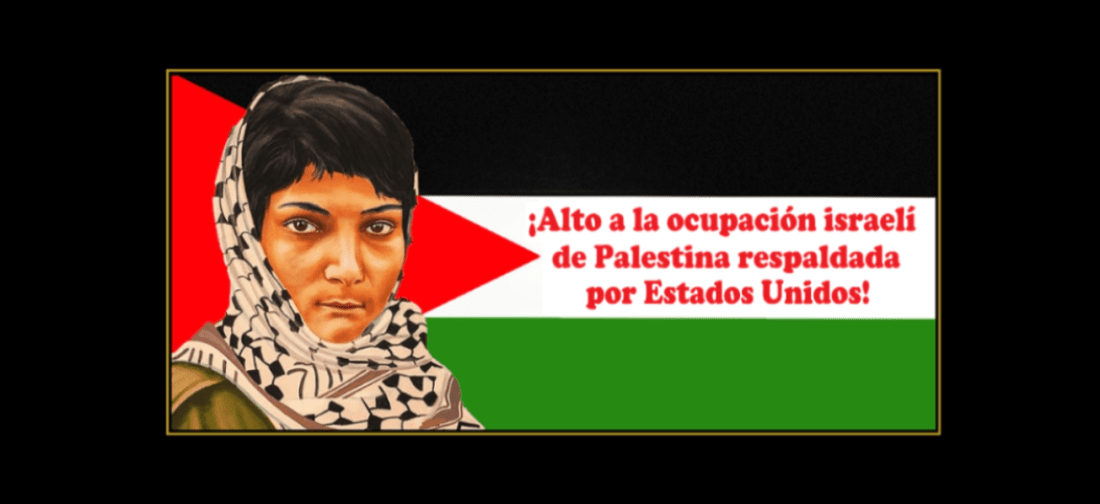
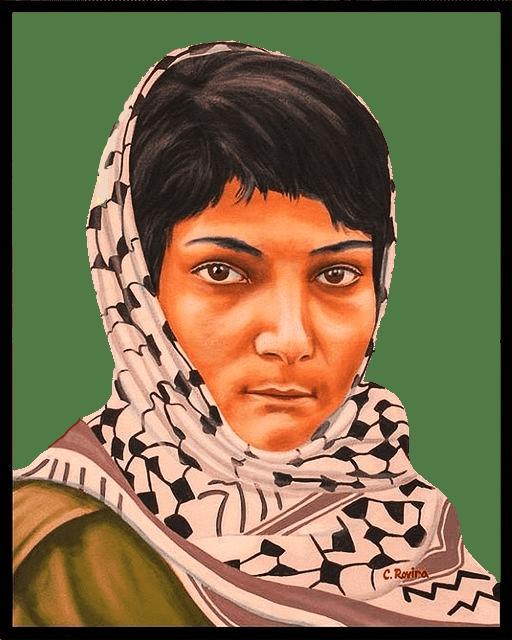
Un retrato que hice en 2021 de Leila Khaled. 24″ X 30″, pintura acrílica sobre lienzo.
Sin embargo, el imperialismo británico había colonizado tierras palestinas desde 1917. Durante todo ese tiempo, los gobernantes británicos cortejaron a los líderes sionistas que presionaron por la idea de crear un “Estado judío”. Numerosas figuras tiránicas apoyaron esta idea, incluido el notorio Adolf Hitler.
La campaña para crear el “Estado de Israel” con la intención de eliminar a la población palestina siguió cobrando impulso. En 1948, se creó el “Estado de Israel” a expensas del sufrimiento palestino sin su participación ni aprobación.
Los mismos métodos sádicos utilizados para inaugurar el Estado de Israel durante la Nakba continúan hasta el día de hoy con el suministro de armas, apoyo logístico y respaldo político y financiero de Estados Unidos. La política exterior de Estados Unidos es tan cómplice como siempre de la horrible destrucción masiva de propiedades y vidas humanas en Gaza.
Leila Khaled frente a un enorme mapa de Palestina.
Leila Khaled se hizo ampliamente conocida por su papel en el secuestro del vuelo 840 de TWA el 29 de agosto de 1969, que viajaba de Roma a Tel Aviv. El avión fue desviado a Damasco, creyendo erróneamente que a bordo se encontraba el embajador de Israel en Estados Unidos, Yitzhak Rabin. Con su arma en mano, Leila ordenó al piloto que sobrevolara la ciudad de Haifa. Quería ver la ciudad que alguna vez fue su lugar de nacimiento y el hogar de su amada familia antes de que los ocupantes israelíes la tomaran por la fuerza.
El 6 de septiembre de 1970, Khaled intentó, pero no logró, comandar un vuelo 219 de El Al, que viajaba de Ámsterdam a Tel Aviv y luego a la ciudad de Nueva York. Para frustrar los intentos de los guerrilleros de entrar en la cabina, el piloto realizó una repentina caída en picada en el aire que provocó la explosión de un dispositivo. En ese momento, el camarada de Laila, Patrick Argüello, un activista nicaragüense, fue asesinado a tiros por un oficial del aire en el avión. Luego arrestaron a Leila.
Una muestra de resiliencia y resistencia palestina.
Después de la captura de Khaled, ella se convirtió en el foco central de una crisis que comenzó en septiembre de 1970 con la incautación de cinco aviones comerciales por parte del FPLP. Los funcionarios estadounidenses hicieron denodados esfuerzos para lograr un intercambio de prisioneros. La preocupación era que los pasajeros estadounidenses y británicos fueran retenidos en el secuestro de múltiples aviones.
Para demostrar que eran serios y estaban dispuestos a morir por su causa, como grabaron las cámaras de televisión de los medios de comunicación, los combatientes del FPLP hicieron estallar tres de los cinco aviones en una pista de aterrizaje jordana. 56 pasajeros estadounidenses, británicos y otros europeos retenidos fueron utilizados para negociar la liberación de siete prisioneros palestinos, incluido Khaled.
Después de haber sido mantenida prisionera por las autoridades británicas durante tres semanas y liberada en un intercambio de prisioneros, Leila Khaled continuó sirviendo como representante política de la lucha palestina, dando conferencias en todo el mundo.
Hoy, Laila Khaled continúa haciendo su parte en la búsqueda de una Palestina libre.
Es muy inspirador saber que no importa lo que el Estado de Israel, respaldado por Estados Unidos, le haya hecho al pueblo palestino, éste continúa resistiendo a pesar de circunstancias deplorables. Su fuerte resiliencia nos asegura que mientras la ocupación de Palestina continúa existiendo, persiste la necesidad de un activismo fuerte y una resistencia global a la opresión.
“The United States is not only the strongest, but also the most terrified country.” ― Leon Trotsky
____________________________________________
By Carlos “Carlito” Rovira
Leon Trotsky was born as Lev Davidovich Bronstein to a wealthy Ukrainian Jewish family on November 7, 1879, in Yanovka, Ukraine during the Russian Empire. However, after becoming drawn to Marxism as a teenager, he purposely repudiated his social class privilege and rejected the Jewish identity as an unapologetic atheist. Trotsky grew to become a prominent figure in one of the most momentous events of the Twentieth Century, the 1917 Russian Socialist Revolution.
In February 1917, Czar Nicholas II was forced to abdicate his throne due to extreme political unrest in Russia. The country was undergoing a promising revolutionary crisis. Trotsky returned to Russia after living in exile for a number of years. He returned with about 4,000 of his followers and immediately began workng diligently to unite his Mezhraiontsy group with the Bolsheviks.
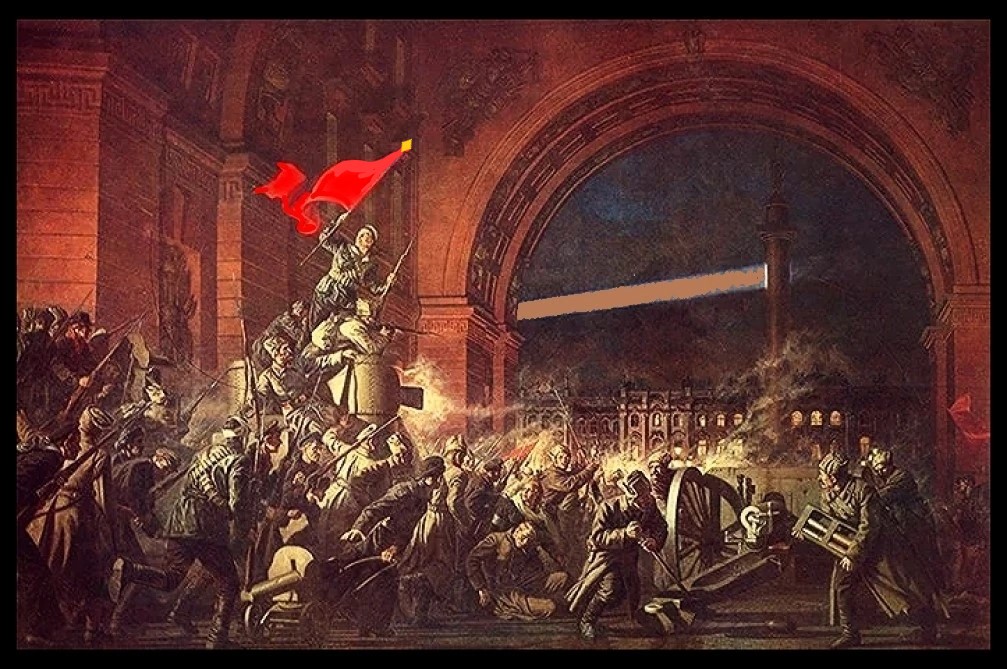
As chairman of the Petrograd Soviet, Trotsky played a key role in the storming of the Winter Palace in which the Kerensky Government was overthrown. Trotsky had then become one of Vladimir Lenin‘s most trusted comrades.
Artist depiction of Bolshevik insurgents storming the Winter Palace in Saint Petersburg, October 1917.
Between 1918 to 1925, Trotsky served as Commissar for Military and Naval Affairs, the equivalent title of a defense minister. He was also founder of the Soviet Red Army.
Under Trotsky’s leadership, the Red Army defeated attempts by counterrevolutionaries to restore the old semi-Feudal capitalist order. He also played a decisive role expelling from 5,600 miles of Russian territory, 14 invading imperialist armies. This included invading military forces from the United States.
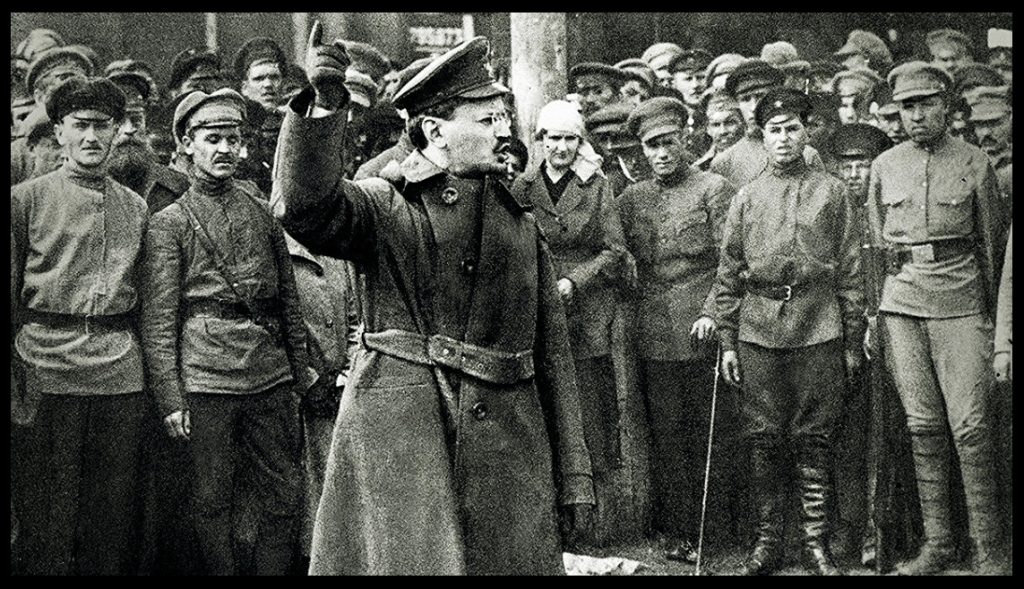
Trotsky speaking to Red Army troops before a battle.The Red Army in pursuit of counterrevolutionary forces during the Civil War in Russia.
Being well-versed in the politics of the United States, Trotsky was quite outspoken against the racist policies of its government officials – especially on the subject of the Klu Klux Klan (KKK), the historic expression of white supremacy which originated from among defeated Confederate Army officers and soldiers after the U.S. Civil War.
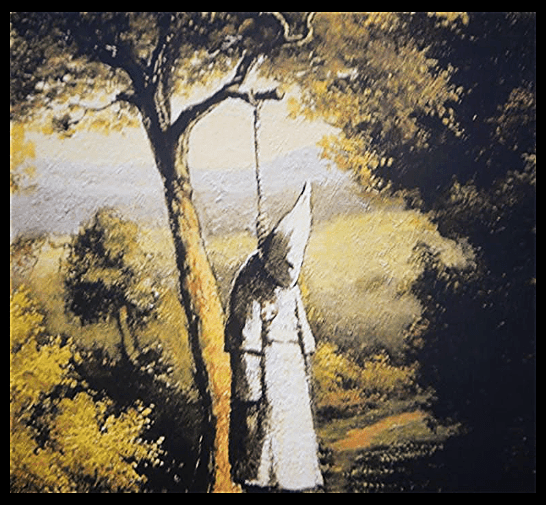
Trotsky’s outspoken and unforgiving stance with white supremacy came at the height of lynching of Black people in the U.S. southern states. He adamantly encouraged U.S. Communists to inflict the same terror on the KKK. Trosky stated: “Let us raise the slogan so that these capitalists will hear it plainly: LYNCH THE LYNCHERS OF THE NEGROES AND THE POOR TOILERS!”
Banksy’s Hanging Klansman. A vision Leon Trotsky likely had when speaking about the KKK.
Trotsky had profound respect for the spiritual power of culture. His Collected Writings on Literature & Art, expressed the importance he gave to this subject for winning over the hearts and minds of millions of working-class people.
Unlike Joseph Stalin’s official restrictions on artistic license, Trosky was enthusiastically in favor of artistic freedom development in all forms. This view was also expressed at a public meeting on May 2, 1956, by China’s Mao Zedong:“Let a hundred flowers bloom; let a hundred schools of thought contend.
Leon Trotsky standing by the Kremlin.
Trotsky’s views on culture and art reflected his general disposition on the power of worker’s rights and power which aimed to encourage dialog and debate. Trotsky wanted to use culture as a tool for strengthening the intellectual potential of all citizens- especially the farmers and working class in a county where illiteracy was widespread.
Moreover, Trotsky envisioned creating a system of checks and balances where the average worker had a voice in the workplace and government. Elected “Commissars” as defined by the principles of Workers & Soldiers Soviets, would have subjected government and military officials to immediate recall if necessary.
Leon Trotsky with fellow combatants of the Red Army.
Trotsky’s logic was to compel officials to practice good leadership by earning the respect and loyalty of their subordinates. However, the role of Commissars fluctuated as the ferment of the revolution gradually waned. Ultimately, these elected posts were eliminated by decree, becoming a key area of contention between Stalin and Trotsky.
THE STALIN – TROTSKY SPLIT
As the Soviet Union moved forward to consolidate its political power, especially after the death of Vladamir Lenin on January 21, 1924, contradictions sharpened between two opposing currents within the Communist Party of the Soviet Union (CPSU).
The differences became crystalized and were spearheaded by Joseph Stalin on the one hand and Leon Trotsky on the other. Stalin represented a fierce movement to concentrate power in the government bureaucracy, whereas Trotsky advocated for empowering the Soviets (committees) of workers.
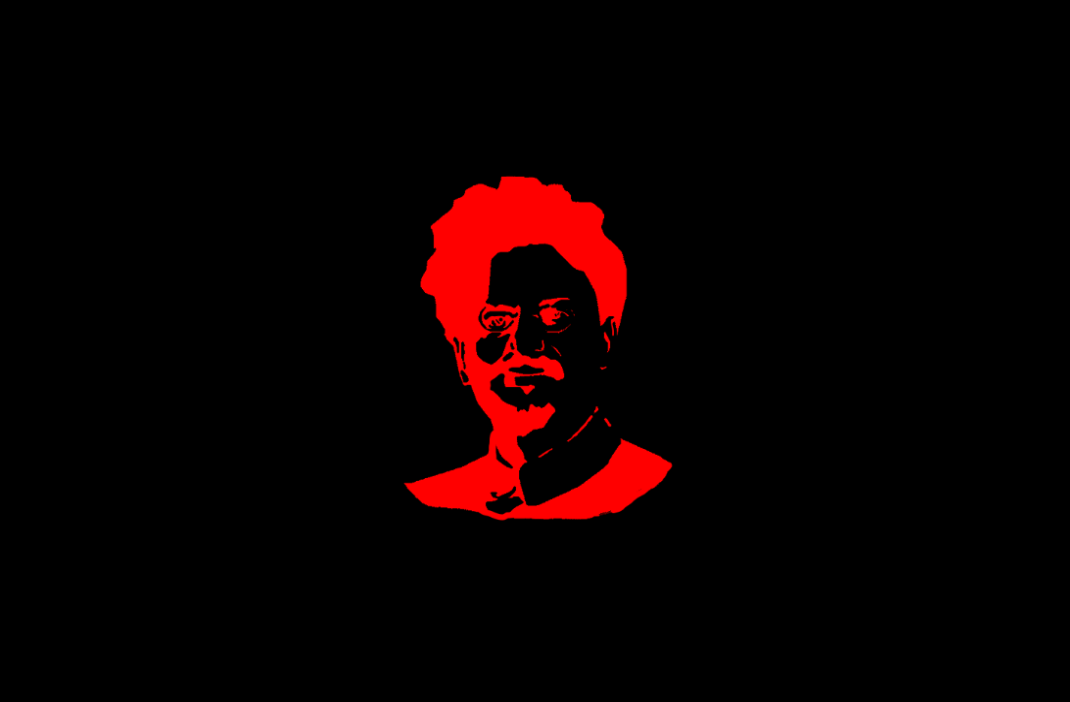
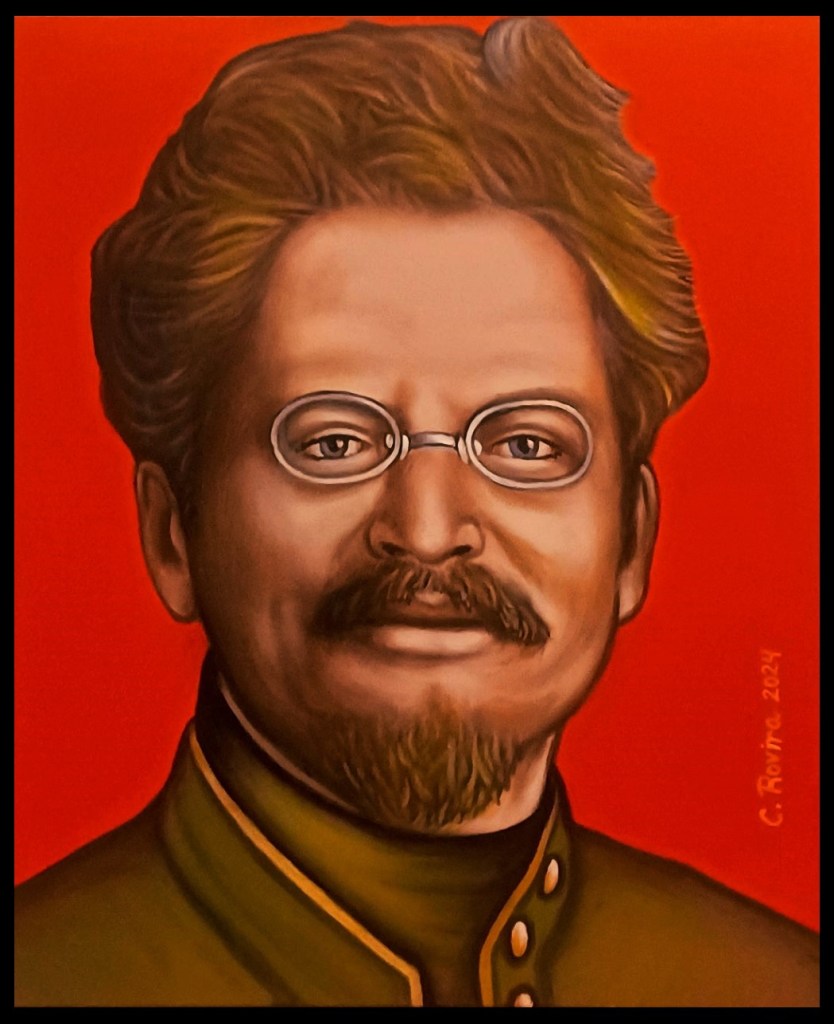
My portrait of Leon Trotsky. 20″ X 24″, acrylic paint on canvas.
As Lenin’s health began to rapidly decline due to a debilitating stroke, he dictated a letter to his trusted aide stating his last wishes that Joseph Stalin not become his successor as leader of the Soviet Union. This historical document became known as Lenin’s Last Testament. However, Stalin manipulated everyone opposed to him by appointing his close allies to key government positions to thwart objections. This event outraged many Bolsheviks who expected Trotsky to be next in line as head of state.
In the years after Lenin died, the majority of the CPSU’s rank and file was gradually steered to partake in a deliberate campaign against Trotsky. He was horribly vilified and removed from his duties as Commissar of the Military, the Politburo, as well as purged from the Communist Party altogether. Eventually, Trotsky was exiled out of the Soviet Union.
As always, dynamics exist everywhere in nature and politics. Tragically, the differences within CPSU were unable to be resolved, resulting in increased antagonism which led to the assassination of Trotsky in Mexico on August 21, 1940, by a NKVD secret agent Jaime Ramón del Rio. In addition, Trotsky’s loyal followers were suffering persecution inside the still developing USSR.
Until the last moments of his life, Trotsky maintained a revolutionary posture by urging his followers to continue defending the Soviet Union. Although Trotsky was scornfully opposed to Stalinism, he understood that it was a phenomenon that did not originate from the capitalist camp but from socialism.
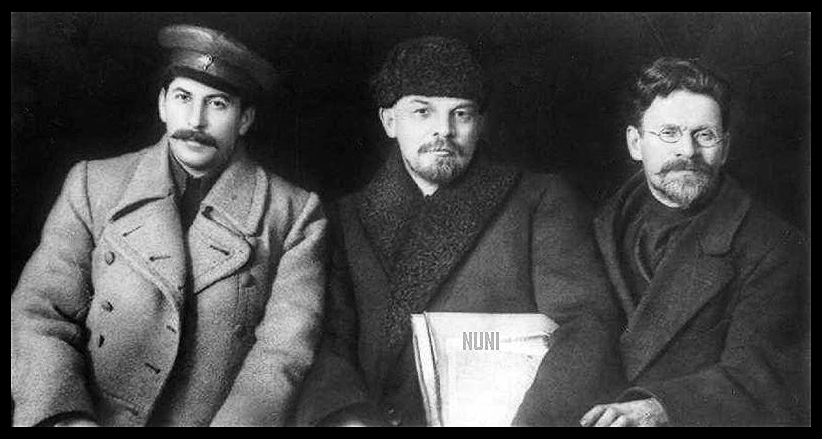
From left to right: Joseph Stalin, Vladamir Lenin, and Leon Trotsky before their political fallout.
Internal turmoil is often the initial spark that ignites the implosion of any revolutionary movement. One can easily point to a similar historical occurrence, when in June 1971 internal conflicts caused the disastrous demise of the Black Panther Party (BPP).
The scenario of domestic dispute and violence applies in both absurd situations. Brothers & sisters turned against brothers & sisters to the highest level of hostilities.
It is impossible to overlook how the BPP split was a set-back for the U.S. movement. And it doesn’t take much to conclude how the BPP split was largely orchestrated by the FBI’s COINTELPRO. Conversely, we cannot dismiss the possible role by foreign intelligence in the Stalin-Trotsky conflict.
However, Leon Trotsky repeatedly warned the international revolutionary movement about the detriments of Stalinism, most notably his predictions of the USSR’s shift to the right and its eventual collapse, which occurred in 1991. Trotsky’s detailed critiques of Stalinism were outlined in his classic polemic titled A Revolution Betrayed.
The collapse of the Soviet Union provided the international gang of capitalist tyrants and exploiters an opportunity to advance their anti-Communist smears. It also caused many difficulties for revolutionaries throughout the world, as well as republics resisting imperialism like Cuba.
There are many lessons to be drawn by future generations of the 1917 Russian Revolution. Specifically, Leon Trotsky’s contributions to the establishment of the very first socialist state, and his comradeship with Vladamir Lenin.
Vladamir Lenin and Leon Trotsky together after the Bolshevic seizer of power.
It will require serious inquiry about this history to counter the baseless anti-Communist slanders directed against the legacy of Leon Trotsky, which originated from Stalinism.
Hopefully, the next major Socialist revolution, wherever it may be, shall avoid a repeat of past mistakes and correctly grapple with socialism’s inherited contradictions. That will surely guarantee a decisive victory for the emancipation of oppressed and exploited people.
LONG LIVE THE REVOLUTIONARY LEGACY OF LEON TROTSKY!




























 carlitoboricua