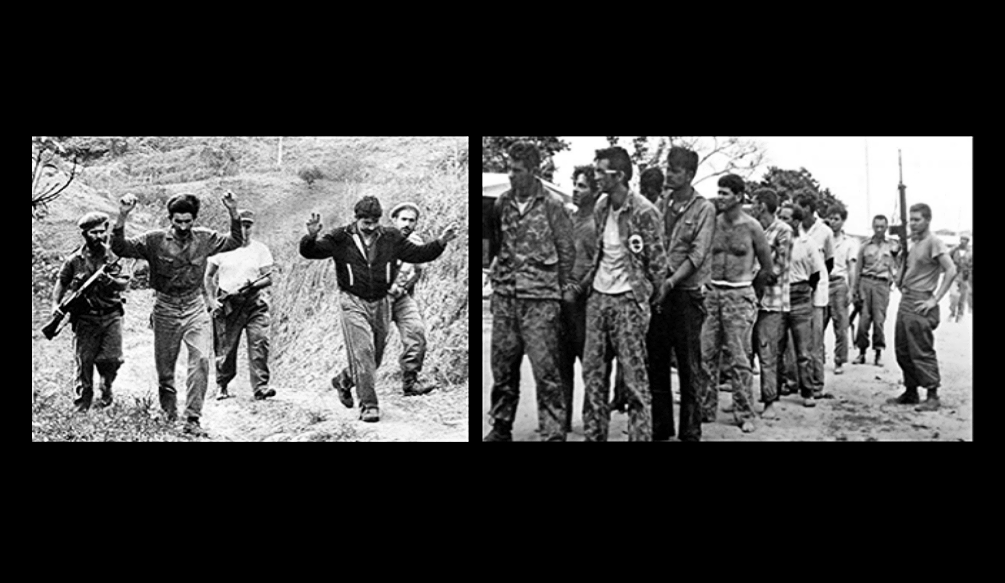
Remember when the heroic Cuban people defeated U.S. Imperialism at the Bay of Pigs on April 17-20, 1961
By Carlos “Carlito” Rovira
The ruling class of the United States was never happy about the triumphant 1959 Cuban Revolution, especially after Comandante Fidel Castro Ruz announced the Socialist direction Cuba would pursue. And as the leadership of the July 26 Movement demonstrated to embrace Marxism–Leninism and began implementing anti-capitalist policies like the nationalization of multinational companies and expropriation of wealthy families, Washington officials became alarmed.
And as diplomatic relations with the United States deteriorated Cuba sought greater ties with the Soviet Union. Havana and Moscow discussed making numerous trade agreements that also included the supply of weapons. Washington officials viewed these developments with extreme disdain.
U.S. President Dwight D. Eisenhower secretly authorized the Central Intelligence Agency (CIA) to prepare right-wing Cubans in exile, formerly of Fulgencio Batista’s Army, for a future invasion of Cuba. By the time John F. Kennedy became President the CIA had drawn up plans for eventual intervention, focusing on storming Cuba’s southern coast.

The objective was to overthrow the Cuban government and punish the revolution for daring to break away from the U.S. colonial stranglehold. To this day U.S. rulers adamantly take to heart the 1823 Monroe Doctrine, which staked out the Western Hemisphere as the “backyard” of the United States.
Washington officials became obsessed with Cuba and dreaded the idea of other countries in Latin American and the Caribbean becoming inspired by the Revolution. Eisenhower and Kennedy engaged in every effort to isolate Cuba, using the Organization of American States (OAS) and making the Green Berets, Army Special Forces, officially operational to deter revolutionary insurgencies.

Two days before the invasion, air strikes were launched by the CIA with B-26 bombers disguised as Cuban aircrafts. The mission of these pilots was destroying Cuba’s airfields and war planes. The goal was to cripple the Revolutionary Armed Forces’ (RAF) capability to counterattack from the air. However, the CIA’s Aireal operation failed with most of Cuba’s combat planes remaining intact.
When the CIA onslaught began in the early morning hours of April 17, 1961, it was met by a local militia, mostly peasant farmers who were part of the RAF. The counterrevolutionary force known as Brigade 2506, was kept at bay until reinforcements arrived. At that point, about 200,000 troops of the RAF and militias arrived with Fidel Castro Ruz in command.


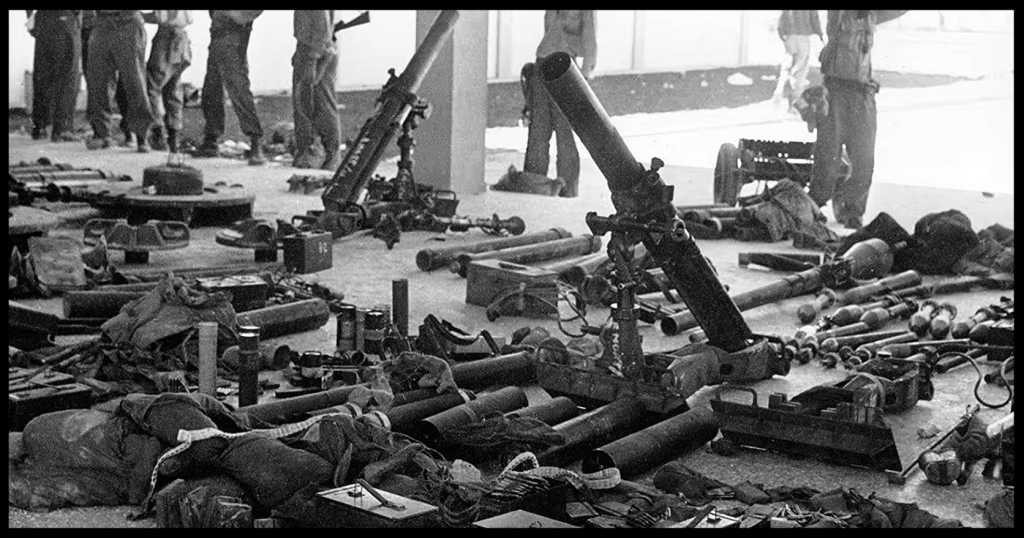
The armed conflict was intense and lasted until April 20th. In less than a day of fighting about 1500 CIA-trained exiled Cubans surrendered, some were overwhelmed by the unexpected heavy gunfire and fled on boats. In addition, 114 were killed in combat.
The CIA plan to establish a beachhead to be followed by a full-scale U.S. military invasion ended in complete disaster. Cuba’s Revolutionary Air Force managed to drop bombs and destroy two ships filled with ammunition and medical supplies for the counterrevolutionaries. Pockets of Brigade 2506 were pinned down and surrounded by superior numbers of revolutionary troops.
Days before the assault was launched Cuba’s RAF intelligence discovered precisely where the U.S.-backed counterrevolutionaries would land. Cuba had a sophisticated spy network long established by the July 26 Movement.
Thanks to the leadership of Comandante Fidel Castro Ruz, Ernesto Che Guevara, Vilma Espin, Celia Sanchez, and Cuba’s mass organizations like the Federation of Cuban Women, the Committees for the Defense of the Revolution, and People’s Militias, which prevented the re-colonization of their homeland.
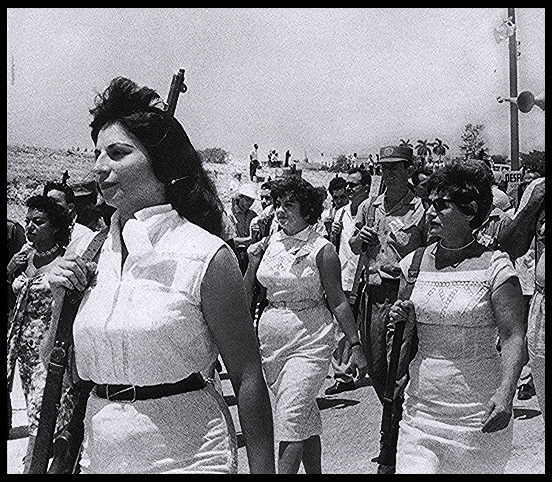

The U.S. government was humiliated. The Cuban government forced Washington officials to negotiate for the release of their 1,100 captured puppet combatants. Numerous parties, including the American Red Cross, played a role as go-between in the public and closed negotiations.
Mainstream figures and the capitalist mass media attempted to defame Fidel Castro Ruz because of his insistence that retribution for the invasion was justified. Cuba was accused of demanding a “ransom” for the release of the prisoners of war as if they were kidnapped victims.
But Cuban diplomats remained firm stating that it was Cuba’s sovereignty that was violated by the captives. In the end, due to pressure from the families of prisoners as well as several international organizations, the U.S. government was politically pressured to an agreement.
At first, President Fidel Castro Ruz demanded tractors for heavy construction needed to industrialize the country. But at the end, the U.S. and Cuban governments agreed on $53 million worth of baby food and medicines, in exchange for the prisoners.
The Bay of Pigs incident caused major political embarrassment for the Kennedy Administration. U.S. officials have never recovered from the shock brought upon them by the CIA’s defeat at the Bay of Pigs. The imperial arrogance of U.S. rulers led them to underestimate the collective consciousness and revolutionary ferment that was occurring in Cuba.
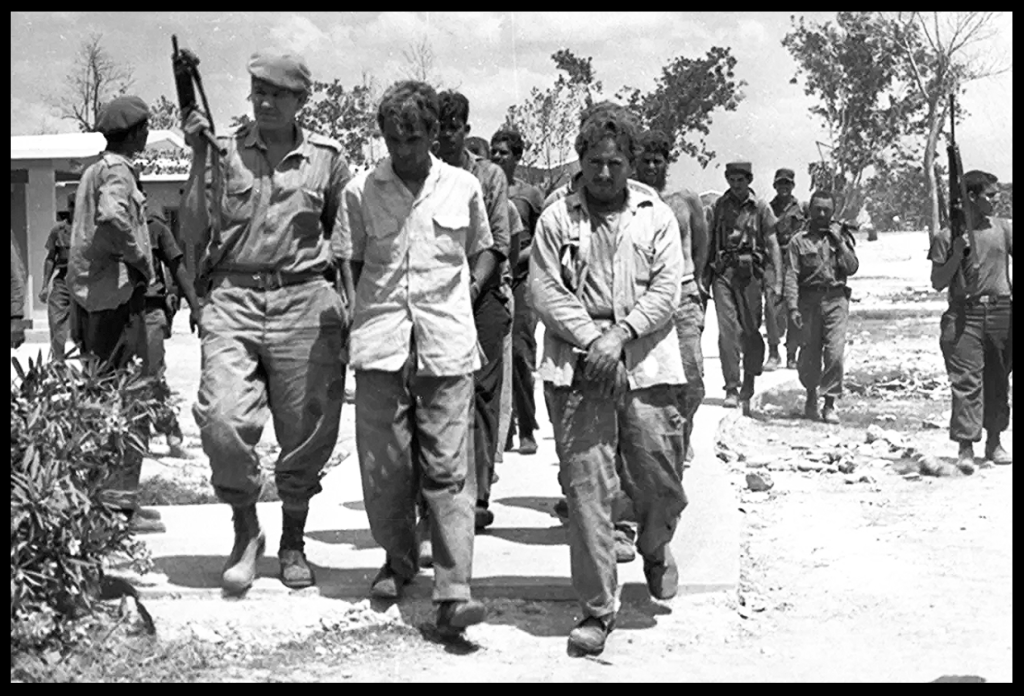
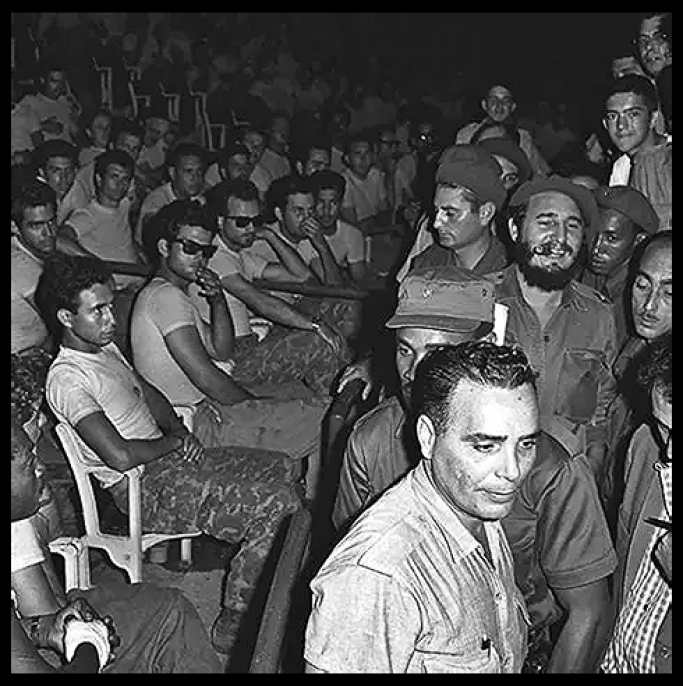
Since Cuba’s initial break with U.S. domination in 1959, the majority of the population have been organized for the country’s defense. Overlooking that particular detail, an essential aspect of the revolution, was the greatest mistake made by U.S. imperialism at the Bay of Pigs.
What this historic battle reaffirms is that no tyrant is invincible. Oppressed people can meet any challenge, no matter how difficult and win. That includes pushing back on continued attempts to undermine Cuba’s right to self-determination and strive to end the more than six decades old economic blockade.
So, whatever ambitious ideas the Trump administration is contemplating on implementing, there are lessons from the Bay of Pigs experience on April 17–20, 1961, for U.S. imperialism to take seriously into consideration. The Cuban people will undoubtedly wage a vigorous struggle to prevent the re-colonization of their homeland.
LONG LIVE THE CUBAN REVOLUTION!
 carlitoboricua