Long Live the Heroic July 26, 1953, Attack on the Moncada Barracks!

Para la versión en español: https://carlitoboricua.blog/?p=14812&preview=true&_thumbnail_id=14826

_________________________________________________________________________

“Demagogues and professional politicians want to make the miracle of being good in everything and with everybody, necessarily fooling everyone in everything. Revolutionaries will proclaim their ideas bravely, define their own principles, and express their intentions to deceive no one, neither friends nor foes.” – Fidel Castro Ruz, from History will absolve me.

_________________________________________________________________________

By Carlos “Carlito” Rovira

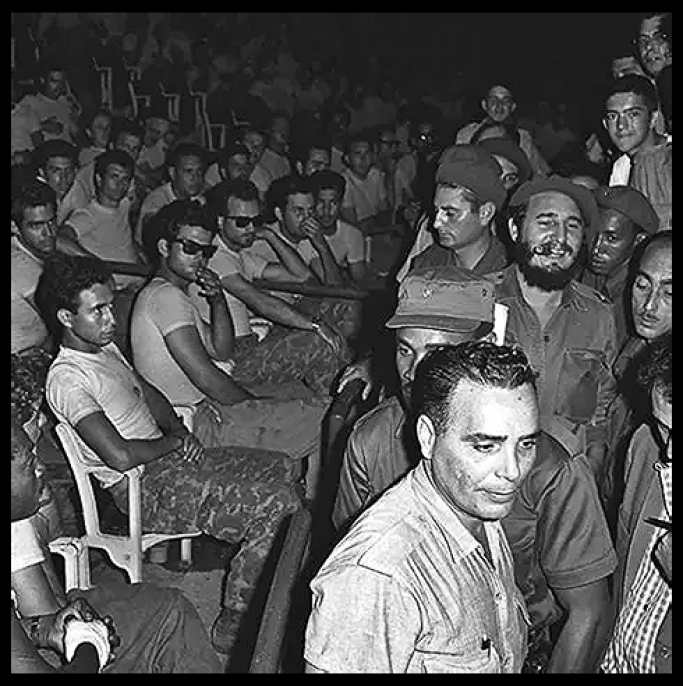
In the early morning hours of July 26, 1953, approximately 160 rebels led by the 27 years old Fidel Castro Ruz, simultaneously attacked two military outposts of the U.S.-puppet regime of Fulgencio Batista. The Moncada Barracks in Santiago, Cuba and the Carlos Manuel de Cespedes Barracks in Bayamo, Cuba were targeted. The Moncada Barracks was the second largest garrison in the country.

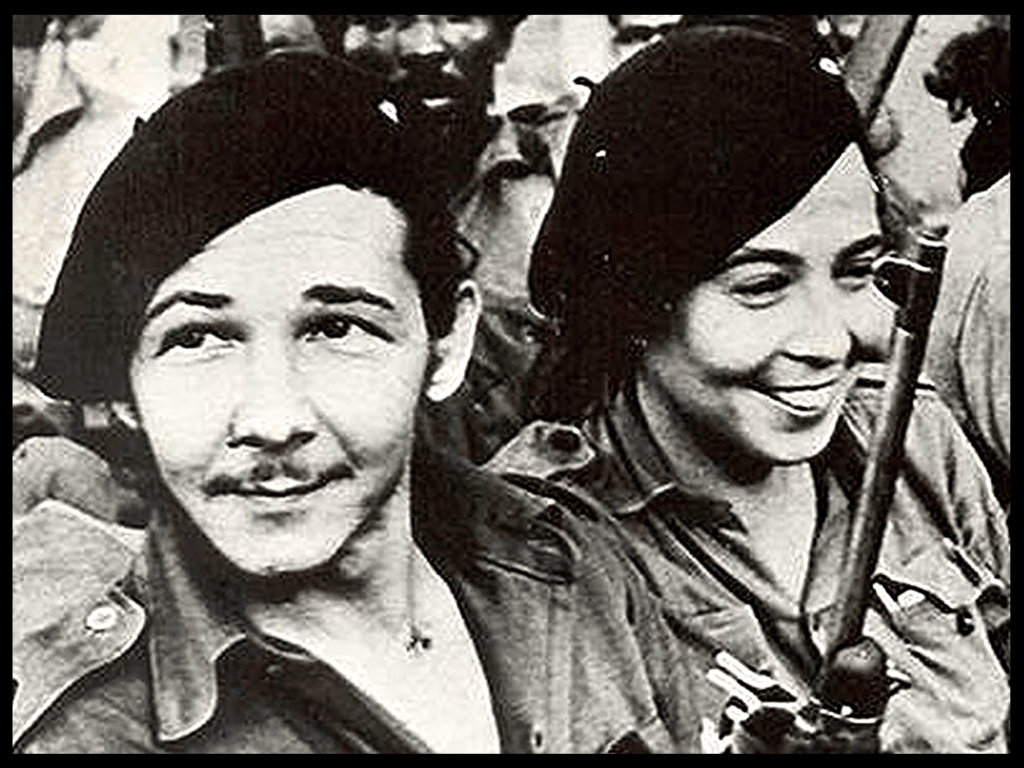
Among the notable freedom fighters who partook in the attacks were Fidel Castro’s brother, Raul Castro, along with Haydee Santamaria and Melba Hernandez – the only women of the group.

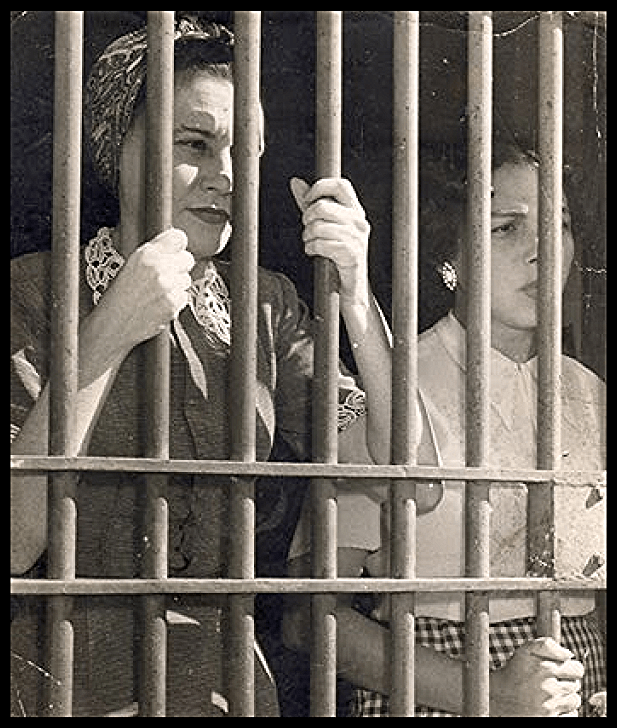
Melba Hernandez (left) and Haydee Santamaria after their capture.

Fidel Castro was motivated to organize these bold actions in response to the discontent felt throughout Cuba for the illegal ouster of outgoing President Carlos Prio Socarras. He was deposed by Fulgencio Batista, who staged a military coup on March 10, 1952.

Although Batista was a candidate for the presidency, according to polls it did not appear as if he would win the election due to his unpopularity from a previous term he served as President of Cuba from October 10, 1940 to October 10, 1944.

Due to the military coup, scheduled elections for the presidency and Parliament were abruptly cancelled. Castro was among the candidates running for a seat in parliament.

As a result of the Cold War, an essential part of the U.S. global strategy was the Central Intelligence Agency (CIA) covertly organizing military coups, such as Cuba in 1952, Paraguay 1954, Guatemala 1954, Argentina 1955, Honduras 1956, Colombia 1957 Venezuela 1958, El Salvador 1960, Peru 1962, Ecuador 1963, Honduras 1963, Brazil 1964, Argentina 1966, Peru 1968, and Panama 1968.

Haydee Santamaria, Celia Sanchez among other members of the Rebel Army in the Sierra Maestra.

Although the rebels were eager to fight for their beliefs despite the danger involved, their determination defined courage and sacrifice. In the midst of gunfire and intense chaos of battle at the Moncada Barracks is where the glorious Cuban Revolution was born.

The inexperienced combatants suffered from being ill-prepared to challenge better trained and equipped government troops. As a result of tactical mistakes, many were tortured and killed after their capture. Amongst the martyrs were Haydee Santamaria’s brother, Abel Santamaria who had his eyes gouged out, and her fiancé, Boris Luis Santa Coloma who had his genitalia dismembered. The two revolutionaries were heinously tortured to death by Batista’s henchmen.

Moncada Barracks in the aftermath of the battle.

Fidel Castro managed to escape and hide in the forest for several days until he was able to negotiate his surrender through an intermediary in the vicinity.

However, what initially appeared to be a devastating defeat for the rebels eventually proved to be the opposite. Fidel Castro was correct by predicting the attacks would trigger an irreversible revolutionary storm consuming all sectors of the population.

Authentic revolution, regardless of its origin, will have certain shared patterns. The courageous action taken by Castro and his team was reminiscent of the 1859 attack on Harpers Ferry, West Virginia, led by the legendary anti-slavery abolitionist John Brown. Although both battles ended in failure with the loss of many courageous lives, each of these events ignited the flames of a revolution in the respective countries.

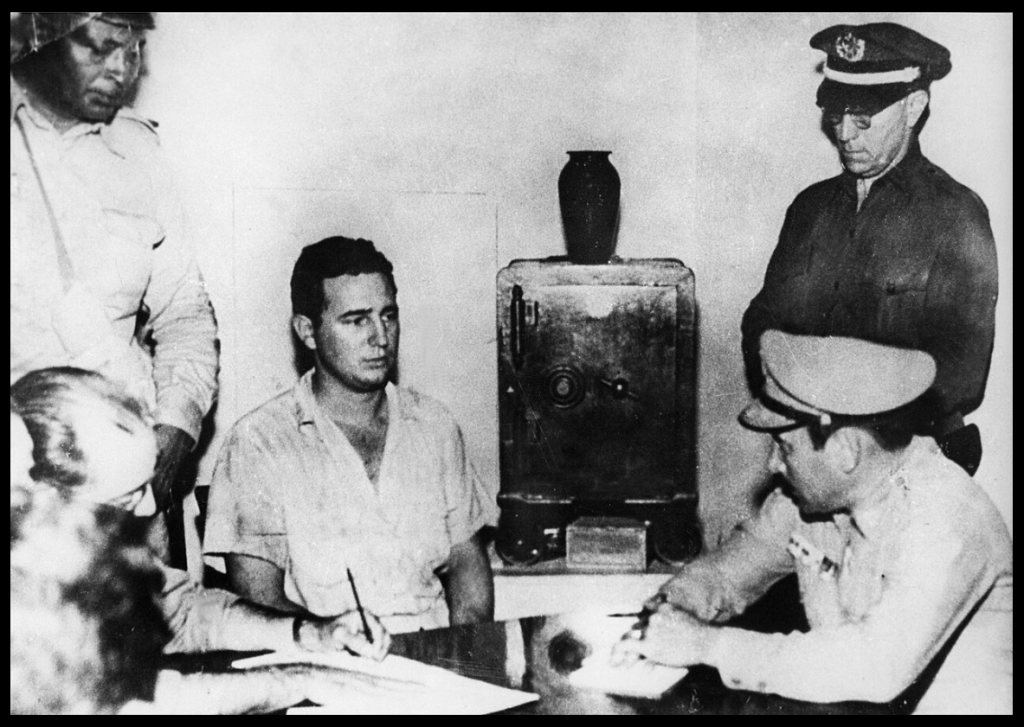
Fidel Castro Ruz being interrogated by Batista’s military officials.
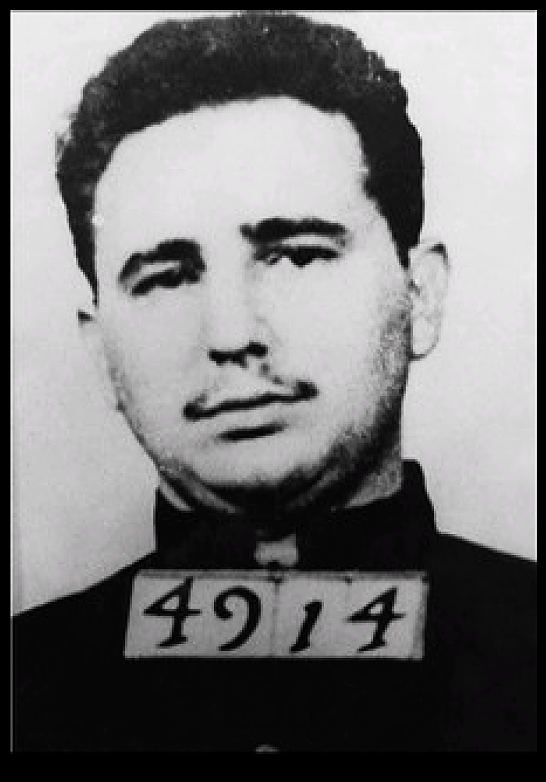
Fidel Castro Ruz prison photo.

Batista’s police and military committed many human rights abuses causing many Cubans to favorably cheer the daring Moncada attack. Citizens lived under the constant threat of incarceration, beatings, and death for merely voicing disapproval for Batista, especially the most oppressed Afro-Cuban population.

This situation gradually weakened the regime, especially after Fidel Castro, a trained lawyer, presented as testimony one of the most famous speeches made in the 20th Century as part of his own defense entitled History will absolve me.” 

Castro’s words were very damaging to Batista. Despite government censorship, the news media was unable to hide Castro’s defiant militant spirit. He used the setting of a courtroom to discredit in detail the regime’s corrupt and fascistic practices on the people.

After the court sentenced Castro to fifteen years imprisonment, his speech was smuggled out page by page to be published and widely circulated in pamphlet form. Consequently, a broad mass movement emerged demanding the release of the political prisoners and removal of the Batista regime.

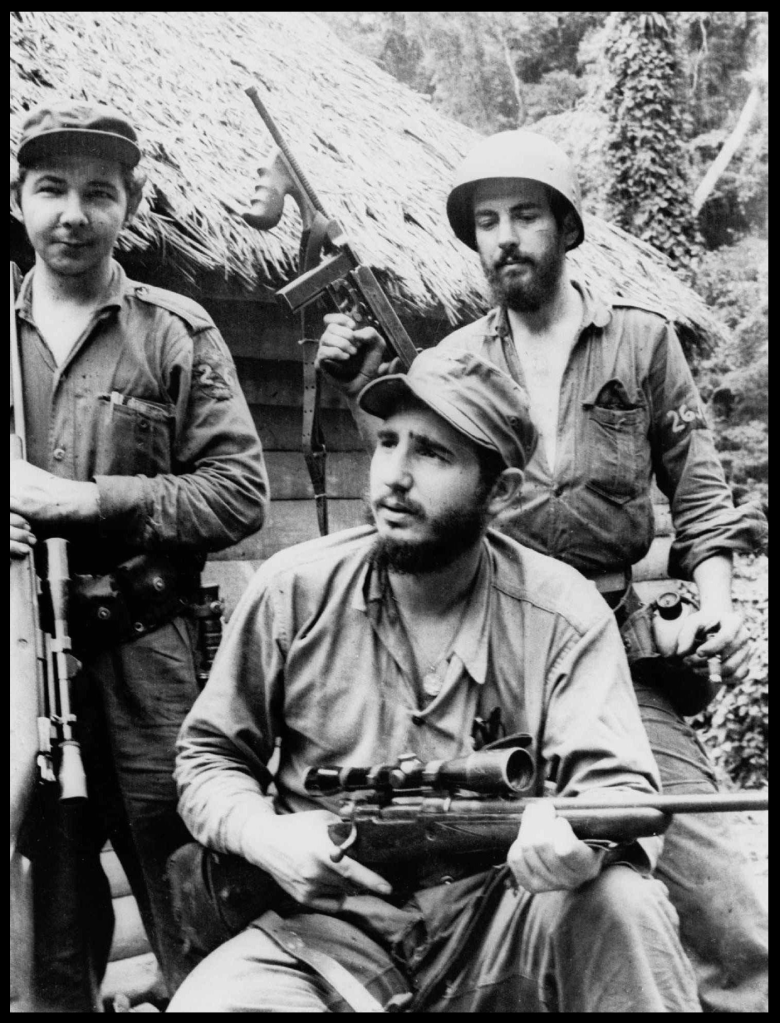
Fidel Castro in the Sierra Maestra Mountains.

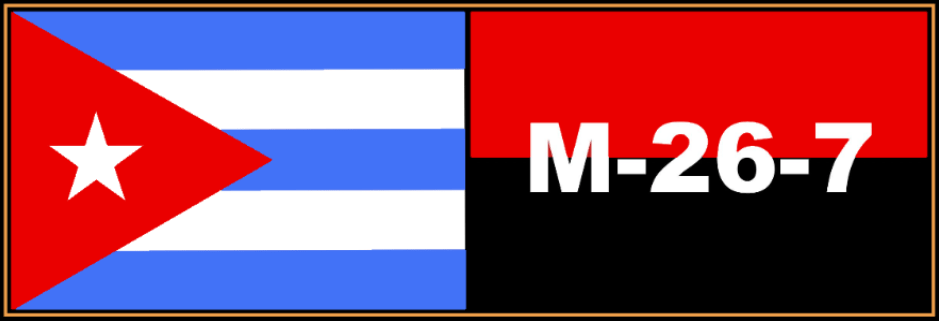
It was Fidel Castro who originated the name “July 26 Movement” to commemorate the martyrs who sacrificed their lives during the failed attempt to seize control of the Moncada compound.

Turmoil and unrest can best describe the situation in Cuba during this historic time. As the frustration and desperation of the people rose, spontaneous demonstrations that usually resulted in violent clashes with government troops took its toll on the people as well.

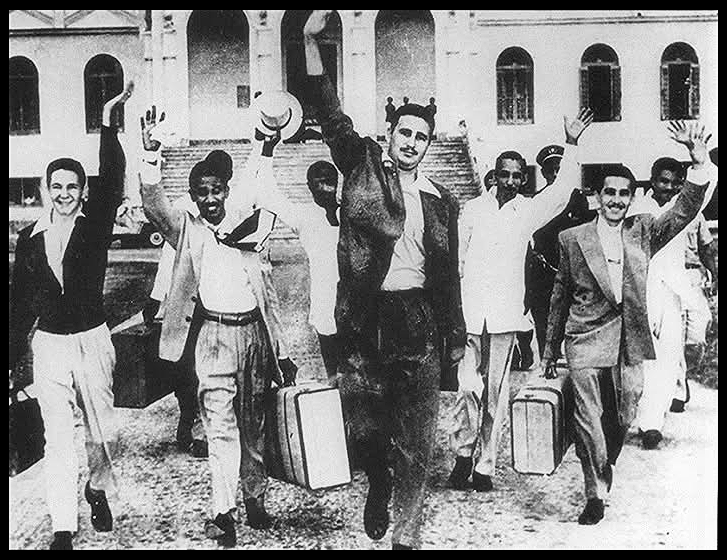
In May 1955, two years after the Moncada attack, Batista was pressured to grant Fidel Castro and his comrades a general amnesty. A powerful mass movement was becoming increasingly overwhelming for Cuba’s ruling class.

Fidel Castro and his comrades were released from prison after receiving a general amnesty.

While compelled to make a tactical concession to the freedom fighters in the face of public opinion, Batista and his cronies that included the Mafia, did not realize that the seeds of revolution had already been planted and were now taking root among the Cuban people.

Moreover, Castro and most of the newly released political prisoners went to Mexico to plan the next phase of the struggle. In Mexico, Fidel Castro met for the first time Ernesto Che Guevara and Camilo Cienfuegos-two figures that became leaders of the Rebel Army.

While Fidel Castro was in Mexico, the tasks of the movement were carried out by Celia Sanchez, Vilma Espin, Haydee Santamaria, Melba Hernandez, Frank Pais, Raul Castro, and Juan Almeida Bosque.

They established propaganda committees throughout Cuba; an intelligence network; smuggled weapons to the Rebel Army in the Sierra Maestra Mountains; developed communications between the freedom fighters in Mexico and Cuba, and so on.

The organizational sophistication of these revolutionaries has made it possible for the Cuban Revolution to survive to this day under the most oppressive circumstances caused by U.S. imperialism. However, the Cuban Revolution has proven beyond any doubt that imperialist tyranny is not invincible.

What began with the attack on the Moncada Barracks, the seizure of power on January 1, 1959, and beyond, will continue to inspire future revolutionary struggles for the complete emancipation of humanity.

LONG LIVE THE CUBAN REVOLUTION!

Remember the Cuban People’s Victory at the Bay of Pigs

REMEMBER THE CUBAN PEOPLE’S VICTORY AT THE BAY OF PIGS

April 17 – April 20, 1961

By Carlos “Carlito” Rovira

The ruling class of the United States was never happy about the triumphant 1959 Cuban Revolution, especially after Comandante Fidel Castro Ruz announced the Socialist direction Cuba would pursue. And as the leadership of the July 26 Movement demonstrated to embrace MarxismLeninism and began implementing anti-capitalist policies like the nationalization of multinational companies and expropriation of wealthy families, Washington officials became alarmed.

And as diplomatic relations with the United States deteriorated Cuba sought greater ties with the Soviet Union. Havana and Moscow discussed making numerous trade agreements that also included the supply of weapons. Washington officials viewed these developments with extreme disdain.

U.S. President Dwight D. Eisenhower secretly authorized the Central Intelligence Agency (CIA) to prepare right-wing Cubans in exile, formerly of Fulgencio Batista’s Army, for a future invasion of Cuba. By the time John F. Kennedy became President the CIA had drawn up plans for eventual intervention, focusing on storming Cuba’s southern coast.

The objective was to overthrow the Cuban government and punish the revolution for daring to break away from the U.S. colonial stranglehold. To this day U.S. rulers adamantly take to heart the 1823 Monroe Doctrine, which staked out the Western Hemisphere as the “backyard” of the United States.

Washington officials became obsessed with Cuba and dreaded the idea of other countries in Latin American and the Caribbean becoming inspired by the Revolution. Eisenhower and Kennedy engaged in every effort to isolate Cuba, using the Organization of American States (OAS) and making the Green Berets, Army Special Forces, officially operational to deter revolutionary insurgencies.

Ernesto Che Guevara and Fidel Castro Ruz, led the defeat of the CIA at the Bay of Pigs.

Two days before the invasion, air strikes were launched by the CIA with B-26 bombers disguised as Cuban aircrafts. The mission of these pilots was destroying Cuba’s airfields and war planes. The goal was to cripple the Revolutionary Armed Forces’ (RAF) capability to counterattack from the air. However, the CIA’s Aireal operation failed with most of Cuba’s combat planes remaining intact.

When the CIA onslaught began in the early morning hours of April 17, 1961, it was met by a local militia, mostly peasant farmers who were part of the RAF. The counterrevolutionary force known as Brigade 2506, was kept at bay until reinforcements arrived. At that point, about 200,000 troops of the RAF and militias arrived with Fidel Castro Ruz in command.

Comandante Fidel Castro Ruz directing the logistics of the battle from a Soviet made SU-100 tank.
The Revolutionary Armed Forces charging the CIA-sponsored invaders at the Bay of Pigs.
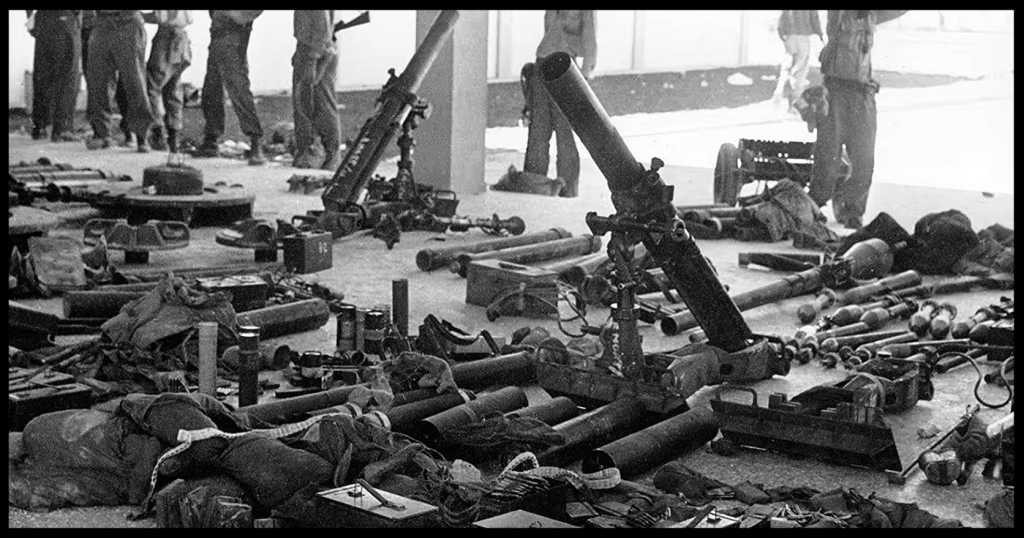
These weapons were confiscated from the CIA-sponsored Brigade 2506.

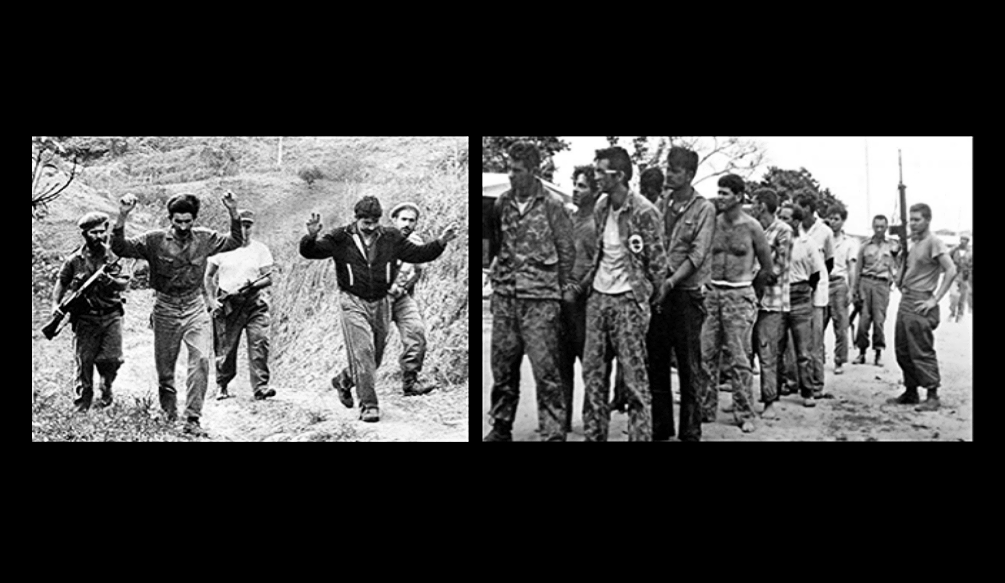
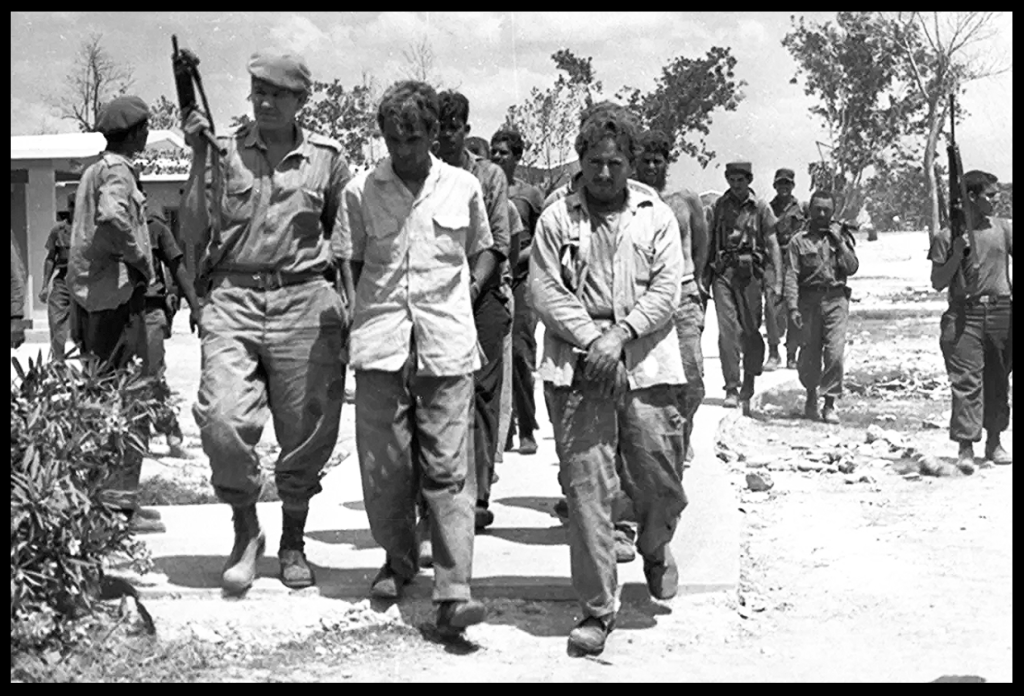
The armed conflict was intense and lasted until April 20th. In less than a day of fighting about 1500 CIA-trained exiled Cubans surrendered, some were overwhelmed by the unexpected heavy gunfire and fled on boats. In addition, 114 were killed in combat.

The CIA plan to establish a beachhead to be followed by a full-scale U.S. military invasion ended in complete disaster. Cuba’s Revolutionary Air Force managed to drop bombs and destroy two ships filled with ammunition and medical supplies for the counterrevolutionaries. Pockets of Brigade 2506 were pinned down and surrounded by superior numbers of revolutionary troops.

Days before the assault was launched Cuba’s RAF intelligence discovered precisely where the U.S.-backed counterrevolutionaries would land. Cuba had a sophisticated spy network long established by the July 26 Movement.

Thanks to the leadership of Comandante Fidel Castro Ruz, Ernesto Che Guevara, Vilma Espin, Celia Sanchez, and Cuba’s mass organizations like the Federation of Cuban Women, the Committees for the Defense of the Revolution, and People’s Militias, which prevented the re-colonization of their homeland.

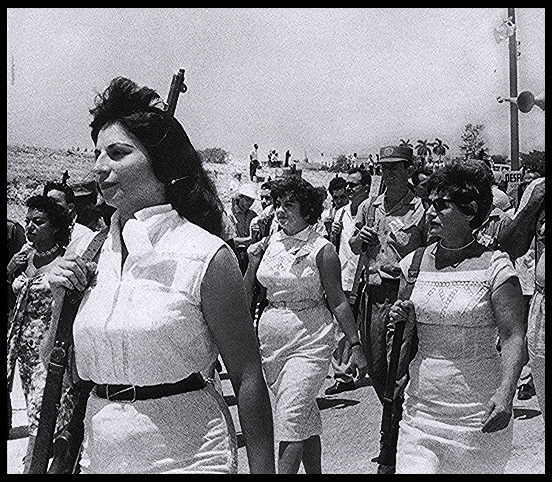
Members of the Federation of Cuban Women..
Members of the Committees for the Defense of the Revolution.

The U.S. government was humiliated. The Cuban government forced Washington officials to negotiate for the release of their 1,100 captured puppet combatants. Numerous parties, including the American Red Cross, played a role as go-between in the public and closed negotiations.

Mainstream figures and the capitalist mass media attempted to defame Fidel Castro Ruz because of his insistence that retribution for the invasion was justified. Cuba was accused of demanding a “ransom” for the release of the prisoners of war as if they were kidnapped victims.

But Cuban diplomats remained firm stating that it was Cuba’s sovereignty that was violated by the captives. In the end, due to pressure from the families of prisoners as well as several international organizations, the U.S. government was politically pressured to an agreement.

Watch video footage of the Bay of Pigs battle.

At first, President Fidel Castro Ruz demanded tractors for heavy construction needed to industrialize the country. But at the end, the U.S. and Cuban governments agreed on $53 million worth of baby food and medicines, in exchange for the prisoners.

The Bay of Pigs incident caused major political embarrassment for the Kennedy Administration. U.S. officials have never recovered from the shock brought upon them by the CIA’s defeat at the Bay of Pigs. The imperial arrogance of U.S. rulers led them to underestimate the collective consciousness and revolutionary ferment that was occurring in Cuba.

Surrounded by security and staff, Fidel Castro walks pass combatants captured at the Bay of Pigs.

Since Cuba’s initial break with U.S. domination in 1959, the majority of the population have been organized for the country’s defense. Overlooking that particular detail, an essential aspect of the revolution, was the greatest mistake made by U.S. imperialism at the Bay of Pigs.

What this historic battle reaffirms is that no tyrant is invincible. Oppressed people can meet any challenge, no matter how difficult and win. That includes pushing back on continued attempts to undermine Cuba’s right to self-determination and strive to end the more than six decades old economic blockade.

LONG LIVE THE CUBAN REVOLUTION!

Tribute to VILMA ESPIN, a heroine of the Cuban Revolution

_________________________________________________________________________

“What did the triumphant revolution offer our women? A new life, filled with possibilities and prospects, in which their deepest dreams might become reality. A society in which that which is most precious to us all-our children’s future-would be assured. A different society, where the people would be masters and mistresses of their own destiny, where they would exert their rights fully, where new values would come into being. The triumph offered our women the opportunity to study and to work, it offered them economic security, thereby putting an end to oppression and hardship. It opened prospects of health care, of social security. For women, the revolution meant the opportunity to attain human dignity.” -Vilma Espin.

________________________________________________________________________

Para la versión en español: https://carlitoboricua.blog/?p=13709&preview=true

Salute to Vilma Espin, heroine of the Cuban Revolution

April 7, 1930 – June 18, 2007

By Carlos “Carlito” Rovira

One of the greatest highlights of the 1959 Cuban Revolution is the role played by women. Among the heroines of this historic event was Vilma Lucila Espin Guillois, better known as Vilma Espin. She was born on April 7, 1930, in Santiago De Cuba to a relatively wealthy family that taught her progressive values. It was during her formative years when she developed affinities for the poor.

Espin became politically active at a young age during her studies for chemical engineering at the University of Oriente, in Santiago de Cuba. She organized student demonstrations there against the 1952 military coup and dictatorship of the notorious U.S.-puppet Fulgencio Batista. In a country where poverty, misery, and turmoil prevailed compelled the young Vilma to question what the causes were for unpleasant things she witnessed.

Although the political status of Cuba was cleverly disguised with semblances of “independence” it was actually under a colonial-type domination by the United States. Cuba was militarily invaded and colonized along with the Philippines, Guam and Puerto Rico, the consequence of the 1898 Spanish-American War.

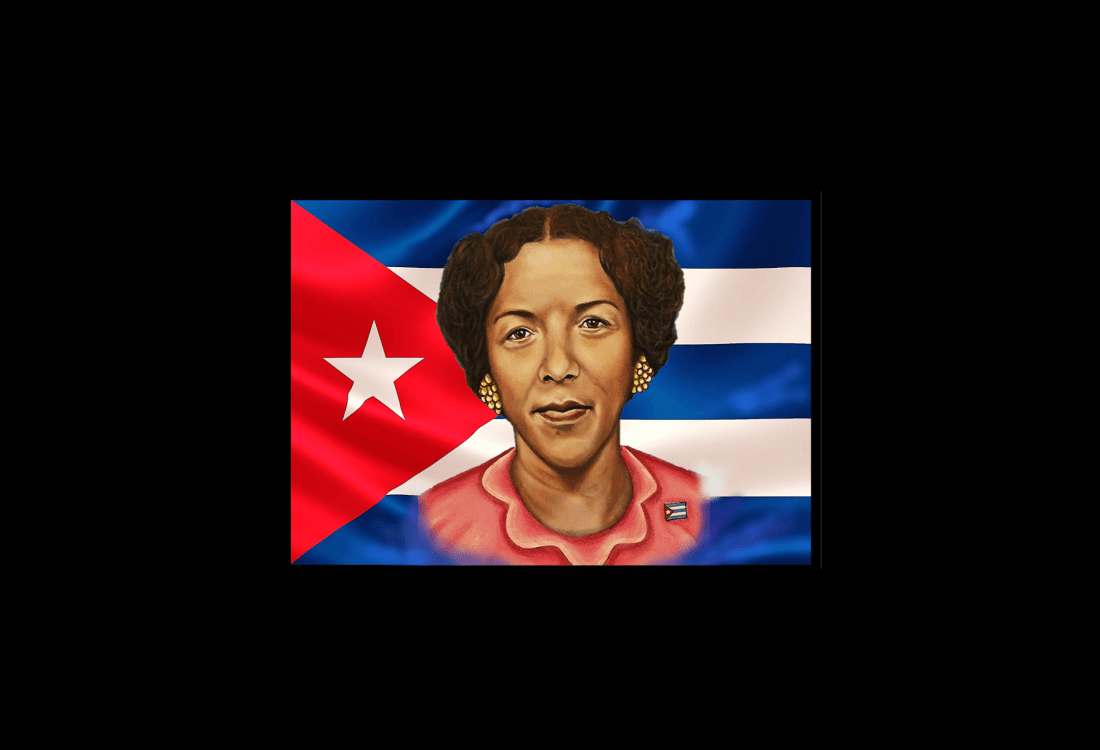
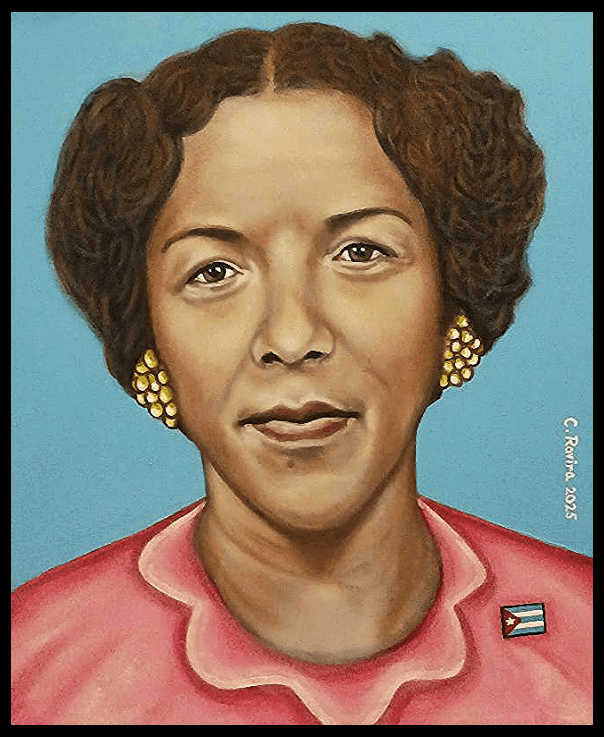
My portrait of Vilma Espin. 24″ X 30″, acrylic paint on canvas.

After completing her post-graduate studies at the Institute of Technology (MIT) in Cambridge, Massachusetts Vilma Espin became one of the first Cuban women to earn a degree in chemical engineering. When Espin returned to Cuba, she met with the 22-year-old Cuban revolutionary Frank Pais. Soon after, she eagerly participated in organizing the July 26 Movement.

Vilma Espin began working as a messenger between survivors of the failed 1953 Moncada Barracks attack exiled in Mexico and the anti-Batista movement in Cuba. After the disastrous arrival to Cuba of the Granma yacht carrying revolutionary combatants who engaged in a gun battle with pro-Batista troops, Vilma Espin joined Fidel and Raul Castro in the Sierra Maestra. By then Espin was a guerilla fighter herself.

After Espin proved her loyalty to the revolutionary cause by diligently performing her duties, she earned a leadership rank in the Rebel Army, alongside figures like Ernesto Che Guevara, Fidel Castro Ruz, Raul Castro Ruz, Celia Sanchez, Haydee Santamaria, Melba Hernandez, Camilo Cienfuegos, Teté Puebla, and others.

Eventually, the circumstances of political activity influenced the personal lives of Vilma Espin and Rebel Army leader Raul Castro Ruz. The two revolutionaries developed a romantic relationship and married shortly after the overthrow of the Batista regime. They established a family with four children, three daughters and a son. Their names are Deborah, Mariela, Nilsa, and Alejandro (Castro Espin).

Raul Castro Ruz and Vilma Espin.

In addition to serving as a political cadre in the Cuban government and Communist Party, Espin played an exemplary role in her professional field as a chemical engineer. She led the way to establish the country’s chemical industry, such as in biopharmaceuticals, industrial and medicinal gases, fertilizers, pesticides, and more.

Vilma Espin’s contributions in this scientific field proved valuable for Cuba’s medical research in vaccines and treatments for infectious diseases like Covid-19, HIV/AIDS, Ebola, as well as for cancer and so on. Long after her death, the achievements of her work continue to play a vital role pushing back on the vindictive U.S. economic blockade.

From left to right: Vilma Espin, Fidel Castro Ruz, Raul Castro Ruz, and Celia Sanchez.

As the moment for the seizure of power approached, Vilma Espin’s work as a leading intelligence operative for the underground spy network of the July 26 Movement proved decisive for demoralizing and neutralizing enemy troops. Along with another Cuban revolutionary heroine Celia Sanchez, Espin was responsible for maintaining a steady flow of weapons, food, and medical supplies for revolutionary forces in the Sierra Maestra Mountains.

Being well-versed in the intricacies of organization, Espin played a pivotal role in the creation of the new revolutionary government. She served as a member of the Central Committee of the Cuban Communist Party from 1965 to 1989. She was chair of the Commission for Social Prevention from 1967 to 1971, director of Industrial Development in the Ministry of Food in 1971, President of the Institute of Childcare, and member of the Cuban Council of State in 1976. In addition, Vilma Espin served as Cuba’s representative on the United Nations General Assembly.

No one can ever dispute that Vilma Espin’s and Raul Castro Ruz’s daughter, Mariela Castro Espin, took after both her parents. It is evident that she was ideologically influenced by the ideals of the revolution during her childhood rearing. Today, Mariela is known throughout the world as a leading voice for LGBTQ+ rights in Cuba, as director of the Cuban National Center for Sex Education.

The Federation of Cuban Women

Vilma Espin was a bulwark for revolutionary ideas, upholding Socialism. She made it her life-mission to challenge backward traditions long established by the Roman Catholic Church, especially, that which justifies gender oppression. This is why Espin was an outspoken advocate for gender equality and in 1960 she set out to create the Federation of Cuban Women (La Federación de Mujeres Cubanas, FMC).

Members of the Federation of Cuban Women (La Federación de Mujeres Cubanas)

The FMC is an organized force with the purpose of empowering women in Cuba. Throughout its existence the organization has introduced and argued for enacting decrees that protect the interest of women. Vilma Espin served as president of the FMC until her death on June 18, 2007.

The FMC continues to be a vital organ of the Cuban Revolution. It follows the motto that without the participation of women would pose a hinderance to the aims of the revolution. This is what made the Communist Party’s support for the FMC a matter of supreme importance.

The FMC addresses issues of the utmost concern to women, such as:

  • A general pronouncement for women’s equal rights.
  • Intergration of women in politics and government administration.
  • Complete integration of women into the economy.
  • Adequate healthcare for women.
  • Childcare for the very young.
  • Women’s access to education.
  • Reorganizing households that keep women in subservient positions.
  • Creating self-defense classes for women to end physical abuse.

During the Bay of Pigs invasion, the Federation of Cuban Women picked up arms in defense of their country.

During the CIA-organized Bay of Pigs invasion in 1961 and the Cuban Missile Crisis of 1962, Vilma Espin’s role in the FCW was vital. This powerful entity mobilized women of all ages for battle during a threatening moment when U.S. intervention seemed likely. They stood ready as part of an armed infrastructure composed of all mass organizations in Cuban society.

In the days leading up to the Bay of Pigs invasion the CIA conducted acts of sabotage on the country’s food supply. Many crop fields were viciously set ablaze. A state of emergency was called by the Cuban government. The Revolutionary Cuban Army and the various mass organizations, including the FMC, were mobilized. Thousands of armed women in organized contingencies were dispatched to farming fields throughout Cuba.

Despite the hardships Cuba faces caused by the U.S. economic blockade the FMC continues to be the most profound part of Vilma Espin’s legacy. What she symbolizes provides a big energy source for the continual resilience of the Cuban people.

This heroine’s name continues to inspire freedom-loving people throughout the world, especially those following in her footsteps in defense of the Cuban homeland. Vilma Espin’s countless examples of valor and selflessness surely point to her noble character, but at the same time sheds light on the moral strength and legitimacy of the Cuban Revolution.

LONG LIVE THE CUBAN REVOLUTION!