Para la versión en español: https://carlitoboricua.blog/2024/10/23/homenaje-a-leon-trotsky-centurion-de-la-revolucion-socialista-rusa-de-1917/
____________________________________________
“The United States is not only the strongest, but also the most terrified country.” ― Leon Trotsky
____________________________________________
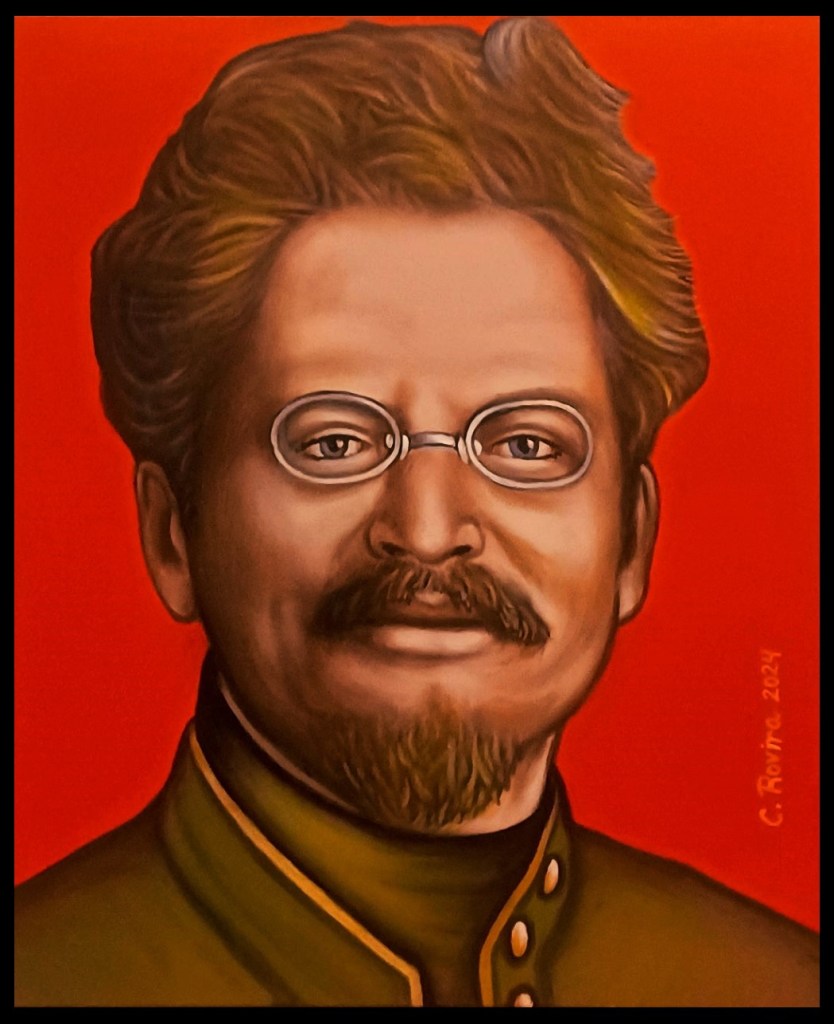
By Carlos “Carlito” Rovira
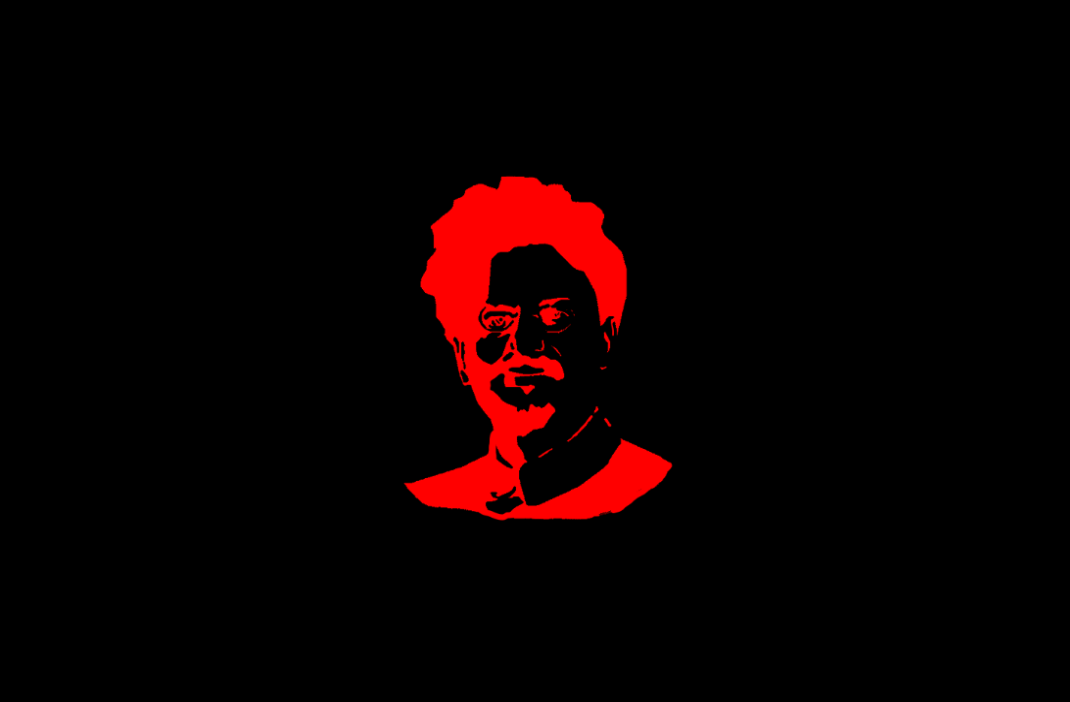
Leon Trotsky was born as Lev Davidovich Bronstein to a wealthy Ukrainian Jewish family on November 7, 1879, in Yanovka, Ukraine during the Russian Empire. However, after becoming drawn to Marxism as a teenager, he purposely repudiated his social class privilege and rejected the Jewish identity as an unapologetic atheist. Trotsky grew to become a prominent figure in one of the most momentous events of the Twentieth Century, the 1917 Russian Socialist Revolution.
In February 1917, Czar Nicholas II was forced to abdicate his throne due to extreme political unrest in Russia. The country was undergoing a promising revolutionary crisis. Trotsky returned to Russia after living in exile for a number of years. He returned with about 4,000 of his followers and immediately began workng diligently to unite his Mezhraiontsy group with the Bolsheviks.
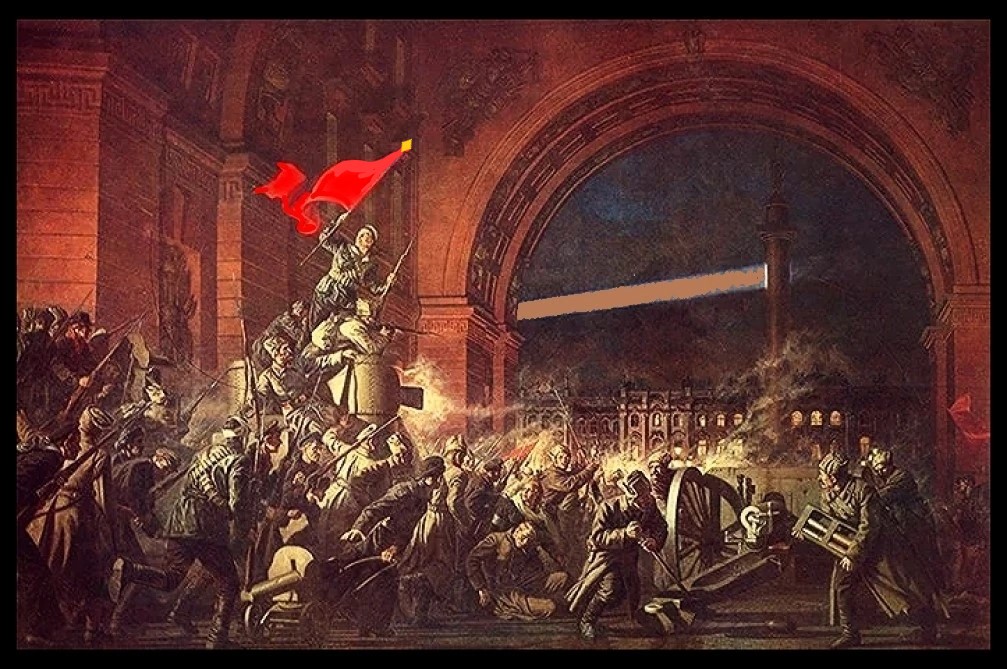
As chairman of the Petrograd Soviet, Trotsky played a key role in the storming of the Winter Palace in which the Kerensky Government was overthrown. Trotsky had then become one of Vladimir Lenin‘s most trusted comrades.
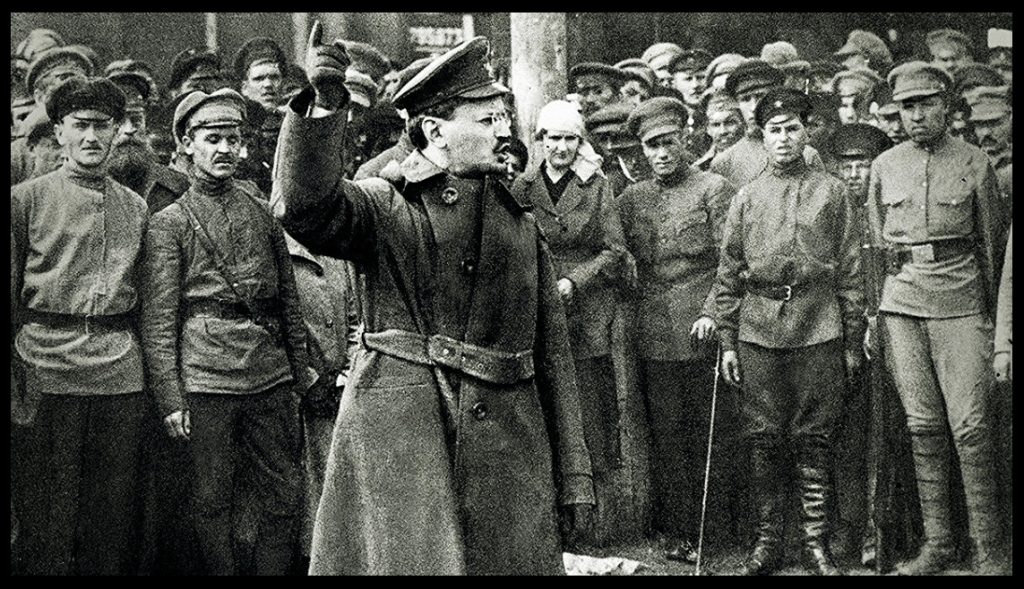
Between 1918 to 1925, Trotsky served as Commissar for Military and Naval Affairs, the equivalent title of a defense minister. He was also founder of the Soviet Red Army.
Under Trotsky’s leadership, the Red Army defeated attempts by counterrevolutionaries to restore the old semi-Feudal capitalist order. He also played a decisive role expelling from 5,600 miles of Russian territory, 14 invading imperialist armies. This included invading military forces from the United States.

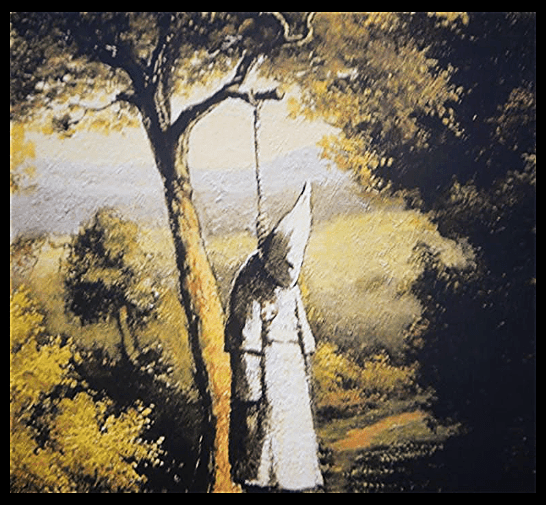
Being well-versed in the politics of the United States, Trotsky was quite outspoken against the racist policies of its government officials – especially on the subject of the Klu Klux Klan (KKK), the historic expression of white supremacy which originated from among defeated Confederate Army officers and soldiers after the U.S. Civil War.
Trotsky’s outspoken and unforgiving stance with white supremacy came at the height of lynching of Black people in the U.S. southern states. He adamantly encouraged U.S. Communists to inflict the same terror on the KKK. Trosky stated: “Let us raise the slogan so that these capitalists will hear it plainly: LYNCH THE LYNCHERS OF THE NEGROES AND THE POOR TOILERS!”
Trotsky had profound respect for the spiritual power of culture. His Collected Writings on Literature & Art, expressed the importance he gave to this subject for winning over the hearts and minds of millions of working-class people.
Unlike Joseph Stalin’s official restrictions on artistic license, Trosky was enthusiastically in favor of artistic freedom development in all forms. This view was also expressed at a public meeting on May 2, 1956, by China’s Mao Zedong: “Let a hundred flowers bloom; let a hundred schools of thought contend.

Trotsky’s views on culture and art reflected his general disposition on the power of worker’s rights and power which aimed to encourage dialog and debate. Trotsky wanted to use culture as a tool for strengthening the intellectual potential of all citizens- especially the farmers and working class in a county where illiteracy was widespread.
Moreover, Trotsky envisioned creating a system of checks and balances where the average worker had a voice in the workplace and government. Elected “Commissars” as defined by the principles of Workers & Soldiers Soviets, would have subjected government and military officials to immediate recall if necessary.

Trotsky’s logic was to compel officials to practice good leadership by earning the respect and loyalty of their subordinates. However, the role of Commissars fluctuated as the ferment of the revolution gradually waned. Ultimately, these elected posts were eliminated by decree, becoming a key area of contention between Stalin and Trotsky.
THE STALIN – TROTSKY SPLIT
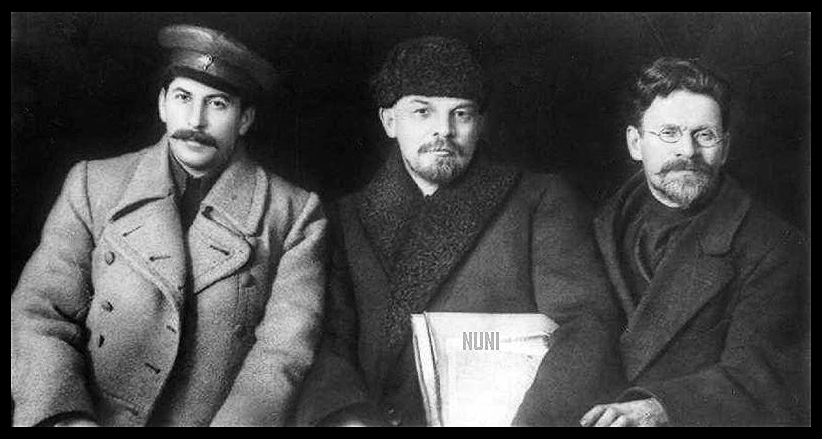
As the Soviet Union moved forward to consolidate its political power, especially after the death of Vladamir Lenin on January 21, 1924, contradictions sharpened between two opposing currents within the Communist Party of the Soviet Union (CPSU).
The differences became crystalized and were spearheaded by Joseph Stalin on the one hand and Leon Trotsky on the other. Stalin represented a fierce movement to concentrate power in the government bureaucracy, whereas Trotsky advocated for empowering the Soviets (committees) of workers.
As Lenin’s health began to rapidly decline due to a debilitating stroke, he dictated a letter to his trusted aide stating his last wishes that Joseph Stalin not become his successor as leader of the Soviet Union. This historical document became known as Lenin’s Last Testament. However, Stalin manipulated everyone opposed to him by appointing his close allies to key government positions to thwart objections. This event outraged many Bolsheviks who expected Trotsky to be next in line as head of state.
In the years after Lenin died, the majority of the CPSU’s rank and file was gradually steered to partake in a deliberate campaign against Trotsky. He was horribly vilified and removed from his duties as Commissar of the Military, the Politburo, as well as purged from the Communist Party altogether. Eventually, Trotsky was exiled out of the Soviet Union.
As always, dynamics exist everywhere in nature and politics. Tragically, the differences within CPSU were unable to be resolved, resulting in increased antagonism which led to the assassination of Trotsky in Mexico on August 21, 1940, by a NKVD secret agent Jaime Ramón del Rio. In addition, Trotsky’s loyal followers were suffering persecution inside the still developing USSR.
Until the last moments of his life, Trotsky maintained a revolutionary posture by urging his followers to continue defending the Soviet Union. Although Trotsky was scornfully opposed to Stalinism, he understood that it was a phenomenon that did not originate from the capitalist camp but from socialism.
Internal turmoil is often the initial spark that ignites the implosion of any revolutionary movement. One can easily point to a similar historical occurrence, when in June 1971 internal conflicts caused the disastrous demise of the Black Panther Party (BPP).
The scenario of domestic dispute and violence applies in both absurd situations. Brothers & sisters turned against brothers & sisters to the highest level of hostilities.
It is impossible to overlook how the BPP split was a set-back for the U.S. movement. And it doesn’t take much to conclude how the BPP split was largely orchestrated by the FBI’s COINTELPRO. Conversely, we cannot dismiss the possible role by foreign intelligence in the Stalin-Trotsky conflict.
However, Leon Trotsky repeatedly warned the international revolutionary movement about the detriments of Stalinism, most notably his predictions of the USSR’s shift to the right and its eventual collapse, which occurred in 1991. Trotsky’s detailed critiques of Stalinism were outlined in his classic polemic titled A Revolution Betrayed.

The collapse of the Soviet Union provided the international gang of capitalist tyrants and exploiters an opportunity to advance their anti-Communist smears. It also caused many difficulties for revolutionaries throughout the world, as well as republics resisting imperialism like Cuba.
There are many lessons to be drawn by future generations of the 1917 Russian Revolution. Specifically, Leon Trotsky’s contributions to the establishment of the very first socialist state, and his comradeship with Vladamir Lenin.

It will require serious inquiry about this history to counter the baseless anti-Communist slanders directed against the legacy of Leon Trotsky, which originated from Stalinism.
Hopefully, the next major Socialist revolution, wherever it may be, shall avoid a repeat of past mistakes and correctly grapple with socialism’s inherited contradictions. That will surely guarantee a decisive victory for the emancipation of oppressed and exploited people.
LONG LIVE THE REVOLUTIONARY LEGACY OF LEON TROTSKY!

 carlitoboricua