______________________________________________________________________
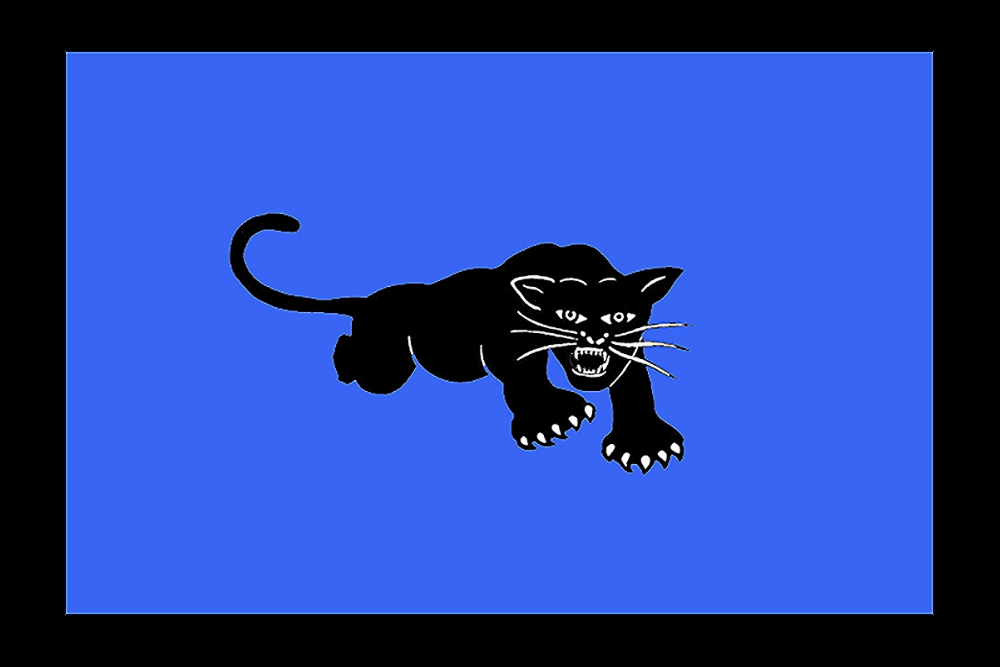
“We say you don’t fight racism with racism. We’re going to fight racism with solidarity. We say you don’t fight capitalism with no black capitalism; you fight capitalism with socialism.” -BPP Chairman Fred Hampton
______________________________________________________________________
By Carlos “Carlito” Rovira
In a coordinated effort between the Illinois State Attorney’s Office, Cook County Police Department, the Chicago Police Department and the Federal Bureau of Investigation (FBI), in the morning hours of December 4, 1969, a heavily armed assault team launched a heinous attack on the residence of Black Panther Party, Illinois Chairman Fred Hampton.
With a vicious sense of racist hatred and no regard for human life, these law enforcement officials fired a single shotgun blast through the entrance door of the apartment instantly killing Mark Clark, by striking him to the chest. These murderers then fired their weapons at will through a wall separating the hallway from the apartment, critically wounding Fred Hampton as he laid in bed.
According to accounts, after the police smashed through the front door entering the apartment, one of the police officers who entered Hampton’s bedroom was overheard saying “He’s still alive.” At that point the handcuffed occupants can hear from another room the kill-shot that ended the Panther leader’s life. In a matter of minutes, two inspiring revolutionaries were maliciously murdered.
MARK CLARK WAS A LOYAL PANTHER
Mark Clarke was 22 years old, an enthusiastic youth with talents in the arts. He was eager to fight against the racist oppression Black people endured since chattel slavery. That became the motive why Clark joined the Black Panther Party soon after he met Chairman Fred Hampton during a visit to the BPP national office in Oakland, California. From then on Hampton and Clark became good friends and comrades until the tragic end of their lives.
Once he embraced the BPP ideology and discipline, specifically it’s Ten Point Program and Platform, Clark organized the Peoria, Illinois chapter of the BPP with 50 recruits, including two of his siblings. Under Clark’s leadership a Free Breakfast Program was established which drew support from many residents from Peoria’s Black community. Clark was appointed by the BPP’s Central Committee the rank of Defense Captain, which he accepted and took seriously.

In the days that followed, law enforcement officials were quick to reinvent the facts. They claimed that the occupants of the apartment fired guns at police. Their story never held water. Evidence gathered from the forensic investigation and other inquiries pointed exclusively to police savagery in the attack.
The shaping of Fred Hampton’s leadership
Like millions of African Americans, Hampton’s parents left the South during the Great Migration of the 1930’s to look for a better life and flee the constant threat of racist terror. They settled in Maywood, Ill., a suburb of Chicago where they worked at the Argo Starch Company.
Hampton was attracted to books and took it upon himself to read the speeches and writings of Marcus Garvey, W.E.B. Dubois, Joan Elbert, Martin Luther King Jr.,Malcolm X as well as Marxist–Leninist classics. He gained a reputation for his knowledge of Black and world history which helped develop his sense of the need for struggle.
As a student at Proviso East High School, he noticed that most of the students who failed were Black. Hampton began to speak out against the school administration for not providing tutoring and remedial programs for students. He was also critical of the fact that the faculty and administration were all white when one-fourth of the student body was Black.
Hampton challenged the school’s exclusive racist practice of nominating only white girls to compete for “Miss Homecoming Queen.” He organized a protest, walk-out and school boycott. As a result, the following year Black female students were included in this contest.
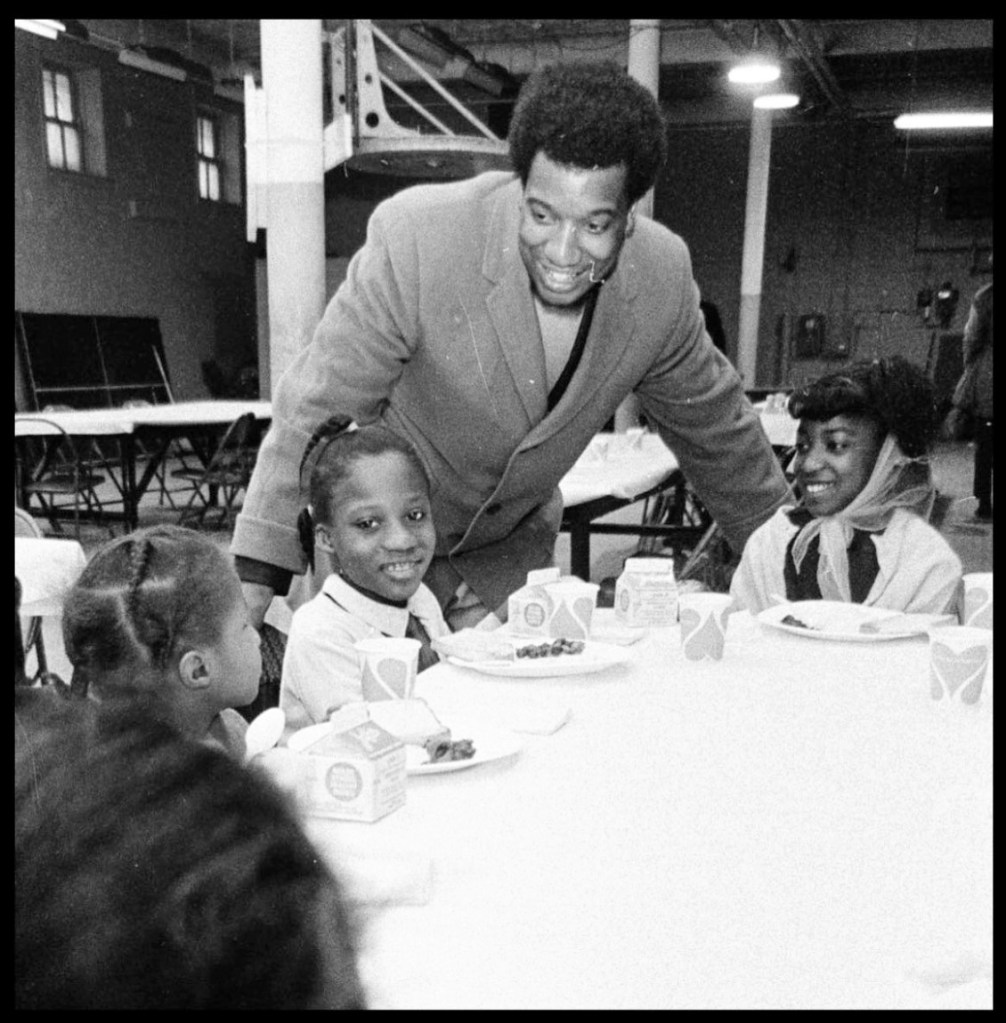
Fred Hampton was respected by white and Black students alike. The year after he graduated from Proviso East, a school administrator requested his help to calm racial tensions among students.
An event that likely affected the young Fred Hampton, much as it affected most of Chicago’s Black community, was the 1955 gruesome lynching of Emmett Till. The 14-year-old Till was visiting family in Mississippi when he was abducted and killed for allegedly whistling at a white woman. Till was the son of family friends and neighbors of the Hamptons.
While Hampton was in the NAACP, the Black Panther Party was opening chapters across the country and becoming a prominent force in the Black liberation struggle. Hampton began to absorb and understand the revolutionary content of the Panthers’ political perspective and joined. He soon demonstrated his leadership abilities and became deputy chairman of the party’s Illinois chapter.
His disposition and skills as a speaker earned Hampton a moral authority. His political achievements included brokering peace with the supposed “street gangs” of Chicago, amongst them the Puerto Rican group the Young Lords. Hampton was instrumental in transforming the Young Lords into a revolutionary political organization.
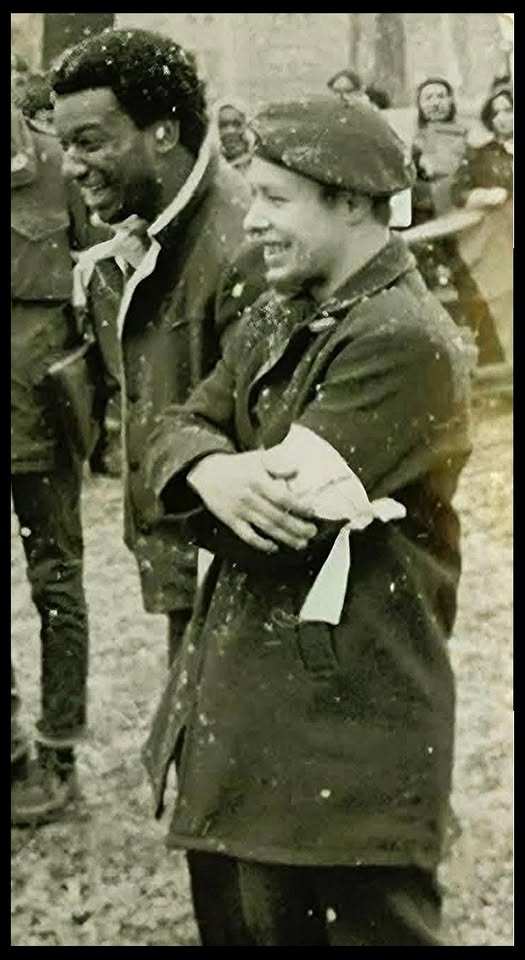
The white, racist U.S. ruling class was appalled. How dare the descendants of African slaves call themselves Socialists and aim to achieve Black people’s right to reparations! Even more daring was the Black Panther Party’s call for the overthrow of capitalism—a demand the ruling class could never tolerate. Their ability to forge unity in struggle was a threat in itself.
All this was happening while resentment for the war in Vietnam was on the rise. The men of privilege and wealth, with a stake in preserving the imperialist system, grew apprehensive the more it became apparent that a mass revolutionary movement was arising.
Hampton valued the need for a multinational revolutionary struggle, and organized the original Rainbow Coalition comprised of the I Wor Kuen of the Asian community, the Brown Berets of the Chicano-Mexican community, the poor white workers of the Young Patriots, the Young Lords and the Black Panthers. The Black Panther Party set standards for waging struggle. Their enthusiastic projection of socialism allowed many to envision its relevance to African Americans and other oppressed nationalities.
Operation COINTELPRO, an acronym for Counterintelligence Program, was established in the mid-1950’s to deter the development of any movement deemed a threat to the existing social, economic and political order. It remained secret until 1971, when courageous anti-repression/anti-war activists broke into an FBI field office in Media, Pa., and confiscated files revealing the hidden operation.
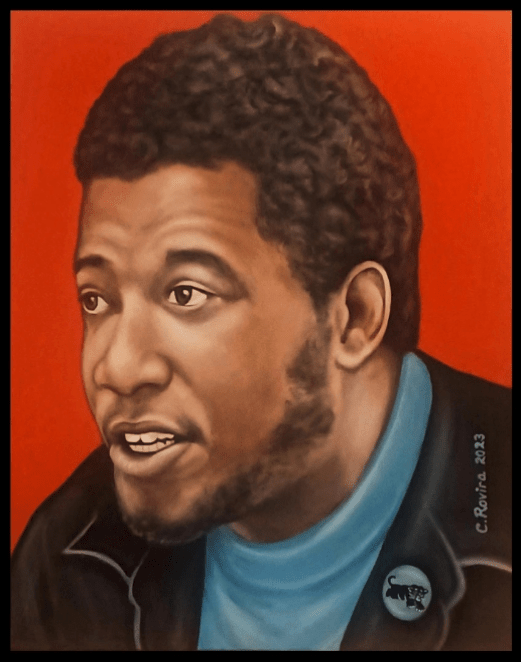
As the Civil Rights movement advanced—galvanizing strength from all sectors of the population, breaking the despicable Jim Crow laws and compelling the U.S. Congress to pass other progressive legislation—the FBI increasingly turned its attention to the Black liberation struggle.
The slanderous editorials against the Panthers in the capitalist-owned mass media, combined with Hoover’s frequent verbal attacks, reflected the wishes of the ruling class who sought the complete destruction of the Black Panther Party and the ideals it embodied. Internal FBI memos show that the government had a special interest in Hampton’s political activities and his associations; Chicago police were encouraged by the FBI to find a way to lock up Hampton, if not worse.
These circumstances compelled the government to carry out the horrible attack on Fred Hampton as part of their strategy to destroy the Black Panther Party and ultimately the entire revolutionary movement.
“The greatest threat to national security”
The Black Panther Party openly advocated for socialist revolution, and openly supported the Chinese and Cuban revolutions. The Panthers’ breakfast program for children, among other social programs, underlined their commitment to meet the needs of communities that received nothing but oppression and neglect from the government.
Prior to Hampton’s death, police raided the Panthers’ Chicago office on three separate occasions. William O’Neal, Fred Hampton’s bodyguard, was a police informant who was instructed to draw up a floor plan of the targeted apartment weeks earlier. Law enforcement used the information gathered by O’Neal to murder Hampton.
The staunch anti-capitalist stance of these young revolutionaries who declared themselves Marxist-Leninists made them the target of the most ruthless, racist elements in power. On numerous occasions, the notorious FBI Director J. Edgar Hoover expressed a special disdain for the Black struggle, particularly towards Dr. Martin Luther King Jr. and Malcolm X. Many were not surprised when Hoover declared the Black Panther Party “the greatest threat to national security.”
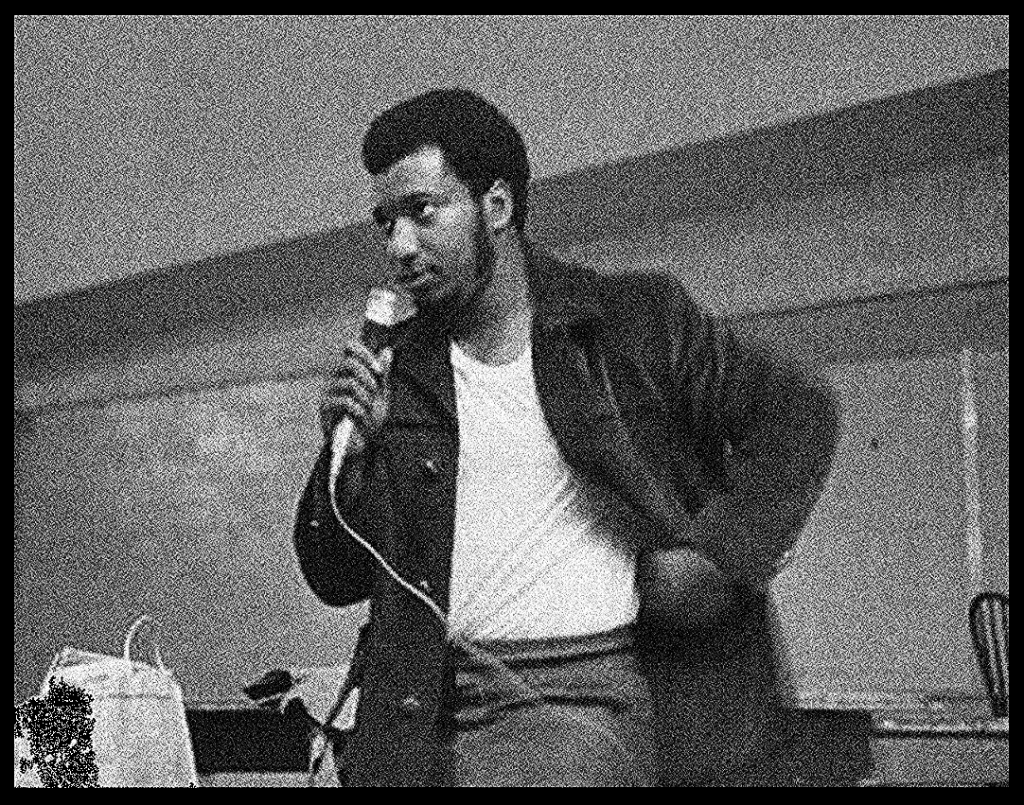
Hampton’s murder was part of a pattern of police raids, false imprisonment and executions of Black Panthers. COINTELPRO documents proved that assassination of Black leaders was among its aims. Fred Hampton and the Black Panther Party had to be eliminated simply because they had touched upon capitalism’s greatest weakness—the decisiveness and strength that a multi-national movement has in a battle against this system.
The Black Panther Party arose from the struggles of the African American people, historically the most oppressed and exploited group in the United States. They symbolized hope and received the greatest affection. They attributed Black oppression to the capitalist system, and dared to pick up arms against the state. The militancy and defiance of these young revolutionaries deeply impacted the Civil Rights and socialist movements.
Hampton and the Black Panthers believed all would benefit if the struggle against racist oppression was taken up by the whites as their own. Hampton knew that it was possible to smash the racial barriers created by capitalism to divide and conquer the working class. His confidence was based on the strong belief that this system provides motivation for all to unite and engage in revolutionary struggle.
Long live the Legacies of Fred Hampton & Mark Clark!
Long live the Legacy of the Black Panther Party!


 carlitoboricua
Awesome, I will be sharing!!!
LikeLike