________________________________________________________________________
“My life I give for the freedom of my country. This is a cry for victory in our struggle for independence.” –Lolita Lebron
________________________________________________________________________
By Carlos “Carlito” Rovira
Throughout Puerto Rican history, women have played an exemplary and leading role in the struggle against colonialism. Political and military leaders like Mariana Bracetti, Lola Rodríguez De Tío, Juana Colón, Blanca Canales, Isabel Rosado and many others, have been models of courage and devotion to the struggle for independence and self-determination.
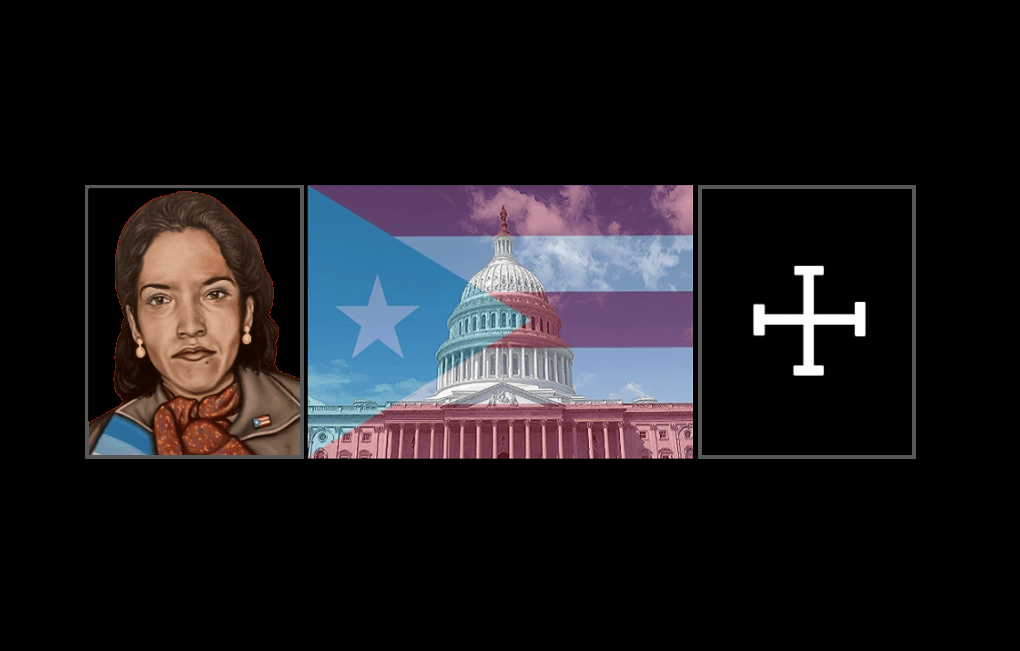
One of the most widely known and respected women of the Puerto Rican liberation struggle in the 20th Century is Lolita Lebrón. Because of her outspokenness and firm disposition, her name became synonymous with the daring March 1, 1954 Nationalist attack on the U.S. House of Representatives.
Lolita was born on November 19, 1919, to a poor working-class family who lived in the legendary municipality of Lares, known for the famous September 23, 1868 “El Grito de Lares” uprising. It was a revolt aiming to end Spanish colonialism and African chattel slavery.
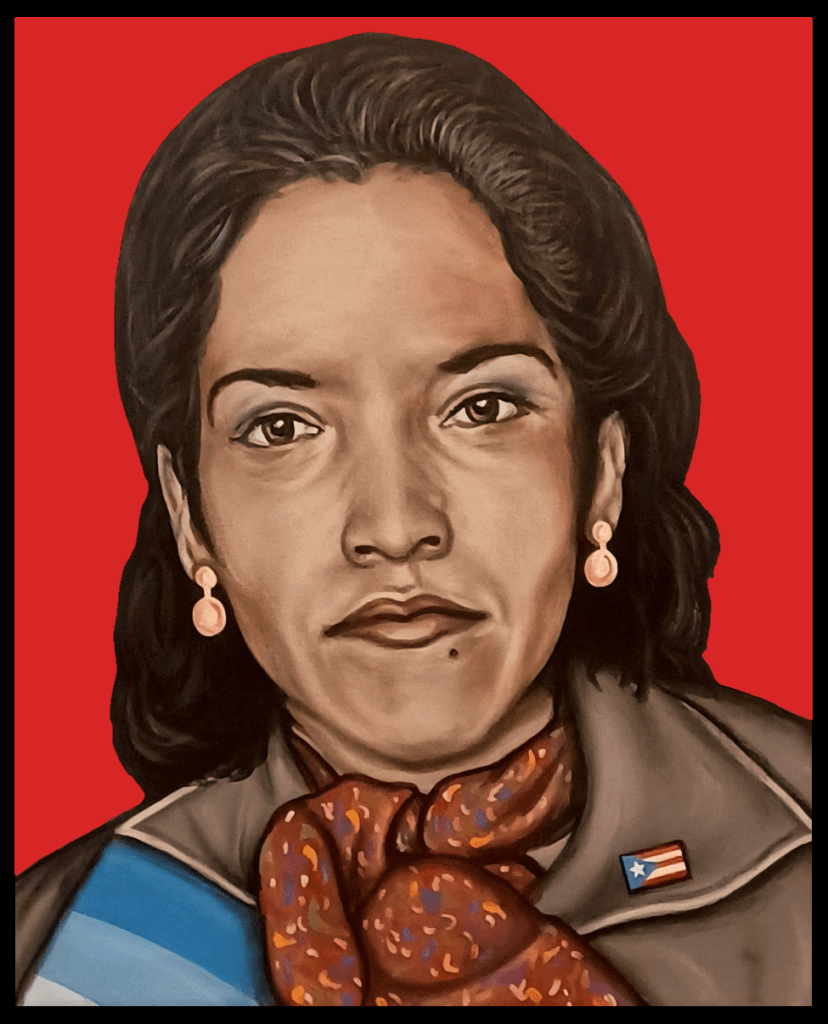
The hardships Lolita’s family experienced during her youth, brought upon by tightening U.S. colonial economic policy, contributed to her strong character. As a young woman, like so many Puerto Ricans, she decided to leave Puerto Rico in 1940 in search of a better life.
After World War II and into the 1960s, an annual average of 63,000 people were displaced. They were compelled to migrate to the United States. By the end of this exodus, half of the Puerto Rican nation uprooted. They were pushed off their land in order to make way for lucrative agricultural and mining industries. This was an aspect of Washington’s colonial plan implemented in the interests of capitalist corporations at the expense of the native population.
Lolita Lebrón settled in New York City’s El Barrio community (East Harlem), then the largest concentration of Puerto Ricans outside the homeland. Like so many who left Puerto Rico, Lolita was employed as a stitcher in NYC’s Garment District. She immediately came face to face with the racism and exploitation that defines life for immigrant workers in the United States.
The Nationalist Party

Having a proud sense of identity and a strong belief in the cause for Puerto Rico’s independence, Lolita increasingly developed resentment for the presence of foreign oppressors in her adored homeland. And because she witnessed first-hand the suffering of her people forced to endure racist violence and discrimination in a distant land, persuaded her to join the secret New York committee of the Nationalist Party, led by Julio Pinto Gandia, a confidant of the legendary Dr. Pedro Albizu Campos.
The Nationalist Party was banned in 1938. It continued its activities under intense repression, especially following the 1950 Jayuya Uprising and the attempted assassination of President Harry S. Truman that same year by Nationalists Oscar Collazo and Griselio Torresola. During the anti-communist, anti-labor and racist witch-hunts of the McCarthy era, the Nationalist Party secretly operated under the name “Movimiento Libertador” (Liberation Movement).
The New York committee served as a rear guard within the colonizing country to gather political and financial support for the movement in Puerto Rico. They held meetings with the hope of organizing the Puerto Rican community and to draw allies around the issue of independence.
Colonizers shift tactics
Taking advantage of the imprisonment of Nationalist leaders, the U.S. government shifted methods of disguising its role as colonizers. The governorship of Puerto Rico was no longer to be a military official appointed by the U.S. president. Instead, supposed “free elections” were held with Puerto Rican candidates exclusively approved by U.S. rulers. In addition, in 1952 the U.S.-dominated United Nations was persuaded to approve a resolution that designated the case of Puerto Rico as an “internal matter” of the United States.
Faced with this new reality, anti-colonial activists had to find new tactics to expose the colonial reality that Puerto Rico still experienced. Dr. Pedro Albizu Campos put out a call to carry out any form of action that would bring attention to the criminal nature of U.S. domination in Puerto Rico.
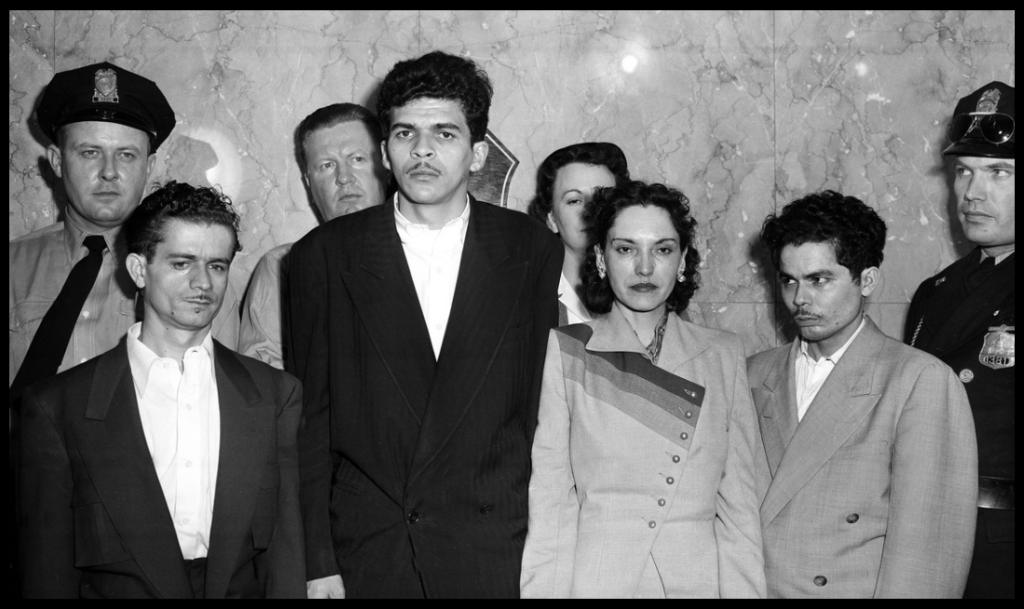
A group of members from the New York committee—Rafael Cancel Miranda, Andrés Figueroa Cordero, Irvin Flores and Lolita Lebrón—secretly prepared to respond to Dr. Pedro Albizu Campos’s call. For many weeks and months, the four patriots met to discuss and select the target, with no regard for their own personal safety or survival.
With no mention of their plan to families or friends, the four left for Washington, expecting never to return. Their only concern was to achieve the political objective in the action they undertook.
A bold and daring attack

the attack on the House of Representatives.
On the morning of March 1, 1954, members of the House of Representatives were meeting to discuss immigration policy and the government of democratically elected President Jacobo Árbenz of Guatemala—a government the CIA overthrew in November of that year. The four patriots calmly entered the Capitol building, passing through the lobby and up the stairs to a balcony designated for visitors.
As the proceedings went on, Lolita Lebrón pulled out of her shoulder bag the Puerto Rican flag and a gun. She then shouted, “QUE VIVA PUERTO RICO LIBRE!” Within seconds of brandishing their weapons, the four revolutionaries opened fire on the U.S. Congress.
When the gunfire began with bullets whistling through the air, panic erupted in the chamber. Many congressional figures and their staff began screaming as they frantically pushed one another to get to the exit doors. Others avoided being shot by running to hide underneath tables and behind chairs.


once they were apprehended by Capitol Police.
Before it ended, 30 rounds were fired, and five congressmen were wounded. All government buildings were shut down, and security throughout the District of Columbia was increased.
The brave patriots were immediately apprehended. The mass media then launched a vicious campaign to vilify the Puerto Rican independence movement. The four Nationalists were ultimately convicted and sentenced to life imprisonment.
Lolita Lebron and all Puerto Rican Nationalist political prisoners.
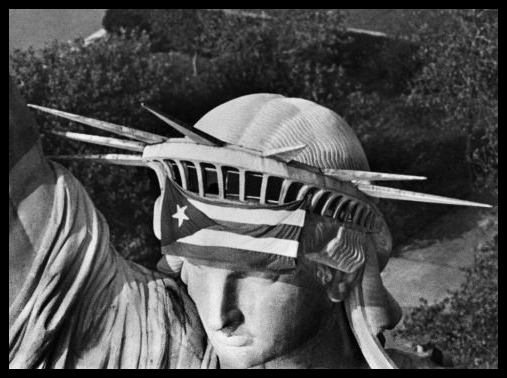
As Puerto Ricans mounted their struggle against racism and the right to self-determination during the upsurge of the 1960s and 1970s, more and more people raised the demand for the immediate release of Puerto Rican political prisoners. Such was the case on October 25, 1977, when a group of 30 Boricuas and allies unexpectedly exposed the issue on a worldwide scale. They courageously seized physical control of the Statue of Liberty, in New York Harbor. This event politically embarrassed U.S. rulers.
Thanks to the diplomatic skillfulness and uncompromising solidarity work of the Cuban revolutionary government, an international campaign galvanized widespread support for their release.
The political pressure paid off in 1979, when President Jimmy Carter granted amnesty to Lolita Lebrón, Rafael Cancel Miranda, Andrés Figueroa Cordero, Irvin Flores Rodriguez, as well as Oscar Collazo, who on November 1, 1950, attempted the assassination of President Harry Truman at the Blair House.
The release of these brave freedom fighters was joyfully celebrated in Puerto Rico and throughout the diaspora. A sense of pride and accomplishment was widely felt.
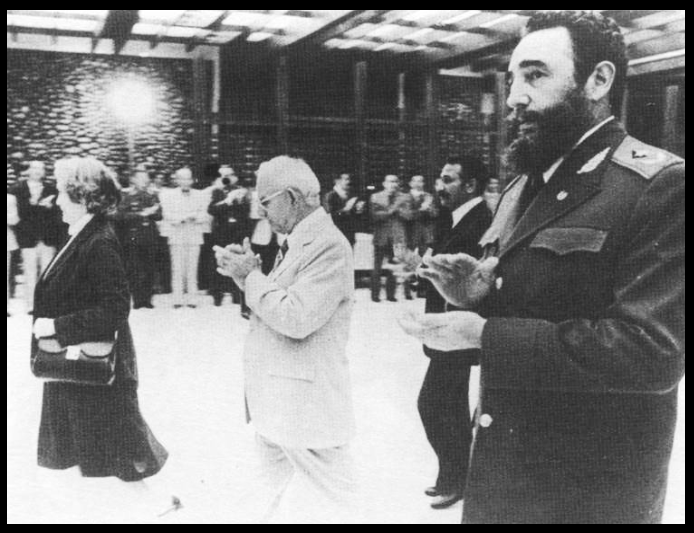
incarcerated Puerto Rican Nationalists to visit Cuba.
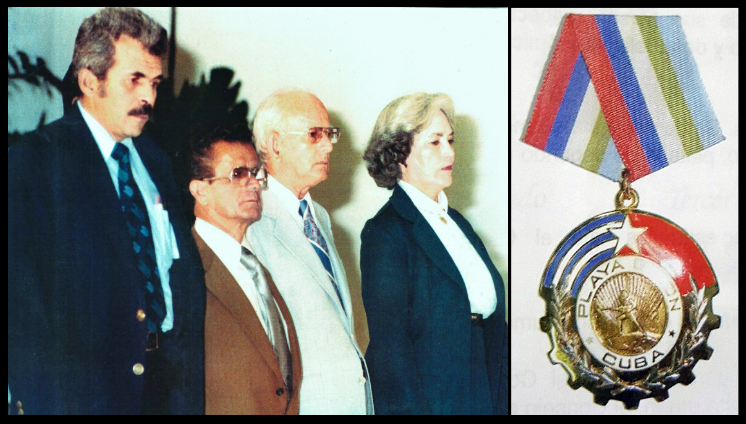
heroes with the Medal of the Order of the Bay of Pigs.
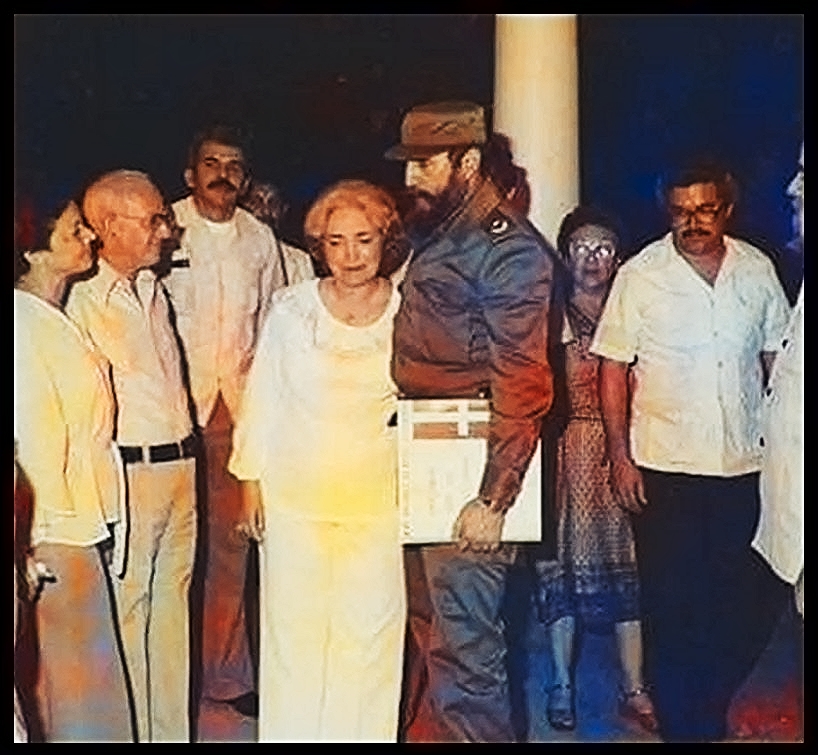
The actions of these formerly incarcerated patriots are events that shocked the imperial-minded men and women of privilege — a shock they never overcame nor forgotten. The colonizers of Puerto Rico never expected such a bold act in the capital of their empire.
What Lolita, Rafael, Andrés and Irvin did on that day symbolizes not only the fury of the colonized Puerto Rican nation but of every oppressed people that strives for a world without foreign domination.
¡QUE VIVA PUERTO RICO LIBRE!

 carlitoboricua