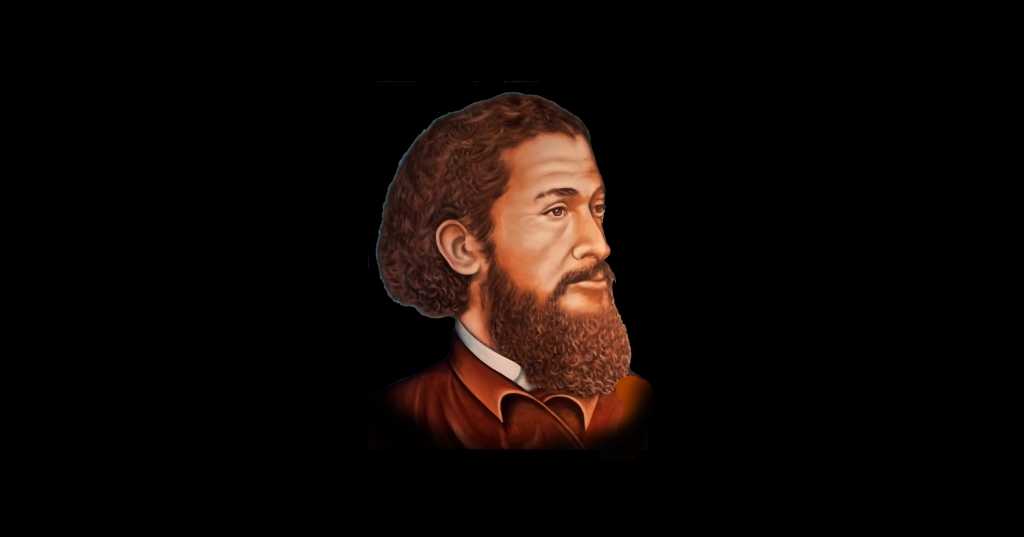
Tribute to Dr. Ramon Emeterio Betances-Father of the Puerto Rican Nation
April 8, 1827 – September 16, 1898
Tribute to Dr. Ramon Emeterio Betances – Father ofn the Puerto Rican Nation
Para la versión en español: https://carlitoboricua.blog/?p=9404&preview=true
By Carlos “Carlito” Rovira
Of all revolutionary leaders during the Nineteenth Century in Puerto Rico’s anti-colonial struggle Dr. Ramon Emeterio Betances is of profound significance. He is among the most recognized figures in Caribbean and Latin American history.
Ramon Emeterio Betances’ convictions provided a roadmap for future generations. Dr Pedro Albizu Campos and the Nationalist Party, Arturo Alfonso Schomberg, the Puerto Rican Socialist Party, Puerto Rican Independence Party, Los Macheteros, the Young Lords, and so many more, came about due to traditions in the national liberation struggle firmly established by him. Today, Betances’ legacy carries the title of honor, Father of the Puerto Rican Nation.
This legendary figure held several titles and professions, which he utilized as assets in the service of the liberation struggle. He was a poet, novelist, journalist, public health administrator, social hygienist, medical doctor, surgeon, ophthalmologist, scientist, diplomat, politician, in addition to being an abolitionist and revolutionary leader.

The son of a White-Dominican father and an Afro-Puerto Rican mother, Betances was reared in a relatively wealthy and privileged family. However, as he became of age, Betances questioned the causes for the social and economic inequalities that existed under a slave-owning colonial system.
During his formative years, the young Ramon was educated by a private tutor. When Betances was 17 years old, his father sent him to study at the School of Medicine of Montpellier in Paris, France. It was there where he finished his degree in Medicine and Surgery.
While in France, Betances was influenced by the 1848 revolutionary upheaval in Europe. This period of historical unrest is when both the Monarchy and the Roman Catholic Church were losing political control as the masses rose to rebel against them.
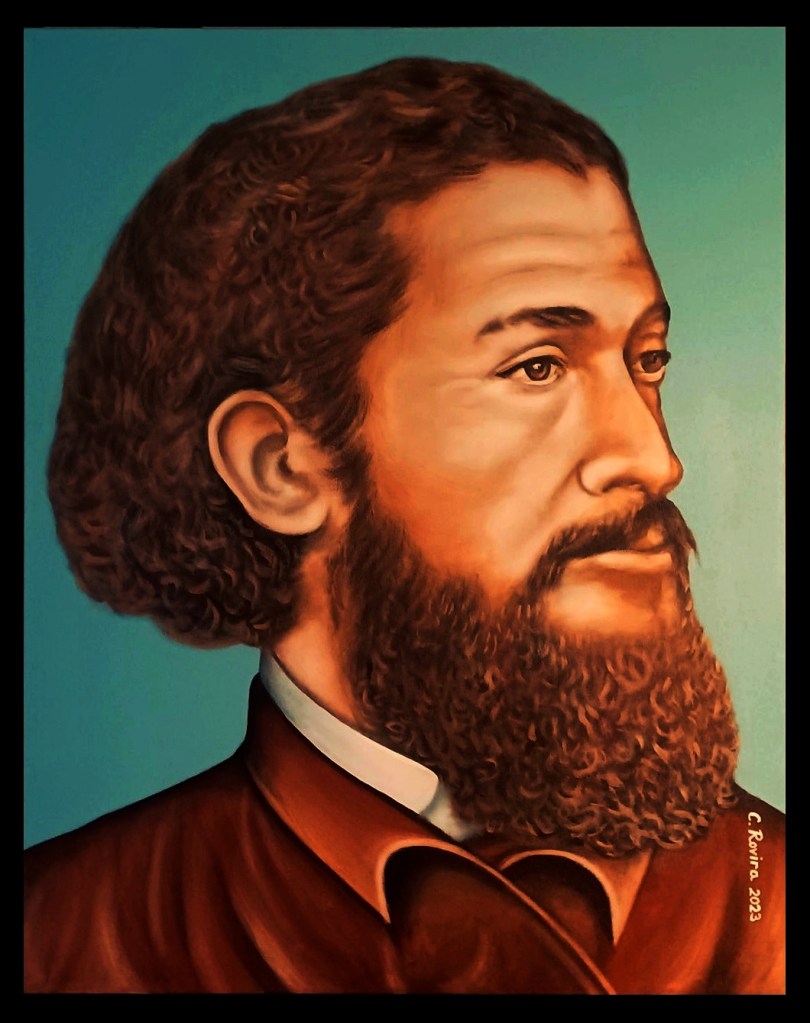
24″ X 30″, acrylic paint on canvas.
Upon his return to Puerto Rico, Betances opened his medical practice. Being a physician and humanist, he was empathetic of the human suffering he witnessed.
During the cholera epidemic of 1856, Betances defiantly clashed with colonial officials in the city of Mayaguez. He risked arrest and imprisonment because he prioritized medical care for enslaved Africans over the colonizing white-Spanish born soldiers and officers, who were also infected by the widespread deadly disease.
Influence of the 1804 Haitian Revolution
Betances gradually evolved a contempt against foreign tyranny. He was influenced by the revolutionary storm of ideas in France but was profoundly impacted by the boldness of the Haitian Revolution.
The militant example of the Haitian people was a beacon of hope and inspiration for enslaved and colonized people throughout the Caribbean, Africa and United States – similar to the Soviet Union in the early part of its history. As a result, Betances was motivated to become active in the clandestine movement for independence and the abolition of slavery.
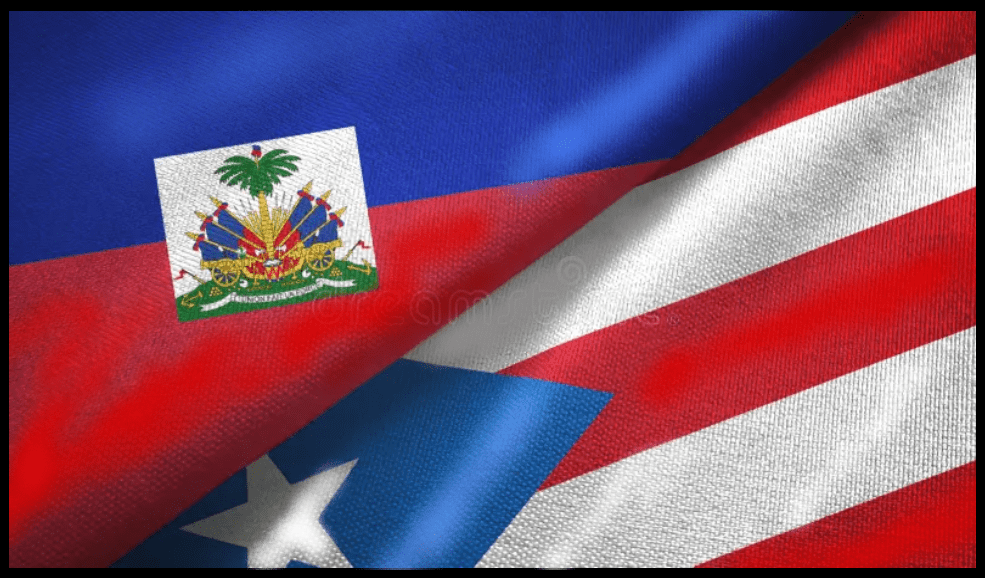
Haitian leaders understood quite well the necessity and benefits for oppressed people of different lands to forge unity, if they are to survive the onslaught of colonizing powers. This was a feature of the Haitian perspective that became most attractive to Betances.
In fact, Betances was so inspired by the Haitian experience that he went about to form a political alliance with Haiti and Dominican revolutionaries during the Restoration War of the 1860s. Haiti supported Dominican revolutionary leaders like Santiago Rodríguez by providing weapons and safe haven during their struggle against Spanish intentions to restore slavery and re-colonize the Dominican Republic.
In collaboration with fellow revolutionist Segundo Ruiz Belvis and others, Betances led an organizing effort to create the Revolutionary Committee, an organization devoted to the struggle for independence and the abolition of slavery in Puerto Rico by preparing for revolution there. Organizing these committees was most important in areas where enslaved Africans and other downtrodden sectors of the population were concentrated.

Betances became the central figure in the movement which brought about the 1868 Grito De Lares, an uprising that attempted the overthrow of Spanish colonialism. El Grito De Lares is also an event that affirmed the existence of the Puerto Rican Nation.
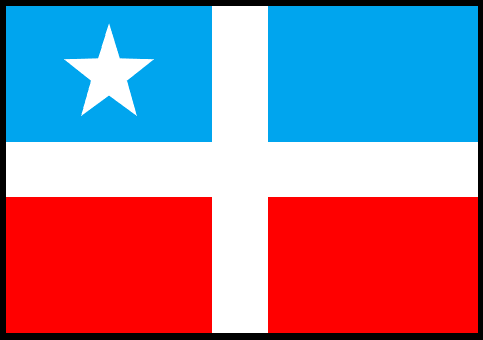
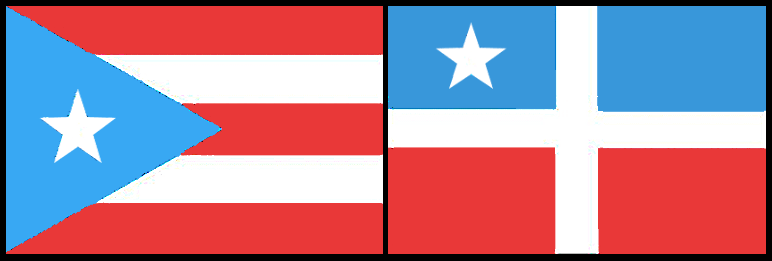
It was with enthusiasm of the moment as Puerto Rican revolutionaries prepared to wage armed battle with Spanish colonialism when Betances and a woman leader of the movement named Mariana Bracetti, a professional Stitcher, collaborated to create the first Puerto Rican flag.
A few weeks before the scheduled date for the Lares uprising, Betances returned to Puerto Rico from the island of Española (Haiti and Dominican Republic) on a schooner filled weapons and ammunition for the battle. These were weapons confiscated from the French during the Haitian Revolution.
Unfortunately, the revolutionaries were betrayed by an informant in the group. As the schooner approached the Port of Arecibo with the much-needed cargo Betances and his crew found themselves surrounded by Spanish warships. After their apprehension Betances was exiled to France.
But Betances was unstoppable. Between 1869-1870, he visited Haiti with Jose A. Basora, a fellow leader of Puerto Rico’s Revolutionary Committee. The two prominent Puerto Rican figures met with Haitian revolutionary leaders in an effort to collaborate for their mutual quest.

In the truest internationalist spirit and despite the failure of the 1868 Grito De Lares uprising, Betances traveled throughout the Caribbean forging relations with Cuban, Haitian, Dominican and Jamaican revolutionaries. He was not deterred from striving to build a united federation of the Greater Antilles, a force capable of challenging the colonizing powers as the Haitian Revolution had envisioned.
Dr. Ramon Emeterio Betances paid close attention to socio-economic and political developments in the U.S., especially after it freed itself from the greatest hinderance to its growth, the system of chattel slavery. Based on his perceptions of U.S. expansionism Betances believed the U.S. was destined to become a tyrannical power posing a threat to Puerto Rico, all of Latin America and the Caribbean.
Weeks before his death and shortly after the U.S. military invasion on November 16, 1898, Dr. Ramon Emeterio Betances stated “I do not want to see Puerto Rico colonized by Spain nor the United States.”
QUE VIVA PUERTO RICO LIBRE!


thank you for the history hopefully someday 🙏🏽💪🏽
LikeLike