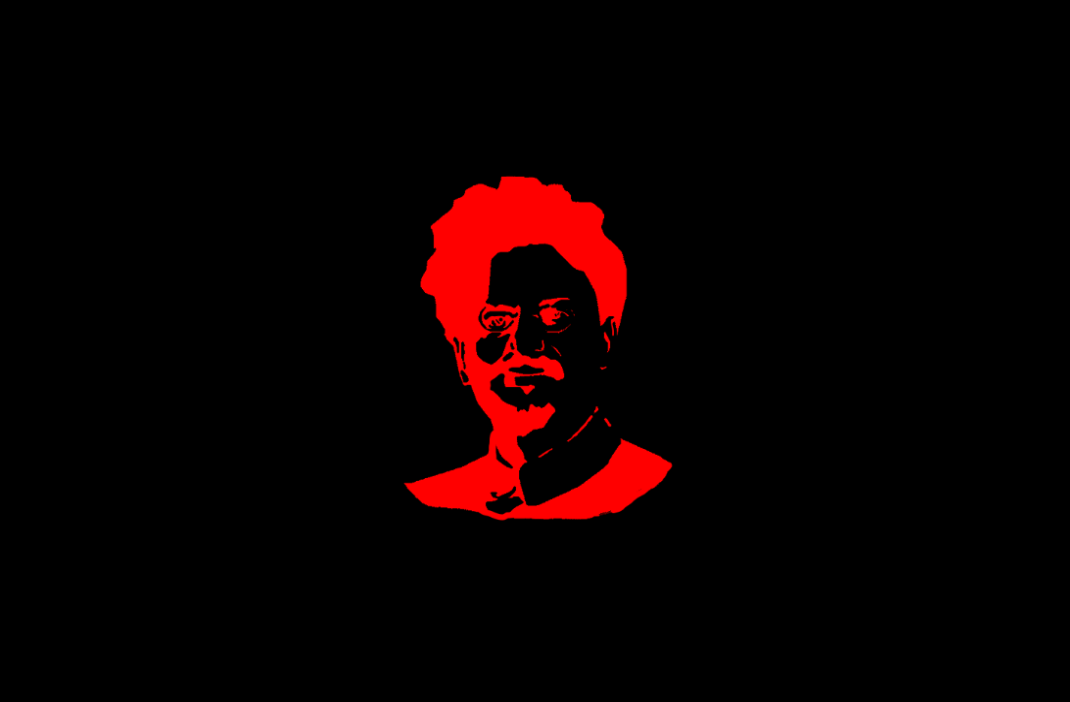
Tribute to LEON TROTSKY Centurion of the October 1917 Russian Socialist Revolution

Para la versión en español: https://carlitoboricua.blog/2024/10/23/homenaje-a-leon-trotsky-centurion-de-la-revolucion-socialista-rusa-de-1917/

____________________________________________

“The United States is not only the strongest, but also the most terrified country.” ― Leon Trotsky

____________________________________________

By Carlos “Carlito” Rovira

Leon Trotsky was born as Lev Davidovich Bronstein to a wealthy Ukrainian Jewish family on November 7, 1879, in Yanovka, Ukraine during the Russian Empire. However, after becoming drawn to Marxism as a teenager, he purposely repudiated his social class privilege and rejected the Jewish identity as an unapologetic atheist. Trotsky grew to become a prominent figure in one of the most momentous events of the Twentieth Century, the 1917 Russian Socialist Revolution.

In February 1917, Czar Nicholas II was forced to abdicate his throne due to extreme political unrest in Russia. Trotsky returned to Russia with thousands of his followers eager to join the Bolsheviks. The country was undergoing a promising revolutionary crisis.

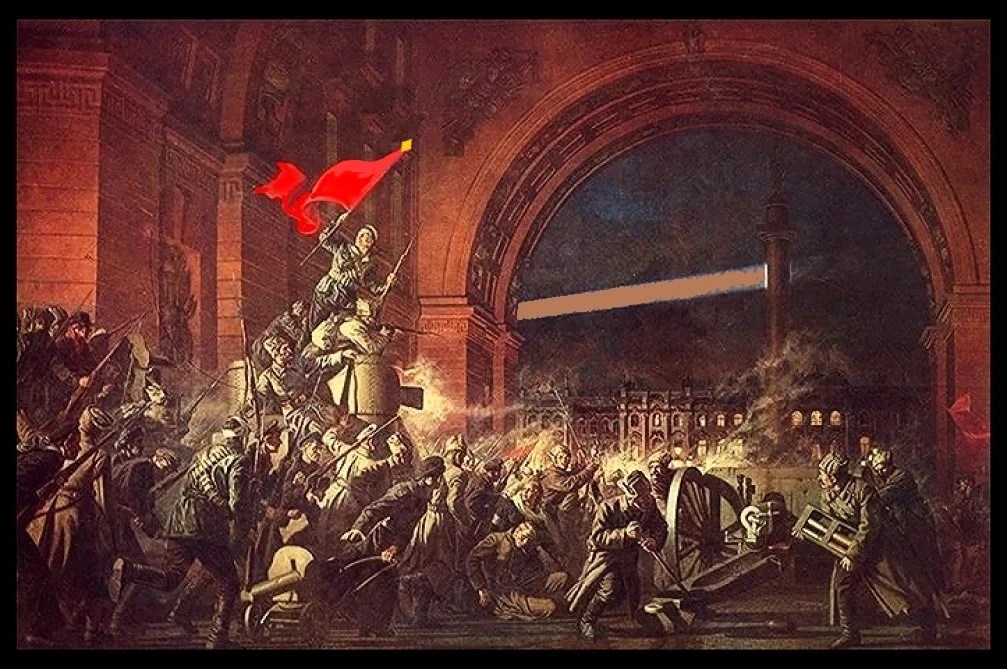
As chairman of the Petrograd Soviet, Trotsky played a key role in the storming of the Winter Palace in which the Kerensky Government was overthrown. Trotsky had then become one of Vladimir Lenin‘s most trusted comrades.
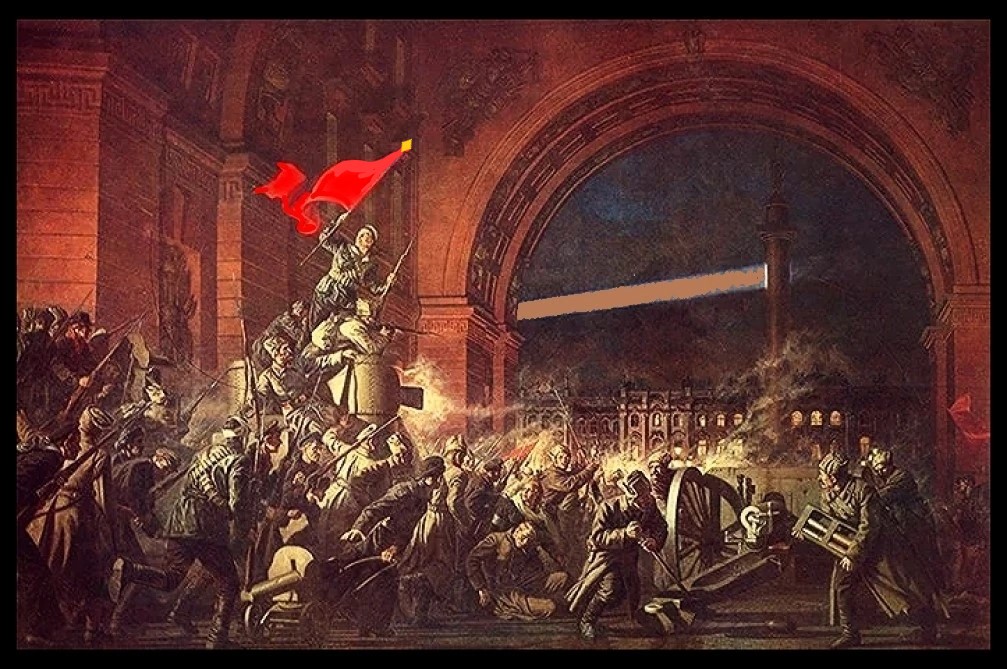
Artist depiction of Bolshevik insurgents storming the Winter Palace in Saint Petersburg, October 1917.

Between 1918 to 1925, Trotsky served as Commissar for Military and Naval Affairs, the equivalent title of a defense minister. He was also founder of the Soviet Red Army.

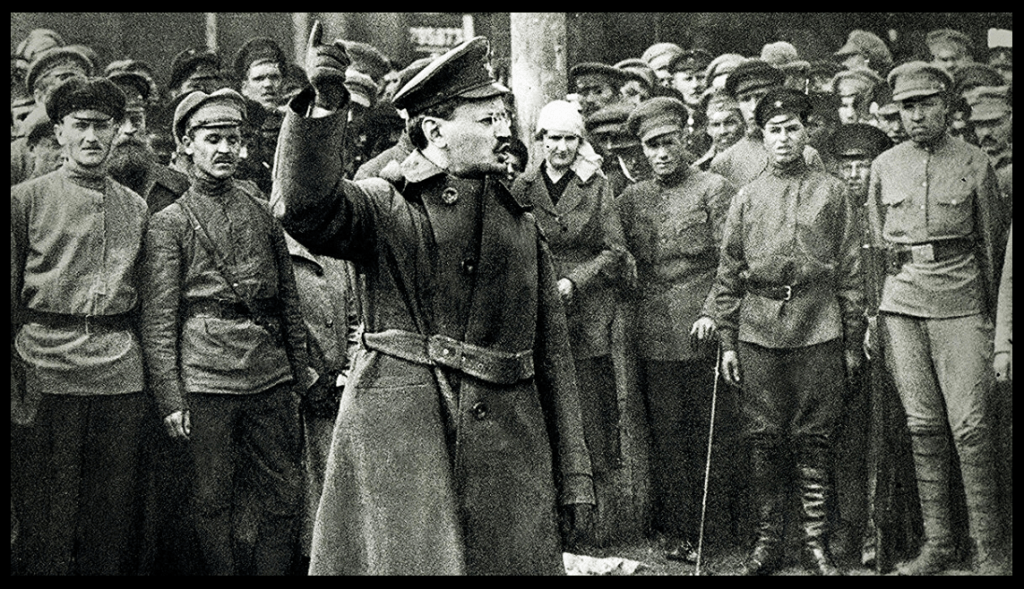
Under Trotsky’s leadership, the Red Army defeated attempts by counterrevolutionaries to restore the old semi-Feudal capitalist order. He also played a decisive role expelling from 5,600 miles of Russian territory, 14 invading imperialist armies. This included invading military forces from the United States.
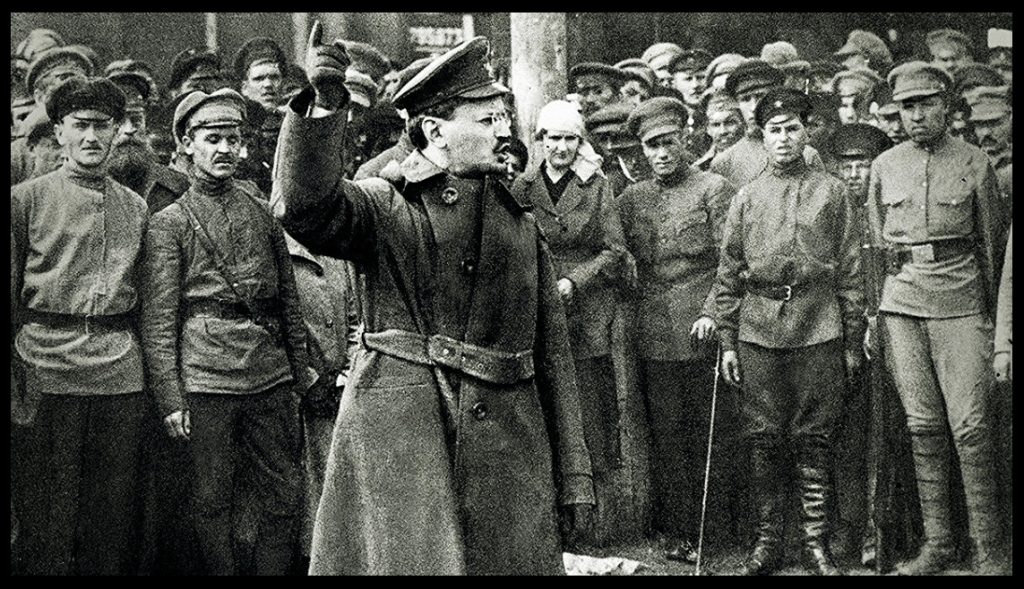
Trotsky speaking to Red Army troops before a battle.
The Red Army in pursuit of counterrevolutionary forces during the Civil War in Russia.

Being well-versed in the politics of the United States, Trotsky was quite outspoken against the racist policies of its government officials – especially on the subject of the Klu Klux Klan (KKK), the historic expression of white supremacy which originated from among defeated Confederate Army officers and soldiers after the U.S. Civil War.

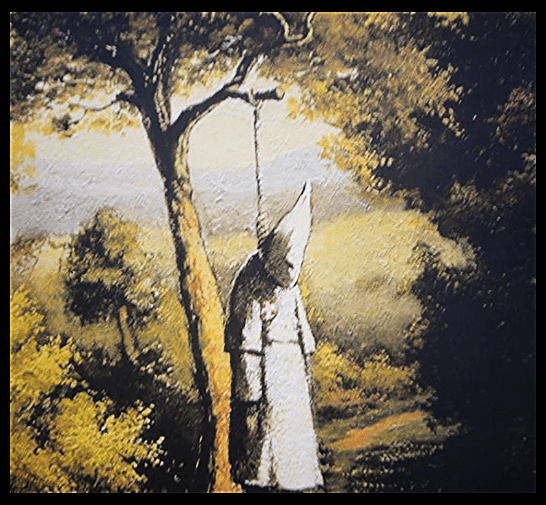
Trotsky’s outspoken and unforgiving stance with white supremacy came at the height of lynching of Black people in the U.S. southern states. He adamantly encouraged U.S. Communists to inflict the same terror on the KKK. Trosky stated: “Let us raise the slogan so that these capitalists will hear it plainly: LYNCH THE LYNCHERS OF THE NEGROES AND THE POOR TOILERS!”
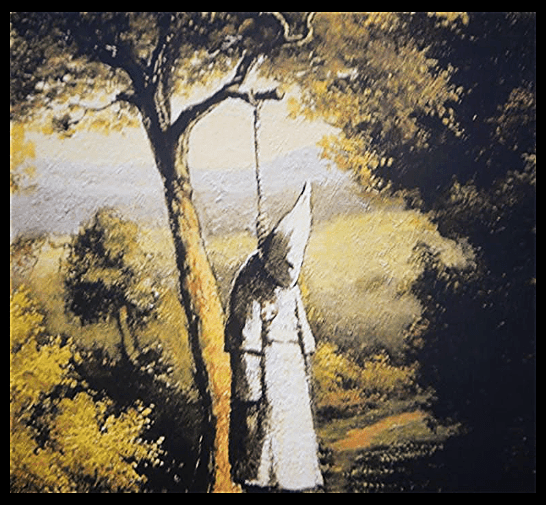
Banksy’s Hanging Klansman. A vision Leon Trotsky likely had when speaking about the KKK.

Trotsky had profound respect for the spiritual power of culture. His Collected Writings on Literature & Art, expressed the importance he gave to this subject for winning over the hearts and minds of millions of working-class people.

Unlike Joseph Stalin’s official restrictions on artistic license, Trosky was enthusiastically in favor of artistic freedom development in all forms. This view was also expressed at a public meeting on May 2, 1956, by China’s Mao Zedong: “Let a hundred flowers bloom; let a hundred schools of thought contend.

Leon Trotsky standing by the Kremlin.

Trotsky’s views on culture and art reflected his general disposition on the power of worker’s rights and power which aimed to encourage dialog and debate. Trotsky wanted to use culture as a tool for strengthening the intellectual potential of all citizens- especially the farmers and working class in a county where illiteracy was widespread.

Moreover, Trotsky envisioned creating a system of checks and balances where the average worker had a voice in the workplace and government. Elected “Commissars” as defined by the principles of Workers & Soldiers Soviets, would have subjected government and military officials to immediate recall if necessary.

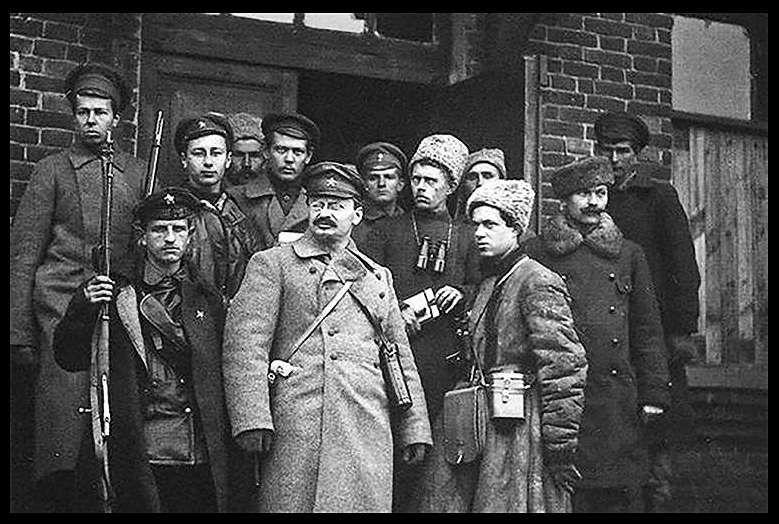
Leon Trotsky with fellow combatants of the Red Army.

Trotsky’s logic was to compel officials to practice good leadership by earning the respect and loyalty of their subordinates. However, the role of Commissars fluctuated as the ferment of the revolution gradually waned. Ultimately, these elected posts were eliminated by decree, becoming a key area of contention between Stalin and Trotsky.

THE STALIN – TROTSKY SPLIT

As the Soviet Union moved forward to consolidate its political power, especially after the death of Vladamir Lenin on January 21, 1924, contradictions sharpened between two opposing currents within the Communist Party of the Soviet Union (CPSU).

The differences became crystalized and were spearheaded by Joseph Stalin on the one hand and Leon Trotsky on the other. Stalin represented a fierce movement to concentrate power in the government bureaucracy, whereas Trotsky advocated for empowering the Soviets (committees) of workers.
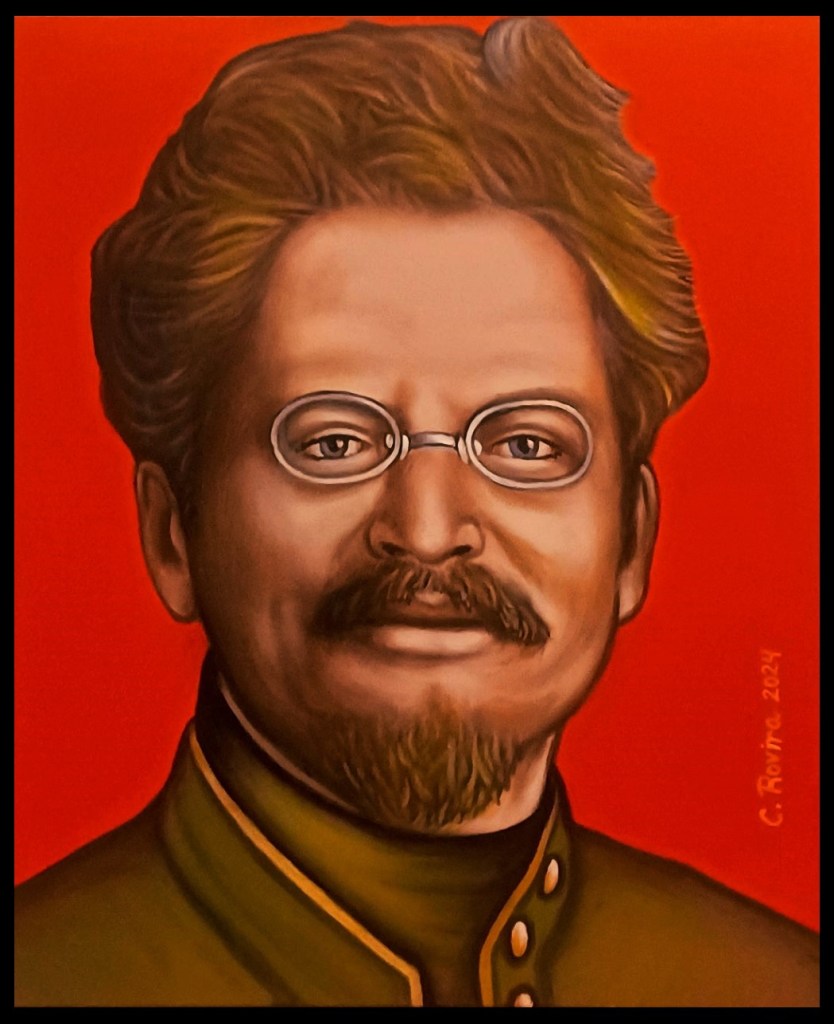
My portrait of Leon Trotsky. 20″ X 24″, acrylic paint on canvas.

As Lenin’s health began to rapidly decline due to a debilitating stroke, he dictated a letter to his trusted aide stating his last wishes that Joseph Stalin not become his successor as leader of the Soviet Union. This historical document became known as Lenin’s Last Testament. However, Stalin manipulated everyone opposed to him by appointing his close allies to key government positions to thwart objections. This event outraged many Bolsheviks who expected Trotsky to be next in line as head of state.

In the years after Lenin died, the majority of the CPSU’s rank and file was gradually steered to partake in a deliberate campaign against Trotsky. He was horribly vilified and removed from his duties as Commissar of the Military, the Politburo, as well as purged from the Communist Party altogether. Eventually, Trotsky was exiled out of the Soviet Union.

As always, dynamics exist everywhere in nature and politics. Tragically, the differences within CPSU were unable to be resolved, resulting in increased antagonism which led to the assassination of Trotsky in Mexico on August 21, 1940, by a NKVD secret agent Jaime Ramón del Rio. In addition, Trotsky’s loyal followers were suffering persecution inside the still developing USSR.

Until the last moments of his life, Trotsky maintained a revolutionary posture by urging his followers to continue defending the Soviet Union. Although Trotsky was scornfully opposed to Stalinism, he understood that it was a phenomenon that did not originate from the capitalist camp but from socialism.
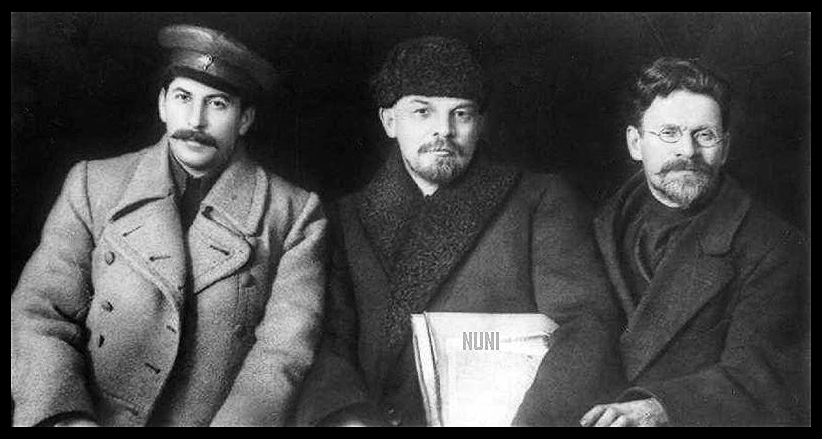
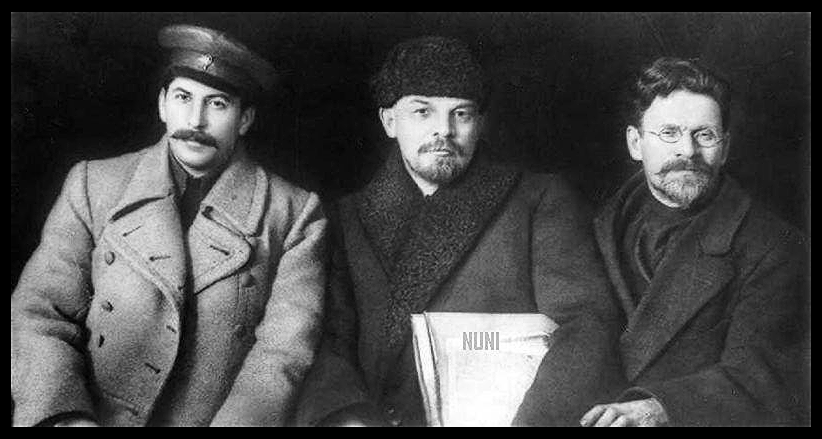
From left to right: Joseph Stalin, Vladamir Lenin, and Leon Trotsky before their political fallout.

Internal turmoil is often the initial spark that ignites the implosion of any revolutionary movement. One can easily point to a similar historical occurrence, when in June 1971 internal conflicts caused the disastrous demise of the Black Panther Party (BPP).

The scenario of domestic dispute and violence applies in both absurd situations. Brothers & sisters turned against brothers & sisters to the highest level of hostilities.

It is impossible to overlook how the BPP split was a set-back for the U.S. movement. And it doesn’t take much to conclude how the BPP split was largely orchestrated by the FBI’s COINTELPRO. Conversely, we cannot dismiss the possible role by foreign intelligence in the Stalin-Trotsky conflict.

However, Leon Trotsky repeatedly warned the international revolutionary movement about the detriments of Stalinism, most notably his predictions of the USSR’s shift to the right and its eventual collapse, which occurred in 1991. Trotsky’s detailed critiques of Stalinism were outlined in his classic polemic titled A Revolution Betrayed.

The collapse of the Soviet Union provided the international gang of capitalist tyrants and exploiters an opportunity to advance their anti-Communist smears. It also caused many difficulties for revolutionaries throughout the world, as well as republics resisting imperialism like Cuba.

There are many lessons to be drawn by future generations of the 1917 Russian Revolution. Specifically, Leon Trotsky’s contributions to the establishment of the very first socialist state, and his comradeship with Vladamir Lenin.

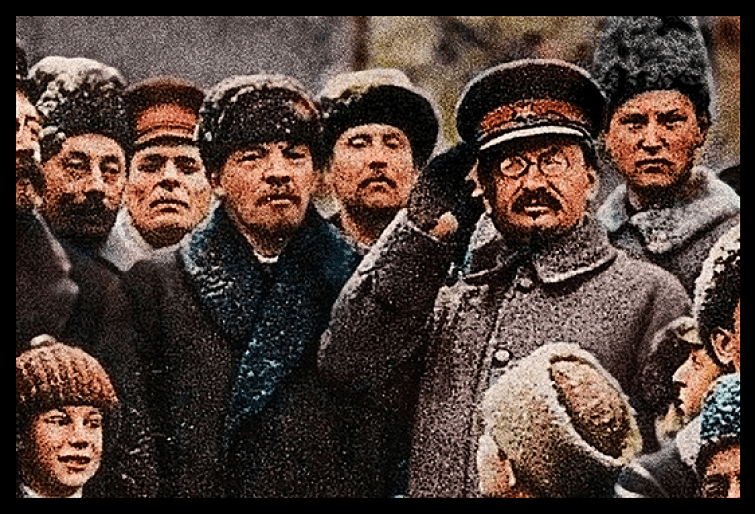
Vladamir Lenin and Leon Trotsky together after the Bolshevic seizer of power.

It will require serious inquiry about this history to counter the baseless anti-Communist slanders directed against the legacy of Leon Trotsky, which originated from Stalinism.

Hopefully, the next major Socialist revolution, wherever it may be, shall avoid a repeat of past mistakes and correctly grapple with socialism’s inherited contradictions. That will surely guarantee a decisive victory for the emancipation of oppressed and exploited people.

LONG LIVE THE REVOLUTIONARY LEGACY OF LEON TROTSKY!

Homenaje a LEON TROTSKY Centurión de la Revolución Socialista Rusa de 1917

For English Version: https://carlitoboricua.blog/2024/10/23/tribute-to-leon-trotsky-centurion-of-the-october-1917-russian-socialist-revolution/

______________________________________________

Estados Unidos no sólo es el país más fuerte, sino también el más aterrorizado.”

-León Trotsky

_____________________________________________

Por Carlos “Carlito” Rovira

León Trotsky nació como Lev Davidovich Bronstein en una rica familia judía ucraniana el 7 de noviembre de 1879, en Yanovka, Ucrania durante el Imperio Ruso. Sin embargo, después de sentirse atraído por el marxismo a una edad temprana, repudió deliberadamente su privilegio de clase social y rechazó la identidad judía, al tiempo que se convirtió en un ateo sin complejos. Trotsky creció hasta convertirse en una figura destacada de uno de los acontecimientos más trascendentales del siglo XX, la Revolución Socialista Rusa de 1917.

En febrero de 1917, el zar Nicolás II se vio obligado a abdicar de su trono debido al extremo malestar político en Rusia. Trotsky regresó a Rusia con miles de seguidores deseosos de unirse a los bolcheviques. El país atravesaba una prometedora crisis revolucionaria.

Como presidente del Sóviet de Petrogrado, Trotsky desempeñó un papel clave en el asalto al Palacio de Invierno en el que fue derrocado el gobierno de Kerensky. Trotsky se había convertido entonces en uno de los camaradas más confiables de Vladimir Lenin.

Representación artística de los insurgentes bolcheviques asaltando el Palacio de Invierno, en octubre de 1917.

Entre 1918 y 1925, Trotsky se desempeñó como Comisario para Asuntos Militares y Navales, el título equivalente a un ministro de Defensa. También fue fundador del Ejército Rojo soviético.

Bajo el liderazgo de Trotsky, el Ejército Rojo derrotó los intentos de los contrarrevolucionarios de restaurar el antiguo orden capitalista semifeudal. También jugó un papel decisivo al expulsar de 5.600 millas de territorio ruso a 14 ejércitos imperialistas invasores. Esto incluyó fuerzas militares invasoras de Estados Unidos.

Trotsky hablando ante las tropas del Ejército Rojo antes de una batalla.
El Ejército Rojo persiguiendo a las fuerzas contrarrevolucionarias durante la Guerra Civil en Rusi

Trotsky, muy versado en la política estadounidense, fue bastante franco contra las políticas racistas de Estados Unidos, especialmente en el tema del notorio Klu Klux Klan (KKK).

La postura abierta e implacable de Trotsky respecto de la supremacía blanca se produjo durante el apogeo de los linchamientos de negros en los estados del sur de Estados Unidos. Animó a los comunistas estadounidenses a infligir el mismo terror al KKK. Trosky afirmó: “Levantemos la consigna para que estos capitalistas la escuchen claramente: ¡LINCHAMIENTO A LOS LINCHADORES DE LOS NEGROS Y DE LOS TRABAJADORES POBRES!”

El Klan ahorcado de Banksy. Una visión que probablemente tuvo León Trotsky cuando hablaba del KKK.

Trotsky tenía un profundo respeto por el poder espiritual de la cultura. Su colección de Obras Escritas Sobre La Literatura y El Arte expresó la importancia que le dio al tema para ganarse los corazones y las mentes de millones de personas de clase trabajadora.

A diferencia de las restricciones oficiales impuestas por Joseph Stalin a las licencias artísticas, Trosky estaba con entusiasmo a favor del desarrollo de la libertad artística en todas sus formas. Esta opinión también se expresó en una reunión pública en el 2 de mayo de 1956, por Mao Zedong de China se opuso a ello: “Que florezcan cien flores; que compitan cien escuelas de pensamiento.”

León Trotsky junto al Kremlin.

Las opiniones de Trotsky sobre la cultura y el arte reflejaban su disposición general sobre el poder de los derechos de los trabajadores y el poder que apuntaba a fomentar el diálogo y el debate. Trotsky quería utilizar la cultura como herramienta para fortalecer el potencial intelectual de todos los ciudadanos, especialmente los agricultores y la clase trabajadora en un país donde el analfabetismo estaba generalizado.

Además, Trotsky imaginó la creación de un sistema de controles y equilibrios donde el trabajador promedio tuviera voz en el lugar de trabajo y en el gobierno. Los “comisarios” electos, tal como los definen los principios de los soviets de trabajadores y soldados, habrían sometido a los funcionarios gubernamentales y militares a una destitución inmediata si fuera necesario.

León Trotsky con compañeros combatientes del Ejército Rojo.

La lógica de Trotsky era obligar a los funcionarios a practicar un buen liderazgo ganándose el respeto y la lealtad de sus subordinados. Sin embargo, el papel de los comisarios fluctuó a medida que el fermento de la revolución disminuyó gradualmente. Al final, estos cargos electos fueron eliminados por decreto, convirtiéndose en un área clave de discordia entre Stalin y Trotsky.

LA ESCISIÓN STALIN-TROTSKY

A medida que la Unión Soviética avanzaba para consolidar su poder político, especialmente después de la muerte de Vladamir Lenin el 21 de enero de 1924, se agudizaron las contradicciones entre dos corrientes opuestas dentro del Partido Comunista de la Unión Soviética (PCUS).

Las diferencias cristalizaron y fueron encabezadas por Joseph Stalin, por un lado, y León Trotsky, por el otro. Stalin representó un movimiento feroz para concentrar el poder en la burocracia gubernamental, mientras que Trotsky abogó por empoderar a los soviets (comités) de trabajadores.

Mi retrato de León Trotsky. 20″ X 24″, pintura acrílica sobre lienzo. Hecho en 2024.

Cuando la salud de Lenin comenzó a deteriorarse rápidamente debido a un derrame cerebral debilitante, dictó una carta a su asistente de confianza expresando sus últimos deseos de que Joseph Stalin no se convirtiera en su sucesor como líder de la Unión Soviética. Este documento histórico pasó a ser conocido como el Último Testamento de Lenin. Sin embargo, Stalin manipuló a todos los que se oponían a él nombrando a sus aliados cercanos para puestos gubernamentales clave para frustrar las objeciones. Este acontecimiento indignó a muchos bolcheviques que esperaban que Trotsky fuera el siguiente en la fila como jefe de Estado.

Gradualmente, en los años posteriores a la muerte de Lenin, la mayoría de las bases del PCUS se dirigieron contra Trotsky en una campaña deliberada. Fue horriblemente vilipendiado y destituido de sus funciones como Comisario Militar y del Politburó, además de purgado del Partido Comunista. Finalmente, Trotsky fue exiliado de la Unión Soviética.

Como siempre, la dinámica existe en todas partes de la naturaleza y la política. Trágicamente, las diferencias dentro del PCUS no pudieron resolverse, lo que resultó en un mayor antagonismo que condujo al asesinato de Trotsky en México el 21 de agosto de 1940 por un agente secreto del NKVD, Jaime Ramón del Río. Además, los seguidores leales de Trotsky sufrían persecución dentro de la aún en desarrollo unión soviética.

Hasta los últimos momentos de su vida, Trotsky mantuvo una postura revolucionaria al instar a sus seguidores a seguir defendiendo a la Unión Soviética. Aunque Trotsky se oponía desdeñosamente al estalinismo, entendía que se trataba de un fenómeno que no se originaba en el campo capitalista sino en el socialismo.

De izquierda a derecha: Joseph Stalin, Vladamir Lenin y León Trotsky antes de sus consecuencias políticas.

La agitación interna es a menudo la chispa inicial que enciende la implosión de cualquier movimiento revolucionario. Se puede señalar fácilmente un acontecimiento histórico similar, cuando en junio de 1971 los conflictos internos causaron la desastrosa desaparición del Partido Panteras Negra (BPP) en los Estados Unidos.

El escenario de disputas domésticas y violencia se aplica en ambas situaciones absurdas. Hermanos y hermanas se volvieron contra hermanos y hermanas hasta el más alto nivel de hostilidades.

Es imposible pasar por alto cómo la división del BPP fue un revés para el movimiento estadounidense. Y no hace falta mucho para concluir cómo la división del BPP fue orquestada en gran medida por COINTELPRO del FBI. Por el contrario, no podemos descartar el posible papel de la inteligencia extranjera en el conflicto Stalin-Trotsky.

Sin embargo, León Trotsky advirtió repetidamente al movimiento revolucionario internacional sobre los perjuicios del estalinismo, en particular sus predicciones sobre el giro de la URSS hacia la derecha y su eventual colapso, que ocurrió en 1991. Las críticas detalladas de Trotsky al estalinismo se esbozaron en su polémica clásica titulada La Revolución Traicionada.

El colapso de la Unión Soviética brindó a la pandilla internacional de tiranos y explotadores capitalistas una oportunidad de promover sus difamaciones anticomunistas. También causó muchas dificultades a los revolucionarios de todo el mundo, así como a las repúblicas que hoy resisten al imperialismo como Cuba.

Hay muchas lecciones que las generaciones futuras pueden extraer de la Revolución Rusa de 1917. Específicamente, las contribuciones de León Trotsky al establecimiento del primer estado socialista y su camaradería con Vladamir Lenin.

Vladamir Lenin y León Trotsky juntos tras la toma del poder por los bolcheviques.

Será necesario investigar seriamente esta historia para contrarrestar las calumnias anticomunistas infundadas dirigidas contra el legado de León Trotsky, que se originó en el estalinismo.

Es de esperar que la próxima gran revolución socialista, donde quiera que esté, evite que se repitan los errores del pasado y aborde correctamente las contradicciones heredadas del socialismo. Eso seguramente garantizará una victoria decisiva para la emancipación de los pueblos oprimidos y explotados.

¡VIVA EL LEGADO REVOLUCIONARIO DE LEÓN TROTSKY!

Remember the October 25,1977 Puerto Rican takeover of the STATUE OF LIBERTY

______________________________________________

“We seized the Statue of Liberty in 1977 to expose to the world the hypocrisy of the United States that projects itself as a beacon of freedom. When in fact, it is the colonizer of Puerto Ricans and unjustly imprisons us when we challenge their rule. The takeover was also an act of solidarity with the struggles of our Black, Native American, Chicano-Mexican, Asian, and Arab brothers and sisters, whom we share a common oppressor.”

Fernando Ponce Laspina, Nationalist Party of Puerto Rico -NY Committee

One of the participants and arrestees of the 1977, Statue of Liberty takeover.

______________________________________________

By Carlos “Carlito” Rovira

On October 25, 1977, a group of 30 Puerto Ricans and allies unexpectedly caused shock to the ruling class when they courageously seized physical control of the Statue of Liberty, located in New York Harbor. This daring act of civil disobedience became monumental in the history of resistance in the United States. The group called itself the New York Committee to Free the Five Puerto Rican Nationalists, an entity of various groups and individuals from the Puerto Rican diaspora during the 1970s.

With militarystyle planning and discipline, prior to boarding and during their ride on a ferry boat from Manhattan to Liberty Island, the group divided itself into several teams of fours. They pretended to be tourists and strangers to one another to avoid suspicion of their intentions.

As soon as the vessel reached its destination and docked, the activists went into action demonstrating a powerful energy of resistance to oppression. They ran to storm with fury the entrances of the facility where the giant human-like figure stands tall.

Boricuas with energy of resistance. El Maestro’s Fernando Ponce Laspina holding up the flag on the right.

Within 15 minutes the protestors secured their position in this national monument by locking doors and shutting windows to forestall an aggressive response they expected by law enforcement. Once inside, and after they expelled visiting tourists and Federal employees, the activists hurried up the staircase to reach the top level where the head of the Statue is located.

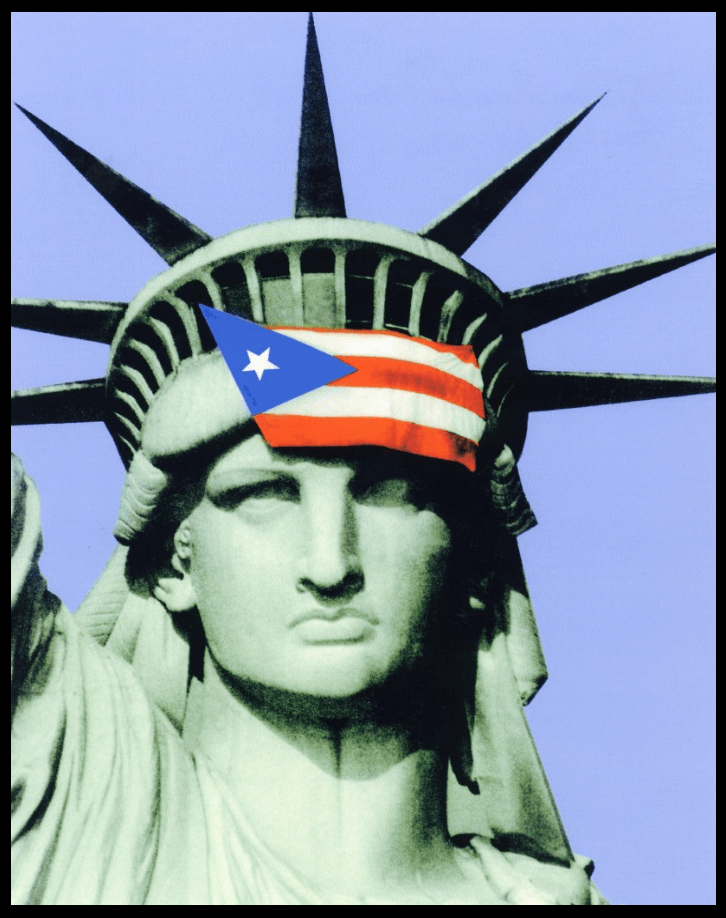
With a strong sense of both political and cultural conviction for the beloved homeland, they unfurled and hoisted a very huge Puerto Rican Flag from the statue’s crown, where it was proudly displayed for the world to witness.

An arial photo of Boricua dignity at Statue of liberty.

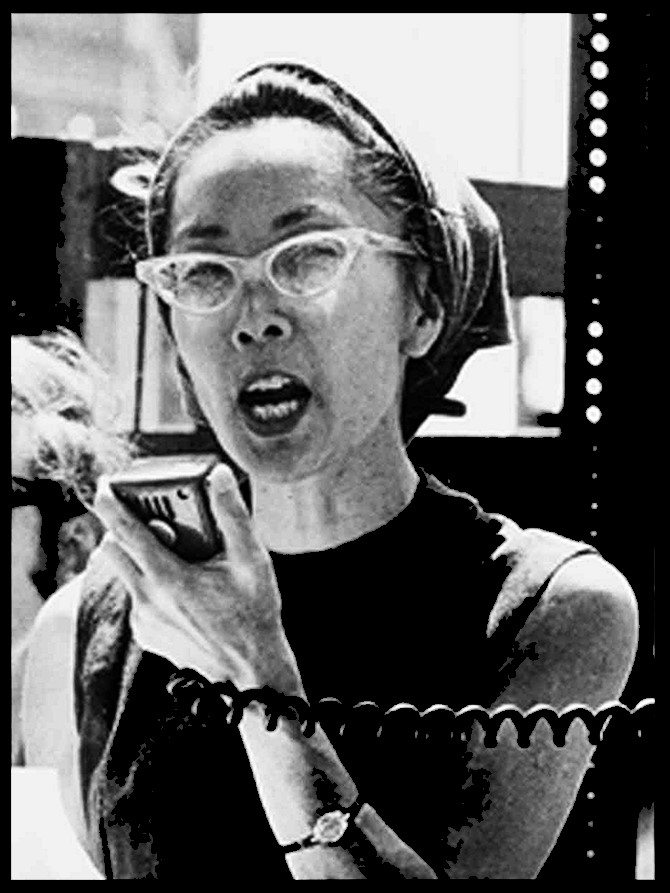
Among the non-Boricua participants of this action who merits recognition for risking her own personal safety in the interest of a Puerto Rican cause was the legendary Japanese American internationalist, Yuri Kochiyama.

Yuri Kochiyama

While the mainstream media depicted this act of resistance as “terroristic”, the inspiration for it was to bring about world attention to the criminal U.S. colonial domination of Puerto Rico and to demand the release of political prisoners Lolita Lebron, Rafael Cancel Miranda, Irvin Flores Rodriguez, Andres Figueroa Cordero and Oscar Collazo.

These freedom fighters were passionate about upholding the dignity of the liberation struggle. They were members of the Nationalist Party who responded to a directive given by Dr. Pedro Albizu Campos. All five patriots were sentenced to life imprisonment for carrying out justified armed actions against the U.S. colonizers in two separate historic events.

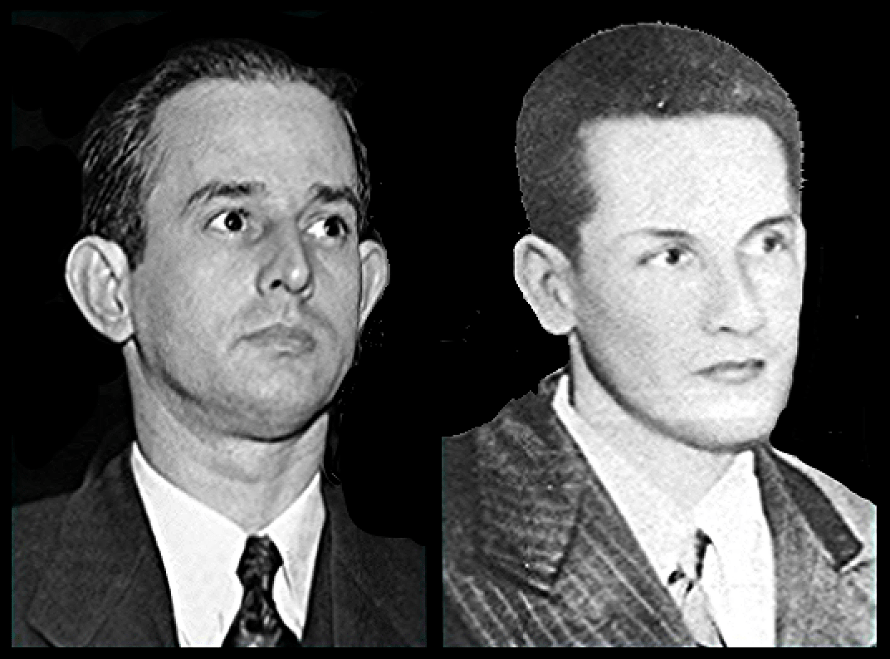
On November 1, 1950, Nationalist Party members Oscar Collazo and Griselio Torresola went to the Blair House in Washington, D.C. to assassinate President Harry Truman. Their intended purpose was to counter Washington’s lies about the Jayuya-Nationalist revolt of October 30, 1950, and the severe repression that followed. U.S. government officials falsely depicted the conflict as Puerto Ricans vs. Puerto Ricans.

Torresola was killed and Collazo critically wounded in a shootout with Capital Police and Secret Service. However, their brave act did bring about political exposure to what was occurring in Puerto Rico.

From L to R: Oscar Collazo and Griselio Torresola.

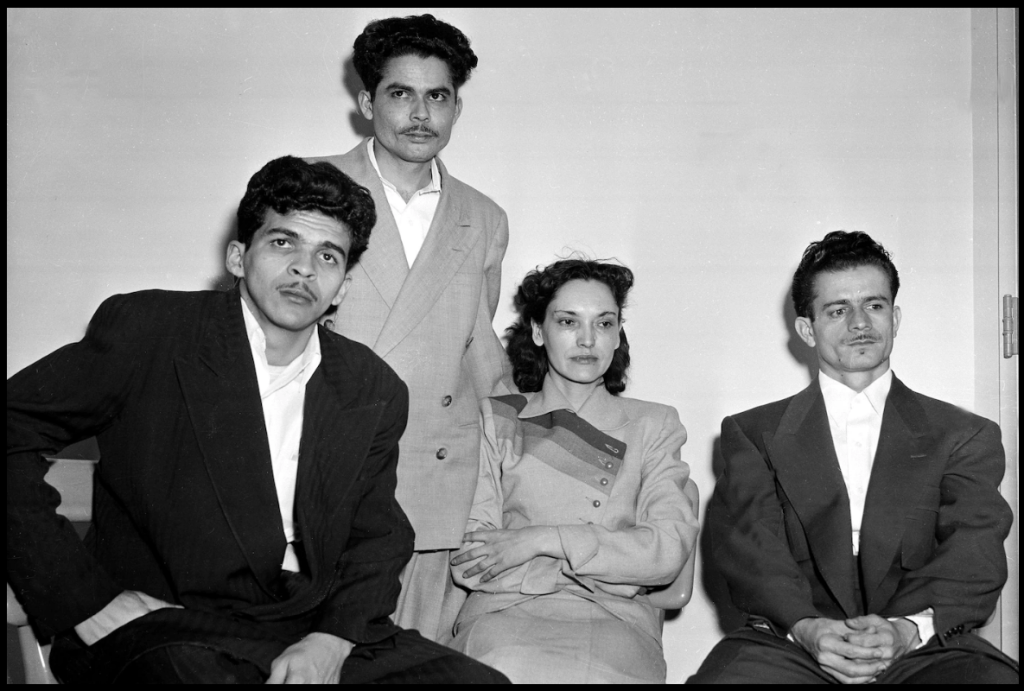
And then, on the morning of March 1, 1954, as members of the House of Representatives met in the Chamber of the Capitol, Lolita Lebrón, Rafael Cancel Miranda, Irvin Flores Rodriguez and Andres Figueroa Cordero, calmly walked up a staircase to the balcony. Lolita pulled out a Puerto Rican flag and a handgun from her shoulder bag. She then shouted the solemn words of the liberation struggle: “QUE VIVA PUERTO RICO LIBRE!” Within seconds of brandishing their weapons, the four Nationalists opened fire on the colonizers in the U.S. Congress.

From L to R: Rafael Cancel Miranda, Andres Figueroa Cordero, Lolita Lebron, Irvin Flores Rodriguez.

Considering the fury of the 1960s-70s in poor, working-class communities of the diaspora and Puerto Rico, the boldness of the Statue of Liberty takeover added to the broadly supported call for their release. No one can ever dispute how this militant action contributed to the release of the five Puerto Rican Nationalists two years later, when President Jimmy Carter was pressured to grant amnesty.

Among other factors that led to a victorious outcome was the solidarity received from the Government of Cuba. Despite many threats and a brutal economic blockade, the Cuban Revolution has always maintained its principles of solidarity by upholding the centuries-long revolutionary tradition known as the “Two Wings of the Same Bird“, Cuba and Puerto Rico.

After a nine-hour siege the police forced their way through and arrested the demonstrators. In discipline fashion they lined up waiting for the inevitable by chanting slogans and singing the revolutionary Puerto Rican National Anthem, La Borinqueña.”

Among the names of individuals arrested were Yuri Kochiyama, Fernando Ponce Laspina, Charlie “Indio” Alejandro, Madelyn Gonzalez, Chino Lopez, Julio Wells, David (DJ) Tirado, Emma Torres, Richie Perez, Mickey Meléndez and others. Serving as media-spokesperson for the action, outside the perimeter of the Statue of Liberty was Vicente Alba-Panama.

Despite everything U.S. rulers have done to Boricuas through racist violence, discrimination, economic deprivation, and attempts to eliminate our identity as a people, the innate instinct to resist oppression can never be destroyed.

There is reason to feel proud knowing that it was the power of the Puerto Rican struggle which made possible the release of all five political prisoners. This profound example of resilience and determination has added to the unbreakable traditions of the Puerto Rican people.

¡QUE VIVA PUERTO RICO LIBRE!