Tribute to Blanca Canales, heroine of the Jayuya Uprising

By Carlos “Carlito” Rovira

Below is a 20” X 24”, acrylic paint portrait of the legendary Puerto Rican Nationalist, Blanca Canales, one of my favorite super-sheroes. Her story always fascinated me whenever my parents spoke of her with admiration during my childhood.

Blanca Canales lived from February 17, 1906, to July 25, 1996. She was an educator and staunch leader of the Nationalist Party in Jayuya, Puerto Rico. As a child she was reared by parents who advocated independence for the homeland from U.S. domination. By the time Blanca reached adulthood she became well versed in the anti-colonial cause.
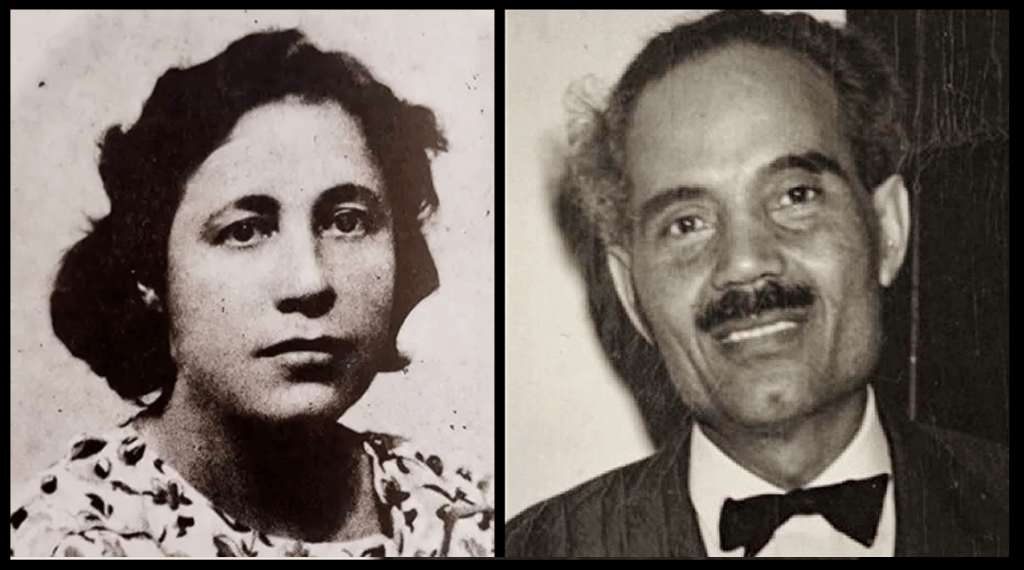
The young Blanca Canales and Dr. Pedro Albizu Campos.

Canales was motivated to join the Nationalist Party due to her disdain for the repressive U.S. colonial presence in Puerto Rico, especially during the 1948 Law 53, also known as the Gag Law. This decree made it illegal to mention independence in literature, recorded music or public speeches. In addition, waving or possessing a Puerto Rican flag was a criminal offense punishable by 10 years in prison.

When Dr. Pedro Albizu Campos rose to the presidency of the Nationalist Party Blanca participated in organizing the women’s section of that entity, known as Daughters of Freedom. Her charisma and convictions inspired many women to join the ranks of the Nationalist Party.
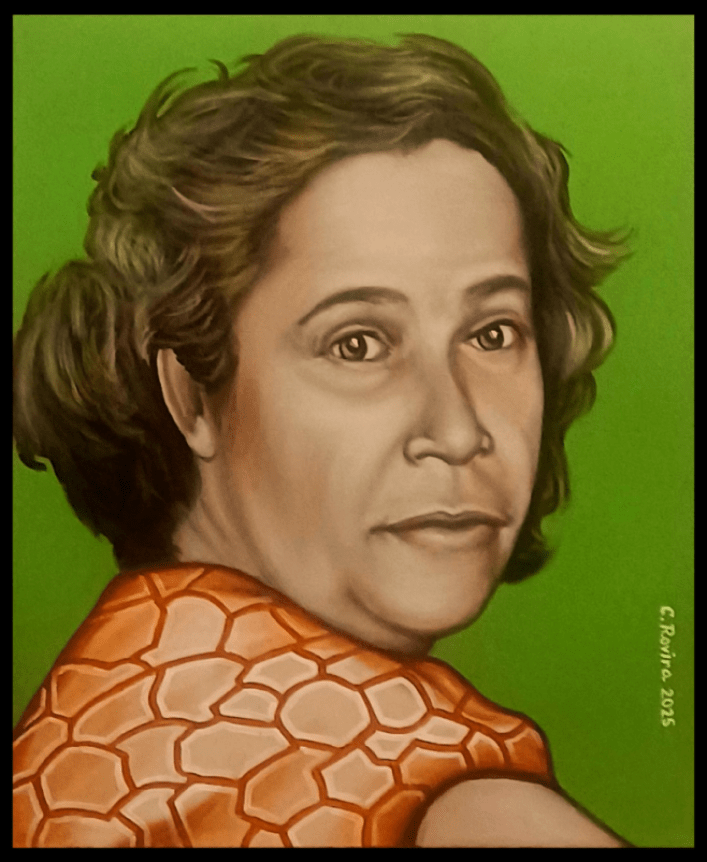
My portrait of Blanca Canales. 20″ X 24″, acrylic paint on canvas.

But Blanca Canales is best known for leading the famous October 30, 1950, Jayuya Uprising, part of the general Nationalist revolt in Puerto Rico. The Nationalist Party leadership chose to strike with armed force once their intelligence operatives discovered a secret plan the U.S. colonizers preparing to destroy the independence movement with violence.

On that morning, Canales led a contingency of insurrectionists in an armed attack on the police headquarters of Jayuya, where a fierce gun battle ensued for several hours. Police officials were shocked by the unexpected tenacity of the Nationalists. Overwhelmed and outnumbered, colonial officials and police were compelled to surrender and exit the building with their hands raised in the air.
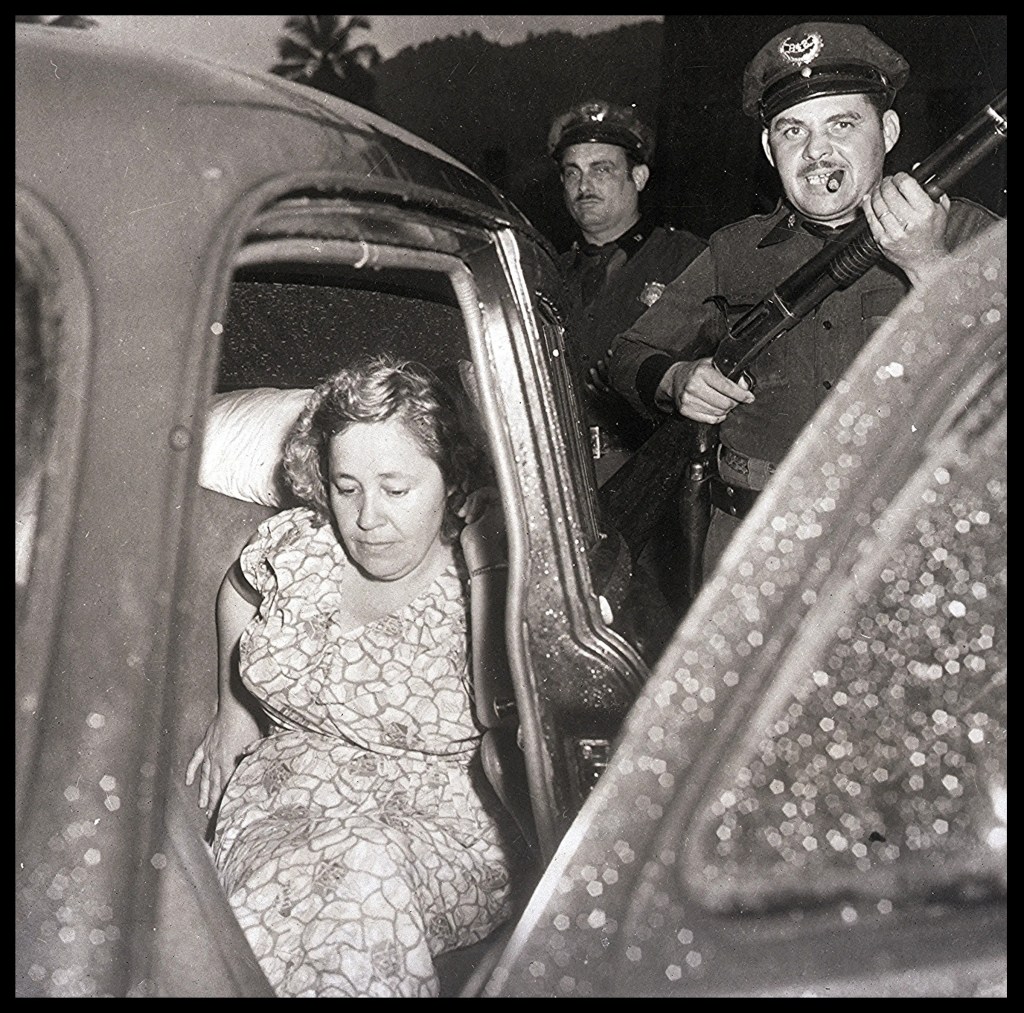
Blanca Canales in custody by colonial police after the Jayuya Uprising.
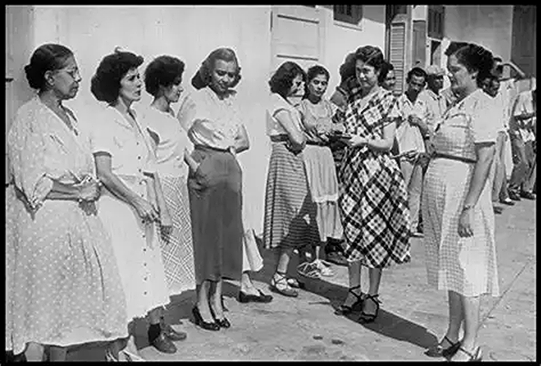
Nationalist Party women faced the same repressive consequences as their male comrades. In this photo they are being processed after arrest by colonial police.

Puerto Rican Nationalists also launched armed attacks on police and government facilities in other cities, Utuado, Arecibo, Mayaguez, Naranjito, Peñuelas, and Ponce. In San Juan, Dr. Pedro Albizu Campos and other patriots defended the Nationalist Party headquarters in a shootout with colonial police. Blanca Canales was one of many women who took part in this significant chapter in Puerto Rican history.

Immediately after the Nationalists gained control of Jayuya, Blanca proceeded to give the command to burn down the despised police facility. Surrounded by crowds of residents, the brave patriots defiantly raised the outlawed Puerto Rican flag. With her weapon raised in the air, Canales shouted the solemn historic words of the struggle — “QUE VIVA PUERTO RICO LIBRE!” She boldly declared the independence of Puerto Rico!
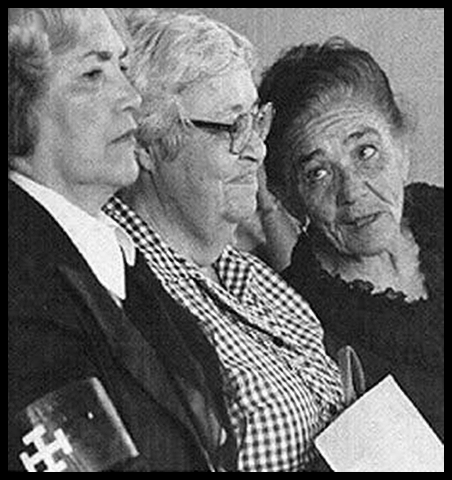
Blanca Canales flanked by two other Nationalist heroines, Lolita Lebron (left) and Isabel Rosado (right).

The response of U.S. colonialism to the insurrectionists was swift and brutal. The National Guard was utilized to repress the revolt including bombing Jayuya and Utuado from warplanes in a desperate rush to subdue the Nationalists.

The Jayuya Uprising is an episode in Puerto Rican history that remains virtually hidden from mainstream education. Puerto Rico’s colonial status points to the plunderous intentions of the U.S. in Latin America and Caribbean. What the Jayuya Uprising did was to cause political embarrassment for U.S. rulers, who were quick to depict the situation as a conflict among Puerto Ricans.

Blanca’s love for the homeland was uncompromising. Despite the revolt being suppressed and having sacrificed so much by spending years in prison, her courageous role in the liberation struggle is unforgettable. Her legacy will surely give rise to future revolutionaries that will fight for a free Puerto Rico.

QUE VIVA PUERTO RICO LIBRE!
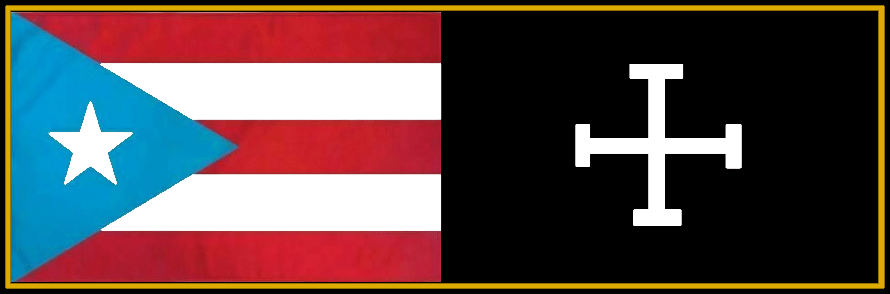
Long live the fighting spirit of the Aug 21,1831, Nat Turner Rebellion

Featured

______________________________________________

“I had a vision – and I saw white spirits and black spirits engaged in battle, and the sun was darkened – the thunder rolled in the Heavens, and blood flowed in streams – and I heard a voice saying, ‘Such is your luck, such are you called to see, and let it come rough or smooth, you must surely bear it.” – Nat Turner

______________________________________________

By Carlos “Carlito” Rovira

Of the events in African American history that bourgeois historians and apologists of slavery tend to dread the most is the Nat Turner Rebellion. This monumental chapter in Black history occurred on August 21, 1831, at the Belmont Plantation in Southampton County, Virginia. Since then, Nat Turner’s name symbolizes defiance for Black people but for white privilege it continues to be a moment in history that torments the imagination.

White supremacy’s preferred narrative of that rebellion is to overemphasize the violence inflicted on the slave owning families. False interpretations of history aimed to project slavers as victims and insidiously criminalize the justified rage of Black people, both in the past and present.

The horrific acts of violence inflicted on white slave owning families by the rebellious enslaved people can best be characterized as the “chickens coming home to roost”. To understand why this slave revolt was one of the bloodiest in U.S. history it requires critical thinking to grasp the experiences African Americans endured under that system.

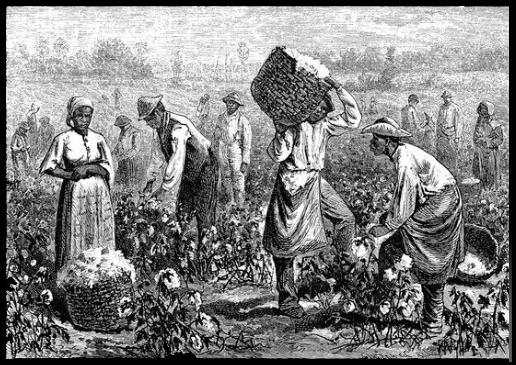
Great Britain perceived the Thirteen Colonies as their goose that laid golden eggs and valued them more than all its conquered territories throughout the globe. it was in the United States where the system of chattel slavery became most lucrative and why it was extremely brutal.

The rapid economic accumulation of wealth created from enslaved labor allowed the United States to develop into the giant capitalist bastion it is today. The enormous financial power that derived from the harshest circumstances of human suffering compelled the rulers to develop a set of ideas that served as their ideological justification for Black oppression — White supremacy.

African chattel slavery was most lucrative and brutal in the United States.

Despite the glorification of the “old South” by the mainstream Black people were subjected to extreme forms of degradation, beatings, castration, torture, murder, and the rape of women, men and children alike. Black families lived under constant fear of being separated. Without warning children, mothers and fathers were sold to other slave plantations. In addition, among the most shocking and heinous acts committed by slave owners as a sport and for punishing insubordinate slaves was having their children tossed into rivers to be killed by crocodiles.

The gall of bourgeois historians who dare to make false judgement while minimizing the crimes inflicted on Black people. The blame for the not-so-pleasant details of slave uprisings falls strictly on those who firmly preserved the cruelty that came with this system. Black people have historically been driven to use force as a means to end their suffering.

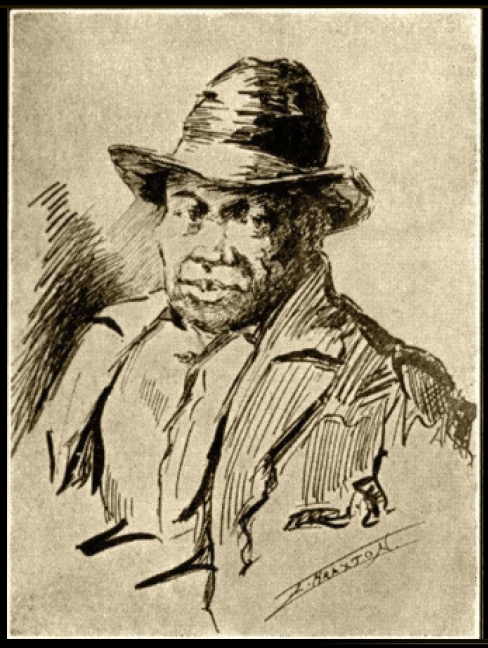
Sketch drawing of Nat Turner.

No uprising in history has ever been pretty. When a subjugated people realizes that struggle is the only path to freedom there are no guarantees that bloodshed will be absent from the equation. In addition, tyrants have always reserved the right to use violence, as a way to preserve their power. For oppressed people breaking away from the yoke of their plight has always been achieved by whatever means necessary.

Although Nat Turner was traumatized from abuses since childhood, he managed to develop strong leadership qualities which allowed him to serve as preacher among the enslaved. According to the supposed “confession” made after his capture, to a Southampton attorney Thomas Ruffin Gray, Turner stated that he had received a message from “God” commanding him to lead the slaves in an uprising.

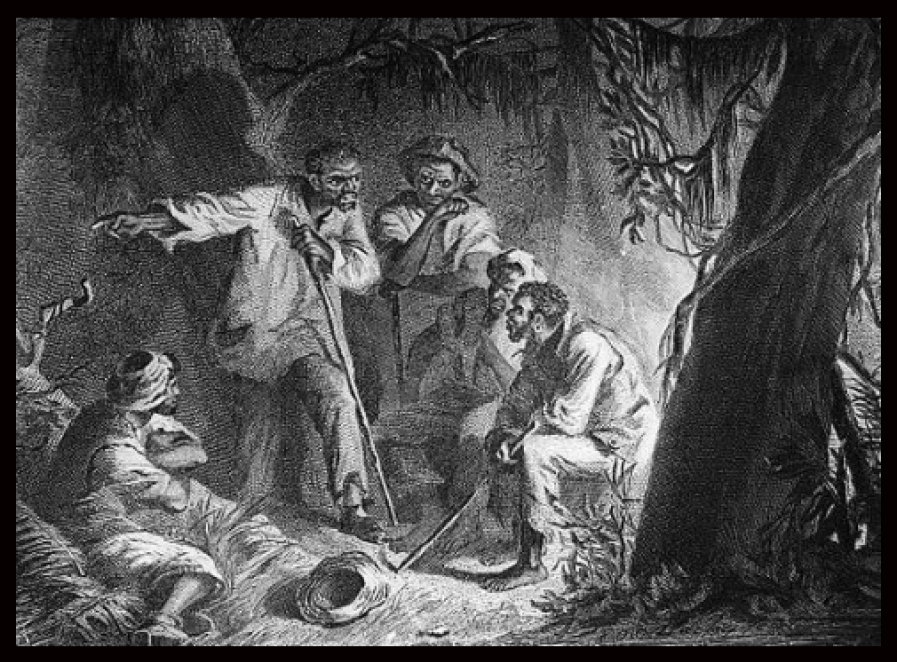
Nat Turner and fellow enslaved prepare for rebellion.

On the evening of August 21, 1831, Turner led numerous slaves in an action which abruptly began the rebellion. They ran to the supply sheds to arm themselves with tools used for toiling the land. With weapons in hand the enslaved laborers proceeded throughout the plantation to bludgeon and stab to death the well-armed overseers.

The intensity of the revolt continued with Turner and his followers entering the hated resident mansion which symbolized the depth of their oppression. It was there where all members of the privileged White slave owning family were killed.

An artist’s depiction of Nat Turner’s Rebellion.

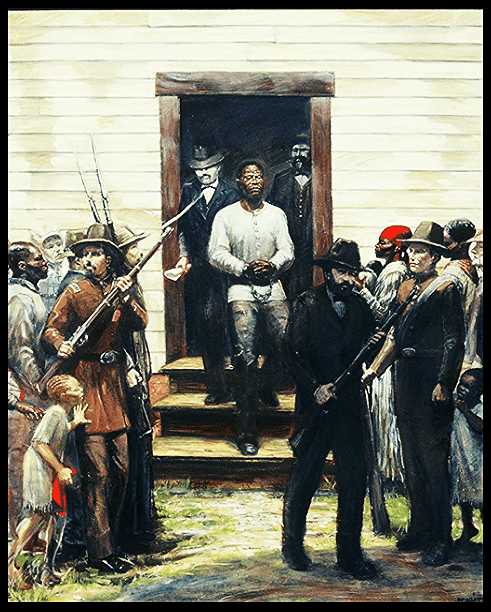
Days later, a state of panic widely consumed the White populace of Virginia and neighboring states, as the Black insurgents were hunted down like animals by bands of racist vigilantes. Unfortunately, by October 30th all the insurrectionists were captured and put on a showcase trial.

On November 11, 1831 Nat Turner and 56 of his followers were executed and about 200 non-participants of the revolt from neighboring plantations were beaten and tortured. The repressive decrees implemented throughout the South were intense and lasted until the end of the Civil War.

As if killing Nat Turner and his followers were not enough to satisfy the frenzied vindictiveness of slavers, the bodies of the martyrs were gruesomely chopped to pieces, burned and used to make oil and glue.

In the aftermath the white populace proved to be psychologically impacted. They became increasingly fearful of Black people. New repressive measures were instituted throughout the South with harsher laws that restricted the movement of the enslaved and free Blacks alike.

Artist depiction of Nat Turner being led to his execution.

Nat Turner contributed to the rising momentum of that period which popularized the use of armed force against the vile institution of slavery. By all accounts this rebellion inspired John Brown‘s attack on Harper’s Ferry in 1859, which triggered the momentous political storm that resulted in the Civil War of 1861-1865 and the overthrow of the slave-owning system.

The Attempt to destroy slavery by the slaves themselves is of the utmost significance. This event will continue to inspire today’s anti-racist struggles as we continue to grapple with the historical consequences of African chattel slavery in the modern era.

A plaque stands on the site of the rebellion in Belmont Plantation, Southhampton, Virginia.

Although the rebellion was suppressed, with the martyrs tortured and executed, this history continues to inspire struggle in the present period. The legacy of this slave revolt added to Black traditions that gave us Harriet Tubman, Frederick Douglas, Ida B. Wells, Marcus Garvey, the African Blood Brotherhood, Malcolm X, the Black Panther Party, and more recently, what transpired with the Black Lives Matter demonstrations.

History has given Nat Turner the noble title of revolutionary. A future revolutionary struggle in the United States will surely bring about a broad desire for erecting statues and monuments dedicated to the memory of Black freedom fighters like Nat Turner. Giving the highest tribute to men and women who fought for Black liberation will be part and parcel of realizing the demand for Reparations.

LONG LIVE THE MEMORY OF NAT TURNER, OCTOBER 2, 1800 – NOVEMBER 11, 1831

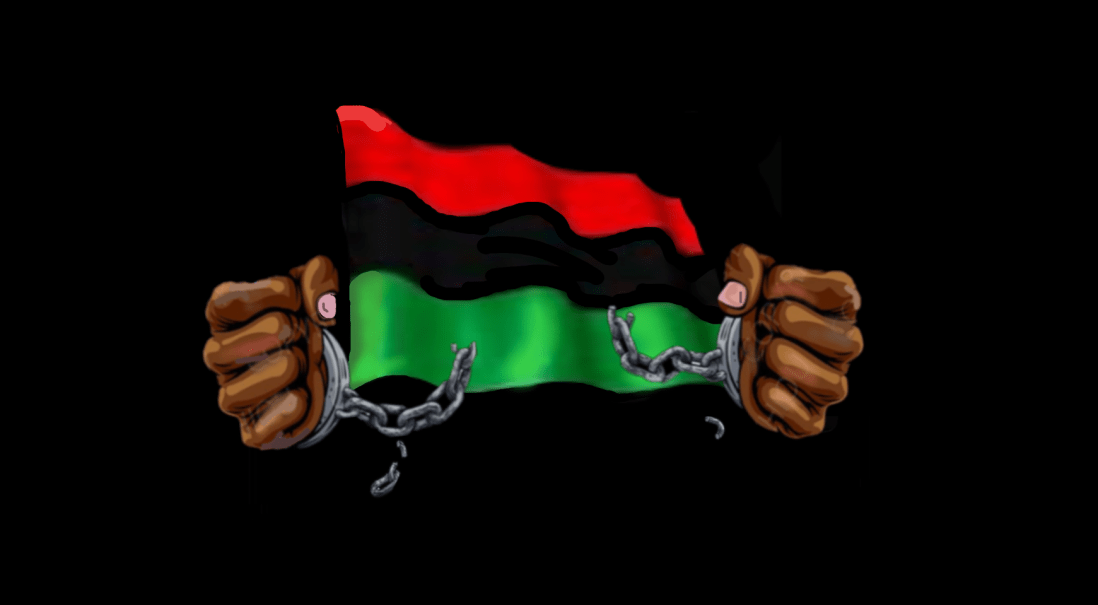
Black Liberation Flag.png


Salute to Vietnam’s Major General Nguyen Thi Dinh

Salute to Vietnam’s Major General Nguyen Thi Dinh

March 15, 1920 – August 26, 1992

By Carlos “Carlito” Rovira

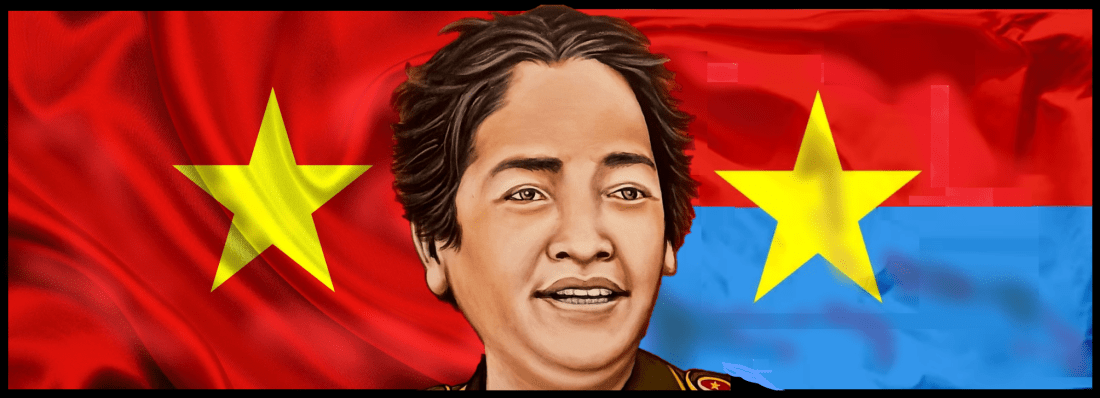
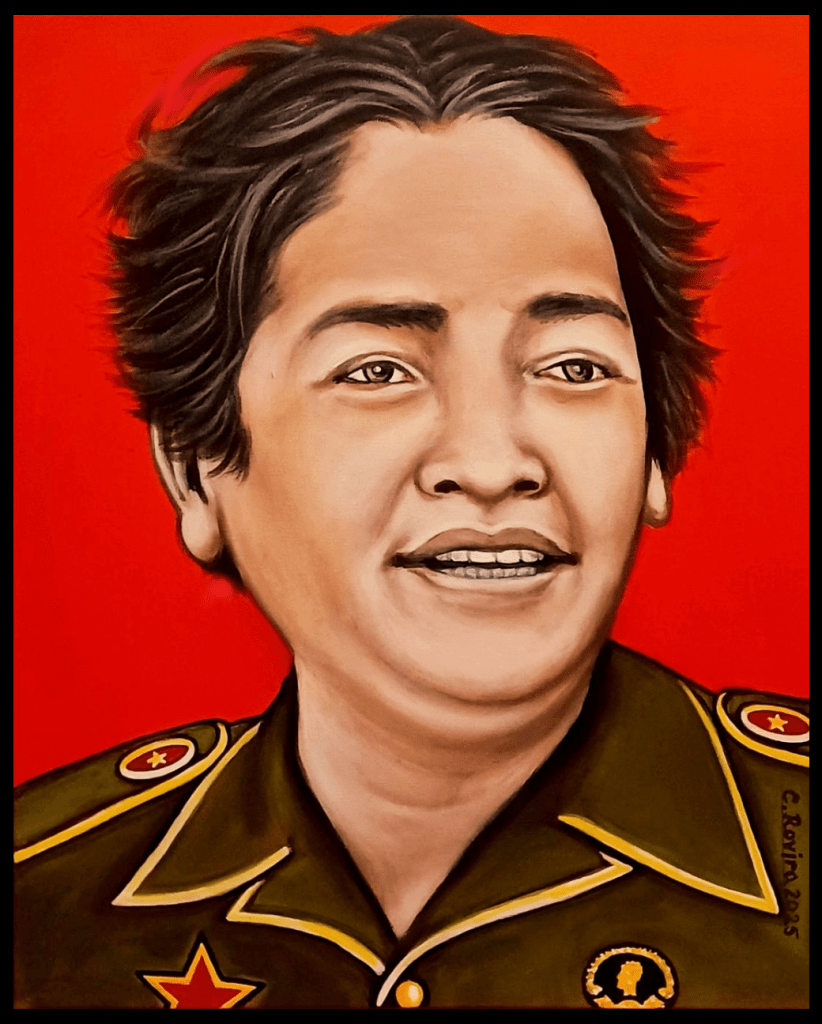
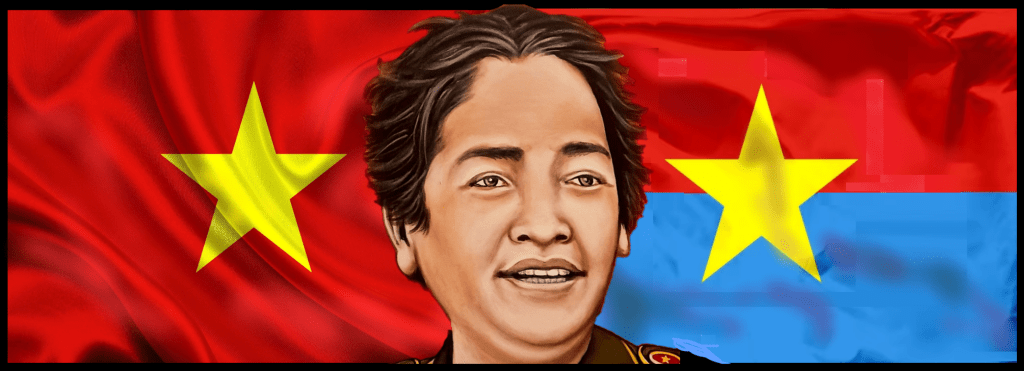
As a salute to the 50th anniversary of Vietnam’s triumph over U.S. imperialism, I was inspired to paint a 20” X 24”, acrylic paint canvas portrait of Major General Nguyễn Thị Định. Her legacy symbolizes the resilience of the heroic Vietnamese people, first against the French and then the United States.

Nguyễn Thị Định joined Vietnam’s liberation struggle by coming into the ranks of the Viet Minh at just 16 years of age. In 1938 she joined the Indochinese Communist Party which eventually became the Communist Party of Vietnam.

A piece I made to honor General Nguyễn Thị Định. 20″ X 24″, acrylic paint on canvas.

She was arrested by the French colonizers and imprisoned between 1940-1943. Dinh’s husband was also captured by French authorities and sent to a torturous facility in Con Dao Island. It was there where he was killed. Dinh always promised to avenge his death.

During the Vietnam War Định commanded the all-women guerilla force which became known as the “Long-Haired Army”. She is remembered for her brilliant leadership in the 1960 Dong Khoi uprising in the Ben Tre Province, the turning point in the Vietnam War.

General Nguyễn Thị Định and Comandante Fidel Castro Ruz in a visit to Cuba.

As the conflict intensified Dinh developed necessary strategies and tactics in guerilla warfare that resulted in inflicting many casualties on U.S. military personnel and their puppet soldiers in the South Vietnamese Army.

Nguyễn Thị Định was a co-founder of the National Front for the Liberation of Vietnam (also known as the Viet Cong). She became a prominent political figure in the People’s Liberation Armed Forces of South Vietnam.

General Nguyễn Thị Định cherishing a moment with her comrades at a guerilla base.

In April 1974, due to her unique leadership capabilities, Dinh was promoted to become Vietnam’s first female military general, earning her the rank of Major General.

This significant development in Vietnamese history reflects the pivotal role women played during that country’s liberation struggle. Most combatants of the NLF were women.

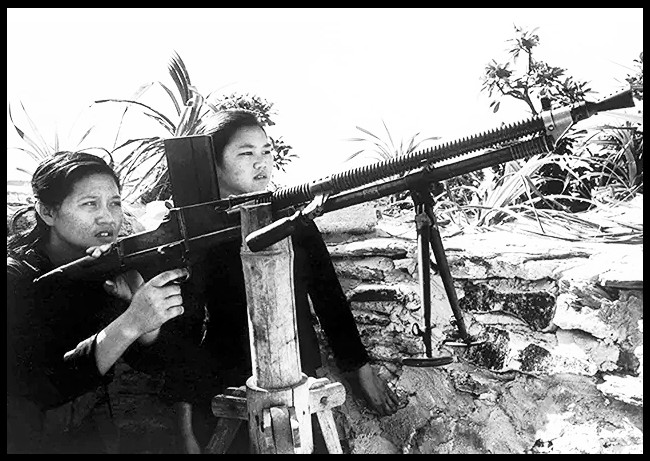
Vietnamese women played a significant role as combatants during the military struggle.

The gender of these fully capable women combatants became psychologically disturbing for imperialist troops trained to further adopt the views of male dominance. Many of these U.S. troops were guilty of terrorizing the Vietnamese civilian population.

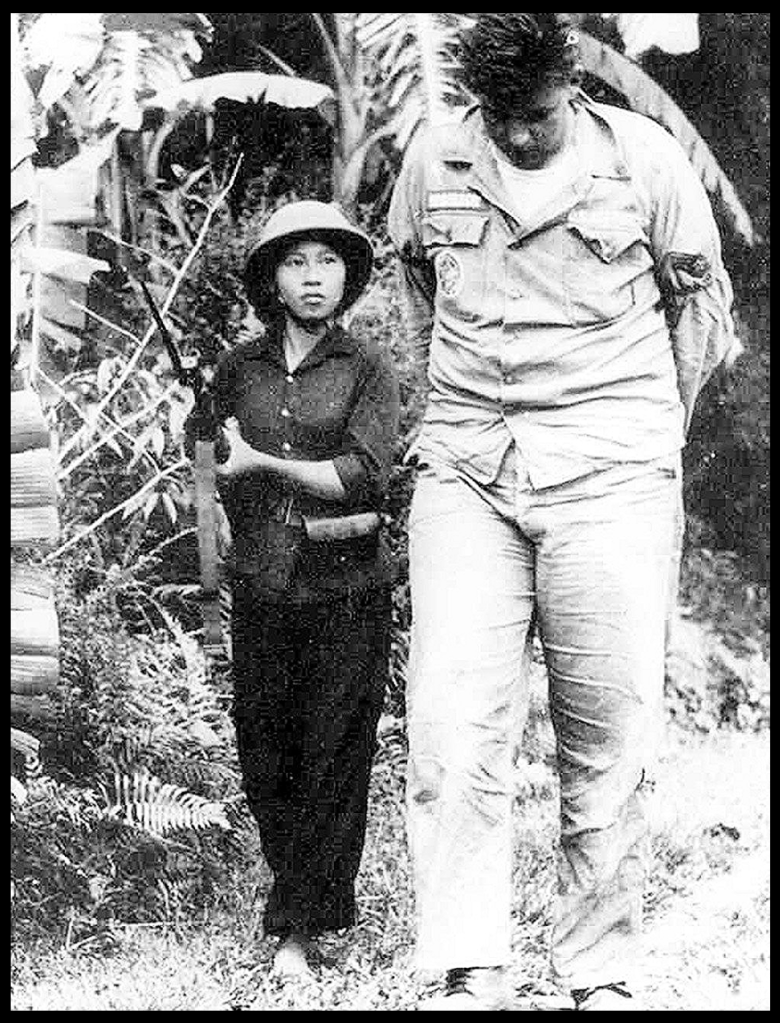
A U.S. combat pilot shot down and taken as prisoner of war.

The lessons the Vietnamese struggle provided the world are numerous. The steadfast and courage of the Vietnamese people impacted the intensity of the 1960s-70s mass upsurge in this country. Thanks to the Vietnam’s war for liberation Black and Brown people in the U.S. were given another point of reference for their own struggles.

And when a mighty anti-war movement rose up in this country it became decisive with its opposition to stop the colonial war the U.S. was waging in Vietnam.

Today, Nguyễn Thị Định is remembered for inspiring the Vietnamese people to do the impossible, defeating in battle the greatest tyrant ever known in human history. What this heroine proved is that oppressors are never invincible.

LONG LIVE THE HEROIC EXAMPLE OF THE VIETNAMESE PEOPLE!

LONG LIVE THE LEGACY OF MAJOR GENERAL NGUYEN THI DINH!