By Karen E. Quiñones Miller
“Attica! Attica!”
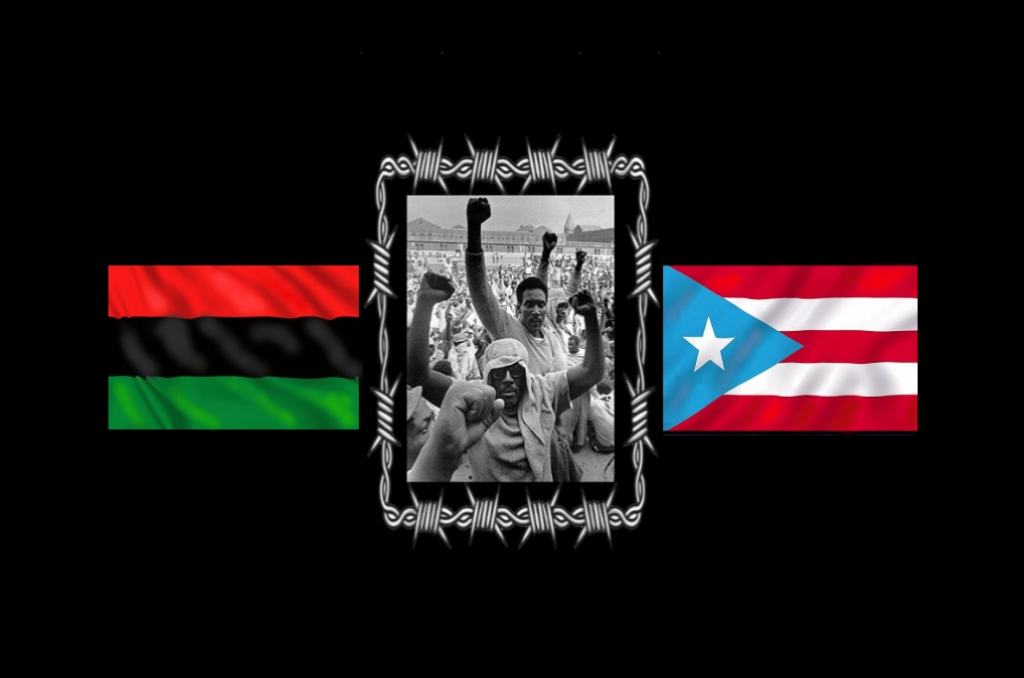
It was the battle-cry shouted during the Attica Rebellion which began on yesterday’s date (September 9th) in 1971, when inmates took over the prison to demand an end to the deplorable conditions they faced in the facility.
“We are men, not beasts, and will not be driven as such.”
A 21-year old Attica inmate.
After only five days of negotiations, that seemed to be progressing, the New York governor decided to heck with all that, ordered to send in state troopers with tear gas, rifles and guns.
The Attica Rebellion has subsequently gone down in history as the deadliest prison protest in U. S. history. Thirty-three inmates and ten guards were killed before it was all over.
“. . . with the exception of Indian massacres in the late 19th century, the state police assault which ended the four-day prison uprising was the bloodiest one-day encounter between Americans since the Civil War.”
— The McKay Commission, tasked to investigate and report on the Rebellion
Attica Correctional Facility, located in Wyoming County New York, was opened in 1931 and designed to hold 1,200 inmates. At the time of the Rebellion, in September 1971, it housed 2,250.

•Inmates who were only allowed to shower once a week.
•Inmates who were only given one roll of toilet paper a month.
•Inmates who fed substandard food.
•Inmates who had inadequate medical care.
•Inmates who were 64% Black and Brown — with guards and administrators who were all white.
On August 21st, George Jackson — one of the Soledad Brothers and political activist — was shot and killed by prison guards during an escape attempt from San Quentin State Prison in California.
The next day, August 22nd, a multiracial group of 800 inmates in Attica wearing black armbands, marched into the mess hall and sat down in silence, never touching their food. They did so for breakfast, lunch, and supper.
It was a 24-hour Hunger Strike, organized by the newly formed Attica Liberation Faction, to declare their mourning for Jackson and solidarity with his cause.
Though the food strike was designed to only last a day, tensions remained high in the following weeks — with prison officials surprised that some whites were joining with the non-cooperative attitude adopted by the Blacks and Latinos.
Then on September 8th, a group of inmates were nonchalantly watching two Black inmates, Leroy Dewer and Ray Lamoir, playfully wrestling in the prison yard when a white guard told them to quit it. When inmates protested that the two were only horsing around the guard ordered the two inmates into disciplinary confinement.

in the prison courtyard, September 11, 1971.
A verbal argument between inmates and guards erupted, and when the arguments devolved into a fray a white lieutenant guard was struck in the face. All of the inmates were then ordered back to their cells.
But later word came down from the warden that the two inmates who had been wrestling should be placed in Housing Block Z — the notorious solitary confinement unit where inmates were frequently beaten and tortured.
When guards went to the cell block to get the men, another inmate threw a soup can which hit one of the guards. He was then tackled and also dragged to HBZ.
The next morning — Thursday, September 9th — things were even more tense than usual, with rumors swirling that the taken inmates were being brutally tortured. When one of the guards who had been involved in the prior day’s incident said something untoward to an inmate, a group of inmates just snapped and attacked the guard.
Within minutes, other inmates overpowered a small number of guards and locked them in prison cells. After security systems in place to prevent such takeovers from happening failed, a total of 38 guards were beaten and taken hostage.
All four cell blocks that made up the prison were under the inmates in less than an hour.

prison taken over by inmates.
Only about one-half of the prison population took part in the Rebellion but they quickly organized — designating a group to be in charge of the protection of hostages, another to keep order, and yet another to negotiate and handle contact with administrators and government officials.
The negotiation committee presented a manifesto that was written by ALF two months before by the Rebellion. When the manifesto was read to the media there was widespread surprise that the manifesto did not ask for mass prison release — but rather primarily asked for mass prison reform.
The inmates requested outside observers be brought in as witnesses to the negotiations. The list of people they requested, and who came, included Bobby Seale of The Black Panthers; José “Fi” Ortiz and José Paris of The Young Lords; Tom Wick of The New York Times; Clarence B. Jones of the Amsterdam News; William Kuntsler, a well-known radical civil rights attorney and activist; Herman Badillo, the first Puerto Rican elected to the U. S. House of Representatives; and State Senator John Dunne.
“We invite all the people to come here and witness this degradation so that they can better know how to bring this degradation to an end. This is what we want,” the inmates declared, promising that none of the ‘Outside Observers Committee’ members would be harmed or taken hostage.
They inmates also requested Minister Louis Farrakhan of the National of Islam join the committee, but he declined the invitation. He never gave an explanation, but many thought he was told to refuse by The Honorable Elijah Muhammad.
It is also believed, by some, that had Farrakhan had agreed to be part of the Outside Observers Committee the ultimate outcome might have been different.
You see, after 3 days of negotiations, though some progress had been made, the inmates refused to budge on certain points. Incarcerated Nation of Islam members were among the most disciplined and respected organizers of the Rebellion — so the belief is that Farrakhan could have made a difference in the negotiations.

On Sunday, Outside Observer Committee members Badillo, Wick, and Dunne personally called New York Governor Nelson A. Rockefeller and begged him to come to the prison and talk to the inmates. They said such a good faith gesture, the inmates might give a little on some negotiation points. The call lasted more than an hour; the governor refused.
The next morning, on what would later be called ‘Bloody Monday,’ Rockefeller ordered the National Guard to “take back” the prison, although negotiations were supposedly ongoing.
The troopers first dropped tear gas canisters into prison yard, and then blindly fired more than 2,000 rounds of gunfire through the fog of smoke.
Twenty minutes later, 43 people (32 inmates and 11 hostages) were dead and hundreds more wounded.
But Attica was back under the control of prison authorities.
Immediately after the raid, state and prison officials went in front of television cameras and newspaper reporters and claimed the 11 hostages had their throats slashed by inmates when state troopers stormed the yard. Those horrific claims made the afternoon and evening news broadcasts and were splashed across the front pages of the next morning newspapers across the nation.

However, Dr. John Edland — the County Coroner — gave an unscheduled and impromptu press conference Tuesday afternoon to dispute those claims. None of the hostages had slashed throats, he said, all had been killed by gunfire.
The Special Commission on Attica, chaired by Robert B. McKay — a widely respected legal scholar and dean of NYU School of Law — was created in November 1971 to discover the causes of the Rebellion and what had actually happened.
The Commission released its findings in September 1972, and it not only verified the coroner’s report that the hostages had been killed by state troopers, it went a lot further.
The Commission found that the rebellion was an unplanned and spontaneous action; not a deliberate pre-planned politically motivated plot by Marxist revolutionaries as state officials originally claimed.

It also criticized Governor Rockefeller for refusing to visit the prison site to continue attempts at a negotiated solution, and also for not seeking a less-lethal method to end the Rebellion, such as the use of tear gas alone.
The Commission also exposed the brutality and torture inflicted upon the prisoners in retaliation for the Rebellion. Vengeful guards were reportedly peeing into inmate’s wounds, and slamming metal batons into their ankles, knees, and testicles.
A group of Inmates later filled suit and 25 years later were awarded $12 million for the abuse they suffered, though no one was prosecuted.
“Attica! Attica!”
The battle cry may have started in 1971, but it has lasted as a cultural protest cry throughout the years.
REMEMBER ATTICA!
Karen E. Quiñones Miller is a contributing writer to this blog. She is also a proud Black nationalist and formerly a Staff Writer at the Philadelphia Inquirer.


