Melba Hernandez’s life is filled with many fascinating stories which reflect the courage, strength and resilience of Cuban women who made overthrowing the U.S.-puppet regime of Fulgencio Batista a reality. Melba was a combatant and leader in the Rebel Army of the July 26 Movement. She became an important and symbolic political figure of the 1959 Cuban Revolution.
During the armed struggle Hernandez fought gallantly alongside of Comandante Fidel Castro Ruz. She was a confidant of the revolutionary leader and after the seizure of power this heroine became part of his executive staff. Melba played a pivotal role during the critical period of consolidating the Cuban state apparatus.
Melba was introduced to politics by her parents who partook in Cuba’s War for Independence of 1895, led by the legendary Jose Marti. She was a lawyer who was affected by witnessing first-hand the disturbing social and economic inequality in Cuba. From the time she completed her education the young Melba was empathetic with the plight of poor peasants and exploited workers whom she represented as legal counsel.
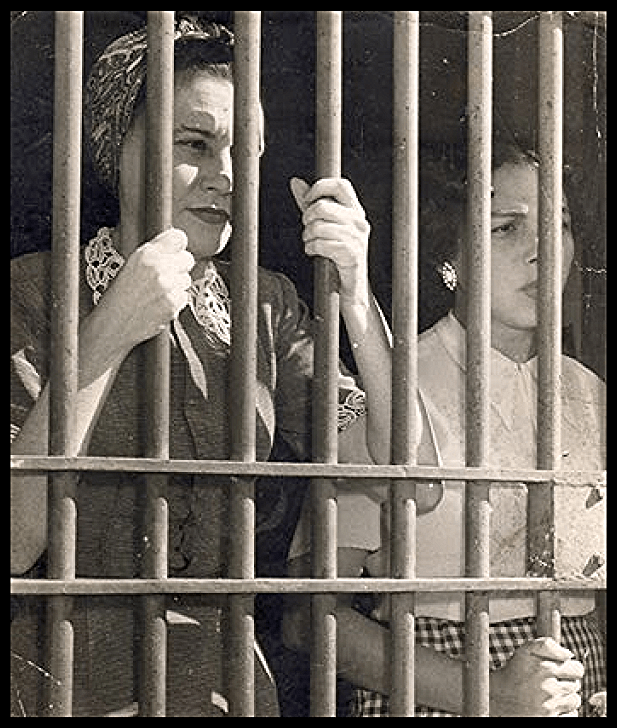
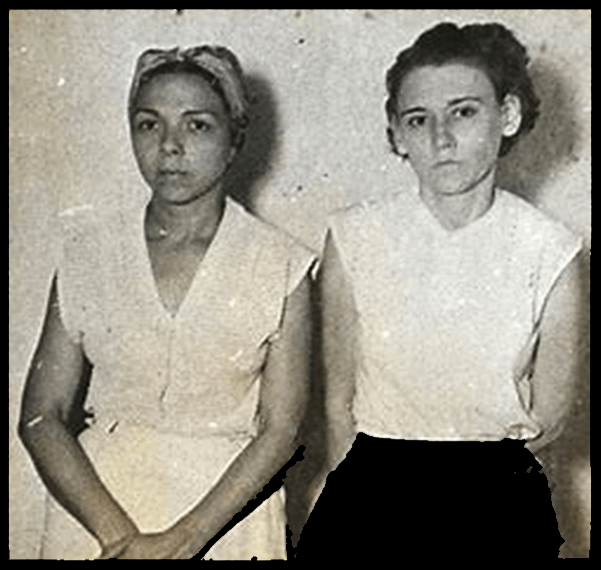
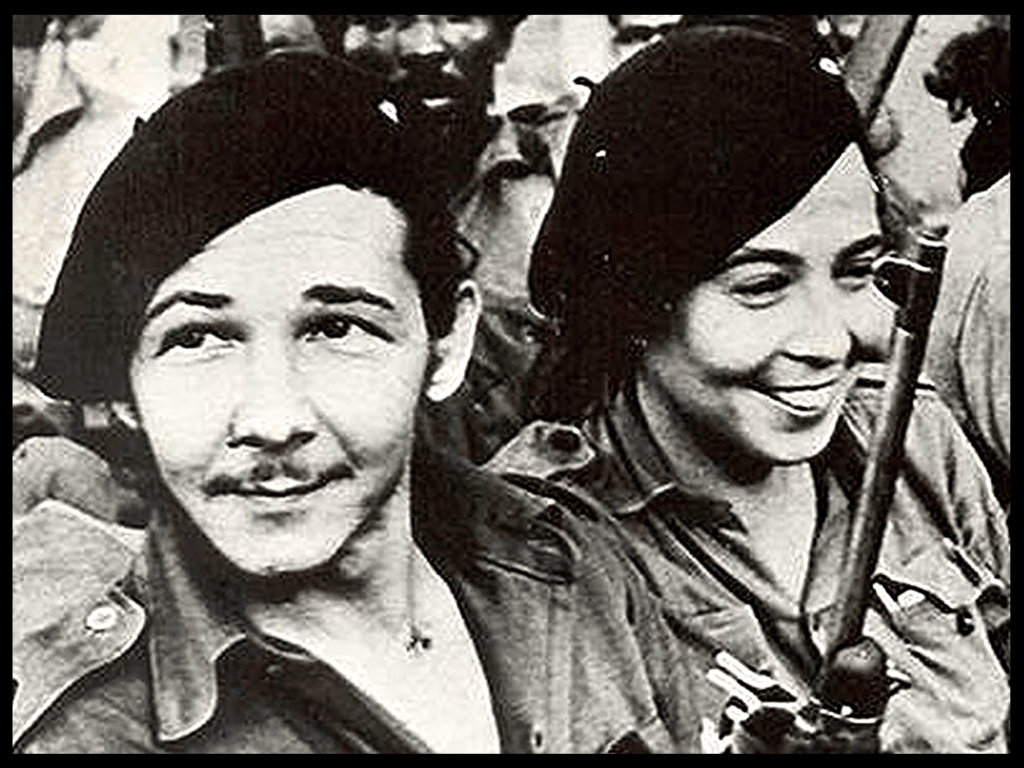
Melba Hernandez (right) and Haydee Santamaria in custody following the attack on Moncada Barracks.
Melba Hernandez and Haydee Santamaria were the only two women that partook in the July 26, 1953, attack on the Moncada Barracks in Santiago, the event that sparked the Cuban Revolution. Part of Fidel Castro Ruz’s plan was for the revolutionary insurgents to enter the surrounding restricted zone at Moncada dressed in the same uniforms as government soldiers. It was Melba who illegally obtained the uniforms. She convinced a military official who supported the rebel cause to assist with her mission.
The attack on Moncada was bloody and ended in failure. By the time it ended most of the insurrectionists were wounded and killed. Many of these revolutionaries died as by torture at the hands of sadistic henchmen of the Batista regime. Some, like Fidel Castro Ruz managed to escape and hide in the jungle until they negotiated a surrender days later through an intermediary.
Hernandez and Santamaria were arrested, convicted and given shorter prison sentences in comparison to their male counterparts who were released two years later. During their incarceration, Hernandez and Santamaria experienced humiliating abuse by Batista’s prison officials.
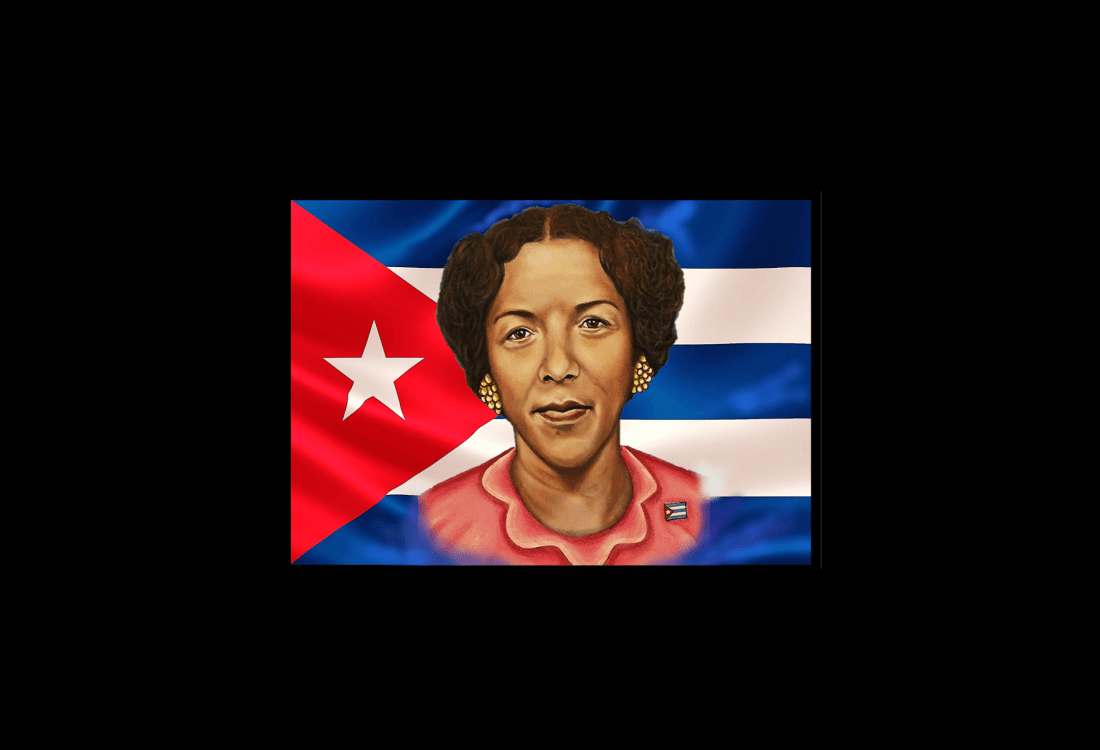
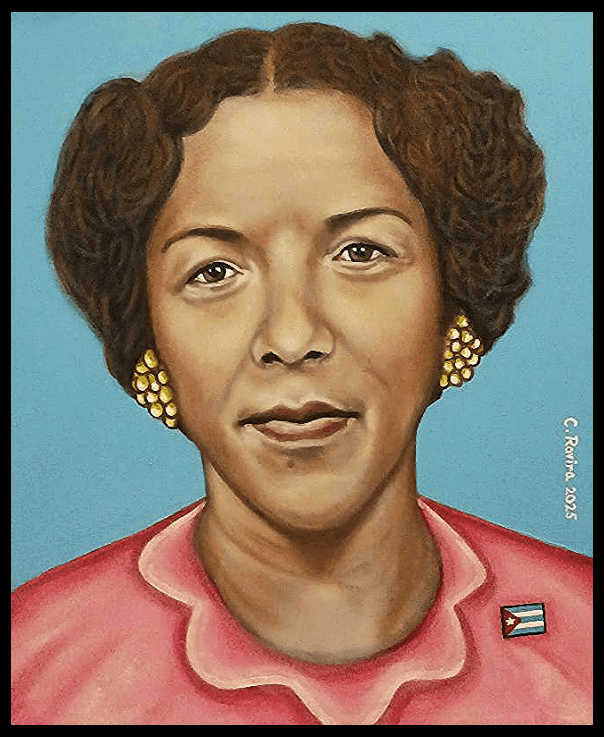
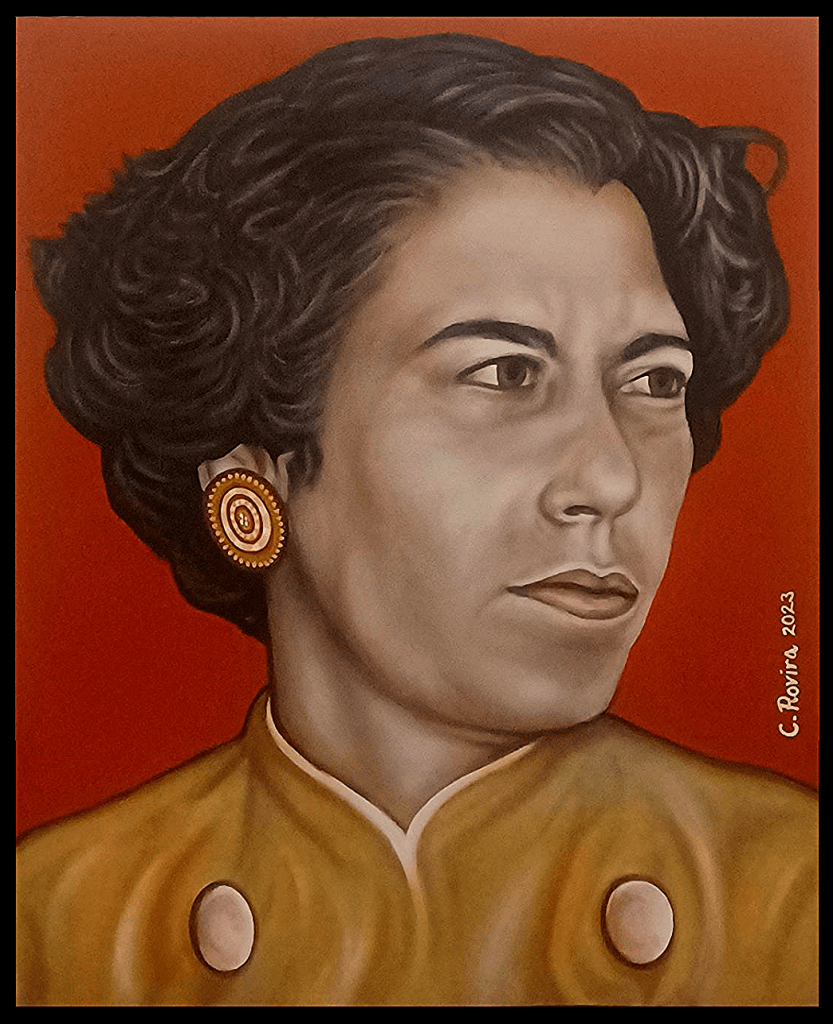
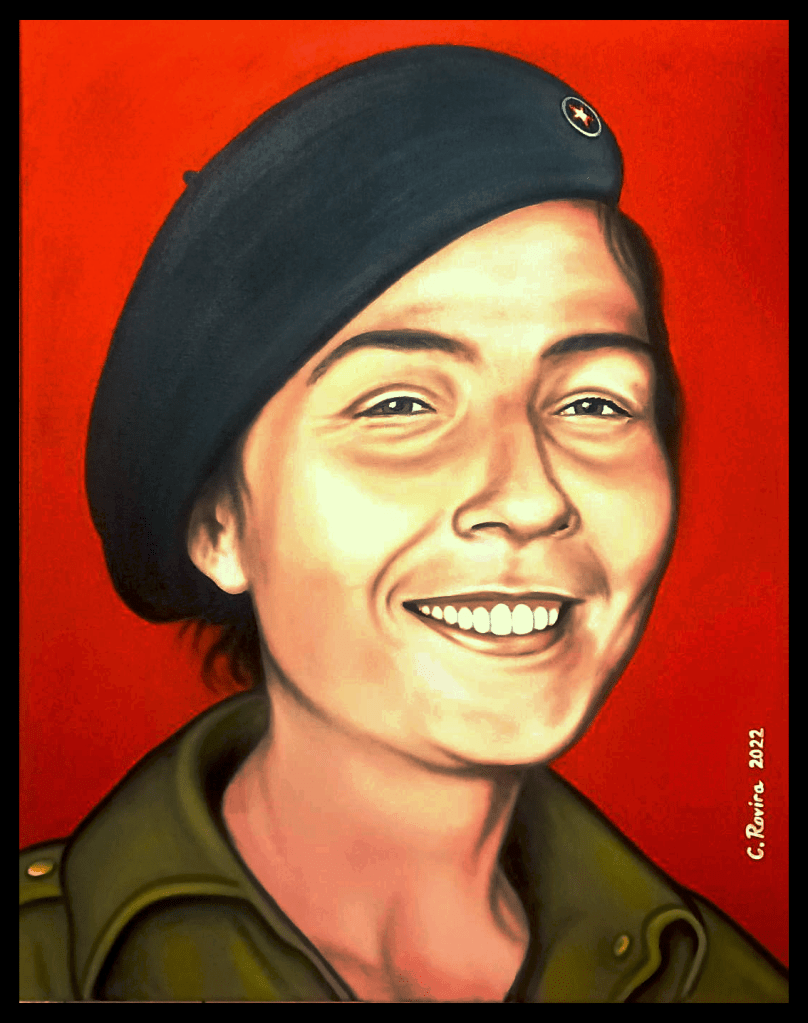
My portrait of Melba Hernandez. 20″ X 24″, acrylic paint on canvas.
After these heroines were released, they were determined to carry out the work of building a mass movement and the clandestine network that would eventually topple the Batista government. Melba was instrumental in smuggling out of the prison where Fidel Castro was held a draft of his famous courtroom speech when he was tried “History will Absolve Me”, one of the most important documents of the Cuban Revolution.
After the seizure of power on January 1, 1959, Hernandez was assigned to several important roles in the government. In 1960, she was placed in charge of women’s prisons in Cuba. For Hernandez, a top priority was to spearhead prison reform to align with the humane principles of the revolution.
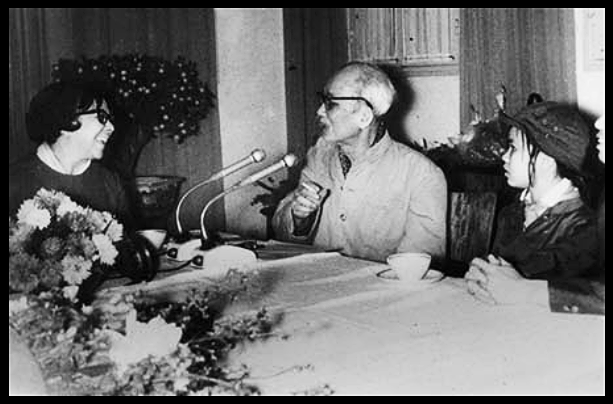
Melba Hernandez meeting with Vietnamese leader Ho Chi Minh.
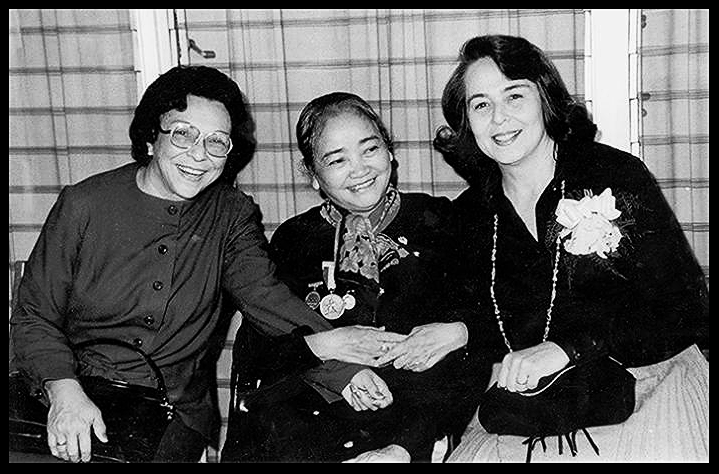
Melba Hernández and Vilma Espín welcomed Vietnam‘s General Nguyễn Thị Định, during her visit to Cuba
During the late 1960s – 1970s, at the height of the vicious colonial war the U.S. was waging against the Vietnamese people, Hernandez risked danger to herself by traveling frequently to the war-torn country as head of the Cuban Committee in Solidarity with Vietnam. She also served as Secretary General of OSPAAAL, the Organization of Solidarity with the Peoples of Asia, Africa and Latin America.
In the 1980s, Hernandez earned Cuba’s Ambassadorship to Vietnam and Cambodia due to her diligent work of solidarity with the Vietnamese Revolution. This heroine also served the Cuban government as a Deputy in the country’s National Assembly of People’s Power.
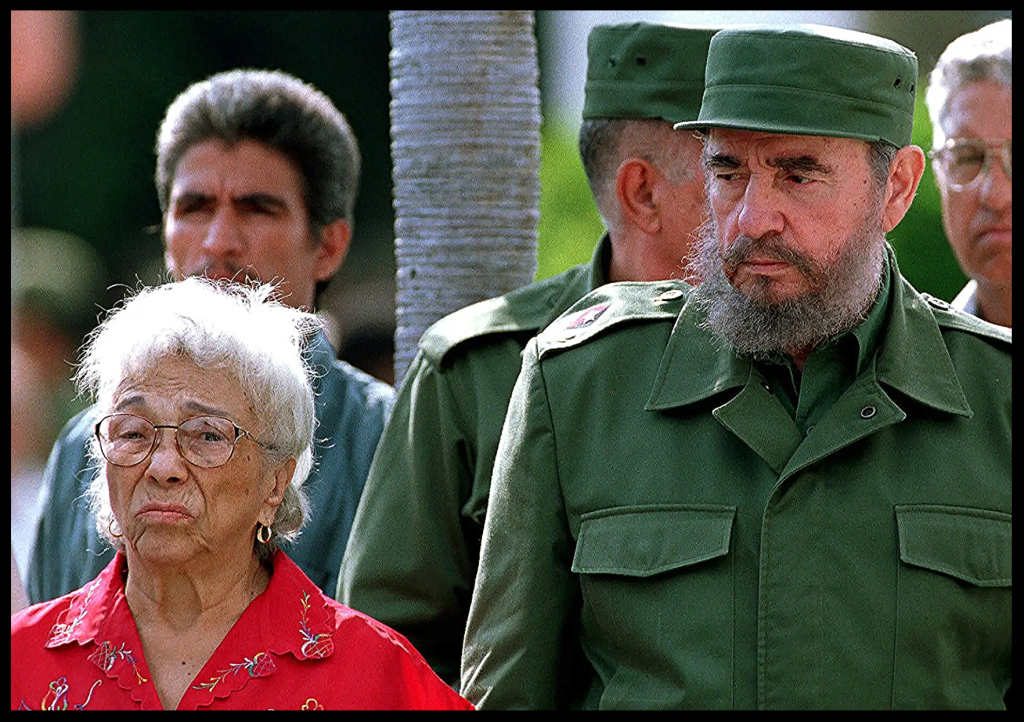
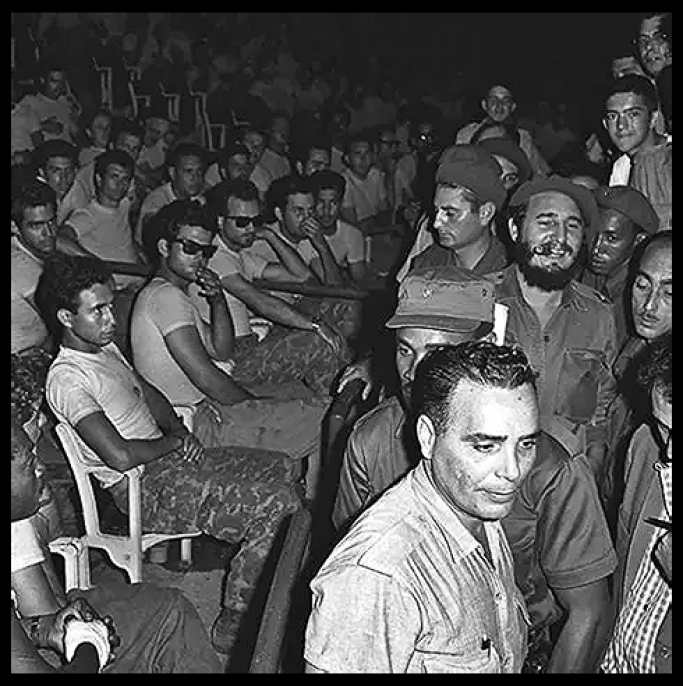
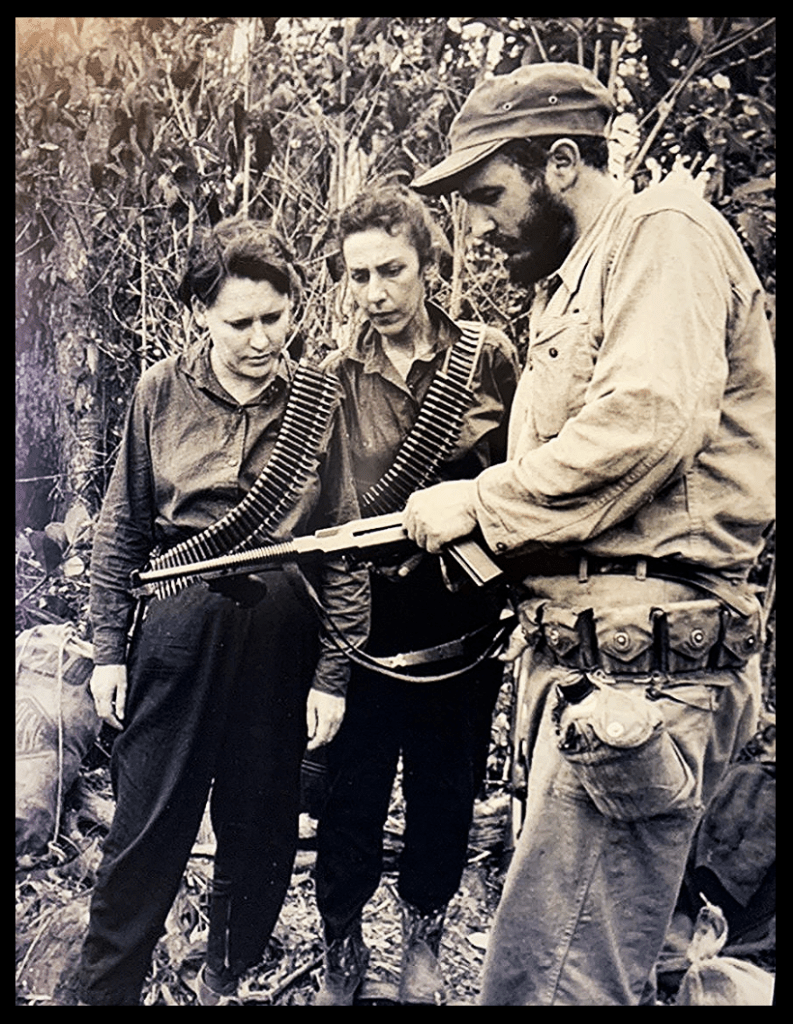
Melba Hernandez with Comandante Fidel Castro Ruz.
Sadly, on March 9, 2014, Melba died of natural causes. Having lived her life as a diplomat and high-ranking official of a revolutionary government, her legacy shall inspire revolutionaries for generations to come, especially women who will be duty-bound to confront backward traditions that perpetuate women’s oppression.
Hernandez was among other iconic female figures who were decisive in that revolutionary experience, such as Vilma Espin, Celia Sanchez, Aleida March, Haydee Santamaria, and others. Their selflessness and loyalty to the revolution surmounted of of what many would have expected.
Thanks to the Cuban Revolution Melba Hernandez, dared to be amongst those to set standards for challenging the greatest tyrant in human history.
“Los demagogos y los políticos profesionales quieren hacer el milagro de ser buenos en todo y con todos, engañando necesariamente a todos en todo. Los revolucionarios proclamarán sus ideas con valentía, definirán sus propios principios y expresarán su intención de no engañar a nadie, ni a amigos ni a enemigos.”– Fidel Castro Ruz, de La historia me absolverá.
En la madrugada del 26 de julio de 1953, aproximadamente 160 rebeldes, liderados por Fidel Castro Ruz, atacaron simultáneamente dos puestos militares del régimen títere estadounidense de Fulgencio Batista. El Cuartel Moncada, en Santiago de Cuba, y el Cuartel Carlos Manuel de Céspedes, en Bayamo, Cuba, fueron los objetivos. El Cuartel Moncada era la segunda guarnición más grande del país.
Entre los notables luchadores por la libertad que participaron en los ataques se encontraban el hermano de Fidel Castro, Raúl Castro, junto con Haydée Santamaría y Melba Hernández, las únicas mujeres del grupo.
Melba Hernández (izquierda) y Haydee Santamaría después de su captura.
Fidel Castro se vio motivado a organizar estas audaces acciones en respuesta al descontento en Cuba por la destitución ilegal del presidente saliente Carlos Prío Socarrás. Fue depuesto por Fulgencio Batista, quien dio un golpe militar el 10 de marzo de 1952.
Aunque Batista era candidato a la presidencia según las encuestas no parecía que ganaría las elecciones debido a su impopularidad desde un período anterior cuando se desempeñó como Presidente de Cuba del 10 de octubre de 1940 al 10 de octubre de 1944.
Durante este periodo, las elecciones presidenciales y parlamentarias programadas se cancelaron abruptamente. Castro estaba entre los candidatos que se postulaban para un escaño en el parlamento.
Como resultado de la Guerra Fría, una parte esencial de la estrategia global de Estados Unidos fue la organización encubierta de golpes militares por parte de la Agencia Central de Inteligencia (CIA), como los de Cuba en 1952, Paraguay en 1954, Guatemala en 1954, Argentina en 1955, Honduras en 1956, Colombia en 1957, Venezuela en 1958, El Salvador en 1960, Perú en 1962, Ecuador en 1963, Honduras en 1963, Brasil en 1964, Argentina en 1966, Perú en 1968 y Panamá en 1968.
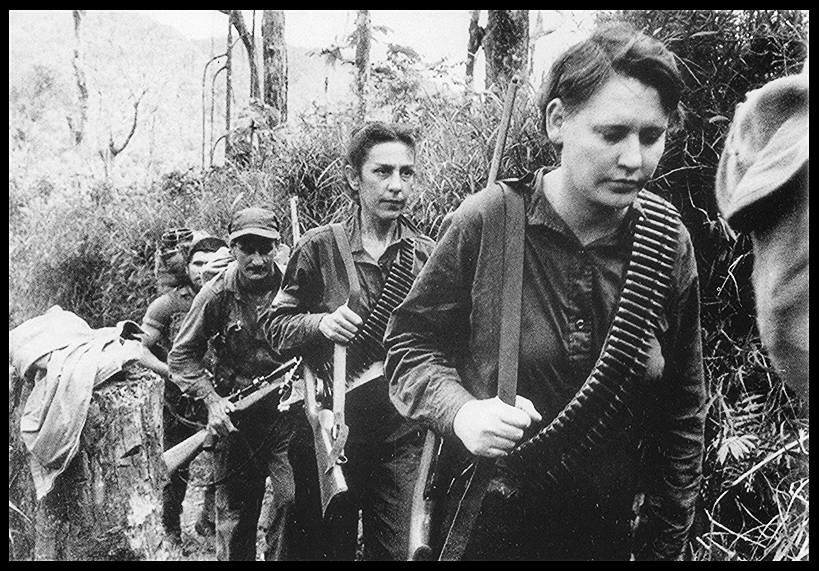
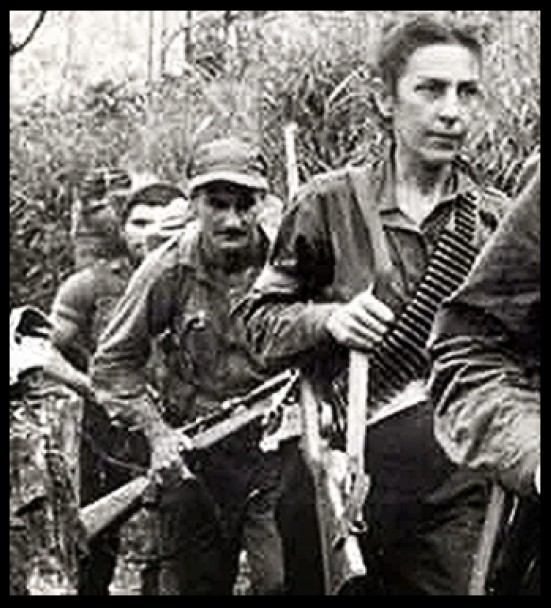
Haydee Santamaria, Celia Sanchez among other members of the Rebel Army in the Sierra Maestra.
Aunque los rebeldes estaban deseosos de luchar por sus convicciones a pesar del peligro que implicaba, su determinación definió el valor y el sacrificio. En medio de disparos y un intenso caos, la Revolución Cubana comenzó en el Cuartel Moncada en ese día inolvidable.
Los combatientes inexpertos sufrieron la falta de preparación para enfrentarse a tropas gubernamentales mejor entrenadas y equipadas. Como resultado de errores tácticos, muchos fueron capturados, torturados y asesinados.
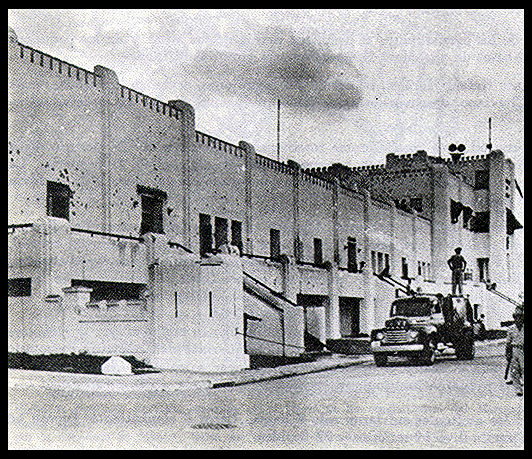
Cuartel Moncada después de la batalla.
Fidel Castro logró escapar y esconderse en el bosque durante varios días hasta que pudo negociar su rendición a través de un intermediario en los alrededores.
Sin embargo, lo que inicialmente pareció una derrota devastadora para los rebeldes resultó ser todo lo contrario. Fidel Castro acertó al predecir que los ataques desencadenarían una tormenta revolucionaria irreversible que consumiría a todos los sectores de la población.
Una auténtica revolución, independientemente de su origen, tendrá ciertos patrones comunes. La valiente acción de Castro y su equipo recordó el ataque de 1859 que fue lanzado en Estados Unidos a Harpers Ferry, Virginia Occidental, liderado por el legendario abolicionista antiesclavista John Brown. Aunque ambas batallas fracasaron con la pérdida de muchos valientes combatientes, cada uno de estos eventos encendió las llamas de una revolución.
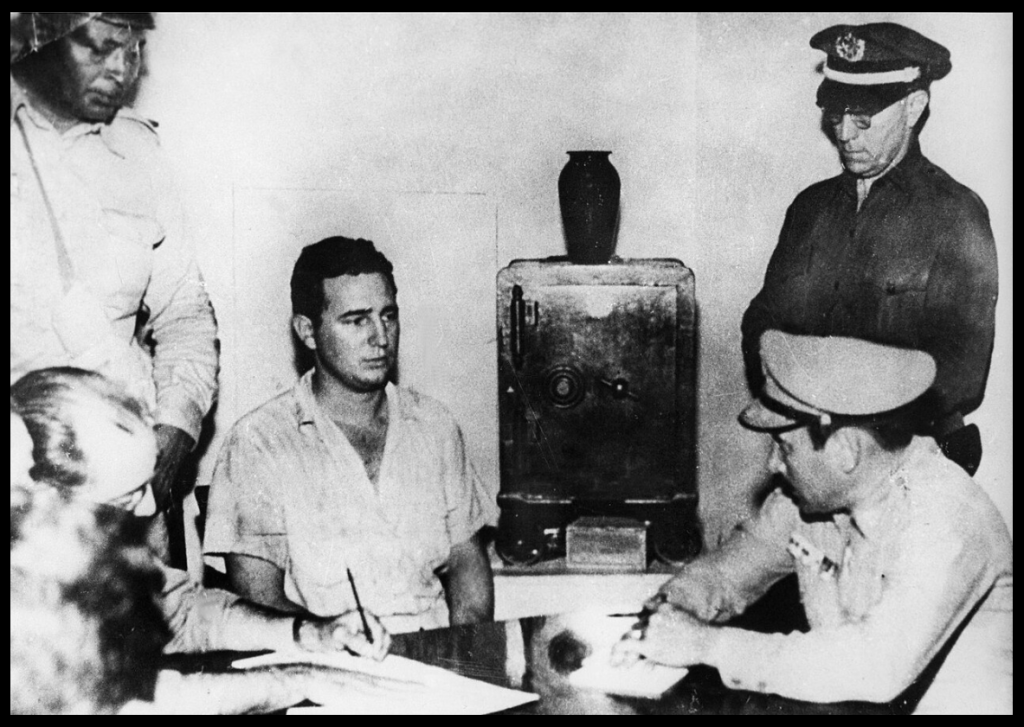
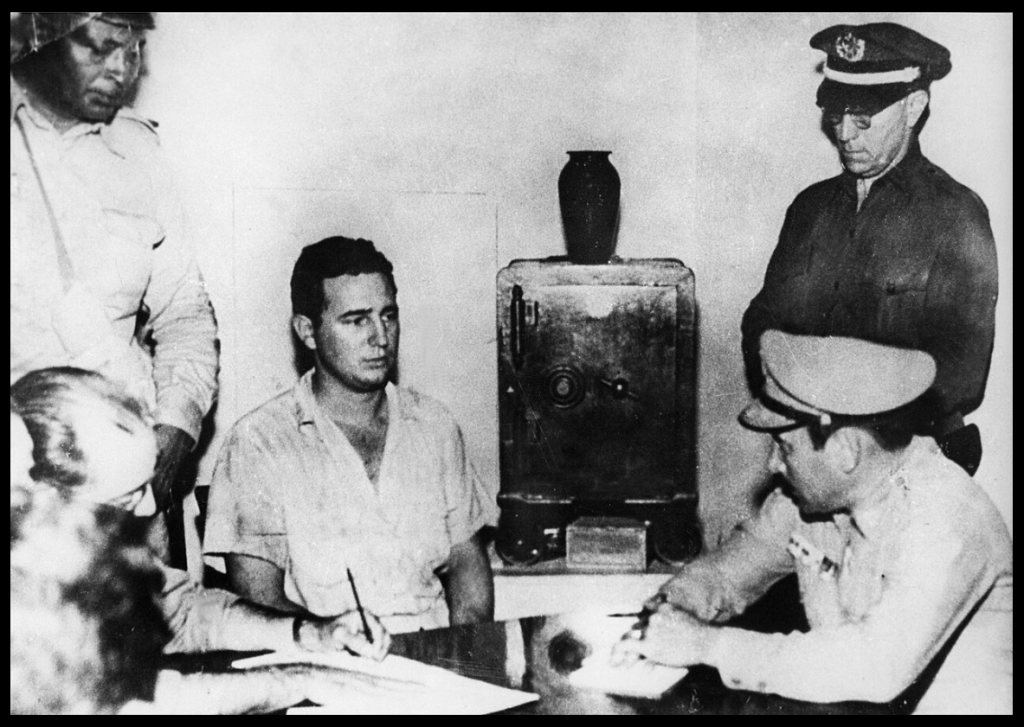
Fidel Castro Ruz siendo interrogado por oficiales militares de Batista.
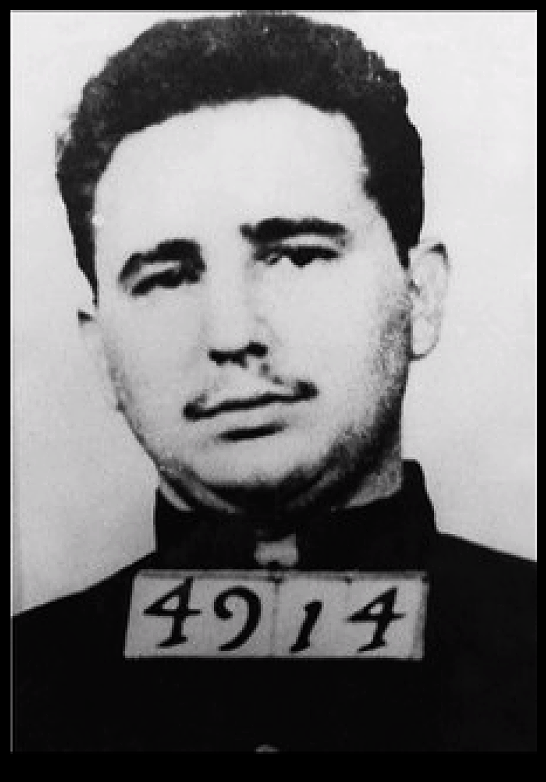
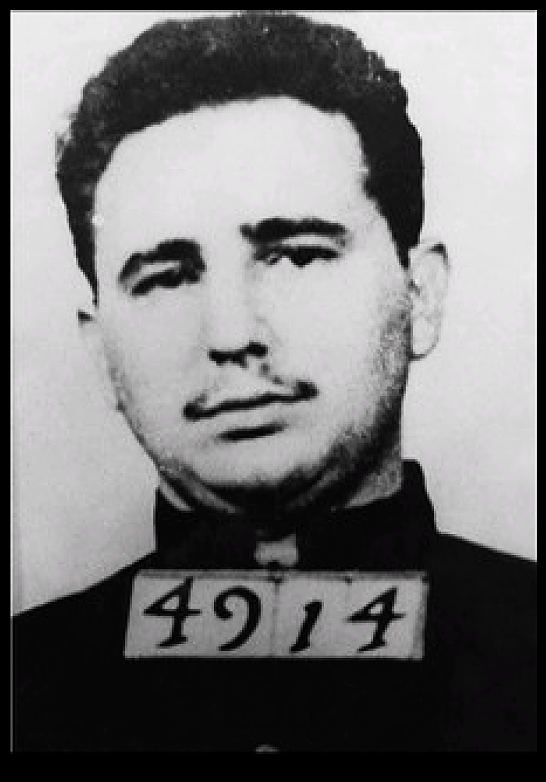
Foto de la prisión de Fidel Castro Ruz.
La policía y el ejército de Batista cometieron numerosos abusos contra los derechos humanos, lo que provocó que muchos cubanos aplaudieran favorablemente el audaz ataque al Moncada. Los ciudadanos vivían bajo la constante amenaza de encarcelamiento, palizas y muerte por el simple hecho de expresar su desaprobación hacia Batista, especialmente la población afrocubana más oprimida.
Esta situación fue debilitándose poco a poco al régimen, sobre todo después de que Fidel, abogado de formación, presentara como testimonio uno de los discursos más famosos del siglo XX, como parte de su propia defensa titulado “La historia me absolverá“.
Las palabras de Castro perjudicaron a Batista. A pesar de la censura gubernamental, los medios de comunicación no pudieron ocultar su espíritu militante y desafiante. Utilizó el escenario de un tribunal para desacreditar detalladamente las prácticas corruptas y fascistas del régimen contra el pueblo.
Tras la condena de Castro a quince años de prisión por parte del tribunal, su discurso fue filtrado página por página para su publicación y amplia circulación en forma de panfleto. Como resultado, surgió un amplio movimiento de masas que exigía la liberación de los presos políticos y el derrocamiento del régimen de Batista.
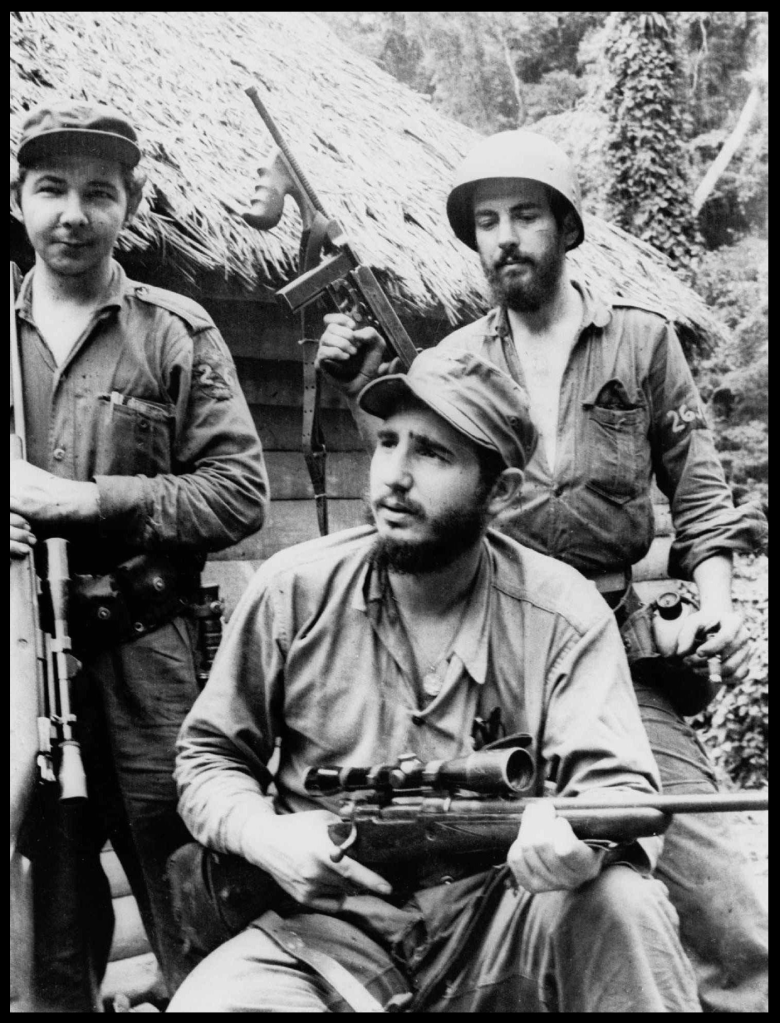
Fidel Castro en la Sierra Maestra.
Fue Fidel Castro quien acuñó el nombre “Movimiento 26 de Julio” para conmemorar a los mártires que sacrificaron sus vidas durante el fallido intento de tomar el Moncada.
La agitación y la intranquilidad son la mejor descripción de la situación en Cuba durante este período histórico. A medida que la frustración y la desesperación del pueblo aumentaban, las manifestaciones espontáneas, que solían desembocar en enfrentamientos violentos con las tropas gubernamentales, también afectaron al pueblo.
Aunque obligados a hacer una concesión táctica a los luchadores por la libertad ante la opinión pública, Batista y sus compinches no se percataron de que las semillas de la revolución ya estaban sembradas.
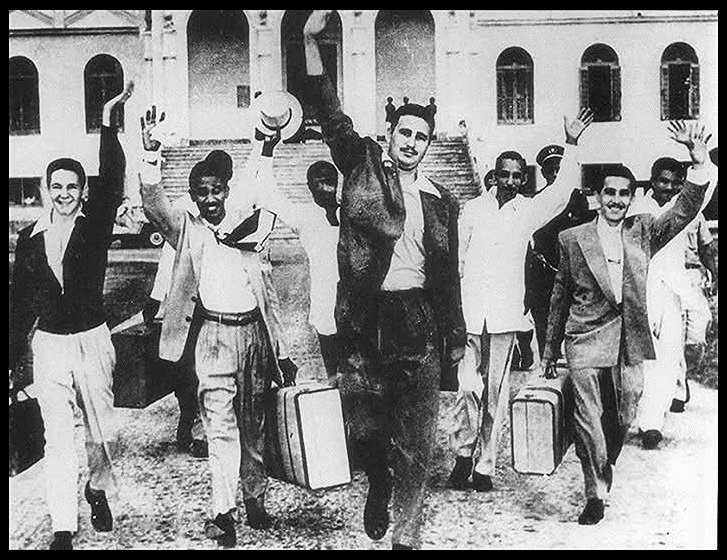
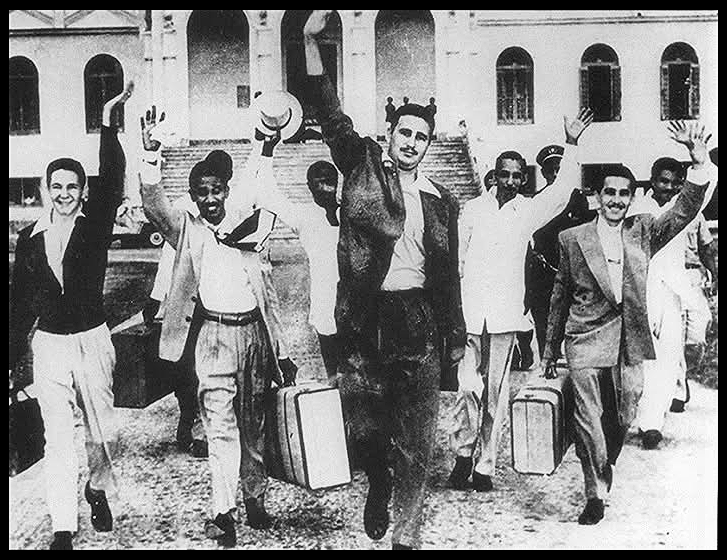
Fidel Castro y sus compañeros fueron liberados de prisión después de recibir una amnistía general.
Además, Castro y la mayoría de los presos políticos recién liberados fueron a México para planificar la siguiente fase de la lucha. En México, Fidel Castro conoció por primera vez a Ernesto Che Guevara y Camilo Cienfuegos, dos figuras que se convirtieron en líderes del Ejército Rebelde.
Durante su estancia en México, las tareas del movimiento fueron llevadas a cabo por Celia Sánchez, Vilma Espín, Haydée Santamaría, Melba Hernández, Frank País, Raúl Castro y Juan Almeida Bosque.
Establecieron comités de propaganda en toda Cuba; una red de inteligencia; contrabandearon armas al Ejército Rebelde en la Sierra Maestra; desarrollaron las comunicaciones entre los luchadores por la libertad en México y Cuba, etc.
En mayo de 1955, dos años después del asalto al Moncada, Batista fue presionado para conceder una amnistía general a Fidel Castro y sus camaradas. Un poderoso movimiento de masas se estaba volviendo cada vez más abrumador para la clase dominante cubana.
La sofisticación organizativa de estos revolucionarios ha permitido que la Revolución Cubana sobreviva hasta nuestros días en circunstancias opresivas causadas por el imperialismo estadounidense. Sin embargo, la Revolución Cubana ha demostrado más allá de toda duda que la tiranía imperialista no es invencible.
Lo que comenzó con el ataque al Cuartel Moncada, la toma del poder el 1 de enero de 1959 y más allá, seguirá inspirando futuras luchas revolucionarias por la emancipación completa de la humanidad.
“Demagogues and professional politicians want to make the miracle of being good in everything and with everybody, necessarily fooling everyone in everything. Revolutionaries will proclaim their ideas bravely, define their own principles, and express their intentions to deceive no one, neither friends nor foes.” – Fidel Castro Ruz, from History will absolve me.
In the early morning hours of July 26, 1953, approximately 160 rebels led by the 27 years old Fidel Castro Ruz, simultaneously attacked two military outposts of the U.S.-puppet regime of Fulgencio Batista. The Moncada Barracks in Santiago, Cuba and the Carlos Manuel de Cespedes Barracks in Bayamo, Cuba were targeted. The Moncada Barracks was the second largest garrison in the country.
Among the notable freedom fighters who partook in the attacks were Fidel Castro’s brother, Raul Castro, along with Haydee Santamaria and Melba Hernandez – the only women of the group.
Melba Hernandez (left) and Haydee Santamaria after their capture.
Fidel Castro was motivated to organize these bold actions in response to the discontent felt throughout Cuba for the illegal ouster of outgoing President Carlos Prio Socarras. He was deposed by Fulgencio Batista, who staged a military coup on March 10, 1952.
Although Batista was a candidate for the presidency, according to polls it did not appear as if he would win the election due to his unpopularity from a previous term he served as President of Cuba from October 10, 1940 to October 10, 1944.
Due to the military coup, scheduled elections for the presidency and Parliament were abruptly cancelled. Castro was among the candidates running for a seat in parliament.
As a result of the Cold War, an essential part of the U.S. global strategy was the Central Intelligence Agency (CIA) covertly organizing military coups, such as Cuba in 1952, Paraguay 1954, Guatemala 1954, Argentina 1955, Honduras 1956, Colombia 1957 Venezuela 1958, El Salvador 1960, Peru 1962, Ecuador 1963, Honduras 1963, Brazil 1964, Argentina 1966, Peru 1968, and Panama 1968.
Haydee Santamaria, Celia Sanchez among other members of the Rebel Army in the Sierra Maestra.
Although the rebels were eager to fight for their beliefs despite the danger involved, their determination defined courage and sacrifice. In the midst of gunfire and intense chaos of battle at the Moncada Barracks is where the glorious Cuban Revolution was born.
The inexperienced combatants suffered from being ill-prepared to challenge better trained and equipped government troops. As a result of tactical mistakes, many were tortured and killed after their capture. Amongst the martyrs were Haydee Santamaria’s brother, Abel Santamaria who had his eyes gouged out, and her fiancé, Boris Luis Santa Coloma who had his genitalia dismembered. The two revolutionaries were heinously tortured to death by Batista’s henchmen.
Moncada Barracks in the aftermath of the battle.
Fidel Castro managed to escape and hide in the forest for several days until he was able to negotiate his surrender through an intermediary in the vicinity.
However, what initially appeared to be a devastating defeat for the rebels eventually proved to be the opposite. Fidel Castro was correct by predicting the attacks would trigger an irreversible revolutionary storm consuming all sectors of the population.
Authentic revolution, regardless of its origin, will have certain shared patterns. The courageous action taken by Castro and his team was reminiscent of the 1859 attack on Harpers Ferry, West Virginia, led by the legendary anti-slavery abolitionist John Brown. Although both battles ended in failure with the loss of many courageous lives, each of these events ignited the flames of a revolution in the respective countries.
Fidel Castro Ruz being interrogated by Batista’s military officials.
Fidel Castro Ruz prison photo.
Batista’s police and military committed many human rights abuses causing many Cubans to favorably cheer the daring Moncada attack. Citizens lived under the constant threat of incarceration, beatings, and death for merely voicing disapproval for Batista, especially the most oppressed Afro-Cuban population.
This situation gradually weakened the regime, especially after Fidel Castro, a trained lawyer, presented as testimony one of the most famous speeches made in the 20th Century as part of his own defense entitled “History will absolve me.”
Castro’s words were very damaging to Batista. Despite government censorship, the news media was unable to hide Castro’s defiant militant spirit. He used the setting of a courtroom to discredit in detail the regime’s corrupt and fascistic practices on the people.
After the court sentenced Castro to fifteen years imprisonment, his speech was smuggled out page by page to be published and widely circulated in pamphlet form. Consequently, a broad mass movement emerged demanding the release of the political prisoners and removal of the Batista regime.
Fidel Castro in the Sierra Maestra Mountains.
It was Fidel Castro who originated the name “July 26 Movement” to commemorate the martyrs who sacrificed their lives during the failed attempt to seize control of the Moncada compound.
Turmoil and unrest can best describe the situation in Cuba during this historic time. As the frustration and desperation of the people rose, spontaneous demonstrations that usually resulted in violent clashes with government troops took its toll on the people as well.
In May 1955, two years after the Moncada attack, Batista was pressured to grant Fidel Castro and his comrades a general amnesty. A powerful mass movement was becoming increasingly overwhelming for Cuba’s ruling class.
Fidel Castro and his comrades were released from prison after receiving a general amnesty.
While compelled to make a tactical concession to the freedom fighters in the face of public opinion, Batista and his cronies that included the Mafia, did not realize that the seeds of revolution had already been planted and were now taking root among the Cuban people.
Moreover, Castro and most of the newly released political prisoners went to Mexico to plan the next phase of the struggle. In Mexico, Fidel Castro met for the first time Ernesto Che Guevara and Camilo Cienfuegos-two figures that became leaders of the Rebel Army.
While Fidel Castro was in Mexico, the tasks of the movement were carried out by Celia Sanchez, Vilma Espin, Haydee Santamaria, Melba Hernandez, Frank Pais, Raul Castro, and Juan Almeida Bosque.
They established propaganda committees throughout Cuba; an intelligence network; smuggled weapons to the Rebel Army in the Sierra Maestra Mountains; developed communications between the freedom fighters in Mexico and Cuba, and so on.
The organizational sophistication of these revolutionaries has made it possible for the Cuban Revolution to survive to this day under the most oppressive circumstances caused by U.S. imperialism. However, the Cuban Revolution has proven beyond any doubt that imperialist tyranny is not invincible.
What began with the attack on the Moncada Barracks, the seizure of power on January 1, 1959, and beyond, will continue to inspire future revolutionary struggles for the complete emancipation of humanity.
Remember when the heroic Cuban people defeated U.S. Imperialism at the Bay of Pigs on April 17-20, 1961
By Carlos “Carlito” Rovira
The ruling class of the United States was never happy about the triumphant 1959 Cuban Revolution, especially after Comandante Fidel Castro Ruz announced the Socialist direction Cuba would pursue. And as the leadership of the July 26 Movement demonstrated to embrace Marxism–Leninism and began implementing anti-capitalist policies like the nationalization of multinational companies and expropriation of wealthy families, Washington officials became alarmed.
And as diplomatic relations with the United States deteriorated Cuba sought greater ties with the Soviet Union. Havana and Moscow discussed making numerous trade agreements that also included the supply of weapons. Washington officials viewed these developments with extreme disdain.
U.S. President Dwight D. Eisenhower secretly authorized the Central Intelligence Agency (CIA) to prepare right-wing Cubans in exile, formerly of Fulgencio Batista’s Army, for a future invasion of Cuba. By the time John F. Kennedy became President the CIA had drawn up plans for eventual intervention, focusing on storming Cuba’s southern coast.
The objective was to overthrow the Cuban government and punish the revolution for daring to break away from the U.S. colonial stranglehold. To this day U.S. rulers adamantly take to heart the 1823 Monroe Doctrine, which staked out the Western Hemisphere as the “backyard” of the United States.
Washington officials became obsessed with Cuba and dreaded the idea of other countries in Latin American and the Caribbean becoming inspired by the Revolution. Eisenhower and Kennedy engaged in every effort to isolate Cuba, using the Organization of American States (OAS) and making the Green Berets, Army Special Forces, officially operational to deter revolutionary insurgencies.
Ernesto Che Guevara and Fidel Castro Ruz, led the defeat of the CIA at the Bay of Pigs.
Two days before the invasion, air strikes were launched by the CIA with B-26 bombers disguised as Cuban aircrafts. The mission of these pilots was destroying Cuba’s airfields and war planes. The goal was to cripple the Revolutionary Armed Forces’ (RAF) capability to counterattack from the air. However, the CIA’s Aireal operation failed with most of Cuba’s combat planes remaining intact.
When the CIA onslaught began in the early morning hours of April 17, 1961, it was met by a local militia, mostly peasant farmers who were part of the RAF. The counterrevolutionary force known as Brigade 2506, was kept at bay until reinforcements arrived. At that point, about 200,000 troops of the RAF and militias arrived with Fidel Castro Ruz in command.
Comandante Fidel Castro Ruz directing the logistics of the battle from a Soviet made SU-100 tank.
The Revolutionary Armed Forces charging the CIA-sponsored invaders at the Bay of Pigs.
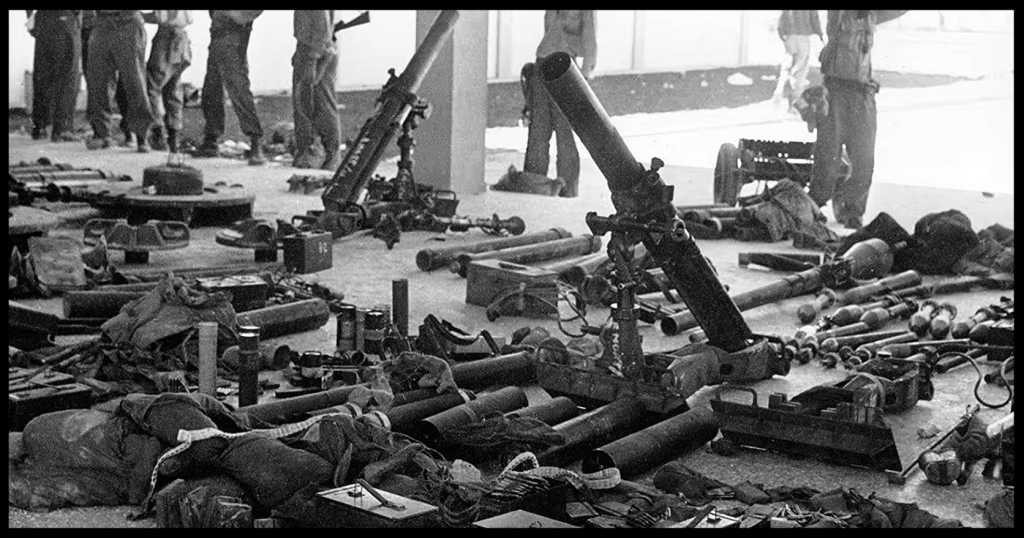
These weapons were confiscated from the CIA-sponsored Brigade 2506.
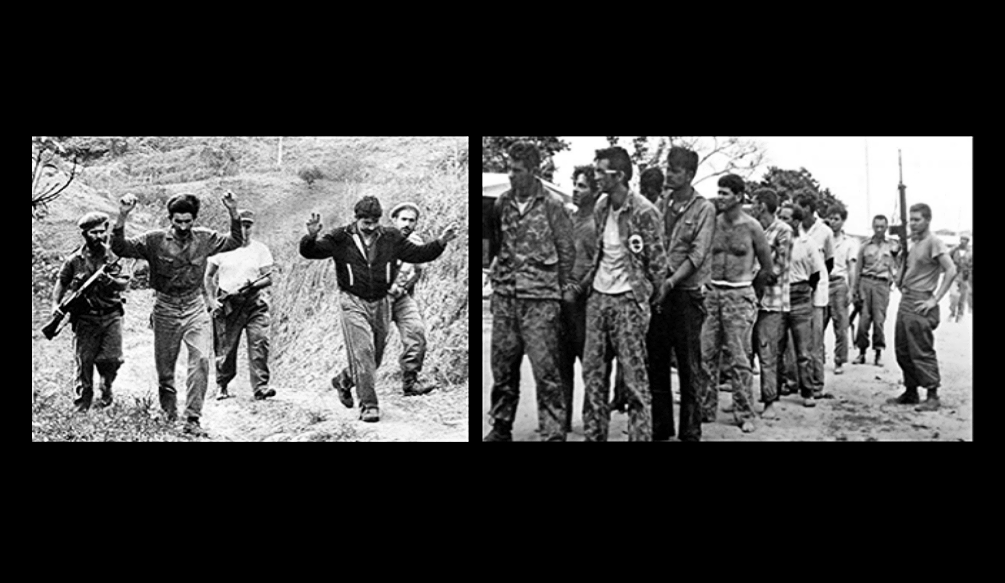
The armed conflict was intense and lasted until April 20th. In less than a day of fighting about 1500 CIA-trained exiled Cubans surrendered, some were overwhelmed by the unexpected heavy gunfire and fled on boats. In addition, 114 were killed in combat.
The CIA plan to establish a beachhead to be followed by a full-scale U.S. military invasion ended in complete disaster. Cuba’s Revolutionary Air Force managed to drop bombs and destroy two ships filled with ammunition and medical supplies for the counterrevolutionaries. Pockets of Brigade 2506 were pinned down and surrounded by superior numbers of revolutionary troops.
Days before the assault was launched Cuba’s RAF intelligence discovered precisely where the U.S.-backed counterrevolutionaries would land. Cuba had a sophisticated spy network long established by the July 26 Movement.
Thanks to the leadership of Comandante Fidel Castro Ruz, Ernesto Che Guevara, Vilma Espin, Celia Sanchez, and Cuba’s mass organizations like the Federation of Cuban Women, the Committees for the Defense of the Revolution, and People’s Militias, which prevented the re-colonization of their homeland.
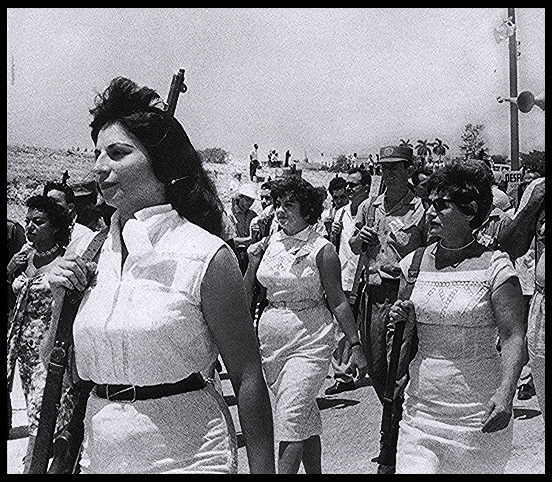
Members of the Federation of Cuban Women..
Members of the civilian organization Committees for the Defense of the Revolution.
The U.S. government was humiliated. The Cuban government forced Washington officials to negotiate for the release of their 1,100 captured puppet combatants. Numerous parties, including the American Red Cross, played a role as go-between in the public and closed negotiations.
Mainstream figures and the capitalist mass media attempted to defame Fidel Castro Ruz because of his insistence that retribution for the invasion was justified. Cuba was accused of demanding a “ransom” for the release of the prisoners of war as if they were kidnapped victims.
But Cuban diplomats remained firm stating that it was Cuba’s sovereignty that was violated by the captives. In the end, due to pressure from the families of prisoners as well as several international organizations, the U.S. government was politically pressured to an agreement.
Watch video footage of the Bay of Pigs battle.
At first, President Fidel Castro Ruz demanded tractors for heavy construction needed to industrialize the country. But at the end, the U.S. and Cuban governments agreed on $53 million worth of baby food and medicines, in exchange for the prisoners.
The Bay of Pigs incident caused major political embarrassment for the Kennedy Administration. U.S. officials have never recovered from the shock brought upon them by the CIA’s defeat at the Bay of Pigs. The imperial arrogance of U.S. rulers led them to underestimate the collective consciousness and revolutionary ferment that was occurring in Cuba.
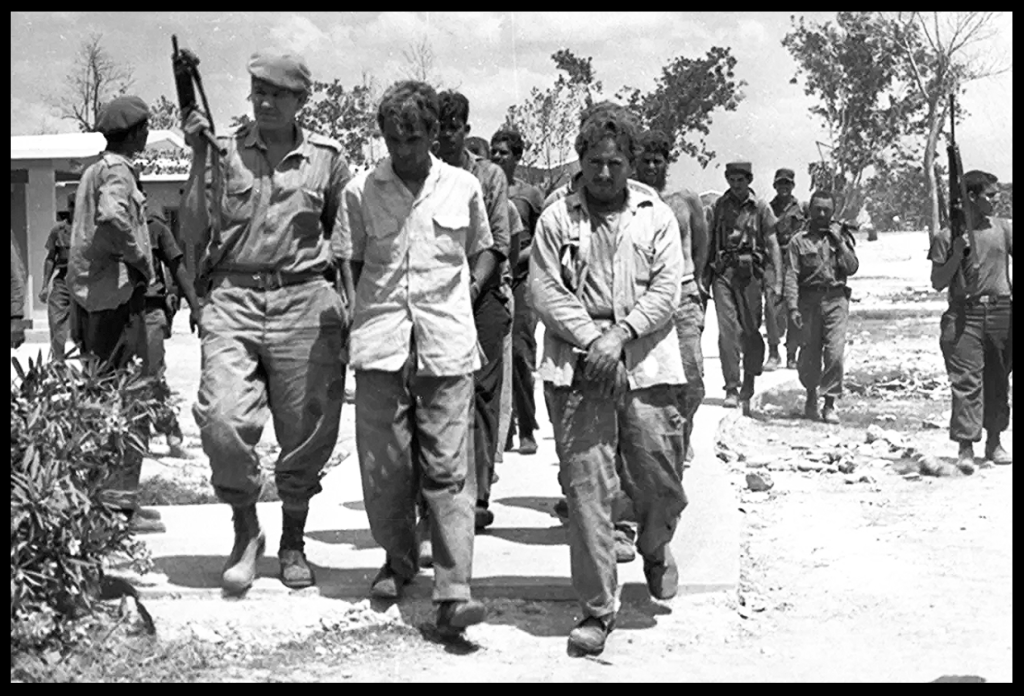
Counterrevolutionary troops captured during the battle.
Surrounded by security and staff, Fidel Castro walks pass combatants captured at the Bay of Pigs.
Since Cuba’s initial break with U.S. domination in 1959, the majority of the population have been organized for the country’s defense. Overlooking that particular detail, an essential aspect of the revolution, was the greatest mistake made by U.S. imperialism at the Bay of Pigs.
What this historic battle reaffirms is that no tyrant is invincible. Oppressed people can meet any challenge, no matter how difficult and win. That includes pushing back on continued attempts to undermine Cuba’s right to self-determination and strive to end the more than six decades old economic blockade.
So, whatever ambitious ideas the Trump administration is contemplating on implementing, there are lessons from the Bay of Pigs experience on April 17–20, 1961, for U.S. imperialism to take seriously into consideration. The Cuban people will undoubtedly wage a vigorous struggle to prevent the re-colonization of their homeland.
“Moncada achieves greatness through the courage of those who die and those who live. Moncada would have been nothing without the courage of those who died there and those who lived.” – Haydee Santamaria
Haydee Santamaria: Heroine of the Cuban Revolution
December 30, 1922 – July 28, 1980
By Carlos “Carlito” Rovira
Haydee Santamaria was a courageous heroine of the Cuban Revolution. She played a significant role in the July 26, 1953, attack on the Moncada Barracks, in Santiago De Cuba – the battle that marks the start of the Cuban Revolution.
Along with Haydee Santamaria’s close comrade Melba Hernandez, they were the only women among the 150 revolutionary combatants in this historic event.
After the failed Moncada assault and while in custody, Batista’s henchmen attempted to intimidate Haydee Santamaria using horror. The interrogators showed Haydee the gouged eyes of her brother, Abel Santamaria, and the dismembered genitalia of her fiancé, Boris Luis Santa Coloma. The two revolutionaries were heinously tortured to death.
Melba Hernandez (l) and Haydee Santamaria (r) after their arrest by Batista soldiers.
Haydee stood firm by her revolutionary convictions and refused to surrender information the torturers wanted. She courageously responded: “If you did that to them and they didn’t talk, much less will I.”
Although Haydee Santamaria and Melba Hernandez were given a short prison sentence of 7 months, as compared to 15 years Fidel Castro Ruz and others received, prison guards were no less lenient with their physical abuse. Santamaria and Hernandez were treated with the same vindictive hatred as were their male comrades. Santamaria and Hernandez were routinely beaten and tortured during their incarceration.
During the armed struggle Haydee became part of the all-women battalion called the Mariana Grajales Platoon. This unit part of the July 26 Rebel Army fought courageously in many incursions with government troops during the revolution, especially battles in the Sierra Maestra mountains.
Haydee Santamaria is among a long list of women warriors who made possible the victory of the Cuban Revolution, like her comrades-in-arms Vilma Espin and Celia Sanchez.
My portrait of Haydee Santamaria, painted in 2024. 20″ X 24″, acrylic paint on canvas.
Haydee Santamaria demonstrated bravery above expectation. In the period leading up to the decisive battles of the revolution she made several risky trips between Florida and Cuba to smuggle weapons and ammunitions for the guerilla army.
Following the overthrow of the Batista regime, like most members of the July 26 Rebel Army, Haydee Santamaria played an important and leading role in the uncertain and challenging period of consolidating Cuba’s revolutionary government.
Among Santamaria’s achievements was the creation of Casa De Las Americas, in April 1959. This entity served as an ideological cultural weapon which generated crucial support for the Cuban Revolution. It gave a voice to many visual, literary, and performing artists who used their renditions to convey the ideas of the Revolution to millions of people throughout the globe.
The world renown Silvio Rodriguez was among the many talents produced by what Casa De Las Americas set out to achieve as its mission. Silvio Rodriguez eventually led Cuba’s Nueva Trova movement which used the romanticism of music and song to legitimize the revolutionary cause in Cuba and all Latin America.
Haydee Santamaria was Director of Casa De Las Americas for two decades. Although Santamaria was not an artist herself, she understood the important role played by painters, musicians, writers, poets and other intellectuals in shaping the thinking of society throughout history. As a leader of the Communist Party of Cuba, Haydee’s contributions were politically geared by the new culture the Revolution was striving to create.
The Cuban Revolution has provided the world with many valuable lessons that pertain to the role of culture and art in the struggle for human emancipation. Such is universally applicable today under all circumstances.
From left to right: Haydee Santamaria, Celia Sanchez and Fidel Castro Ruz in the Sierra Maestra.
Sadly, the life of this revolutionary heroine ended in tragedy. Haydee unbeknownst to many people, was suffering from chronic depression. On July 28, 1980, to the shock of her close comrades, all of Cuba and the world, Haydee committed suicide.
Although her death was widely mourned, Haydee did not receive a state funeral. Many speculated that this decision was due to the unfamiliarity on how to respond when a government official unexpectedly takes their own life. Others attributed not having a state funeral to the deep religious influence of Catholicism in Cuba. Her battle with mental illness and eventual suicide was considered taboo and a “sin against God”.
Tragically, information and resources for those suffering with acute mental health issues such as depression, were not available then as it is today in Cuba.
Haydee Santamaria’s contributions continue to be a critical part of Cuba’s history and legacy. Her staunch bravery and strategic planning helped to shape Cuba into a powerful political example throughout Latin America, the Caribbean and many countries in the world for many generations to come.
“We rebels… get far too much credit for winning the Revolution. Our enemies deserve most of the credit, for being greedy cowards and idiots.” -Celia Sanchez
One of the greatest heroines and leader of the 1959 Cuban Revolution was Celia Sánchez. This historic figure played a pivotal role in the revolutionary struggle that resulted in the overthrow of the notorious U.S.-puppet Fulgencio Batista.
Celia Sanchez was born on May 9, 1920, in the municipality of Media Luna, Oriente, Cuba. She grew up in a relatively affluent household and raised by her father, Dr. Manuel Sanchez, who practiced medicine. Celia’s mother died when she was a very young child.
During her early adulthood, Sanchez worked assisting her father’s medical clinic until she became inspired to be politically active, a change that came about in her life in response to Batista’s military coup on March 10, 1952. Celia’s political involvement led her to organize the July 26th Movement in the municipality of Manzanillo, Cuba in 1955.
Fidel Castro Ruz named the new entity the “JULY 26 MOVEMENT” to honor the martyrs that courageously attempted to seize the Moncada Barracks by force on July 26, 1953. Although the attack ended in failure with many revolutionaries killed by torture, the event sparked the Cuban Revolution.
My portrait of Celia Sanchez, painted in 2016. 24″ X 30″, acrylic paint on canvas.
Celia never hesitated to voluntarily take on tasks, including such that posed danger and required risking her life. This heroine’s passionate energy and uncompromising commitment to the revolution made her one of the most trusted comrades of Fidel Castro Ruz’s and Ernesto Che Guevara.
Cuba was militarily invaded and colonized by the United States, along with the Philippines, Guam and Puerto Rico, the consequence of the 1898 Spanish-American War. Although the United States gave Cuba the political status “Protectorate”, with cleverly disguised semblances of “independence”, it was actually another form of outright colonial domination.
What replaced Spain’s tyrannical rule in Cuba was a system exclusively serving the interest of U.S. monopoly capitalism which aimed to super-exploit the Cuban people. Cuba’s sugar, tobacco, textiles, and tourism was the target of U.S. billionaires while the people went further into the depths of poverty and despair.
Celia Sanchez with fellow guerillas in the Sierra Maestra mountains.
And because U.S. rulers were motivated by malicious intent it was natural for their less significant junior partners in the Mafia to behave like scavengers and turn Cuba into a haven for every kind of criminal activity. Havana became the epicenter of capitalist decadence endorsed by the native white elite.
While Batista government officials catered to the comforts of U.S. financial investors they viewed the Cuban people with disdain. Their disposition resulted in the deaths of 20,000 Cuban men, women and children, who were mercilessly shot, tortured and raped by police and soldiers of the Batista regime.
Celia Sanchez was a staunch Marxist–Leninist who desired to teach the doctrine she embraced and strived to embed its principles as the guiding light of the Communist Party of Cuba. She was among many in that experience who wanted to ensure the revolution’s anti-capitalist direction.
Celia Sanchez posing with her weapon.
In December 1956, Sanchez shared the responsibility for deciding the location where the Granma boat would land on Cuba’s coastal shores once it arrived from Mexico, filled with combatants ready to fight. She also took responsibility for recruiting and training from among the poor peasants and workers to provide reinforcements for the Rebel Army.
As the guerillas intensified their actions Batista responded by increasing repression on the populace to tighten his grip on power. The frenzy Batista demonstrated with terror only served to inspire mass support for the Rebel Army.
From l to r: Vilma Espin, Fidel Castro Ruz, Raul Castrol Ruz, and Celia Sanchez.
Along with other women combatants like Vilma Espin and Haydee Santamaria, Celia Sanchez play a pivotal role in organizing a broad network for smuggling weapons, food and medical supplies to the growing Rebel Army in the mountains.
These warrior women were compelled to fight on two fronts, against the ruthless Batista army on the one hand, and sexist traditions manifesting in paternalistic behavior from male comrades. However, through example the Cuban Revolution took many steps forward towards achieving women’s equality. This is a continuous ideological struggle in which Celia Sanchez played a big role initiating, as a leading combatant at first, then a government official.
Sanchez was the first woman to join the July 26 Rebel Army. And because of her experiences and courage under gunfire from enemy troops she earned a leadership role in the Rebel Army’s General Staff.
Celia Sanchez in the Sierra Maestra.
After the overthrow of U.S. and Mafia controlled Batista’s regime, it was of the utmost importance for the revolution to consolidate in order to guard against a counterrevolution and retain political power. Washington officials were furious in disbelief of what had occurred in “their backyard.” The more extreme elements of the U.S. ruling class were itching to call for military intervention.
Celia Sanchez’s leadership during this period was instrumental for consolidating the new revolutionary state. She served the Cuban Government as Secretary to the Presidency of the Council of Ministers and in the Department of Services of the Council of State. Her many examples of valor served to inspire and galvanize support for the revolution among the youth.
Celia Sanchez being honored in a state funeral.
Sadly, on January 11, 1980, Celia Sanchez died after a long battle with lung cancer. Her death saddened many in Cuba and supporters of the revolution throughout the world, familiar with her feats. President Fidel Castro Ruz was known to be devastated having lost someone with whom he had developed a strong personal and political bond.
Sanchez always demonstrated selflessness and a passion for the emancipation of humanity. Her contributions to the revolution’s achievements are cardinal. She has secured a very special place for her legacy in the archives of the Cuban Revolution and the struggles for women’s equality throughout the world.
“¿Qué ofreció la revolución triunfante a nuestras mujeres? Una nueva vida, llena de posibilidades y perspectivas, donde sus sueños más profundos podrían hacerse realidad. Una sociedad donde lo más preciado para todos nosotros —el futuro de nuestros hijos— estaría asegurado. Una sociedad diferente, donde las personas serían dueñas y dueñas de su propio destino, donde ejercerían plenamente sus derechos, donde surgirían nuevos valores. El triunfo ofreció a nuestras mujeres la oportunidad de estudiar y trabajar, les brindó seguridad económica, poniendo fin así a la opresión y las penurias. Abrió perspectivas de atención médica y seguridad social. Para las mujeres, la revolución significó la oportunidad de alcanzar la dignidad humana.” -Vilma Espin
Homenaje a Vilma Espín, heroína de la Revolución Cubana
7 de abril de 1930 – 18 de junio de 2007
Por Carlos “Carlito” Rovira
Uno de los momentos más destacados de la Revolución Cubana de 1959 es el papel de las mujeres. Entre las heroínas de este acontecimiento histórico se encontraba Vilma Lucila Espín Guillois, más conocida como Vilma Espín. Nació el 7 de abril de 1930 en Santiago de Cuba, en el seno de una familia relativamente adinerada que le inculcó valores progresistas. Fue durante sus años de formación cuando desarrolló una fuerte afinidad con los pobres.
Espín se involucró políticamente a temprana edad, mientras estudiaba ingeniería química en la Universidad de Oriente, en Santiago de Cuba. Allí organizó manifestaciones estudiantiles contra el golpe militar de 1952 y la dictadura del infame títere estadounidense Fulgencio Batista. En un país donde prevalecían la pobreza, la miseria y la agitación, la joven Vilma se vio obligada a cuestionar las causas de los sucesos desagradables que presenciaba.
Aunque el estatus político de Cuba se disfrazaba hábilmente con apariencias de “independencia”, en realidad se encontraba bajo un dominio colonial estadounidense. Cuba fue invadida y colonizada militarmente junto con Filipinas, Guam y Puerto Rico como consecuencia de la Guerra Hispano-Estadounidense de 1898.
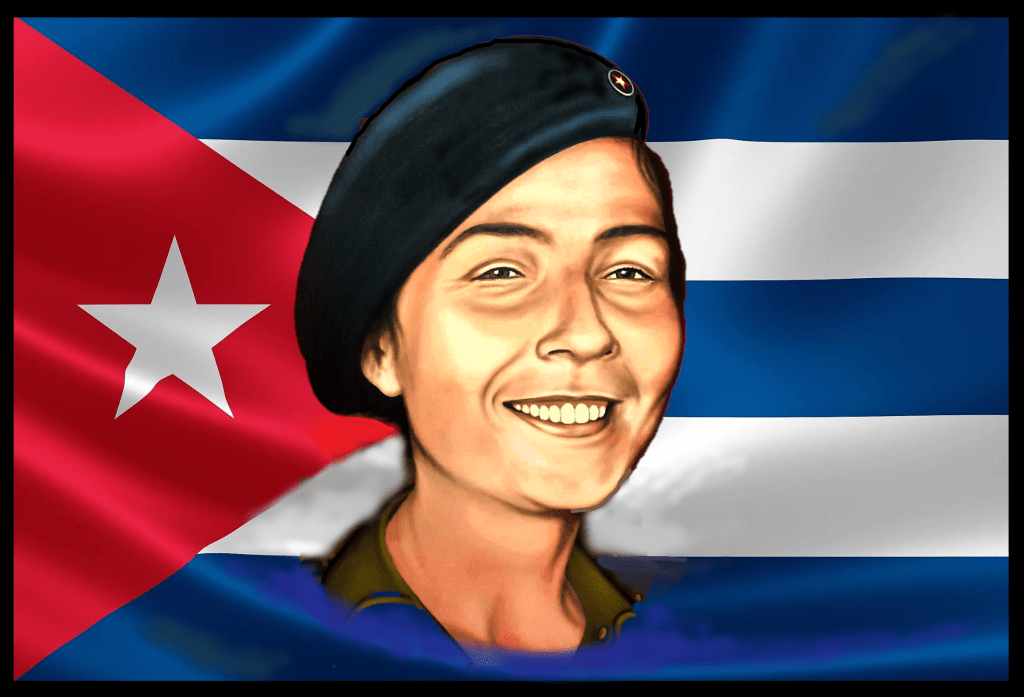
Mi retrato de Vilma Espin. 24″ X 30″, pintura acrílica sobre lienzo.
Tras completar sus estudios de posgrado en el Instituto de Tecnología (MIT) de Cambridge, Massachusetts, Vilma Espín se convirtió en una de las primeras cubanas en obtener un título en ingeniería química. A su regreso a Cuba, conoció al revolucionario cubano Frank País, de 22 años. Poco después, participó con entusiasmo en la organización del Movimiento 26 de Julio.
Vilma Espín comenzó a trabajar como mensajera entre los sobrevivientes del fallido asalto al Cuartel Moncada de 1953, exiliados en México, y el movimiento anti-batista en Cuba. Tras la desastrosa llegada a Cuba del yate Granma, que transportaba combatientes revolucionarios que se enfrentaron en un tiroteo con tropas batistianas, Vilma Espín se unió a Fidel y Raúl Castro en la Sierra Maestra. Para entonces, Espín ya era guerrillera.
Tras demostrar su lealtad a la causa revolucionaria con el cumplimiento diligente de sus deberes, Espín alcanzó un rango de liderazgo en el Ejército Rebelde, junto a figuras como Ernesto Che Guevara, Fidel Castro Ruz, Raúl Castro Ruz, Celia Sánchez, Haydée Santamaría, Melba Hernández, Camilo Cienfuegos, Teté Puebla y otros.
Con el tiempo, las circunstancias de su actividad política influyeron en la vida personal de Vilma Espín y del líder del Ejército Rebelde, Raúl Castro Ruz. Ambos revolucionarios iniciaron una relación romántica y contrajeron matrimonio poco después del derrocamiento del régimen de Batista. Formaron una familia con cuatro hijos: tres mujeres y un varón. Sus nombres son Déborah, Mariela, Nilsa y Alejandro (Castro Espín).
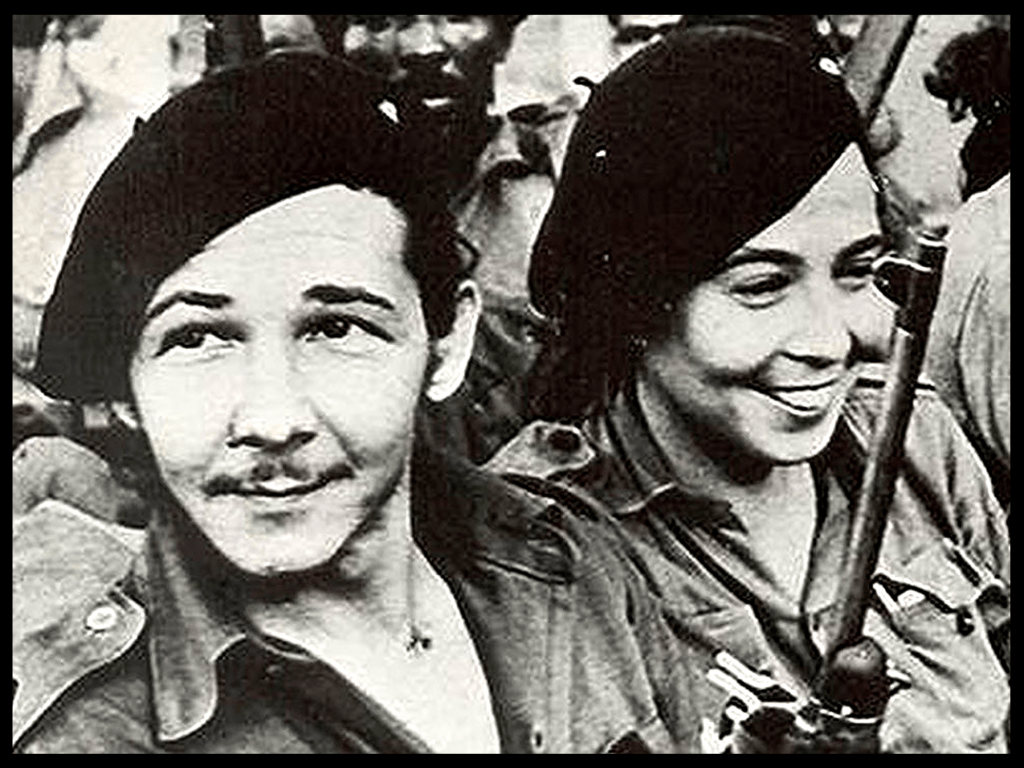
Raul Castro Ruz y Vilma Espin.
Además de ser figura política en el gobierno cubano y el Partido Comunista, Espín desempeñó un papel ejemplar en su campo profesional como ingeniera química. Lideró el camino para establecer la industria química del país, en sectores como bio-farmacéuticos, gases industriales y medicinales, fertilizantes, pesticidas y más.
Las contribuciones de Vilma Espín en este campo científico resultaron valiosas para la investigación médica cubana en vacunas y tratamientos para enfermedades infecciosas como la COVID-19, el VIH/SIDA, el ébola, así como para el cáncer, entre otras. Mucho después de su muerte, los logros de su labor siguen desempeñando un papel vital en la lucha contra el vengativo bloqueo económico estadounidense.
De izquierda a derecha: Vilma Espín, Fidel Castro Ruz, Raúl Castro Ruz y Celia Sánchez.
A medida que se acercaba el momento de la toma del poder, la labor de Vilma Espín como destacada agente de inteligencia de la red clandestina de espionaje del Movimiento 26 de Julio resultó decisiva para desmoralizar y neutralizar a las tropas enemigas. Espín también fue responsable de mantener un flujo constante de armas, alimentos y suministros médicos para las fuerzas revolucionarias en la Sierra Maestra.
Conocida en los entresijos de la organización, Espín desempeñó un papel fundamental en la creación del nuevo gobierno revolucionario. Fue miembro del Comité Central del Partido Comunista de Cuba de 1965 a 1989. Fue presidenta de la Comisión de Prevención Social de 1967 a 1971, directora de Desarrollo Industrial del Ministerio de Alimentación en 1971, presidenta del Instituto de Puericultura y miembro del Consejo de Estado de Cuba en 1976. Además, Vilma Espín fue representante de Cuba en la Asamblea General de las Naciones Unidas.
Es lógico que la hija de Vilma Espín y Raul Castro Ruz, Mariela Castro Espín, se viera influenciada ideológicamente por los ideales de la revolución durante su infancia. Hoy, Mariela es conocida mundialmente como una destacada portavoz de los derechos LGBTQ+ en Cuba, como directora del Centro Nacional de Educación Sexual de Cuba.
La Federación de Mujeres Cubanas
Y como Vilma Espín fue un baluarte de las ideas revolucionarias, defendiendo el socialismo. Ella se propuso como misión de vida desafiar las tradiciones retrógradas establecidas desde hace tiempo por la Iglesia Católica Romana, especialmente aquellas que justificaban la opresión de género. Por ello, Espín fue una firme defensora de la igualdad de género y en 1960 se propuso crear la Federación de Mujeres Cubanas (FMC).
Miembras de la Federación de Mujeres Cubanas (La Federación de Mujeres Cubanas)
La FMC es una fuerza organizada con el propósito de empoderar a las mujeres en Cuba. A lo largo de su existencia, la organización ha presentado y defendido la promulgación de decretos que protegen los intereses de las mujeres. Vilma Espín presidió la FMC hasta su fallecimiento el 18 de junio de 2007.
La FMC sigue siendo un órgano vital de la Revolución Cubana. Sigue el lema de que sin la participación de las mujeres se obstaculizarían los objetivos de la revolución. Por eso, el apoyo del Partido Comunista a la FMC es de suma importancia.
La FMC abordó temas de suma importancia para las mujeres, como:
• Un pronunciamiento general a favor de la igualdad de derechos de las mujeres.
• Integración de las mujeres en la política y la administración pública.
• Integración completa de las mujeres en la economía.
• Atención médica adecuada para las mujeres.
• Cuidado infantil para los más pequeños.
• Acceso de las mujeres a la educación.
• Reorganización de los hogares que mantienen a las mujeres en posiciones de subordinación.
• Creación de clases de defensa personal para mujeres con el fin de erradicar el maltrato físico.
Durante la invasión de Bahía de Cochinos, la FMC se alzó en armas en defensa de su país.
Durante la invasión de Bahía de Cochinos, organizada por la CIA, en 1961 y, de nuevo, durante la Crisis de los Misiles de Cuba en 1962, el papel de Vilma Espín en la Federación de Mujeres Cubanas fue vital. Esta poderosa organización de masas movilizó a mujeres de todas las edades para la batalla en un momento amenazante, cuando la intervención estadounidense parecía probable. Se mantuvieron listas como parte de una infraestructura armada que abarcaba a toda la sociedad cubana.
En los días previos a la invasión de Bahía de Cochinos, la CIA llevó a cabo actos de sabotaje contra el suministro de alimentos del país. Muchos campos de cultivo fueron incendiados brutalmente. El gobierno cubano decretó el estado de emergencia. El Ejército Revolucionario Cubano y las diversas organizaciones de masas, incluida la FMC, se movilizaron. Miles de mujeres armadas, en contingencias organizadas, fueron enviadas a los campos de cultivo de toda Cuba.
A pesar de las dificultades que enfrenta Cuba a causa del bloqueo económico estadounidense, la FMC sigue siendo la parte más profunda del legado de Vilma Espín. Lo que ella simboliza es una gran fuente de energía para la resiliencia del pueblo cubano.
Su nombre sigue inspirando a quienes aman la libertad en todo el mundo, especialmente a quienes siguen sus pasos en la defensa de la patria cubana. Los innumerables ejemplos de valor y altruismo de Vilma Espín sin duda demuestran su noble carácter, pero al mismo tiempo ponen de relieve la fuerza moral y la legitimidad de la Revolución Cubana.
“What did the triumphant revolution offer our women? A new life, filled with possibilities and prospects, in which their deepest dreams might become reality. A society in which that which is most precious to us all-our children’s future-would be assured. A different society, where the people would be masters and mistresses of their own destiny, where they would exert their rights fully, where new values would come into being. The triumph offered our women the opportunity to study and to work, it offered them economic security, thereby putting an end to oppression and hardship. It opened prospects of health care, of social security. For women, the revolution meant the opportunity to attain human dignity.” —Vilma Espin.
Salute to Vilma Espin, heroine of the Cuban Revolution
April 7, 1930 – June 18, 2007
By Carlos “Carlito” Rovira
One of the greatest highlights of the 1959 Cuban Revolution is the role played by women. Among the heroines of this historic event was Vilma Lucila Espin Guillois, better known as Vilma Espin. She was born on April 7, 1930, in Santiago De Cuba to a relatively wealthy family that taught her progressive values. It was during her formative years when she developed affinities for the poor.
Espin became politically active at a young age during her studies for chemical engineering at the University of Oriente, in Santiago de Cuba. She organized student demonstrations there against the 1952 military coup and dictatorship of the notorious U.S.-puppet Fulgencio Batista. In a country where poverty, misery, and turmoil prevailed compelled the young Vilma to question what the causes were for unpleasant things she witnessed.
Although the political status of Cuba was cleverly disguised with semblances of “independence” it was actually under a colonial-type domination by the United States. Cuba was militarily invaded and colonized along with the Philippines, Guam and Puerto Rico, the consequence of the 1898 Spanish-American War.
My portrait of Vilma Espin. 24″ X 30″, acrylic paint on canvas.
After completing her post-graduate studies at the Institute of Technology (MIT) in Cambridge, Massachusetts Vilma Espin became one of the first Cuban women to earn a degree in chemical engineering. When Espin returned to Cuba, she met with the 22-year-old Cuban revolutionary Frank Pais. Soon after, she eagerly participated in organizing the July 26 Movement.
Vilma Espin began working as a messenger between survivors of the failed 1953 Moncada Barracks attack who were exiled in Mexico and the anti-Batista movement in Cuba. After the disastrous arrival to Cuba of the Granma yacht carrying revolutionary combatants who engaged in a gun battle with pro-Batista troops, Vilma Espin joined Fidel and Raul Castro in the Sierra Maestra. By then Espin was a guerilla fighter herself.
After Espin proved her loyalty to the revolutionary cause by diligently performing her duties, she earned a leadership rank in the Rebel Army, alongside other staunch leadership figures like Ernesto Che Guevara, Fidel Castro Ruz, Raul Castro Ruz, Celia Sanchez, Haydee Santamaria, Melba Hernandez, Camilo Cienfuegos, Teté Puebla, and others.
Eventually, the circumstances of political activity influenced the personal lives of Vilma Espin and Rebel Army leader Raul Castro Ruz. The two revolutionaries developed a romantic relationship and married shortly after the overthrow of the Batista regime. They established a family with four children, three daughters and a son. Their names are Deborah, Mariela, Nilsa, and Alejandro (Castro Espin).
Raul Castro Ruz and Vilma Espin.
In addition to serving as a political cadre in the Cuban government and Communist Party, Espin played an exemplary role in her professional field as a chemical engineer. She led the way to establish the country’s chemical industry, such as in biopharmaceuticals, industrial and medicinal gases, fertilizers, pesticides, and more.
Vilma Espin’s contributions in this scientific field proved valuable for Cuba’s medical research in vaccines and treatments for infectious diseases like Covid-19, HIV/AIDS, Ebola, as well as for cancer and so on. Long after her death, the achievements of her work continue to play a vital role pushing back on the vindictive U.S. economic blockade.
From left to right: Vilma Espin, Fidel Castro Ruz, Raul Castro Ruz, and Celia Sanchez.
As the moment for the seizure of power approached, Vilma Espin’s work as a leading intelligence operative for the underground spy network of the July 26 Movement proved decisive for demoralizing and neutralizing enemy troops. Along with another Cuban revolutionary heroine Celia Sanchez, Espin was responsible for maintaining a steady flow of weapons, food, and medical supplies for revolutionary forces in the Sierra Maestra Mountains.
Being well-versed in the intricacies of organization, Espin played a pivotal role in the creation of the new revolutionary government. She served as a member of the Central Committee of the Cuban Communist Party from 1965 to 1989. She was chair of the Commission for Social Prevention from 1967 to 1971, director of Industrial Development in the Ministry of Food in 1971, President of the Institute of Childcare, and member of the Cuban Council of State in 1976. In addition, Vilma Espin served as Cuba’s representative on the United Nations General Assembly.
No one can ever dispute that Vilma Espin’s and Raul Castro Ruz’s daughter, Mariela Castro Espin, took after both her parents. It is evident that she was ideologically influenced by the ideals of the revolution during her childhood rearing. Today, Mariela is known throughout the world as a leading voice for LGBTQ+ rights in Cuba, as director of the Cuban National Center for Sex Education.
The Federation of Cuban Women
Espin was a bulwark for revolutionary ideas, upholding Socialism. She made it her life-mission to challenge backward traditions long established by the Roman Catholic Church, especially, that which justifies gender oppression. This is why Espin was an outspoken advocate for gender equality and in 1960 she set out to create the Federation of Cuban Women (La Federación de Mujeres Cubanas, FMC).
Members of the Federation of Cuban Women (La Federación de Mujeres Cubanas)
The FMC is an organized force with the purpose of empowering women in Cuba. Throughout its existence the organization has introduced and argued for enacting decrees that protect the interest of women. Vilma Espin served as president of the FMC until her death on June 18, 2007.
The FMC continues to be a vital organ of the Cuban Revolution. It follows the motto that without the participation of women would pose a hinderance to the aims of the revolution. This is what made the Communist Party’s support for the FMC a matter of supreme importance.
The FMC addresses issues of the utmost concern to women, such as:
A general pronouncement for women’s equal rights.
Intergration of women in politics and government administration.
Complete integration of women into the economy.
Adequate healthcare for women.
Childcare for the very young.
Women’s access to education.
Reorganizing households that keep women in subservient positions.
Creating self-defense classes for women to end physical abuse.
During the Bay of Pigs invasion, the Federation of Cuban Women picked up arms in defense of their country.
During the CIA-organized Bay of Pigs invasion in 1961 and the Cuban Missile Crisis of 1962, Vilma Espin’s role in the FCW was vital. This powerful entity mobilized women of all ages for battle during a threatening moment when U.S. intervention seemed likely. They stood ready as part of an armed infrastructure composed of all mass organizations in Cuban society.
In the days leading up to that crisis, the CIA conducted acts of sabotage on the country’s food supply. Many crop fields were viciously set ablaze. A state of emergency was called by the Cuban government. The Revolutionary Cuban Army and the various mass organizations, including the FMC, were mobilized. Thousands of armed women in organized contingencies were dispatched to protect farming fields throughout Cuba.
Despite the hardships Cuba faces caused by the U.S. economic blockade the FMC continues to be the most profound part of Vilma Espin’s legacy. What she symbolizes provides a big energy source for the continual resilience and valor of the Cuban people. Her countless examples of selflessness surely point to her noble character, but at the same time sheds light on the moral strength and legitimacy of the Cuban Revolution.
This heroine’s name continues to inspire freedom-loving people throughout the world, especially those following in her footsteps in defense of the Cuban homeland. That alone should serve as a warning to any imperialist power foolishly contemplating on using military force to re-colonize Cuba.
“No hay que temer, puertorriqueños, el rugir del cañón; salvar a la nación es el deber del corazón. También sabrán luchar. Ya no queremos déspotas; la tiranía caerá ahora; las mujeres invencibles también sabrán luchar. Queremos libertad y nuestros machetes nos la darán”.– Lola Rodriguez De Tio
______________________________________________
By Carlos “Carlito” Rovira
Lola Rodríguez De Tió nació en San Germán, Puerto Rico, el 14 de septiembre de 1843. Creció hasta convertirse en la primera mujer del país en establecerse como una estudiosa literaria y reconocida en toda América Latina. El trabajo de De Tió refleja sus creencias abiertas sobre temas críticos durante su vida joven, la esclavitud africana y la colonización española de Puerto Rico.
Lola Rodríguez De Tió fue una feminista devota, poeta, académica literaria y defensora de la independencia de Puerto Rico y Cuba. Como mujer de mente libre, frecuentemente expresaba desprecio por las tradiciones arraigadas en el catolicismo y sus puntos de vista que desalentaban el avance de las mujeres.
La mayoría de las mujeres en las colonias españolas eran analfabetas, especialmente entre las pobres. Se les impidió desarrollarse intelectualmente debido a los tabúes y la doctrina de la Iglesia Católica Romana. Pero a pesar de las opresivas “normas” sociales, Lola Rodríguez se propuso rebeldemente convertirse en un genio literario femenino.
Con tan sólo diecisiete años, Lola Rodríguez ejerció con valentía sus pensamientos. Despreciaba las expectativas culturales anti-mujeres en cuanto a la apariencia. Aunque menor de edad, Lola Rodríguez exigió desafiante que le permitieran tener el pelo corto, lo que se convirtió en su marca personal de toda la vida.
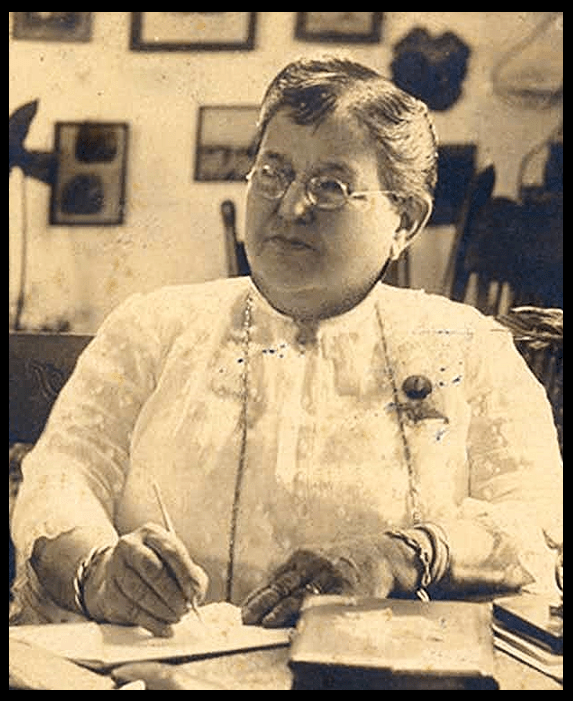
Lola Rodríguez De Tió
A medida que se hacía adulta, De Tió quería usar su talento como escritora y poeta para expresar sus puntos de vista críticos sobre el control de España sobre las dos colonias restantes en el hemisferio occidental: Cuba y Puerto Rico.
Su admiración por la lucha cubana y su familiaridad con la visión de la Revolución Haitiana de unir a las naciones caribeñas en una fuerza poderosa para repeler las intenciones de las potencias colonizadoras, puede haber sido lo que la inspiró a crear la famosa metáfora “Dos alas del mismo pájaro“.
La afiliación de Lola Rodríguez De Tió con el Comité Revolucionario de Puerto Rico hizo posible su estrecha colaboración con el Dr. Ramón Emeterio Betances, una figura central del movimiento anticolonial de Puerto Rico que era muy respetado en todo el Caribe. De Tió también jugó un papel importante en la lucha que culminó el 23 de septiembre de 1868 con El Grito De Lares, un levantamiento que pedía el fin de la esclavitud de los africanos y del colonialismo español.
Aunque De Tió se hizo conocida por ser autora de muchas interpretaciones hermosas, se la recuerda mejor por escribir la letra original y revolucionaria del Himno Nacional de Puerto Rico, La Borinqueña. De Tió compuso la canción en 1868 cuando se acercaban los temblores del levantamiento de Lares. Fue un momento en el que el deseo general de convertirse en nación se sintió ampliamente mientras los boricuas se preparaban ansiosamente para la batalla.
Uno de los actos de falta de respeto más escandalosos del colonialismo estadounidense fue imponer una versión distorsionada del Himno Nacional de Puerto Rico. A pesar de ser también llamada “La Borinqueña”, la militancia de la canción original fue saneada con letras no revolucionarias. Hoy en día, el gobierno colonial títere de Estados Unidos lo utiliza como versión “oficial”. Nunca debe confundirse la composición de Lola Rodríguez De Tió con la versión vergonzosamente reescrita en 1952 por el traidor Ramón Collado.
Después del fracaso de Lares en 1868, De Tió vivió un tiempo en La Habana, Cuba. Pero en 1891 fue deportada por su activismo y franqueza contra la tiranía española. Se mudó a la ciudad de Nueva York, donde se unió a los revolucionarios cubanos y puertorriqueños que vivían en el exilio.
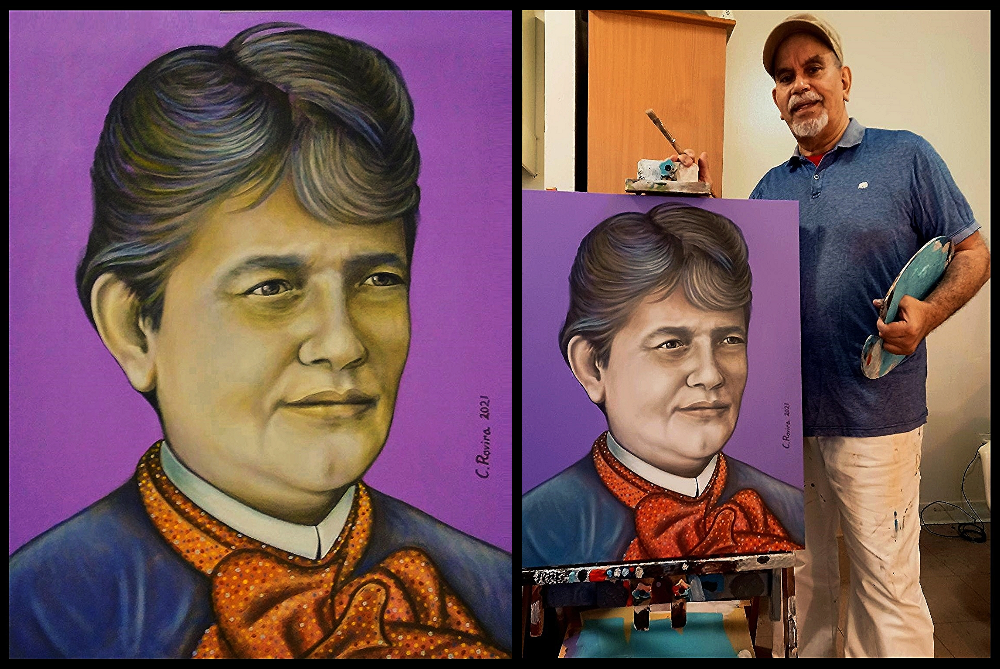
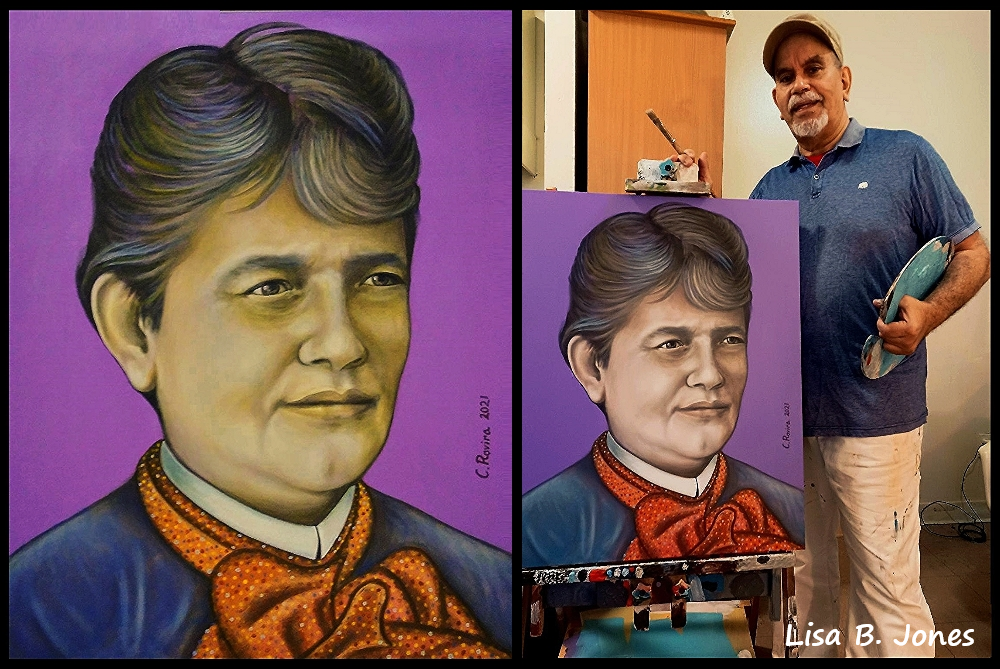
Mi homenaje artístico a Lola Rodríguez De Tío. 24″ X 30″, pintura acrílica sobre lienzo.
Las reuniones de revolucionarios exiliados de ambos países eran una práctica habitual que se remontaba a mediados de la década de 1850. Se congregaron principalmente en la zona conocida hoy como El Barrio (East Harlem) para escapar de la brutal aplicación de los decretos de España.
Los más proactivos de esta comunidad se reunieron en secreto en un hotel de Broome Street en el Lower East Side donde formaron la Sociedad para la Independencia de Cuba y Puerto Rico. Muchos regresaron a sus respectivos países de origen para servir como combatientes en el Grito De Yara de Cuba y el Grito De Lares de Puerto Rico.
Fue en la ciudad de Nueva York en 1891, donde Lola Rodríguez De Tió y el líder revolucionario cubano José Martí se reunieron por primera vez. Lo que siguió fue un fuerte vínculo de respeto mutuo y colaboración política.
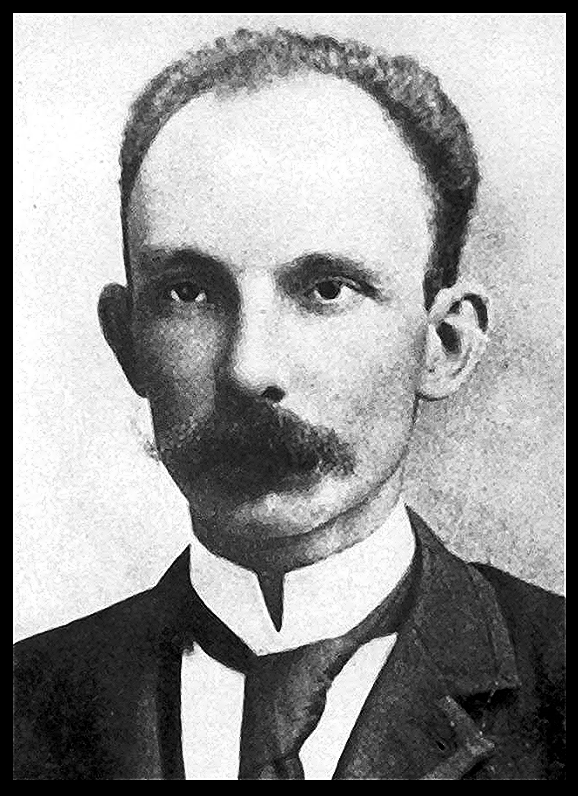
El emblemático líder revolucionario de Cuba, José Martí.
Muchos creen que el mérito de la idea original de invertir los colores de la bandera cubana para crear la bandera puertorriqueña moderna fue compartido por el poeta revolucionario Francisco Gonzalo Marín y Lola Rodríguez De Tió. Ambas figuras prominentes promovieron firmemente la importancia de aprovechar la solidaridad cubana y puertorriqueña, especialmente entre los revolucionarios que viven juntos en el exilio.
Fue en ese escenario donde se discutió y aprobó la propuesta de diseño de la actual bandera puertorriqueña el 22 de diciembre de 1895, en una reunión secreta celebrada en Chimney Corner Hall. Al frente de este esfuerzo histórico estuvieron los destacados Manuel Besosa, Antonio Vélez Alvarado y Juan de Mata Terreforte. Entre los 59 asistentes se encontraba el archivero de historia negra, Arturo Alfonso Schomburg.
De Tió trabajó duro con los exiliados cubanos y puertorriqueños en un esfuerzo por recaudar fondos para una próxima guerra revolucionaria en Cuba. Cuando estalló la lucha militar contra el colonialismo español en Cuba José Martí y muchos de sus compatriotas volvieron a luchar. Desafortunadamente, el 19 de mayo de 1895, el querido líder revolucionario murió en batalla.
Después de la Guerra Hispanoamericana, en 1899, Lola Rodríguez De Tió y su familia regresaron a Cuba donde vivió el resto de su vida, aunque continuó visitando Puerto Rico. Continuó ejerciendo su profesión en la Academia de las Artes y las Letras de Cuba. También continuó abogando por la independencia de Puerto Rico y la igualdad de derechos de las mujeres en Cuba a través de sus artículos publicados en varios periódicos y revistas.
El 10 de noviembre de 1924 falleció la querida poeta puertorriqueña. Lola Rodríguez De Tío está enterrada en el Cementerio de Colón en La Habana, Cuba. Ella demostró ser ejemplar para las generaciones posteriores de mujeres puertorriqueñas, específicamente las del Partido Nacionalista de Puerto Rico y más allá.
Tumba de Lola Rodríguez De Tio en el Cementerio de Colón en La Habana, Cuba.
¡Viva el legado de Lola Rodriguez De Tió!Que Viva Puerto Rico Libre!
“There is no need to fear, Puerto Ricans, the roar of the cannon; saving the nation is the duty of the heart. They will also know how to fight. We no longer want despots; tyranny shall fall now; the unconquerable women also will know how to fight. We want liberty, and our machetes will give it to us.” -Lola Rodríguez De Tió
_____________________________________________
By Carlos “Carlito” Rovira
Lola Rodríguez De Tió was born in San German, Puerto Rico on September 14, 1843. She grew up to become the country’s first woman to establish herself as a renown literary scholar who was recognized throughout Latin America. De Tió’s work reflects her outspoken beliefs on critical issues during her young life, African chattel slavery and Spanish colonialism in Puerto Rico.
Lola Rodríguez De Tió was a feminist, a poet, a literary scholar and a devoted advocate for the independence of Cuba and Puerto Rico. As a free minded woman, she frequently expressed contempt for backward traditions rooted in Catholicism, specifically its views discouraging the advancements of women.
Most women in the Spanish colonies were illiterate, especially among the poor. Women were restricted from developing intellectually, due to taboos and the corrupt doctrine of the Roman Catholic Church. But despite oppressive social “norms” Lola Rodriguez rebelliously set out to become a female literary genius.
At just seventeen years of age, Lola Rodríguez was courageously exertive about her thoughts. She had the utmost disdain for anti-women cultural expectations on physical appearance. Although underage, Lola Rodriguez defiantly demanded to be allowed having short hair, which became her life-long personal trademark.
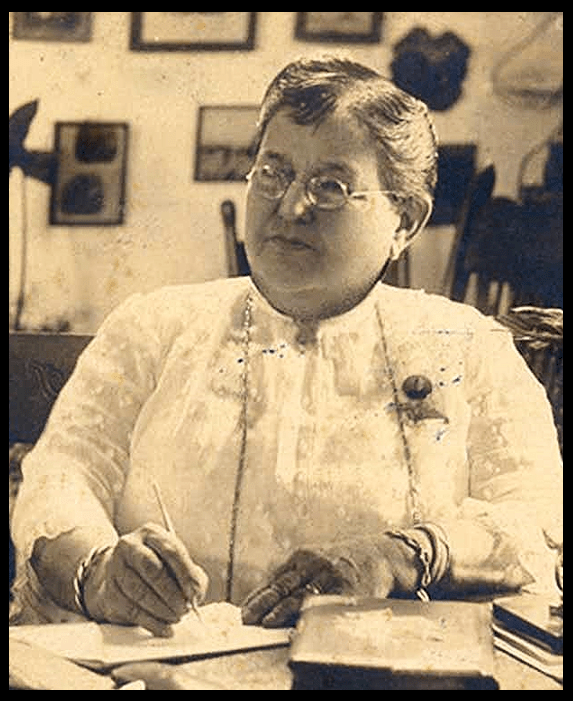
Lola Rodriguez De Tio
As she became an adult, De Tió wanted to use her talents as a writer and poet to voice her critical views on Spain’s repressive hold in its two remaining Western Hemispheric colonies – Cuba and Puerto Rico.
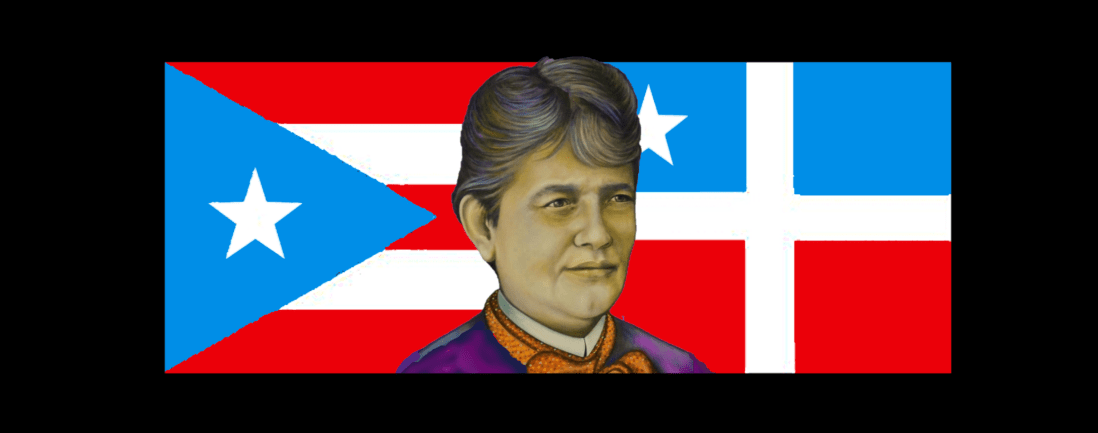
Her admiration for the Cuban struggle and the Haitian Revolution’s vision of uniting the Caribbean nations into one mighty force to repel the intentions of colonizing powers, may have been what inspired her to create the famous metaphor “Two Wings of the Same Bird.”
De Tió’s affiliation with Puerto Rico’s Revolutionary Committees made possible her close collaboration with Dr. Ramon Emeterio Betances, a central figure of Puerto Rico’s anti-colonial movement who was highly respected throughout the Caribbean. De Tió also played a significant role in the struggle which culminated on September 23, 1868, with El Grito De Lares, an uprising that called for an end to the enslavement of African people and Spanish colonialism.
Although De Tió became known for authoring many beautiful renditions, she is best remembered for writing the original and revolutionary lyrics of Puerto Rico’s National Anthem, La Borinqueña. De Tió composed the song in 1868 as the tremors of the Lares uprising approached. It was a moment in time when the general desire for nationhood was widely sensed as Boricuas eagerly prepared their weapons for battle.
One of the most outrageous acts of disrespect by U.S. colonizers was imposing a distorted version of the Puerto Rican National Anthem. Adding insult to injury, that distorted version was also named “La Borinqueña.” The original militant lyrics were replaced by a sanitized, non-revolutionary composition. Today, it is used by the U.S.-puppet colonial government as the “official” version. Ramon Collado is the composer who shamefully betrayed his people by re-writing the lyrics in 1952 on behalf of U.S. colonialism.
After the failure at Lares in 1868, De Tió lived for a while in Havana, Cuba. But in 1891 she was deported by Spanish authorities for her activism and outspokenness. She moved to New York City where she joined Cuban and Puerto Rican revolutionaries living in exile.
My artist tribute to Lola Rodriguez De Tio. 24″ X 30″, acrylic paint on canvas.
Gatherings of exiled revolutionaries from both countries was a customary practice dating back to the mid 1850s. They congregated mainly in the area known today as El Barrio (East Harlem) to escape the brutal enforcement of Spain’s decrees.
The more pro-active individuals from this community secretly met at a hotel on Broome Street in the Lower East Side where they formed the Society for the Independence of Cuba & Puerto Rico. Many returned to their respective homelands to serve as combatants in Cuba’s Grito De Yara and Puerto Rico’s Grito De Lares.
It was in New York City in 1891, where Lola Rodriguez De Tio and Cuban revolutionary leader Jose Marti met for the first time. What followed was a strong bond of mutual respect for one another and political collaboration.
Cuba’s iconic revolutionary leader, Jose Marti.
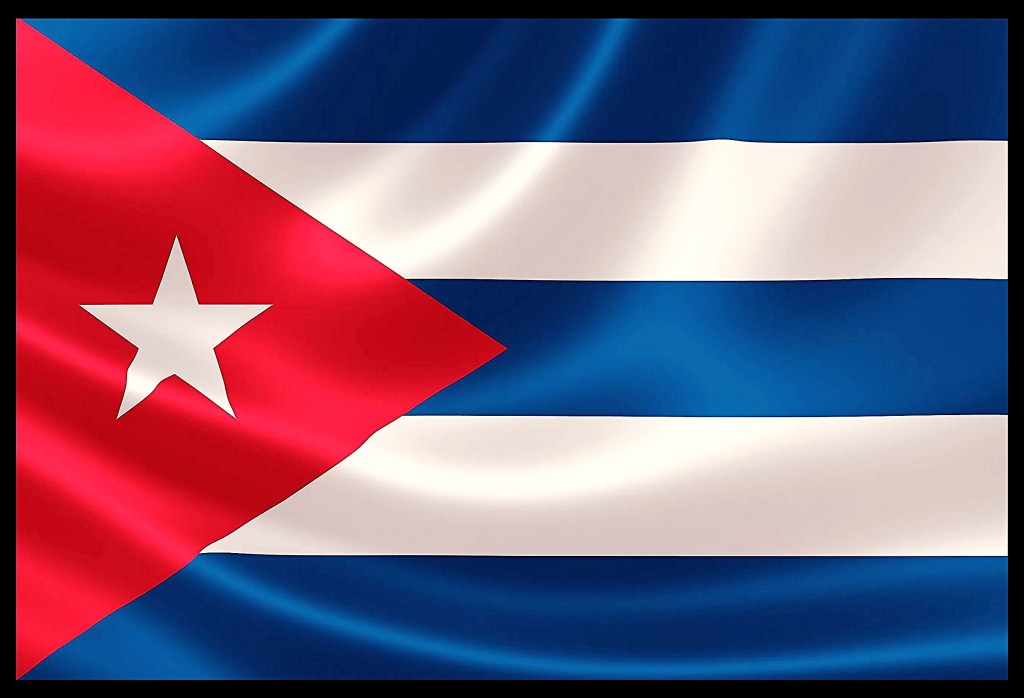
Many believe that credit for the original idea of inverting the colors of the Cuban flag to create the modern-day Puerto Rican flag was shared coincidentally by revolutionary poets Francisco Gonzalo Marín and Lola Rodríguez De Tió. Both of these prominent figures adamantly promoted the importance of building on Cuban and Puerto Rican solidarity, especially by revolutionaries living together in exile.
It was in that setting where the proposed design of the present-day Puerto Rican flag was discussed and approved on December 22, 1895, in a secret meeting held at Chimney Corner Hall. At the helm of this historic effort were the prominent Manuel Besosa, Antonio Velez Alvarado and Juan de Mata Terreforte. Among the 59 attendees included the archivist of Black history, Arturo Alfonso Schomburg.
De Tió worked hard with the Cuban and Puerto Rican exiles in efforts to raise funds for an upcoming revolutionary war in Cuba. When the military struggle against Spanish colonialism sparked in Cuba Jose Marti and many of his compatriots returned to fight. Unfortunately, on May 19, 1895, the beloved revolutionary leader, was killed in battle.
After the Spanish-American War, in 1899, Lola Rodríguez and her family returned to Cuba where she lived for the rest of her life, although continuing to visit Puerto Rico. She continued to work in her profession at the Cuban Academy of Arts and Letters. She also continued advocating for Puerto Rico’s independence and equal rights for women in Cuba through her articles published in various newspapers and journals throughout Latin America.
On November 10, 1924, the belove Puerto Rican poet died. Lola Rodríguez De Tió’s remains are buried at the Colon Cemetery in Havana, Cuba. Her legacy symbolizes the centuries-long traditions of the Two Wings of the Same Bird – Cuba & Puerto Rico. Lola Rodriguez De Tio impacted later generations of Puerto Rican women, specifically those of the Nationalist Party and beyond.
Lola Rodriguez De Tio’s tomb at the Colon Cemetery in Havana, Cuba.
Long live the legacy of Lola Rodríguez De Tió! ¡QUE VIVA PUERTO RICO LIBRE!

























 carlitoboricua