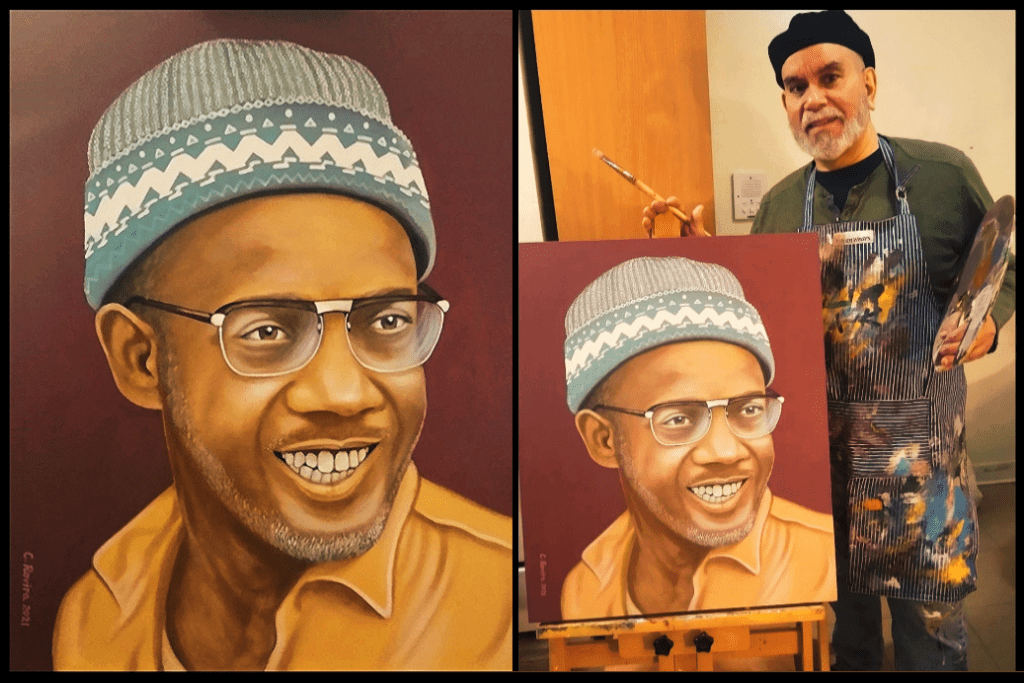
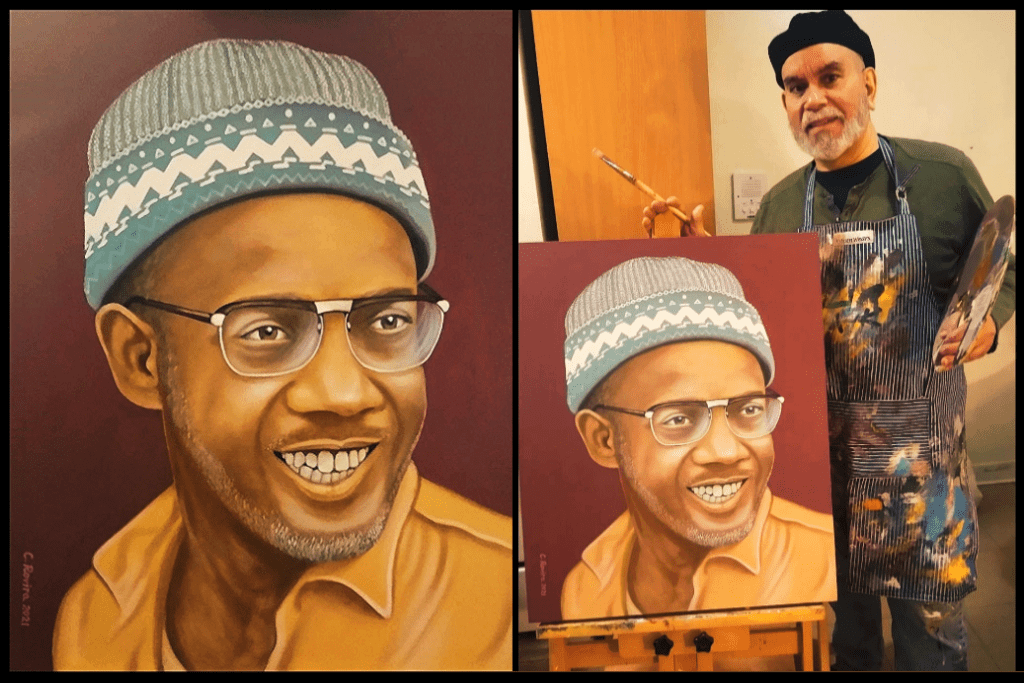
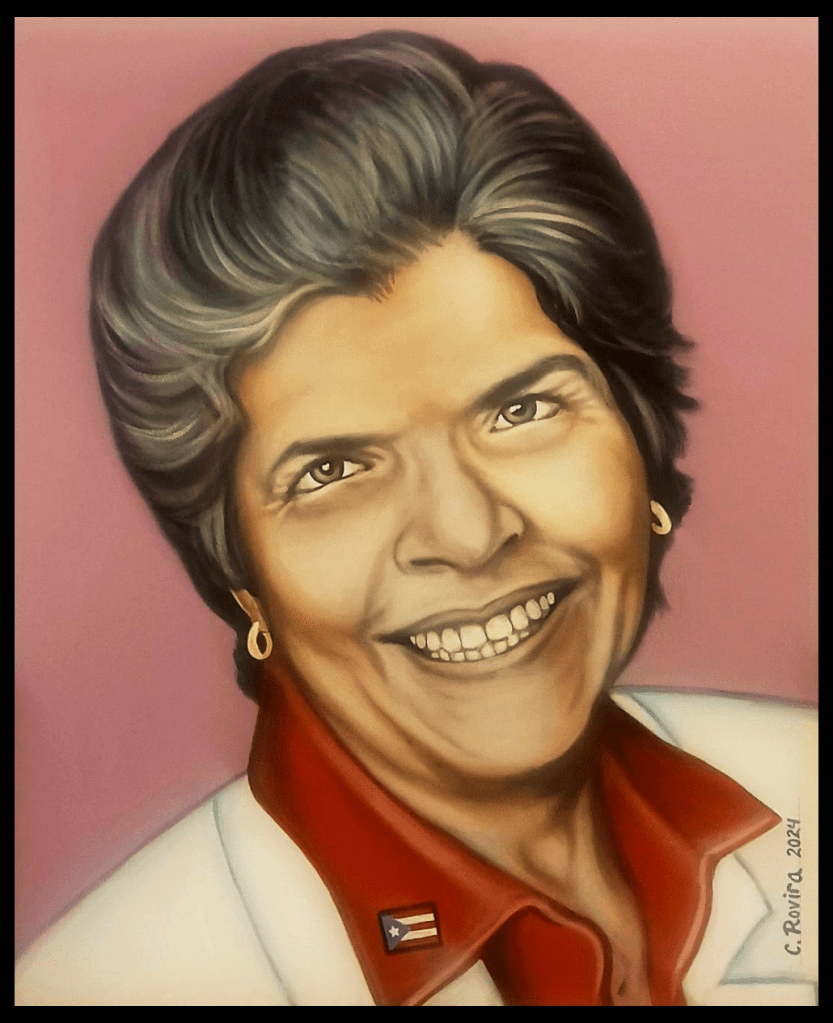
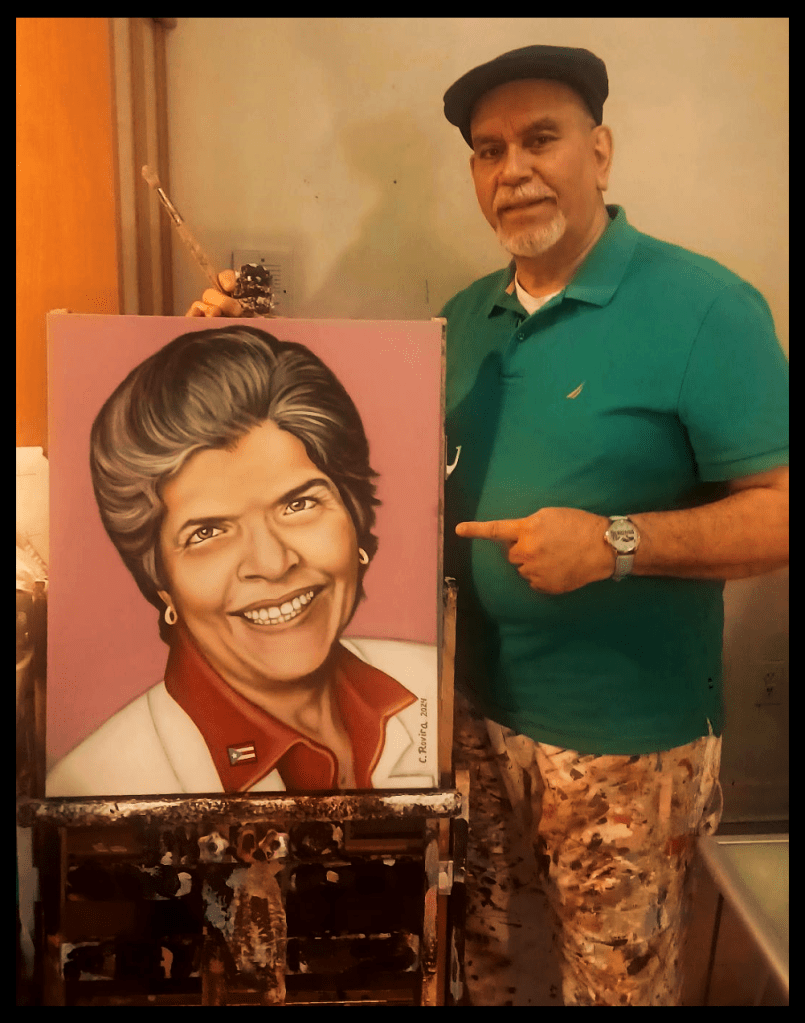
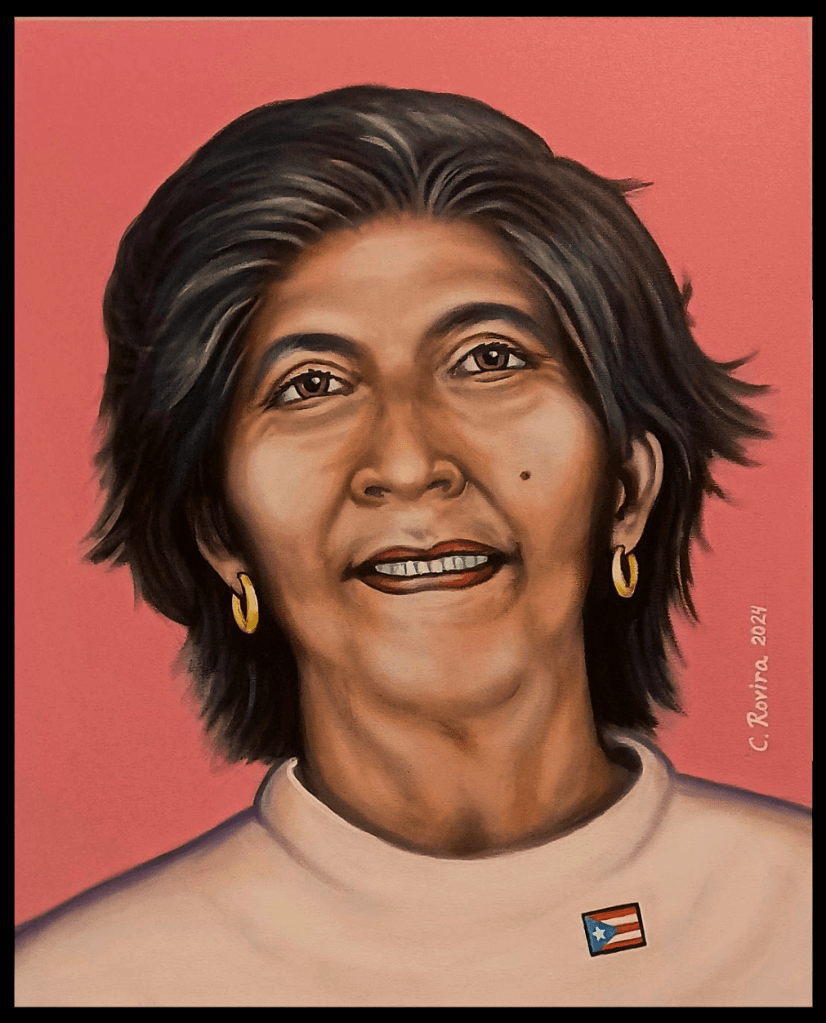
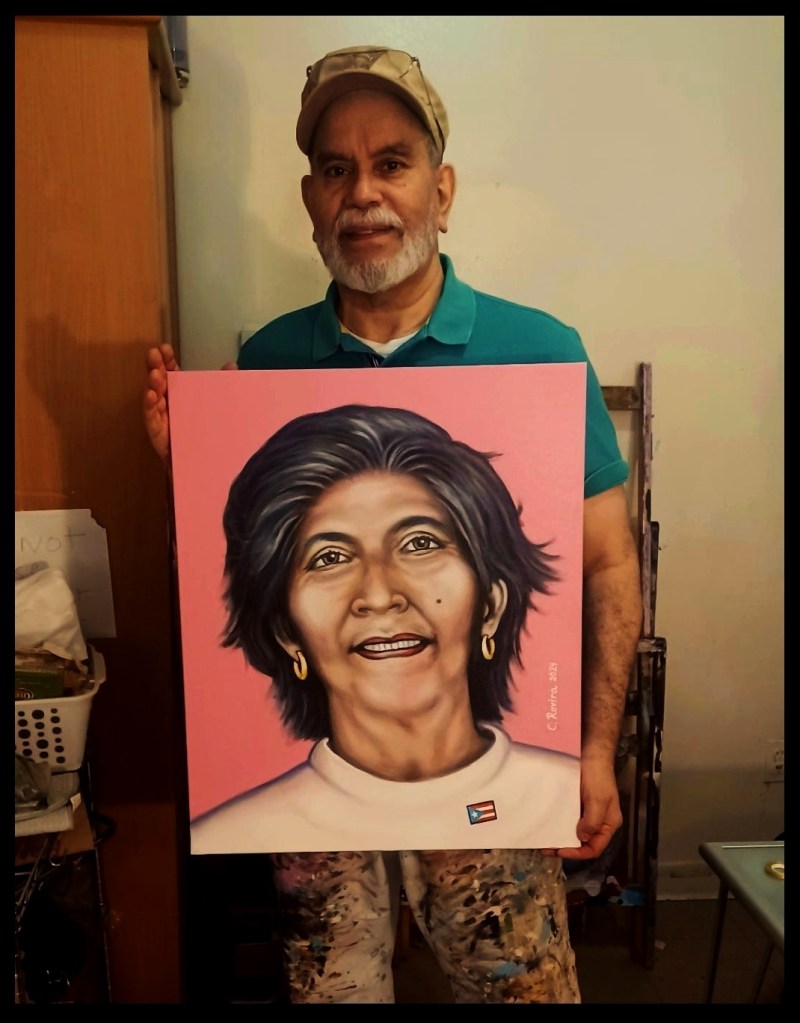
I have enjoyed painting the portraits of revolutionary figures for several decades, as well as images of loved-ones family members commission me to paint. But in 2024, when I decided to paint a 24” X 30” acrylic canvas portrait of my mother, Rosa Maria Barretto-Rovira, it was a completely different experience for me as a visual artist. Painting my mother’s portrait was not easy, it was emotionally challenging.
A 20″ X 24″ acrylic on canvas portrait I painted of my mother.
My mother was a proud Boricua woman who was never mistaken about our identity as Puerto Ricans. Nor was she ever confused about what was the correct side to be on in the anti-colonial struggle.
In 1949, my mother was compelled to leave Puerto Rico in search of a better life. She was among the 63,000 people per year forced to migrate due to economic hardships created by U.S. colonial policy. This exodus took place between the end of World War II and the 1960’s.
Doña Rosa, as what many community folks called her, worked as a stitcher in NYC’s Garment District. She was a member of the International Ladies Garment Workers Union (ILGWU). When having chats with her friends she would brag about work stoppages she partook.
Painting my mother’s portrait was the most emotionally challenging project I ever did.
I remember when at just 8 years old hearing my mother tell one of my schoolteachers: “We want our independence.” She referred to Puerto Rico. Eventually, that conversation had a profound impact on me.
At the height of the repressive McCarthy Era and the 1948 Puerto Rico Law 53, also known as the Gag Law, my mother, my father, Carlos M. Rovira, Sr., and aunt, Anjelica Rovira-Nieves, were members of a New York City-based secret committee of the banned Nationalist Party.
This committee served as a rear guard to support the Party politically and financially. It functioned under the leadership of Don Julio Pinto Gandia, a confidant of the Nationalist leader, Dr. Pedro Albizu Campos.
My parents were superintendents of a tenement building on Broom Street in the Lower East Side, NYC where quite often they held fundraising events in the basement. The money raised was used to provide whatever necessary to benefit the efforts of the Nationalist Party.
This well-hidden story was not revealed to me until I became an adult decades later, by elders who were also members of this secret committee.
It is no wonder why Doña Rosa wholeheartedly supported theYoung Lordsand my decision to join them at just 14 years of age. In 1969 during the Young Lords takeover of the First Spanish Methodist Church in El Barrio (East Harlem), she was among supporters who mobilized to provide us with food and other necessities during the occupation.
Today, I’m proud knowing who my mother was. I shall always cherish the contributions she made to my personal development, as well as for having stood by me during the years I unfortunately served six years in prison for committing a regrettable stupidity. Doña Rosa was a mother in the truest sense of the word.
From the time I was a young child she taught me never to allow myself being bullied by anyone and to strike back hard with full force whenever someone laid their hands on me. If my mother were to hear the opposite as what she instructed I was punished, with the belt or her flip-flop slippers (chancletas). My siblings and I grew up in a supposed “rough neighborhood”, NYC’s Alphabet City during the 1960s, Doña Rosa did not want her children becoming pushovers or “chumps” for bullies to treat as easy prey.
Her sacrifices as a mother, under the difficult circumstances of poverty and cultural shock are unforgettable. Her life was not easy due to harsh experiences in Puerto Rico’s colonial reality and the racism she encountered in the U.S. as an immigrant woman of color who spoke very little English.
My dear mother’s examples of character and conviction are reasons why I vowed to always pay homage to her by continuing to raise the banner of Puerto Rican national liberation. If there is such a thing as “life after death,” I want her to know that I will always love her very much.
Super Bowl 50 of February 7, 2016, in Levi Stadium, Santa Clara, California, when the Denver Broncos beat the Carolina Panthers 24-10, will be remembered for generations to come as the setting for another outburst of anti-Black racist hatred. This event will certainly be monumental in the history of race relations in this country.
For the most part, no one ever expected such a barrage of condemnation against the super-star African American singing artist Beyonce for her performance during halftime. The Super Bowl is an institutionalized extravagant sport event viewed by tens of millions of people annually throughout the United States.
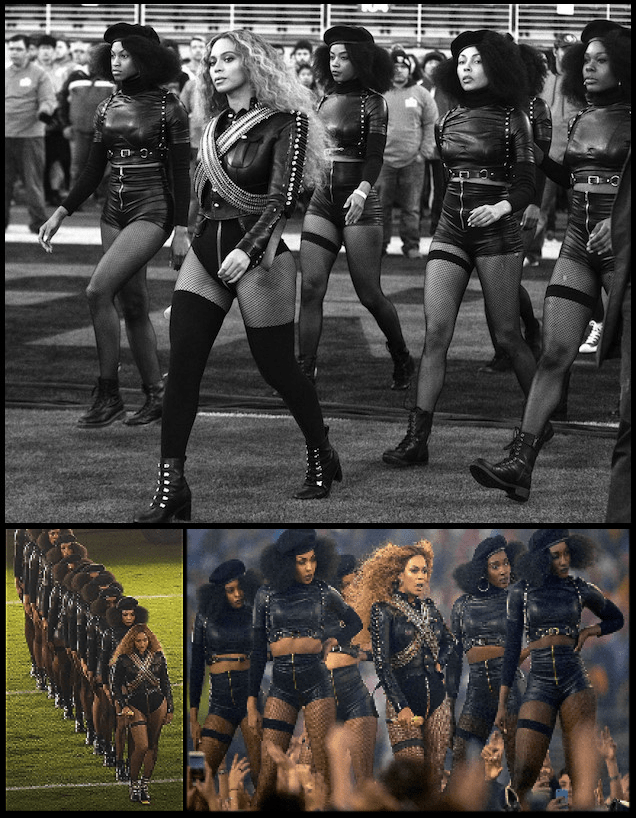
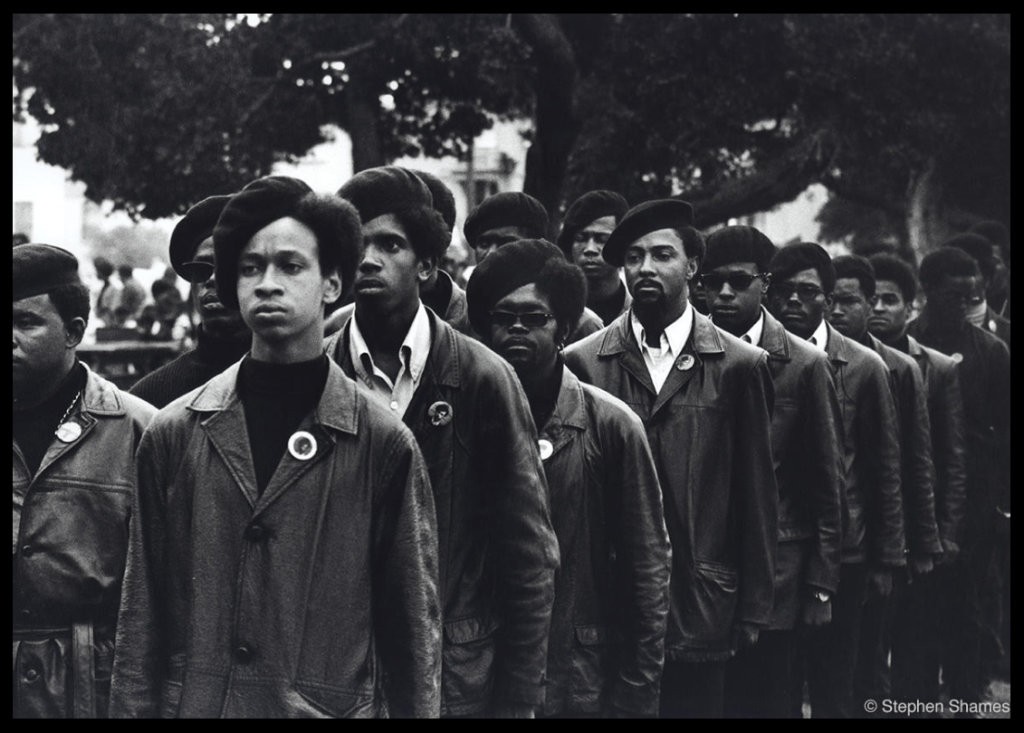
The controversy began immediately after a dance troupe of about 50 Black women, with Beyonce at the helm, took center stage in a beautifully choreographed arrangement and dress attire that made references to the legendary Black Panther Party and Malcolm X.
To many people nothing could have been a better tribute to the annual tradition of Black History Month (February) than to depict figures so symbolic, especially on the 50th anniversary of the Black Panther Party’s founding by Huey P. Newton and Bobby Seale.
Beyonce and performing dancers beautifully simulating Black Panthers’ disciplined formation.
But in order to understand why this performance became such a controversy we must first explore the causes that triggered it. Anyone who closely examines the norms of this violent “sport” will easily see how it tends to present itself as a feverish gladiator ritual. The definition of “sport” has been changed to mean inflicting bodily harm among high priced members of opposing teams and in some cases with permanent damage.
With military music bands playing and jet fighters flying high above the airspace, the Superbowl has become an event that insidiously promotes a peculiar version of militarism. It accentuates sexism, white supremacy, big nation chauvinist arrogance, war – all of the not-so-hidden ideas that prevail in the general thinking of capitalist culture.
With this kind of historically rooted setting, it came as no surprise when arch racists and notorious figures like New York State Representative Peter King and the disgraced former New York City Mayor Rudolph Giuliani, launched a barrage of attacks against the prominent Black female performer.
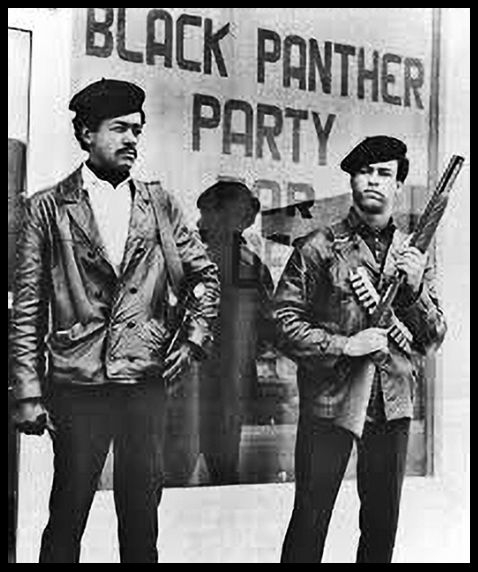
Black Panther Party members in a drill exercise.
Every moronic die-hard white racist consumed by the militarized sports culture most likely had something derogatory to say about Beyonce’s Super Bowl performance and the freedom struggle of Black people.
They were appalled that Beyonce would dare pay homage to heroic African American revolutionaries, even in the most minimized implicit manner. The vindictive outcry by these and other white supremacists has little to do with Beyonce or what they perceived as “offensive” during the halftime performance.
Malcolm X, the Black Panther Party and the mass upsurge that occurred during the 1960’s – 70’s, the height of the Civil Rights movement, continues to haunt the imagination of our oppressors to this day. Their apprehensions are attributed to the militant traditions of the African American masses which brought about the rise of Malcolm X and the Black Panther Party.
The lessons that came as a result of those experiences are indisputably applicable in our reality today – and that is precisely what these villains fear. Blacks, Latinos, Indigenous and other people of color continue to be brutalized and murdered by the police across the United States.
Black Panther Party co-founders Bobby Seale and Huey P. Newton.
Unlike the lies asserted by Guilliani and King it was the police who attacked, imprisoned and murdered Black Panthers in a criminal campaign organized by the Federal Bureau of Investigation (FBI) known as COINTELPRO. However, both Malcolm X and the BPP boldly advocated and practiced the right to use armed self-defense against the racist terror of the police in the Black community.
What the representatives of the ruling class are most upset about at Beyonce is that her Superbowl halftime performance reminded everyone of a period in U.S. history when Black people defiantly posed a threat to this racist system by galvanizing many sectors of the general population. This phenomenon presented the potential for revolution in this country under the impact of the Black liberation struggle.
The role Black people played in the events of that period in history is something the ruling class cannot forget or forgive. They will naturally dread the mere thought of a revolutionary upheaval until their final day of doom.
The Black Panther Party believed in the building a sophisticated revolutionary organization.
This is why former Black Panther and political prisoner Mumia Abu-Jamal has stated: “The tyrants, oppressors and racists who continue to hold political power in this country by using the most ruthless means cannot afford a repeat of the 1960’s.”
The plight of Black people, from the nearly 400 years of slavery, Jim Crow discrimination, mass incarceration and police brutality today, are facts that our oppressors and those who benefit from white privilege and entitlement would like us to ignore and forget.
Regardless, what Beyonce’s motives were, she touched upon a vulnerability of white supremacist America. If Beyonce’s halftime performance were a projection of jingoism, militarism or a glorification of white supremacy she would not have been targeted with condemnation.
Beyonce without a doubt merits our applause and praises for paying tribute through her performance to a historic symbol of African American defiance – the Black Panther Party.
LONG LIVE THE LEGACY OF THE BLACK LIBERATION STRUGGLE!
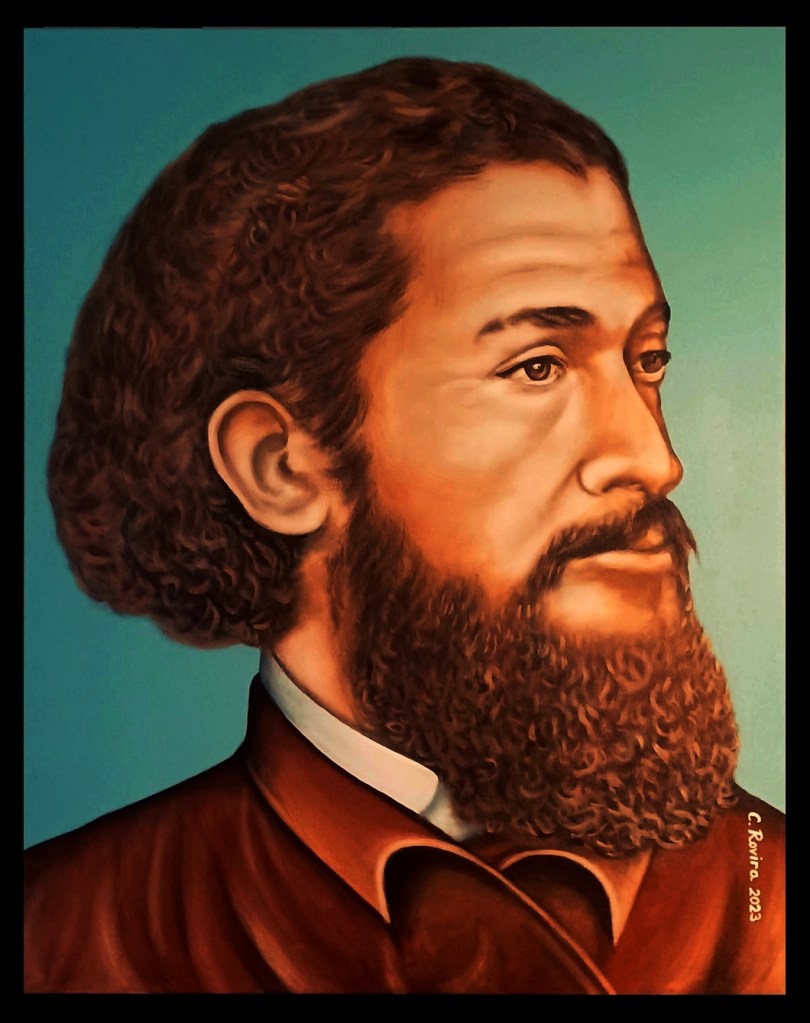
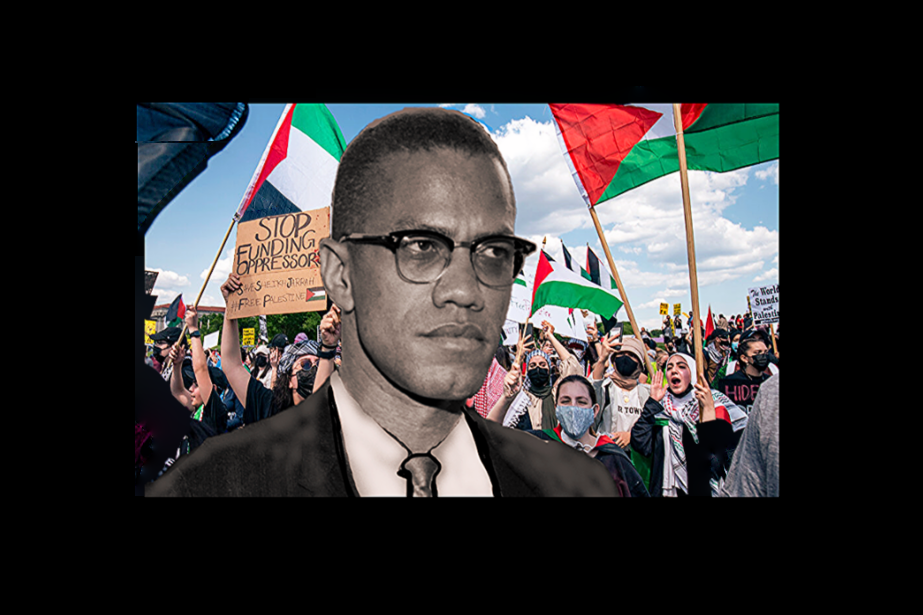
Below is a statement made by El Hajj Malik El Shabazz, Malcolm X condemning imperialism’s barbaric treatment of the Palestinian people. His remarks came at a time when Malcolm X began to understand the depths of the imperialist system and the commonalities between the Black liberation struggle and all oppressed people.
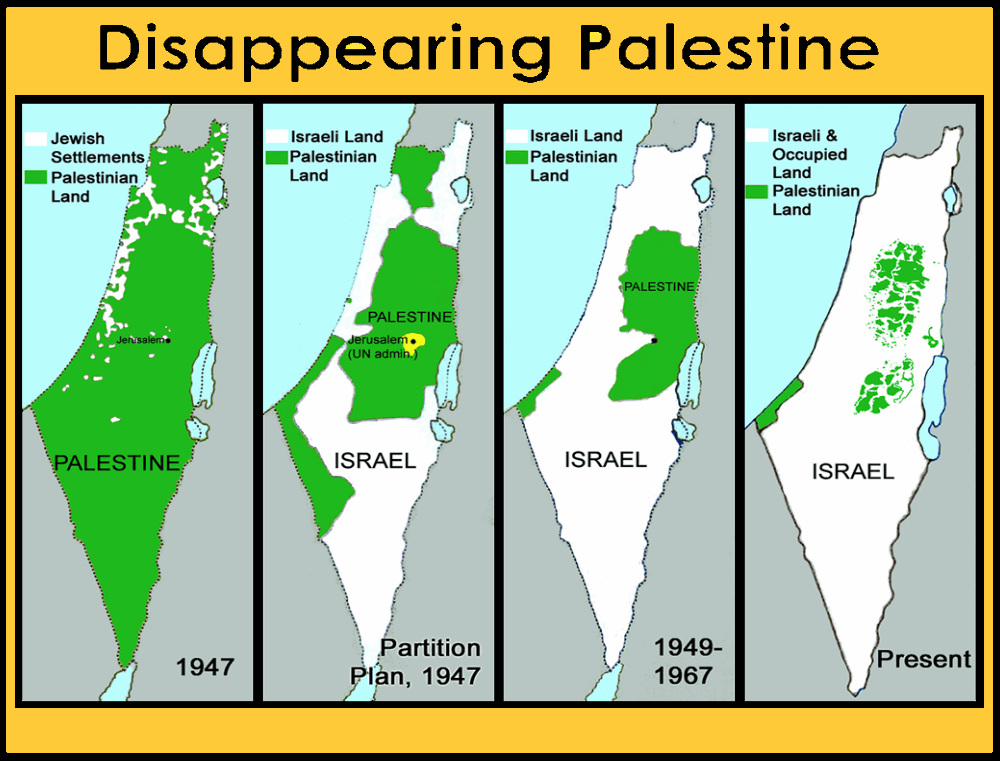
Malcolm’s defiant disposition then reflected the indisputable reality of Palestinians, horrors that continued to intensify to this day. Malcolm’s own experiences with racist oppression as an African American allowed him the ability to see through the ocean of lies used to preserve the U.S.-backed Israeli occupation of Palestine.
-Carlos “Carlito” Rovira
——————————————–
This was originally published in “The Egyptian Gazette,” Sept. 17, 1964:
PALESTINE DOESN’T BELONG TO WESTERN IMPERIALIST
By Malcolm X
The Zionist armies that now occupy Palestine claim their ancient Jewish prophets predicted that in the “last days of this world” their own God would raise them up a “messiah,” who would lead them to their promised land, and they would set up their own “divine” government in this newly gained land. This “divine” government would enable them to “rule all other nations with a rod of iron.”
If the Israeli Zionists believe their present occupation of Arab Palestine is the fulfillment of predictions made by their Jewish prophets, then they also religiously believe that Israel must fulfill its “divine” mission to rule all other nations with a rod of iron, which only means a different form of iron-like rule, more firmly entrenched even than that of the former European Colonial Powers.
These Israeli Zionists religiously believe their Jewish God has chosen them to replace the outdated European colonialism with a new form of colonialism, so well disguised that it will enable them to deceive the African masses into submitting willingly to their “divine” authority and guidance, without the African masses being aware that they are still colonized.
Camouflage
The Israeli Zionists are convinced they have successfully camouflaged their new kind of colonialism. Their colonialism appears to be more “benevolent,” more “philanthropic,” a system with which they rule simply by getting their potential victims to accept their friendly offers of economic “aid” and other tempting gifts that they dangle in front of the newly independent African nations, whose economies are experiencing great difficulties. During the 19th century, when the masses here in Africa were largely illiterate, it was easy for European imperialists to rule them with “force and fear.” But in this present era of enlightenment, the African masses are awakening, and it is impossible to hold them in check now with the antiquated methods of the 19th century.
The imperialists, therefore, have been compelled to devise new methods. Since they can no longer force or frighten the masses into submission, they must devise modern methods that will enable them to maneuver the African masses into willing submission.
The modern 20th century weapon of neo-imperialism is “dollarism.” The Zionists have mastered the science of dollarism: the ability to come posing as a friend and benefactor, bearing gifts and all other forms of economic aid and offers of technical assistance. Thus, the power and influence of Zionist Israel in many of the newly “independent” African nations has fast become even more unshakeable than that of the 18th century European colonialists … and this new kind of Zionist colonialism differs only in form and method, but never in motive or objective.
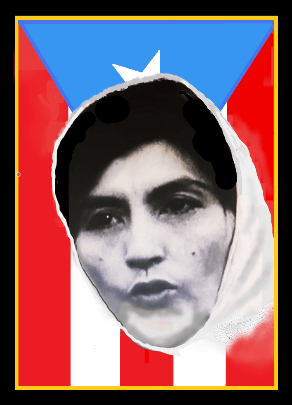
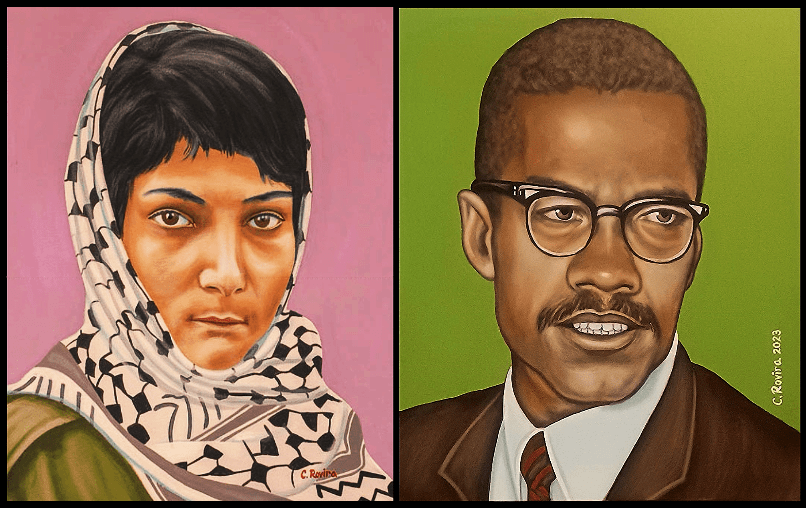
Portraits I made of two revolutionary figures, Laila Khaled and Malcolm X. Each of these portraits are 24″ X 30″, acrylic paint on canvas.
At the close of the 19th century, when European imperialists wisely foresaw that the awakening masses of Africa would not submit to their old method of ruling through force and fear, these ever-scheming imperialists had to create a “new weapon” and to find a “new base” for that weapon.
Dollarism
The number one weapon of 20th century imperialism is Zionist dollarism, and one of the main bases for this weapon is Zionist Israel. The ever-scheming European imperialists wisely placed Israel where she could geographically divide the Arab world, infiltrate, and sow the seed of dissension among African leaders and also divide the Africans against the Asians.
Zionist Israel’s occupation of Arab Palestine has forced the Arab world to waste billions of precious dollars on armaments, making it impossible for these newly independent Arab nations to concentrate on strengthening the economies of their countries and elevate the living standard of their people.
LONG LIVE THE PALESTINIAN RESISTANCE!
And the continued low standard of living in the Arab world has been skillfully used by the Zionist propagandists to make it appear to the Africans that the Arab leaders are not intellectually or technically qualified to lift the living standard of their people … thus, indirectly inducing Africans to turn away from the Arabs and towards the Israelis for teachers and technical assistance.
“They cripple the bird’s wing, and then condemn it for not flying as fast as they.”
The imperialists always make themselves look good, but it is only because they are competing against economically crippled newly independent countries whose economies are actually crippled by the Zionist-capitalist conspiracy. They can’t stand against fair competition; thus, they dread Gamal Abdul Nasser’s call for African-Arab Unity under Socialism.
Messiah?
If the “religious” claim of the Zionists is true that they were to be led to the promised land by their messiah, and Israel’s present occupation of Arab Palestine is the fulfillment of that prophesy, where is their messiah whom their prophets said would get the credit for leading them there? It was [United Nations mediator] Ralph Bunche who “negotiated” the Zionists into possession of Occupied Palestine! Is Ralph Bunche the messiah of Zionism? If Ralph Bunche is not their messiah, and their messiah has not yet come, then what are they doing in Palestine ahead of their messiah?
Did the Zionists have the legal or moral right to invade Arab Palestine, uproot its Arab citizens from their homes and seize all Arab property for themselves just based on the “religious” claim that their forefathers lived there thousands of years ago? Only a thousand years ago the Moors lived in Spain. Would this give the Moors of today the legal and moral right to invade the Iberian Peninsula, drive out its Spanish citizens, and then set up a new Moroccan nation … where Spain used to be, as the European Zionists have done to our Arab brothers and sisters in Palestine?
In short, the Zionist argument to justify Israel’s present occupation of Arab Palestine has no intelligent or legal basis in history … not even in their own religion. Where is their Messiah?
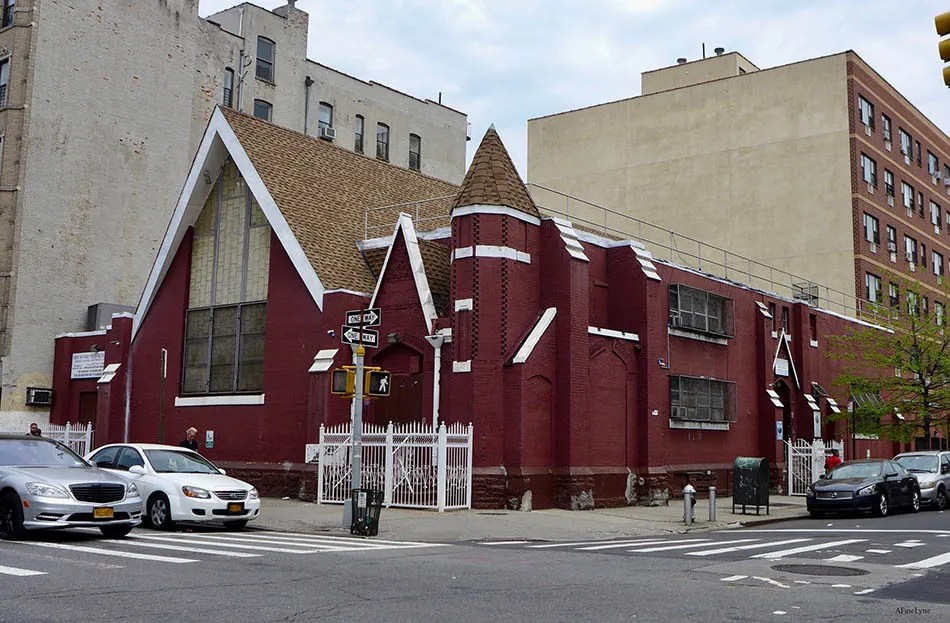
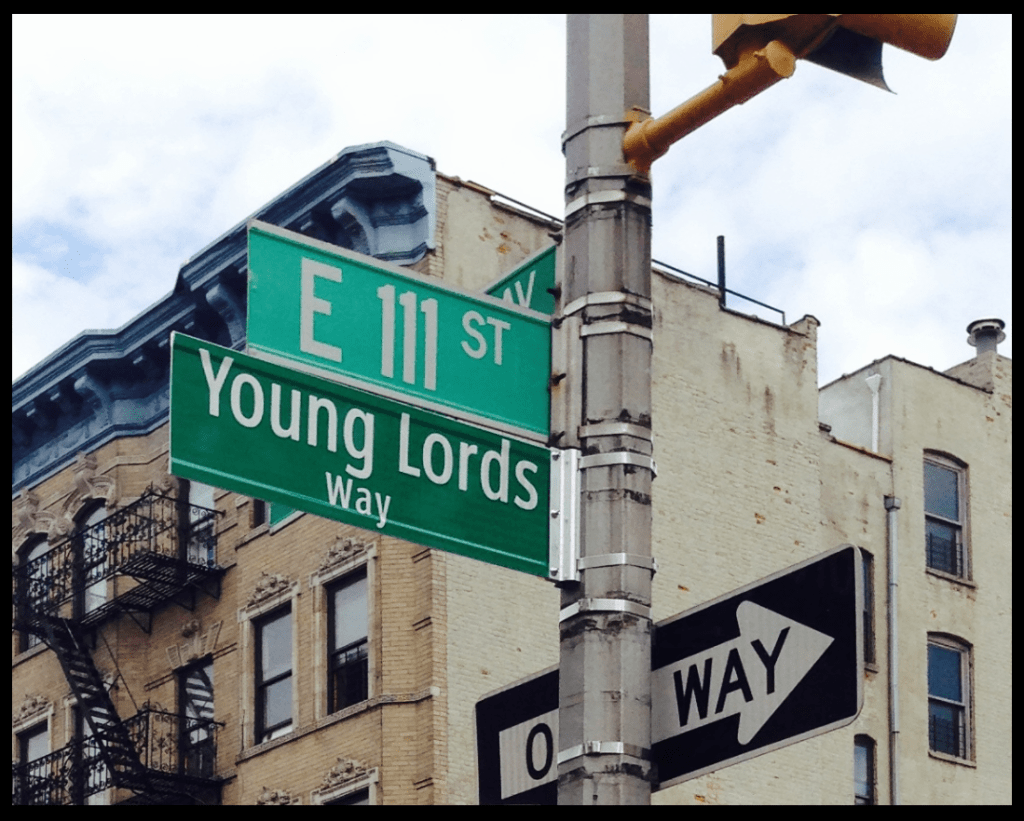
In the center of the East Harlem community, also known as El Barrio, is the site of historic significance that is described by many as The People’s Church. Located at 163 East 111th Street, co-named “Young Lords Way”, on the corner of Lexington Avenue, this monumental structure is administered by the First Spanish United Methodist Church (FSUMC).
For many decades, dating back to the time of socialist Vito Marcantonio, during the 1940’s-50’s, the People’s Church stood in the midst of one of the most impoverished and repressed part of New York City. It was in that setting where this church became a symbol of the Puerto Rican diaspora’s struggles, especially after the rise of the revolutionary youth group the Young Lords.
Young Lords Way adjacent to the location of the People’s Church.
For an atheist, non-religious believer like me, The People’s Church symbolizes something beyond religion. It represents the defiance of the Puerto Rican diaspora in struggle. Maintaining it open and accessible to the community makes a political statement and a direct challenge to the racist displacement inflicted against our people everywhere in this country.
Memories of events at the People’s Church in connection with the Young Lords also have sentimental/personal value to me.
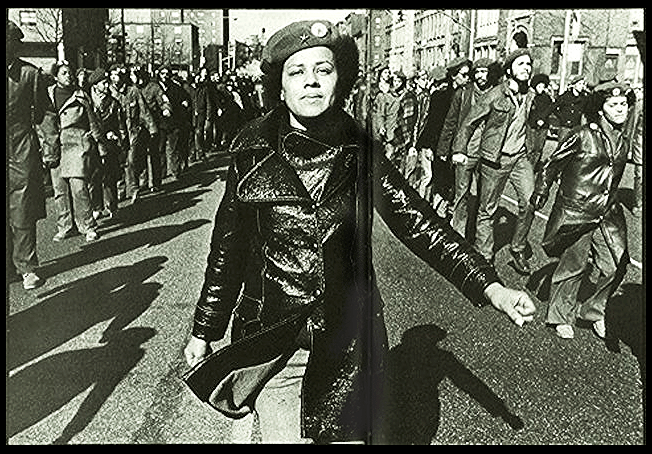
Young Lords in drill exercise on the streets of El Barrio.
It was at the People’s Church where I transcended from a boy to a man during the two takeovers; it was there where I learned the necessity of having a fighting disposition in the liberation struggle; it was from that experience where I learned from others the virtues of teamwork, responsibility and organization.
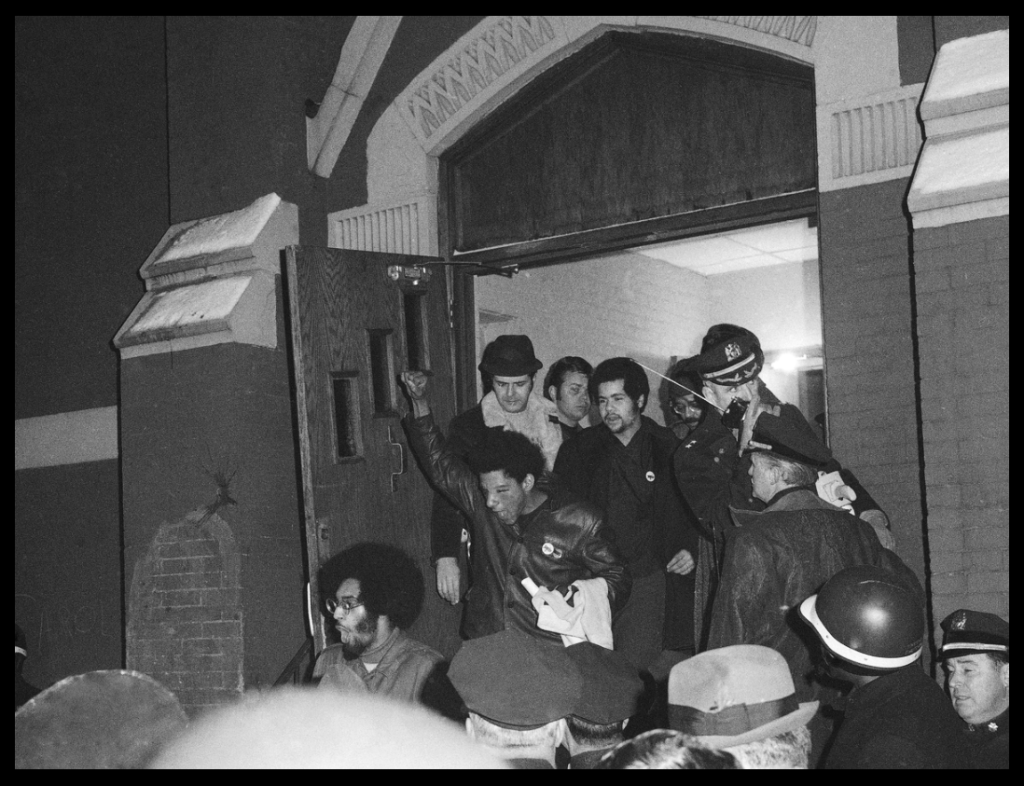
In addition, it was at the People’s Church on December 7, 1969, at 15 years old, where I was beaten by NYPD cops, along with thirteen other Young Lords, including five women. The violent frenzy of the police on that day was encouraged by parishioners when Young Lords came to a Sunday mass service asking permission to use the space for a free breakfast program for poor children of the neighborhood.
December 28, 1969, Young Lords being arrested after their nine days siege of the People’s Church.
In recent years, various programs were established benefiting this poor, working class community, such as food pantry distributions, acupuncture treatment, exercise classes, educational film showings, and so much more. These programs are consistent with all that the Young Lords had hoped to create for the community at this small and intimate place of gathering.
A child enjoying her meal at the Young Lords Free Breakfast Program.
The thing to remain on guard about, is the increasingly greed of real estate interest, especially as the capitalist economic crisis intensifies. There is always the threat that the people of this community may lose this oasis amid poverty and despair, due to lack of funds. That should never happen, and we must always be ready to wage a relentless struggle to prevent such a lost.
What will follow, impossible to predict! One does not need to be imaginative to figure out the lust of greedy developers who anxiously look for opportunities to build condominiums for the wealthy in targeted neighborhoods with rising real estate value.
Losing this bastion of history shall be a victory for gentrification while undoubtedly being a tragedy for the Black and Brown residents of this community. For that reason, under no circumstances should we allow further insult to injury on our people. The people’s Church is more than just a building, it is a monument of the people’s struggle.
Long live the rebellious traditions of THE PEOPLE’S CHURCH!
Here I am half century later, standing by the People’s Church, 111th Street & Lexington Avenue, NYC.
Below is an account written by Sister Cleo Silvers on having the honor of working with Dr. Mutulu Shakur. Cleo is a long-time healthcare activist. As a member of the Black Panther Party and later the Young Lords she organized and fought for the human right to adequate healthcare. She is a founder of the Health Revolutionary Unity Movement (HRUM) and played a leading role in the 1970 YLP takeover of Lincoln Hospital, in the South Bronx, NYC.
–Carlito Rovira
—————————————————–
Who Doctor Mutulu Shakur was to me
By Cleo Deborah Silvers
Doctor Mutulu Shakur is one of the most iconic and remarkable men We have had the honor of sharing space with on this Earth.
I say this because few human beings have walked the Earth who’ve made as significant a contribution to history, healthcare, and society in general as Dr. Shakur has.
Doctor Shakur was an intelligent young revolutionary brother when we met in December of 1970. It was soon after we (The Think Lincoln Committee, Health Revolutionary Unity Movement (HRUM), The Young Lords, the Black Panthers, and the Community Coalition against Drug Addiction) had occupied the sixth floor of the Lincoln Hospital Nurse’s Residence. We demanded and set up a drug detox program with the support of the medical staff.
The positive, overwhelming response from the community demonstrated the need for a drug-free detoxification program–a program that did not use Methadone (another opiate with properties similar to heroin) in the South Bronx and in Harlem, New York. When we met, he was only nineteen years old and already a critical organizer and leader in the Republic of New Africa.
Dr. Mutulu Shakur fought vigorously in the interest of the Black Community throughout his life. His commitment and effective organizing, especially in health care for poor Black and other communities of color, raised his profile and attracted the attention of the FBI counterintelligence program and local police and District Attorneys. They targeted Dr. Mutulu Shakur and framed him for crimes he did not commit. His conviction was part of a massive, sustained attack (1960s-1980s) on the U.S. revolutionary left, especially those rooted in the Black, Latino, and Native American working-class communities.
Dr. Mutulu Shakur was introduced to me by his older adopted brother, Zayd Shakur, a brilliant and respected leader in the Harlem Branch of the Black Panther Party. As a member of the Black Panther Party and a healthcare activist, I was mentored by Zayd Shakur and worked under his leadership in the BPP medical collective.
Cleo Silvers (left) at a Young Lords rally outside Lincoln Hospital.
As Director of the newly established Lincoln Detox program and strategist, as well as program planner and medical and methodology collaborator along with Dr. Steve Levin, Medical Director, I was being pulled in many directions, working almost twenty-four hours a day.
Zayd and the party’s leadership agreed that I was swamped, and Dr. Shakur could take over some of my responsibilities. I met Mutulu and, at the suggestion of his brother, interviewed him and immediately hired him to take over my position as Director of Lincoln Detox.
In the process of transferring the methodology and details of the Program to Mutulu, we automatically became fast friends. I should include one important note here; Mutulu and I, although we loved each other we, had widely different ideological positions and were known to struggle vigorously for our differing points of view. Mutulu was a Black Nationalist and I was a Marxist. Almost every time we saw each other, there were warm hugs and sharp ideological struggle.
With Mutulu, because of his brilliance and tenacity. As Director of the Program, I had no worries about the strength or sustainability of Lincoln Detox. Dr. Shakur more than exceeded my expectations. Dr. Shakur worked with the patients; he administered the Program; he went downtown and fought for the continuation of funding. He built an extraordinary collective of patients, workers, activists, community members, hospital workers, and doctors. They continued to ensure that political education was a part of each heroin addict’s healing and recovery.
During this period, the Black Panther Party was going through an intense internal power struggle (exacerbated by FBI Counterintelligence Program interventions aimed to weaken and destroy the Black Panther Party).
Concerned that the factional situation could undermine the Lincoln Hospital work, Zayd, Rasheed, and Lumumba took me to the Young Lords Party, which had a powerful position in Lincoln Hospital, so I could continue effectively organizing hospital workers and building the Health Revolutionary Unity Movement (HRUM), patterned on the League of Revolutionary Black Workers (LRBW). I continued to work there until James Forman invited me to join the LRBW in Detroit.
Dr. Shakur was always looking for ways to enhance the work of detoxing addicts without using drugs. He wanted to ensure a well-thought-out, comprehensive new methodology for healing our people.
One day, after reading an article in the newspaper about the use of acupuncture as a medical cure for several illnesses and the thousand-year History of the use of this practice, Mutulu was intrigued and rallied his collective to check it out. Dr. Shakur and several collective members headed down to Chinatown.
They did some research and spoke to everyone who might be able to point them in the correct direction to acquire what they needed to understand the elements of acupuncture. They were able to speak with some Chinese experts and some acupuncturists there. The collective and Mutulu came back to the Bronx with a full acupuncture body chart, better known as an acupuncture map, several sets of acupuncture needles, and other equipment.
They began reading as much as possible about the use of acupuncture in Eastern countries that had been using this healthcare method for millennia. This is when the team started practicing on oranges. (Dr. Shakur reminded me just a few weeks before he passed: “No, Cleo, we started practicing on onions first and then oranges to develop our skills using the acupuncture needles.”)
They began using the acupuncture pressure points on the detox patients as they learned, and it was very successful. Mutulu was elated! I don’t know all the details because I had been assigned to go to Detroit and begin my work organizing on the line in an auto plant (Dodge Truck, the Dodge Revolutionary Union Movement (DRUM)).
Portrait by Carlito Rovira. 24″ X 30″, acrylic paint on canvas.
As Mutulu told the story, he and some of his colleagues were contacted and invited to go to China and then Canada to study acupuncture. I do know that the always astute brother, Mutulu Shakur returned from the Canadian Institute for the Study of Acupuncture with a certification to practice and a doctorate he had earned in the teaching and practice of acupuncture.
But this is just the beginning of Mutulu’s story of his incredible fighting spirit and contribution to healthcare, drug rehabilitation, and to the struggle for the legalization and use of acupuncture in the United States, not to speak of his ongoing work in the fight for justice and equality for Black people and people of color as well as his role and participation of leadership in the Provisional Government of the Republic of New Africa.
The most brilliant contribution from Dr. Mutulu Shakur, though, is his influential role in the development and design of the five-point auricle acupuncture protocol for drug detoxification and several trauma-induced conditions.
This protocol was used and demonstrated around the world by the last Medical Director of Lincoln Detox Dr. Mike Smith, as though he had developed this groundbreaking method of helping detox heroin addicts, but in fact, it was Dr. Mutulu Shakur and his collective who developed the five-point protocol for drug detoxification and any income received for the training, use or demonstration of this acupuncture protocol should have always gone to the estate and family of Dr. Mutulu Shakur and/or his colleagues.
Before his passing, Mutulu and I were discussing plans to help recover some of this income from the Mike Smith estate, and I plan to move forward on this struggle because it is only proper, and that Mutulu assured me that he wanted to engage in this struggle no matter the outcome.
Mutulu was the central figure in the creation of the Black Acupuncture Advisory Association of North America (BAANA) and the Harlem Institute of Acupuncture.
Cleo Silvers and Dr. Mutulu Shakur.
After Mutulu was incarcerated, once I returned to New York from Detroit and Los Angeles, I began to work in the Committee to Free Mutulu, led by his late uncle and my friend Churney. Although we fought for his freedom, Dr. Mutulu Shakur languished in prison for some thirty more years and wrestled with a life-threatening illness until he was freed in December 2022 (just six months ago) to come home to his remarkable family and fight his debilitating cancer.
Mutulu was a heroic family man, including the time he was married to my other celebrated friend, Afeni Shakur. He was a brilliant star of the revolution, a continuous fighter for justice and equality for his people. He was also a critical mentor to the youth throughout time, including to his stepson Tupac Shakur. He is still a healer and a person who was before his time in ideas and practice.
Dr. Mutulu Shakur was and is my mentor, mentee, co-strategist, healer, student, and teacher, but most of all, Dr. Mutulu Shakur was and is my iconic, beloved friend and comrade.
On November 24, 1946, an unsung woman warrior named Cleo Deborah Silvers was born in Philadelphia, Pennsylvania. Sadly, on Monday, August 11, 2025, Cleo passed away due to an infectious condition that resulted in multiple organ failure. She is survived by her beloved husband and close comrade, Ron Painter.
Cleo was a revolutionary in the truest sense. Like all human beings Cleo had many traits, good and bad. However, her unique positive quality that defined her character was always striving to be a critical thinker. The state of the liberation struggle was usually at the center of her thoughts.
Cleo did not allow herself to be lured into the same toxic petty discourse the police state once used to destroy the Black Panther Party and Young Lords. She was well aware that the disruptive activities against the progressive movement, such as COINTELPRO, continue to the present day.
There were hardships in Cleo’s family history. They were among the millions of African Americans that partook in the Great Migration of the 1920s-1970s. Black people were compelled to uproot in an exodus to the Northern region and West coast to escape the racist terror of the Ku Klux Klan in the Southern states.
Photos of two stages in Cleo Silver’s life.
This was a period in U.S. history when blatantly racist Jim Crow laws were enacted throughout the South, while at the same time a not-so-hidden persecutive version existed in every part of the country. Although “Whites Only” signs were not the norm in Northern states what resulted from white privilege automatically implied anti-Black restrictions.
Cleo always recalled how she witnessed as a child anti-Black racism and discrimination. A cruel example that stood vividly in her childhood memories is when Black children were not allowed at department stores to partake on lines to give “Santa Claus” their Christmas gift wish list. Cleo’s mother, Deborah Benn, vocally expressed outrage, pressuring store managers to end the racist practice.
Cleo’s resilience in personal encounters with racism and her justified contempt for this system is what molded this freedom fighter’s character. Like so many Black youths during the 1960’s, Cleo Silvers was attracted to the political militant force of the Black Power movement, specifically Malcolm X, Queen Mother Moore, Kwame Ture (Stokley Carmichael), and the Black Panther Party (BPP).
Sister Cleo’s history of service in the liberation struggle is unique and merits the utmost respect and admiration. Moreover, she was a hospital worker and an organizer for the Health Revolutionary Unity Movement (HRUM).
As a healthcare activist Cleo co-founded the Lincoln Hospital Detox Center and became its acting director. She was a close ally and collaborator of the late Black nationalist Dr. Mutulu Shakur, who she hired for a position that required professional knowledge of acupuncture treatment for drug addiction.
Heroine addiction was at the center of concern and political critique for the Black Panther Party and Young Lords due to the influx of the deadly drug in Black and Latino communities across the country.
My portrait of Cleo Silvers. 24″ X 30″, acrylic paint on canvas.
Before joining the YLP, Cleo was a member of the Black Panther Party first in Harlem and then in the Bronx branch. Due to the fraternal relationship between the BPP and YLP, it allowed members of both entities to transfer to the other organization on request. Cleo did precisely that.
Cleo’s decision to join the YLP came about when an unfortunate situation was about to occur which had a chilling effect on the entire revolutionary movement in this country. A factional split was developing headed by Eldridge Cleaver on one side and Huey P. Newton on the other. The FBI’s Operation COINTELPRO succeeded in manipulating internal differences to the point of open antagonisms.
Cleo was among African American members in the YLP who demonstrated their internationalist and revolutionary spirit, when they joined a predominant Puerto Rican entity. Cleo’s experiences in these revolutionary organizations defined her political perspective on the need to forge a united front to defeat capitalism.
THE YLP LINCOLN HOSPITAL TAKEOVER
In the early morning hours of July 14th, 1970, the YLP takeover of Lincoln Hospital angered top government officials. The Young Lords’ unexpected bold action managed to expose to the world the criminal practices of the medical industrial complex.
In military fashion, about one hundred Young Lords stormed out of a U-HAUL truck that came to a full stop on Lincoln Hospital’s sallyport, on Bruckner Boulevard in the Black and Brown community of the South Bronx. Within minutes Young Lords secured every entrance and window in the hospital to prevent the police from entering the facility when they arrived.
Cleo Silvers sitting at the far left in a press conference during the Young Lords takeover of Lincoln Hospital.
Once it became known to news media outlets what occurred at Lincoln Hospital then NYC Mayor John Lindsay sounded the alarm of attacks against the Young Lords. The rulers went into crisis mode due to the political embarrassment they faced. The YLP exposed the implicit policy for racketeering corporate profits using supposed “healthcare” for poor people who endure diseases that stem from social oppression.
Thanks to Cleo’s political skillfulness and familiarity with Lincoln Hospital’s physical structure, she was one of the key strategists of the takeover. When the Young Lords leadership decided to end the occupation with an organized retreat it was Cleo who is credited for proposing that the plan to withdraw include waiting for the shift change of hospital workers and, using the available supply of attire worn by medical staff to inconspicuously bypass the anxious riot police.
Since the events of the 1960’s-70’s mass upsurge, Sister Cleo continued to stay active and outspoken about the inadequacies in healthcare for Black and Brown people. In addition, she played a role in efforts demanding the freedom of political prisoners, specifically, captive Black Panthers like Mumia Abu-Jamal, the late Russell Maroon Shoatz, and the late Dr. Mutulu Shakur.
Along with Iris Morales, Cleo was among the sisters who created the Woman’s Caucus. This organ of the YLP structure empowered the females of the organization and helped the men understand many complex theoretical questions relevant to the liberation struggle, such was the interlocked relationship between patriarchy and white supremacy.
The legacy of this warrior woman is filled with many examples of resilience and valor, which impacted many young people inside and outside of the YLP. No matter the activity, in the internal political education discussions or community organizing, Cleo always had a presence.
Cleo Silvers proud and happy to receive an honorary doctorate from Lehman College in 2022.
Cleo’s knowledge of one of capitalism’s most vile features, the medical industrial complex earned her recognition from various mainstream circles, including UCLA and the City University of New York/Lehman College where she received in 2022 an honorary doctorate in Humane Letters.
There was an aspect of her personal life Cleo was open about, her love and devotion to her husband and close comrade, Ron Pointer. As her medical condition became more debilitating Ron’s constant care and devotion supported Cleo until she transitioned. As Cleo often stated “Without Ron there would be no Cleo.”
Cleo Silvers and Ron Painter, on their wedding day, May 2, 2016.
This sister was among several Young Lords, men and women alike, who played a significant role in my formative political development, for which I am eternally grateful. Cleo has undoubtedly secured a special place in the archives of the class struggle along with Black and Puerto Rican revolutionary history.
Here is a canvas portrait I recently painted of an unsung woman warrior whom I hold very dear in my heart, Dr. Martha Duarte Arguello. Martha was among those who contributed to my personal and political development during our mutual experience as members of the Young Lords Party.
Portrait of a Warrior Woman, my dear sister Martha. On the right, is when I completed the painting.
As a young child, Martha was reared in a Dominican family that upheld revolutionary traditions and resisted the fascistic reign of Rafael Trujillo. Her revolutionary zeal and internationalist spirit allowed her to understand the meaning of solidarity to defeat a common oppressor.
It is without a doubt that this sister’s experiences in the Dominican struggle made a contributing mark on the history of the Young Lords. Martha was among other Dominican sisters and brothers who were in the ranks of the Young Lords, along with other Latinx and African American members.
Martha was both exemplary and selfless on many levels. She embraced the idea of organizing and politicizing the common people on the street as well as defending them from the racist police.
Her stern disposition and commitment to the struggle for human emancipation became apparent to many Young Lords. As a result, Martha’s leadership traits shattered many sexist myths and allowed her to become the first woman in the Defense Ministry – the special component in YLP’s structure responsible for the organization’s security.
Martha was also one of the founders of the Young Lords Women’s Caucus, which became famous for introducing to the general membership new and revolutionary concepts including the connections between patriarchy and racist oppression. In many ways, the Women’s Caucus became the YLP’s political backbone and emotional fire.
This portrait is 20” X 24”, acrylic paint on canvas. It was inspired by my respect and affection for Dr. Martha Duarte Arguello. For someone who joined a predominantly Puerto Rican organization while being of another nationality, proved her internationalist convictions and what was meant to be a Young Lord.
“Before I die, I will see our community given the respect we deserve. I’ll be damned if I’m going to my grave without having the respect this community deserves. I want to go to wherever I go with that in my soul and peacefully say I’ve finally overcome.” -Sylvia Rivera
Sylvia Rivera was a Puerto Rican transgendered woman who became a significant historic figure in the struggle against LGBTQ+ oppression. Along with her closest friend and trusted ally, Marsha P. Johnson, an African American also a transgendered woman, they both became the principal leaders of the June 28, 1969, Stonewall Uprising in New York City’s Greenwich Village.
This critical moment in U.S. history sparked a momentum that shattered many anti-gay taboos. LGBTQ+ people in the United States and the world benefited years later from the political shockwaves caused by this struggle.
The racist and homophobic New York Police Department (NYPD) stormed into the Stonewall Inn, a tavern and safe space for many in the LGBTQ+ community. When the cops entered in storm-trooper fashion their intent was to brutalize the patrons of this establishment.
But unexpectedly, the would-be victims fought back. As soon as a customer was struck in the face the cops were challenged with a fury of fists, chairs and other flying objects. What began at Stonewall spilled onto the streets and for several nights the LGBTQ+ community clashed with riot police in lower Manhattan.
Sylvia Rivera and Martha P. Johnso
The Stonewall Uprising occurred in the setting of a mass upsurge throughout the United States during the 1960’s-1970’s, in which Civil Rights and the movement against the Vietnam War were at the center of discussion. As Black and Brown women revolted against centuries-long racist and patriarchal practices, while war in Southeast Asia compelled the youth to resist the draft and deployment to the battlefield, the Stonewall Uprising placed LGBTQ+ oppression on the map of resistance.
As a result of their courageous stance, Sylvia Rivera, Marsha P. Johnson, and many others were also able to successfully place LGBTQ+ oppression in the context of reactionary cultural “norms” in capitalist society.
Despite arguments made by far-right bourgeois circles, Evangelicals and other religious denominations, LGBTQ+ people have been an integral part of human social development before the beginning of recorded history.
The plight of LGBTQ+ people came about many centuries ago with the rise of social class society. Organized religion has served as capitalism’s most reliable ideological bulwark. The same institution that was used to defend the system of African chattel slavery is now spearheading the persecution of LGBTQ+ people.
Street named in Sylia Rivera’s honor, Greenwich Village, New York City.
Like many in the LGBTQ+ community, alienation and abuse began at a very early age. The suffering Sylvia Rivera experienced throughout her life reflects the persecution LGBTQ+ endure – specifically transgender people.
Sylvia’s resistance to gender oppression began as a child. At 10 years old, Sylvia was abandoned by her father and forced to live on the streets of New York City where she was exposed to continued abuse and drug use. Thanks to Martha P. Johnson and others in the LGBTQ+ community Sylvia was able to survive many hardships and move on with her life.
Months after the Stonewall Uprising, Sylvia began exploring the links between her personal experiences and different forms of oppression affecting millions of people. Sylvia soon realized the need to forge unity among the various people’s struggles for emancipation.
My portrait of Sylvia Rivera, painted in 2023. 24″ X 30″, acrylic paint on canvas.
Sylvia was adamantly anti-racist and became openly critical about the LGBTQ+ movement being hijacked by privileged white gay men. She was also critically vocal about the anti-Trans attitudes that exist in the LGBTQ+ community itself.
On August 15, 1970, Black Panther Partyleader Huey P. Newton added to the storm of political enlightenment, with his statementof solidarity for the Gay and Women’s movements. Newton stated: “The gay liberation front and the women’s front are our friends, they are our potential allies, and we need as many allies as possible”.
Newton’s statement triggered measurable controversy within the Black Panther Party itself and many so-called “progressive” groups. Some were too embarrassed to admit being complicit in upholding traditions of sexual oppression.
Moreover, the new political storm also left a critical impact on theYoung Lords’ disposition towards LGBTQ+. Young Lords Gay & Lesbian members who were still in the closet were now embolden and found a sense of freedom to caucus without shame.
Along with other members of the Young Lords Party, I had the pleasure and honor to serve as bodyguard security on Sylvia Rivera. Our task was to protect Sylvia at all costs during a period when she became the target of death threats. Sylvia’s outspokenness was viewed with disdain by the hierarchy of organized religion, police officials and random figures among the far-right.
Despite the fake atoning overtures made by government officials years later, the militant leadership Black and Brown transgendered people displayed on June 28, 1969, has never been forgiven nor forgotten by NYPD’s top brass. Blatant discrimination, violence, and homelessness continue to be the reality for this demographic of the U.S. population, especially transgendered children.
Site of the Stonewall Inn, 53 Christopher Street, New York City.
Sylvia supported the Young Lords Party wholeheartedly, not only as a fellow Puerto Rican herself, but because she was observant of the humanity and respect YLP members displayed towards her and LGBTQ+ people in general. Sylvia was impressed by the political perspective of the Young Lords which motivated her to participate in many of our activities, specifically mass demonstrations.
During one of her many interviews when asked what she felt about the Young Lords, Sylvia stated:“Any time they needed any help, I was always there for the Young Lords. It was just the respect they gave us as human beings. They gave us a lot of respect.”
It is indisputable that Sylvia Rivera was a Revolutionary. Thanks to her leadership and militant defiance to oppression another link was made to the long chain of resistance. It is warriors of the oppressed like Sylvia Rivera and Marsha P Johnson, that will guarantee the contributions and role LGBTQ+ will play in the rise of a new revolutionary mass movement in this country.
On August 15, 1970, on the heels of the Stonewall Rebellion, Black Panther Party co-founder Huey P. Newton, surprised the progressive and revolutionary movement in the United States when he gave a speech that outlined the Party’s position on two emerging movements during the mass upsurge of the 1960’s. It called for an end to Women’s and LGBTQ+ oppression. Huey P. Newton’s statement became strikingly controversial, because of the centuries-long strength of capitalist ideology, that is, patriarchy with its divisive misogynistic and homophobic features.
Huey P. Newton’s statement reflected the revolutionary enthusiasm of that period in history. His words shattered many backward taboos generally held in this society, the progressive-revolutionary movement, and the Black Panther Party itself.
——————–
In the words of Huey P. Newton:
“During the past few years strong movements have developed among women and among homosexuals seeking their liberation. There has been some uncertainty about how to relate to these movements.
Whatever your personal opinions and your insecurities about homosexuality and the various liberation movements among homosexuals and women (and I speak of the homosexuals and women as oppressed groups), we should try to unite with them in a revolutionary fashion. I say “whatever your insecurities are” because as we very well know, sometimes our first instinct is to want to hit a homosexual in the mouth and want a woman to be quiet. We want to hit a homosexual in the mouth because we are afraid that we might be homosexual; and we want to hit the woman or shut her up because we are afraid that she might castrate us or take the nuts that we might not have to start with.
We must gain security in ourselves and therefore have respect and feelings for all oppressed people. We must not use the racist attitude that the White racists use against our people because they are Black and poor. Many times, the poorest White person is the most racist because he is afraid that he might lose something or discover something that he does not have. So you’re some kind of a threat to him. This kind of psychology is in operation when we view oppressed people and we are angry with them because of their particular kind of behavior, or their particular kind of deviation from the established norm.
Remember, we have not established a revolutionary value system; we are only in the process of establishing it. I do not remember our ever constituting any value that said that a revolutionary must say offensive things towards homosexuals, or that a revolutionary should make sure that women do not speak out about their own particular kind of oppression. As a matter of fact, it is just the opposite: we say that we recognize the women’s right to be free. We have not said much about the homosexual at all, but we must relate to the homosexual movement because it is a real thing. And I know through reading, and through my life experience and observations that homosexuals are not given freedom and liberty by anyone in the society. They might be the most oppressed people in the society.
Sylvia Rivera and Martha P. Johnson, trans women who were leaders of the 1969 Stonewall Rebellion.
And what made them homosexual? Perhaps it’s a phenomenon that I don’t understand entirely. Some people say that it is the decadence of capitalism. I don’t know if that is the case; I rather doubt it. But whatever the case is, we know that homosexuality is a fact that exists, and we must understand it in its purest form: that is, a person should have the freedom to use his body in whatever way he wants.
That is not endorsing things in homosexuality that we wouldn’t view as revolutionary. But there is nothing to say that a homosexual cannot also be a revolutionary. And maybe I’m now injecting some of my prejudice by saying that “even a homosexual can be a revolutionary.” Quite the contrary, maybe a homosexual could be the most revolutionary.
New York City Cops about to brutalize a member of the LGBTQ+ community, Stonewall 1969.
When we have revolutionary conferences, rallies, and demonstrations, there should be full participation of the gay liberation movement and the women’s liberation movement. Some groups might be more revolutionary than others. We should not use the actions of a few to say that they are all reactionary or counterrevolutionary, because they are not.
We should deal with the factions just as we deal with any other group or party that claims to be revolutionary. We should try to judge, somehow, whether they are operating in a sincere revolutionary fashion and from a really oppressed situation. (And we will grant that if they are women they are probably oppressed.) If they do things that are unrevolutionary or counterrevolutionary, then criticize that action. If we feel that the group in spirit means to be revolutionary in practice, but they make mistakes in interpretation of the revolutionary philosophy, or they do not understand the dialectics of the social forces in operation, we should criticize that and not criticize them because they are women trying to be free. And the same is true for homosexuals. We should never say a whole movement is dishonest when in fact they are trying to be honest. They are just making honest mistakes. Friends are allowed to make mistakes. The enemy is not allowed to make mistakes because his whole existence is a mistake, and we suffer from it. But the women’s liberation front and gay liberation front are our friends, they are our potential allies, and we need as many allies as possible.
Huey P. Newton
We should be willing to discuss the insecurities that many people have about homosexuality. When I say “insecurities,” I mean the fear that they are some kind of threat to our manhood. I can understand this fear. Because of the long conditioning process that builds insecurity in the American male, homosexuality might produce certain hang-ups in us. I have hang-ups myself about male homosexuality. But on the other hand, I have no hang-up about female homosexuality. And that is a phenomenon in itself. I think it is probably because male homosexuality is a threat to me and female homosexuality is not.
We should be careful about using those terms that might turn our friends off. The terms “faggot” and “punk” should be deleted from our vocabulary, and especially we should not attach names normally designed for homosexuals to men who are enemies of the people, such as Nixon or Mitchell. Homosexuals are not enemies of the people.
We should try to form a working coalition with the gay liberation and women’s liberation groups. We must always handle social forces in the most appropriate manner.“
Huey P. Newton, Minister of Defense, Black Panther Party
August 15, 1970
In the spirit of Huey P. Newton, LGBTQ+ LIVES MATTER!
Long Live the Legacy of Huey P. Newton and the Black Panther Party!
La acumulación de riqueza en un polo es al mismo tiempo acumulación de miseria, agonía del trabajo, esclavitud, ignorancia, brutalidad, degradación mental, en el polo opuesto. -Karl Marx
El 5 de mayo de 1818, en la ciudad de Tréveris, Provincia de Prusia en Alemania nació una gran figura histórica que con el tiempo conmocionaría a todas las escuelas de pensamiento. Carlos Marx impactaría a toda la sociedad, incluidos aquellos que sirvieron para proteger a la clase insegura de opresores, tiranos y explotadores durante su tiempo y en el mundo de hoy.
Este valiente revolucionario finalmente formuló ideas que servirían para proporcionar a las personas oprimidas y explotadas una teoría revolucionaria integral, basada en el estatus social y económico de la clase trabajadora. Fue en colaboración con su camarada y amigo de mayor confianza, Friedrich Engels, que Marx pudo desarrollar un enfoque científico para examinar el capitalismo, para acelerar su derrocamiento.
Uno de los mayores logros de Marx fueron sus conclusiones analíticas sobre cómo se crean las ganancias capitalistas. La clase capitalista no eran los amos de la sociedad porque trabajaron más duro o fueron más inteligentes que nadie. Su posición fue gracias a su robo de plusvalía: el valor de las mercancías por encima y más allá de lo que es socialmente necesario para producirlas. Esta plusvalía es fruto del trabajo no remunerado, que se convierte en el núcleo de la inmensa riqueza robada por los capitalistas.
La rapidez de producción que resultó significó que la abundancia tendió a causar escasez, cuando la sobreproducción provocó despidos laborales, lo que hizo que los bienes básicos fueran inasequibles para los trabajadores, mientras que los capitalistas solo estaban interesados en satisfacerse con el deseo de maximizar la tasa de plusvalía.
Una vez que estos bienes básicos circularan en el mercado y se vendieran, la plusvalía ya creada se realizaría como ganancias.
Y debido a que el capitalismo colectivizó la producción de mercancías con concentraciones de trabajadores organizados para una distribución del trabajo, se introdujo una socialización de la producción. La magnitud de la producción alcanzó gradualmente niveles nunca antes vistos en la historia humana. La capacidad de las fuerzas productivas para satisfacer las necesidades de todos en esta sociedad reveló varias veces por qué la pobreza y la miseria son un absurdo que se hereda en este sistema. Este es un fenómeno que inevitablemente obligará a los trabajadores a rebelarse.
En las palabras de Karl Marx:
“La condición esencial para la existencia y el dominio de la clase burguesa es la formación y el aumento del capital; la condición del capital es el trabajo asalariado. El trabajo asalariado se basa exclusivamente en la competencia entre los trabajadores. El avance de la industria, cuyo promotor involuntario es la burguesía, reemplaza el aislamiento de los trabajadores, debido a la competencia, por la combinación revolucionaria, debido a la asociación. El desarrollo de la Industria Moderna, por lo tanto, corta bajo sus pies el fundamento mismo sobre el cual la burguesía produce y se apropia de los productos. Lo que la burguesía produce, por tanto, sobre todo, son sus propios sepultureros. Su caída y la victoria del proletariado son igualmente inevitables”.
Fue este análisis el que llevó a Marx y Engels a volverse inflexibles e implacables en sus críticas a la Economía Política, es decir, el argumento engañoso e hipócrita utilizado por los gobernantes capitalistas para justificar su comportamiento parasitario en la brutal explotación de los trabajadores.
Este análisis también fue central en la visión del mundo de Marx que definió sus concepciones en filosofía, ideología, política, historia, cultura y artes, pero lo más importante de todo fue su actitud hacia la relación antagónica entre clases sociales opuestas.
EL IMPACTO TREMENDO DE CARLOS MARX
EN EL MUNDO
Las ideas de Marx impactaron movimientos progresistas y revolucionarios en todos los continentes a lo largo del siglo XX, mucho después de su muerte. Gracias al liderazgo político del ruso V.I. Lenin, las ideas de Marx guiaron el desarrollo de la Unión Soviética, el primer experimento mundial de economía socialista planificada.
Las ideas contenidas en esta nueva doctrina resultaron tan alarmantes para figuras prominentes de la clase dominante que, poco después de que las obras completas de Karl Marx y Federico Engels se publicaran en inglés, se produjo una escasez de suministro en Estados Unidos. Prestigiosas instituciones académicas realizaron grandes compras a editoriales europeas.
Economistas, filósofos, historiadores, antropólogos, arqueólogos burgueses, etc., en Estados Unidos comenzaron a “estudiar” el marxismo, no con la intención de comprender su lógica revolucionaria, sino de buscar sus puntos débiles para desacreditarla.
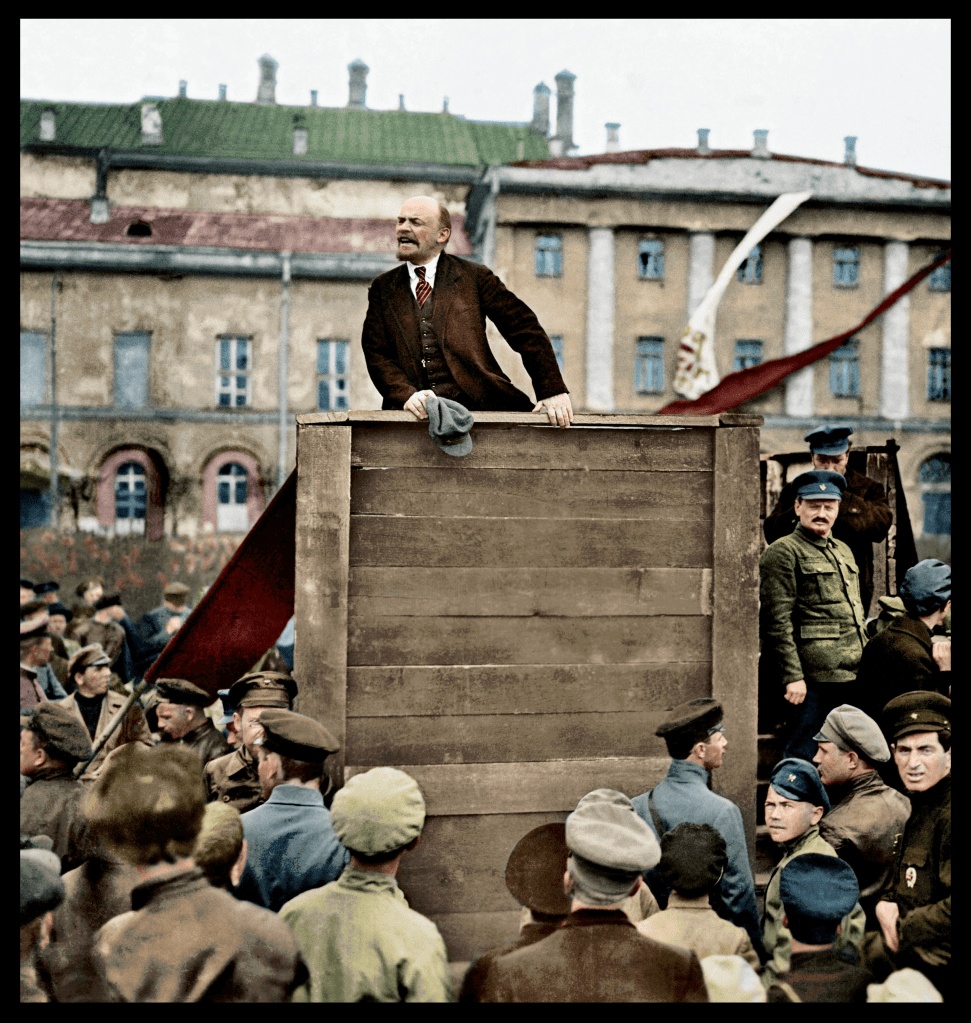
El líder revolucionario ruso, V.I. Lenin, en el monumento a Marx y Engels en la Unión Soviética, 1918.
En su mayor parte, las teorías de Marx demostraron ser consistentes con sus expectativas cuando los trabajadores en los países capitalistas industrializados se rebelaron ferozmente mientras que en las regiones saqueadas y colonizadas de África, Asia y América Latina, el imperialismo capitalista fue desafiado por la furia de las luchas de liberación nacional.
No es de extrañar que figuras revolucionarias como Amilcar Cabral, Celia Sanchez, Ho Chi Minh, Claudia Jones, Madame Nguyễn Thị Định, Fidel Castro Ruz, Patrice Lumumba, Nguyễn Thị Bình, Ernesto Che Guevara, Mao Zedong, Steve Biko, Kim Il- Sung y muchos otros, recurrieron a abrazar el marxismo y buscaron formas de aplicar sus muchas lecciones a sus respectivas realidades.
Contenido en los primeros escritos de Marx y Engels como el Manuscrito Filosófico y Económico, El Manifiesto Comunista, Los Orígenes de la Familia, la Propiedad Privada y el Estado, La Guerra Civil en los Estados Unidos, La Utopía y el Socialismo Científico, Sobre la Religión, el Salario, el Precio y la Las ganancias, junto con el resto de su vasta colección de escritos, son muchas lecciones valiosas que son indiscutiblemente aplicables en nuestras experiencias actuales. Por eso, hasta el día de hoy, 141 años después de su muerte, Carlos Marx sigue siendo despreciado y temido por los gobernantes capitalistas.
La escritura clásica que sigue rondando a la clase dominante.
En Estados Unidos, figuras afroamericanas como Cyril Briggs, Harry Haywood, W.E.B. DuBois, Lorraine Hansberry, Paul Robeson, Audre Lorde, Fred Hampton y muchos más pudieron ver cómo la lucha de liberación negra tenía afinidades naturales con el análisis fundamental del marxismo. En las décadas de 1960 y 1970, el escrito más notable del marxismo, “El Manifiesto Comunista”, se convirtió en uno de los varios requisitos de estudio de educación política para los miembros del Partido Panteras Negra y del Partido Young Lords.
CARLOS MARX Y LA GUERRA CIVIL EN LOS
ESTADOS UNIDOS
Uno de los compromisos políticos más notables de Marx fue su intervención en los acontecimientos de la Guerra Civil en los Estados Unidos. La esclavitud africana en los Estados Unidos fue la más lucrativa y brutal de toda la historia. Fue un sistema que sirvió como impulso económico para el capitalismo y le permitió crecer hasta convertirse en la colosal riqueza que comprende hoy.
A través de su correspondencia con el presidente Abraham Lincoln y de su columna en el New York Tribune, Karl Marx trató de generar presión insistiendo firmemente en la necesidad de un decreto que hiciera técnicamente ilegal la esclavitud.
El 1 de enero de 1863, Lincoln firmó la Proclamación de Emancipación. Este documento monumental se convirtió en el precedente legal para reclutar y armar a los ex esclavos. Aunque los motivos de Lincoln eran de consideración militar, la Proclamación de Emancipación aceleró el resultado de la guerra y eventualmente garantizaría la derrota de la Eslavocracia del Sur.
Sectores de la clase dominante británica que tenían intereses económicos creados en la economía esclavista del Sur habían deseado intervenir militarmente en apoyo de la Confederación. Gracias al liderazgo de Karl Marx en la poderosa Asociación Internacional de Trabajadores de Inglaterra, se impidió que los gobernantes británicos acudieran en ayuda de la clase propietaria de esclavos del Sur.
El papel principal de Karl Marx en la movilización de la clase obrera inglesa para evitar la prolongación de la esclavitud africana en los Estados Unidos fue, en todos los sentidos objetivos, un profundo acto de solidaridad con el pueblo afroamericano. Las convicciones de Marx eran firmes, es por eso que afirmó: “El trabajo de piel blanca nunca puede liberarse mientras el trabajo de piel negra esté marcado”.
EL MARXISMO ES MÁS RELEVANTE HOY
QUE NUNCA ANTES
Las contribuciones revolucionarias de Carlos Marx y Friedrich Engels siguen siendo el blanco de los filósofos, economistas e historiadores burgueses. Los académicos de la clase dominante demuestran su desprecio por la clase trabajadora acusando falsamente al marxismo de ser “totalitario” o afirmando que está lleno de nada más que “fantasías irrealizables”, etc.
Del mismo modo, hay quienes, incluso dentro de la izquierda socialista predominantemente blanca de este país, afirman, rebosantes de arrogancia social, que el marxismo y el nacionalismo de los oprimidos son contradictorios y nunca pueden reconciliarse para complementarse entre sí, en la lucha contra los gobernantes capitalistas.
Otros en los sectores más conservadores de los movimientos nacionales, estrictamente preocupados por los sentimientos culturales más estrechos del nacionalismo, afirman erróneamente que el marxismo es una “cosa blanca” o europea y, por lo tanto, es irrelevante para la gente de color y sus luchas de liberación nacional.
Ambos puntos de vista solo sirven para promover las nociones reaccionarias de la supremacía blanca y el anticomunismo. Los hechos materiales objetivos prueban lo contrario. Bajo las intensas circunstancias del imperialismo actual, todas las entidades oprimidas tienen una relación de clase definida con el capitalismo. Es un fenómeno del que nadie puede escapar.
Las personas de color en los Estados Unidos son las comunidades más explotadas y perseguidas. Son víctimas de violencia policial y encarcelamiento. Si alguien va a tener un mayor interés y voz en la caída de este vil sistema y el establecimiento de una nueva sociedad, son aquellos que históricamente han estado en el fondo de la disparidad social y económica.
Es un absurdo y un reflejo de cuán profundamente arraigado está el privilegio blanco en la cultura creer que dominar el marxismo requiere que las personas de color descarten su propia identidad como agrupaciones nacionales históricamente constituidas dentro de la población en general. Esta distorsión del significado del marxismo descarta la necesidad de que el socialismo surja en igualdad de condiciones y ha resultado en la preservación de las tradiciones burguesas disfrazadas bajo el manto de defender la “unidad” de la clase trabajadora.
Las enseñanzas de Carlos Marx y Friedrich Engels son hoy más relevantes que nunca para las luchas de liberación de los pueblos negros, latinos, asiáticos, árabes e indígenas, especialmente debido a la super-explotación y al número cada vez mayor de estos grupos nacionales que ingresan a la clase obrera de los Estados Unidos.
Una exposición de la hipocresía y la fantasía embriagadora de la religión organizada.
Las instituciones ideológicas capitalistas como la iglesia, los medios de comunicación, la educación pública, etc., implícita y explícitamente nos alentarán a aceptar lo que existe, es decir, a ser sumisos a las injusticias racistas del estado policial y el dominio de los ricos explotadores. Fue precisamente la opresión de la clase social, trayendo tanto sufrimiento a nuestro mundo, que Karl Marx desinteresadamente dedicó toda su vida a condenar y trabajó para deshacer.
Si Carlos Marx estuviera vivo hoy, seguramente habría sido parte de los movimientos que condenan la persecución de las familias inmigrantes e indocumentadas en los Estados Unidos, los asesinatos policiales racistas de los afroamericanos, la ocupación israelí de Palestina respaldada por los Estados Unidos así como la colonización de Puerto Rico por los Estados Unidos.
Es la devoción intransigente de Marx a la revolución en nombre de los trabajadores y los oprimidos del mundo lo que explica el odio total de la clase dominante por las concepciones que desarrolló, incluida la relevancia del marxismo para cada cuestión que enfrenta el mundo hoy. Los gobernantes no pueden soportar la idea de un análisis bien articulado que pida el fin del capitalismo y apunte hacia la única dirección para lograr la emancipación completa de la humanidad.
Tumba de Carlos Marx en el cementerio de Highgate, Londres, Inglaterra.
¡VIVA EL LEGADO REVOLUCIONARIO DE CARLOS MARX!
Mi retrato de Karl Marx. 50 x 60 cm, pintura acrílica sobre lienzo. Pintado en 2024.