Tribute to Civil Rights iconic figure FANNIE LOU HAMER

_________________________________________________________________________

“And we can no longer ignore the fact that we can’t sit down and wait for things to change. Because as long as they can keep their feet on our neck, they will always do it. But it’s time for us to stand up and be women and men.” –Fannie Lou Hamer

_________________________________________________________________________

By Carlos “Carlito” Rovira

The legacy of Fannie Lou Hamer is one of the most inspiring to come out of the 1960s-70s Civil Rights movement. She was an outspoken activist that never yield to white supremacist terror and fought vigorously for the human rights of Black people.

Born in Montgomery County, Mississippi on October 6, 1917, during the height of Jim Crow laws and lynchings, Fannie Lou Hamer knew first-hand the viciousness of Black oppression. She was the youngest of 20 children in an extremely poor sharecropping family.

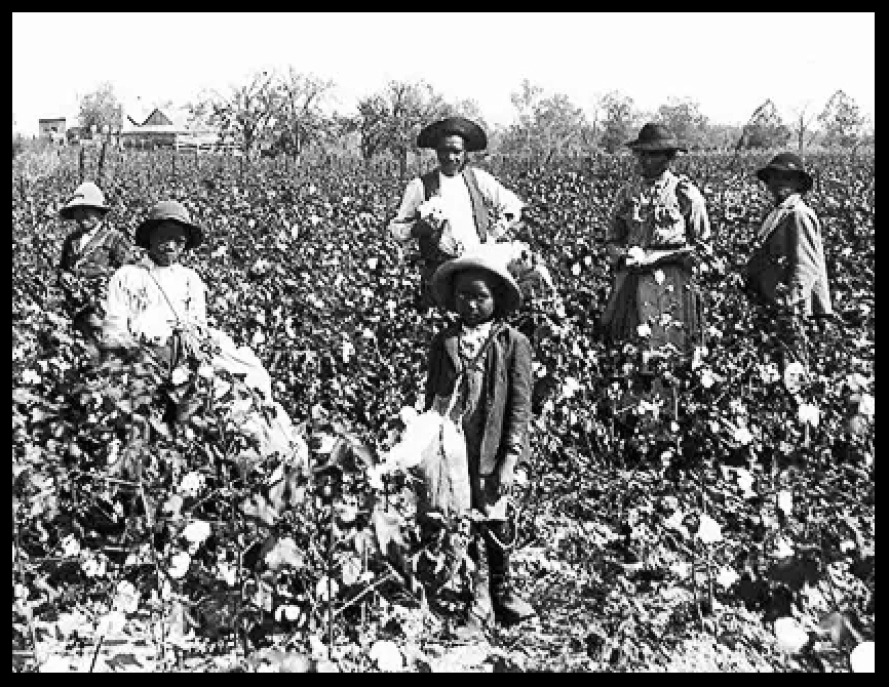
At just 6 years old, Fannie Lou began working in the field picking cotton. She was compelled to drop out of school at 12 years old to work full-time in the cotton fields in order to help support her family survive. However, because Fannie Lou loved reading the Bible and other books, she was fully literate by the time adulthood arrived.

Big landowners attempted to use the sharecropping system to re-enslave Black people.

One of the most outrageous acts committed against Hamer was in 1961 at a hospital in Mississippi. She went to undergo a routine surgery for the removal of a uterine tumor. Without her knowledge or consent, a white doctor also performed a hysterectomy.

Years later, Hamer discovered that what was done to her without permission was part of a broader and secret eugenics campaign to reduce the Black population. This heinous genocidal program involved medical institutions as well as agencies of the U.S. government. Indigenous, Chicana/Mexican and Puerto Rican women were also secretly targeted for sterilization. Similarly, in Puerto Rico, one/third of the child-baring female population was sterilized between the 1930s to the 1980s.

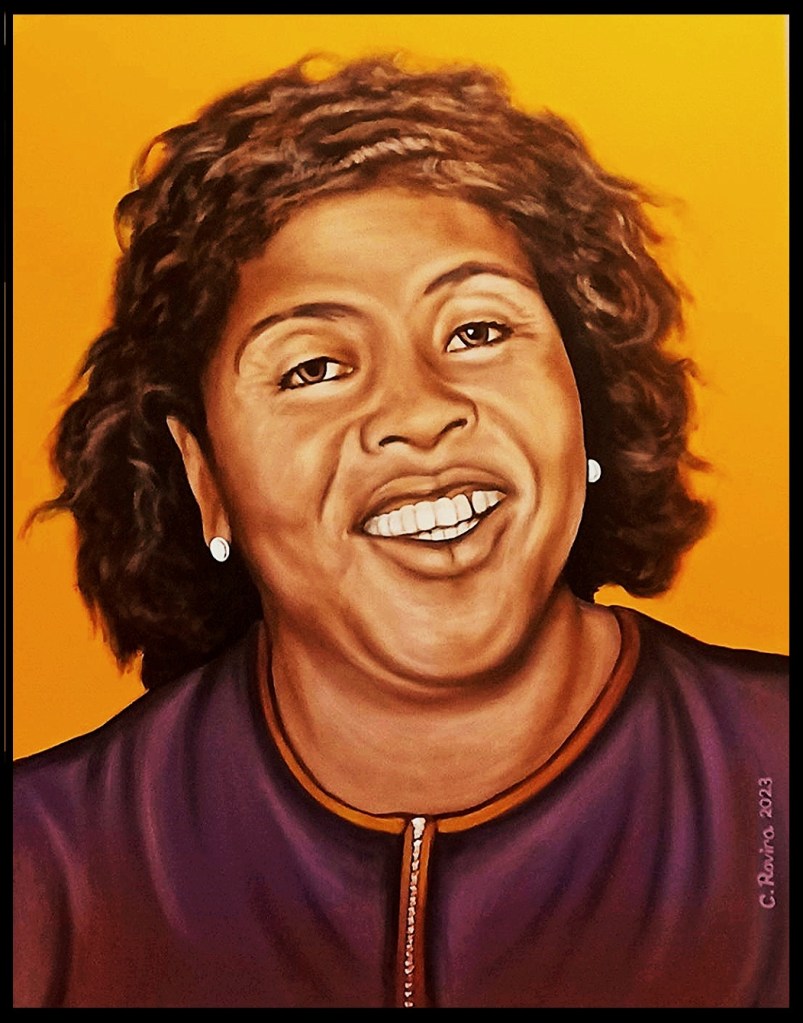
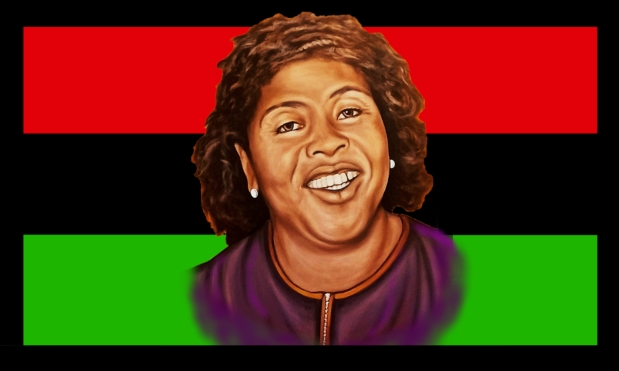
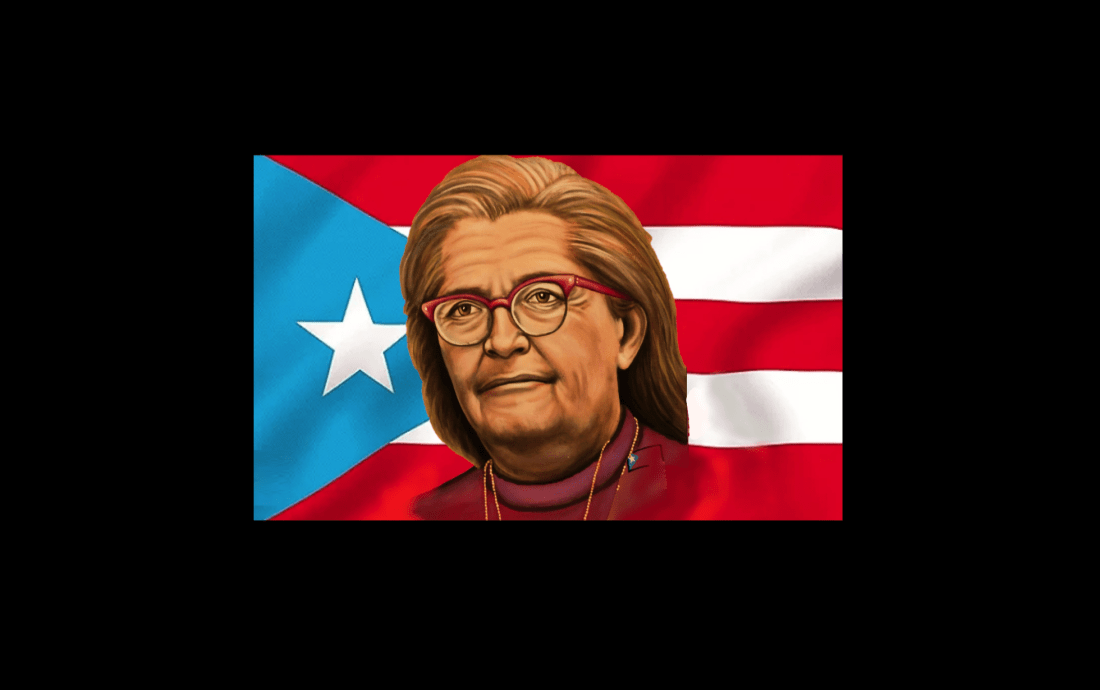
My portrait of Fannie Lou Hamer made in 2023. 24″ X 30″, acrylic paint on canvas.

Despite many ordeals that affected her personally, Hamer’s resilience and leadership was strengthened. In 1963, this heroine earned the title Field Secretary for the Student Nonviolence Coordinating Committee (SNCC) for its voter registration drives. This was an exemplary entity initially founded and led by another Civil Rights icon, Ella Baker.

Hamer’s outspokenness was admired by many Civil Rights leaders, including, Dr. Martin Luther King, Jr with whom she collaborated. Although Hamer differed with the more radical politics and tactics of the Black Panther Party, they maintained a mutual respect for one another based on their common interest in Black emancipation. In fact, Hamer was quite vocal condemning the media’s slanders and the government’s COINTELPRO attacks on individual Panther leaders and their offices throughout the country.

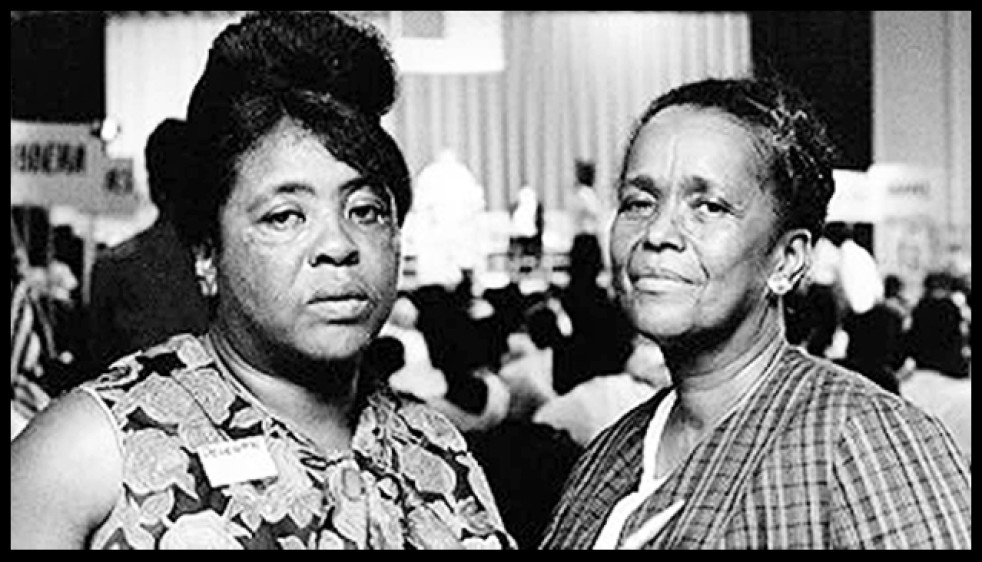
Fannie Lou Hamer (L) and Ella Baker (R).

The Ku Klux Klan and other racists among the white populace of the deep South did not take well knowing that Black people were emboldened and politically active. The consequential backlash that African Americans encountered for organizing themselves to demand their rights was violence.

In many municipalities throughout the South police and KKK activities were synonymous. For anyone, especially African Americans, who challenged existing racist laws designed to deny Black people the right to vote meant risking your life. Fannie Lou Hamer proved to be a courageous woman; she dismissed the potential physical danger to herself and proceeded in her quest for racial equality.

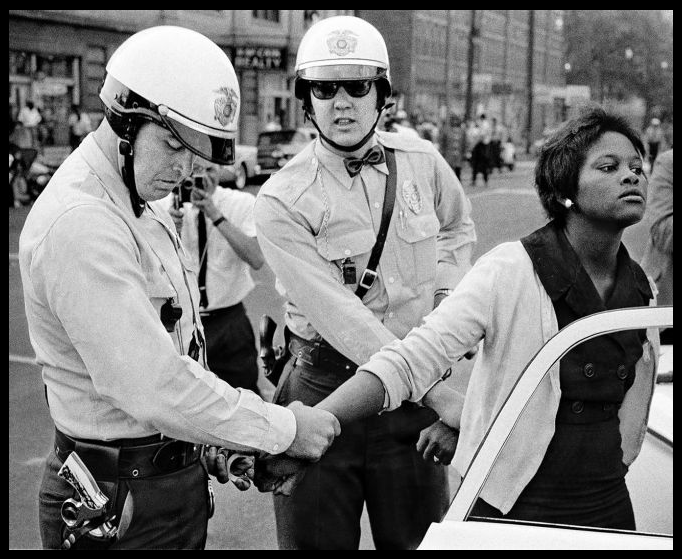
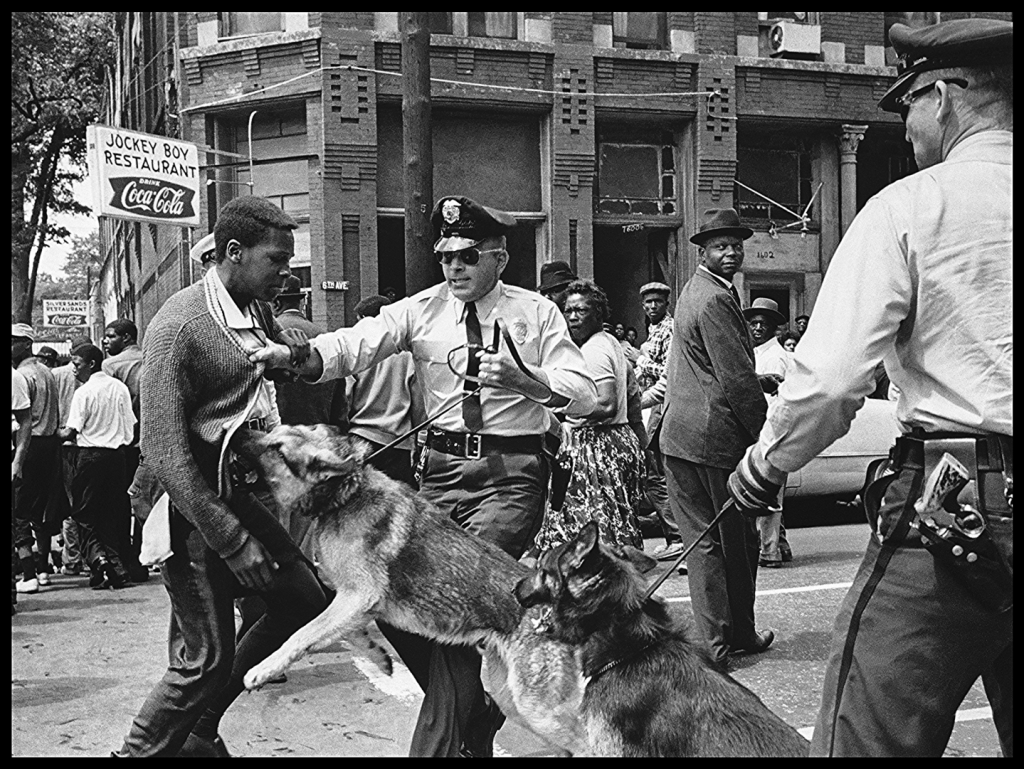
The police state was never hesitant to use violence against the Civil Rights movement.

On June 9, 1963, Fannie Lou Hamer was severely beaten by police while in custody. She was traveling on a bus with co-activists of Freedom Summer, returning home from a voter registration workshop. When they arrived at a rest stop to get a meal at a diner the group was refused service. The police were then called and immediately all the Black activists were brutally beaten.

Once in the jailhouse, Fannie Lou had her clothing ripped off. As she was viciously held down on the floor naked the police struck her with a baton repeatedly. The cops sexually abused and tortured her. The horror she helplessly experienced on that day is reminiscent of what enslaved Black women suffered by the hands of overseers and slaveowners.

The beating caused permanent kidney damage, which resulted in a medical condition that lasted until her death on March 14, 1977. Despite her poor health and being emotionally traumatized, Hamer continued her activist work with the Student Nonviolent Coordinating Committee and the Southern Christian Leadership Conference (SCLC).

Fannie Lou Hamer traveled throughout the United States to enlighten people of the noble endeavor. She was invited to speak at universities, churches, political gatherings and rallies. Her influence was indisputably powerful as she promoted the general vision of the Civil Rights movement.

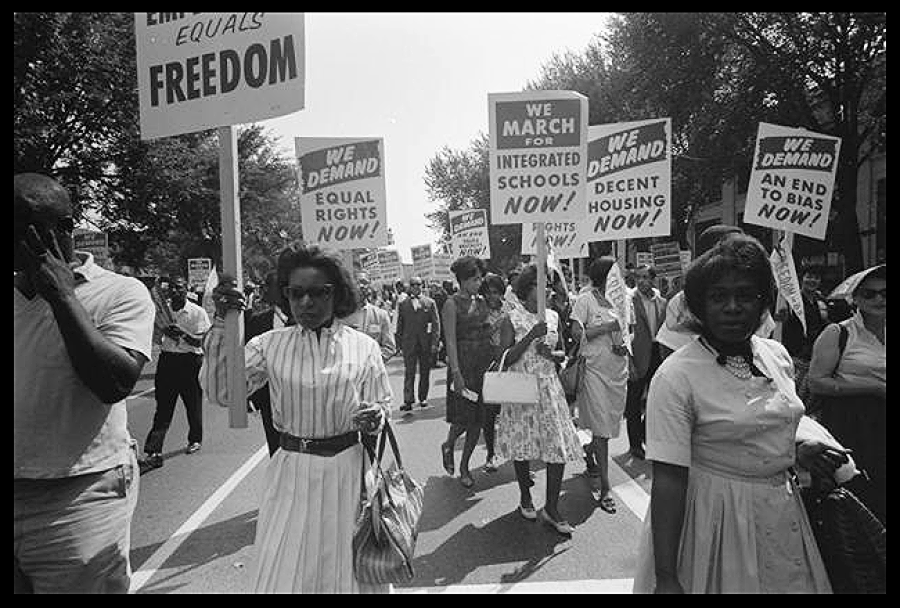
Women played a pivotal role in the Civil Rights movement.

On December 20, 1964, Fannie Lou Hamer visited the Williams Institutional Church in the Mecca of Black politics and culture, Harlem, New York City, where she met and appeared alongside of Malcolm X, El-Hajj Malik el-Shabazz. Hamer was running for office in Mississippi, in a campaign to win a seat in the U.S. House of Representative. It was at the gathering in Harlem when she presented her most famous speech titled, “Sick and Tired of Being Sick and Tired.”

Hamer was well received by a mostly Black audience who sympathized and admired her defiance and ability to survive many life-threatening ordeals. Her speech included a chronology of racist violence she personally experienced as well as shedding light on the suffering Black people have endured throughout the country.

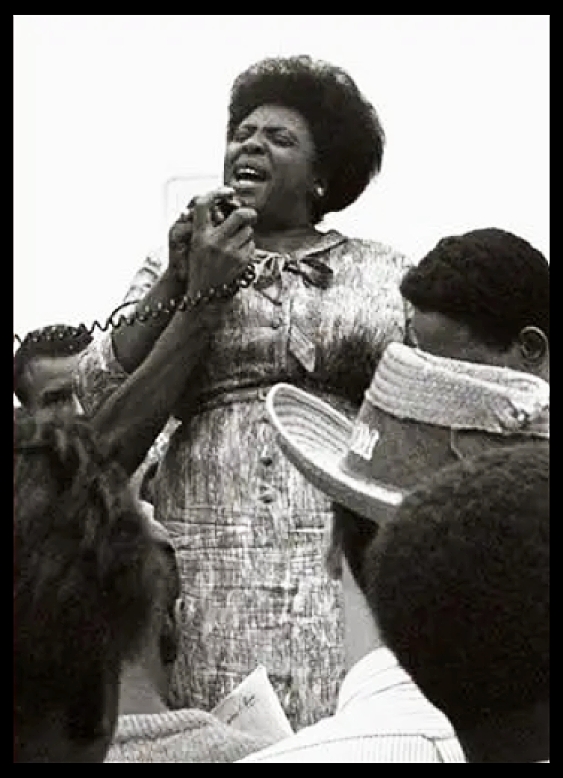
Fannie Lou Hamer was an outspoken Queen of the Civil Rights movement.

Among the many challenges Fannie Lou Hamer had to confront was the shameful patronizing racism of the overwhelmingly white Democratic Party, or “Dixiecrats,” as Malcolm X frequently described them. Their not-so-hidden social arrogance was transparent to most Black people, especially Fannie Lou Hamer who sensed their insidious prejudices towards her for speaking with a strong rural Southern Black accent and having a sharecropper family background.

White Democratic Party officials postered about “favoring” Black freedom, but only to the extent of securing for themselves the Black vote. It would have been naive to expect anything else. The customs, habits and traditions of the Democratic Party, along with its insidious behavior towards African Americans is all rooted in the history of chattel slavery. The Democratic Party was once the political party of slave owners.

Being aware of the history and insulting behavior by white privileged officials, compelled Black activists affiliated with the Democratic Party to create the Mississippi Freedom Democratic Party (MFDP) in 1964, of which Fannie Lou Hamer was a co-founder. The Civil Rights activists had hoped to push for a better position within the Democratic Party while preserving an independent existence beneficial to the political struggles of Black people.

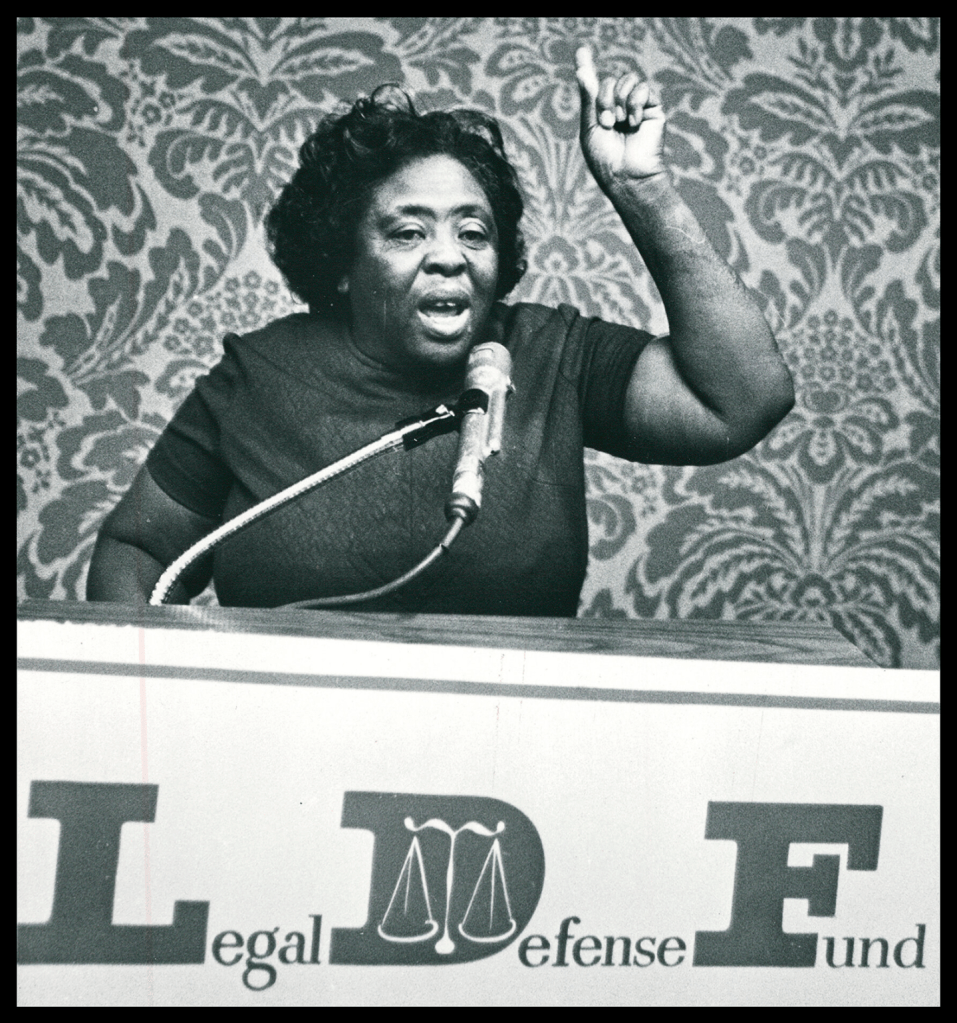
Fannie Lou Hamer was a skillful orator that addressed the plight of the oppressed.

Hamer continued to push forward by creating the Freedom Farm Cooperative in Sunflower County, Mississippi. 640 acres were purchased to provide employment for many Black residents. They collectively cultivated and farmed the land. Hamer was also a co-founder National Women’s Political Caucus (NWPC), an entity that included Black and other women of color. The NWPC played a pivotal role during the rise of the Feminist movement. It made efforts to combine and highlight the relevance of the anti-racist struggle to the demands of women’s emancipation.

Fannie Lou Hamer was inspiring and an indisputably unique representation of an oppressed people. But she was also the product of centuries-long militant traditions which made possible the survival of Black people from the most challenging and unimaginable circumstances throughout their history.

Despite living with chronic pain from injuries sustained during the 1963 savage beating by police, the spirited energy to fight for the freedom of her people never deterred. The selflessness and humanity that Fannie Lou Hamer passionately possessed throughout her life, once it is emulated by millions of people it shall guarantee a victorious fight to end racist oppression and usher in a new society.

LONG LIVE THE LEGACY OF FANNIE LOU HAMER!

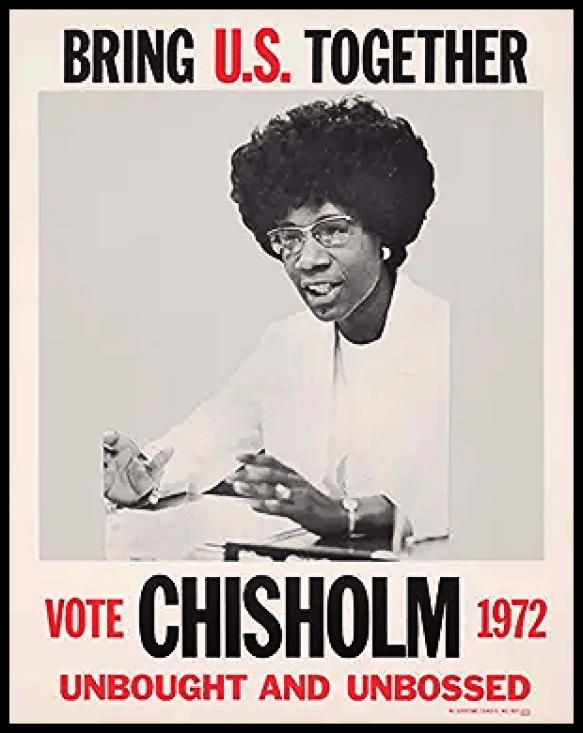
SHIRLEY A. CHISHOLM – a defiant voice of the Civil Rights movement

___________________________________________________________________

“Health is a human right, not a privilege that you purchase” — Shirly A. Chisholm

____________________________________________________________________

Tribute to Shirley Chisholm, November 30, 1924 – January 1, 2005

By Carlos “Carlito” Rovira

The legendary Shirley Anita Chisholm was a powerful voice of defiance that never ceded her fight for human rights in the United States. As a community activist and member of the U.S. House of Representatives she fought for racial and gender equality, anti-poverty programs, educational reform, and civil rights.

Although Chisholm was never a revolutionary in the traditional sense the Civil Rights movement, she played a significant role in had the potential of evolving in a more radical direction. When making public speeches she agitated like a Black nationalist, a feminist, labor organizer, supporter of LGBTQ+ rights, and used her Spanish language fluency to express support for the Latinx community. 

Chisholm was born in Brooklyn, New York to poor immigrant parents from Guyana and Barbados. Being that her family was undergoing financial difficulties, the young Shirley and her sister were sent to live with relatives in Barbados during her childhood.

Although I do not give grandeur to figures in bourgeois politics, Congresswoman Shirley A. Chisholm is a unique case. While Chisholm’s story was not restricted to her achievements in mainstream politics, she represents a particular part in the history of the Civil Rights movement that also fought for social justice.

Chisholm was among progressive politicians that challenged the government by fighting to achieve what oppressed people were demanding. Among these voices in mainstream politics were figures like Vito Marcantonio, Adam Clayton Powell, Charles Diggs, and others.

Chisholm waged a relentless struggle against white supremacist practices in the House of Representatives and other parts of the U.S. Government. Despite the desire of many white racist colleagues not to acknowledge Chisholm’s title, she was nevertheless an elected official who did not hesitated to call out anti-Black legislative proposals motivated to resist the Civil Rights momentum.

Like many progressive Black figures and openly anti-capitalist political organizations of that period, Chisholm was implicitly and explicitly accused of having “communist ties.” She adamantly condemned McCarthy Era legislation maintained for repressing the Communist Party USA and anyone that promoted the ideals of socialism.

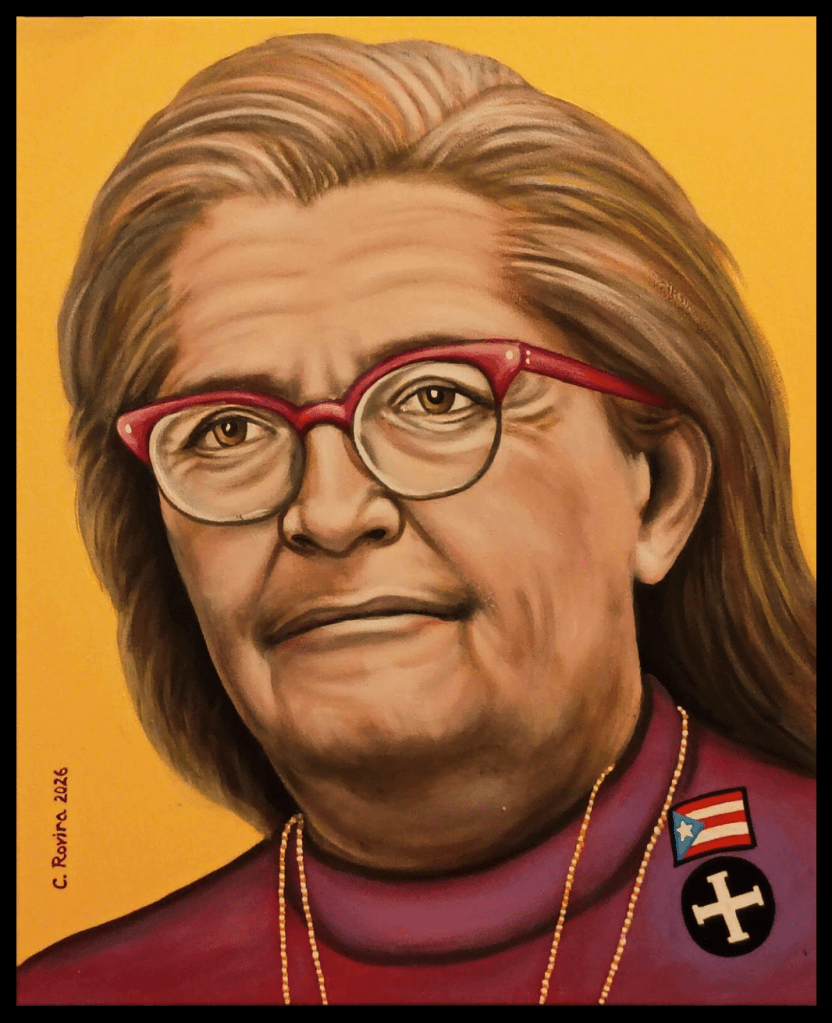
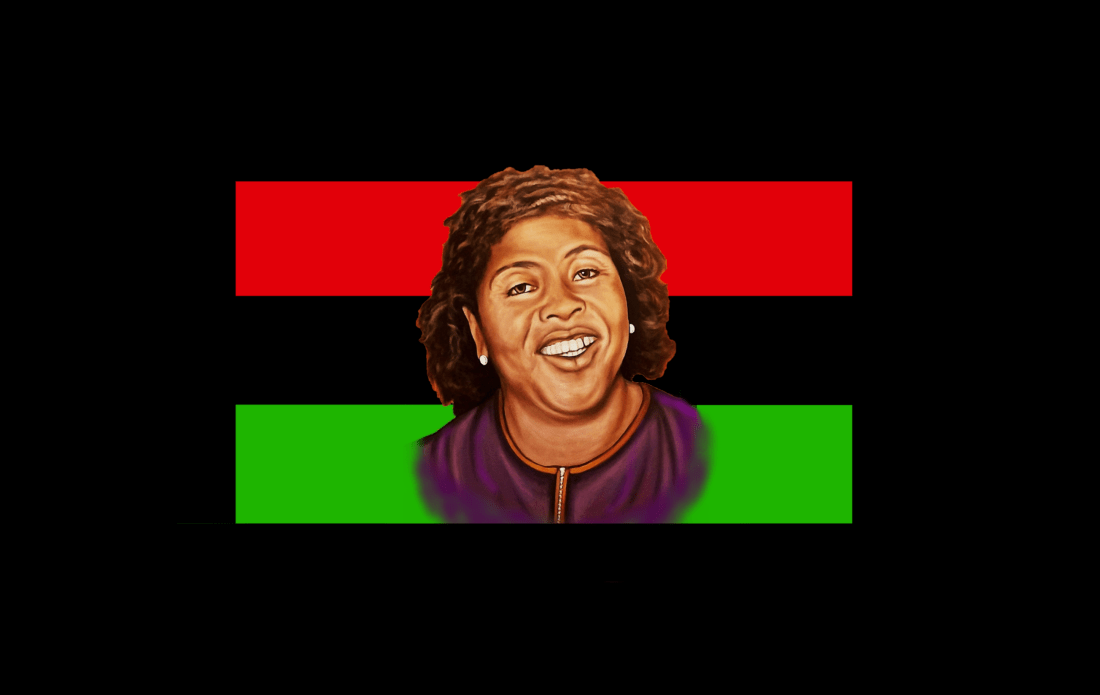
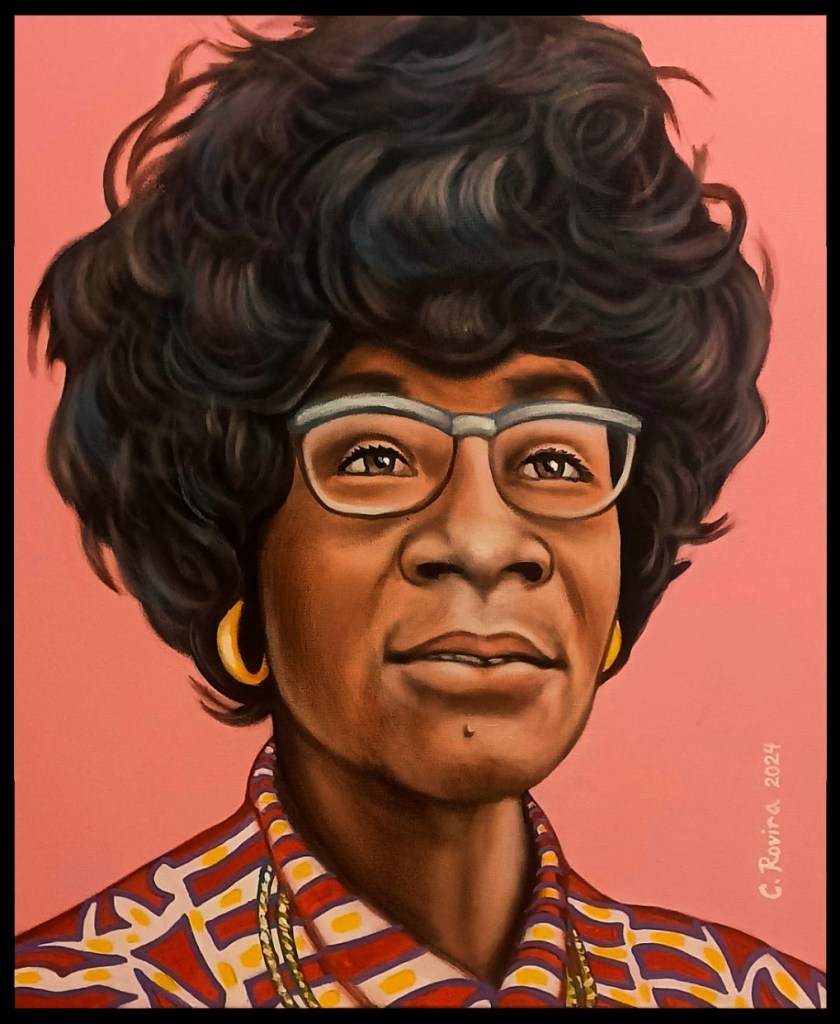
My portrait of Shirley A. Chisholm. 20″ X 24″, acrylic paint on canvas.

Chisholm was the first Black woman from New York to win a seat in the U.S. House of Representatives. She was an outspoken member of Congress who was vehemently opposed to the criminal U.S. war in Vietnam which she linked to the social and economic disparity in the United States.

The Congresswoman participated in many anti-war demonstrations and rallies throughout the country where she added her voice to the massive public outcry against the war. Her denunciations of Washington officials were fearlessly made to expose their criminal warmongering policies.

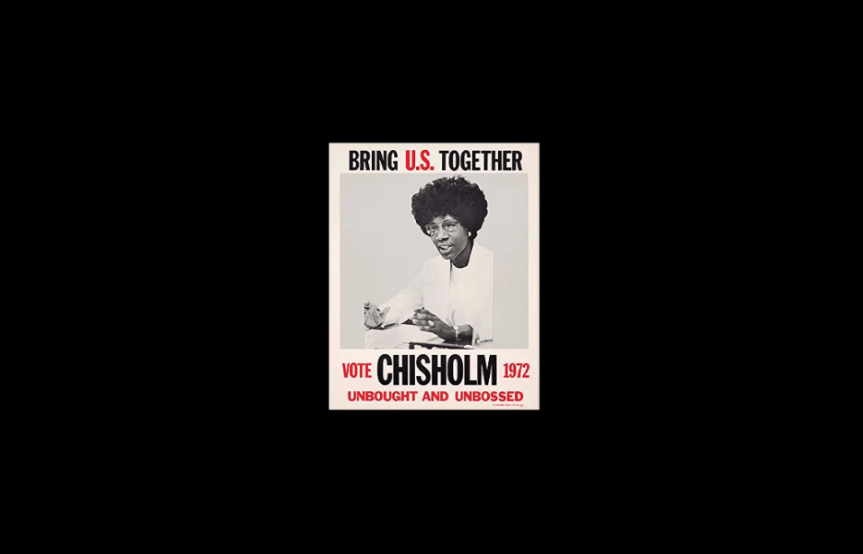
Chisholm unapologetically supported the Black Panther Party (BPP). She admired their courageous militant spirit. In April 1972, Chisholm met with BPP leader Huey P. Newton. The BPP recognized Chisholm’s courageousness and empathy for the suffering of the Black masses. The Panthers openly endorsed her campaign to get elected to Congress and set their organizational infrastructure for a voter registration drive to have her elected.

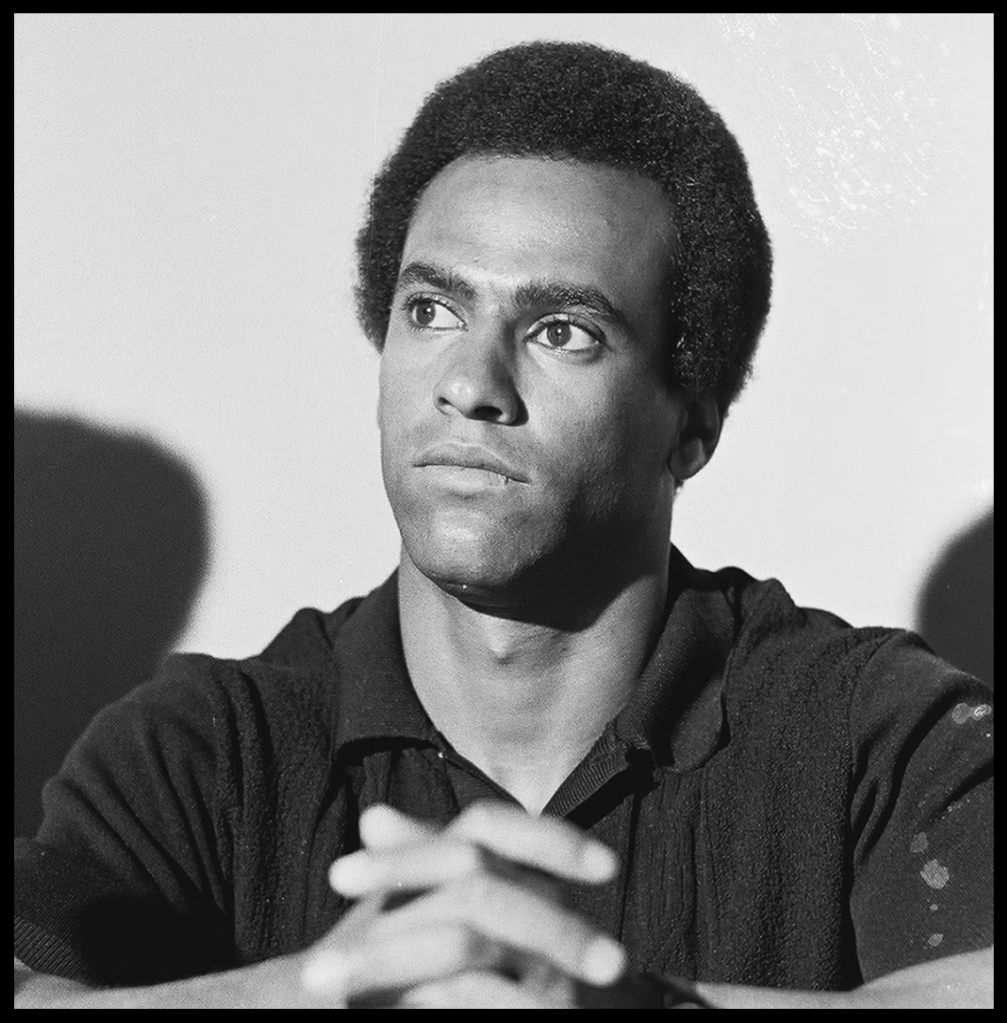
Black Panther Party Minister of Defense Huey P. Newton.

Although Chisholm possessed a fiery spirit that added to the strength of the Civil Rights movement, she came under heavy criticism and condemnation from many circles including within the Black community. On June 8, 1972, Chisholm unexpectedly visited the racist Alabama Governor George Wallace at Holy Cross Hospital in Silver Spring, Maryland where he was recovering from gunshot wounds in an assassination attempt. In that same year Wallace and Chisholm were competing candidates for the Democratic Party presidential nomination.

Chisholm’s response to her many critics, who viewed the visit to an outspoken white supremacist as absurd, was that she acted with empathy consistent with her religious faith. Like all mainstream political figures Chisholm also had her own significant contradictions.

Despite Chisholm’s political complexities, how she viewed her involvement in bourgeois politics on behalf of oppressed people merits appreciation and applause. Washington officials were irked by an outspoken Black woman intruding in their world of white privilege and entitlement. Nothing could have been more uncomfortable than a strong and dignified woman of color with character always ready to call them out

The humiliation she experienced from the disrespectful behavior of racist colleagues did not deter her. Chisholm’s life journey which at times included unpleasant moments taught her to be resilient. Nothing stopped her from moving forward to carry out legislative work. Her famous motto was: “If they deny you a seat at the table bring your own folding chair.” She had a way of frustrating the most condescending and arrogant elements in the U.S. Congress.