Tribute to Lucy Gonzalez Parsons 1851 – 1942

_________________________________________________________________________

“Now, what do we mean when we say revolutionary Socialist? We mean that the land shall belong to the landless, the tools to the toiler, and the products to the producers.” ― Lucy Parsons

_________________________________________________________________________

By Carlos “Carlito” Rovira

The struggles of the U.S. working-class have produced some of the most exemplary militant fighters which will continue inspiring millions of people for generation to come. Among these powerful historic figures is Lucy Gonzalez Parsons.

Although Parsons never made mention about it throughout her life researchers disclosed in recent decades that she was born enslaved at a plantation in Virginia. In 1863, her slaveowner brought 12-year-old Lucy to Texas along with her mother named Charlotte.

In the years following the end of the Civil War in the United States of 1860-1865, in which ended African chattel slavery was ended, Parsons became a journalist, labor organizer, revolutionary feminist, and an anarcho-communist.
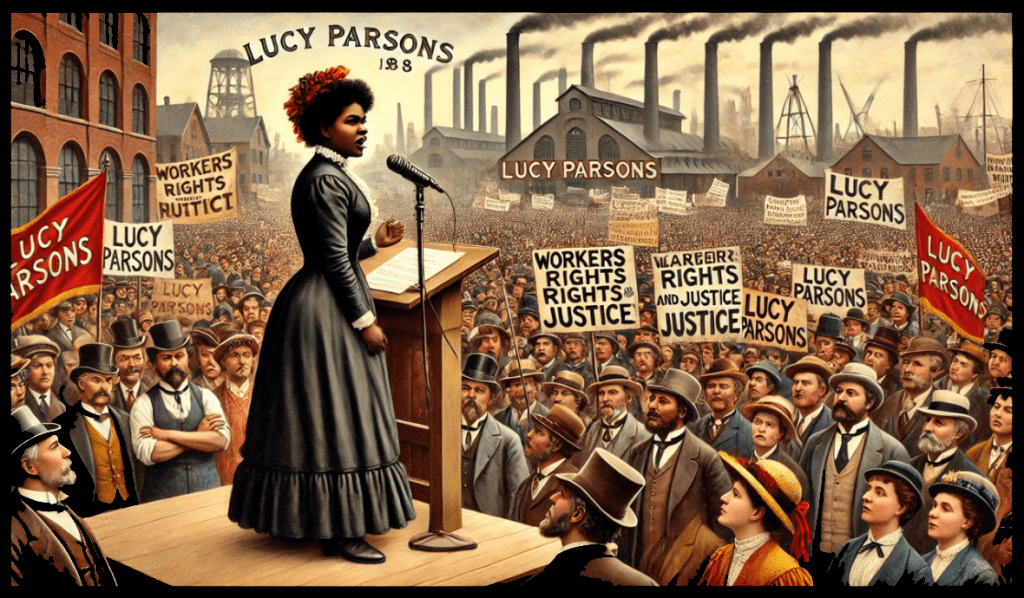
Artist depiction of Lucy Parsons speaking at a labor rally.

She fought vigorously to bring about the eight-hour day, women’s rights, against child-labor and socialism. Despite hardships caused by tragic events in her personal life Lucy Parsons became a true working class shero with a deep disdain for the capitalist system.

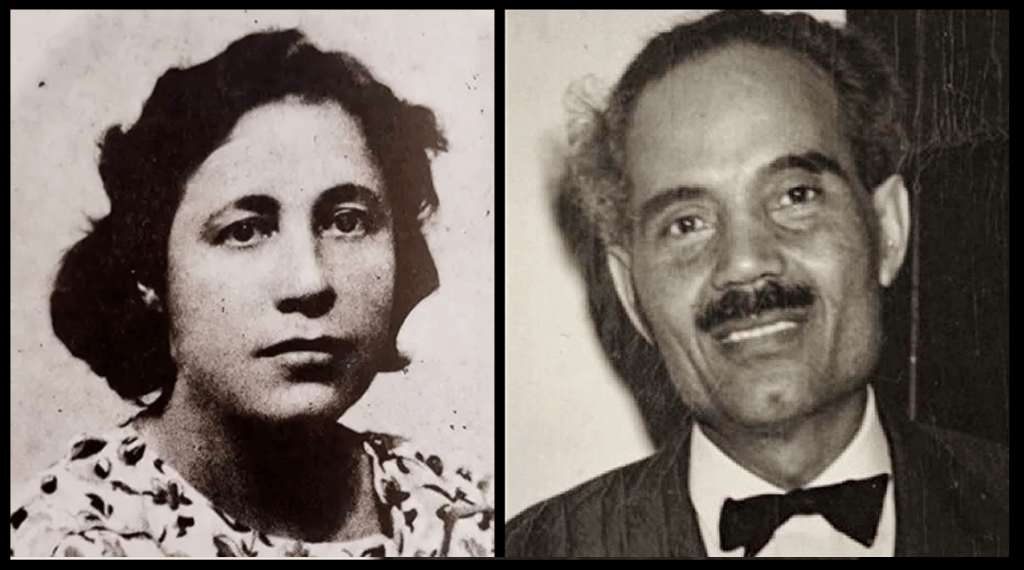
Lucy Parsons lived in Texas with her husband Albert Parsons and their two children. They were despised for being an interracial couple. Albert Parson was white and Lucy an obvious woman of color, with African American, Mexican, and Indigenous racial strains.

As Jim Crow laws intensified and due to her outspokenness, the Ku Klux Klan threaten their lives quite often. Eventually, the family was compelled to move to Chicago where they found relative safety from racist terror.
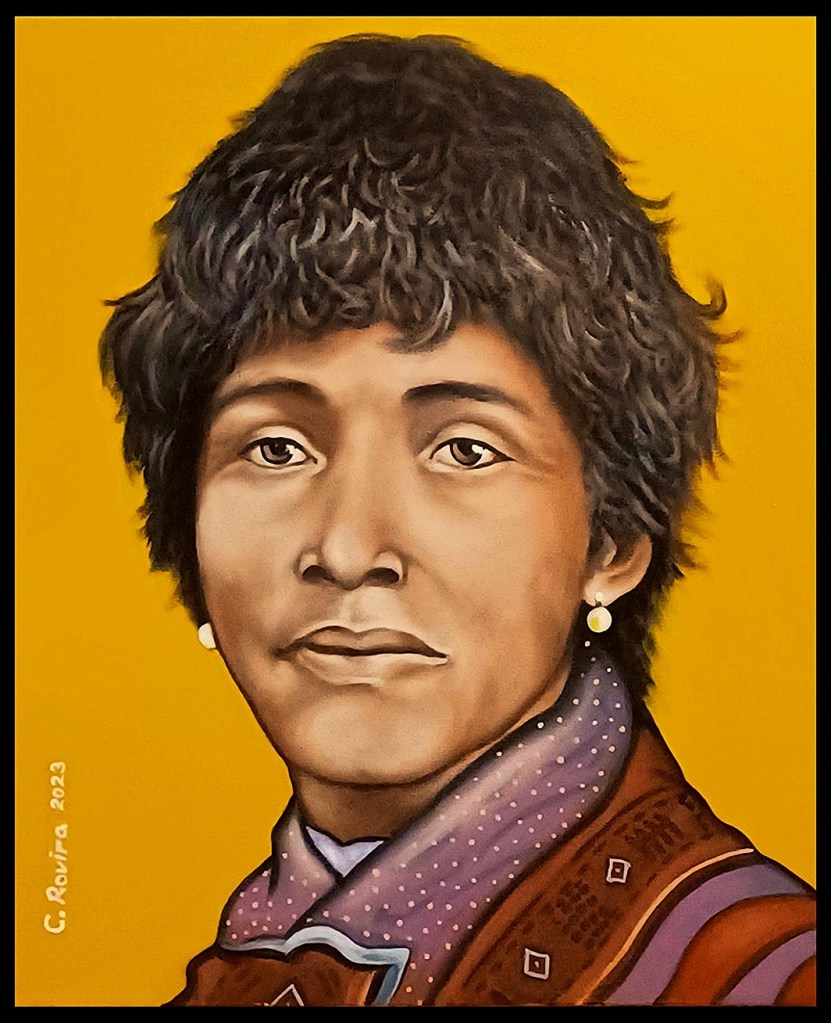
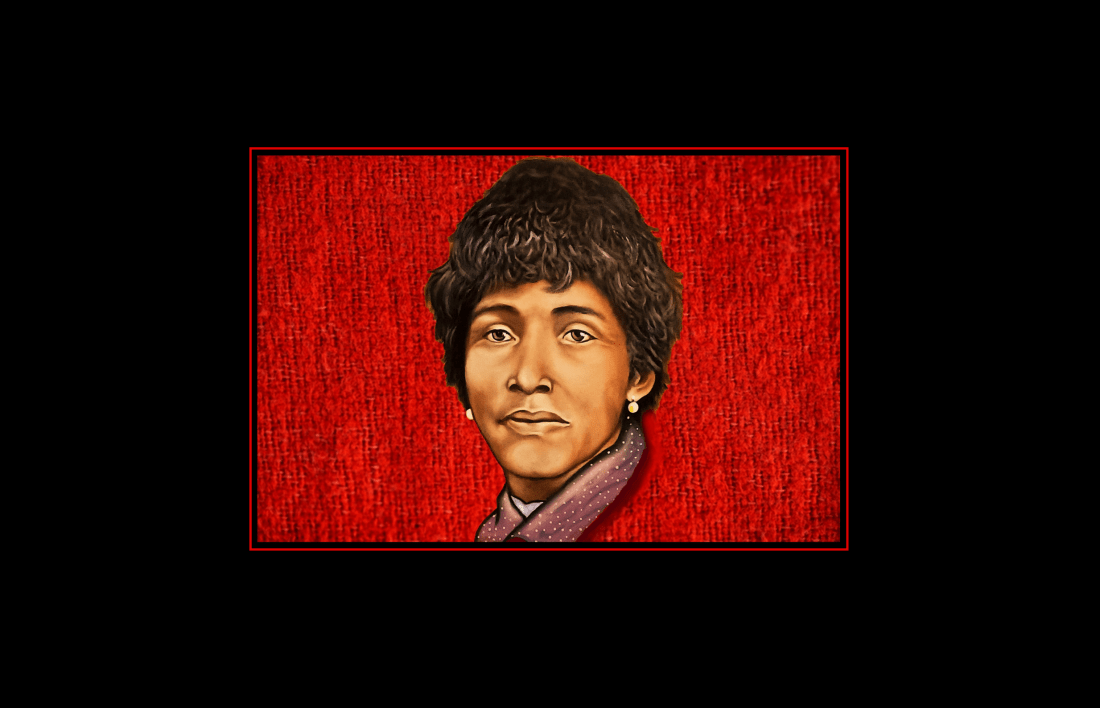
My portrait of Lucy Parsons. 20″ X 24″, acrylic paint on canvas.

At the first May Day rally in Chicago’s Haymarket Square, on May 4, 1886, during a labor demonstration for the eight-hour workday that was attended by thousands of people, a bomb was thrown. The explosion and subsequent gunfire killed seven police officers and four civilians.

This tragic event became a perfect excuse for the government to make a punishing example by launching a crackdown on the labor movement. What resulted was a controversial trial with questionable evidence. Following a guilty verdict, on November 11, 1887, four labor leaders were executed by hanging at Chicago’s Cook County jail. Lucy Parson’s husband, Albert Parsons, was among the four men accused and executed, alongside his comrades August Spies, Adolph Fischer, and George Engel.

For Lucy Parsons to Lose her beloved to a horrifying government persecution served to further radicalize her. She became more outspoken in condemning the capitalist system. Parsons led a national campaign involving speaking tours to raise funds for legal defense and to expose the injustice committed against the Haymarket martyrs, especially in the New York City tri-state area which became a hub for the labor movement. Parsons’ efforts succeeded in reaching the hearts and minds of millions throughout the country.

As Parsons rose to become a prominent voice, she bonded with another renown female working-class figure, Mary Harris, better known as Mother Jones. Parsons and Jones were the only women to speak at the July 8, 1905, founding convention of the International Workers of the World (IWW) also known as the “Wobblies.” Their quest was to build one big labor union of all trades.

The IWW was one of the most militant workers organizations in U.S. labor history, where Parsons and Jones played leading roles. In many cases, striking Wobbly members would conduct their pickets and other actions by boldly displaying their firearms for self-defense and to convince others of their allegiance to convictions.
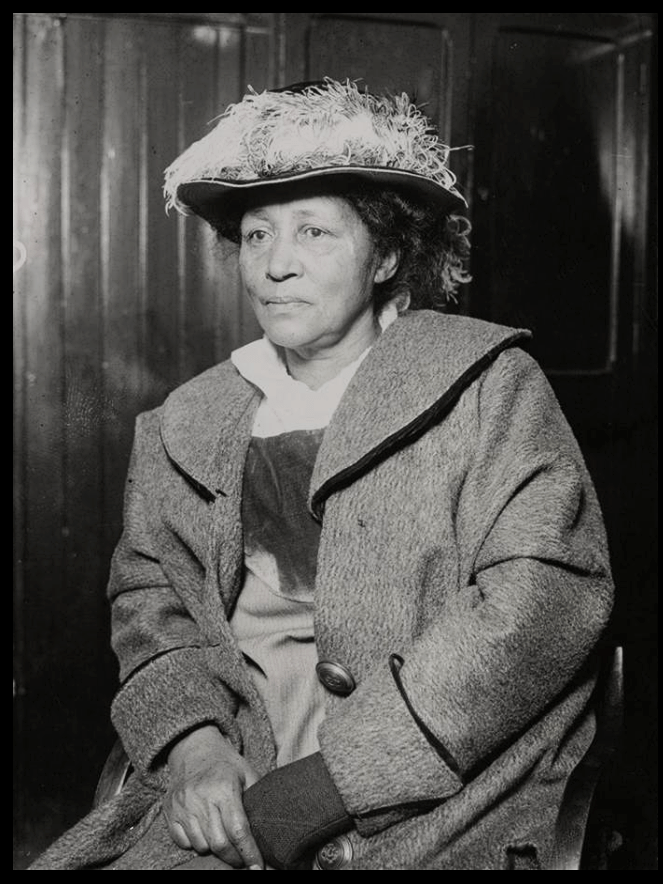
Lucy Parsons

As years passed, Lucy Parson’s perspective of the world and class struggle expanded. The 1917 Russian Socialist Revolution had a tremendous impact on her. She was a writer for the Anarchist newspaper The Alarm, where she expressed many controversial views, including support for Vladamir Lenin and the Bolshevik victory that established a revolutionary worker’s state.

Such was the bases for differences she held with Emma Goldman and others in the U.S. feminist movement. Parsons polemicized with those who tended to raise women’s rights isolated from other social issues, the plight of Black people and fighting for a socialist world. She believed that fighting women’s oppression was an integral part of engaging in the class struggle.

During the Great Depression of the 1930s, Lucy Parson became highly critical of the Communist Party USA for excessively supporting President Franklyn D. Roosevelt’s New Deal policy. Parsons believed that it was a government ploy designed to deceive the working-class and prevent its revolutionary politicization.

However, although Parsons identified primarily as an anarchist for much of her life, and despite her critiques, she officially joined the Communist Party USA in 1939. She came to the conclusion that what was more important than sectarian organizational affiliations is to fully commit to advance the cause for the emancipation of the working-class.
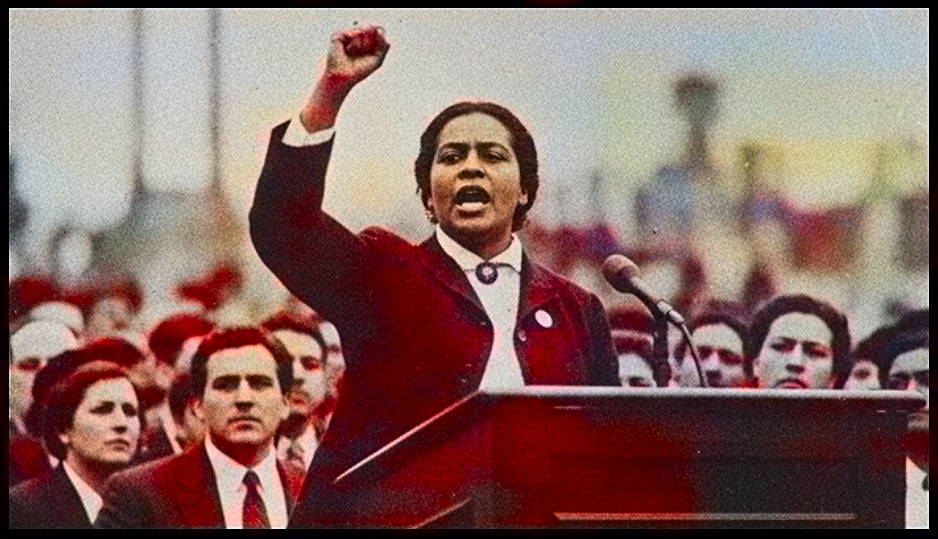
For the remainder of her life Lucy Parsons travelled across the country agitating for the freedom of the Scottsboro Boys, partaking in picket lines of numerous striking workers and speaking to audiences at union halls to promote the ideas of socialism.

Lucy Parsons became known for her defiance. She was not afraid of imprisonment nor death. This heroine would challenge law enforcement officials whenever they attempted to shutdown public meetings. The Chicago Police Department and the Justice Department’s J. Edgar Hoover, perceived Lucy Parsons as an active threat to the established social and economic order. Chicago Police Chief Frederick Ebersold famously characterized Lucy Parsons more dangerous than a thousand rioters, referring to her advocacy for socialist revolution.

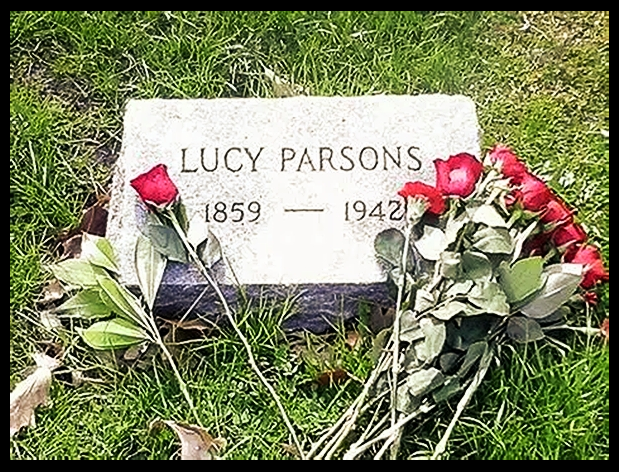
Tragically, Lucy Gonzalez Parsons died on March 7, 1942, in an accidental house fire in Chicago. She is buried in the Forest Home Cemetery in Forest Park, Illinois. Parson’s life-long examples of resilience and conviction will be remembered. She has earned a special place of honor for all eternity in the historic archives of the class struggle.
LONG LIVE THE LEGACY OF LUCY PARSONS!
Tribute to Ruth Mary Reynolds Feb 28, 1916 – Dec 2, 1989

By Carlos “Carlito” Rovira

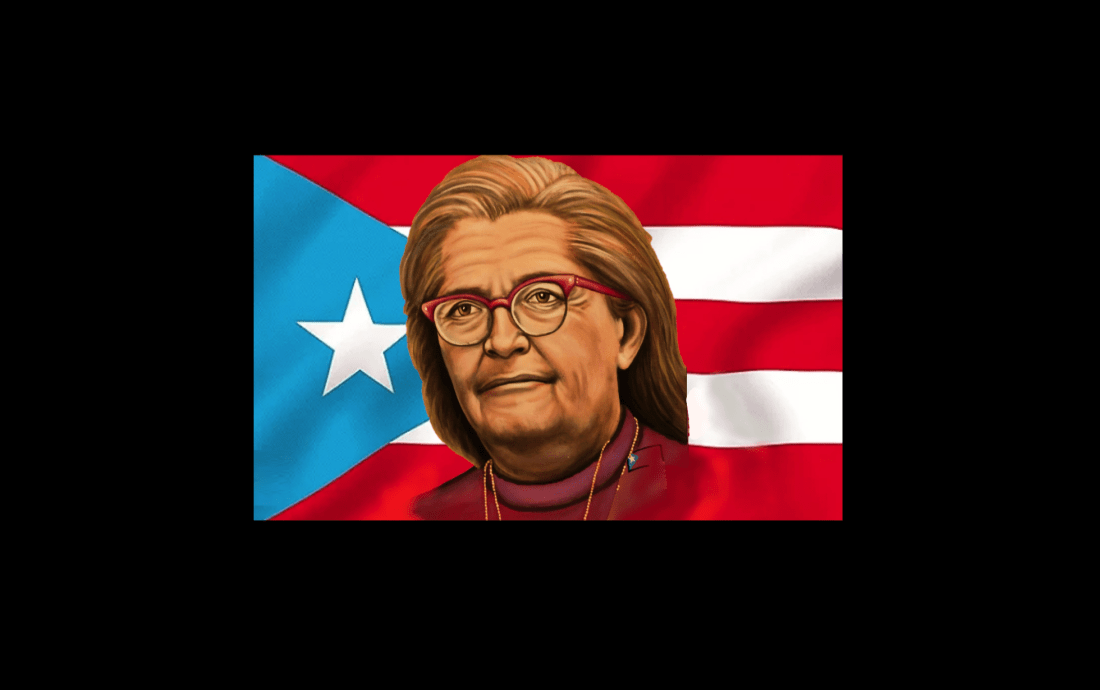
Ruth Mary Reynolds was a heroine who is remembered with the highest honors for being one of the greatest allies of the historic struggle for Puerto Rico’s independence and right to self-determination.

Raynolds was born on February 28, 1916. She was raised at a family-owned ranch in the mining town of Terraville, located in the Black Hills of South Dakota. She grew up in a family surrounding with strict Methodist religious customs.

The land on which Ruth Reynolds was reared as a child belonged to the Rose bud Tribal people who lived there for hundreds of years before they were driven out during the Westward expansion that resulted in the so-called “Indian Wars.” It was another example of stolen land by white settlers in U.S. history.

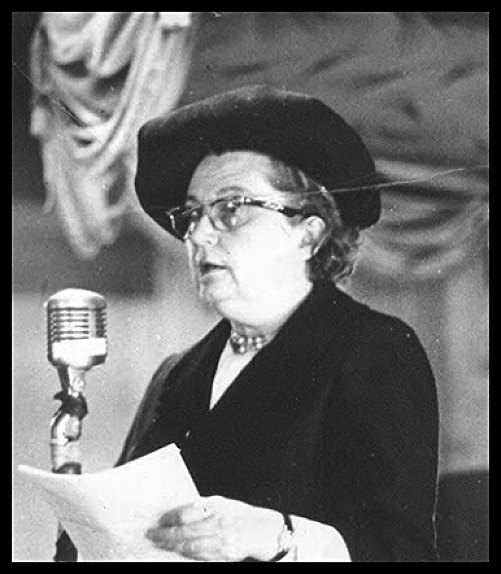
Ruth A. Reynolds

Similarly to the legendary, anti-slavery abolitionist, John Brown, Ruth Reynolds acknowledged her white privilege coming at the expense of oppressed people of color. And like John Brown, she demonstrated true solidarity not just in words but with her actions. Such are standards which progressive minded people of white origin must adopt in the United States today, if they are serious of building unity for eventually defeating white supremacy.

Since the time of her youth, Reynolds was inquisitive about the injustices and inequalities that caused human suffering in society. That may explain why she was eventually drawn to address the socio-economic plight of the Puerto Rican masses.

Raynolds became an educator who taught Indigenous children and adults on the Lakota Rosebud Reservation in South Dakota. Despite the existing political environment which insidiously encouraged whites to be indifferent or partake in the racist persecution of Blacks, Latinos and Indigenous people, Reynolds on the other hand, developed to fiercely identity with the oppressed.

After Reynolds earned her master’s degree, in 1941 she relocated to New York City to join the civil rights group known as Harlem Ashram. She lived and worked in East Harlem (El Barrio), where she did advocacy for Puerto Rican children. Between 1945-1975, there was an influx of Puerto Ricans migrating to the urban centers of the U.S. at an annual average rate of 63,000, due to colonial economic policies.

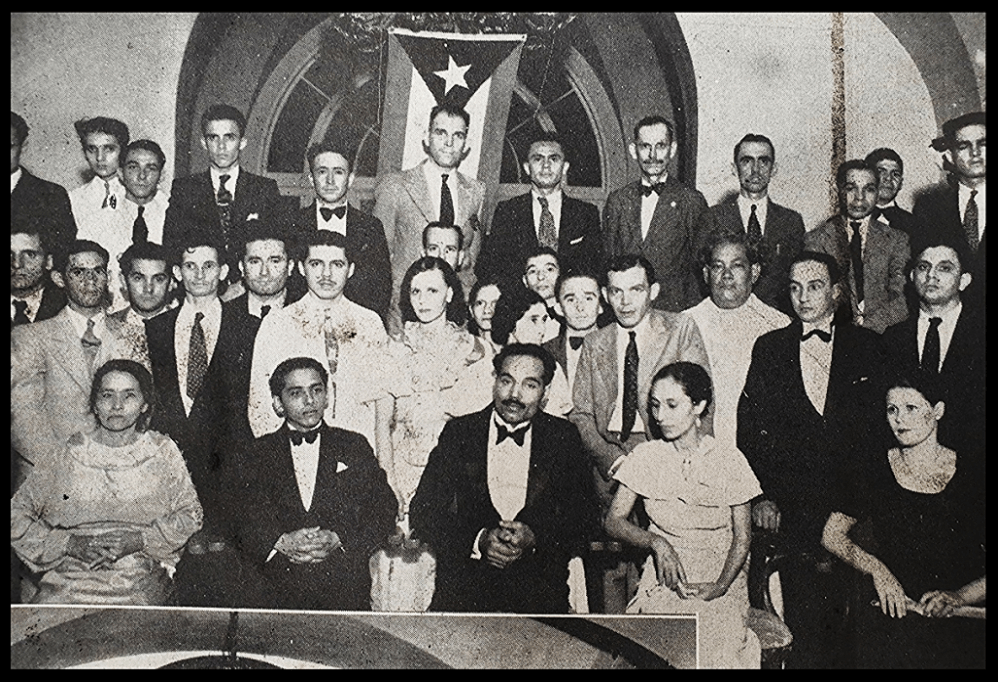
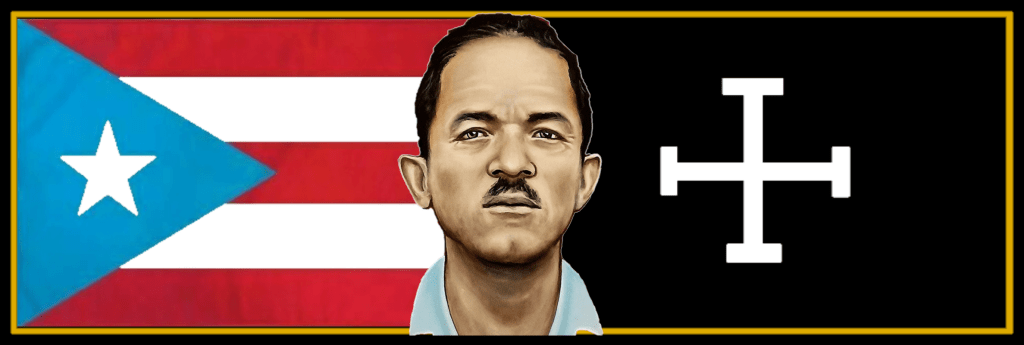
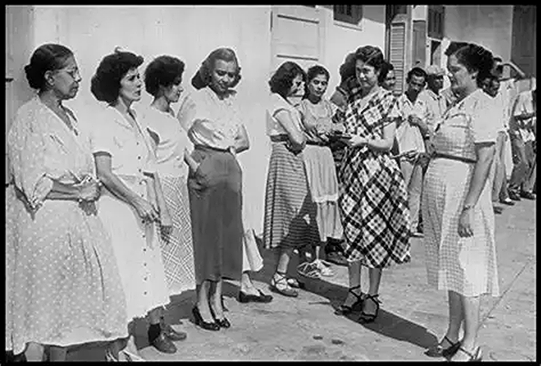
Members of the Nationalist Party of Puerto Rico with Dr. Pedro Albizu Campos sitting front center.

It was through her advocacy in East Harlem where she met the prominent Socialist Congressman, Vito Marcantonio, who was legal counsel to and ally of Dr. Pedro Albizu Campos, the Puerto Rican Nationalist Party leader. Marcantonio and Reynolds collaborated for a number of years on the matter of Puerto Rico’s struggle for independence.

When it was brought to Campos’ attention the work that Harlem Ashram did, he asked his confidant Julio Pinto Gandia to have Reynolds visit him at Columbia Hospital, in NYC. Campos was undergoing treatment for a heart attack while serving a 10 years prison sentence for sedition.

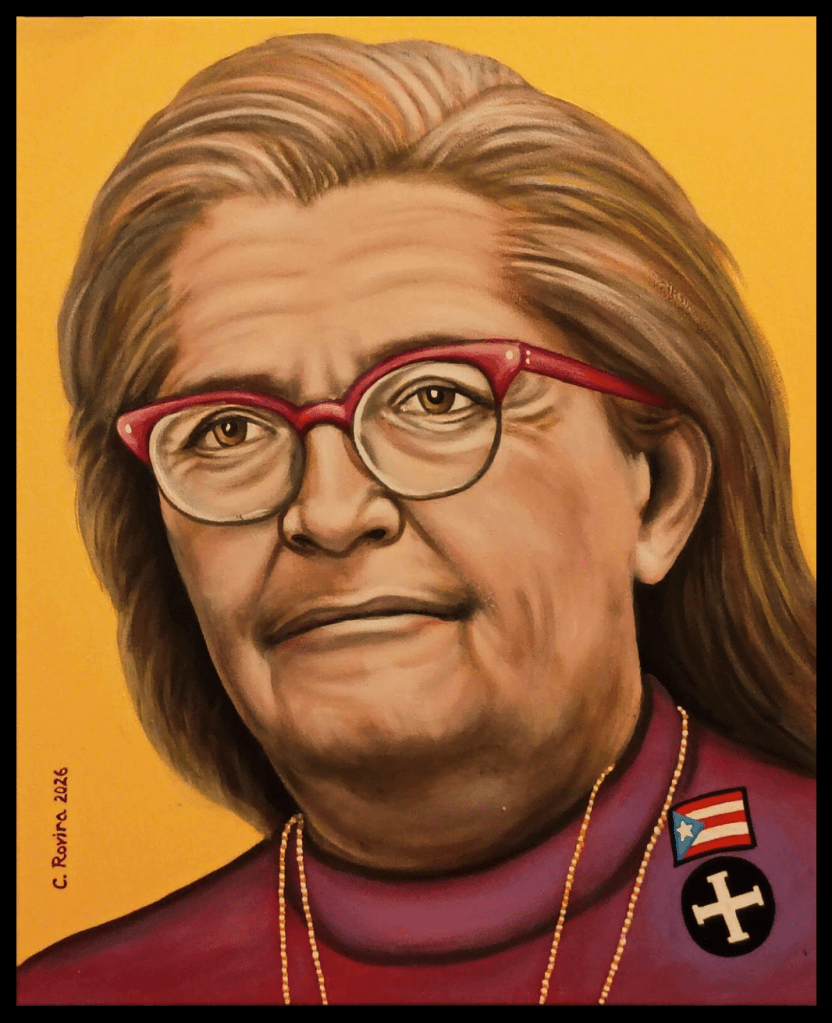
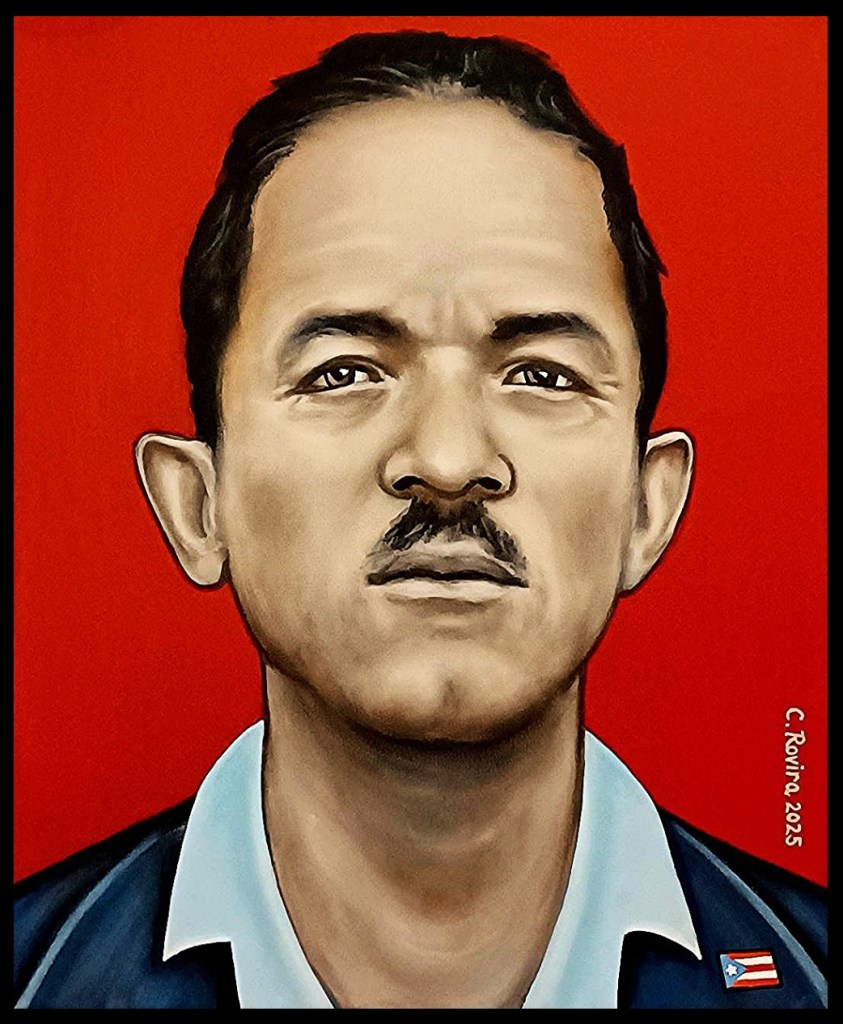
My portrait of Ruth Mary Reynolds. 20″ X 24″, acrylic paint on canvas.

When Reynolds and Campos met for the first time in 1943 it was the beginning of a long-lasting comradeship that would last until his death in April 1965.

After Compos’ release from prison in 1949, the U.S. installed colonial government was secretly planning a major crackdown on the Nationalist movement. It was amid the repressive, anti-Communist MaCarthy Era in the U.S., which Puerto Rico felt a thousandfold in the subjugated setting of colonialism.

After Nationalist Party intelligence operatives discovered the government’s plans to suppress the movement, Dr. Pedro Albizu Campos believed it was best for revolutionaries to strike the first blow.

On October 30, 1950, a Nationalist Revolt occurred throughout Puerto Rico. Police and colonial officials became targets of Nationalist rage for the draconian decree known as the “Gag Law” (1948 Law 53) which prohibited any form of reference to independence, in literature, public speech, musical or poetic lyrics. The heinous law also made the Puerto Rican flag illegal.

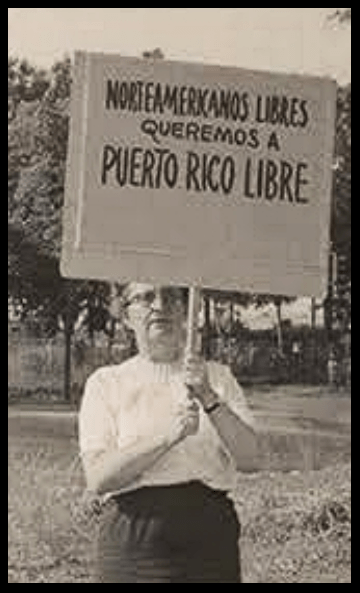
Ruth A. Reynolds holding a sign that reads
“Free North Americans want a free Puerto Rico.”

The most intense gun battle was in Jayuya. Under the leadership of another gallant woman named Blanca Canales, the insurrectionists seized control of the municipality. U.S. military forces surrounded the Jayuya as warplanes bombed the city.

On November 2, 1950, following the armed rebellion and Nationalists Oscar Collazo and Griselio Torricelli attempted assassination of President Harry Truman in Washington, Reynolds was arrested and charged with sedition, for mere association.

Heavily armed police and agents of the Federal Bureau of Investigation (FBI) stormed into her apartment early in the morning without a warrant. Law enforcement officials confiscated her research papers and whatever else they could find to build a case against Campos and the Nationalist Party.

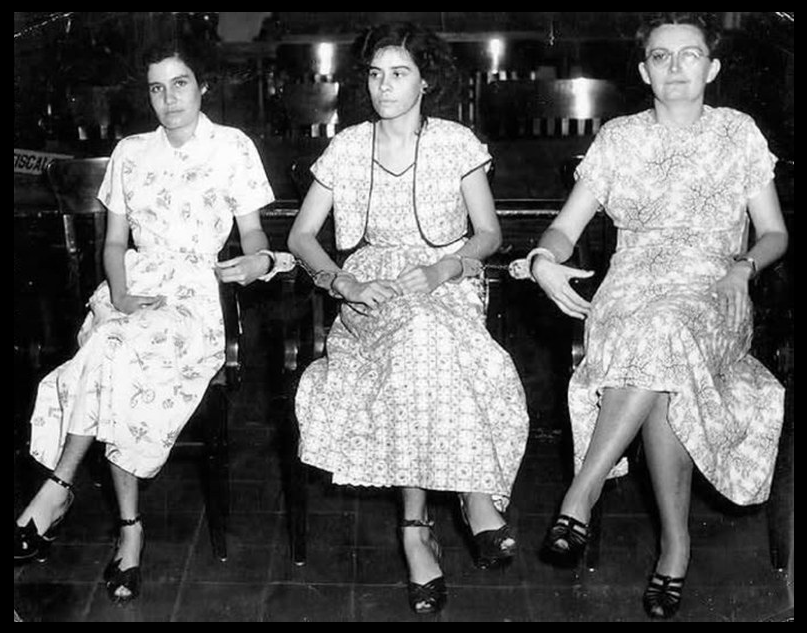
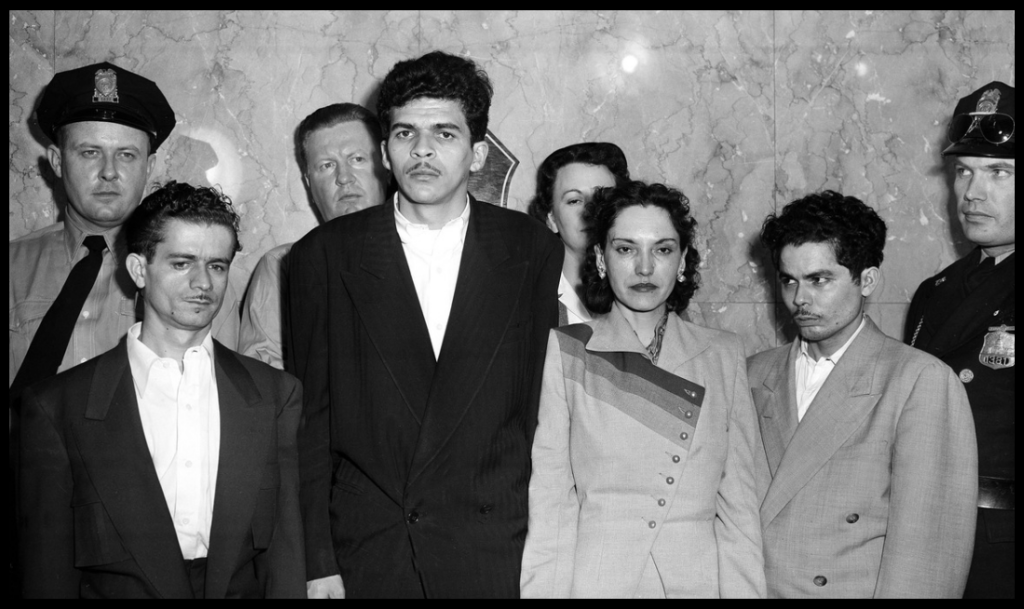
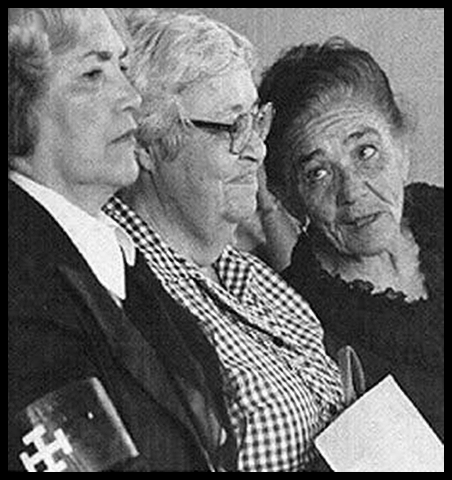
(L to R) Nationalists Carmen María Pérez Gonzalez, Olga Viscal Garriga and Ruth Mary Reynolds.

Although Reynolds was sentenced to six years in prison, she was released 19 months later after winning an appeal. During her incarceration in the Insular Penitentiary of Arecibo, PR, she was constantly subjected to psychological abuse by prison officials. Reynolds believed that she was also the subject of hidden radiation torture, as was Dr. Pedro Albizu Campos.

However, the trauma she endured did not deter her from pursuing her passion for Puerto Rico’s independence. Her resolve was strengthened by the cruelty she experienced herself. Reynolds co-founded the American League for Puerto Rico’s Independence, continued documenting and defiantly voiced contempt for U.S. atrocities against the Puerto Rican people, especially the beatings and murders of individuals in the independence movement.

With Nationalist Julio Pinto Gandia, Renolds lobbied the delegates of many countries at the United Nations Organization seeking support for Puerto Rico’s independence. She also testified before the U.S. Congress to push the issue.

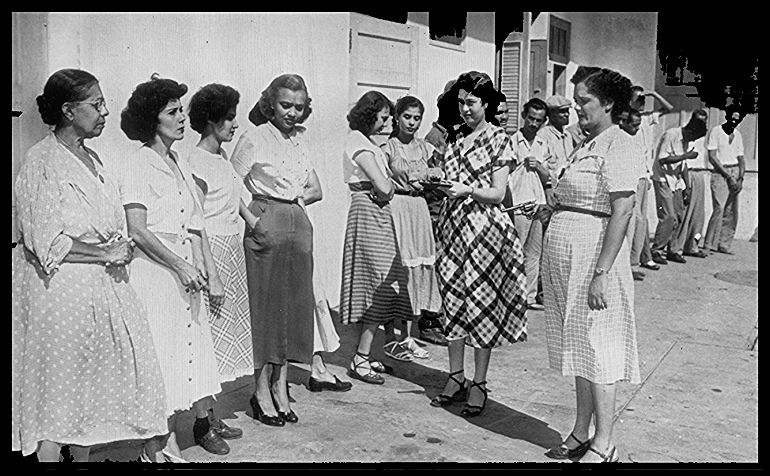
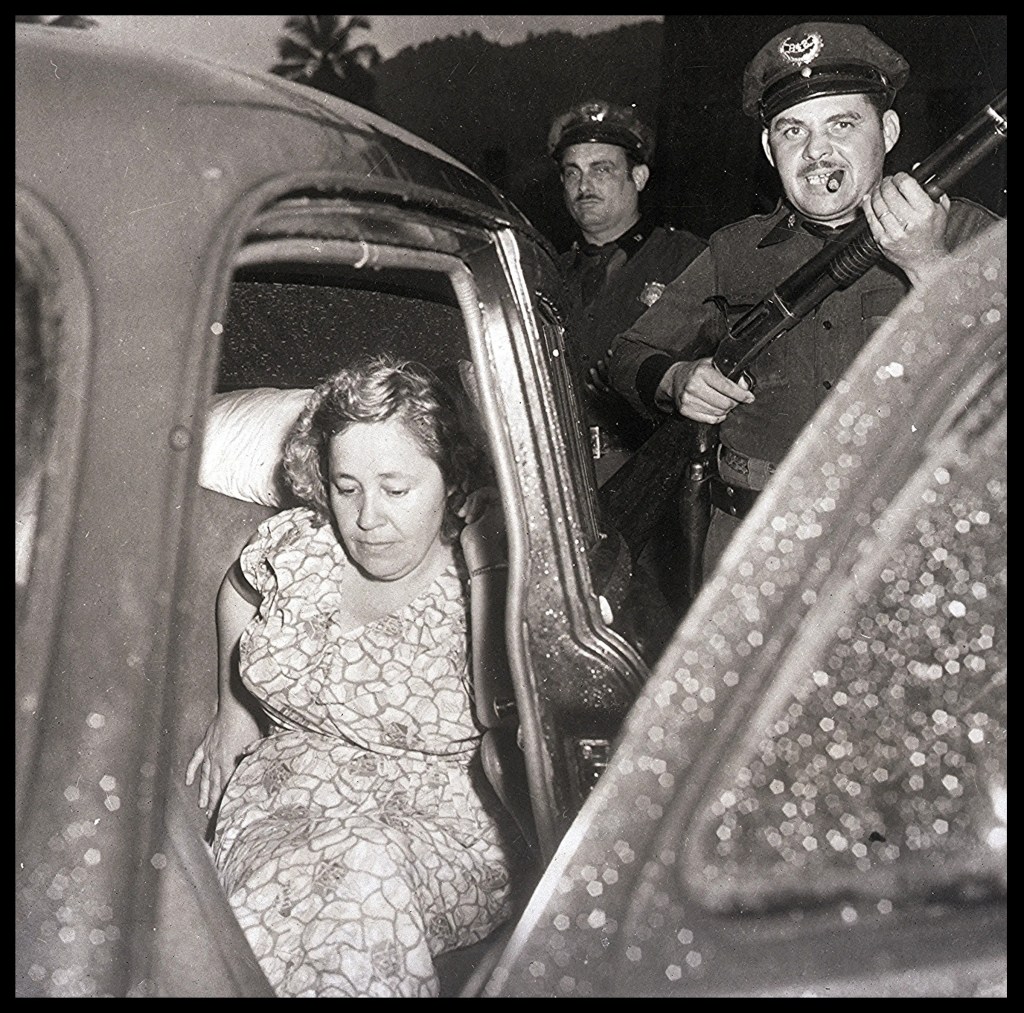
Nationalist Party women being processed after their arrests by colonial police.

Reynolds was indisputably committed to Puerto Rico’s right to independence. Although she was not officially a member of the Nationalist Party of Puerto Rico, the affection, admiration and respect that she earned made her an honorary member.

Her legacy has secured a special place in the archives of Puerto Rican national liberation and the struggle against imperialism. What was unique about Ruth Reynolds, as a U.S. citizen of white origin with all the implied privileges, she fought hard and sacrificed much for the Puerto Rican people as if she was a Boricua by birth herself.

¡QUE VIVA PUERTO RICO LIBRE!

Tribute to Maurice Bishop Freedom Fighter of Grenada

________________________________________________________________________

“Our Revolution in Grenada is a people’s Revolution and as such one of the fundamental principles of our Revolution is the establishment of the people’s rights. Among these rights, we include the right to equal pay for men and women, the right to social and economic justice, the right to work and the right to democratic participation in the affairs of our nation.” – Maurice Bishop

_________________________________________________________________________

By Carlos “Carlito” Rovira

Born on May 29, 1944, on the Caribbean island of Grenada, Maurice Bishop became an inspiring revolutionary figure who sought to make Black liberation a reality in his homeland. He envisioned transforming the social and economic life of Grenada on a socialist basis. Bishop founded and led the New Jewel Movement (Joint Endeavour for Welfare, Education and Liberation, a revolutionary political party with a Marxist-Leninist premise.

Bishop studied at the University of London where he graduated in 1969 with a degree in law. It was during those years when he began reading MarxistLeninist literature and became interested in learning about the histories of socialist movements, especially the Cuban Revolution.

He returned to Grenada in 1970 where he practiced law defending the grievances of poor workers. On that year Bishop provided legal counsel for militant striking nurses at St. George’s General Hospital seeking better working conditions for medical staff and adequate healthcare for patients.

On March 13, 1979, Maurice Bishop led an uprising in which the government of Prime Minister Sir Eric Gairy was overthrown. This was the outcome of deteriorating social and economic conditions that impacted the general population of the island nation.  Gairy was accused of leading a corrupt and oppressive regime that was supported by lumpen elements of the “Mongoose Gang”.

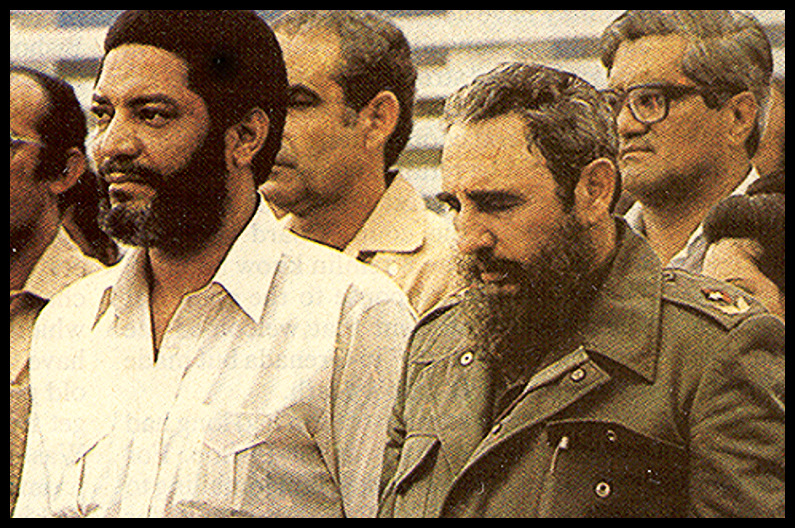
Grenada’s Prime Minister Marice Bishop and Cuban President Fidel Castro Ruz, in Cuba, 1980

Between 1979–1983 Maurice Bishop’s government introduced sweeping reforms, including free healthcare, secondary education, construction of homes, paid maternity leave, equal pay for women, and the Center for Popular Education (CPE) for literacy, and land reforms.

As soon as the new government was established it forged close diplomatic relations with Cuba. Havana officials agreed to help Grenada construct the Point Salines International Airport on the southern tip of the island. It was later re-named to Maurice Bishop International Airport, after the Grenadian national hero.

Bishop visited Cuba in 1977 prior to becoming Grenada’s Prime Minister. He returned for the Non-Aligned Countries Summit in Havana on September 2, 1979, and again for the May Day celebration in 1980.

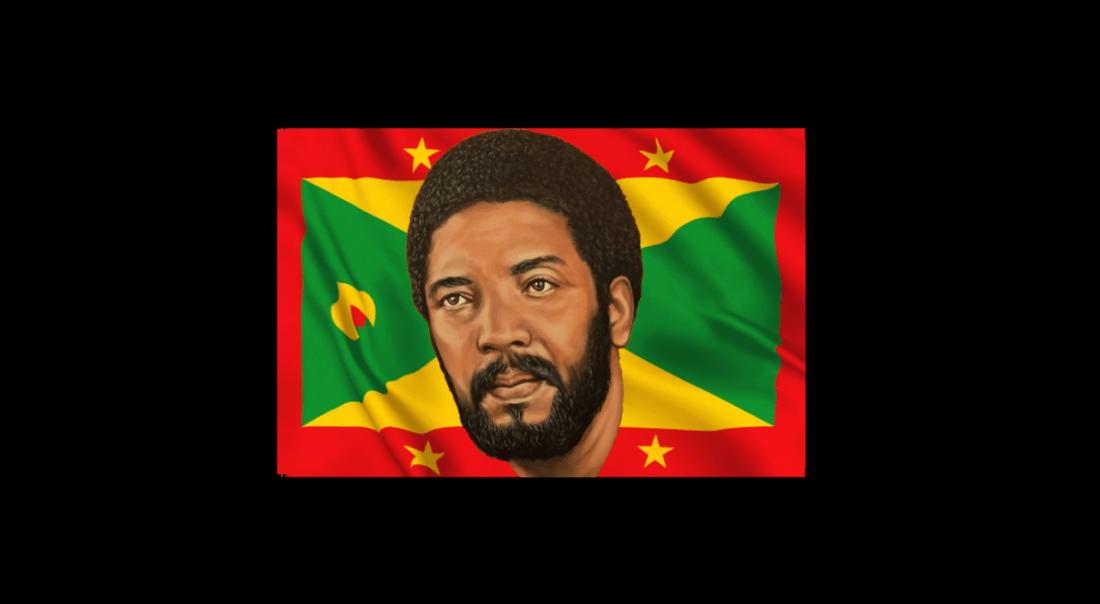
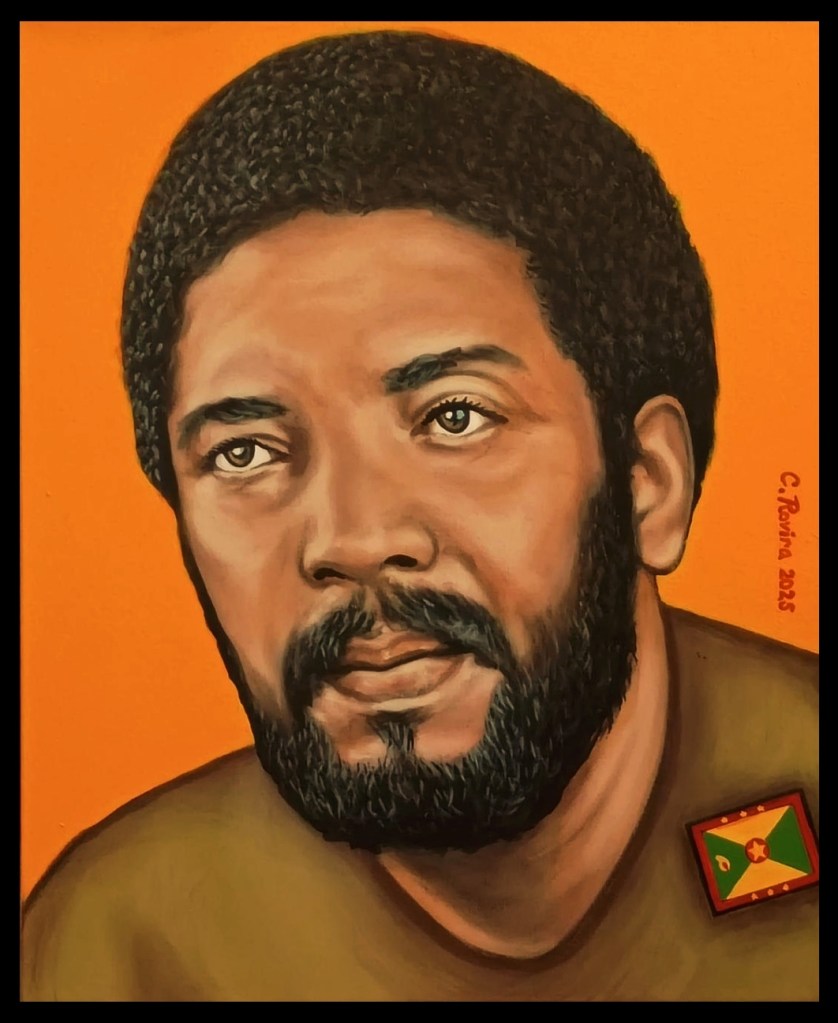
My portrait of Maurice Bishop. 20″ X 24″, acrylic paint on canvas.

Washington officials were enraged by the developing relationship between Grenada, Cuba and the Soviet Union. U.S. officials felt threaten by the revolutionary enthusiasm of that period, in which Grenada added to the anxiety.

Under the Democratic Party presidency of Jimmy Carter and Republican Party Ronald Reagan, the Central Intelligence Agency (CIA) was given approval to conspire and aggravate internal differences within the Grenadian leadership. The country’s second head of state, Deputy Prime Minister Bernard Coard was at odds with Bishop over his relationship with Cuba and other socialist countries. Coard became increasingly anti-communist.

On October 13, 1983, Coard led a coup in which Bishop was arrested. A few days later hundreds of Bishop’s supporters freed him by storming the Fort George prison where he was held, located in the capitol city of Saint George. Soon after, the revolutionary leader was re-captured and on October 19, 1983, Coard ordered Bishop be executed by firing squad.

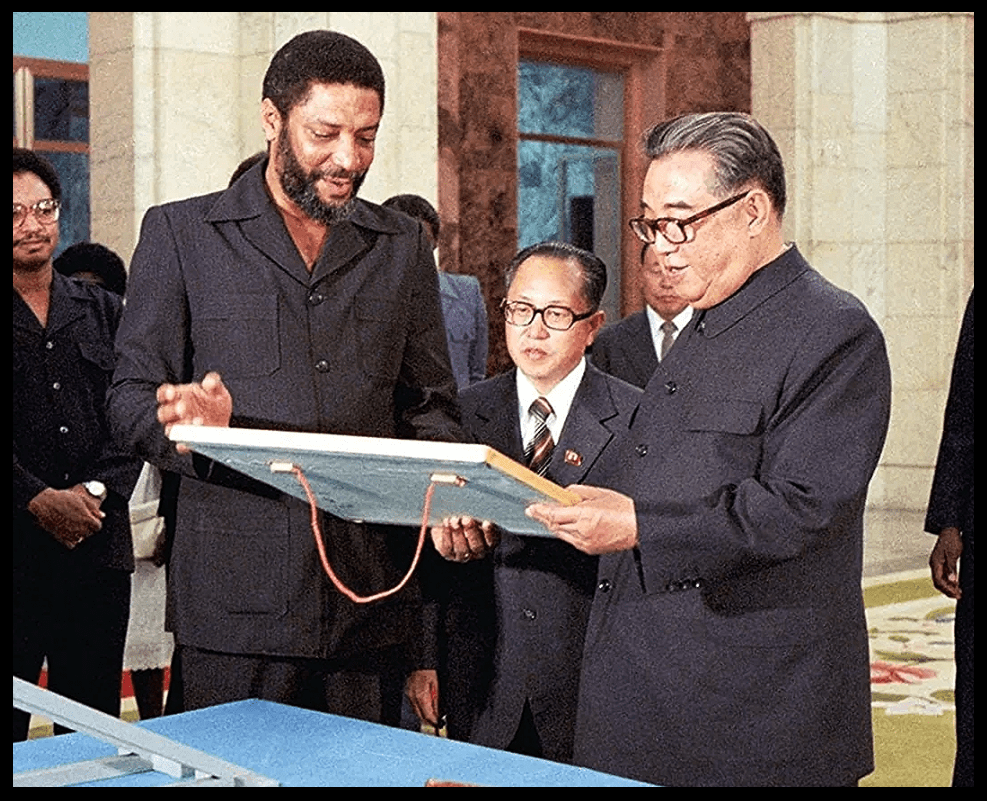
Democratic People’s Republic of Korea (DPRK) President Kim Il Sung with
Grenada’s Prime Minister Maurice Bishop.

Taking advantage of the internal strife in the country, on October 25, 1983, U.S. military forces invaded Grenada. Washington officials used “restoring order” and the safety of U.S. students attending school in Grenada as a pretense for the invasion. The real motive for the assault was to eliminate Cuban and Soviet influence in Grenada and the Caribbean islands.

Being that Bernard Coard appeared to work on behalf of U.S. imperialism it’s ironic that he was also arrested by U.S. forces and charged with the assassination of Maurice Bishop. Washington officials, however, were politically cautious and wanted to project the military invasion as an act to uphold justice. U.S.-trained Law enforcement officers from neighboring Caribbean islands were brought to Grenada on a C-5A military transport plane to give the false appearance of their inclusion in the U.S. operation.

It was the first U.S. military incursion in a foreign country since its defeat in the Vietnam War. Washington officials wanted to assert their military might in order to make a political statement to the world. To accomplish this endeavor, elite units were used from Army Special Forces, Navy Seals and Marines.

Despite the tightening grip of U.S. imperialism on the Caribbean island nations and all Latin America, the masses of this region continue to demonstrate their resistance to oppression. What Maurice Bishop aimed to achieve in his beloved Grenada will inevitably become a reality with the defeat of imperialism.

LONG LIVE THE REVOLUTIONARY LEGACY OF MAURICE BISHOP!

Tribute to Civil Rights iconic figure FANNIE LOU HAMER

_________________________________________________________________________

“And we can no longer ignore the fact that we can’t sit down and wait for things to change. Because as long as they can keep their feet on our neck, they will always do it. But it’s time for us to stand up and be women and men.” –Fannie Lou Hamer

_________________________________________________________________________

By Carlos “Carlito” Rovira

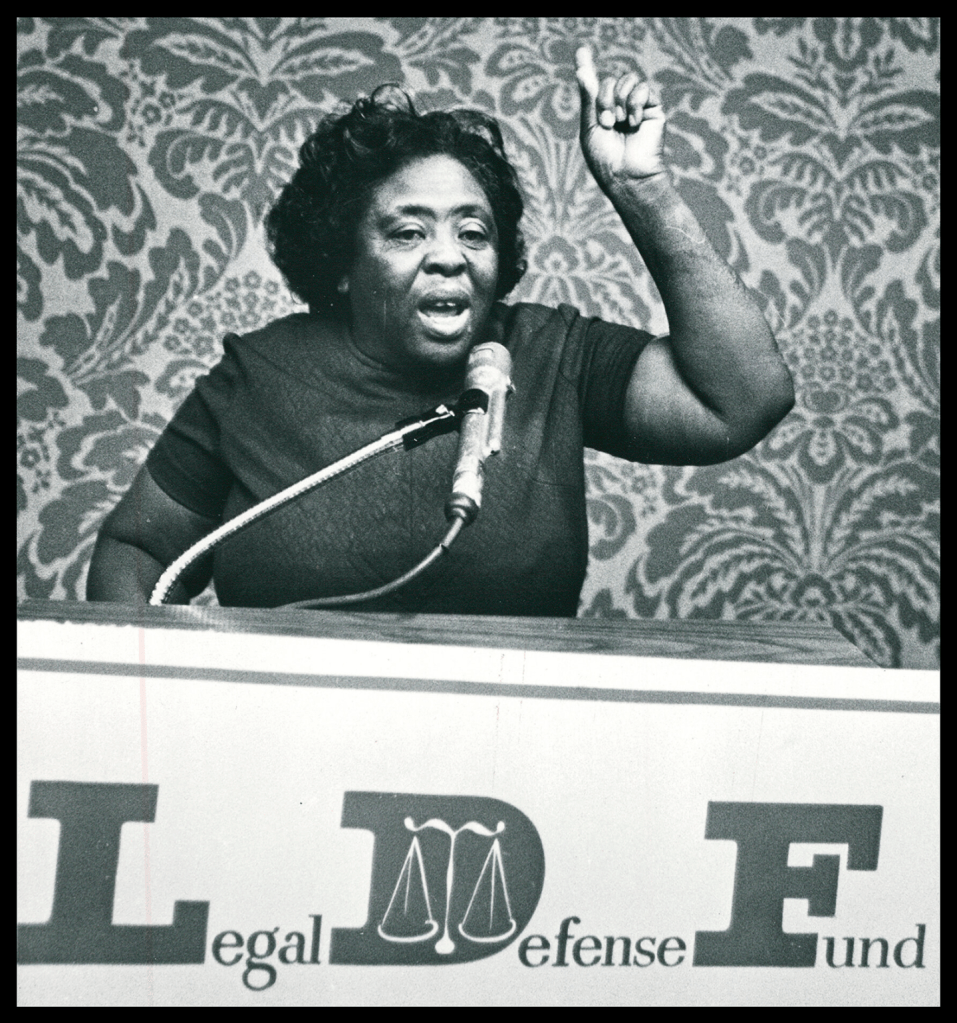
The legacy of Fannie Lou Hamer is one of the most inspiring to come out of the 1960s-70s Civil Rights movement. She was an outspoken activist that never yield to white supremacist terror and fought vigorously for the human rights of Black people.

Born in Montgomery County, Mississippi on October 6, 1917, during the height of Jim Crow laws and lynchings, Fannie Lou Hamer knew first-hand the viciousness of Black oppression. She was the youngest of 20 children in an extremely poor sharecropping family.

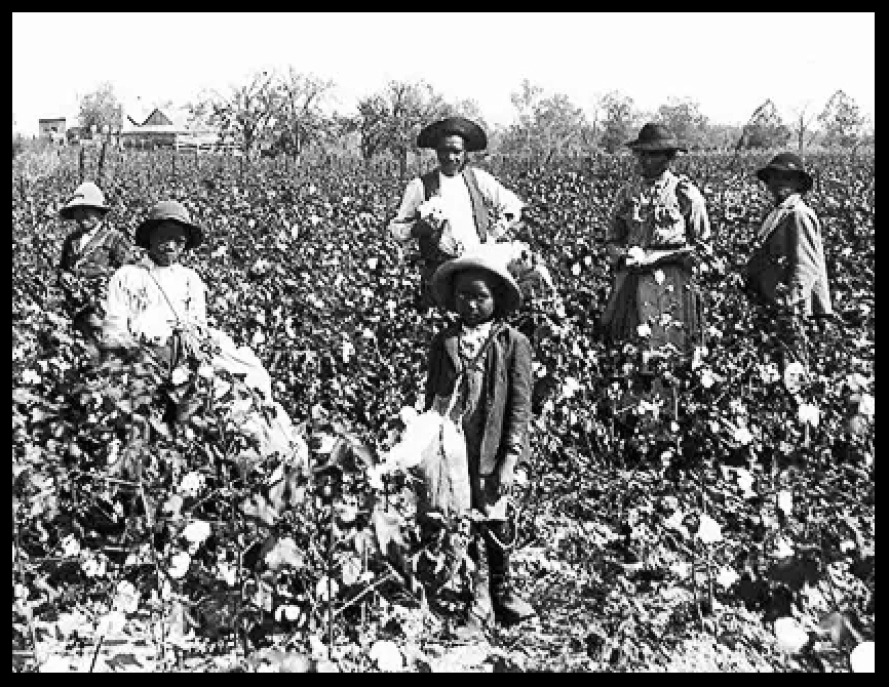
At just 6 years old, Fannie Lou began working in the field picking cotton. She was compelled to drop out of school at 12 years old to work full-time in the cotton fields in order to help support her family survive. However, because Fannie Lou loved reading the Bible and other books, she was fully literate by the time adulthood arrived.

Big landowners attempted to use the sharecropping system to re-enslave Black people.

One of the most outrageous acts committed against Hamer was in 1961 at a hospital in Mississippi. She went to undergo a routine surgery for the removal of a uterine tumor. Without her knowledge or consent, a white doctor also performed a hysterectomy.

Years later, Hamer discovered that what was done to her without permission was part of a broader and secret eugenics campaign to reduce the Black population. This heinous genocidal program involved medical institutions as well as agencies of the U.S. government. Indigenous, Chicana/Mexican and Puerto Rican women were also secretly targeted for sterilization. Similarly, in Puerto Rico, one/third of the child-baring female population was sterilized between the 1930s to the 1980s.

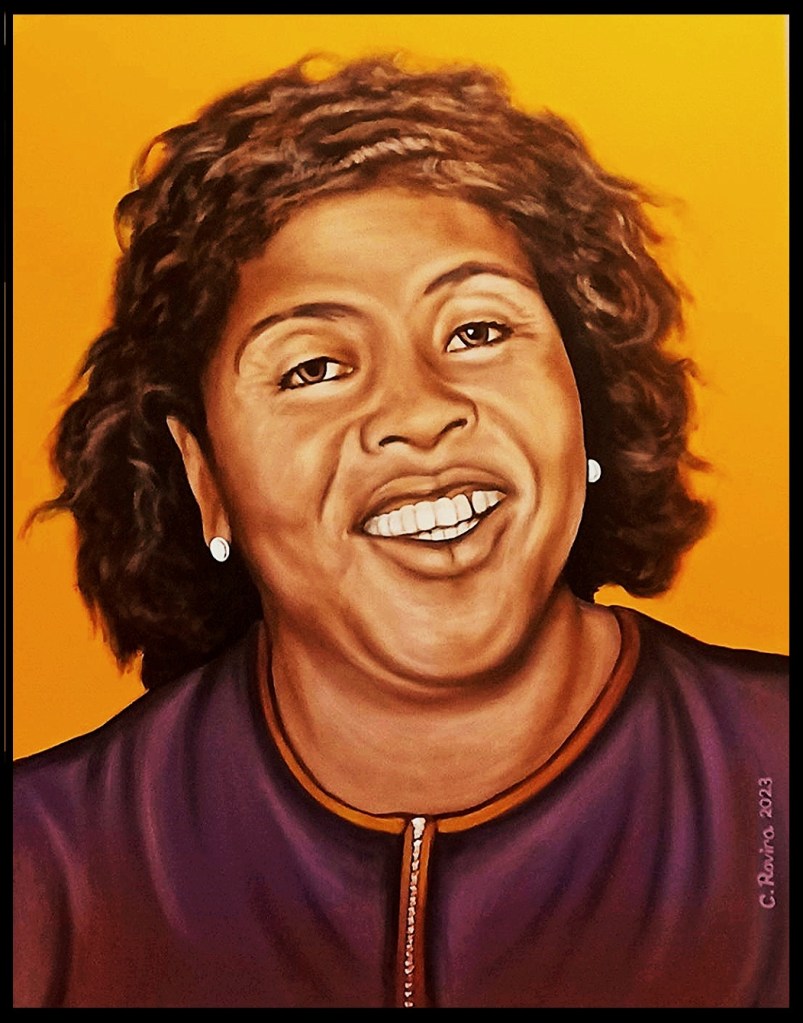
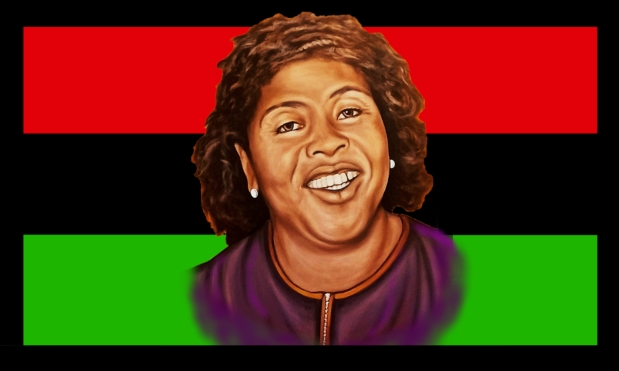
My portrait of Fannie Lou Hamer made in 2023. 24″ X 30″, acrylic paint on canvas.

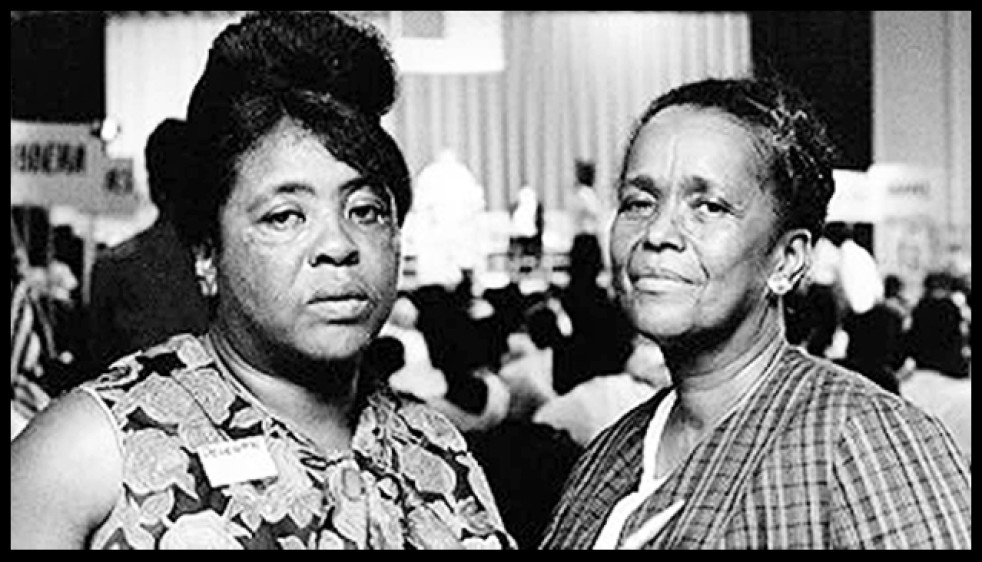
Despite many ordeals that affected her personally, Hamer’s resilience and leadership was strengthened. In 1963, this heroine earned the title Field Secretary for the Student Nonviolence Coordinating Committee (SNCC) for its voter registration drives. This was an exemplary entity initially founded and led by another Civil Rights icon, Ella Baker.

Hamer’s outspokenness was admired by many Civil Rights leaders, including, Dr. Martin Luther King, Jr with whom she collaborated. Although Hamer differed with the more radical politics and tactics of the Black Panther Party, they maintained a mutual respect for one another based on their common interest in Black emancipation. In fact, Hamer was quite vocal condemning the media’s slanders and the government’s COINTELPRO attacks on individual Panther leaders and their offices throughout the country.

Fannie Lou Hamer (L) and Ella Baker (R).

The Ku Klux Klan and other racists among the white populace of the deep South did not take well knowing that Black people were emboldened and politically active. The consequential backlash that African Americans encountered for organizing themselves to demand their rights was violence.

In many municipalities throughout the South police and KKK activities were synonymous. For anyone, especially African Americans, who challenged existing racist laws designed to deny Black people the right to vote meant risking your life. Fannie Lou Hamer proved to be a courageous woman; she dismissed the potential physical danger to herself and proceeded in her quest for racial equality.

The police state was never hesitant to use violence against the Civil Rights movement.

On June 9, 1963, Fannie Lou Hamer was severely beaten by police while in custody. She was traveling on a bus with co-activists of Freedom Summer, returning home from a voter registration workshop. When they arrived at a rest stop to get a meal at a diner the group was refused service. The police were then called and immediately all the Black activists were brutally beaten.

Once in the jailhouse, Fannie Lou had her clothing ripped off. As she was viciously held down on the floor naked the police struck her with a baton repeatedly. The cops sexually abused and tortured her. The horror she helplessly experienced on that day is reminiscent of what enslaved Black women suffered by the hands of overseers and slaveowners.

The beating caused permanent kidney damage, which resulted in a medical condition that lasted until her death on March 14, 1977. Despite her poor health and being emotionally traumatized, Hamer continued her activist work with the Student Nonviolent Coordinating Committee and the Southern Christian Leadership Conference (SCLC).

Fannie Lou Hamer traveled throughout the United States to enlighten people of the noble endeavor. She was invited to speak at universities, churches, political gatherings and rallies. Her influence was indisputably powerful as she promoted the general vision of the Civil Rights movement.

Women played a pivotal role in the Civil Rights movement.

On December 20, 1964, Fannie Lou Hamer visited the Williams Institutional Church in the Mecca of Black politics and culture, Harlem, New York City, where she met and appeared alongside of Malcolm X, El-Hajj Malik el-Shabazz. Hamer was running for office in Mississippi, in a campaign to win a seat in the U.S. House of Representative. It was at the gathering in Harlem when she presented her most famous speech titled, “Sick and Tired of Being Sick and Tired.”

Hamer was well received by a mostly Black audience who sympathized and admired her defiance and ability to survive many life-threatening ordeals. Her speech included a chronology of racist violence she personally experienced as well as shedding light on the suffering Black people have endured throughout the country.

Fannie Lou Hamer was an outspoken Queen of the Civil Rights movement.

Among the many challenges Fannie Lou Hamer had to confront was the shameful patronizing racism of the overwhelmingly white Democratic Party, or “Dixiecrats,” as Malcolm X frequently described them. Their not-so-hidden social arrogance was transparent to most Black people, especially Fannie Lou Hamer who sensed their insidious prejudices towards her for speaking with a strong rural Southern Black accent and having a sharecropper family background.

White Democratic Party officials postered about “favoring” Black freedom, but only to the extent of securing for themselves the Black vote. It would have been naive to expect anything else. The customs, habits and traditions of the Democratic Party, along with its insidious behavior towards African Americans is all rooted in the history of chattel slavery. The Democratic Party was once the political party of slave owners.

Being aware of the history and insulting behavior by white privileged officials, compelled Black activists affiliated with the Democratic Party to create the Mississippi Freedom Democratic Party (MFDP) in 1964, of which Fannie Lou Hamer was a co-founder. The Civil Rights activists had hoped to push for a better position within the Democratic Party while preserving an independent existence beneficial to the political struggles of Black people.

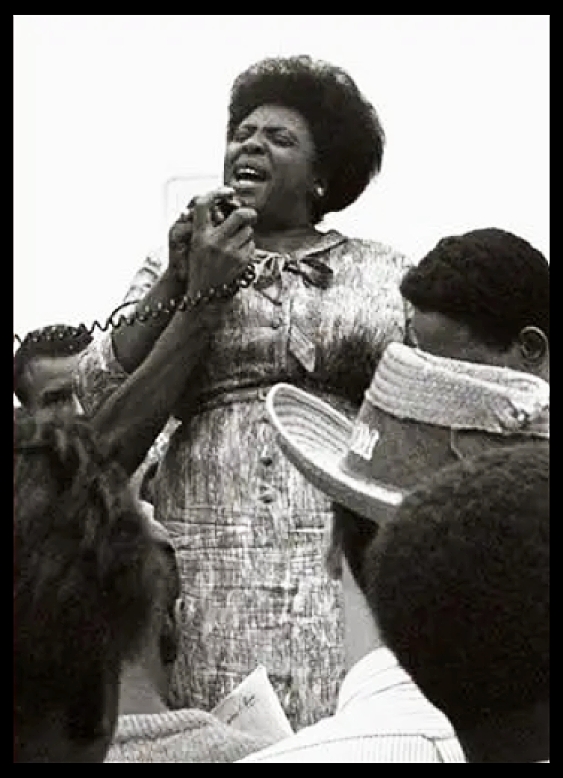
Fannie Lou Hamer was a skillful orator that addressed the plight of the oppressed.

Hamer continued to push forward by creating the Freedom Farm Cooperative in Sunflower County, Mississippi. 640 acres were purchased to provide employment for many Black residents. They collectively cultivated and farmed the land. Hamer was also a co-founder National Women’s Political Caucus (NWPC), an entity that included Black and other women of color. The NWPC played a pivotal role during the rise of the Feminist movement. It made efforts to combine and highlight the relevance of the anti-racist struggle to the demands of women’s emancipation.

Fannie Lou Hamer was inspiring and an indisputably unique representation of an oppressed people. But she was also the product of centuries-long militant traditions which made possible the survival of Black people from the most challenging and unimaginable circumstances throughout their history.

Despite living with chronic pain from injuries sustained during the 1963 savage beating by police, the spirited energy to fight for the freedom of her people never deterred. The selflessness and humanity that Fannie Lou Hamer passionately possessed throughout her life, once it is emulated by millions of people it shall guarantee a victorious fight to end racist oppression and usher in a new society.

LONG LIVE THE LEGACY OF FANNIE LOU HAMER!

Tribute to a Cuban Revolutionary Heroine MELBA HERNANDEZ


By Carlos “Carlito” Rovira

Melba Hernandez’s life is filled with many fascinating stories which reflect the courage, strength and resilience of Cuban women who made overthrowing the U.S.-puppet regime of Fulgencio Batista a reality. Melba was a combatant and leader in the Rebel Army of the July 26 Movement. She became an important and symbolic political figure of the 1959 Cuban Revolution.

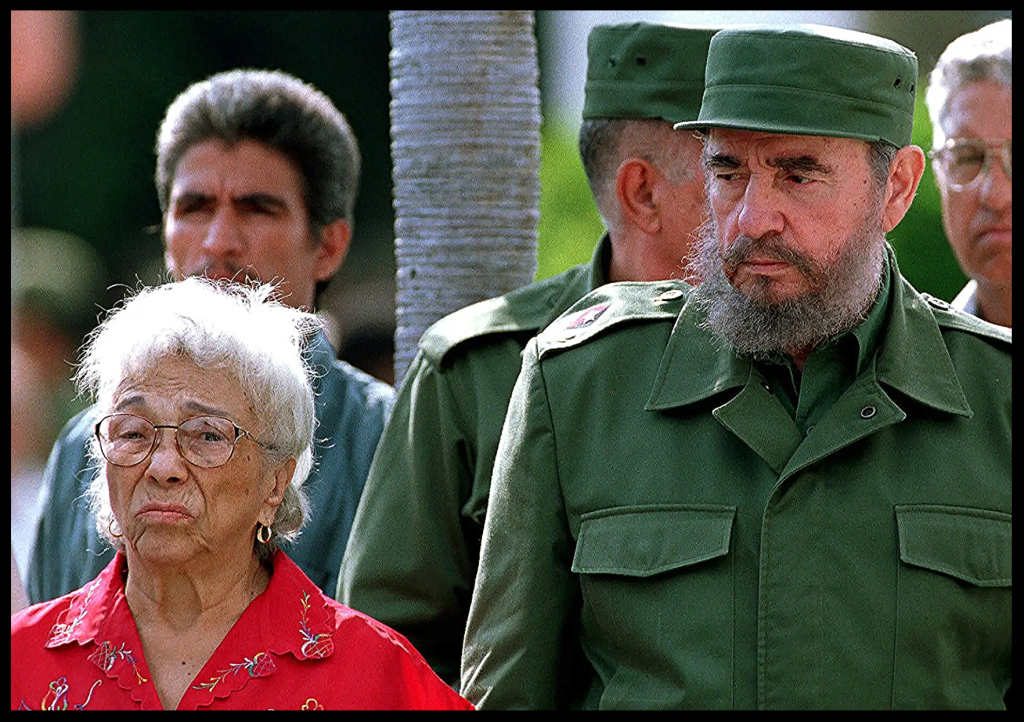
During the armed struggle Hernandez fought gallantly alongside of Comandante Fidel Castro Ruz. She was a confidant of the revolutionary leader and after the seizure of power this heroine became part of his executive staff. Melba played a pivotal role during the critical period of consolidating the Cuban state apparatus.

Melba was introduced to politics by her parents who partook in Cuba’s War for Independence of 1895, led by the legendary Jose Marti. She was a lawyer who was affected by witnessing first-hand the disturbing social and economic inequality in Cuba. From the time she completed her education the young Melba was empathetic with the plight of poor peasants and exploited workers whom she represented as legal counsel.

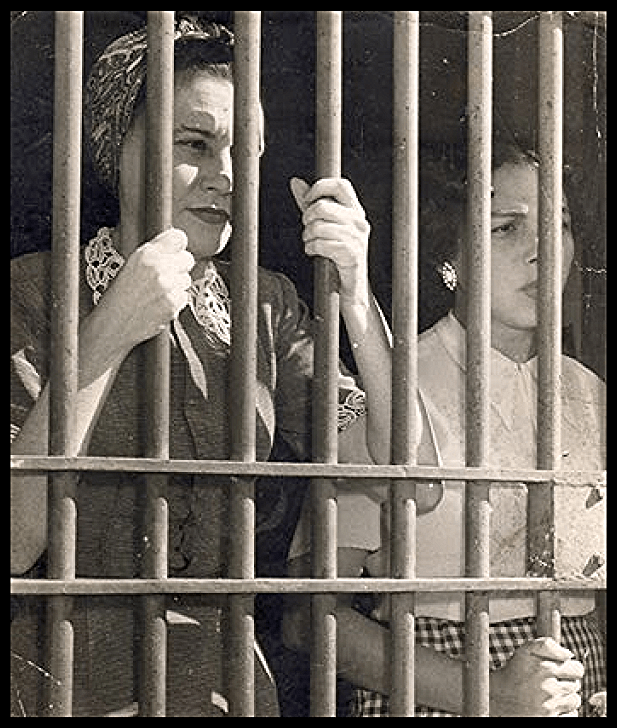
Melba Hernandez (right) and Haydee Santamaria in custody following the
attack on Moncada Barracks.

Melba Hernandez and Haydee Santamaria were the only two women that partook in the July 26, 1953, attack on the Moncada Barracks in Santiago, the event that sparked the Cuban Revolution. Part of Fidel Castro Ruz’s plan was for the revolutionary insurgents to enter the surrounding restricted zone at Moncada dressed in the same uniforms as government soldiers. It was Melba who illegally obtained the uniforms. She convinced a military official who supported the rebel cause to assist with her mission.

The attack on Moncada was bloody and ended in failure. By the time it ended most of the insurrectionists were wounded and killed. Many of these revolutionaries died as by torture at the hands of sadistic henchmen of the Batista regime. Some, like Fidel Castro Ruz managed to escape and hide in the jungle until they negotiated a surrender days later through an intermediary.

Hernandez and Santamaria were arrested, convicted and given shorter prison sentences in comparison to their male counterparts who were released two years later. During their incarceration, Hernandez and Santamaria experienced humiliating abuse by Batista’s prison officials.

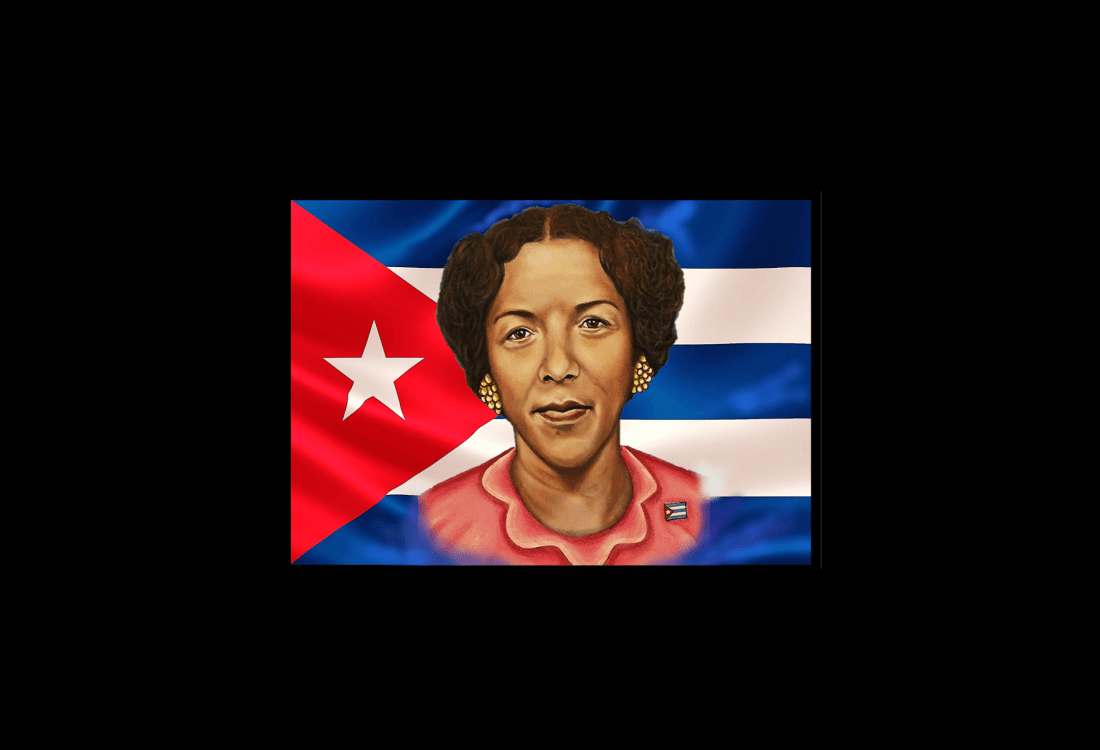
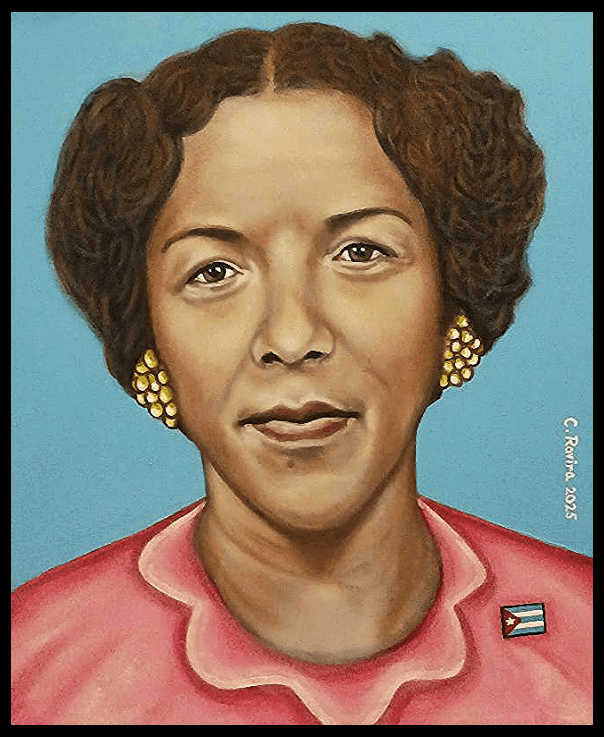
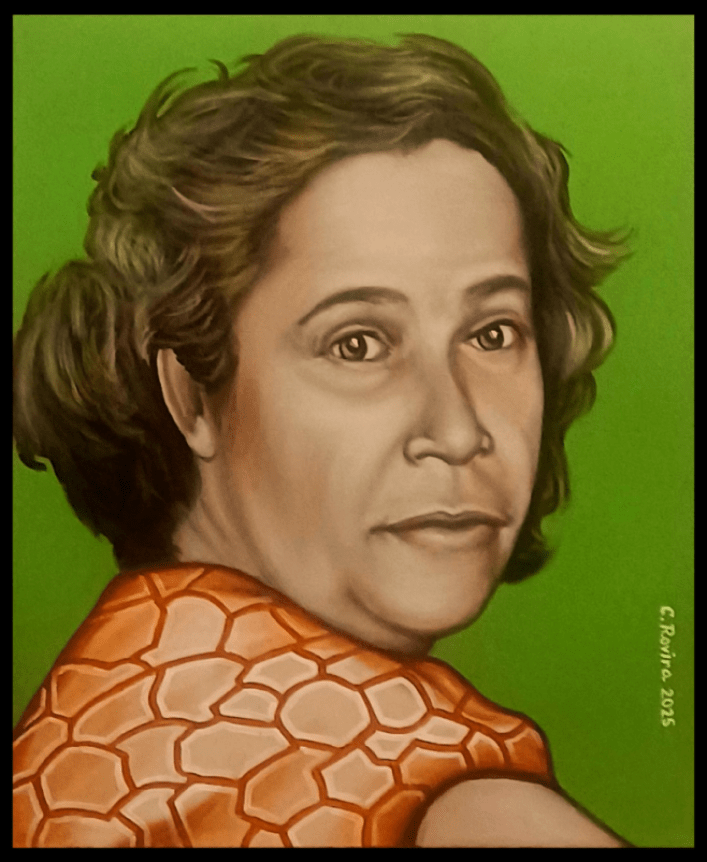
My portrait of Melba Hernandez. 20″ X 24″, acrylic paint on canvas.

After these heroines were released, they were determined to carry out the work of building a mass movement and the clandestine network that would eventually topple the Batista government. Melba was instrumental in smuggling out of the prison where Fidel Castro was held a draft of his famous courtroom speech when he was tried “History will Absolve Me”, one of the most important documents of the Cuban Revolution.

After the seizure of power on January 1, 1959, Hernandez was assigned to several important roles in the government. In 1960, she was placed in charge of women’s prisons in Cuba. For Hernandez, a top priority was to spearhead prison reform to align with the humane principles of the revolution.

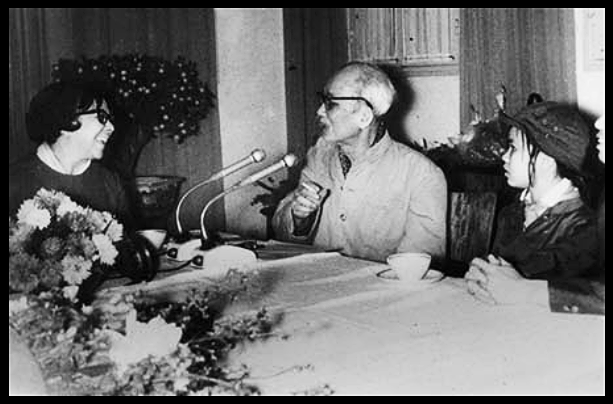
Melba Hernandez meeting with Vietnamese leader Ho Chi Minh.
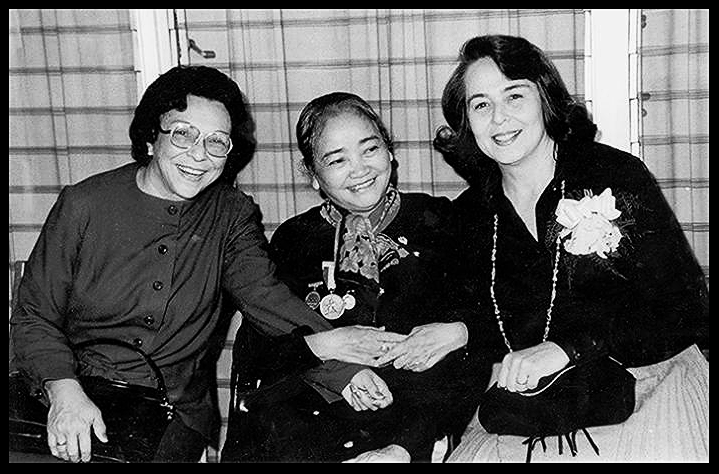
Melba Hernández and Vilma Espín welcomed Vietnam‘s General Nguyễn Thị Định, during her visit to Cuba

During the late 1960s – 1970s, at the height of the vicious colonial war the U.S. was waging against the Vietnamese people, Hernandez risked danger to herself by traveling frequently to the war-torn country as head of the Cuban Committee in Solidarity with Vietnam. She also served as Secretary General of OSPAAAL, the Organization of Solidarity with the Peoples of Asia, Africa and Latin America.

In the 1980s, Hernandez earned Cuba’s Ambassadorship to Vietnam and Cambodia due to her diligent work of solidarity with the Vietnamese Revolution. This heroine also served the Cuban government as a Deputy in the country’s National Assembly of People’s Power.

Melba Hernandez with Comandante Fidel Castro Ruz.

Sadly, on March 9, 2014, Melba died of natural causes. Having lived her life as a diplomat and high-ranking official of a revolutionary government, her legacy shall inspire revolutionaries for generations to come, especially women who will be duty-bound to confront backward traditions that perpetuate women’s oppression.

Hernandez was among other iconic female figures who were decisive in that revolutionary experience, such as Vilma Espin, Celia Sanchez, Aleida March, Haydee Santamaria, and others. Their selflessness and loyalty to the revolution surmounted of of what many would have expected.

Thanks to the Cuban Revolution Melba Hernandez, dared to be amongst those to set standards for challenging the greatest tyrant in human history.

LONG LIVE THE CUBAN REVOLUTION!

DON JULIO PINTO GANDIA & the Nationalist Party of Puerto Rico

By Carlos “Carlito” Rovira

Julio Pinto Gandia was someone whom I remember during my childhood visiting our family home on the Lower East Side, New York City. I knew him as Don Pinto. My parents and other family members were affiliated with a secret committee of the Nationalist Party of Puerto Rico that operated in New York City, of which Don Pinto was leader.

Born in Manati, Puerto Rico on July 9, 1908, Gandia was one of the most outspoken advocates for the independence of Puerto Rico from U.S. colonialism throughout most of his life. He became a close and trusted confidant of the iconic Nationalist leader Dr. Pedro Albizu Campos and became known as his “right-hand man.”

Pedro Albizu Campos, Gilberto Concepción de Gracia and lawyer Julio Pinto Gandía, in the San Juan courthouse, Puerto Rico (1936)

When Campos was incarcerated in the 1930s for seditious conspiracy to overthrow the U.S. government in Puerto Rico, Gandia was asked to fill in as Interim President of the Nationalist Party.

And because Don Pinto Gandia was a legal attorney himself he worked closely with the Socialist Congressman Vito Marcantonio who represented New York’s East Harlem community. They both collaborated for several years to fight for Campos’ release from prison while using his legal case to expose the criminality of U.S. colonialism in Puerto Rico.

My portrait of Don Julio Pinto Gandia. 20″ X 24″, acrylic paint on canvas.

But Gandia was himself under the watchful eye of the Federal Bureau of Investigation (FBI), especially during the repressive McCarthy Era (1947-1957) of which in Puerto Rico it was more fascistic. He was constantly arrested by the FBI and other colonial authorities. And to interfere with his livelihood and cause further personal harm, in 1937 Gandia was disbarred from the practice of law in Puerto Rico.

Gandia was also accused of being the “mastermind” of the March 1, 1954, Nationalist armed attack on the U.S. House of Representatives. Lolita Lebron, Rafael Cancel Miranda, Irvin Flores Rodriguez, and Andres Figueroa Cordero staged that daring act to bring attention to the plight of the Puerto Rican people. From that point on Gandia was frequently arrested for questioning.

His refusal to answer questions by FBI and court judges about the attack on the U.S. Congress usually landed Gandia jail time for contempt of court. His stubbornness and complete loyalty to the Puerto Rican cause was recognized by his comrades and enemies of the independence movement alike.

In many of his conversations with Dr. Pedro Albizu Campos, Don Pinto Gandia raised the importance of aggressively bringing the case of Puerto Rico before the United Nations. Pinto Gandia was then assigned the task of meeting with delegates of countries belonging to the United Nations Special Committee on Decolonization to discuss Puerto Rico’s status.

Gandia’s skillful diplomatic work paid off when in 1978 the U.N. Special Committee officially declared Puerto Rico an occupied colony, despite infuriating outbursts made by U.S. delegates and the mainstream mass media. Washington officials reacted by launching a campaign that falsely showcased Puerto Rico as a success story of U.S. imperialism in Latin America.

However, two years prior to the political embarrassment the U.S. Government faced at the United Nations, in September 1976, after leaving his apartment in Puerto Rico, Julio Pinto Gandia vanished forever without a trace.

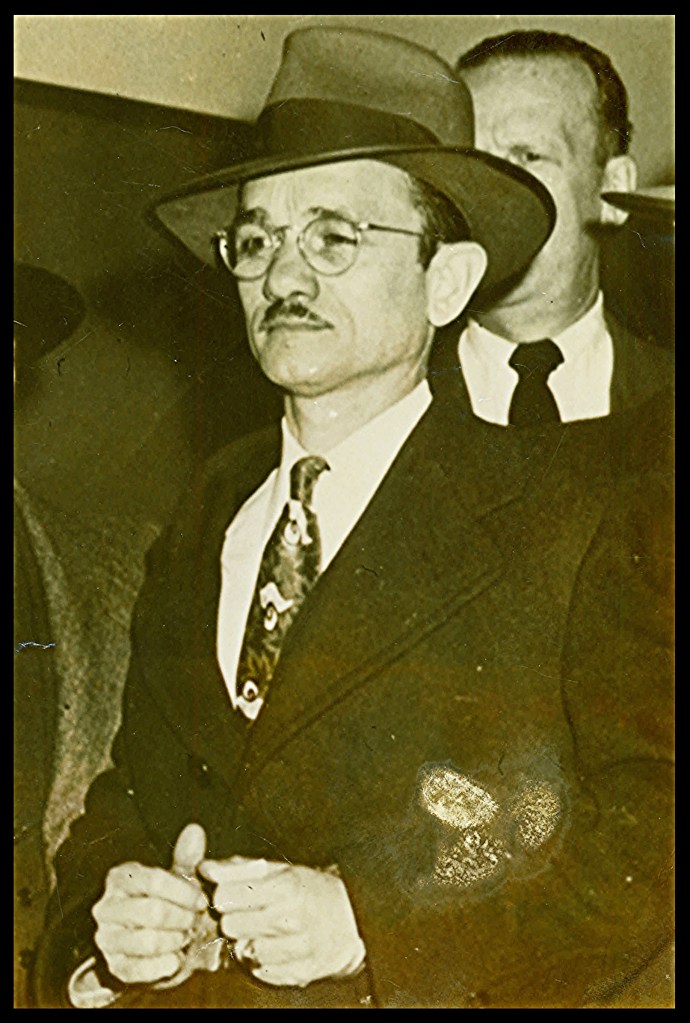
Don Julio Pinto Gandia in FBI custody.

Considering that Operation COINTELPRO was taking place with the Puerto Rican independence movement as one of its main targets, it is believed by many that the U.S. government was directly responsible for Gandia’s disappearance. The work this revolutionary was perceived as a threat to U.S. interest in its highly valued colonial possession.

Although we will never know what tragedy occurred to Julio Pinto Gandia his legacy has secured a special place in the archives of that historic liberation struggle. His resilience, sacrifice, and courageousness, under the most difficult circumstances reflect the moral strengths of the Puerto Rican people.

¡QUE VIVA PUERTO RICO LIBRE!

SHIRLEY A. CHISHOLM – a defiant voice of the Civil Rights movement

___________________________________________________________________

“Health is a human right, not a privilege that you purchase” — Shirly A. Chisholm

____________________________________________________________________

Tribute to Shirley Chisholm, November 30, 1924 – January 1, 2005

By Carlos “Carlito” Rovira

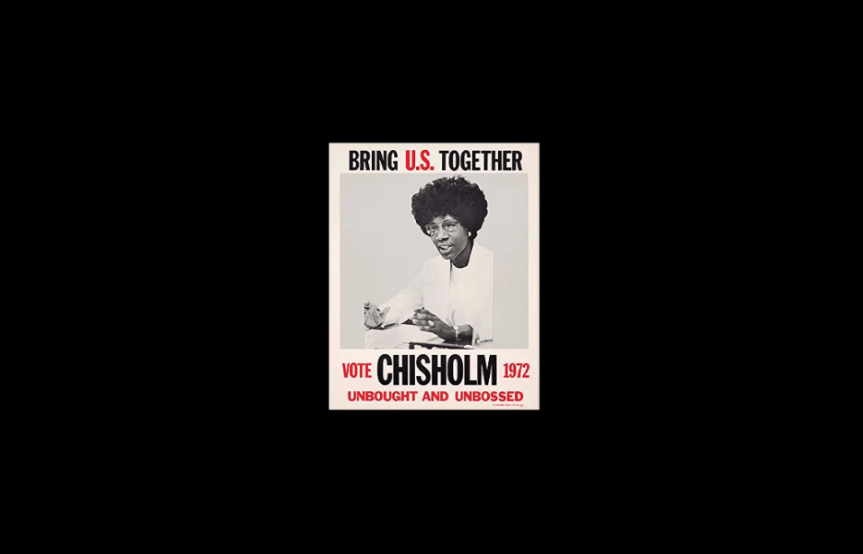
The legendary Shirley Anita Chisholm was a powerful voice of defiance that never ceded her fight for human rights in the United States. As a community activist and member of the U.S. House of Representatives she fought for racial and gender equality, anti-poverty programs, educational reform, and civil rights.

Although Chisholm was never a revolutionary in the traditional sense the Civil Rights movement, she played a significant role in had the potential of evolving in a more radical direction. When making public speeches she agitated like a Black nationalist, a feminist, labor organizer, supporter of LGBTQ+ rights, and used her Spanish language fluency to express support for the Latinx community. 

Chisholm was born in Brooklyn, New York to poor immigrant parents from Guyana and Barbados. Being that her family was undergoing financial difficulties, the young Shirley and her sister were sent to live with relatives in Barbados during her childhood.

Although I do not give grandeur to figures in bourgeois politics, Congresswoman Shirley A. Chisholm is a unique case. While Chisholm’s story was not restricted to her achievements in mainstream politics, she represents a particular part in the history of the Civil Rights movement that also fought for social justice.

Chisholm was among progressive politicians that challenged the government by fighting to achieve what oppressed people were demanding. Among these voices in mainstream politics were figures like Vito Marcantonio, Adam Clayton Powell, Charles Diggs, and others.

Chisholm waged a relentless struggle against white supremacist practices in the House of Representatives and other parts of the U.S. Government. Despite the desire of many white racist colleagues not to acknowledge Chisholm’s title, she was nevertheless an elected official who did not hesitated to call out anti-Black legislative proposals motivated to resist the Civil Rights momentum.

Like many progressive Black figures and openly anti-capitalist political organizations of that period, Chisholm was implicitly and explicitly accused of having “communist ties.” She adamantly condemned McCarthy Era legislation maintained for repressing the Communist Party USA and anyone that promoted the ideals of socialism.

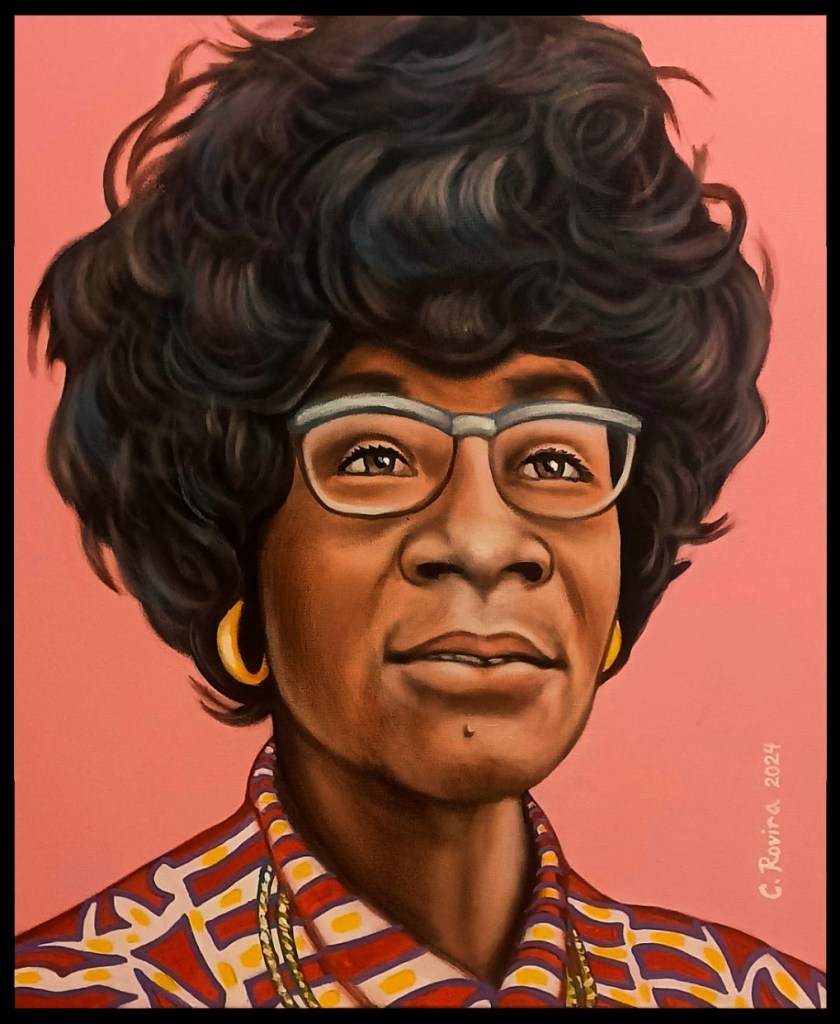
My portrait of Shirley A. Chisholm. 20″ X 24″, acrylic paint on canvas.

Chisholm was the first Black woman from New York to win a seat in the U.S. House of Representatives. She was an outspoken member of Congress who was vehemently opposed to the criminal U.S. war in Vietnam which she linked to the social and economic disparity in the United States.

The Congresswoman participated in many anti-war demonstrations and rallies throughout the country where she added her voice to the massive public outcry against the war. Her denunciations of Washington officials were fearlessly made to expose their criminal warmongering policies.

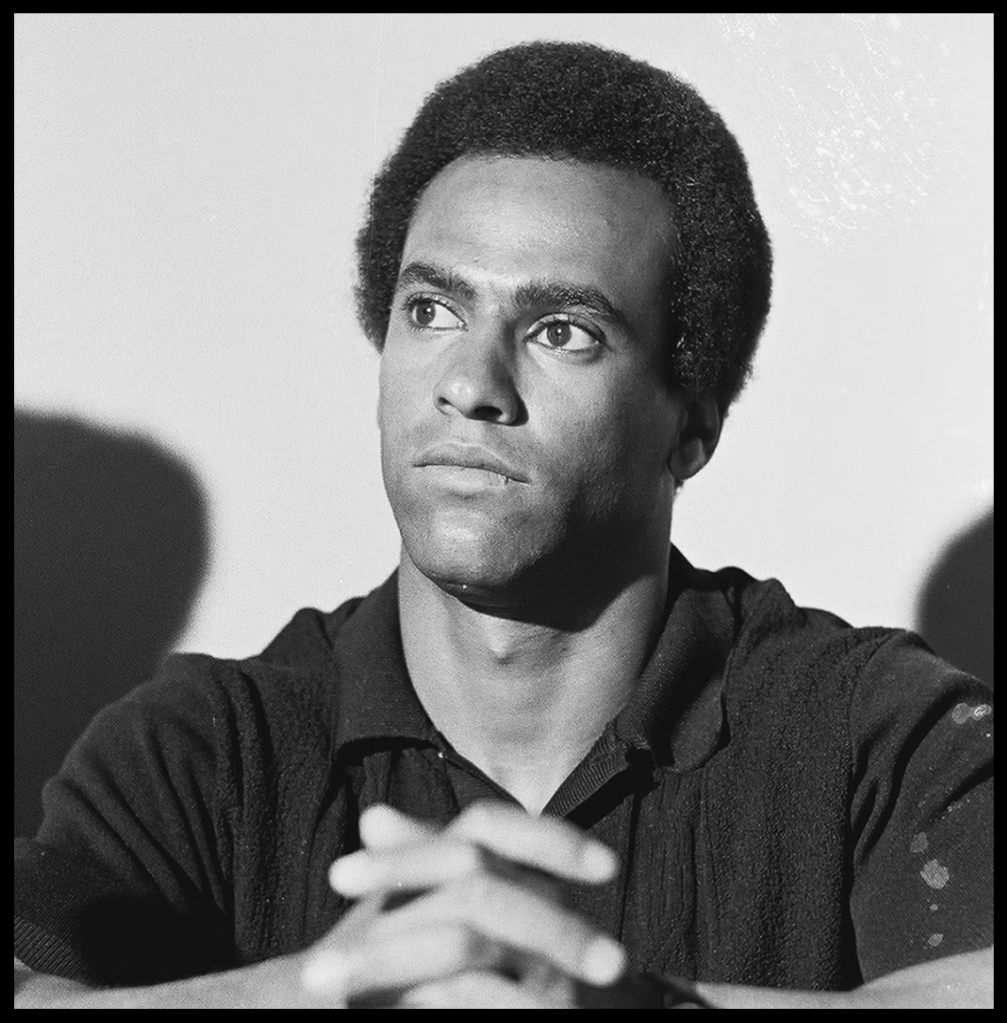
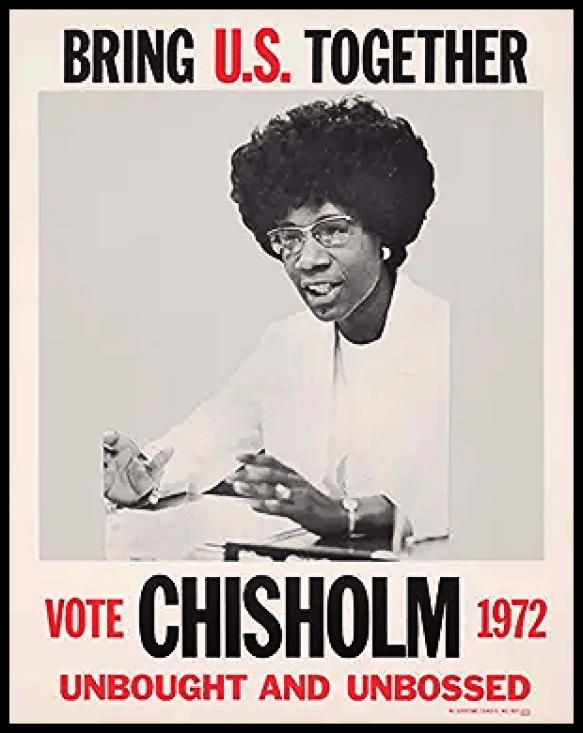
Chisholm unapologetically supported the Black Panther Party (BPP). She admired their courageous militant spirit. In April 1972, Chisholm met with BPP leader Huey P. Newton. The BPP recognized Chisholm’s courageousness and empathy for the suffering of the Black masses. The Panthers openly endorsed her campaign to get elected to Congress and set their organizational infrastructure for a voter registration drive to have her elected.

Black Panther Party Minister of Defense Huey P. Newton.

Although Chisholm possessed a fiery spirit that added to the strength of the Civil Rights movement, she came under heavy criticism and condemnation from many circles including within the Black community. On June 8, 1972, Chisholm unexpectedly visited the racist Alabama Governor George Wallace at Holy Cross Hospital in Silver Spring, Maryland where he was recovering from gunshot wounds in an assassination attempt. In that same year Wallace and Chisholm were competing candidates for the Democratic Party presidential nomination.

Chisholm’s response to her many critics, who viewed the visit to an outspoken white supremacist as absurd, was that she acted with empathy consistent with her religious faith. Like all mainstream political figures Chisholm also had her own significant contradictions.

Despite Chisholm’s political complexities, how she viewed her involvement in bourgeois politics on behalf of oppressed people merits appreciation and applause. Washington officials were irked by an outspoken Black woman intruding in their world of white privilege and entitlement. Nothing could have been more uncomfortable than a strong and dignified woman of color with character always ready to call them out

The humiliation she experienced from the disrespectful behavior of racist colleagues did not deter her. Chisholm’s life journey which at times included unpleasant moments taught her to be resilient. Nothing stopped her from moving forward to carry out legislative work. Her famous motto was: “If they deny you a seat at the table bring your own folding chair.” She had a way of frustrating the most condescending and arrogant elements in the U.S. Congress.

Tribute to Blanca Canales, heroine of the Jayuya Uprising

By Carlos “Carlito” Rovira

Below is a 20” X 24”, acrylic paint portrait of the legendary Puerto Rican Nationalist, Blanca Canales, one of my favorite super-sheroes. Her story always fascinated me whenever my parents spoke of her with admiration during my childhood.

Blanca Canales lived from February 17, 1906, to July 25, 1996. She was an educator and staunch leader of the Nationalist Party in Jayuya, Puerto Rico. As a child she was reared by parents who advocated independence for the homeland from U.S. domination. By the time Blanca reached adulthood she became well versed in the anti-colonial cause.

The young Blanca Canales and Dr. Pedro Albizu Campos.

Canales was motivated to join the Nationalist Party due to her disdain for the repressive U.S. colonial presence in Puerto Rico, especially during the 1948 Law 53, also known as the Gag Law. This decree made it illegal to mention independence in literature, recorded music or public speeches. In addition, waving or possessing a Puerto Rican flag was a criminal offense punishable by 10 years in prison.

When Dr. Pedro Albizu Campos rose to the presidency of the Nationalist Party Blanca participated in organizing the women’s section of that entity, known as Daughters of Freedom. Her charisma and convictions inspired many women to join the ranks of the Nationalist Party.

My portrait of Blanca Canales. 20″ X 24″, acrylic paint on canvas.

But Blanca Canales is best known for leading the famous October 30, 1950, Jayuya Uprising, part of the general Nationalist revolt in Puerto Rico. The Nationalist Party leadership chose to strike with armed force once their intelligence operatives discovered a secret plan the U.S. colonizers preparing to destroy the independence movement with violence.

On that morning, Canales led a contingency of insurrectionists in an armed attack on the police headquarters of Jayuya, where a fierce gun battle ensued for several hours. Police officials were shocked by the unexpected tenacity of the Nationalists. Overwhelmed and outnumbered, colonial officials and police were compelled to surrender and exit the building with their hands raised in the air.

Blanca Canales in custody by colonial police after the Jayuya Uprising.
Nationalist Party women faced the same repressive consequences as their male comrades. In this photo they are being processed after arrest by colonial police.

Puerto Rican Nationalists also launched armed attacks on police and government facilities in other cities, Utuado, Arecibo, Mayaguez, Naranjito, Peñuelas, and Ponce. In San Juan, Dr. Pedro Albizu Campos and other patriots defended the Nationalist Party headquarters in a shootout with colonial police. Blanca Canales was one of many women who took part in this significant chapter in Puerto Rican history.

Immediately after the Nationalists gained control of Jayuya, Blanca proceeded to give the command to burn down the despised police facility. Surrounded by crowds of residents, the brave patriots defiantly raised the outlawed Puerto Rican flag. With her weapon raised in the air, Canales shouted the solemn historic words of the struggle — “QUE VIVA PUERTO RICO LIBRE!” She boldly declared the independence of Puerto Rico!

Blanca Canales flanked by two other Nationalist heroines, Lolita Lebron (left) and Isabel Rosado (right).

The response of U.S. colonialism to the insurrectionists was swift and brutal. The National Guard was utilized to repress the revolt including bombing Jayuya and Utuado from warplanes in a desperate rush to subdue the Nationalists.

The Jayuya Uprising is an episode in Puerto Rican history that remains virtually hidden from mainstream education. Puerto Rico’s colonial status points to the plunderous intentions of the U.S. in Latin America and Caribbean. What the Jayuya Uprising did was to cause political embarrassment for U.S. rulers, who were quick to depict the situation as a conflict among Puerto Ricans.

Blanca’s love for the homeland was uncompromising. Despite the revolt being suppressed and having sacrificed so much by spending years in prison, her courageous role in the liberation struggle is unforgettable. Her legacy will surely give rise to future revolutionaries that will fight for a free Puerto Rico.

QUE VIVA PUERTO RICO LIBRE!

Long Live the Heroic July 26, 1953, Attack on the Moncada Barracks!

Para la versión en español: https://carlitoboricua.blog/?p=14812&preview=true&_thumbnail_id=14826

_________________________________________________________________________

“Demagogues and professional politicians want to make the miracle of being good in everything and with everybody, necessarily fooling everyone in everything. Revolutionaries will proclaim their ideas bravely, define their own principles, and express their intentions to deceive no one, neither friends nor foes.” – Fidel Castro Ruz, from History will absolve me.

_________________________________________________________________________

By Carlos “Carlito” Rovira

In the early morning hours of July 26, 1953, approximately 160 rebels led by the 27 years old Fidel Castro Ruz, simultaneously attacked two military outposts of the U.S.-puppet regime of Fulgencio Batista. The Moncada Barracks in Santiago, Cuba and the Carlos Manuel de Cespedes Barracks in Bayamo, Cuba were targeted. The Moncada Barracks was the second largest garrison in the country.

Among the notable freedom fighters who partook in the attacks were Fidel Castro’s brother, Raul Castro, along with Haydee Santamaria and Melba Hernandez – the only women of the group.

Melba Hernandez (left) and Haydee Santamaria after their capture.

Fidel Castro was motivated to organize these bold actions in response to the discontent felt throughout Cuba for the illegal ouster of outgoing President Carlos Prio Socarras. He was deposed by Fulgencio Batista, who staged a military coup on March 10, 1952.

Although Batista was a candidate for the presidency, according to polls it did not appear as if he would win the election due to his unpopularity from a previous term he served as President of Cuba from October 10, 1940 to October 10, 1944.

Due to the military coup, scheduled elections for the presidency and Parliament were abruptly cancelled. Castro was among the candidates running for a seat in parliament.

As a result of the Cold War, an essential part of the U.S. global strategy was the Central Intelligence Agency (CIA) covertly organizing military coups, such as Cuba in 1952, Paraguay 1954, Guatemala 1954, Argentina 1955, Honduras 1956, Colombia 1957 Venezuela 1958, El Salvador 1960, Peru 1962, Ecuador 1963, Honduras 1963, Brazil 1964, Argentina 1966, Peru 1968, and Panama 1968.

Haydee Santamaria, Celia Sanchez among other members of the Rebel Army in the Sierra Maestra.

Although the rebels were eager to fight for their beliefs despite the danger involved, their determination defined courage and sacrifice. In the midst of gunfire and intense chaos of battle at the Moncada Barracks is where the glorious Cuban Revolution was born.

The inexperienced combatants suffered from being ill-prepared to challenge better trained and equipped government troops. As a result of tactical mistakes, many were tortured and killed after their capture. Amongst the martyrs were Haydee Santamaria’s brother, Abel Santamaria who had his eyes gouged out, and her fiancé, Boris Luis Santa Coloma who had his genitalia dismembered. The two revolutionaries were heinously tortured to death by Batista’s henchmen.

Moncada Barracks in the aftermath of the battle.

Fidel Castro managed to escape and hide in the forest for several days until he was able to negotiate his surrender through an intermediary in the vicinity.

However, what initially appeared to be a devastating defeat for the rebels eventually proved to be the opposite. Fidel Castro was correct by predicting the attacks would trigger an irreversible revolutionary storm consuming all sectors of the population.

Authentic revolution, regardless of its origin, will have certain shared patterns. The courageous action taken by Castro and his team was reminiscent of the 1859 attack on Harpers Ferry, West Virginia, led by the legendary anti-slavery abolitionist John Brown. Although both battles ended in failure with the loss of many courageous lives, each of these events ignited the flames of a revolution in the respective countries.

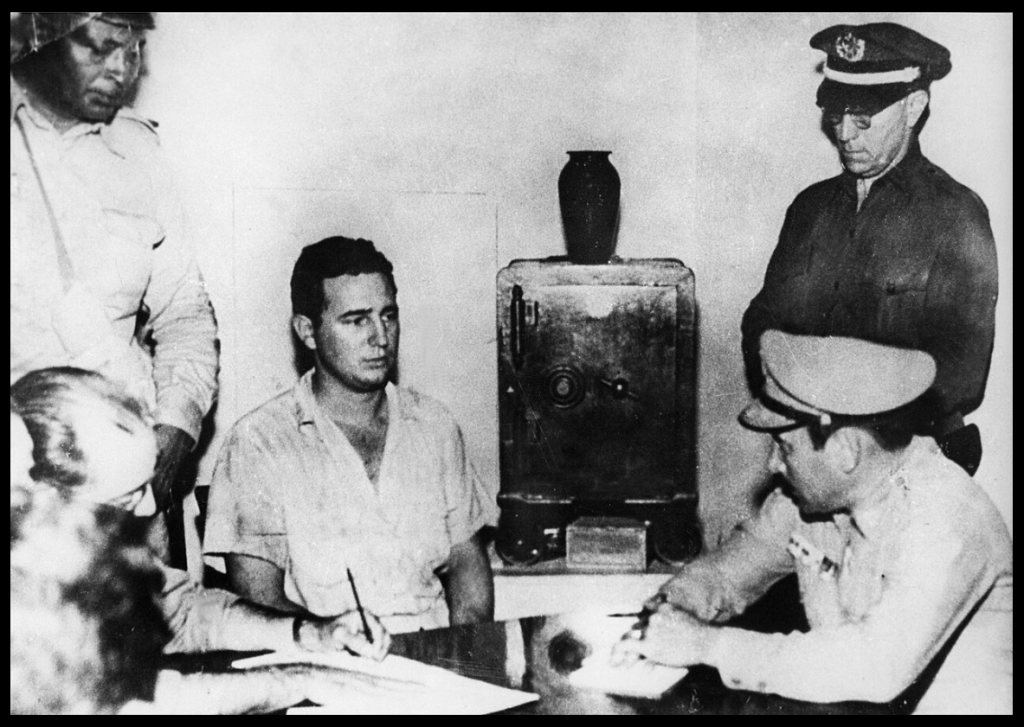
Fidel Castro Ruz being interrogated by Batista’s military officials.
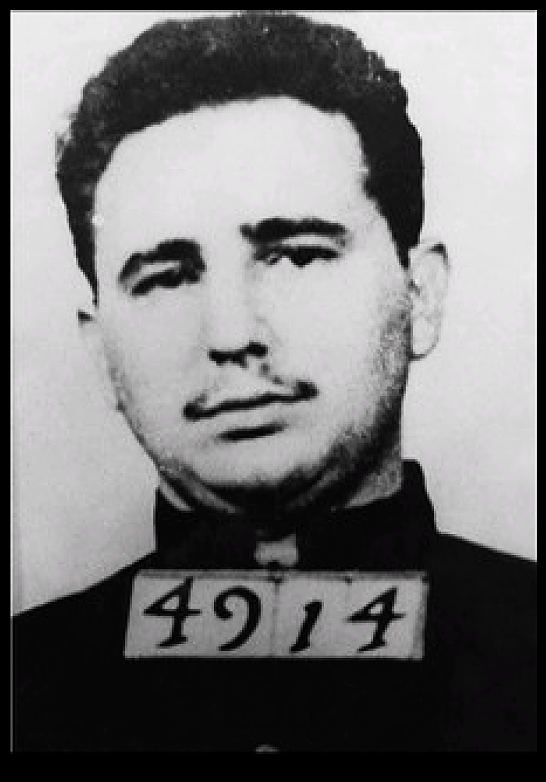
Fidel Castro Ruz prison photo.

Batista’s police and military committed many human rights abuses causing many Cubans to favorably cheer the daring Moncada attack. Citizens lived under the constant threat of incarceration, beatings, and death for merely voicing disapproval for Batista, especially the most oppressed Afro-Cuban population.

This situation gradually weakened the regime, especially after Fidel Castro, a trained lawyer, presented as testimony one of the most famous speeches made in the 20th Century as part of his own defense entitled History will absolve me.” 

Castro’s words were very damaging to Batista. Despite government censorship, the news media was unable to hide Castro’s defiant militant spirit. He used the setting of a courtroom to discredit in detail the regime’s corrupt and fascistic practices on the people.

After the court sentenced Castro to fifteen years imprisonment, his speech was smuggled out page by page to be published and widely circulated in pamphlet form. Consequently, a broad mass movement emerged demanding the release of the political prisoners and removal of the Batista regime.

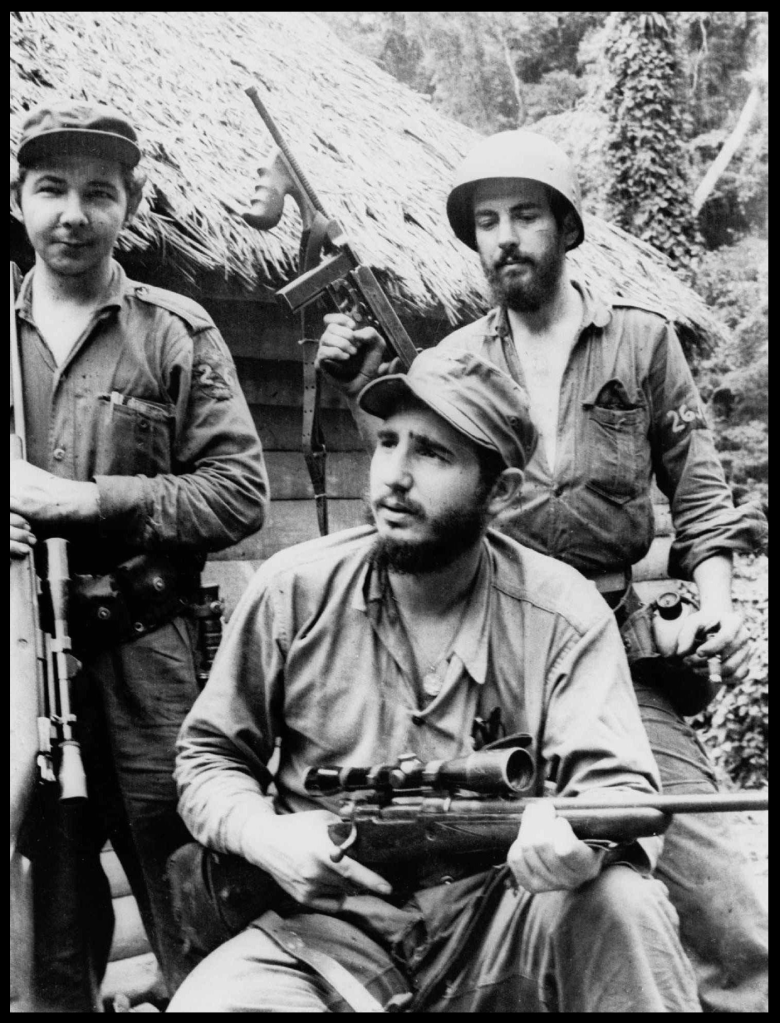
Fidel Castro in the Sierra Maestra Mountains.

It was Fidel Castro who originated the name “July 26 Movement” to commemorate the martyrs who sacrificed their lives during the failed attempt to seize control of the Moncada compound.

Turmoil and unrest can best describe the situation in Cuba during this historic time. As the frustration and desperation of the people rose, spontaneous demonstrations that usually resulted in violent clashes with government troops took its toll on the people as well.

In May 1955, two years after the Moncada attack, Batista was pressured to grant Fidel Castro and his comrades a general amnesty. A powerful mass movement was becoming increasingly overwhelming for Cuba’s ruling class.

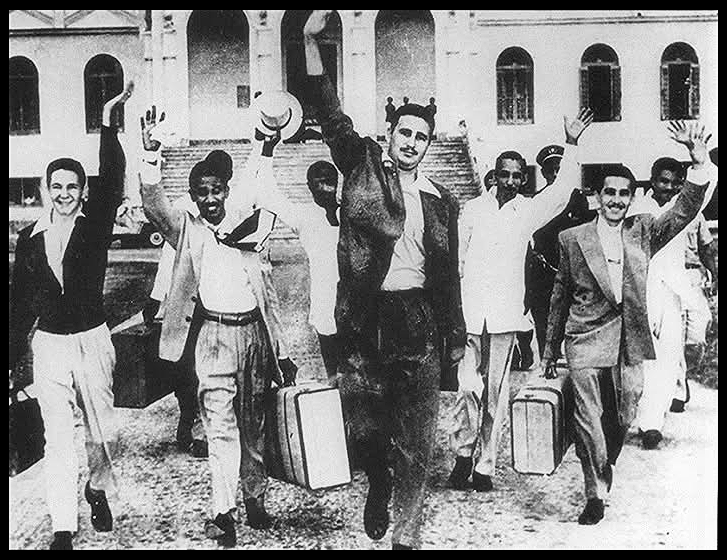
Fidel Castro and his comrades were released from prison after receiving a general amnesty.

While compelled to make a tactical concession to the freedom fighters in the face of public opinion, Batista and his cronies that included the Mafia, did not realize that the seeds of revolution had already been planted and were now taking root among the Cuban people.

Moreover, Castro and most of the newly released political prisoners went to Mexico to plan the next phase of the struggle. In Mexico, Fidel Castro met for the first time Ernesto Che Guevara and Camilo Cienfuegos-two figures that became leaders of the Rebel Army.

While Fidel Castro was in Mexico, the tasks of the movement were carried out by Celia Sanchez, Vilma Espin, Haydee Santamaria, Melba Hernandez, Frank Pais, Raul Castro, and Juan Almeida Bosque.

They established propaganda committees throughout Cuba; an intelligence network; smuggled weapons to the Rebel Army in the Sierra Maestra Mountains; developed communications between the freedom fighters in Mexico and Cuba, and so on.

The organizational sophistication of these revolutionaries has made it possible for the Cuban Revolution to survive to this day under the most oppressive circumstances caused by U.S. imperialism. However, the Cuban Revolution has proven beyond any doubt that imperialist tyranny is not invincible.

What began with the attack on the Moncada Barracks, the seizure of power on January 1, 1959, and beyond, will continue to inspire future revolutionary struggles for the complete emancipation of humanity.

LONG LIVE THE CUBAN REVOLUTION!

Remember the Cuban People’s Victory at the Bay of Pigs

REMEMBER THE CUBAN PEOPLE’S VICTORY AT THE BAY OF PIGS

April 17 – April 20, 1961

By Carlos “Carlito” Rovira

The ruling class of the United States was never happy about the triumphant 1959 Cuban Revolution, especially after Comandante Fidel Castro Ruz announced the Socialist direction Cuba would pursue. And as the leadership of the July 26 Movement demonstrated to embrace MarxismLeninism and began implementing anti-capitalist policies like the nationalization of multinational companies and expropriation of wealthy families, Washington officials became alarmed.

And as diplomatic relations with the United States deteriorated Cuba sought greater ties with the Soviet Union. Havana and Moscow discussed making numerous trade agreements that also included the supply of weapons. Washington officials viewed these developments with extreme disdain.

U.S. President Dwight D. Eisenhower secretly authorized the Central Intelligence Agency (CIA) to prepare right-wing Cubans in exile, formerly of Fulgencio Batista’s Army, for a future invasion of Cuba. By the time John F. Kennedy became President the CIA had drawn up plans for eventual intervention, focusing on storming Cuba’s southern coast.

The objective was to overthrow the Cuban government and punish the revolution for daring to break away from the U.S. colonial stranglehold. To this day U.S. rulers adamantly take to heart the 1823 Monroe Doctrine, which staked out the Western Hemisphere as the “backyard” of the United States.

Washington officials became obsessed with Cuba and dreaded the idea of other countries in Latin American and the Caribbean becoming inspired by the Revolution. Eisenhower and Kennedy engaged in every effort to isolate Cuba, using the Organization of American States (OAS) and making the Green Berets, Army Special Forces, officially operational to deter revolutionary insurgencies.

Ernesto Che Guevara and Fidel Castro Ruz, led the defeat of the CIA at the Bay of Pigs.

Two days before the invasion, air strikes were launched by the CIA with B-26 bombers disguised as Cuban aircrafts. The mission of these pilots was destroying Cuba’s airfields and war planes. The goal was to cripple the Revolutionary Armed Forces’ (RAF) capability to counterattack from the air. However, the CIA’s Aireal operation failed with most of Cuba’s combat planes remaining intact.

When the CIA onslaught began in the early morning hours of April 17, 1961, it was met by a local militia, mostly peasant farmers who were part of the RAF. The counterrevolutionary force known as Brigade 2506, was kept at bay until reinforcements arrived. At that point, about 200,000 troops of the RAF and militias arrived with Fidel Castro Ruz in command.

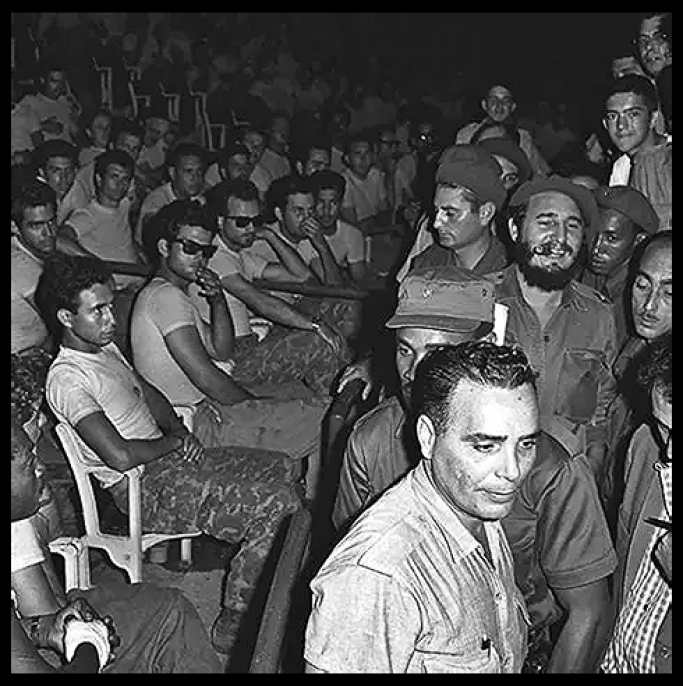
Comandante Fidel Castro Ruz directing the logistics of the battle from a Soviet made SU-100 tank.
The Revolutionary Armed Forces charging the CIA-sponsored invaders at the Bay of Pigs.
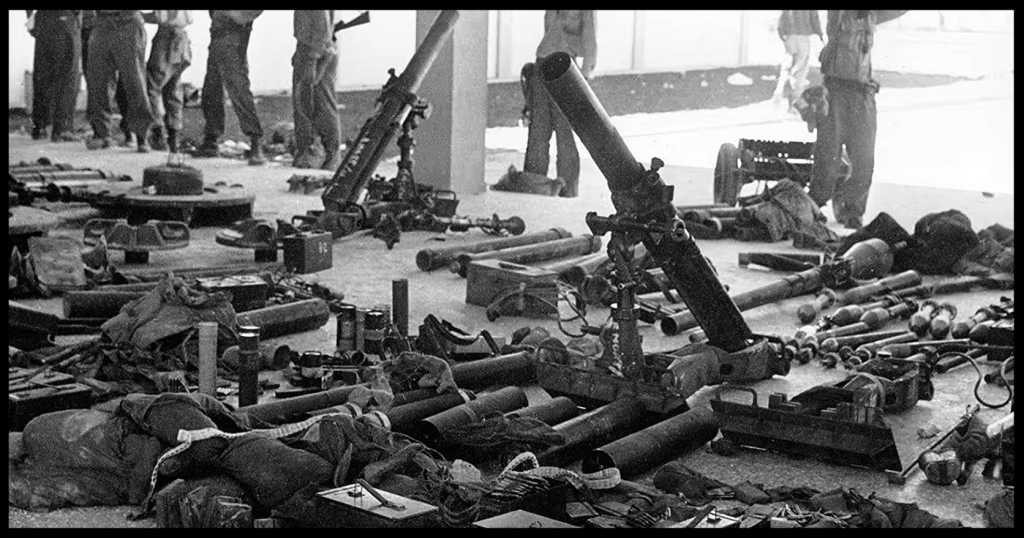
These weapons were confiscated from the CIA-sponsored Brigade 2506.

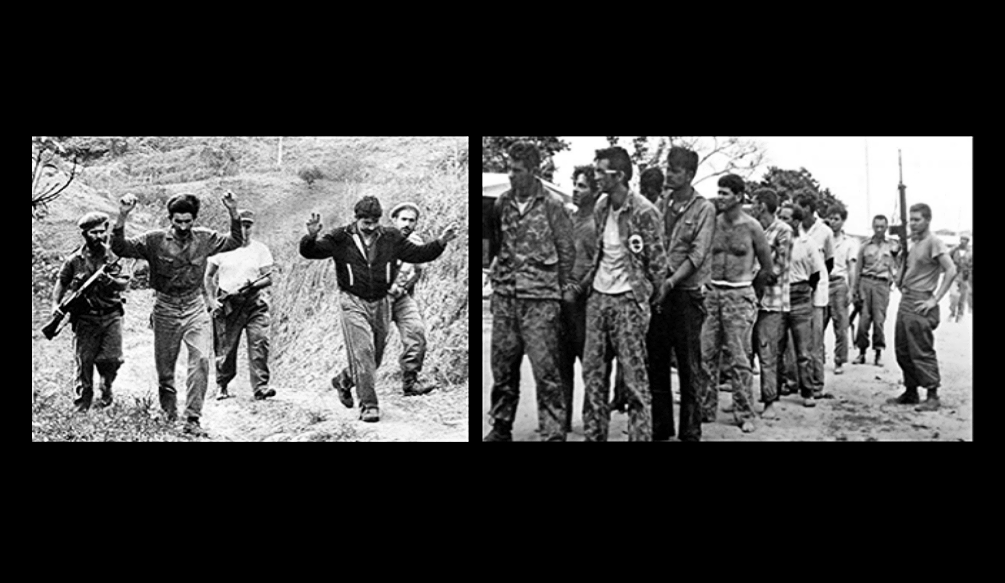
The armed conflict was intense and lasted until April 20th. In less than a day of fighting about 1500 CIA-trained exiled Cubans surrendered, some were overwhelmed by the unexpected heavy gunfire and fled on boats. In addition, 114 were killed in combat.

The CIA plan to establish a beachhead to be followed by a full-scale U.S. military invasion ended in complete disaster. Cuba’s Revolutionary Air Force managed to drop bombs and destroy two ships filled with ammunition and medical supplies for the counterrevolutionaries. Pockets of Brigade 2506 were pinned down and surrounded by superior numbers of revolutionary troops.

Days before the assault was launched Cuba’s RAF intelligence discovered precisely where the U.S.-backed counterrevolutionaries would land. Cuba had a sophisticated spy network long established by the July 26 Movement.

Thanks to the leadership of Comandante Fidel Castro Ruz, Ernesto Che Guevara, Vilma Espin, Celia Sanchez, and Cuba’s mass organizations like the Federation of Cuban Women, the Committees for the Defense of the Revolution, and People’s Militias, which prevented the re-colonization of their homeland.

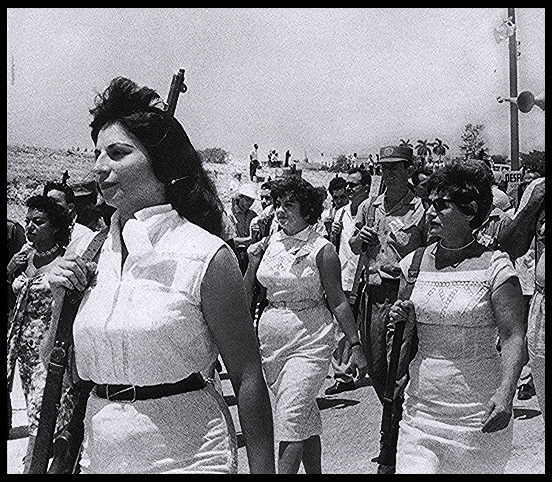
Members of the Federation of Cuban Women..
Members of the Committees for the Defense of the Revolution.

The U.S. government was humiliated. The Cuban government forced Washington officials to negotiate for the release of their 1,100 captured puppet combatants. Numerous parties, including the American Red Cross, played a role as go-between in the public and closed negotiations.

Mainstream figures and the capitalist mass media attempted to defame Fidel Castro Ruz because of his insistence that retribution for the invasion was justified. Cuba was accused of demanding a “ransom” for the release of the prisoners of war as if they were kidnapped victims.

But Cuban diplomats remained firm stating that it was Cuba’s sovereignty that was violated by the captives. In the end, due to pressure from the families of prisoners as well as several international organizations, the U.S. government was politically pressured to an agreement.

Watch video footage of the Bay of Pigs battle.

At first, President Fidel Castro Ruz demanded tractors for heavy construction needed to industrialize the country. But at the end, the U.S. and Cuban governments agreed on $53 million worth of baby food and medicines, in exchange for the prisoners.

The Bay of Pigs incident caused major political embarrassment for the Kennedy Administration. U.S. officials have never recovered from the shock brought upon them by the CIA’s defeat at the Bay of Pigs. The imperial arrogance of U.S. rulers led them to underestimate the collective consciousness and revolutionary ferment that was occurring in Cuba.

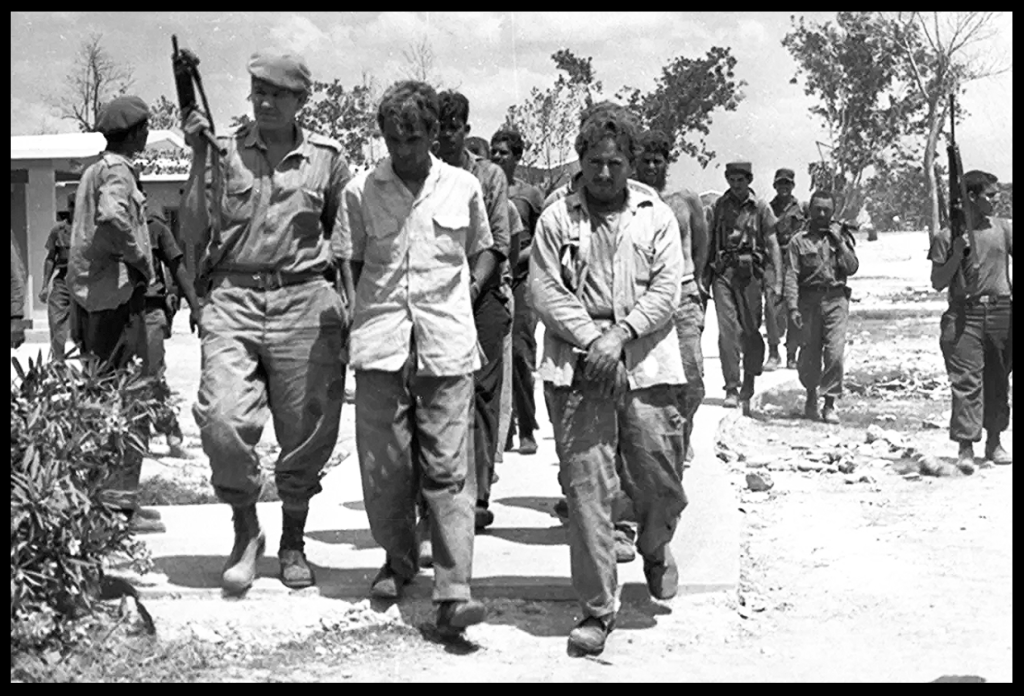
Surrounded by security and staff, Fidel Castro walks pass combatants captured at the Bay of Pigs.

Since Cuba’s initial break with U.S. domination in 1959, the majority of the population have been organized for the country’s defense. Overlooking that particular detail, an essential aspect of the revolution, was the greatest mistake made by U.S. imperialism at the Bay of Pigs.

What this historic battle reaffirms is that no tyrant is invincible. Oppressed people can meet any challenge, no matter how difficult and win. That includes pushing back on continued attempts to undermine Cuba’s right to self-determination and strive to end the more than six decades old economic blockade.

LONG LIVE THE CUBAN REVOLUTION!