__________________________________________________________________
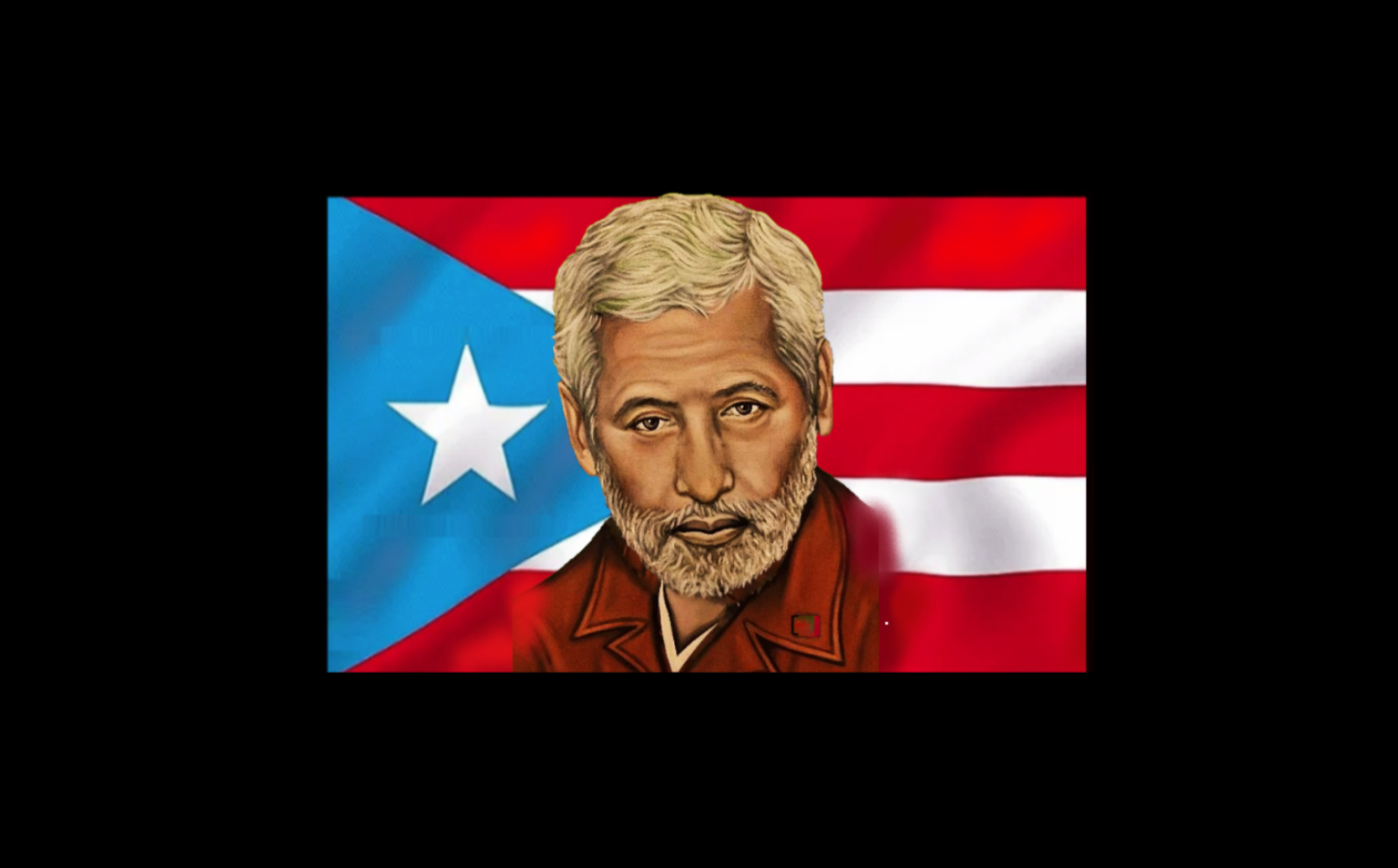
“I am not a terrorist. I am an anti-terrorist. I fight against the terror that the United States commits in Puerto Rico.” — Filiberto Ojeda Ríos
__________________________________________________________________
By Carlos “Carlito” Rovira
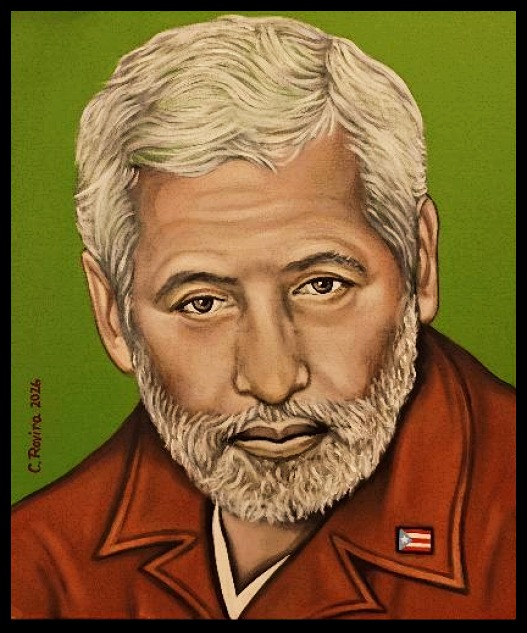
One of the many names that shall forever be associated with the meaning of being a freedom fighter is Filiberto Ojeda Ríos. His passion and devotion to the Puerto Rican national liberation struggle will not go unnoticed in history. Filiberto Ojeda’s determination and sacrifice will continue to inspire future generations of revolutionaries.
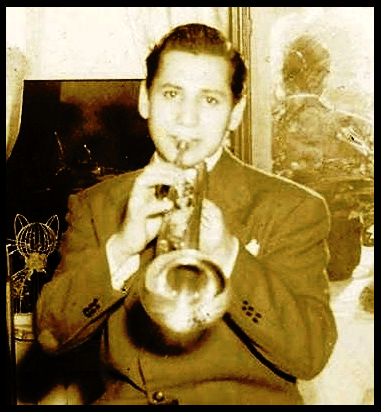
Filiberto Ojeda Ríos was born on April 26, 1933, to a working-class family in Naguabo, Puerto Rico. Being an advanced student with “engaging intelligence”, this talented youth was able to enter college at fifteen years old! And because he was culturally adept as a child with a special attraction to music, he learned how to play both the trumpet and guitar. His talents were widely recognized which led him to become part of La Sonora Ponceña, one of Puerto Rico’s most famous Salsa music bands.
But as Filiberto matured to adulthood, like many Boricuas who become politically enlightened once learning about the July 25, 1898, military invasion and colonization of Puerto Rico, he developed a justified resentment towards U.S. colonial rule in his beloved homeland. Eventually, his attraction to defy foreign tyranny with militancy became the centerstage of his life. Filiberto firmly chose to play a role in the struggle for Puerto Rico’s independence.
In 1960, Fiiberto moved with his family to Cuba where he remained for several years. He wholeheartedly supported the 1959 Cuban Revolution and fully embraced the centuries-long traditions of the Two Wings of the Same Bird.
Filiberto was adamantly anti-capitalist, which explains why he was attracted to the Socialist aspirations and political analysis of the Cuban Revolution. Filiberto was closely aligned with Marxism–Leninism and the revolutionary nationalist politics of the Puerto Rican movement. He did not see irrelevancy to one another between the two schools of thought. He understood how the colonization of Puerto Rico was motivated by the predatory-expansionist desires of the capitalist system.
The U.S. government had good reasons to be concerned about the young Boricua revolutionary. According to the FBI and a U.S. Department of Justice report, Filiberto was recruited by Cuba’s intelligence service (the General Intelligence Directorate, or DGI) where he trained in weapons techniques and intelligence. As part of their implementation of solidarity and policy with national liberation movements during the circumstances of that period, Cuba provided training to revolutionaries from all over the world, specifically Africa and Palestine.
When Fiiberto returned to Puerto Rico he became very active in the anti-colonial movement, organizing meetings and protest demonstrations. As he observed an increasing militarization in Puerto Rico, Filiberto concluded that more dramatic actions of civil disobedience was necessary to draw world attention to the colonial circumstance.
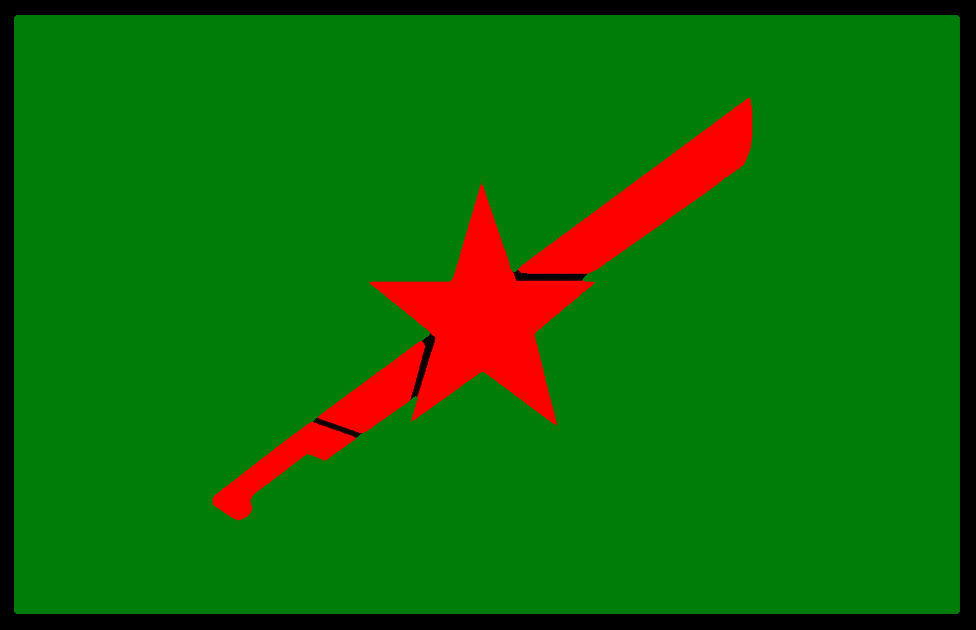
In 1976 Filiberto co-founded the para-military clandestine group Los Macheteros — Boricua Popular Army of which he became the chosen leader. This armed-propaganda entity carried out many actions against federal installations in the United States and Puerto Rico, aimed to expose the plight of the Puerto Rican people under U.S. colonialism.
On August 30, 1985, the FBI conducted a large-scale operation at Filiberto’s residence in Lucillo, Puerto Rico to arrest him and other alleged members of the Macheteros for the September 12, 1983, Wells Fargo heist at the West Hartford facility, in which $7.2 million was taken.
During this FBI operation, a gun battle ensued in which an agent was critically wounded. However, on August 26, 1989, a federal jury in San Juan, Puerto Rico, acquitted the revered freedom fighter on all criminal charges. What was most fascinating about this court trial conclusion was that Filiberto was not a lawyer yet he occasionally waived legal counsel to represent himself!
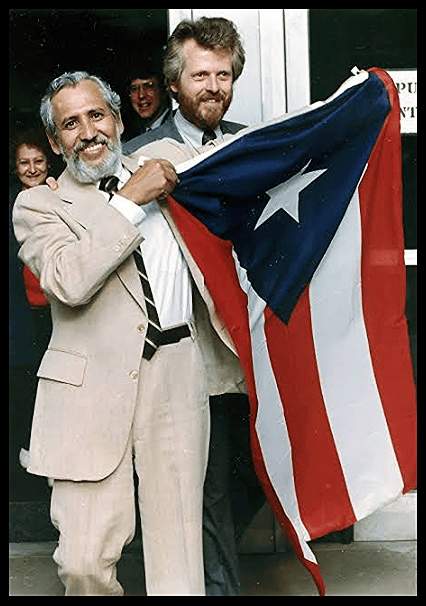
For their resolute militancy Los Macheteros and Filiberto were wanted by U.S. authorities and deemed as “terrorists.” However, because of their admirable defiance, they gained folklore heroes status in the hearts and minds of various sectors in Puerto Rico and the diaspora. What the Macheteros symbolized became a threat to the colonial order.
On the morning of September 23, 2005, Comandante Filiberto Ojeda Rios was killed in his home after an intense gun battle with agents of the Federal Bureau of Investigation (FBI).
The FBI chose that date because of its historic significance to those who uphold the pro-independence cause – the anniversary of El Grito De Lares which took place on September 23, 1868. It was an uprising that aimed to abolish African chattel slavery and win independence from Spanish colonialism. By killing Filiberto on that date U.S. rulers hoped to demoralize the independence movement.
The blatant FBI killing of the revered Machetero leader was widely viewed with contempt. The uproar from the populace was so intense that it compelled officials of the puppet colonial government to question and disapprove the action. The Puerto Rico Police were placed in awkwardness by being kept out of the loop by the FBI about the secret planned attack. For a brief moment, due to Filiberto’s death, U.S. colonialism was implicitly and explicitly scrutinized by all sectors of the population.
But Washington officials failed in their efforts to effectively carry out psychological warfare. All that they managed to do was provide the annual El Grito De Lares commemorations with an added meaning. Puerto Rico’s hard social and economic reality has defined many new forms of struggle, but with its long fighting traditions kept well intact. Regardless of what the empire throws against any oppressed and colonized people, the instinct to rebel cannot be destroyed. Today, Boricuas continue to wage their national liberation struggle!
In that light, Filiberto Ojeda Rios shall always be remembered with the same grandeur as Dr. Ramon Emeterio Betances, Lola Rodrguez De Tio, Dr. Pedro Albizu Campos, Lolita Lebron, Blanca Canales, Julio Pinto Gandia, and so many past and future Boricua freedom fighters.
QUE VIVA PUERTO RICO LIBRE!


One thought on “Tribute to FILIBERTO OJEDA RIOS ¡Todo Boricua Machetero!”