Remember the July 25, 1978 CERRO MARAVILLA MURDERS!

By Carlos “Carlito” Rovira

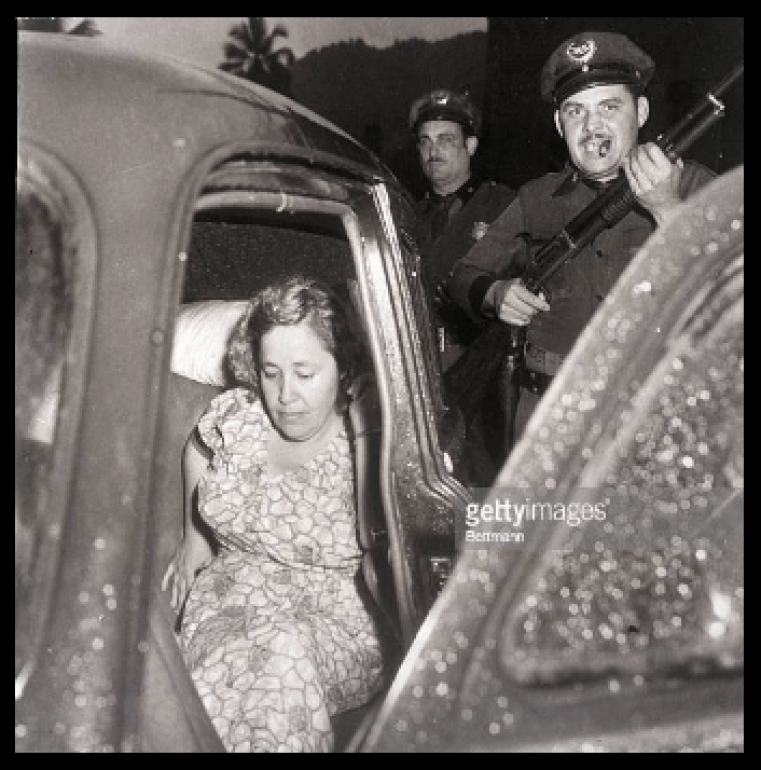
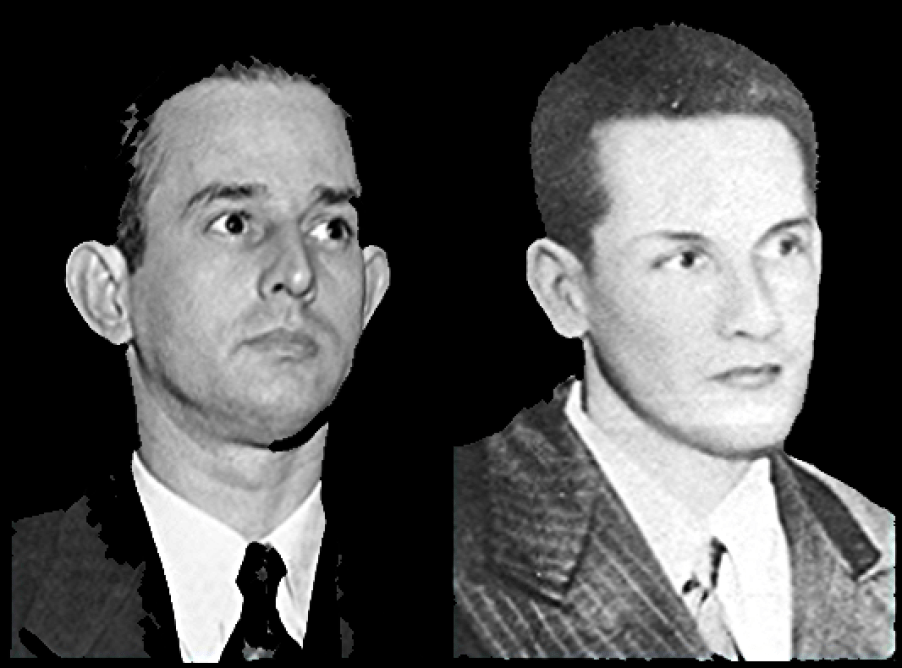
On July 25, 1978, the colonizing Puerto Rico Police assassinated two young pro-independence activists. This brutal and blatant murder, known as the Cerro Maravilla murders, exposed for the world to see the violence used by U.S. imperialism to keep Puerto Rico in chains to this day.

The controversy and the cover-up that followed were like none other in Puerto Rico’s political history. It involved government officials at the highest level, top police brass as well as the Federal Bureau of Investigation (FBI) and Justice Department. The case was indisputably identical to what COINTELPRO did to members of the Black Panther Party and other entities of the U.S. left during that same period.

Arnaldo Darío Rosado, 24, and Carlos Soto Arriví, 18, had been involved in pro-independence groups before. Inspired by the heroes of independence who championed the liberation of the homeland from U.S. rule by any means necessary, they joined the Armed Revolutionary Movement (MRA). The MRA had no experience in such matters, it never carried out any military actions in the past.
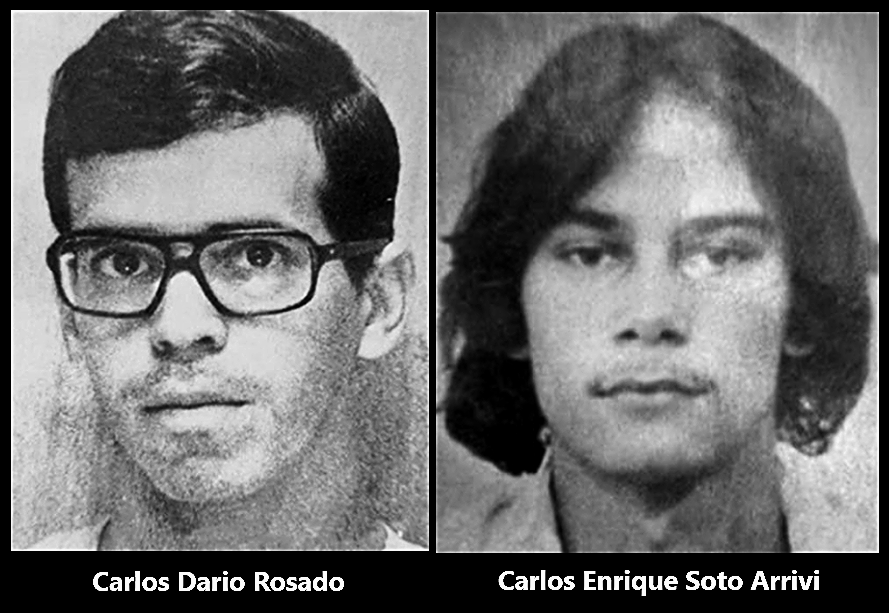
A police agent named Alejandro González Malavé, infiltrated the group. He recruited Darío and Soto to set fire to a communications tower on the mountain named Cerro Maravilla. Supposedly, the act was to protest the imprisonment of Puerto Rican Nationalists Lolita Lebron, Rafael Cancel Miranda, Irving Flores, Andres Figueroa Cordero, and Oscar Collazo.

By 1978, the freedom of these political prisoners was a campaign of paramount importance, both to the pro-independence movement in Puerto Rico and to human rights advocates around the world. In fact, it was a frequently mentioned issue in news outlets and United Nations Organization discussions.

It was a clever ploy by the Puerto Rico Police. First and foremost, July 25th is the date of the 1898 U.S. military invasion. And because Arnaldo and Carlos were highly devoted to the cause for Puerto Rico’s independence but were too inexperienced to detect how they were being lured into a trap, it was easy for the police to lead them to their deaths.

COLONIAL POLICE MURDER ARNALDO & CARLOS

On the evening of July 25, 1978, the three forced taxi driver Julio Ortiz Molina to drive them to the communications tower at the top of the mountain in Cerro Maravilla.

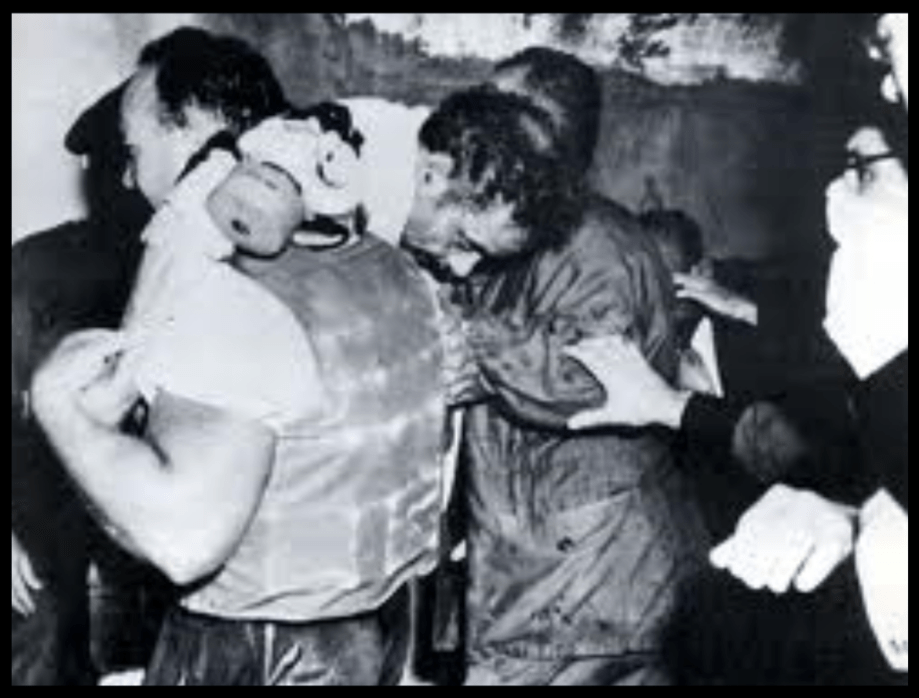
Once the vehicle arrived at the location, heavily armed police opened fire on the cab. Darío and Soto shouted, “Don’t shoot, we surrender,” according to well-documented testimony. The two were dragged out of the car, savagely beaten then forced to kneel. They were then shot dead, execution style.

The cops who testified during the investigation disclosed that several hours before the murders, officers assigned to the sting operation were ordered by Col. Angel Perez Casillas, commander of the Intelligence Division, that, “These terrorists should not come down (from the mountain) alive.”

Eyewitness accounts confirmed what many in the independence movement had all along asserted. The assassination of the two independence activists was a political statement on the part of the Puerto Rico Police.
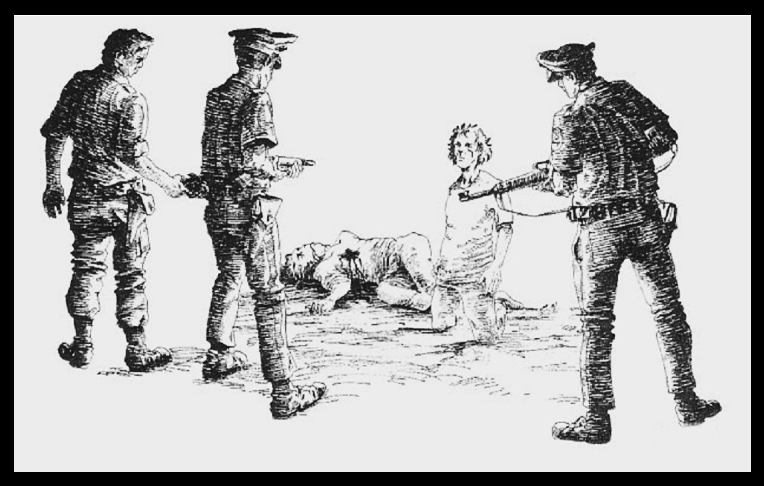
A drawing depiction of the Cerro Maravilla murders, by Artist Juan Alvarez O’Neill.

Then Governor of Puerto Rico, Carlos Romero Barcelo, of the pro-statehood New Progressive Party, immediately hailed the cops as heroes. Pretentious investigations were conducted by the colonial government, as well as by the FBI and the Justice Department, but only to assist in a systematic cover-up motivated by the already existing colonial setting in Puerto Rico.

In the aftermath of the killings, every agency involved in the investigation was quick to exonerate the killer cops and demonize the two victims, and for clear-cut and well-defined reasons. The Puerto Rico Police exists as the principal enforcer of U.S. colonial policy.

Historically, every repressive act involved the complicity of the Puerto Rico Police. It has served as the pit bull of U.S. agencies, most especially the FBI, dating back to the attacks on Dr. Pedro Albizu Campos, the Nationalist Party and the brutal Rio Piedras and the Ponce Massacres.

This specially trained armed attachment of U.S. colonialism is perhaps one of the most sophisticated apparatuses of law enforcement in all 50 states and occupied territories. It is defined by colonial law as a “quasi-military” organization which is granted assistance by the National Guard, in everything involved to the work of a “civilian” police force.

TYRANTS ARE NOT INVINCIBLE.

Regardless of differences in political beliefs, widespread indignation to these murders came from all sectors of the population. A momentum grew to such a degree of pressure that it caused a political crisis for the U.S. colonizers in Puerto Rico.

On April 29, 1986, the undercover cop Alejandro González Malavé was assassinated in front of his mother’s house in Bayamón. He was shot three times by an armed Boricua group identifying itself as the “Volunteer Organization for the Revolution.” Puerto Ricans everywhere applauded the death of this police scoundrel and viewed his killing as well-deserved justice.

The FBI considered this group “one of the most dangerous terrorist organizations in the United States.” On December 3, 1979, the V.O.R. claimed responsibility for an attack on a U.S. Navy bus in Puerto Rico in which two Navy personnel were killed and 10 injured, and the destruction of 6 jet fighters at the Muniz Air National Guard base near San Juan on January 12, 1981.
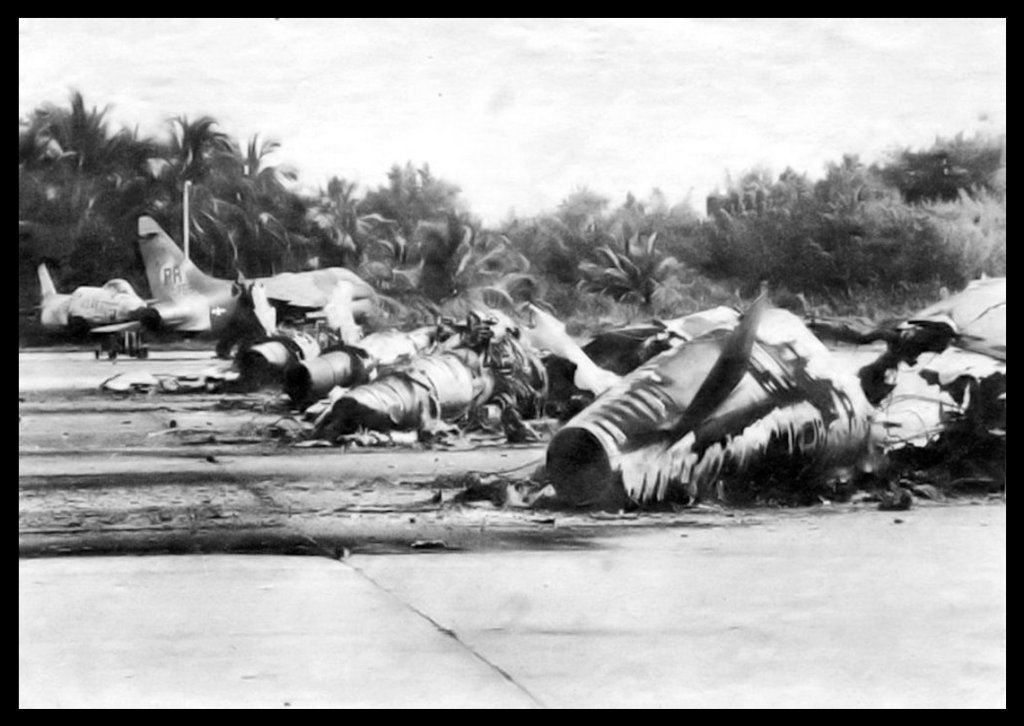
In 1981 the VOR destroyed 6 U.S. jetfighters at the Muniz Air National Guard base.

In the end, eight police officers were convicted and given prison sentences, ranging from 6 to 30 years. But these prison sentences were merely a concession made by the colonial court to ease the mounting outcry for justice. The greatest concern Washington officials always have is the potential for mass rebellion.

Protest demonstrations occurred everywhere in Puerto Rico and the diaspora, demanding justice for Arnaldo and Carlos. News of the details surrounding this case reached global attention and pointed to the inhumanity of the U.S. presence and domination in Puerto Rico.
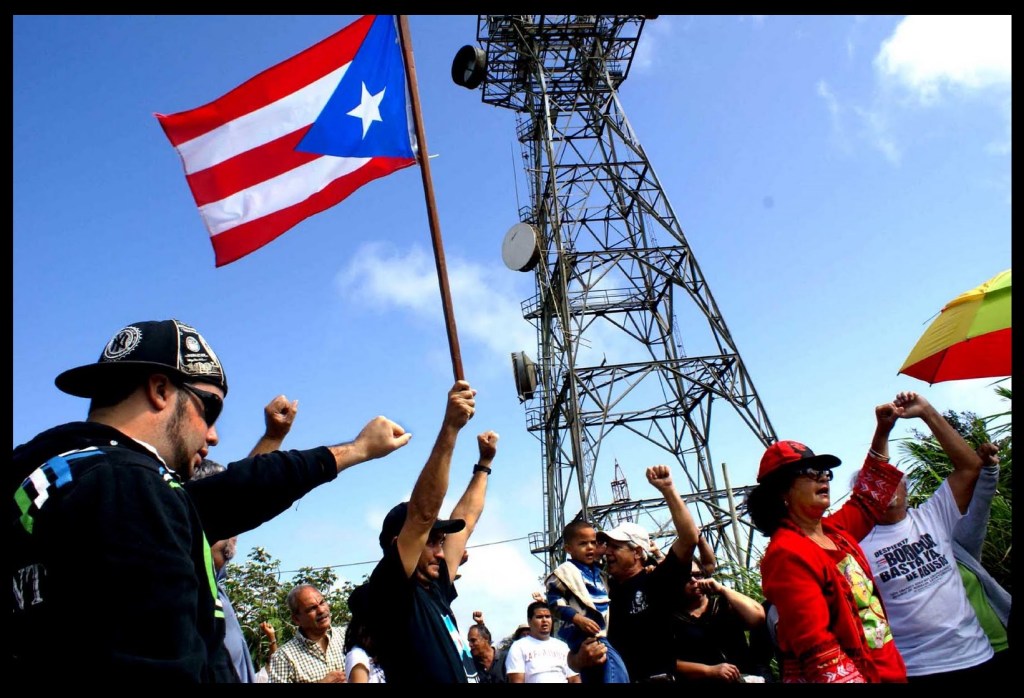
Protest gatherings occur annually on site of the tragic event.

The Cerro Maravilla murders was not the first-time brave men and women were killed for advocating independence for their beloved homeland. Nor will the threat be gone of future incidents like Cerro Maravilla in 1978, as long as U.S. colonialism in Puerto Rico prevails. The armed agencies of U.S. colonialism are the real terrorists.

No matter where, when or how the decisive battles for Puerto Rican national liberation may ensue, it will certainly contribute to the global defeat of U.S. imperialism. The murders of Arnaldo Darío Rosado and Carlos Soto Arriví shall serve as added reason to condemn and bring about the demise of this corrupt and vile system.

Arnaldo Darío Rosado & Carlos Soto Arriví – PRESENTE!

QUE VIVA PUERTO RICO LIBRE!

Cops exploit Bronx tragedy; WE NEED PEOPLE’S ORGANIZATION INSTEAD!

By Carlos “Carlito” Rovira

In the past week many people have been devastated, especially in New York City’s Bronx community, by news video coverage of 15 year old Lesandro Guzman-Feliz, who was also known as “Junior.” The graphic video shows Lesandro being savagely stabbed and hacked to death by members of a street youth gang known as “Los Trinitarios.”

There has been a tremendous outpouring of sympathy by people throughout the city and across the country for Lesandro Guzman-Feliz’s grieving mother and family, who will be impacted by this tragic event for years to come. Unfortunately, public discussion of this case was immediately limited by the media and has not addressed the social context that fuel these events in poor working-class communities.

Media reports have emphasized the perpetrators’ life-time record of criminal activity and zeroed-in on outcries for justice by neighborhood residents. And understandably so, mainstream news outlets sensationalized reports of this tragedy and have in various ways called upon stepping up police activity in oppressed people of color neighborhoods while insidiously attempting to facilitate community support for this end.

First we must ask, why is the racist police —with the assistance of the news media— trying to manipulate the justified anguish of this predominantly Dominican Bronx neighborhood? Why is the police controlling the narrative of these events?

As we well know, the police have never been a friend of the Latino community. The NYPD has historically been responsible for killing scores of unarmed Black and Latino people in this city, with violence comparable to that which was deployed against Lesandro.

And despite the police’s repeated mention that Lesandro Guzman-Feliz aspired to be a cop and that he was a member of the Explorers, a youth club under the auspices of the NYPD, when the police was called to the scene it treated Lesandro with the same contempt it treats all youth of color.

In fact, the attitudes of the two responding NYPD officers serve as a window into how the police view violence among people of color. A later-released video shows that as Lesandro laid bleeding to death two uniformed cops stood back without attempting to save his life.

No one can deny that these hideous crimes merit punishment and justice. Such acts are indisputably a clear indication of a mental and emotional departure from basic moral values and a sense of humanity. Death by senseless violence continues to be part of a disturbing panorama that describes the reality for many communities of color.

Violence conducted by individuals for the pettiest of reason is a behavioral matter that can only be addressed in a discussion of culture of the society within which it happens. That is, the violent historical setting from which capitalist culture developed. And because culture is at the heart of this matter, it is unfortunate that a percentage of unstable individuals among oppressed people will tend to mimic the violence of our oppressors.

Violence among oppressed people will never be a problem that the police will attempt to eradicate. They will point to its existence but only as a ploy to convince us that diminishing civil liberties and other meager freedoms works to our “safety.” In short, the deviant behavior of a few will always be used to enhance the powers of the police, courts and prisons.

In fact, since the very beginning of the police, dating back to slavery, their profession centers on inflicting violence on our people whenever they deem necessary. For this reason alone, poor working-class people cannot rely on the police state for salvation.

Gang violence was never as acute of a problem as it is now, until the 1980’s, when an influx of drugs consumed many communities of color. There was ample evidence, then, pointing to law enforcement, along with the Central Intelligence Agency (CIA), as the main perpetrators in what soon thereafter became a widespread crisis. Gang leaders were corrupted which made these organizations an essential part of the operations that led to funneling drugs into poor communities.

Ultimately every oppressed person in this country will be compelled to realize that peace and security can only come about from our own actions and organizing efforts.

Historically, not all street organizations involved themselves in hideous criminal activity. Many youths joined these groups for noble reasons and simply to obtain a sense of safety and belonging. There are instances in history where street youth groups protected neighborhood residents from crime.

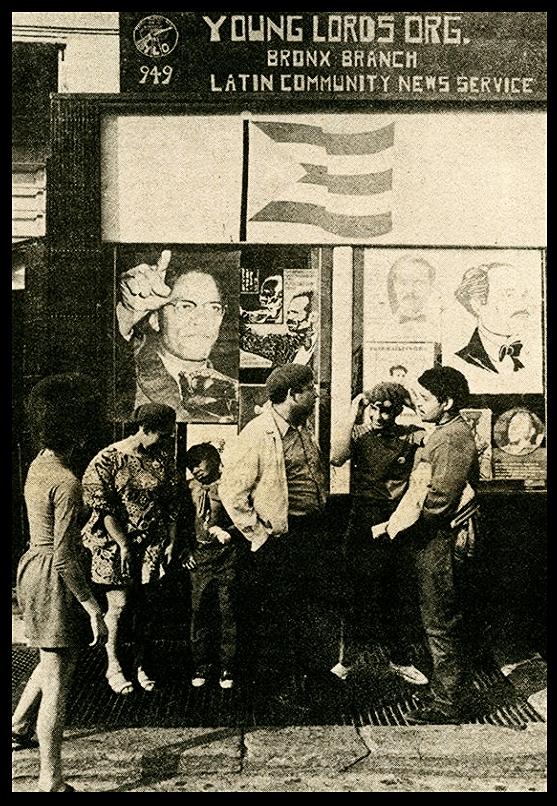
One good example is the Young Lords, a Puerto Rican/Latino youth group that developed on the streets and prisons in Chicago during the 1960’s. They were influenced by the political events of that decade, especially by the activist work of the Black Panther Party. Eventually the Young Lords transcended to become a revolutionary entity.


The Young Lords began on the streets and prisons of Chicago. They eventually transcended to become a revolutionary entity.

Such is the direction that these street youth groups of today must take. They must either side with the people and fight on their behalf or allow themselves to be absorbed by the efforts of the police state. In which case they would risk feeling the wrath of a rising revolutionary mass movement.

Justice and protection from criminal elements that have gone to the point of no return, and forgiveness, as Lesandro Guzman-Feliz’s killers, can only come about with a politically and organizationally sophisticated militant mass movement. And that would automatically imply our people exercising the right to use all techniques and methods of self-defense.

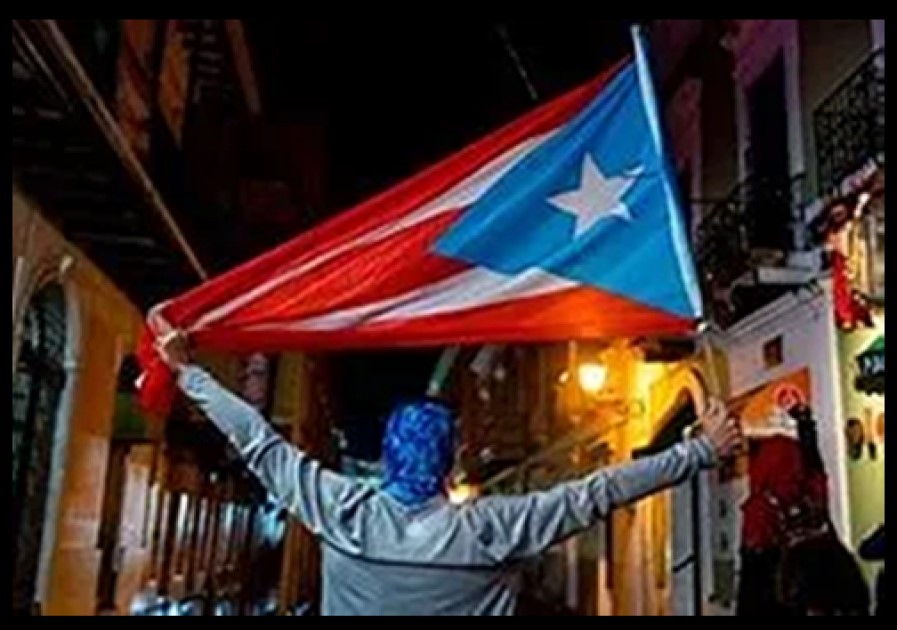
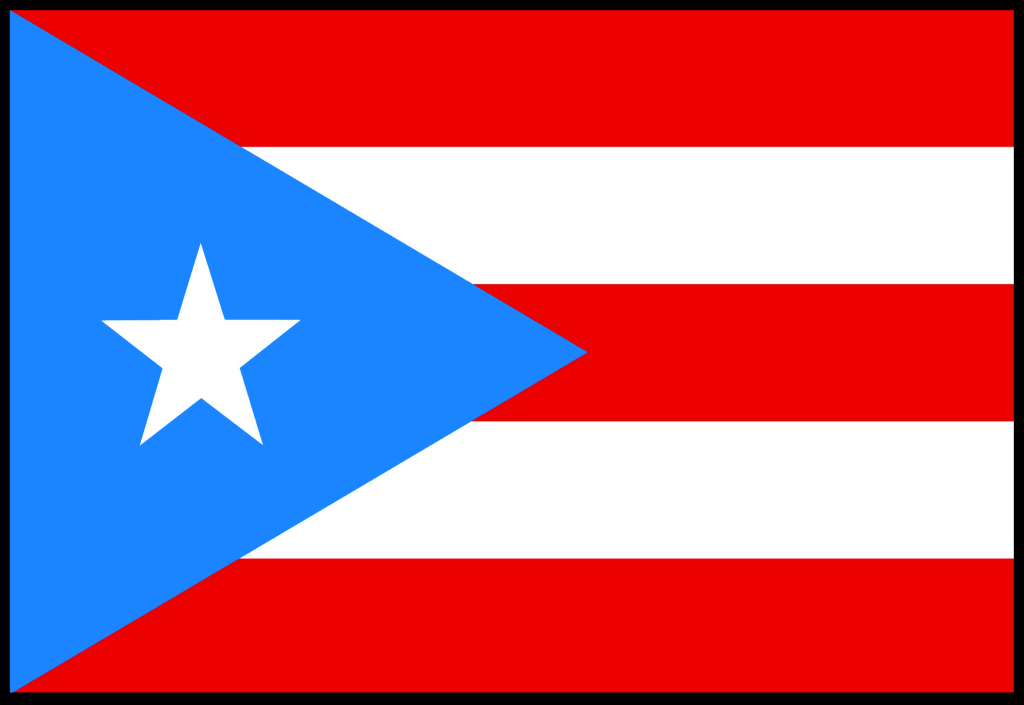
The Puerto Rican Flag – symbol of pride & anti-colonial struggle

Para la versión en español: https://carlitoboricua.blog/?p=6986&preview=true&_thumbnail_id=6990

By Carlos “Carlito” Rovira

On December 22, 1895, Puerto Ricans affiliated with the Cuban Revolutionary Party, approved a proposed design of the Puerto Rican Flag at a secret meeting held at the Chimney Corner Hall in New York City. At the helm of this effort were the prominent Manuel Besosa, Antonio Velez Alvarado and Juan de Mata Terreforte, an exiled veteran of the 1868 Grito De Lares uprising. Among the other 59 attendees was also the renown literary and archivist of Black history Arturo Alfonso Schomburg.

December 22, 1895, Chimney Corner Hall, New York City, where the Puerto Rican Flag was approved.

From the early 1800’s, New York City served as a safe haven for both Cuban and Puerto Rican revolutionaries seeking refuge from Spain’s repressive agencies. Cuba and Puerto Rico were Spain’s remaining colonies, after a series of successful revolutions in Latin America. Madrid wanted to preserve its colonizer status for as long as possible. Its no wonder why New York became the birthplace for both the Cuban and Puerto Rican flags.

The Puerto Rican patriots chose to invert the colors of the Cuban Flag, following the traditions of the “Two Wings of the Same Bird” – which originated from a poetic metaphor written by the legendary female literary Lola Rodriguez De Tio. This metaphorical expression was later used in musical rendition by Cuban revolutionary leader, Jose Marti. Freedom fighters from both countries collaborated for centuries in a mutual struggle against Spanish tyranny.

It is believed by many that the idea of inverting the colors of the Cuban flag originated from Lola Rodriguez De Tio. And understandably so, Lola collaborated closely with Cuban revolutionaries in exile when she lived in New York City.

To Puerto Ricans, like all oppressed people striving to build nationhood, the flag represents many things. It is the one representation that compels us to express our aspirations and deepest sentiments connected to history, culture and heritage.

Twenty-seven years prior of the Chimney Corner Hall meeting, the legendary Dr. Ramon Emeterio Betances and other revolutionary leaders of the 1868 El Grito De Lares uprising saw the necessity of creating such a symbol for the newly established nation in struggle. The leadership of that movement understood quite well the role spirituality plays in a fierce battle for liberation.

In collaboration with Betances, Mariana Bracetti Cuevas, who was also a professional stitcher, created the first Puerto Rican flag. She put together a banner comprising of two red and two turquoise blue boxes, divided by a white cross (similar to the Dominican flag) with a white star on the upper left. The design was partly a tribute to the Dominican people for allowing Boricua revolutionaries to have a base of operations in their country, and because Betances’ father was also Dominican.

In the years following the courageous attempt by Lares insurrectionists, the independence movement continued to exist clandestinely, due to unfavorable circumstances. The Lares martyrs and their supporters were systematically imprisoned, tortured and brutally killed by the Spanish authorities. Puerto Rico was under the most repressive situation, compelling the movement to retreat.

Many who survived the onslaught fled to New York while others went to Cuba joining their comrades fighting to liberate their homeland. Among these brave Puerto Rican patriots was Juan Ruiz Rivera, who would earn the rank of general in the Cuban Liberation Army.

Despite the difficult conditions, the anti-colonial movement in Puerto Rico gradually regained momentum. Moreover, it was these harsh circumstances that motivated the meeting at Chimney Corner Hall and the creation of the current Puerto Rican flag.

On March 24, 1897, the present-day flag of Puerto Rico was flown for the first time at the municipality of Yauco, in an uprising known as “Intentona de Yauco” (Attempt of Yauco). It was the last act of resistance against Spanish colonialism.

The 1897 “Intentona de Yauco” uprising.

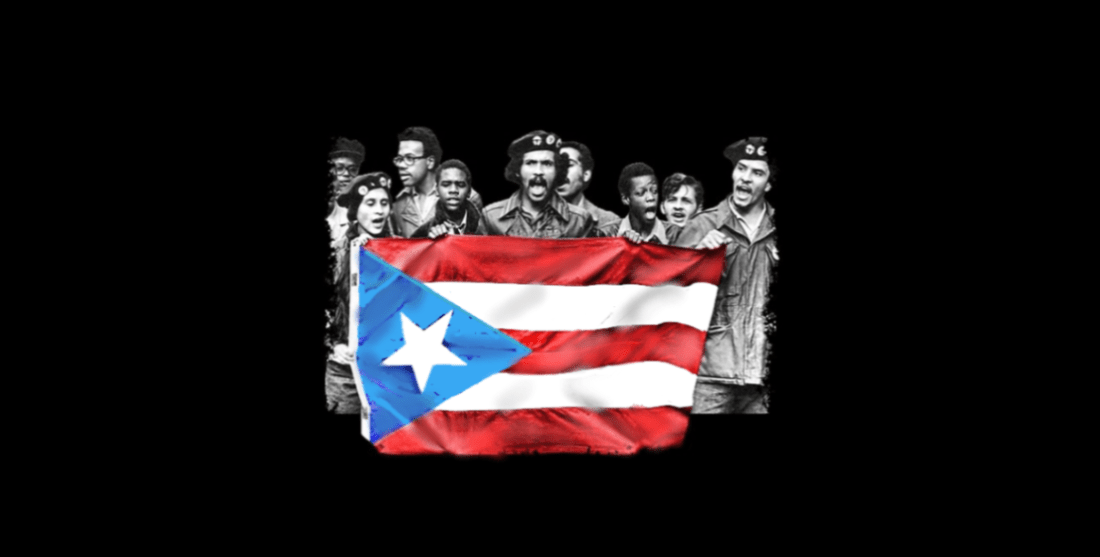
Since the Intentona de Yauco, the Puerto Rican Flag has served to inspire the anti-colonial movement in Puerto Rico as well as in the diaspora. It has been tradition for the flag to be an inspiration in the battle for freedom and justice, such as during the rise of the Young Lords.

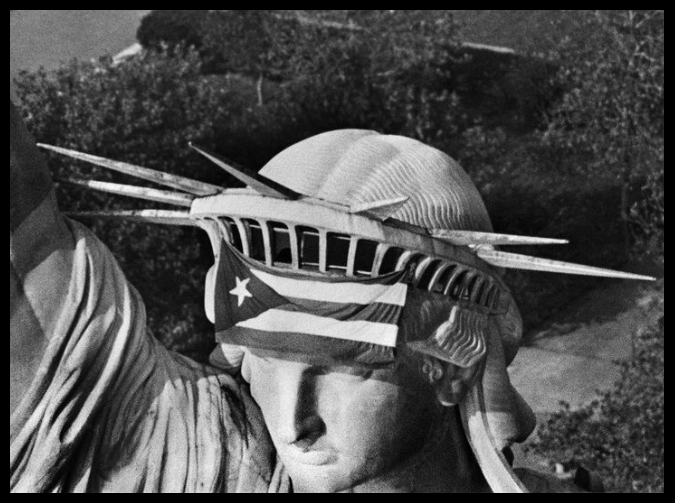
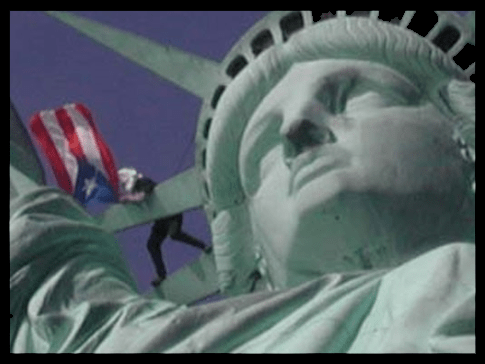
In two dramatic events, Puerto Ricans took center stage in world news with the national flag highlighted in occupations of the Statue of Liberty. In 1977 they occupied the monument to demand the release of political prisoners Lolita Lebron, Rafael Cancel Miranda, Irvin Flores, Andres Figueroa Cordero and Oscar Collazo. And again, in the year 2000 to demand an end to the U.S. Navy’s bombing practice on the Puerto Rican Island of Vieques.

In 1977, Puerto Rican activists seized the Statue of Liberty to demand the release of political prisoners.

On Nov 5, 2000, Tito Kayak, and 25 activists, protested the U.S. Navy bombing practice of Vieques.

The devastation caused by Hurricane Maria in 2017 coupled with the continued enforcement of U.S. colonial policy, made the flag a symbol of hope. Nationalism became a critical force that provided moral strength in the ongoing resistance.

In fact, Mother Nature’s destructive forces can never compare with the attitudes and corruption of U.S. government officials. With their policy of neglect U.S. officials contributed to the loss of 4,645 Puerto Rican lives — death tolls the Trump administration blatantly disputed and trivialized. The criminality of the Jones Act combined with the dangerously ineffective FEMA administrators, showed us (and the World) the genocidal policies of both past and present U.S. Presidents — regardless of political party affiliation.

Criminalization of the Puerto Rican Flag

Adding insult to injury, after the U.S. militarily invaded and colonized Puerto Rico in 1898, use of the flag was discouraged and stigmatized as something evil by U.S. officials. But it was during the imposition of Law 53 of 1948, better known as the Gag Law, (in Spanish: Ley de La Mordaza), anyone caught displaying or possessing the Puerto Rican flag was immediately arrested by the colonial authorities. The infraction was punishable by up to 10 years in prison. This vicious law aimed to quell mass support for independence but was also used to persecute Dr. Pedro Albizu Campos and the Nationalist Party.

Without warrants, homes, schools, businesses and houses of worship were randomly searched by colonial police looking for the “contraband flag”. Thanks to the nationalist fighting spirit of the Puerto Rican masses the U.S. rulers were compelled to eliminate this law.

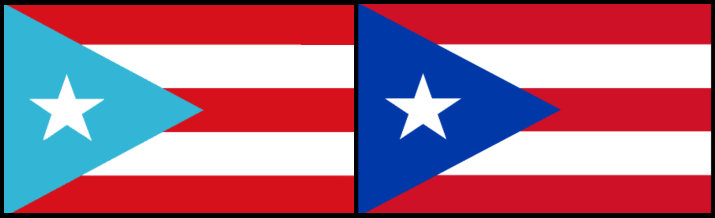
In 1957, Law 53 of 1948, was repealed as well as the ban on the Puerto Rican flag. A development that came about as a result of militant people’s struggle. However, the original turquoise blue on the flag was replaced by the same dark blue as in the U.S. Flag. This was an attempt by the U.S. colonizers to psychologically cause a false sense of assimilation between Puerto Ricans and the foreign oppressors.

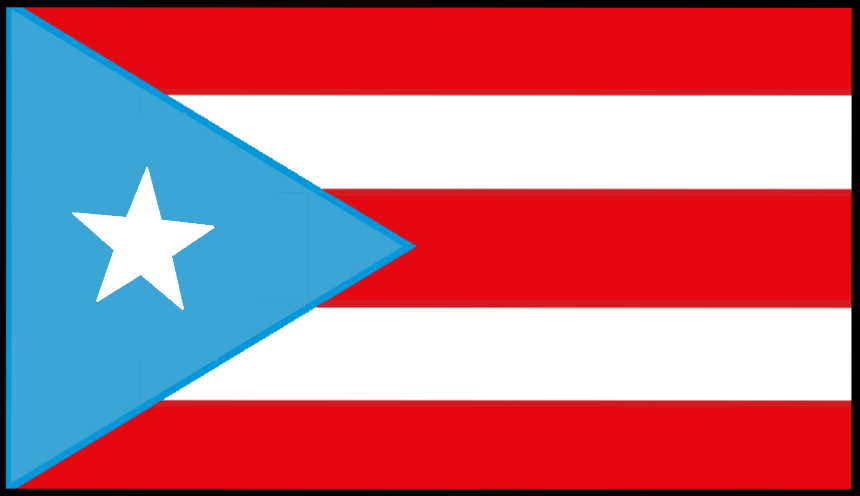
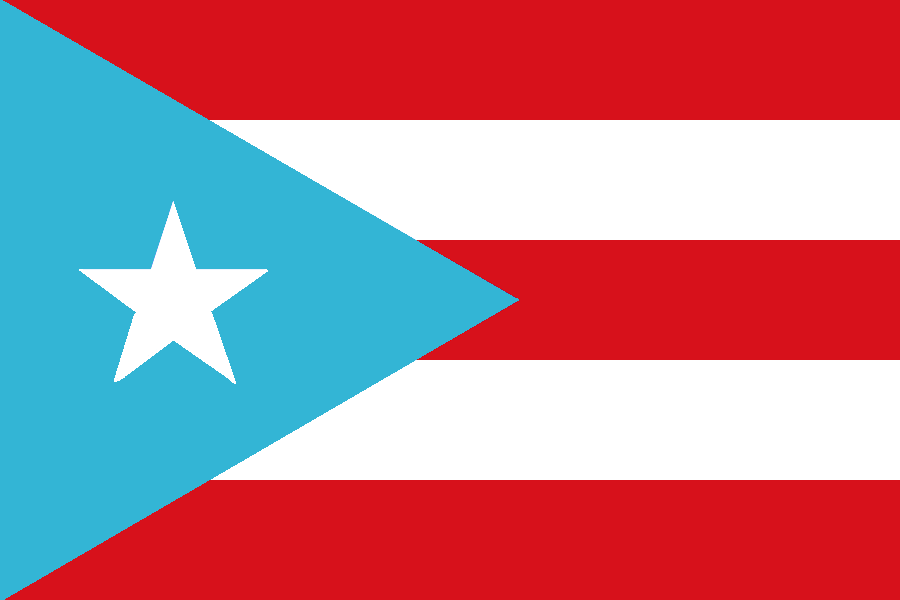
On the left the original version approved by revolutionaries at the 1895 Chimney Corner Hall
meeting in New York City. On the right the version imposed by U.S. colonialism.

When we wave the Puerto Rican Flag in annual events, let’s not do it in vain and end up taking this honor for granted. Those who continue to colonize us want to ensure our national symbols be no more than a passing fad. The Puerto Rican Flag came about with sacrifices made by those who fought and died for the freedom of our people.

That is why we celebrate the Puerto Rican Flag and salute the memory of our ancestors who fought gallantly for a noble cause. Despite everything the U.S. has done to us through racism and attempts to destroy our identity as a people, Boricuas continue to say with pride QUE BONITA BANDERA!

QUE VIVA PUERTO RICO LIBRE!
A Tribute to KARL MARX

_________________________________________________________________________

Accumulation of wealth at one pole is at the same time accumulation of misery, agony of toil, slavery, ignorance, brutality, mental degradation, at the opposite pole.       -Karl Marx _____________________________________________________________________________

la versión en español: https://carlitoboricua.blog/?p=7611&preview=true&_thumbnail_id=7635

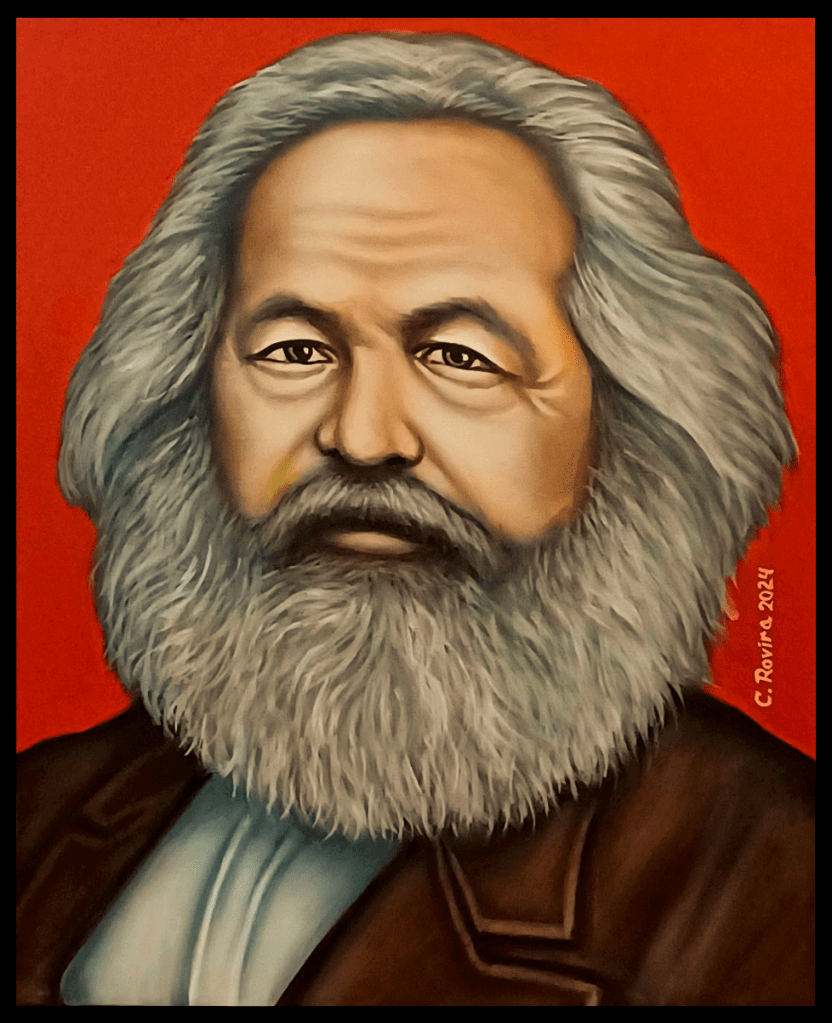
A Tribute to Karl Marx, May 5, 1818 – March 14, 1883

By Carlos “Carlito” Rovira

On May 5, 1818 in the city of Trier, Prussia, a great historic figure was born who would eventually send shock waves towards every school of thinking. Karl Marx would impact all of society, including those who served to protect the insecure class of oppressors, tyrants and exploiters, during his time and the present.

This gallant revolutionary eventually formulated ideas that would serve to provide oppressed and exploited people with a comprehensive revolutionary theory, based on the social and economic status of the working class.  It was in collaboration with his most trusted comrade and friend, Friedrich Engels, that Marx was able to develop a scientific approach for examining capitalism — in order to expedite it’s overthrow.

One of the greatest achievements made by Marx was his analytical conclusions of how capitalist profits are created. The capitalist class were not the lords of society because they worked harder or were smarter than anyone else. Their position was thanks to their theft of surplus value — the value of commodities above and beyond what is socially necessary to produce them. This surplus value is the fruit of unpaid labor, which becomes the nucleus of the vast wealth stolen by the capitalists.

My portrait of Karl Marx. 20″ X 24,” acrylic paint on canvas. Painted in 2024.

The rapidity of production that resulted meant that abundance tended to cause scarcity, when overproduction caused job layoffs thus making commodity goods unaffordable for workers, while capitalists were only interested in satisfying themselves with a lust to maximize the rate of surplus value.

Once these commodity goods circulated in the market and sold the already created surplus value would then be realized as profits.

And because capitalism collectivized commodity production with concentrations of workers organized for a distribution of labor, a socialization of production was introduced. The magnitude of production gradually reached levels never before seen in human history. The capability of the productive forces meeting the needs of everyone in this society several times over revealed why poverty and want are an absurdity that is inherited in this system. This is a phenomenon that shall inevitably compel working people to rebel.

In the words of Karl Marx: 

“The essential conditions for the existence and for the sway of the bourgeois class is the formation and augmentation of capital; the condition for capital is wage-labour. Wage-labour rests exclusively on competition between the labourers. The advance of industry, whose involuntary promoter is the bourgeoisie, replaces the isolation of the labourers, due to competition, by the revolutionary combination, due to association. The development of Modern Industry, therefore, cuts from under its feet the very foundation on which the bourgeoisie produces and appropriates products. What the bourgeoisie therefore produces, above all, are its own gravediggers. Its fall and the victory of the proletariat are equally inevitable.”

It was this analysis that led Marx and Engels to become adamant and unforgiving in their critiques of Political Economy, that is, the deceitful and hypocritical argument used by the capitalist rulers to justify their parasitic exploitation of working people.

This analysis was also central in Marx’s world outlook that defined his conceptions in philosophy, ideology, politics, history, culture and the arts, but most important of all his attitude towards the antagonistic relationship between opposing social classes.

KARL MARX’S TREMENDOUS IMPACT ON THE WORLD

Marx’s ideas impacted revolutionary movements on every continent to the present, long after his death. Thanks to the political leadership of Vladimir Lenin, Marx’s ideas guided the formation of the Soviet Union, the world’s first experiment in socialist planned economy.

The ideas contained in this new doctrine became so alarming to prominent ruling class figures that soon after Marx and Engels collected works were made available in English a supply shortage occurred in the United States. Prestigious institutions of learning made large purchases from European publishers.

Bourgeois economists, philosophers, historians, anthropologists, archeologists, and so on, in the U.S. began “studying” Marxism, not with the intent to understand and advance its revolutionary logic but to search for weaknesses in the doctrine in order to discredit it.

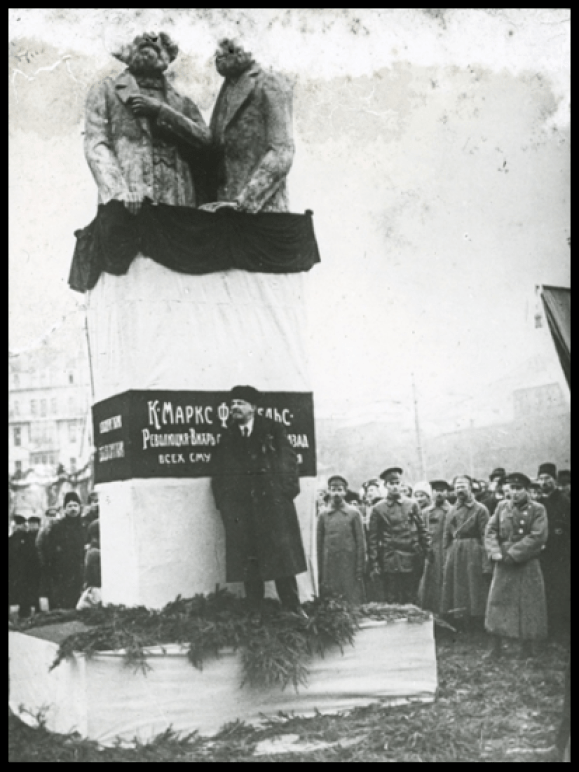
Russian revolutionary leader, V.I. Lenin, at the Marx & Engels monument
in the Soviet Union, 1918.

For the most part Marx’s theories proved consistent with his expectations as workers in industrialized capitalist countries rose up in fierce rebellion while in the plundered and colonized regions of Africa, Asia and Latin America capitalist imperialism was challenged by the fury of national liberation struggles.

It is no wonder why revolutionary figures like Amilcar Cabral, Celia Sanchez, Ho Chi Minh, Claudia Jones, Madame Nguyễn Thị Định, Fidel Castro Ruz, Patrice Lumumba, Nguyễn Thị Bình, Ernesto Che Guevara, Mao Zedong, Steve Biko, Kim Il-Sung and many others, resorted to embrace Marxism and sought ways to apply its many lessons to their respective realities.

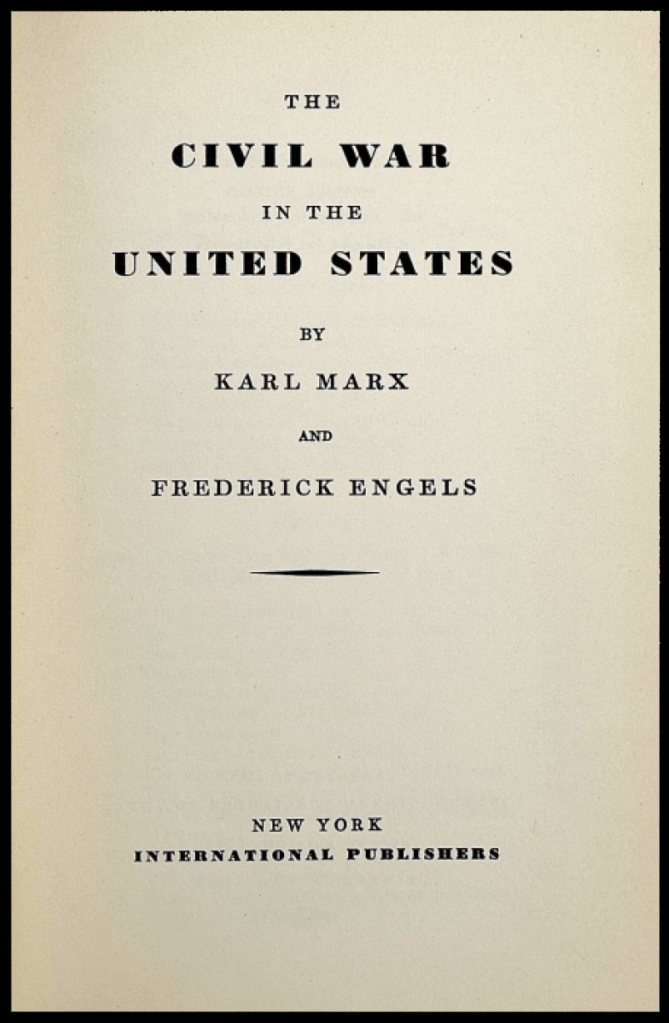
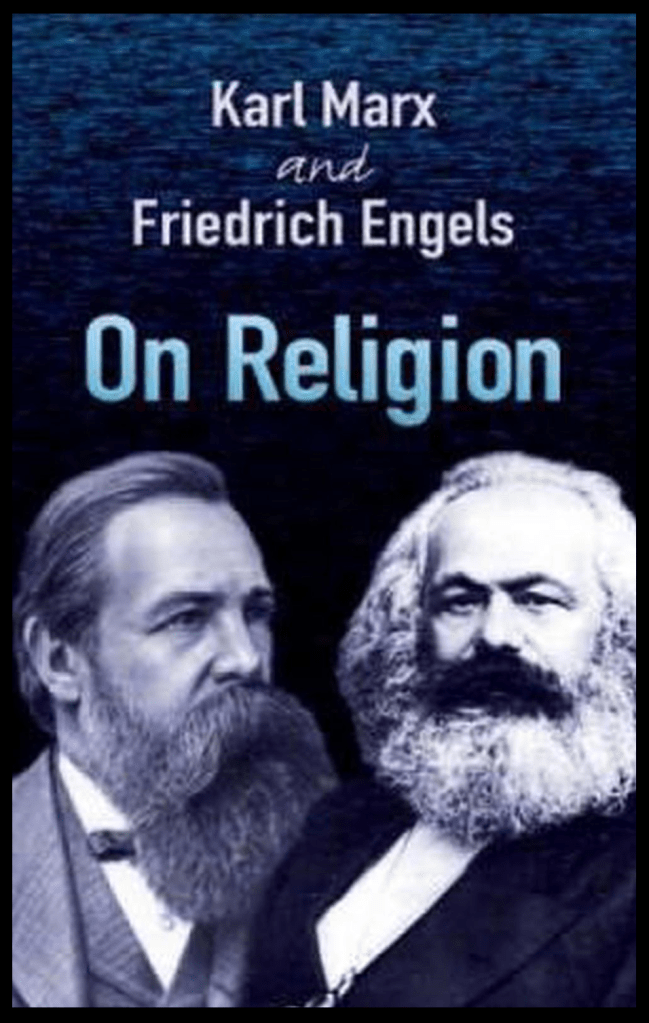
Contained in Marx and Engel’s earliest writings like the Philosophical & Economic Manuscript, The Communist Manifesto, The Origins of the Family, Private Property & the State, The Civil War in the United States, Utopia and Scientific Socialism, On Religion, Wage, Price and Profit, along with the rest of their vast collection of writings, are many valuable lessons which are indisputably applicable in our experiences today. That is why, to this day, 143 years after his death, Karl Marx continues to be despised and dreaded by capitalist rulers.

comman62cov.jpg
The classic writing that continues to haunt the ruling class.

In the United States, African American figures like Cyril Briggs, Harry Haywood, W.E.B. DuBois, Lorraine Hansberry, Paul Robeson, Audre Lorde, Fred Hampton, and many more, were able to see how the Black liberation struggle had natural affinities with the fundamental analysis of Marxism. By the 1960’s-70’s Marxism’s most notable writing “The Communist Manifesto” became one of several political education study requirements for members of the Black Panther Party and Young Lords Party.

KARL MARX & THE CIVIL WAR IN THE UNITED STATES

One of the most notable of Marx’s political involvements was his intervention in the events of the Civil War in the United States. African chattel slavery in the U.S. was the most lucrative and brutal in all of history. It was a system that served as the economic impetus for capitalism and allowed it to grow into the colossal wealth it comprises today.

Through his correspondence with President Abraham Lincoln and through his column in the New York Tribune Karl Marx sought to build pressure by being firmly insistent about the need for a decree that made slavery technically illegal.

On January 1, 1863 Lincoln signed the Emancipation Proclamation. This monumental document became the legal precedent for recruiting and arming Black people. Although Lincoln’s motives were of military consideration the Emancipation Proclamation hastened the outcome of the war and would eventually guarantee the defeat of the Southern Slave owners.

Sectors of the British ruling class who had vested economic interest in the South’s slave economy had desired to militarily intervene in support of the Confederacy. Thanks to Karl Marx’s leadership in the powerful International Workingmen’s Association of England the British rulers were prevented from coming to the aid of the Confederacy.

Karl Marx’s leading role mobilizing the English working class to prevent the prolongation of chattel slavery in the United States was in every objective sense a profound act of solidarity to the African American people. Marx’s convictions were firm, it is why he stated: “Labor in the white skin can never free itself as long as labor in the black skin is branded.”

MARXISM MORE RELEVANT TODAY THAN EVER BEFORE

The revolutionary contributions of Karl Marx and Friedrich Engels continue to be the target of bourgeois philosophers, economists and historians. Ruling class scholars demonstrate their contempt for working class people by falsely accusing Marxism of being “totalitarian” or asserting that it is filled with nothing but “unrealizable fantasy,” etc.

Similarly, there are those in the predominantly white left of this country who claim, dripping with social arrogance, that Marxism and the nationalism of oppressed people are contradictory and can never be reconciled to complement one another, in the fight against capitalism.

Others in conservative sectors of the national movements, strictly concerned with the narrowest cultural sentiments of nationalism, mistakenly assert that Marxism is a European or “white thing” and is therefore irrelevant to people of color.

Both views only serve to promote the reactionary notions of white supremacy and anti-communism. Objective material facts prove the opposite. Under the intense circumstances of imperialism today all oppressed entities have a definite class relationship to capitalism. It is a phenomenon which no one can escape.

People of color in the United States are the most exploited, persecuted communities. They are victims of police violence and mass incarceration. If anyone is to have a greater stake and say in the downfall of this vile system and the establishment of a new society, it is those who have been historically on the bottom of social and economic disparity.

It is an absurdity and a reflection of how deeply embedded white privilege is in the culture to believe that mastering Marxism requires people of color dismiss their self-identity within the broader population. This notion distorts the meaning of Marxism by dismissing the necessity of socialism being built on equal terms. Claiming that the nationalism of oppressed people is counter-productive is nothing more than a disguise intended for the hinderance of working-class unity.

The teachings of Karl Marx and Friedrich Engels are today more relevant than ever before to the liberation struggles of Black, Latino, Asian, Arab and Indigenous people, especially because of the super-exploitation and increasing numbers of these national groups coming into the U.S. working class.

An exposé of organized religion’s hypocrisy and intoxicating fantasy.

The capitalist ideological institutions like the church, mass media, public education, etc., will implicitly and explicitly encourage us to accept the rule of wealthy exploiters and brutality of the police state, as if it were “normal” to do so. It was precisely social class oppression, causing suffering in the world that Karl Marx selflessly devoted his entire life to condemn and worked towards undoing.

If Marx were alive today, he would surely be part of the movements condemning the persecution of immigrant and undocumented families in the United States, the racist police killings of people of color, the U.S.-backed Israeli occupation of Palestine as well as the U.S. colonization of Puerto Rico.

It was Marx’s uncompromising devotion to revolution on behalf of the workers and oppressed people of the world that explains the utter hatred the ruling class has today for the conceptions he developed. The rulers cannot bear the thought of a well-articulated analysis that calls for an end to capitalism and points towards the only direction to bring about the complete emancipation of the human race.

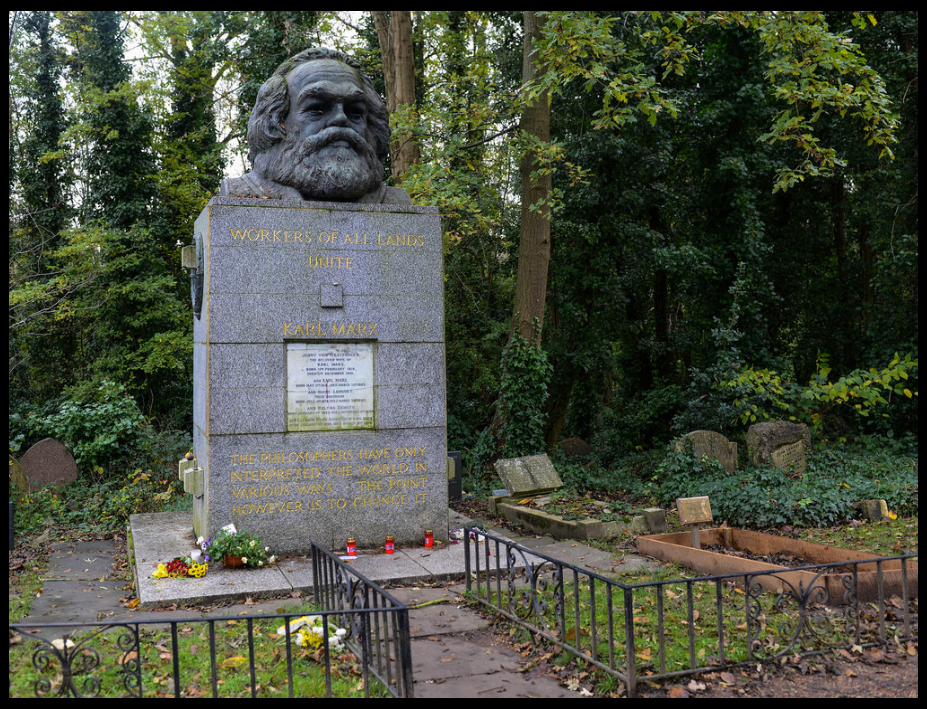
Karl Marx tomb at Highgate Cemetery, London, England.

LONG LIVE THE REVOLUTIONARY LEGACY OF KARL MARX!

THE IMAGE OF DR. PEDRO ALBIZU CAMPOS MUST BE RESPECTED!

By Carlito Rovira


Latin America has produced many revolutionary figures who have left imprints in history with their outstanding examples of courage and selfless deeds. Whether or not these freedom fighters were conscious of it what they demonstrated in their actions would serve for future generations to emulate to complete the task of eliminating the reign of oppressors forever.

These exemplary men and women, like Anacaona, Simon Bolivar, Petra Herrera-Ruiz, Celia Sanchez, Augusto César Sandino, Lolita Lebron, Fidel Castro and Valentina Vazquez, just to mention a few, came about as a consequence of the determination of oppressed people who seek whatever means to achieve their freedom.

Dr. Pedro Albizu Campos, the once leader of the Nationalist Party of Puerto Rico and present-day icon of the Puerto Rican liberation struggle, has secured an important place in the history of struggle of all oppressed people.

The imagery of Dr. Pedro Albizu Campos, like the photographic or artistic depiction of other renown revolutionary figures, ceases to be the visual property of the individual once it becomes a representation of a people with a cause. In actuality, such depictions are the visual expression of a people in a historical endeavor for emancipation.

And because it is an artistic rendition symbolizing a historical revolutionary quest it must therefore be treated with the utmost respect, as if it were a people’s national flag.

The recent defamation of a well known photographic pose of Dr. Pedro Albizu Campos has to be viewed critically and the motives behind its creation must be questioned because of the context of who Don Pedro Albizu Campos was and precisely what would have been his disposition of the devastating events now occurring in Puerto Rico, which have exacerbated the impact of U.S. colonialism there.

Some will argue that this is an “art challenge”, elevating LGBTQ themes and so on. However, there is good art and there is bad art, no equilibrium among the two. There is art that serves the oppressors and art that serves the oppressed, that is, the liberation struggle. A quick view of the defamed image would tend to make the revolutionary appear as a clown or charlatan.

I know quite well that the once transgender leader of the 1969 Stonewall Uprising and eventual member of the Young Lords Silvia Rivera, would have been appalled by this.

To superimpose color shading on the facial features of this revolutionary is to diminish the dignity and seriousness of the memory of someone who the U.S. colonizers continue to despise and dread.

Placing lipstick and eyeshadow on an imagery many revolutionary nationalists view as unassailable is equal to placing shades over his eyes, a baseball cap over his head and a blunt in his mouth. That would naturally be offensive at the highest degree to anyone who embraces the meaning of Don Pedro.

Needless to mention, that the creation of such images can only entertain the wishes of those who are hostile to the cause for Puerto Rico’s independence.

Shame on those who endorse this display of self-hatred, whether implicitly or explicitly, especially as we approach the 53rd anniversary of Pedro Albizu Campos’ death, April 21, 1965.

The colonizers also understand that art is political and that it can be used as a weapon. The question automatically then becomes — who do you want art to serve, the aims of the colonizers or the aims of the colonized?


—————————————————————

With this article is a rendition of the same pose ( featured photo ) which I painted 3 years ago. Dimensions: 24″ X 34″, acrylic on canvas. It was created with my love for Puerto Rico, our people and our historical national liberation struggle.


 QUE VIVA PUERTO RICO LIBRE!


Politics always colors how we see the world. BLACK PANTHER a movie review.

By Carlos “Carlito” Rovira

I’m happy to say that I took some time out and went to see the Marvel Studios movie production Black Panther. I was compelled to make this happen by the range of discussion about it, by people at work, friends and social media. I have to admit that I enjoyed watching it very much. It is the best movie I have seen since the first Star Wars in 1977.

The special effects, color, costumes and most especially of all the cast. Every actor in this movie merits an Oscar, especially Michael B Jordan, Chadwick Boseman, Danai Guirira, Forest Whitaker, Lilitia Whight and Winston Duke. Although “Wakanda” is a fictitious African country the quality of this movie will tend to make you believe for a brief moment that such a place exist.

But despite the movie’s acting and technical sophistication and well-deserved praises, like all areas of aesthetics especially the cinema, Black Panther cannot avoid having political content.

And for progressive minded people, especially people of color with connections to the liberation struggle, we should not be reluctant to divide the one into the two; this movie production has many beautiful aspects that will be appreciated by all especially young people of color.

One would easily feel that Black Panther is promoting a sense of African empowerment, and understandably so with such a powerful display of Black actors. Unfortunately, that is not the case.

Let’s not lose sight that it was the backing of avaricious capitalist corporations, that partake directly or indirectly in the plunder of Africa, that made this movie possible. It became apparent to me how the political content of this movie was insidiously well pronounced, and sugar coated for the purpose of mass acceptance.

Throughout most of the stretch of the movie I could not avoid being baffled when Black warriors of “Wakanda” are shown harmoniously collaborating with a white C.I.A. operative played by Martin Freeman. In one of the scenes, he is wounded in battle and is affectionately cared for by the Wakadans.

The absurdity in this key element of the plot is knowing the criminal history of the C.I.A. in Africa – from the murder of Patrice Lumumba, the imprisonment of Nelson Mandela, and the countless bloody atrocities it has committed throughout the African continent. The profiteers of this movie are hoping that we are ignorant of these historical facts.

In another insidious and politically significant part of this movie the Black Panther (the King) speaks before an international body of delegates from various nations to announce how Wakanda will no longer keep from the world its precious resources but instead will begin to share them. What is absurd in this scene is that in reality imperialist powers have always robbed Africa of all of its resources, human and material. In this same scene the C.I.A. operative is shown applauding the Black Panther’s announcement, as if giving approval.

Many Blacks and other people of color will feel inspired by this movie for many good reasons; Black Panther was excellently made, and its cast was mostly Black who performed their roles with the utmost skills.

But while we admire the talents that comes from an oppressed people let’s not ever forget who controls the aesthetics and institutions of culture in this society, it is not the oppressed. There are reasons why capitalist corporations with complicity in racist oppression in the United States and the colonization of Africa, like the Walt Disney Company, were motivated to partake in making this movie.

THE SO-CALLED “GOVERNMENT SHUTDOWN” IS A FARCE

By Carlos “Carlito” Rovira

There is no such thing as a “shutdown” of the capitalist state while the capitalist class is in power. The rulers are not that stupid to “shutdown” the apparatus that keeps them in power.

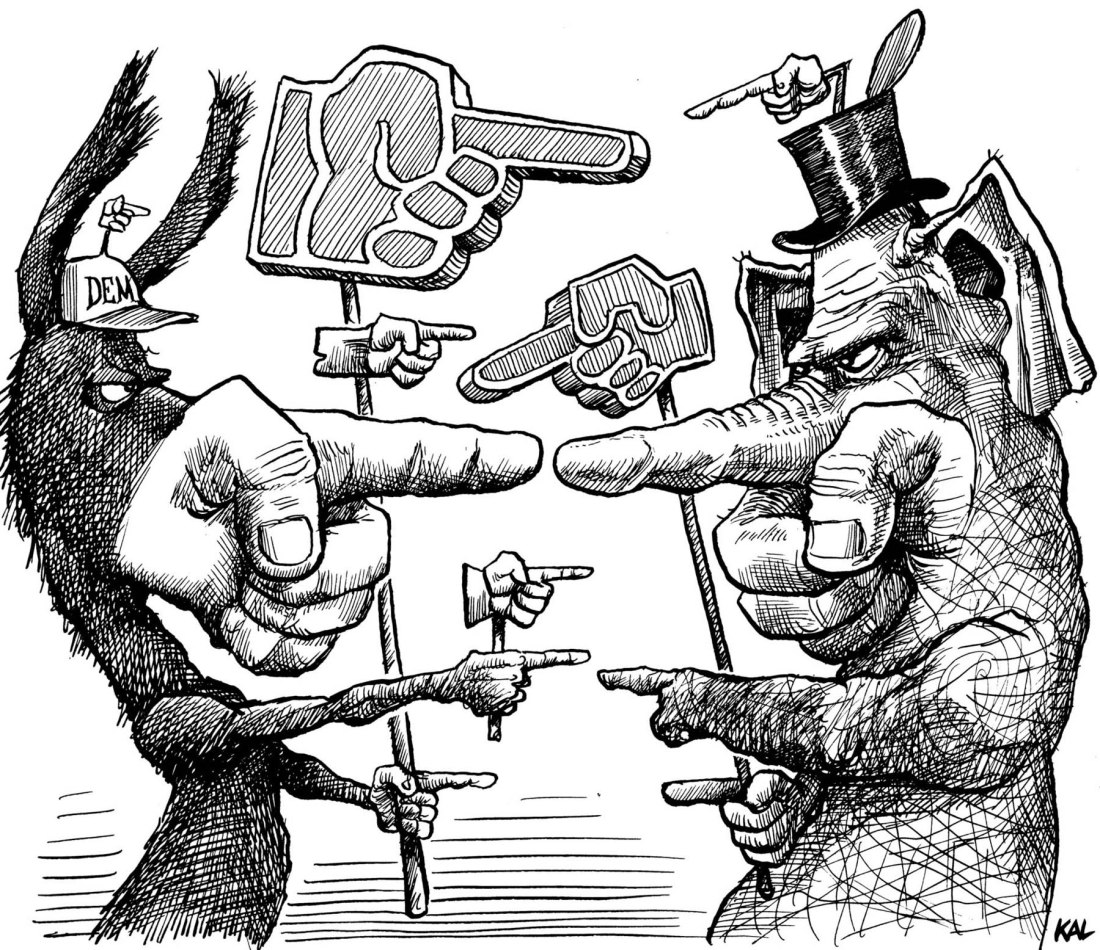
The police and the military will continue to function, maintaining this racist and criminal system of inequality. It is really a deception to make us believe that there is something fundamentally different between Democrats and Republicans, two political entities of the wealthy.

In actuality, what this debate among the different sectors of the ruling class is really about is to test how far they can go and get away with their political and economic subjugation of poor & working-class people.

Trickery is a characteristic of those in this society who have made their fortunes at the expense of the many. In this case Republicans are attempting to demonize children of mostly Mexican origins as a way to sway the public to support the defunding and eliminate the Children’s Health Insurance Program (CHIP) and the Deferred Action for Childhood Arrivals (DACA).

But feverish and self-contradictory policies also existed under the Democratic Obama administration which contributed towards the anti-immigrant posture that exist today.

So-called “non-essential” government workers will not be paid; recipients of social security and other desperately needed programs will not receive their checks. The military brass will continue to receive their payment and retain their privileges while the rank & file and their families will be left to float in the wind.

What is most ironic in all this is that the privileged men and women members of the U.S. Congress will continue to get paid, while millions of families throughout the country suffer.

Political crisis amongst the rulers such as what is now taking place, in which poor people are placed in a situation as pawns, is basically a fight among thieves. And as long as capitalism exist these farcical conflicts will continue to flourish as symptom of capitalist oppression. It is a reminder that WE NEED A FUNDAMENTALLY NEW SOCIETY.

The Hypocrisy in “U.S. Citizenship” for Puerto Ricans

By Carlos “Carlito” Rovira

In the days following the massive devastation caused by Hurricane Maria in 2017, news reports emphasized the “American citizenship” of Puerto Ricans. But why were Puerto Ricans suddenly projected as American citizens when, traditionally, this was not the case?

The same media outlets discovered that most people in the U.S. did not know that Puerto Ricans hold U.S. citizenship. For many North Americans—who often suspect that people who speak Spanish and come from a territory in Latin America are “illegal”—the concept of Puerto Ricans as “citizens” must be baffling indeed. The contradictions of that relationship have been vividly captured in the savagely unequal deployment of relief to other hurricane devastated areas, like Puerto Rico.

We now see a return of this “cultural shock” when it was announced that Puerto Rican/Latino music superstar Benito Antonio Martinez Ocasio, aka Bad Bunny would be the highlight at the 2026 Super Bowl halftime. It became even more of a surprise when it was made clear that the Boricua mega entertainer would sing his tunes exclusively in Spanish.

Far-right, MAGA racists went into a feverish mode of hatred which motivated them to launch a campaign to condemn the National Football League’s decision to have the world-famous singer take the stage in the traditional entertainment show. The far-right pursued arguing that Bad Bunny is not an “all American,” etc.

What is needed to clear up the confusion is a discussion of the origins of Puerto Rico’s relationship with the United States and the peculiarities of Puerto Rican “citizenship.” Unfortunately, the underlying reason for the different responses—the colonial relationship between the U.S. and Puerto Rico—has not been clearly understood.

Puerto Rico was one of four countries colonized by the U.S. in the aftermath of the Spanish-American War of 1898. In 1917, then U.S. President Woodrow Wilson signed the Jones–Shafroth Act. Commonly known today as the “Jones Act” it imposed a second-class version of citizenship on Puerto Ricans living in Puerto Rico.

The U.S. government expressed its imperial arrogance by ignoring the unanimous opposition to the law by the Legislative Assembly, a long-existing political body in Puerto Rico, including outspoken figures like Luis Muñoz Rivera and Jose De Diego. But because Puerto Ricans were under a foreign military occupation, U.S. citizenship was not up for negotiation but blatantly imposed on March 2, 1917.

The law identified the people of the island as “statutory citizens,” a new concept never before applied to anyone, anywhere, which means that certain rights and benefits of citizenship do not apply. Puerto Ricans residing on the island are denied the right to vote in Federal elections and the ability to declare bankruptcy, among other rights and benefits.

The double standard in the supposed “American citizenship” for Puerto Ricans was fueled by the same racist logic of the not-so-hidden second-class citizenship status this country maintains for Indigenous and African American people. Only in the case the Puerto Rican second-class status was actually spelled out in the Jones Act itself, instead of just existing de-facto.

Second-class citizenship for people of color is a norm of U.S. capitalist society.

The U.S. rulers concocted a way of disguising the fact that they had conquered and colonized a distinct nation, in a separate territory, with a separate economy and a distinct history, culture, language and national identity. In short, the Jones Act allowed U.S. rulers to disguise their colonizing intent and undermine the existence and identity of another people.

At first many Puerto Ricans believed that “U.S. citizenship” would benefit them. But they soon discovered the opposite.

Statutory Citizenship and World War I

On April 6, 1917, barely a month after the imposition of “U.S. citizenship” on Puerto Ricans, the U.S. declared war on Germany. This was a war like none that came before. It engulfed all the industrialized capitalist countries of the world. Their aim was the seizure of each other’s colonial possessions in order to obtain new commercial markets, new sources of raw materials and the labor of already conquered people which the victorious imperialist powers could then exploit for profits.

It was a struggle of global proportions facilitated by the most ruthless capitalists of the various imperialist countries. U.S. rulers did not want to be left out of the expected lucrative feeding frenzy, and so they sought ways to persuade the broader U.S. public to support corporate America’s desires to join one side in the conflict.

By November 1917, just 8 months after the imposition of citizenship, the military draft was applied to Puerto Rico. This came after government and military officials realized that Puerto Ricans were reluctant to voluntarily join the U.S. Armed Forces. About 20,000 young men were taken and sent to various U.S. military bases and installations around the world.

Many of these soldiers died or were maimed as a result of highly lethal chemical weapons used in this war. But the death toll among these soldiers is still unknown because U.S. military officials kept no records of Puerto Rican battle casualties. This was the case with the now dissolved 65th Infantry Division, also known as the Borinqueneers.

It was of no concern to the warmongers in Washington that these Puerto Rican men did not have the slightest clue what the war was about in the first place. If we consider the chronology of events, it becomes clear that the Jones–Schafroth Act, which imposed “U.S. citizenship,” was simply designed to use young Boricuas as cannon fodder.

2nd Class “Citizenship” and Life in Puerto Rico

Today it has become indisputably clear that all of the facets of the Jones Act, especially its economic component, are designed to destroy the Puerto Rican nation—as Puerto Rican Nationalist leader Dr. Pedro Albizu Campos predicted.

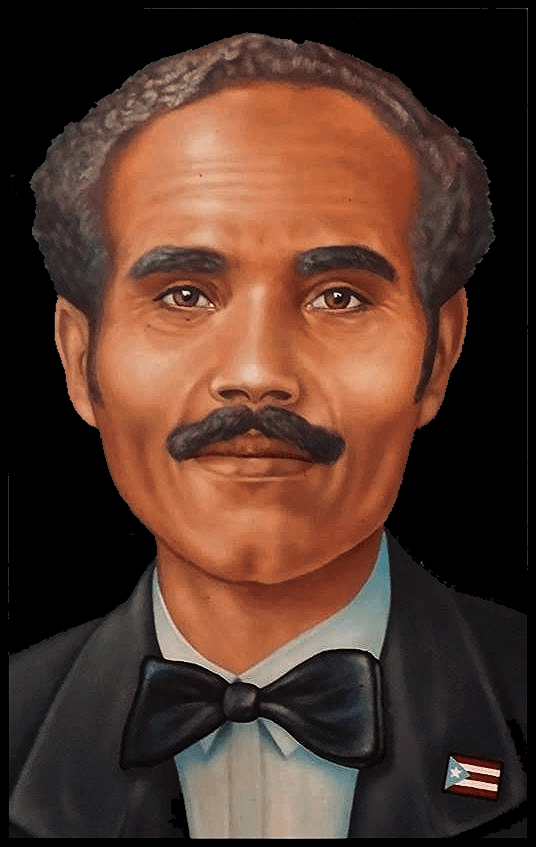
My portrait of Dr. Pedro Albizu Campos. 20″ X 24″, acrylic paint on canvas.

Giant U.S. corporations are now the sole beneficiaries of the imposed American “citizenship” in Puerto Rico. While it is true that Puerto Rico receives limited benefits from the colonial relationship it has also been historically subjected to a range of laws that benefit only the billionaires of Wall Street, and this is the primary effect.

Not only are these avaricious capitalist enterprises exempt from paying taxes to Puerto Rico, they also extract from the country an annual average of $30 billion in profits. For an island with a population less than 4 million this is one of the highest rates of colonial exploitation per capita in the world.

And President Barrack Obama’s austerity measure known as the Puerto Rico Oversight, Management, and Economic Stability Act (PROMESA), which had aimed to forcibly collect an imposed $73 billion dollar hedge fund debt by shutting down public schools, libraries, hospitals, and other public services, as well as reducing the minimum wage, revealed what the aims of U.S. colonizers have always been, since the military invasion of 1898.

Such draconian measures, combined with the fact that Puerto Ricans residing in the United States constitute the second poorest nationality (Native Americans are the poorest), makes “American citizenship” for Puerto Ricans meaningless.

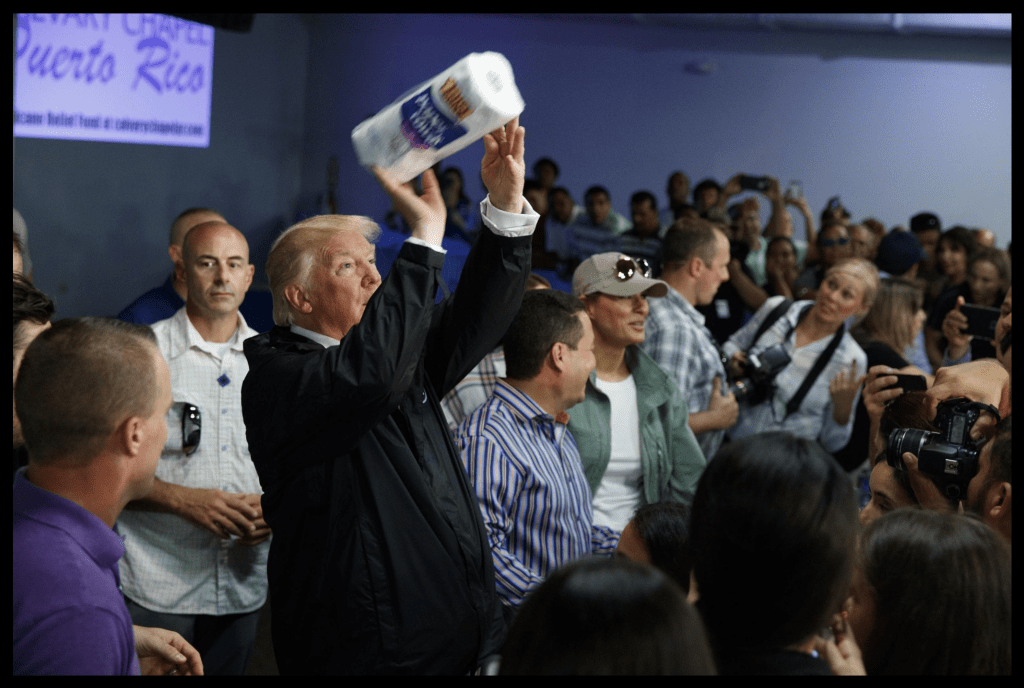
Trump expressed disdain for Puerto Ricans who suffered devastation following Hurricane Maria.

When Donald Trump came to Puerto Rico following Hurricane Maria it was not to assess the damage caused to property and human life. Despite his stupid behavior of throwing paper towels at a Puerto Rican audience and offending them with false claims of how much money Puerto Rico was “costing the federal treasury,” etc., he was consistent by expounding the traditional racist views of U.S. colonialism.

Trump was insidiously reminding Puerto Ricans, in his own crude and malicious style, how worthless “U.S. Citizenship” really is for Puerto Ricans. But in actuality Trump was honestly expressing the disposition of U.S. colonial policy in Puerto Rico, under every Democratic and Republican president.

Another blatant and well-hidden example of the hypocrisy in U.S. citizenship for Puerto Ricans was in an April 2022 Supreme Court decision. The high court ruled that people residing in Puerto Rico and other “territories” are not eligible for Supplemental Security Income, a program that provides desperately needed benefits for low-income residents who are older than 65, blind and disabled. Colonialism is blunt and will remind us of its inhumanity, among other things.

Citizenship, in the truest meaning of the word can only come about when the Puerto Rican people achieve freedom to exercise their human rights, that is, to exercise the right to independence and self-determination, and free from the domination of U.S. Colonialism. The U.S. rulers shall then be brought before justice and forced to provide Puerto Ricans with the Reparations due to them.

QUE VIVA PUERTO RICO LIBRE!

Continue reading “The Hypocrisy in “U.S. Citizenship” for Puerto Ricans”

Salute to the martyrs of the October 30, 1950, Puerto Rican Nationalist Revolt

Para la versión en español: https://carlitoboricua.blog/p=6398&preview=true&_thumbnail_id=6414

___________________________________________________________________

“Military intervention is the most brutal and abusive act that can be committed against a nation and a people. We demanded then, as we do today, the retreat of United States armed forces from Puerto Rico in order to embrace the liberty we held all too briefly in 1868.” –Dr. Pedro Albizu Campos

_____________________________________________________________________

By Carlos “Carlito” Rovira

On October 30, 1950, 75 years ago, an armed battle took place in the municipality of Jayuya which spread throughout Puerto Rico. It became known as the Jayuya Uprising. It is an event in Puerto Rico which bourgeois apologists for U.S. colonialism would prefer to dilute or completely erase from history.

Men and women determined to bring about an independent Puerto Rican republic carried out daring armed confrontations with U.S.-trained police and the National Guard. The fury that ensued was due to U.S. colonial policy, which began with the 1898 military invasion. Leading up to October 1950 the U.S. colonizers were putting in place a brutal plan to crush the independence movement and all expressions of anti-colonialism.

The colonization of Puerto Rico was motivated by capitalist economic interests of giant banks and corporations. Countries like Great Britain, France, Germany, Italy, Belgium, Japan and the United States engaged in savage competition among themselves to obtain colonies. With the conquest of the Philippines, Guam, Cuba and Puerto Rico the U.S. became an imperialist power. U.S. rulers envisioned themselves controlling the world, especially Latin America where they had defined their intentions to make it their own in the 1823 Monroe Doctrine.

However, this historical trend did not go unchallenged. Millions of people resisted the savage onslaught by this system, especially after World War II and well into the 1960’s-70’s with the emergence of organized revolutionary nationalist movements in Africa, Asia and Latin America.

It was a momentous period in history with national liberation movements becoming an integral part of the global class struggle, which came to a head at the height of the so-called Cold War. At the political-military poles of this conflict were the United States on one side and the Soviet Union on the other.

Most notable in this historic turmoil were revolutions in Algeria (1954), Angola (1961), Bolivia (1952), Congo (1960), China (1949), Dominican Republic (1965), Egypt (1952), Iraq (1958), Vietnam (1945) and Cuba (1959), as well as the inspiring liberation movements of Palestine, South Africa and Northern Ireland. Imperialism did not foresee the resistance of its victims picking up arms in their quest for freedom. The Jayuya uprising occurred in the context of existing world circumstances.

The 1950 Nationalist Revolt

Under the leadership of Dr. Pedro Albizu Campos, the Nationalist Party of Puerto Rico proclaimed the inalienable right of the Puerto Rican people to independence. These freedom fighters gained the respect of multiple sectors of the population.

My portrait of Dr. Pedro Albizu Campos, painted in 2000.

The Nationalist Party also became known for advocating the right to use whatever means necessary to achieve liberation, including the use of armed force. This made them the primary target of colonialism’s repressive agencies that sought to destroy the independence movement.

When the political left in the United States was persecuted in the 1940-50’s, the result of an anti-communist witch-hunt spearheaded by the notorious Senator Joseph McCarthy, Puerto Ricans witnessed a harsher version of that despicable campaign. People in the U.S. hardly knew that Nationalists were systematically imprisoned and murdered.

Laws were created to justify killing Nationalists in plain view. The cause for independence was criminalized outright. Such was the nature of Law 53 of 1948, better known as the Gag Law, (Spanish: Ley de La Mordaza); it banned the Nationalist Party, prohibited possession and display of the Puerto Rican flag, outlawed public gatherings, prohibited criticism of the U.S. presence and mention of independence in literature, musical renditions and in all mass media. This vicious law aimed to destroy the Puerto Rican people’s self-identity by instilling fear.

U.S. news media outlets only told the false narrative of Washington officials who projected the uprising as an “internal matter among Puerto Ricans.” But nothing can dismiss the cold facts pointing to the contrary: the supposed “Government of Puerto Rico” did not come into existence by the will of the people, it was installed by U.S. colonial decree. Federal law mandates the U.S. President to take direct charge of matters there in cases of emergency. In addition, the governor of Puerto Rico is required by law to report and take directions from the White House.

Early in October 1950, Nationalist Party intelligence operatives obtained information of a secret government plan to eliminate the independence movement. The tactics to be used in the planned onslaught involved attacking offices and homes of Nationalist Party members. With knowledge of the imminent attack Party leadership chose to uphold national dignity and their right to armed self-defense. They decided that it was best to take the initiative by landing the first blow.

THE JAYUYA UPRISING

On the morning of October 30, 1950, a young woman named Blanca Canales led an armed contingency of Nationalists towards Jayuya. Once they arrived in the city the patriots launched their attack on the police headquarters. The Nationalists then surrounded the despised facility and a gun battle ensued.

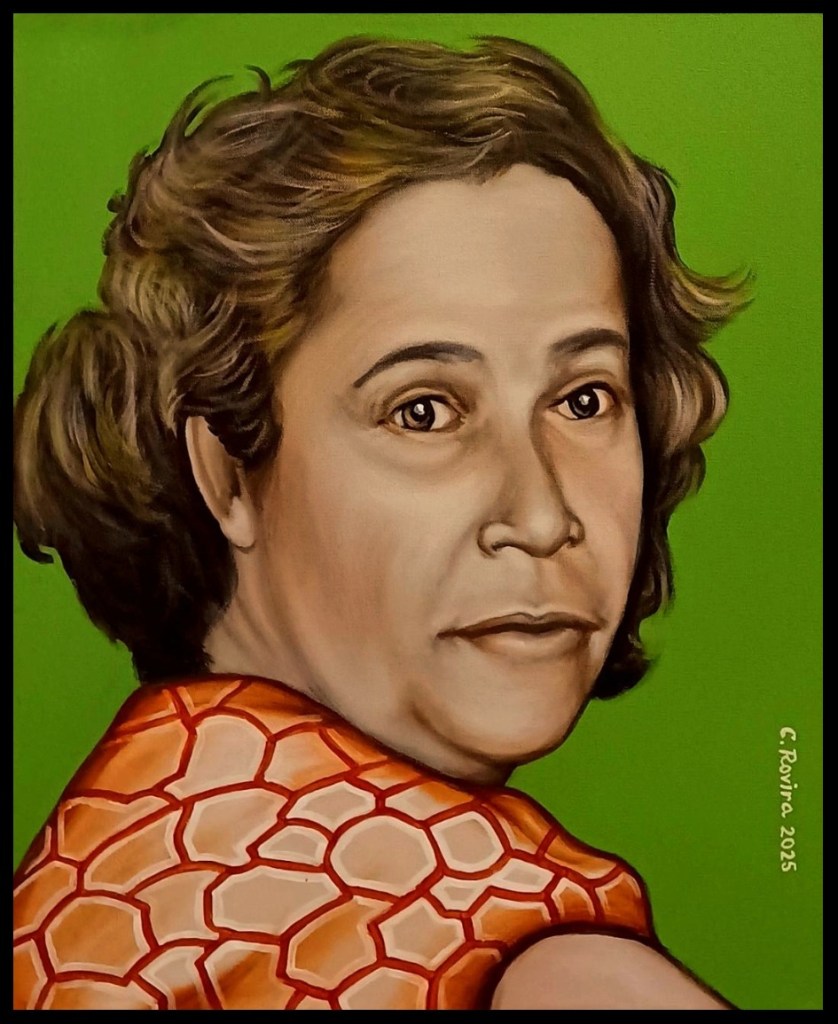
One of my canvas portraits of Blanca Canales. 20″ X 24″, acrylic paint on canvas.

Civil and police officials were shocked by the unexpected tenacity of the freedom fighters. The police were ordered to surrender and come out of the building with their hands raised. As soon as the Nationalists gained control of the situation Blanca Canales proceeded to give the command to burn down the building.

Surrounded by a large gathering of residents, the brave patriots raised the outlawed Puerto Rican flag. With her weapon raised in the air Blanca Canales agitated the onlookers by shouting the historic solemn words of the Puerto Rican liberation struggle: “QUE VIVA PUERTO RICO LIBRE!” She defiantly declared the independence of Puerto Rico!

Blanca Canales, unafraid in custody.

Violent clashes between police and nationalists also occurred in Utuado, Ponce, Mayagüez, Arecibo, Naranjito, Ciales, Peñuelas and other towns. In Arecibo a gun battle ensued at the site of the police station there in which several Nationalists were killed. Among the 12 patriots wounded was former political prisoner Carlos Feliciano.

Carlos Feliciano

In San Juan, colonial police and National Guard attacked the headquarters of the Nationalist Party. Dr. Pedro Albizu Campos, Isabel Rosado and others undertook defending their office with arms at hands until they were overwhelmed in the gun battle by tear gas.

PR Nationalist Isabel Rosado

Campos was then sentenced to life imprisonment. But U.S. puppet Governor Luis Muños Marin conveniently granted Campos a pardon a few months before his death in 1965. Many pro-independence activists, including medical experts, maintain that Campos’ physical deterioration was due to torture with secret radiation experiments.

Dr. Pedro Albizu Campos carried out after being overwhelmed by tear gas in gun battle with police.

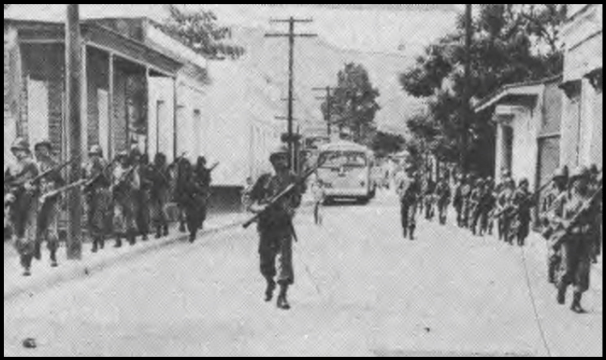
Military airplanes were deployed to bomb Jayuya and Utuado. in Jayuya 70 percent of the municipality was destroyed. The National Guard immediately pushed to suppress the uprising and regain control of the region. New repressive measures were imposed throughout the country, including martial law.

The repression came with the National Guard retaking the municipality of Jayuya.
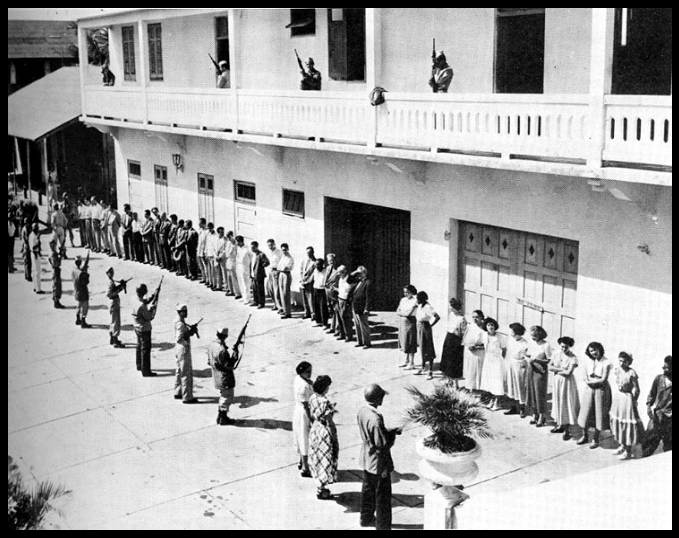
Nationalist Party members were ruthlessly treated by armed forces of U.S. colonialism.
Nationalist Party women fought alongside their male counterparts with conviction and valor.

A news blackout kept the events of the rebellion out of mainstream outlets in order to avoid the condemnation of colonialism in the court of public opinion. To guarantee silencing voices of the emerging struggle U.S. officials intensified their efforts to twist the facts. When the news media asked about the rebellion President Harry Truman falsely described the conflict as being among Puerto Ricans.

On November 1, 1950, Nationalist Party members Oscar Collazo and Griselio Torresola went to the Blair House in Washington, D.C. to assassinate President Harry Truman. Their intended purpose was to counter Washington’s lies about the conflict before the world. Torresola was killed and Collazo was critically wounded in a shootout with Capital Police and Truman’s Secret Service bodyguards. But the brave act of the two martyrs did bring about exposure to what was occurring in Puerto Rico.

Puerto Rican Nationalists Oscar Collazo (L) and Griselio Torresola (R).

The meaning of the Nationalist Revolt

As Puerto Ricans rebelled with guns in hand, anti-colonial struggles in Africa, Asia, the Caribbean and Latin America waged on. The Jayuya Uprising in Puerto Rico was part of that global resistance of oppressed and exploited people.

Although the Nationalist Party did not succeed to expel colonialism, a political victory was won, nevertheless. This chapter in Puerto Rican history proved that the colonizers would compel the people to rebel. It does not matter how great the repressive reach is it can never erase an oppressed people’s identity and revolutionary traditions.

The Jayuya Uprising did force U.S. rulers to change their administering form of domination. In 1952 the Governor of Puerto Rico was no longer a military high ranking official appointed by the U.S. President. Elections were introduced for the office of Governor, but only to disguise the colonizing nature of the U.S. presence. By 1957 Law 53 of 1948, (the Gag Law) was lifted. The removal of this notorious law also meant lifting a ban of the Puerto Rican flag.

If one were to examine the chronology of the atrocities committed by the U.S. in Puerto Rico, like the secret sterilization of women, the cancer epidemic caused by the U.S. Navy bombing destruction of Vieques, the thousands of deaths caused by neglect in the aftermath of Hurricane Maria, and other deliberate policies of genocide, points to why the 1950 revolt was justified.

For their own reasoning U.S. colonizers will also remember this event, as they recognize the potential threat Puerto Ricans pose once they rise up. And in that inevitable future moment the lessons gained from this experience shall prove decisive in fight for a free Puerto Rican republic.

QUE VIVA PUERTO RICO LIBRE!
PR Flag.png

THE TRUMP PHENOMENA: A CONSEQUENCE OF CAPITALISM

By Carlito Rovira

Never before in the history of bourgeois electoral politics in the United States have we witnessed anything more bizarre than what has taken place throughout the 2016 presidential campaign. The U.S. rulers have had their share of absurd individual personalities run for the highest political office but never one who has been so recklessly open with his reactionary views as presidential candidate Donald Trump.

The revelation of a 2005 “hot-mic” tape of a recorded conversation from the NBC’s show Access Hollywood with Co-Hosts Nancy O’Neal and Billy Bush has proven to be disastrous for Trump. It involved Trump making lewd, vulgar, demeaning and degrading remarks about women and how he used his “star power” to assault them. This is the latest in Trump’s long list of self-damaging blunders.

But what is perhaps the thing that we should take notice about and examine is, how sectors of the ruling class are now making it a point to distance themselves from Donald Trump and the contents of his remarks, as if they have been pro-women all along. The Republican Party’s gradual coldness towards Donald Trump resulted once they saw that a Frankenstein was created instead of a winning candidate.

What should be most telling to progressive minded people is that the Donald Trump phenomena in this year’s race for the presidency is not isolated from the vile existence of capitalist culture, in particular, its misogynist, homophobic and white supremacist practices and perspective.

Can anyone really say that anti-Latino, anti-Black, anti-women and anti-Muslim sentiments began with Donald Trump? White supremacy and misogynism has always been fostered by both Democratic and Republican figures. These two aspects of our reality under capitalism will continue to be expressed as “norms” as long as this system exists.

What the news media will not focus on is how Donald Trump is not an isolated case but the consequence of long established traditions in this society.

The rallying call for Donald Trump to resign from the Republican presidential ticket came about once he severely embarrassed that grouping in the ruling class. A huge crack was made in the wall of pretentious morals and respectability for the Republican Party, and potentially for the credibility of all bourgeois politics as well.

It is also possible that key elements among the most powerful and influential members of the ruling class decided that Hillary Clinton was their preferred candidate for president. Using a loose cannon like Donald Trump who is unable to think strategically and abide by the discipline of politics, would clear the way for the first woman to take office in a traditionally male dominated post.

It undoubtedly appears that the capitalist owned mass media sought ways to destroy whatever respect Trump may have had even within his own feverish racist circles. And why would this possibility not be far fetched? Trump’s reckless comments have in every objective sense clashed with the desires of significant sectors of the ruling class who wish to maintain a false projection of fairness and decency, in order to preserve a “peaceful” exploitative capitalism.

What we need to ask now is, how much “better” than the Republicans will the Democrats be in the White House? Consider the increasing poverty, mass incarceration, police terror as well as attacks on women, that we have experienced while Democratic Party presidents and politicians of both parties continue to live comfortably in their own privileged world. It is an increasingly doubtful proposition.

The understandable expectation that women in the U.S. will benefit from a Hillary Clinton presidential administration in Washington is just as doubtful as Blacks and other people of color having benefited from an Obama presidential administration. Of course Hillary Clinton and the Democratic Party will benefit from this latest bombshell. There is no reason to believe otherwise. In fact, the discovery of the 2005 “hot mic” recording may have very well sealed a Clinton win in November.

But as oppressed and exploited people let’s not ignore or pretend otherwise, Hillary Clinton, like Donald Trump, is herself another prominent member of the capitalist class.