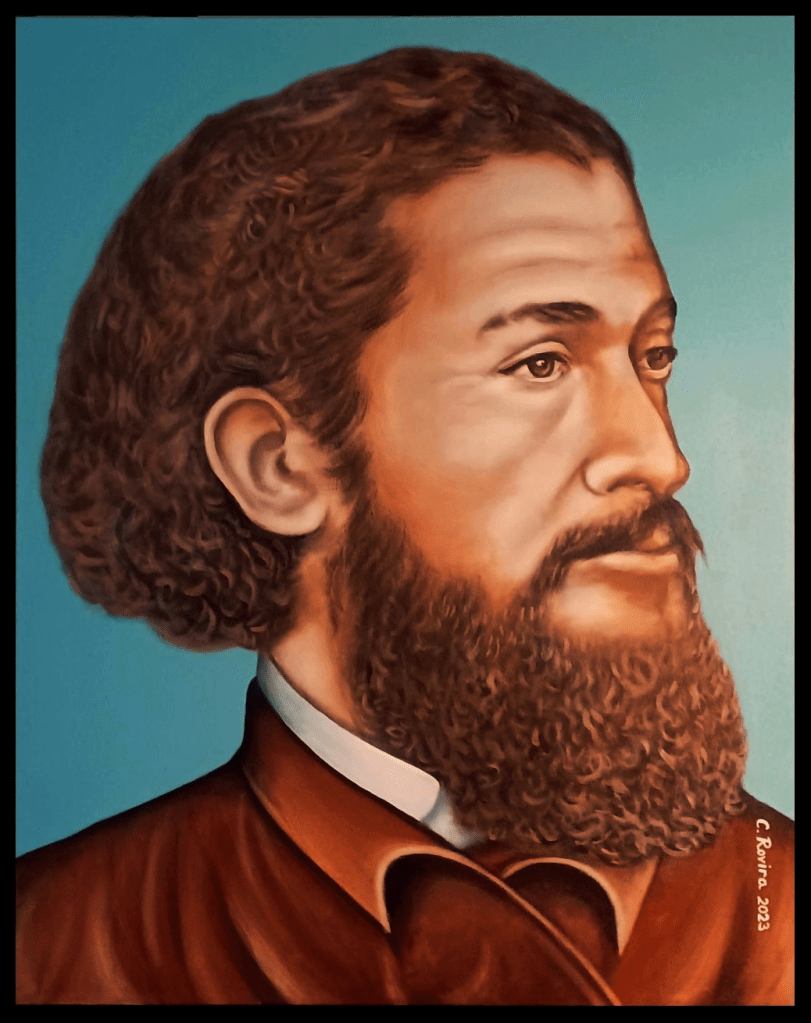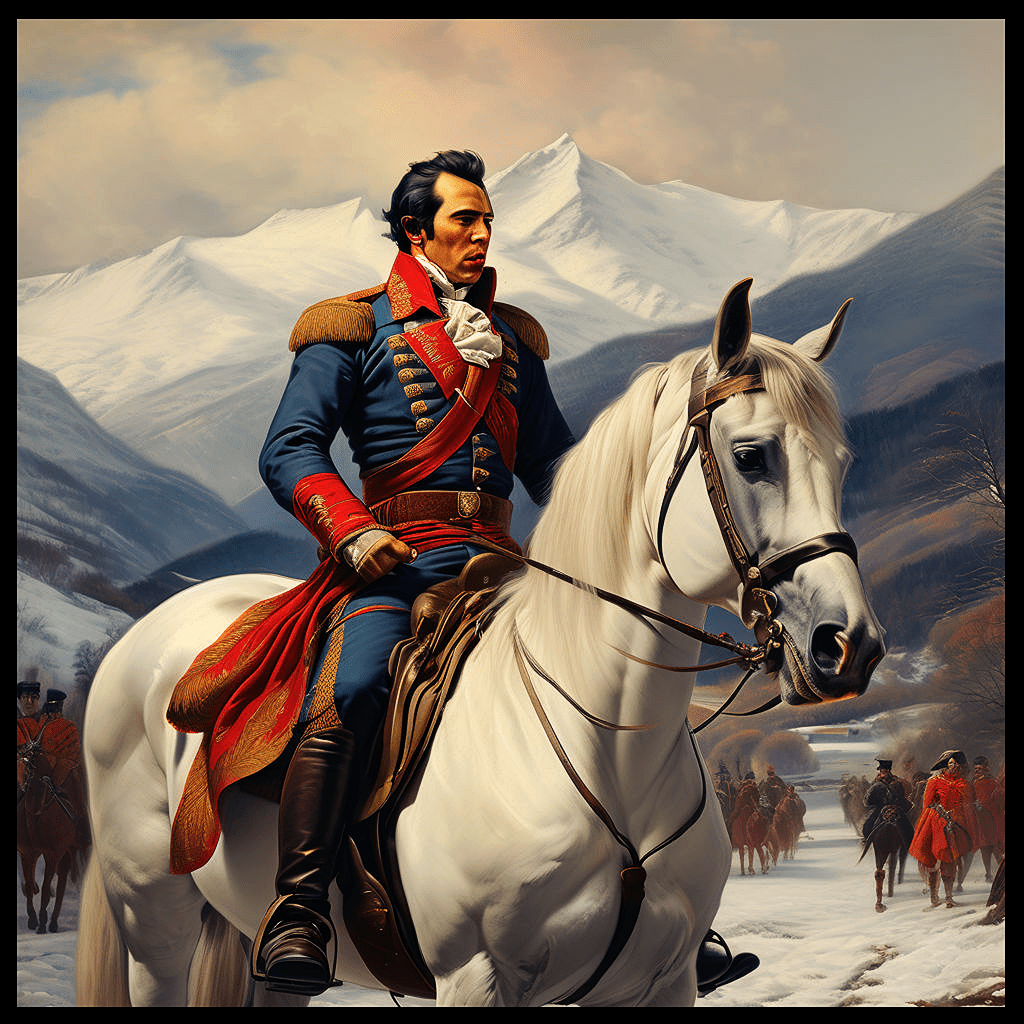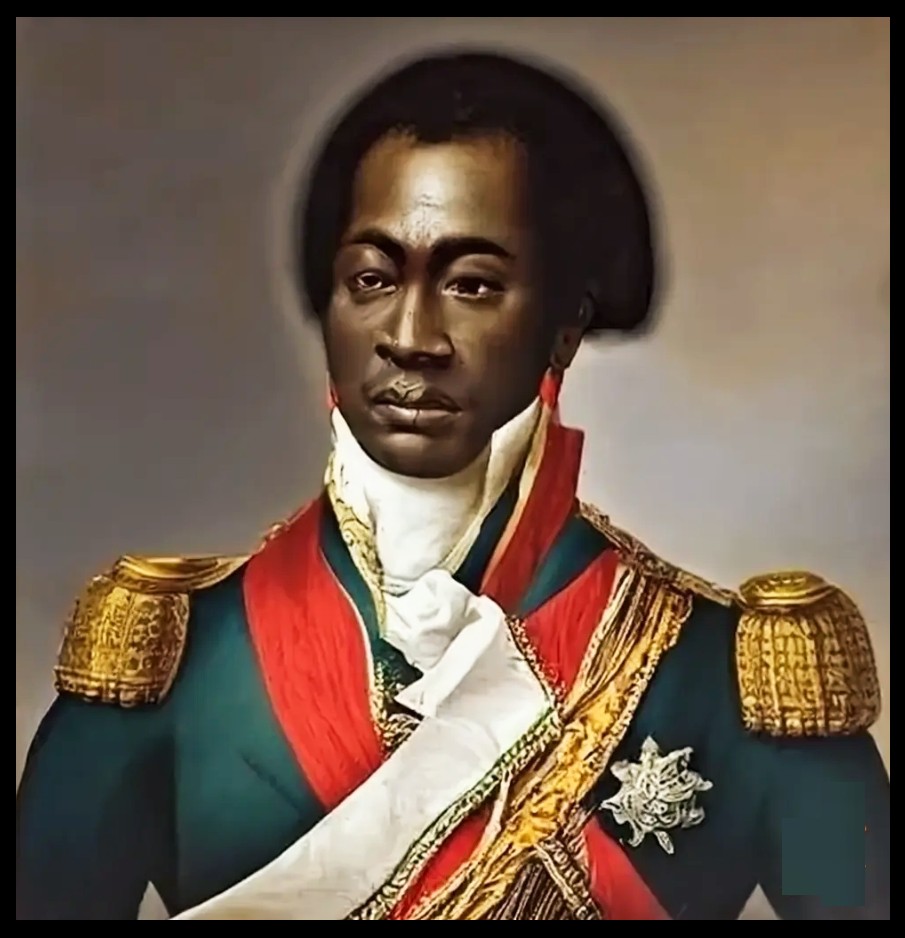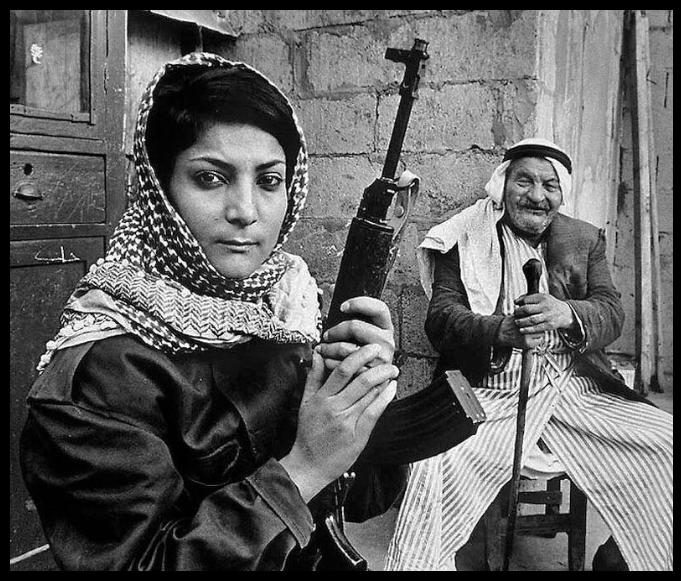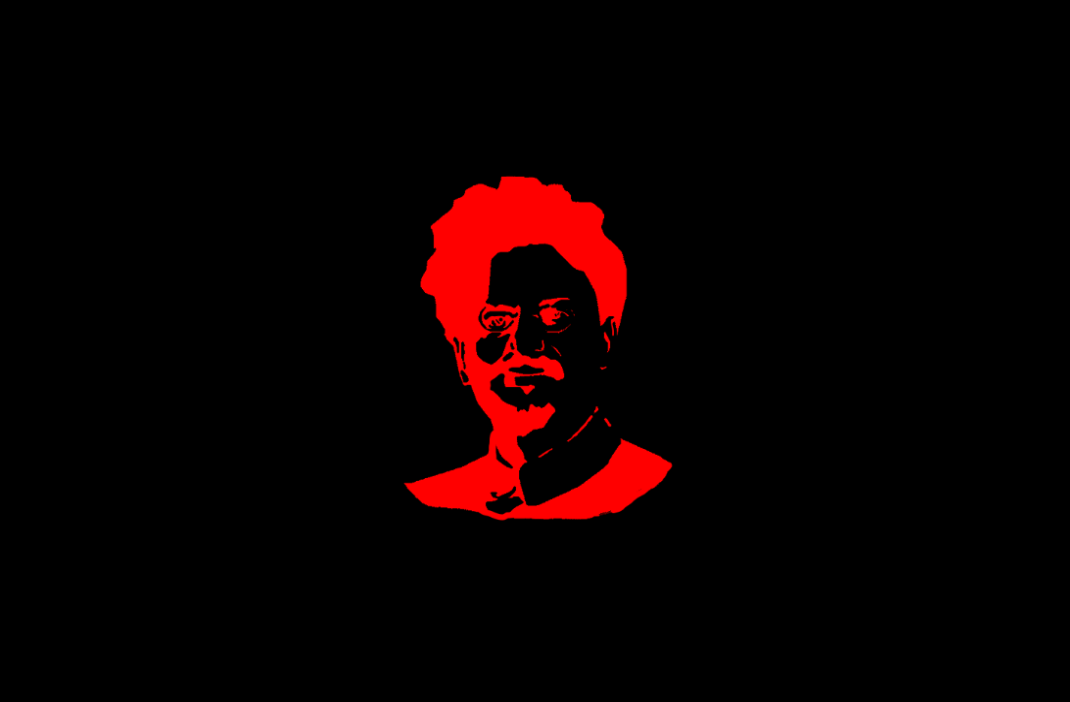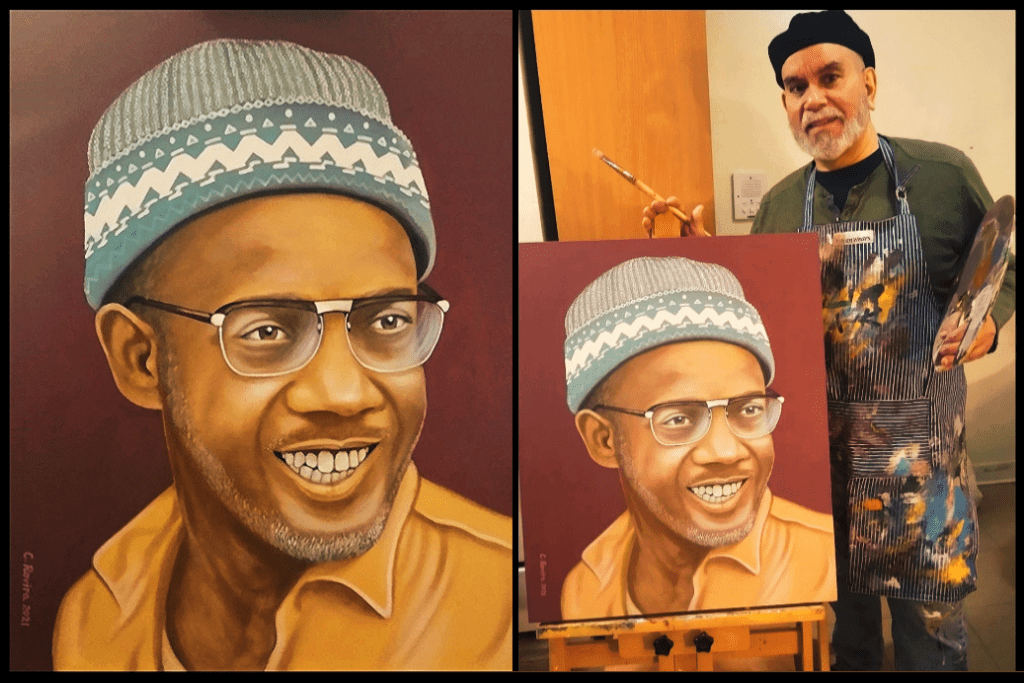
Homenaje a LEON TROTSKY Centurión de la Revolución Socialista Rusa de 1917

For English Version: https://carlitoboricua.blog/2024/10/23/tribute-to-leon-trotsky-centurion-of-the-october-1917-russian-socialist-revolution/

______________________________________________

Estados Unidos no sólo es el país más fuerte, sino también el más aterrorizado.”

-León Trotsky

_____________________________________________

Por Carlos “Carlito” Rovira

León Trotsky nació como Lev Davidovich Bronstein en una rica familia judía ucraniana el 7 de noviembre de 1879, en Yanovka, Ucrania durante el Imperio Ruso. Sin embargo, después de sentirse atraído por el marxismo a una edad temprana, repudió deliberadamente su privilegio de clase social y rechazó la identidad judía, al tiempo que se convirtió en un ateo sin complejos. Trotsky creció hasta convertirse en una figura destacada de uno de los acontecimientos más trascendentales del siglo XX, la Revolución Socialista Rusa de 1917.

En febrero de 1917, el zar Nicolás II se vio obligado a abdicar de su trono debido al extremo malestar político en Rusia. Trotsky regresó a Rusia con miles de seguidores deseosos de unirse a los bolcheviques. El país atravesaba una prometedora crisis revolucionaria.

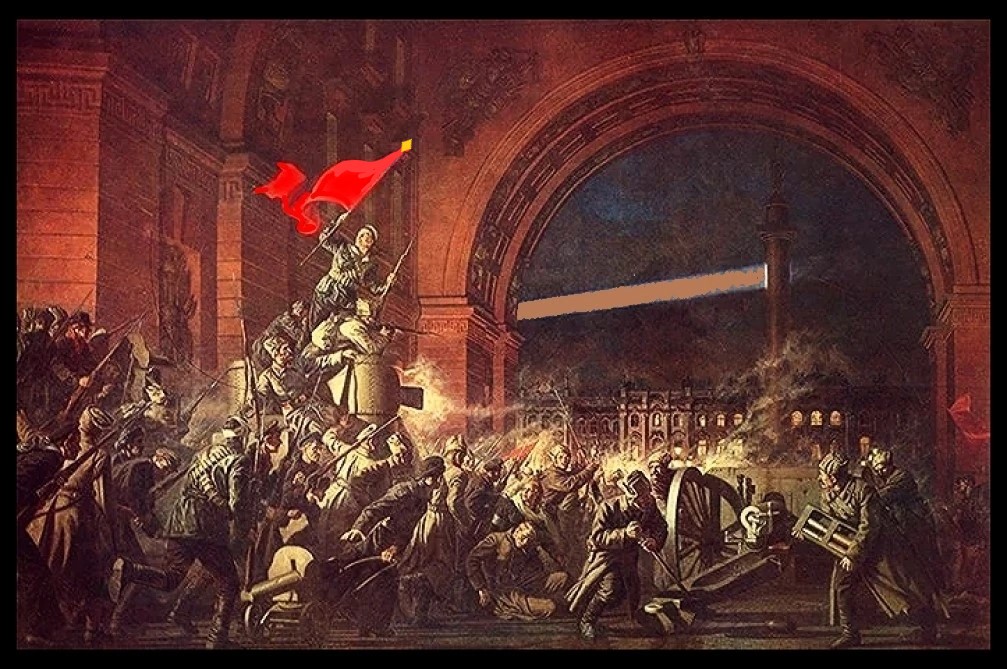
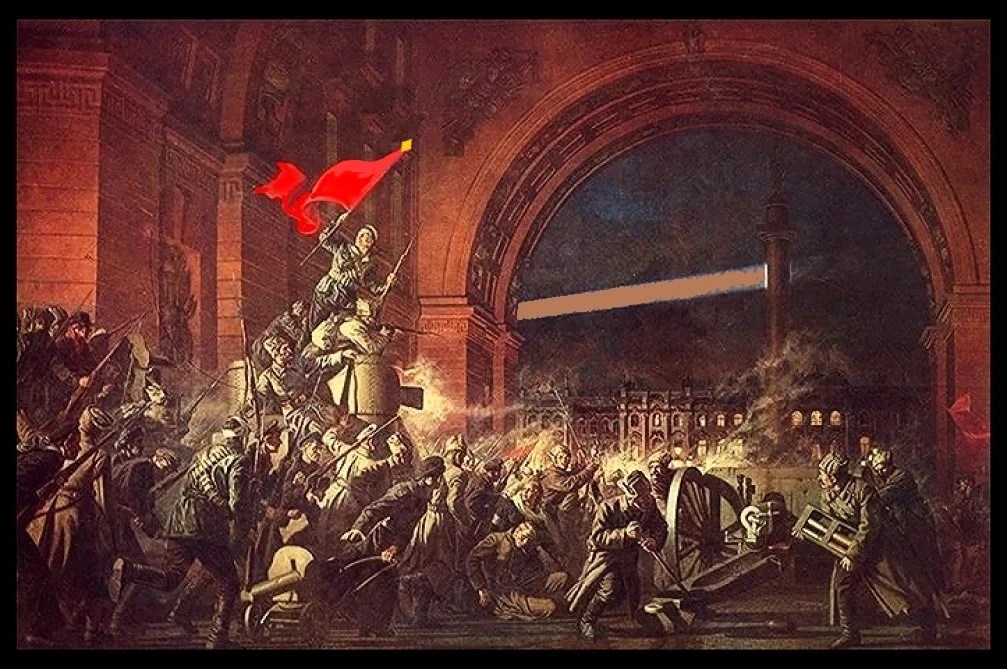
Como presidente del Sóviet de Petrogrado, Trotsky desempeñó un papel clave en el asalto al Palacio de Invierno en el que fue derrocado el gobierno de Kerensky. Trotsky se había convertido entonces en uno de los camaradas más confiables de Vladimir Lenin.

Representación artística de los insurgentes bolcheviques asaltando el Palacio de Invierno, en octubre de 1917.

Entre 1918 y 1925, Trotsky se desempeñó como Comisario para Asuntos Militares y Navales, el título equivalente a un ministro de Defensa. También fue fundador del Ejército Rojo soviético.

Bajo el liderazgo de Trotsky, el Ejército Rojo derrotó los intentos de los contrarrevolucionarios de restaurar el antiguo orden capitalista semifeudal. También jugó un papel decisivo al expulsar de 5.600 millas de territorio ruso a 14 ejércitos imperialistas invasores. Esto incluyó fuerzas militares invasoras de Estados Unidos.

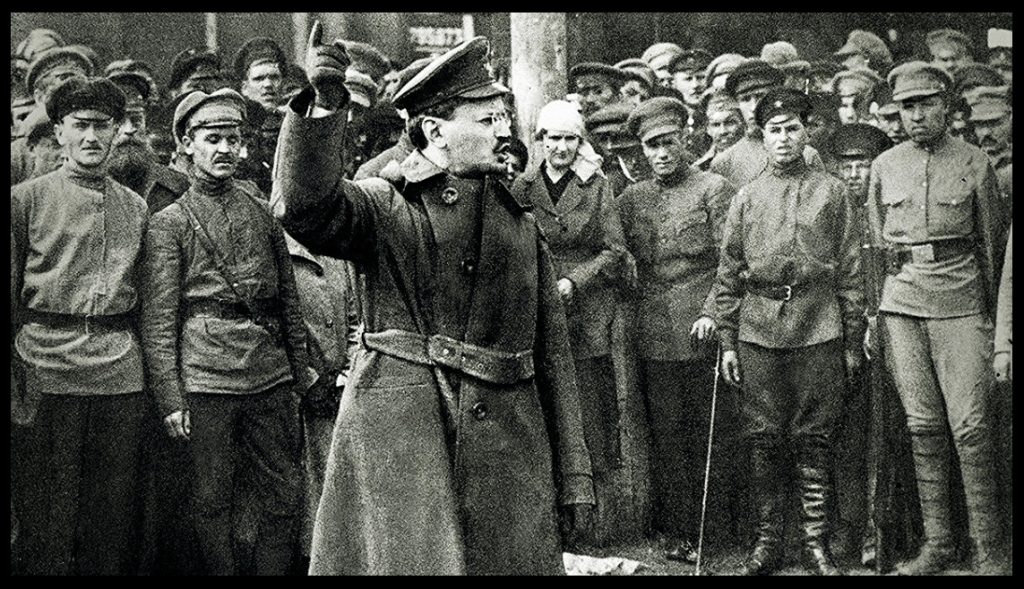
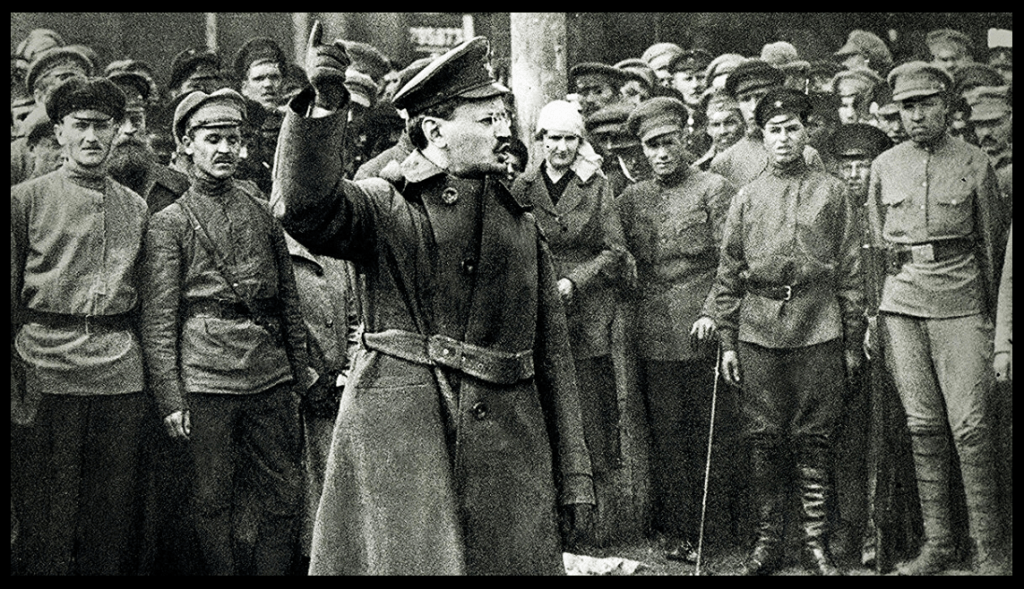
Trotsky hablando ante las tropas del Ejército Rojo antes de una batalla.
El Ejército Rojo persiguiendo a las fuerzas contrarrevolucionarias durante la Guerra Civil en Rusi

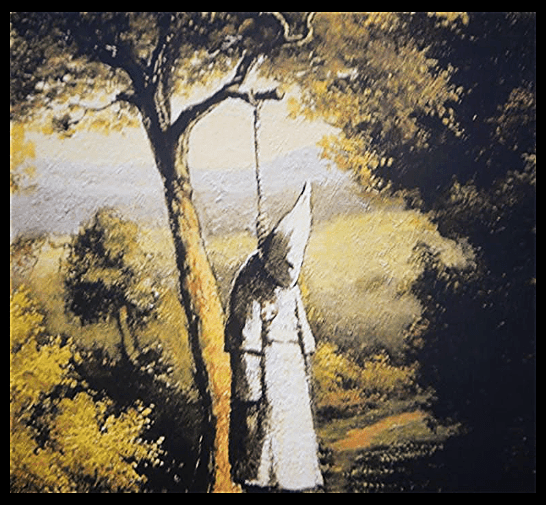
Trotsky, muy versado en la política estadounidense, fue bastante franco contra las políticas racistas de Estados Unidos, especialmente en el tema del notorio Klu Klux Klan (KKK).

La postura abierta e implacable de Trotsky respecto de la supremacía blanca se produjo durante el apogeo de los linchamientos de negros en los estados del sur de Estados Unidos. Animó a los comunistas estadounidenses a infligir el mismo terror al KKK. Trosky afirmó: “Levantemos la consigna para que estos capitalistas la escuchen claramente: ¡LINCHAMIENTO A LOS LINCHADORES DE LOS NEGROS Y DE LOS TRABAJADORES POBRES!”

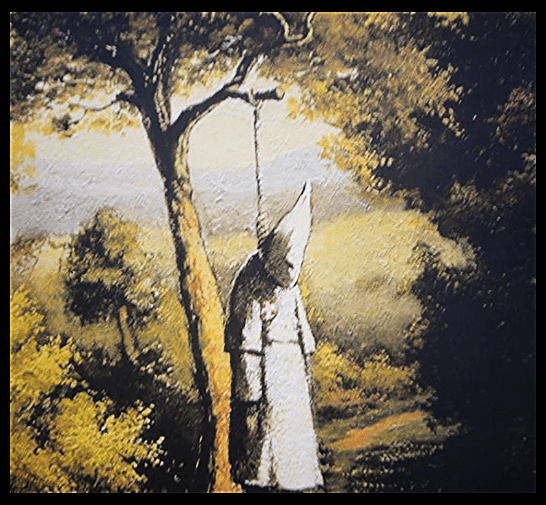
El Klan ahorcado de Banksy. Una visión que probablemente tuvo León Trotsky cuando hablaba del KKK.

Trotsky tenía un profundo respeto por el poder espiritual de la cultura. Su colección de Obras Escritas Sobre La Literatura y El Arte expresó la importancia que le dio al tema para ganarse los corazones y las mentes de millones de personas de clase trabajadora.

A diferencia de las restricciones oficiales impuestas por Joseph Stalin a las licencias artísticas, Trosky estaba con entusiasmo a favor del desarrollo de la libertad artística en todas sus formas. Esta opinión también se expresó en una reunión pública en el 2 de mayo de 1956, por Mao Zedong de China se opuso a ello: “Que florezcan cien flores; que compitan cien escuelas de pensamiento.”

León Trotsky junto al Kremlin.

Las opiniones de Trotsky sobre la cultura y el arte reflejaban su disposición general sobre el poder de los derechos de los trabajadores y el poder que apuntaba a fomentar el diálogo y el debate. Trotsky quería utilizar la cultura como herramienta para fortalecer el potencial intelectual de todos los ciudadanos, especialmente los agricultores y la clase trabajadora en un país donde el analfabetismo estaba generalizado.

Además, Trotsky imaginó la creación de un sistema de controles y equilibrios donde el trabajador promedio tuviera voz en el lugar de trabajo y en el gobierno. Los “comisarios” electos, tal como los definen los principios de los soviets de trabajadores y soldados, habrían sometido a los funcionarios gubernamentales y militares a una destitución inmediata si fuera necesario.

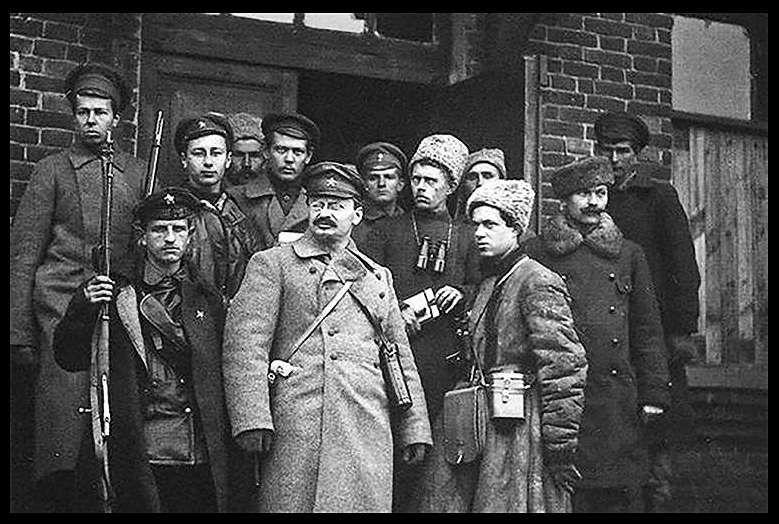
León Trotsky con compañeros combatientes del Ejército Rojo.

La lógica de Trotsky era obligar a los funcionarios a practicar un buen liderazgo ganándose el respeto y la lealtad de sus subordinados. Sin embargo, el papel de los comisarios fluctuó a medida que el fermento de la revolución disminuyó gradualmente. Al final, estos cargos electos fueron eliminados por decreto, convirtiéndose en un área clave de discordia entre Stalin y Trotsky.

LA ESCISIÓN STALIN-TROTSKY

A medida que la Unión Soviética avanzaba para consolidar su poder político, especialmente después de la muerte de Vladamir Lenin el 21 de enero de 1924, se agudizaron las contradicciones entre dos corrientes opuestas dentro del Partido Comunista de la Unión Soviética (PCUS).

Las diferencias cristalizaron y fueron encabezadas por Joseph Stalin, por un lado, y León Trotsky, por el otro. Stalin representó un movimiento feroz para concentrar el poder en la burocracia gubernamental, mientras que Trotsky abogó por empoderar a los soviets (comités) de trabajadores.

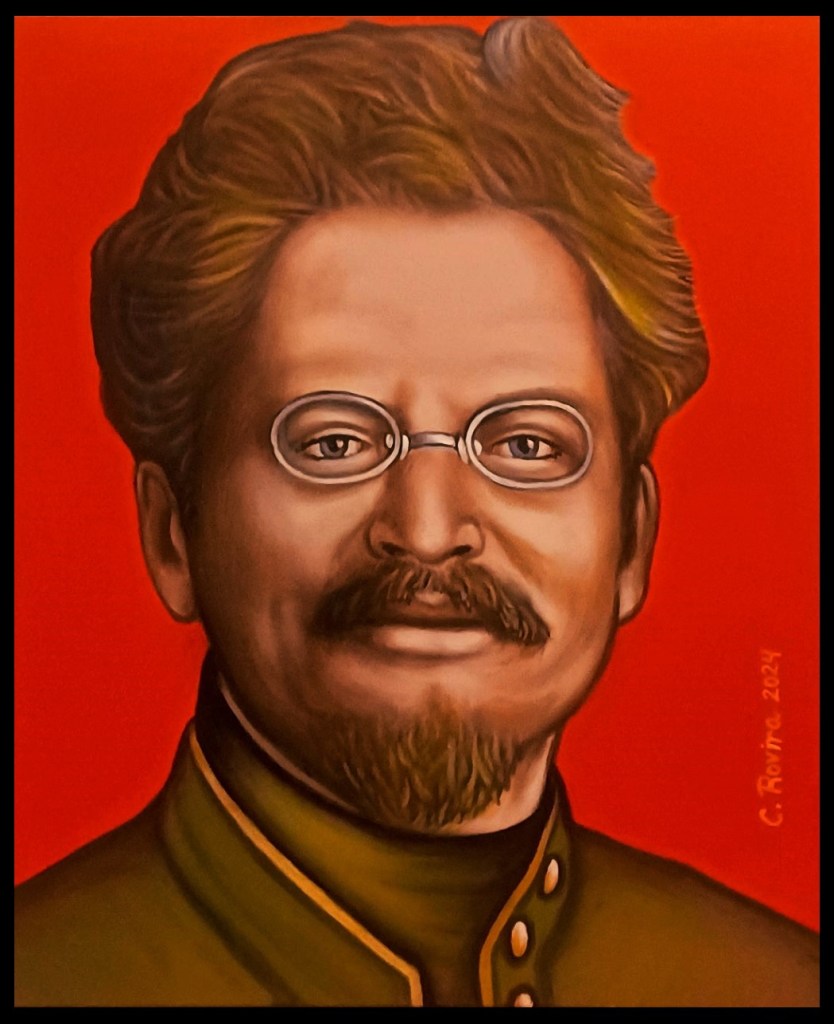
Mi retrato de León Trotsky. 20″ X 24″, pintura acrílica sobre lienzo. Hecho en 2024.

Cuando la salud de Lenin comenzó a deteriorarse rápidamente debido a un derrame cerebral debilitante, dictó una carta a su asistente de confianza expresando sus últimos deseos de que Joseph Stalin no se convirtiera en su sucesor como líder de la Unión Soviética. Este documento histórico pasó a ser conocido como el Último Testamento de Lenin. Sin embargo, Stalin manipuló a todos los que se oponían a él nombrando a sus aliados cercanos para puestos gubernamentales clave para frustrar las objeciones. Este acontecimiento indignó a muchos bolcheviques que esperaban que Trotsky fuera el siguiente en la fila como jefe de Estado.

Gradualmente, en los años posteriores a la muerte de Lenin, la mayoría de las bases del PCUS se dirigieron contra Trotsky en una campaña deliberada. Fue horriblemente vilipendiado y destituido de sus funciones como Comisario Militar y del Politburó, además de purgado del Partido Comunista. Finalmente, Trotsky fue exiliado de la Unión Soviética.

Como siempre, la dinámica existe en todas partes de la naturaleza y la política. Trágicamente, las diferencias dentro del PCUS no pudieron resolverse, lo que resultó en un mayor antagonismo que condujo al asesinato de Trotsky en México el 21 de agosto de 1940 por un agente secreto del NKVD, Jaime Ramón del Río. Además, los seguidores leales de Trotsky sufrían persecución dentro de la aún en desarrollo unión soviética.

Hasta los últimos momentos de su vida, Trotsky mantuvo una postura revolucionaria al instar a sus seguidores a seguir defendiendo a la Unión Soviética. Aunque Trotsky se oponía desdeñosamente al estalinismo, entendía que se trataba de un fenómeno que no se originaba en el campo capitalista sino en el socialismo.

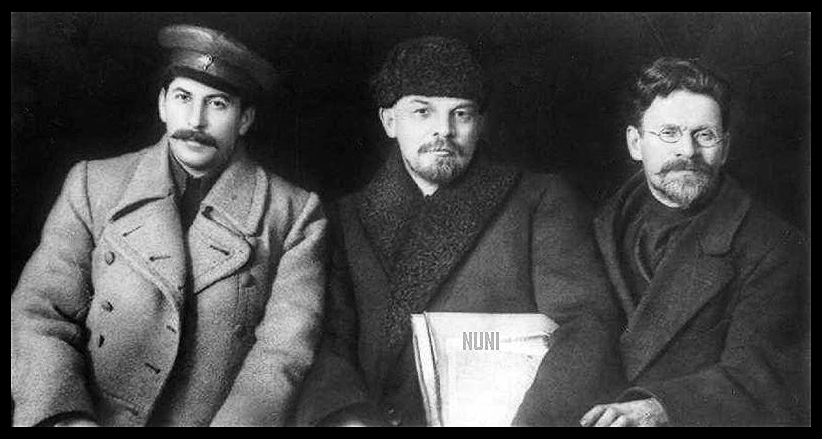
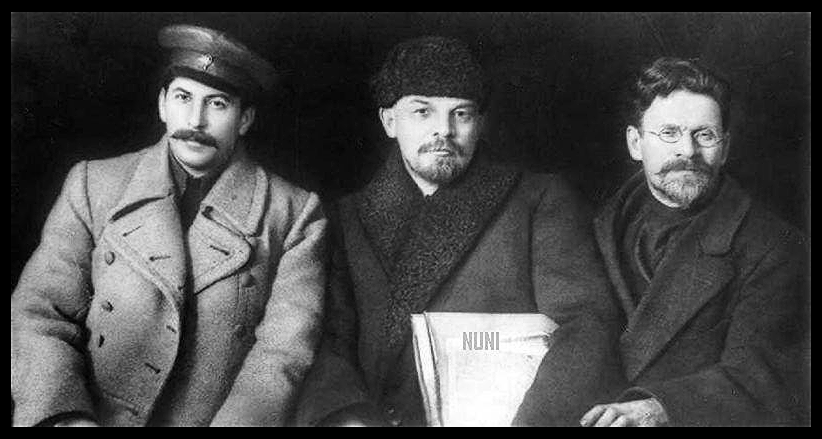
De izquierda a derecha: Joseph Stalin, Vladamir Lenin y León Trotsky antes de sus consecuencias políticas.

La agitación interna es a menudo la chispa inicial que enciende la implosión de cualquier movimiento revolucionario. Se puede señalar fácilmente un acontecimiento histórico similar, cuando en junio de 1971 los conflictos internos causaron la desastrosa desaparición del Partido Panteras Negra (BPP) en los Estados Unidos.

El escenario de disputas domésticas y violencia se aplica en ambas situaciones absurdas. Hermanos y hermanas se volvieron contra hermanos y hermanas hasta el más alto nivel de hostilidades.

Es imposible pasar por alto cómo la división del BPP fue un revés para el movimiento estadounidense. Y no hace falta mucho para concluir cómo la división del BPP fue orquestada en gran medida por COINTELPRO del FBI. Por el contrario, no podemos descartar el posible papel de la inteligencia extranjera en el conflicto Stalin-Trotsky.

Sin embargo, León Trotsky advirtió repetidamente al movimiento revolucionario internacional sobre los perjuicios del estalinismo, en particular sus predicciones sobre el giro de la URSS hacia la derecha y su eventual colapso, que ocurrió en 1991. Las críticas detalladas de Trotsky al estalinismo se esbozaron en su polémica clásica titulada La Revolución Traicionada.

El colapso de la Unión Soviética brindó a la pandilla internacional de tiranos y explotadores capitalistas una oportunidad de promover sus difamaciones anticomunistas. También causó muchas dificultades a los revolucionarios de todo el mundo, así como a las repúblicas que hoy resisten al imperialismo como Cuba.

Hay muchas lecciones que las generaciones futuras pueden extraer de la Revolución Rusa de 1917. Específicamente, las contribuciones de León Trotsky al establecimiento del primer estado socialista y su camaradería con Vladamir Lenin.

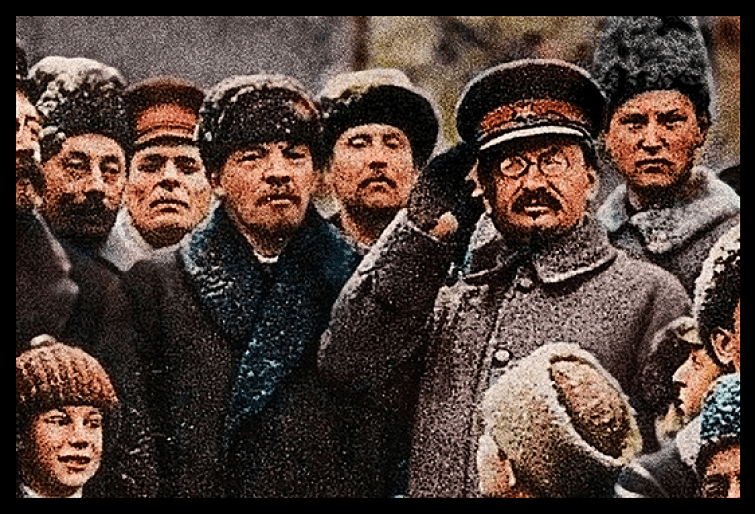
Vladamir Lenin y León Trotsky juntos tras la toma del poder por los bolcheviques.

Será necesario investigar seriamente esta historia para contrarrestar las calumnias anticomunistas infundadas dirigidas contra el legado de León Trotsky, que se originó en el estalinismo.

Es de esperar que la próxima gran revolución socialista, donde quiera que esté, evite que se repitan los errores del pasado y aborde correctamente las contradicciones heredadas del socialismo. Eso seguramente garantizará una victoria decisiva para la emancipación de los pueblos oprimidos y explotados.

¡VIVA EL LEGADO REVOLUCIONARIO DE LEÓN TROTSKY!

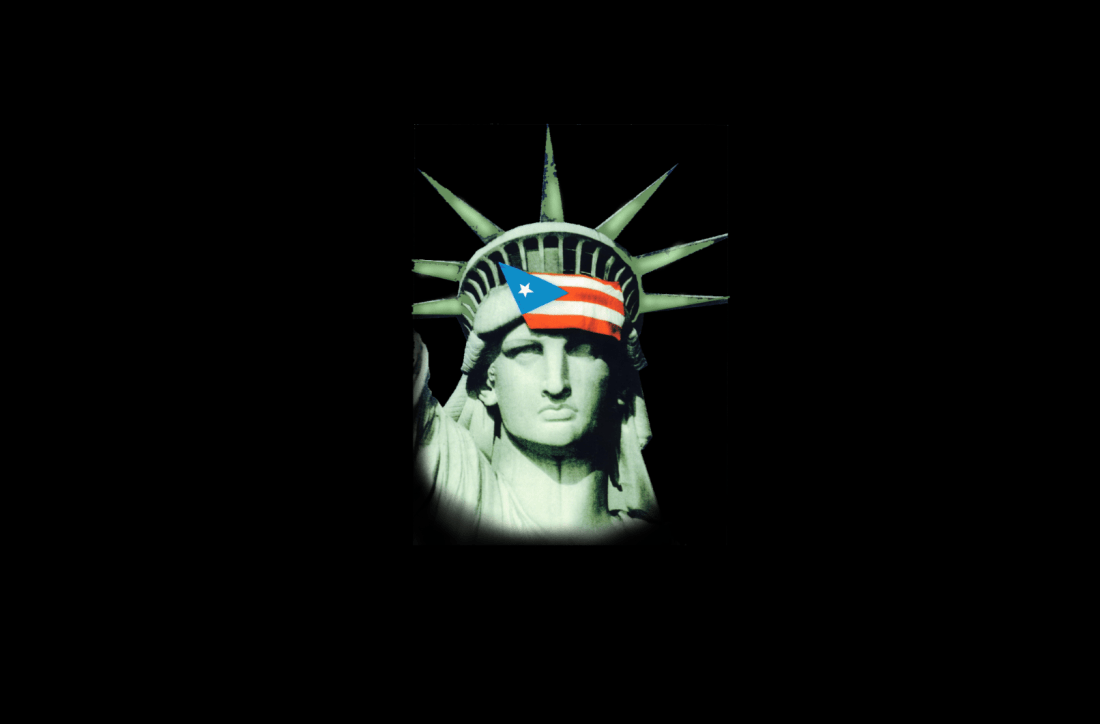
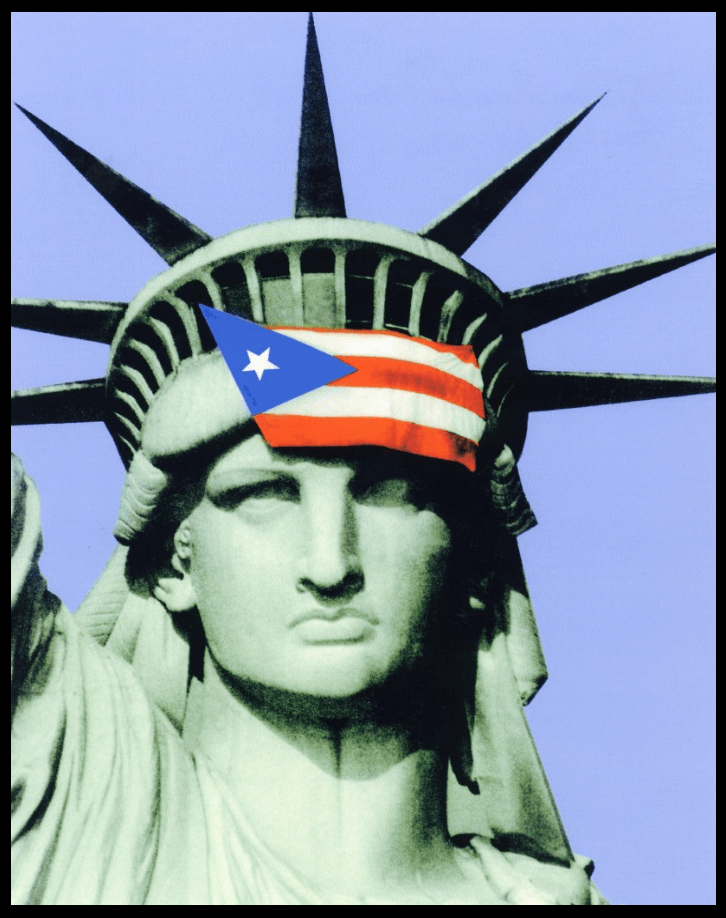
Remember the October 25,1977 Puerto Rican takeover of the STATUE OF LIBERTY

______________________________________________

“We seized the Statue of Liberty in 1977 to expose to the world the hypocrisy of the United States that projects itself as a beacon of freedom. When in fact, it is the colonizer of Puerto Ricans and unjustly imprisons us when we challenge their rule. The takeover was also an act of solidarity with the struggles of our Black, Native American, Chicano-Mexican, Asian, and Arab brothers and sisters, whom we share a common oppressor.”

Fernando Ponce Laspina, Nationalist Party of Puerto Rico -NY Committee

One of the participants and arrestees of the 1977, Statue of Liberty takeover.

______________________________________________

By Carlos “Carlito” Rovira

On October 25, 1977, a group of 30 Puerto Ricans and allies unexpectedly caused shock to the ruling class when they courageously seized physical control of the Statue of Liberty, located in New York Harbor. This daring act of civil disobedience became monumental in the history of resistance in the United States. The group called itself the New York Committee to Free the Five Puerto Rican Nationalists, an entity of various groups and individuals from the Puerto Rican diaspora during the 1970s.

With militarystyle planning and discipline, prior to boarding and during their ride on a ferry boat from Manhattan to Liberty Island, the group divided itself into several teams of fours. They pretended to be tourists and strangers to one another to avoid suspicion of their intentions.

As soon as the vessel reached its destination and docked, the activists went into action demonstrating a powerful energy of resistance to oppression. They ran to storm with fury the entrances of the facility where the giant human-like figure stands tall.

Boricuas with energy of resistance. El Maestro’s Fernando Ponce Laspina holding up the flag on the right.

Within 15 minutes the protestors secured their position in this national monument by locking doors and shutting windows to forestall an aggressive response they expected by law enforcement. Once inside, and after they expelled visiting tourists and Federal employees, the activists hurried up the staircase to reach the top level where the head of the Statue is located.

With a strong sense of both political and cultural conviction for the beloved homeland, they unfurled and hoisted a very huge Puerto Rican Flag from the statue’s crown, where it was proudly displayed for the world to witness.

An arial photo of Boricua dignity at Statue of liberty.

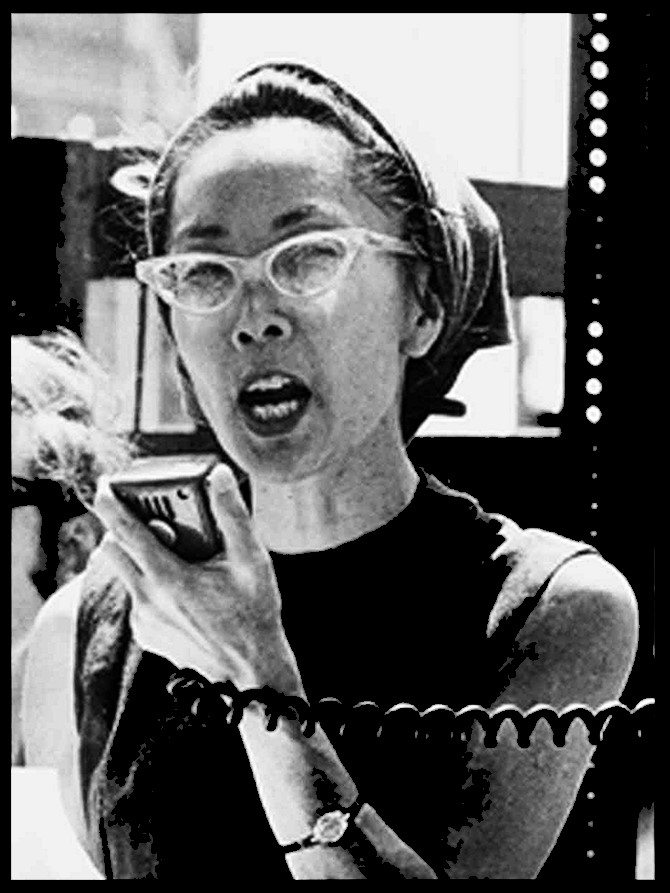
Among the non-Boricua participants of this action who merits recognition for risking her own personal safety in the interest of a Puerto Rican cause was the legendary Japanese American internationalist, Yuri Kochiyama.

Yuri Kochiyama

While the mainstream media depicted this act of resistance as “terroristic”, the inspiration for it was to bring about world attention to the criminal U.S. colonial domination of Puerto Rico and to demand the release of political prisoners Lolita Lebron, Rafael Cancel Miranda, Irvin Flores Rodriguez, Andres Figueroa Cordero and Oscar Collazo.

These freedom fighters were passionate about upholding the dignity of the liberation struggle. They were members of the Nationalist Party who responded to a directive given by Dr. Pedro Albizu Campos. All five patriots were sentenced to life imprisonment for carrying out justified armed actions against the U.S. colonizers in two separate historic events.

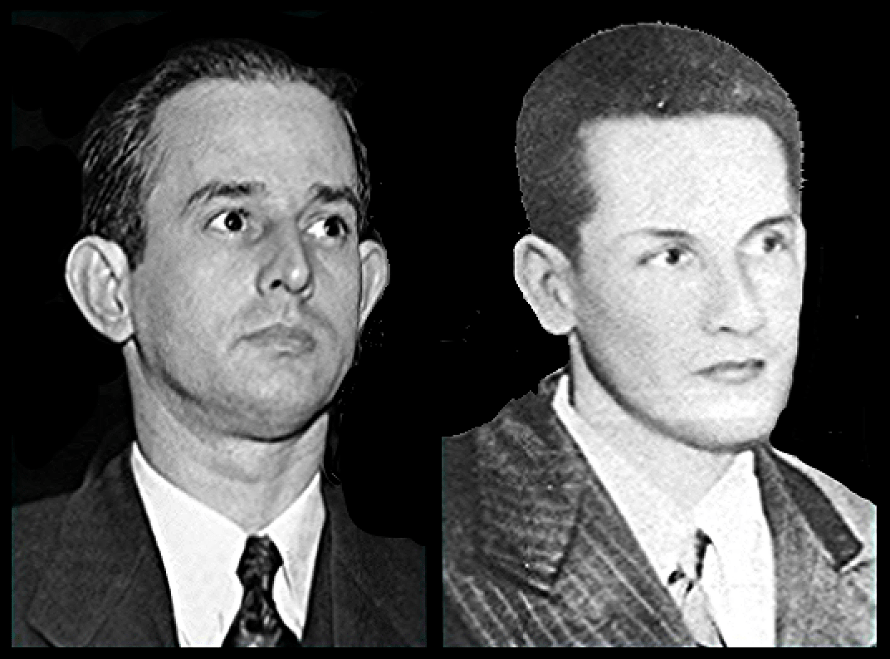
On November 1, 1950, Nationalist Party members Oscar Collazo and Griselio Torresola went to the Blair House in Washington, D.C. to assassinate President Harry Truman. Their intended purpose was to counter Washington’s lies about the Jayuya-Nationalist revolt of October 30, 1950, and the severe repression that followed. U.S. government officials falsely depicted the conflict as Puerto Ricans vs. Puerto Ricans.

Torresola was killed and Collazo critically wounded in a shootout with Capital Police and Secret Service. However, their brave act did bring about political exposure to what was occurring in Puerto Rico.

From L to R: Oscar Collazo and Griselio Torresola.

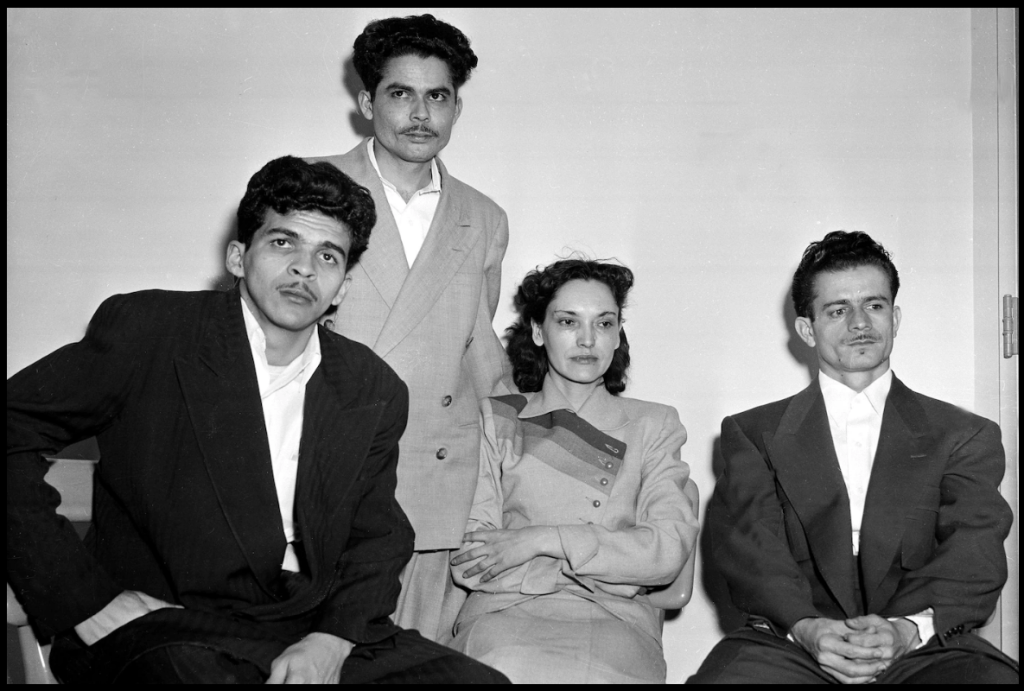
And then, on the morning of March 1, 1954, as members of the House of Representatives met in the Chamber of the Capitol, Lolita Lebrón, Rafael Cancel Miranda, Irvin Flores Rodriguez and Andres Figueroa Cordero, calmly walked up a staircase to the balcony. Lolita pulled out a Puerto Rican flag and a handgun from her shoulder bag. She then shouted the solemn words of the liberation struggle: “QUE VIVA PUERTO RICO LIBRE!” Within seconds of brandishing their weapons, the four Nationalists opened fire on the colonizers in the U.S. Congress.

From L to R: Rafael Cancel Miranda, Andres Figueroa Cordero, Lolita Lebron, Irvin Flores Rodriguez.

Considering the fury of the 1960s-70s in poor, working-class communities of the diaspora and Puerto Rico, the boldness of the Statue of Liberty takeover added to the broadly supported call for their release. No one can ever dispute how this militant action contributed to the release of the five Puerto Rican Nationalists two years later, when President Jimmy Carter was pressured to grant amnesty.

Among other factors that led to a victorious outcome was the solidarity received from the Government of Cuba. Despite many threats and a brutal economic blockade, the Cuban Revolution has always maintained its principles of solidarity by upholding the centuries-long revolutionary tradition known as the “Two Wings of the Same Bird“, Cuba and Puerto Rico.

After a nine-hour siege the police forced their way through and arrested the demonstrators. In discipline fashion they lined up waiting for the inevitable by chanting slogans and singing the revolutionary Puerto Rican National Anthem, La Borinqueña.”

Among the names of individuals arrested were Yuri Kochiyama, Fernando Ponce Laspina, Charlie “Indio” Alejandro, Madelyn Gonzalez, Chino Lopez, Julio Wells, David (DJ) Tirado, Emma Torres, Richie Perez, Mickey Meléndez and others. Serving as media-spokesperson for the action, outside the perimeter of the Statue of Liberty was Vicente Alba-Panama.

Despite everything U.S. rulers have done to Boricuas through racist violence, discrimination, economic deprivation, and attempts to eliminate our identity as a people, the innate instinct to resist oppression can never be destroyed.

There is reason to feel proud knowing that it was the power of the Puerto Rican struggle which made possible the release of all five political prisoners. This profound example of resilience and determination has added to the unbreakable traditions of the Puerto Rican people.

¡QUE VIVA PUERTO RICO LIBRE!

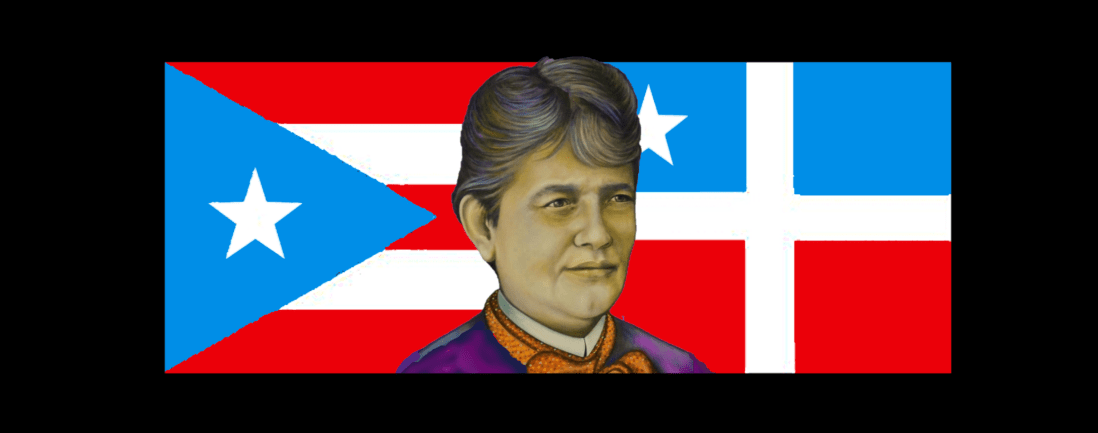
Lola Rodríguez De Tió revolucionaria Boricua 1843-1924

For English version: https://carlitoboricua.blog/?p=10820&preview=true

______________________________________________

“No hay que temer, puertorriqueños, el rugir del cañón; salvar a la nación es el deber del corazón. También sabrán luchar. Ya no queremos déspotas; la tiranía caerá ahora; las mujeres invencibles también sabrán luchar. Queremos libertad y nuestros machetes nos la darán”. – Lola Rodriguez De Tio

______________________________________________

By Carlos “Carlito” Rovira

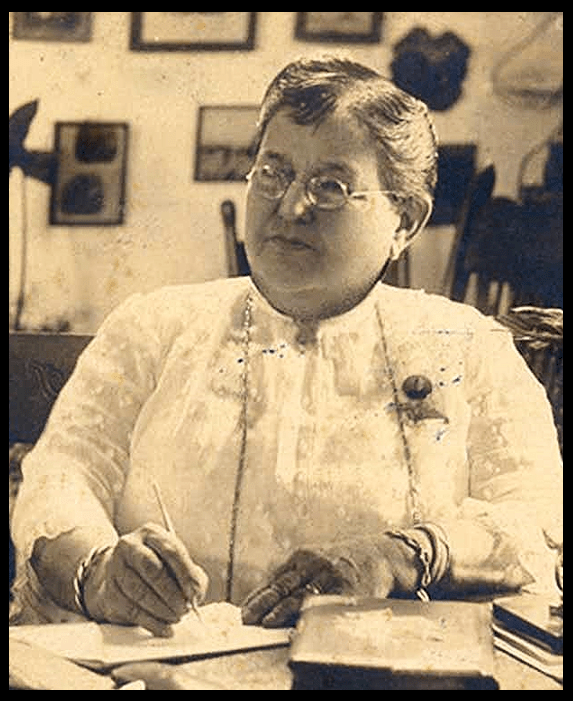
Lola Rodríguez De Tió nació en San Germán, Puerto Rico, el 14 de septiembre de 1843. Creció hasta convertirse en la primera mujer del país en establecerse como una estudiosa literaria y reconocida en toda América Latina. El trabajo de De Tió refleja sus creencias abiertas sobre temas críticos durante su vida joven, la esclavitud africana y la colonización española de Puerto Rico.

Lola Rodríguez De Tió fue una feminista devota, poeta, académica literaria y defensora de la independencia de Puerto Rico y Cuba. Como mujer de mente libre, frecuentemente expresaba desprecio por las tradiciones arraigadas en el catolicismo y sus puntos de vista que desalentaban el avance de las mujeres.

La mayoría de las mujeres en las colonias españolas eran analfabetas, especialmente entre las pobres. Se les impidió desarrollarse intelectualmente debido a los tabúes y la doctrina de la Iglesia Católica Romana. Pero a pesar de las opresivas “normas” sociales, Lola Rodríguez se propuso rebeldemente convertirse en un genio literario femenino.

Con tan sólo diecisiete años, Lola Rodríguez ejerció con valentía sus pensamientos. Despreciaba las expectativas culturales anti-mujeres en cuanto a la apariencia. Aunque menor de edad, Lola Rodríguez exigió desafiante que le permitieran tener el pelo corto, lo que se convirtió en su marca personal de toda la vida.

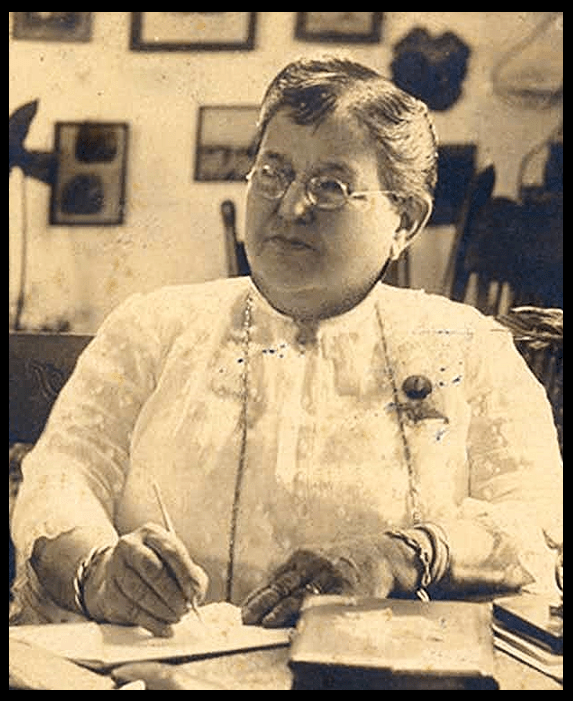
Lola Rodríguez De Tió

A medida que se hacía adulta, De Tió quería usar su talento como escritora y poeta para expresar sus puntos de vista críticos sobre el control de España sobre las dos colonias restantes en el hemisferio occidental: Cuba y Puerto Rico.

Su admiración por la lucha cubana y su familiaridad con la visión de la Revolución Haitiana de unir a las naciones caribeñas en una fuerza poderosa para repeler las intenciones de las potencias colonizadoras, puede haber sido lo que la inspiró a crear la famosa metáfora “Dos alas del mismo pájaro“.

La afiliación de Lola Rodríguez De Tió con el Comité Revolucionario de Puerto Rico hizo posible su estrecha colaboración con el Dr. Ramón Emeterio Betances, una figura central del movimiento anticolonial de Puerto Rico que era muy respetado en todo el Caribe. De Tió también jugó un papel importante en la lucha que culminó el 23 de septiembre de 1868 con El Grito De Lares, un levantamiento que pedía el fin de la esclavitud de los africanos y del colonialismo español.

Aunque De Tió se hizo conocida por ser autora de muchas interpretaciones hermosas, se la recuerda mejor por escribir la letra original y revolucionaria del Himno Nacional de Puerto Rico, La Borinqueña. De Tió compuso la canción en 1868 cuando se acercaban los temblores del levantamiento de Lares. Fue un momento en el que el deseo general de convertirse en nación se sintió ampliamente mientras los boricuas se preparaban ansiosamente para la batalla.

La Borinqueña: https://www.youtube.com/watch?v=wI4pWl7Z1yU

Uno de los actos de falta de respeto más escandalosos del colonialismo estadounidense fue imponer una versión distorsionada del Himno Nacional de Puerto Rico. A pesar de ser también llamada “La Borinqueña”, la militancia de la canción original fue saneada con letras no revolucionarias. Hoy en día, el gobierno colonial títere de Estados Unidos lo utiliza como versión “oficial”. Nunca debe confundirse la composición de Lola Rodríguez De Tió con la versión vergonzosamente reescrita en 1952 por el traidor Ramón Collado.

Después del fracaso de Lares en 1868, De Tió vivió un tiempo en La Habana, Cuba. Pero en 1891 fue deportada por su activismo y franqueza contra la tiranía española. Se mudó a la ciudad de Nueva York, donde se unió a los revolucionarios cubanos y puertorriqueños que vivían en el exilio.

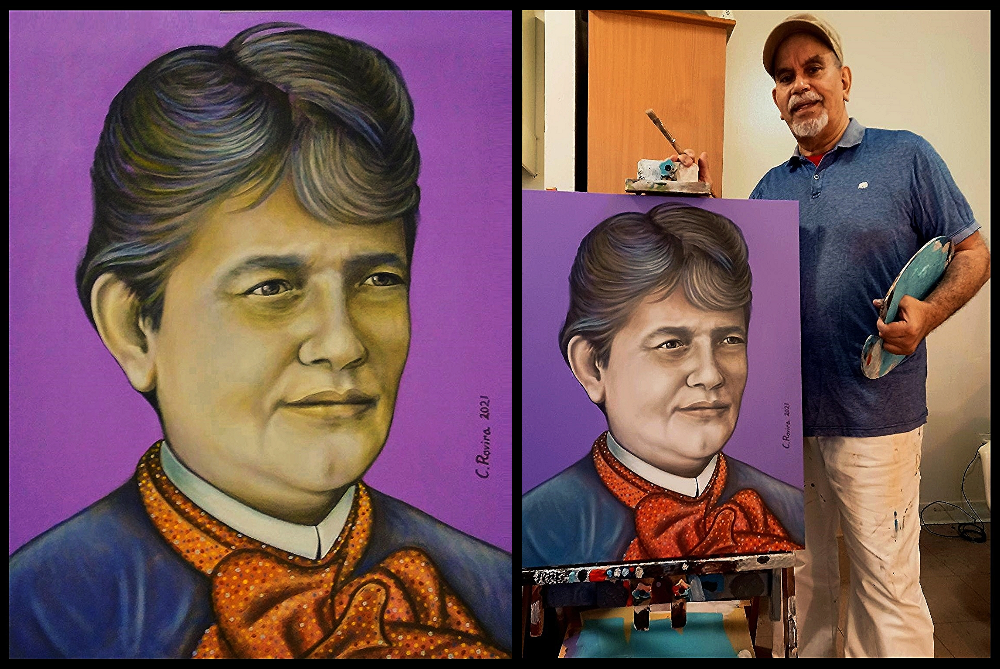
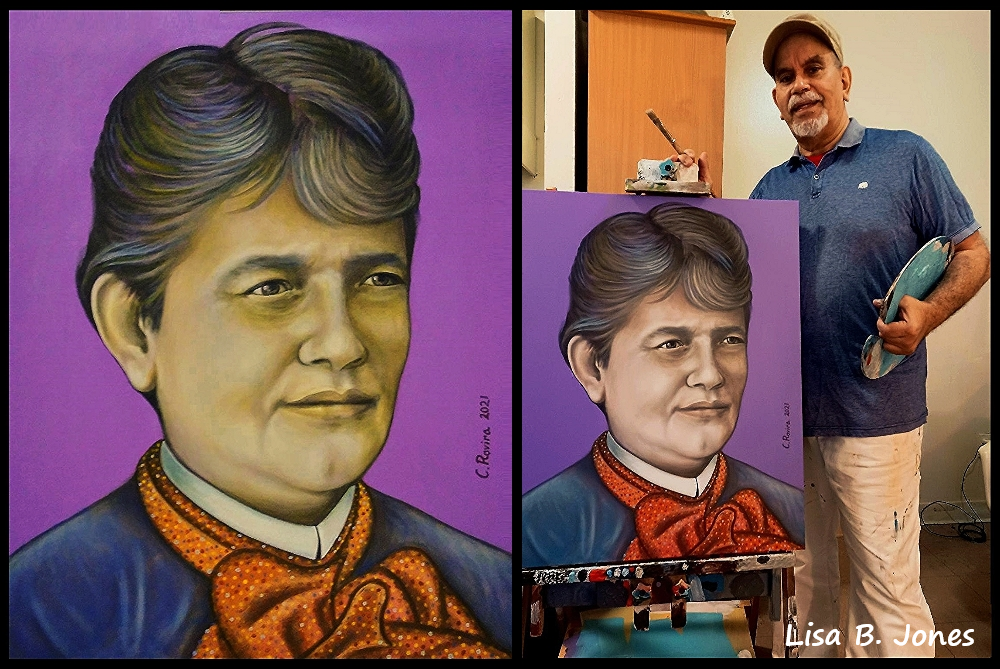
Mi homenaje artístico a Lola Rodríguez De Tío. 24″ X 30″, pintura acrílica sobre lienzo.

Las reuniones de revolucionarios exiliados de ambos países eran una práctica habitual que se remontaba a mediados de la década de 1850. Se congregaron principalmente en la zona conocida hoy como El Barrio (East Harlem) para escapar de la brutal aplicación de los decretos de España.

Los más proactivos de esta comunidad se reunieron en secreto en un hotel de Broome Street en el Lower East Side donde formaron la Sociedad para la Independencia de Cuba y Puerto Rico. Muchos regresaron a sus respectivos países de origen para servir como combatientes en el Grito De Yara de Cuba y el Grito De Lares de Puerto Rico.

Fue en la ciudad de Nueva York en 1891, donde Lola Rodríguez De Tió y el líder revolucionario cubano José Martí se reunieron por primera vez. Lo que siguió fue un fuerte vínculo de respeto mutuo y colaboración política.

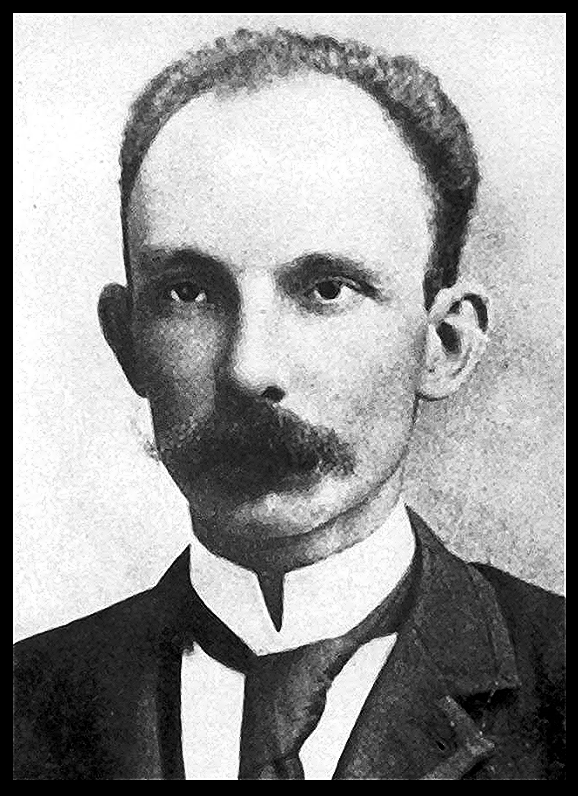
El emblemático líder revolucionario de Cuba, José Martí.

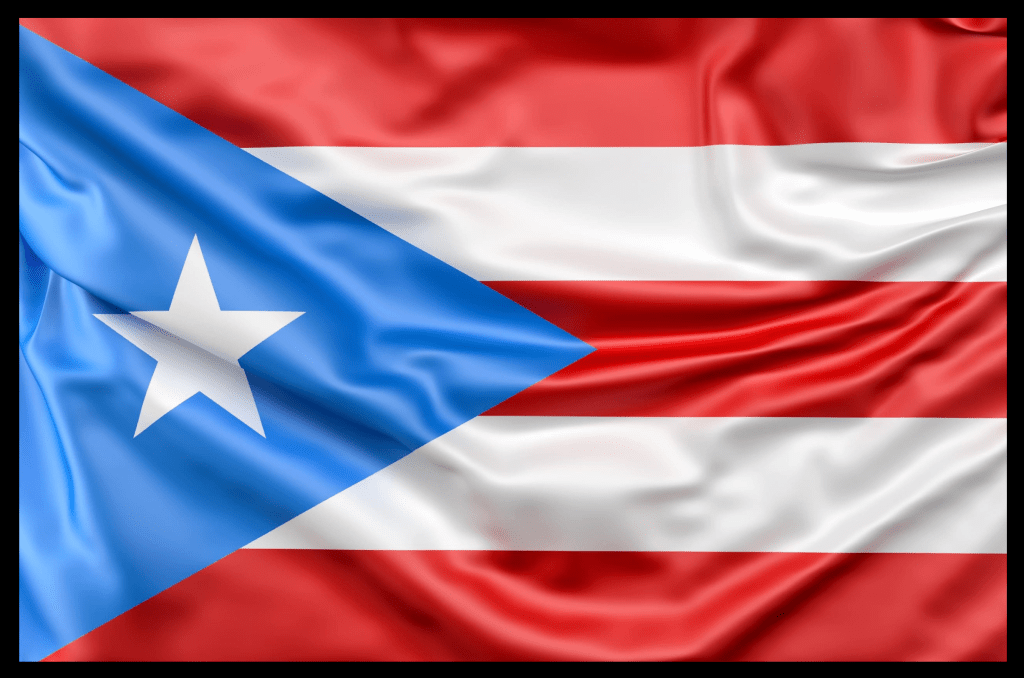
Muchos creen que el mérito de la idea original de invertir los colores de la bandera cubana para crear la bandera puertorriqueña moderna fue compartido por el poeta revolucionario Francisco Gonzalo Marín y Lola Rodríguez De Tió. Ambas figuras prominentes promovieron firmemente la importancia de aprovechar la solidaridad cubana y puertorriqueña, especialmente entre los revolucionarios que viven juntos en el exilio.

Fue en ese escenario donde se discutió y aprobó la propuesta de diseño de la actual bandera puertorriqueña el 22 de diciembre de 1895, en una reunión secreta celebrada en Chimney Corner Hall. Al frente de este esfuerzo histórico estuvieron los destacados Manuel Besosa, Antonio Vélez Alvarado y Juan de Mata Terreforte. Entre los 59 asistentes se encontraba el archivero de historia negra, Arturo Alfonso Schomburg.

De Tió trabajó duro con los exiliados cubanos y puertorriqueños en un esfuerzo por recaudar fondos para una próxima guerra revolucionaria en Cuba. Cuando estalló la lucha militar contra el colonialismo español en Cuba José Martí y muchos de sus compatriotas volvieron a luchar. Desafortunadamente, el 19 de mayo de 1895, el querido líder revolucionario murió en batalla.

Después de la Guerra Hispanoamericana, en 1899, Lola Rodríguez De Tió y su familia regresaron a Cuba donde vivió el resto de su vida, aunque continuó visitando Puerto Rico. Continuó ejerciendo su profesión en la Academia de las Artes y las Letras de Cuba. También continuó abogando por la independencia de Puerto Rico y la igualdad de derechos de las mujeres en Cuba a través de sus artículos publicados en varios periódicos y revistas.

El 10 de noviembre de 1924 falleció la querida poeta puertorriqueña. Lola Rodríguez De Tío está enterrada en el Cementerio de Colón en La Habana, Cuba. Ella demostró ser ejemplar para las generaciones posteriores de mujeres puertorriqueñas, específicamente las del Partido Nacionalista de Puerto Rico y más allá.

Tumba de Lola Rodríguez De Tio en el Cementerio de Colón en La Habana, Cuba.

¡Viva el legado de Lola Rodriguez De Tió! Que Viva Puerto Rico Libre!

Lola Rodríguez De Tió, Puerto Rican revolutionary 1843-1924

En español: https://carlitoboricua.blog/?p=11097&preview=true

____________________________________________

“There is no need to fear, Puerto Ricans, the roar of the cannon; saving the nation is the duty of the heart. They will also know how to fight. We no longer want despots; tyranny shall fall now; the unconquerable women also will know how to fight. We want liberty, and our machetes will give it to us.” -Lola Rodríguez De Tió

_____________________________________________

By Carlos “Carlito” Rovira

Lola Rodríguez De Tió was born in San German, Puerto Rico on September 14, 1843. She grew up to become the country’s first woman to establish herself as a renown literary scholar who was recognized throughout Latin America. De Tió’s work reflects her outspoken beliefs on critical issues during her young life, African chattel slavery and Spanish colonialism in Puerto Rico.

Lola Rodríguez De Tió was a feminist, a poet, a literary scholar and a devoted advocate for the independence of Cuba and Puerto Rico. As a free minded woman, she frequently expressed contempt for backward traditions rooted in Catholicism, specifically its views discouraging the advancements of women.

Most women in the Spanish colonies were illiterate, especially among the poor. Women were restricted from developing intellectually, due to taboos and the corrupt doctrine of the Roman Catholic Church. But despite oppressive social “norms” Lola Rodriguez rebelliously set out to become a female literary genius.

At just seventeen years of age, Lola Rodríguez was courageously exertive about her thoughts. She had the utmost disdain for anti-women cultural expectations on physical appearance. Although underage, Lola Rodriguez defiantly demanded to be allowed having short hair, which became her life-long personal trademark.

Lola Rodriguez De Tio

As she became an adult, De Tió wanted to use her talents as a writer and poet to voice her critical views on Spain’s repressive hold in its two remaining Western Hemispheric colonies – Cuba and Puerto Rico.

Her admiration for the Cuban struggle and the Haitian Revolution’s vision of uniting the Caribbean nations into one mighty force to repel the intentions of colonizing powers, may have been what inspired her to create the famous metaphor “Two Wings of the Same Bird.”

De Tió’s affiliation with Puerto Rico’s Revolutionary Committees made possible her close collaboration with Dr. Ramon Emeterio Betances, a central figure of Puerto Rico’s anti-colonial movement who was highly respected throughout the Caribbean. De Tió also played a significant role in the struggle which culminated on September 23, 1868, with El Grito De Lares, an uprising that called for an end to the enslavement of African people and Spanish colonialism.

Although De Tió became known for authoring many beautiful renditions, she is best remembered for writing the original and revolutionary lyrics of Puerto Rico’s National Anthem, La Borinqueña. De Tió composed the song in 1868 as the tremors of the Lares uprising approached. It was a moment in time when the general desire for nationhood was widely sensed as Boricuas eagerly prepared their weapons for battle.

La Borinqueña: https://www.youtube.com/watch?v=wI4pWl7Z1yU.

One of the most outrageous acts of disrespect by U.S. colonizers was imposing a distorted version of the Puerto Rican National Anthem. Adding insult to injury, that distorted version was also named “La Borinqueña.” The original militant lyrics were replaced by a sanitized, non-revolutionary composition. Today, it is used by the U.S.-puppet colonial government as the “official” version. Ramon Collado is the composer who shamefully betrayed his people by re-writing the lyrics in 1952 on behalf of U.S. colonialism.

After the failure at Lares in 1868, De Tió lived for a while in Havana, Cuba. But in 1891 she was deported by Spanish authorities for her activism and outspokenness. She moved to New York City where she joined Cuban and Puerto Rican revolutionaries living in exile.

My artist tribute to Lola Rodriguez De Tio. 24″ X 30″, acrylic paint on canvas.

Gatherings of exiled revolutionaries from both countries was a customary practice dating back to the mid 1850s. They congregated mainly in the area known today as El Barrio (East Harlem) to escape the brutal enforcement of Spain’s decrees.

The more pro-active individuals from this community secretly met at a hotel on Broome Street in the Lower East Side where they formed the Society for the Independence of Cuba & Puerto Rico. Many returned to their respective homelands to serve as combatants in Cuba’s Grito De Yara and Puerto Rico’s Grito De Lares.

It was in New York City in 1891, where Lola Rodriguez De Tio and Cuban revolutionary leader Jose Marti met for the first time. What followed was a strong bond of mutual respect for one another and political collaboration.

Cuba’s iconic revolutionary leader, Jose Marti.

Many believe that credit for the original idea of inverting the colors of the Cuban flag to create the modern-day Puerto Rican flag was shared coincidentally by revolutionary poets Francisco Gonzalo Marín and Lola Rodríguez De Tió. Both of these prominent figures adamantly promoted the importance of building on Cuban and Puerto Rican solidarity, especially by revolutionaries living together in exile.

It was in that setting where the proposed design of the present-day Puerto Rican flag was discussed and approved on December 22, 1895, in a secret meeting held at Chimney Corner Hall. At the helm of this historic effort were the prominent Manuel Besosa, Antonio Velez Alvarado and Juan de Mata Terreforte. Among the 59 attendees included the archivist of Black history, Arturo Alfonso Schomburg.

De Tió worked hard with the Cuban and Puerto Rican exiles in efforts to raise funds for an upcoming revolutionary war in Cuba. When the military struggle against Spanish colonialism sparked in Cuba Jose Marti and many of his compatriots returned to fight. Unfortunately, on May 19, 1895, the beloved revolutionary leader, was killed in battle.

After the Spanish-American War, in 1899, Lola Rodríguez and her family returned to Cuba where she lived for the rest of her life, although continuing to visit Puerto Rico. She continued to work in her profession at the Cuban Academy of Arts and Letters. She also continued advocating for Puerto Rico’s independence and equal rights for women in Cuba through her articles published in various newspapers and journals throughout Latin America.

On November 10, 1924, the belove Puerto Rican poet died. Lola Rodríguez De Tió’s remains are buried at the Colon Cemetery in Havana, Cuba. Her legacy symbolizes the centuries-long traditions of the Two Wings of the Same Bird – Cuba & Puerto Rico. Lola Rodriguez De Tio impacted later generations of Puerto Rican women, specifically those of the Nationalist Party and beyond.

Lola Rodriguez De Tio’s tomb at the Colon Cemetery in Havana, Cuba.

Long live the legacy of Lola Rodríguez De Tió! ¡QUE VIVA PUERTO RICO LIBRE!

Homenaje al legado de un revolucionario: Amílcar Cabral

English version: https://carlitoboricua.blog/2024/08/29/salute-to-the-legacy-of-a-revolutionary-amilcar-cabral/


_________________________________________________________________________

“Uno de los errores más graves, si no el más grave, cometido por las potencias coloniales en África puede haber sido ignorar o subestimar la fuerza cultural de los pueblos africanos”. -Amilcar Cabral

______________________________________________

Por Carlos “Carlito” Rovira

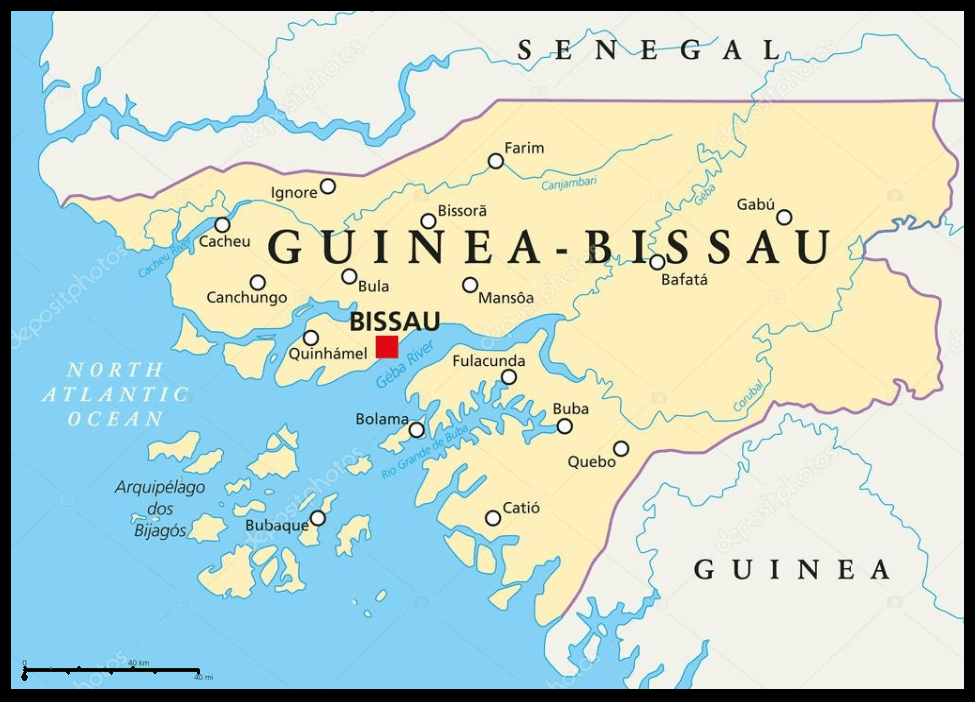
En el centenario del natalicio de Amílcar Cabral, saludamos a esta figura revolucionaria ejemplar. Nacido el 12 de septiembre de 1924 en Bafata, Guinea (colonia portuguesa), Cabral creció teniendo en el corazón la libertad de África. Fue un devoto panafricanista, poeta, ingeniero agrónomo, organizador, intelectual y teórico socialista.

Cabral jugó un papel decisivo en la organización del movimiento guerrillero PAIGC: el Partido Africano para la Independencia de Guinea-Bissau y Cabo Verde, (en portugués) Partido Africano para a Independência da Guiné e Cabo Verde. Esta entidad tenía como objetivo derrocar el colonialismo portugués por cualquier medio necesario.

EL COLONIALISMO ES UN CRIMEN CONTRA LA HUMANIDAD

Los gobernantes blancos europeos se acostumbraron a enriquecerse robando los minerales y recursos naturales de África, como oro, plata, cobre, diamantes, petróleo, productos agrícolas y más. Se dividieron el continente entre ellos sin el consentimiento ni la consideración de los deseos de los africanos que fueron abusados ​​durante siglos mediante la esclavitud, la tortura, la violación y la muerte.

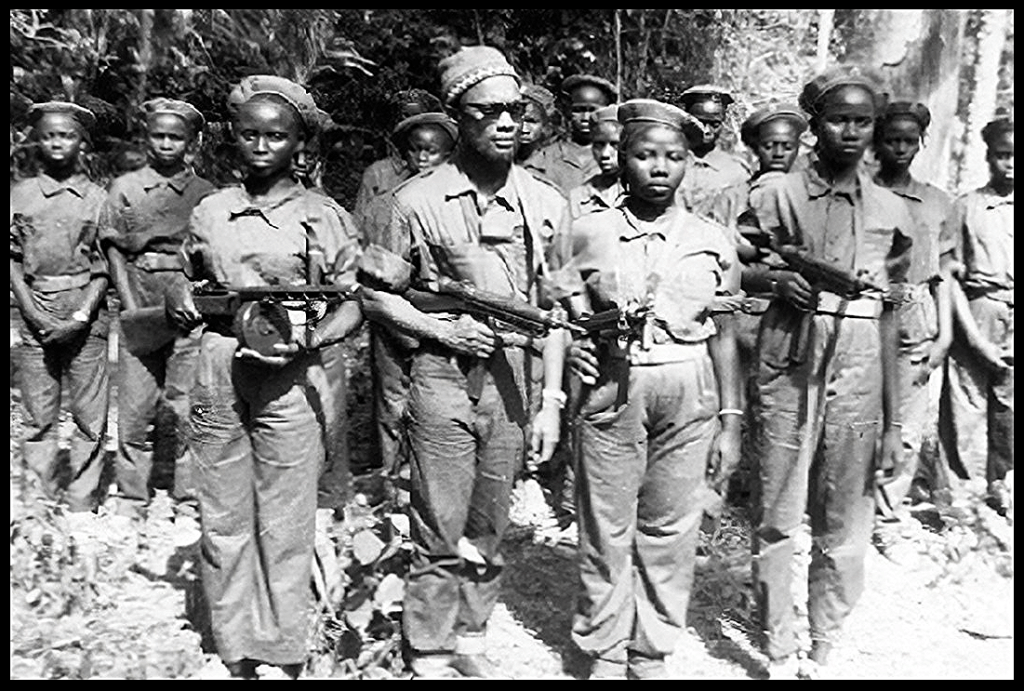
Amílcar Cabral (centro) con sus compañeros del movimiento guerrillero PAIGC.

El estado permanente de agitación que continúa experimentando África se atribuye a la naturaleza subversiva de los Estados imperialistas, que operan como instigadores para dividir y conquistar. Los abundantes recursos naturales de África la convierten en la región territorial más rica de la Tierra. Sin embargo, la población nativa es la más pobre del mundo, con la constante amenaza de hambruna.

No es de extrañar que las agencias de inteligencia del imperialismo como la CIA estén rutinariamente en guardia y listas para desatar sus fuerzas militares del USAFRICOM y la OTAN contra los movimientos de liberación de África.

Mientras estudiaba en el Instituto Superior de Agricultura (en portugués: Instituto Superior de Agronomia), en Lisboa, Portugal, Amílcar Cabral conoció a compañeros de estudios afiliados a movimientos nacionalistas en Argelia, Benin, Gabón, Ghana, Costa de Marfil, Kenia, Mozambique, Namibia, Congo. , Angola y Sudáfrica.

La visión de Cabral de un África emancipada lo motivó a establecer relaciones con movimientos nacionalistas en todo el continente. Fue la visión revolucionaria del mundo de Cabral lo que lo motivó a unirse a los camaradas panafricanistas angoleños para crear el MPLA (Movimiento Popular para la Liberación de Angola).

Nadie podrá jamás cuestionar la solidaridad internacionalista practicada entre los diversos movimientos nacionalistas africanos. A riesgo de sufrir represalias por parte de Portugal y otras potencias europeas, Kwame Nkrumah, que fue Primer Ministro de la Costa Dorada de 1952 a 1957, y luego Primer Ministro y Presidente de Ghana de 1957 a 1966, permitió que las guerrillas del PAIGC establecieran una base de operaciones dentro del territorio de ese país.

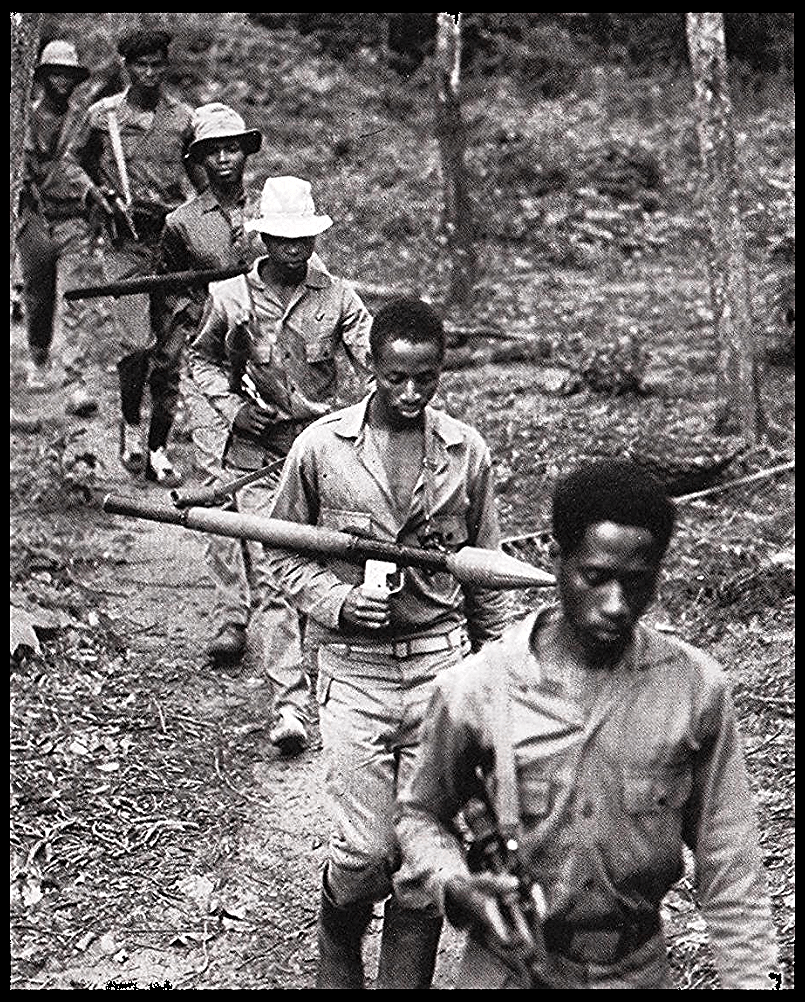
Guerrilleros del PAIGC realizando patrullas.

EL SOCIALISMO APOYA LA LIBERACIÓN NACIONAL

Como resultado de la relación de Amílcar Cabral con la Unión Soviética, la República Popular China, la República Popular Democrática de Corea, la República de Cuba y otros países del Bloque Socialista, el movimiento PAIGC se benefició política y militarmente.

Cabral vivió durante un período de la historia en el que los movimientos nacionalistas africanos surgieron como una erupción volcánica en todo el mundo. El colonialismo europeo encontró su rival con el ascenso del panafricanismo ansioso por empuñar las armas y de Estados socialistas dispuestos a proporcionárselas.

Los países miembros del Bloque Socialista proporcionaron entrenamiento con armas sofisticadas, como lanzadores de cohetes antiaéreos que disminuyeron la capacidad de la Fuerza Aérea portuguesa para dominar los cielos de Guinea-Bissau y Cabo Verde.

Sólo en la Unión Soviética había campamentos secretos donde miles de guerrilleros del PAIGC recibían entrenamiento de las Fuerzas Especiales del Ejército Soviético. Gracias a la solidaridad recibida de Cuba y la Unión Soviética, las guerrillas del PAIGC pudieron infligir muchas bajas al ejército colonizador portugués.

AMICAR CABRAL Y LA REVOLUCIÓN CUBANA

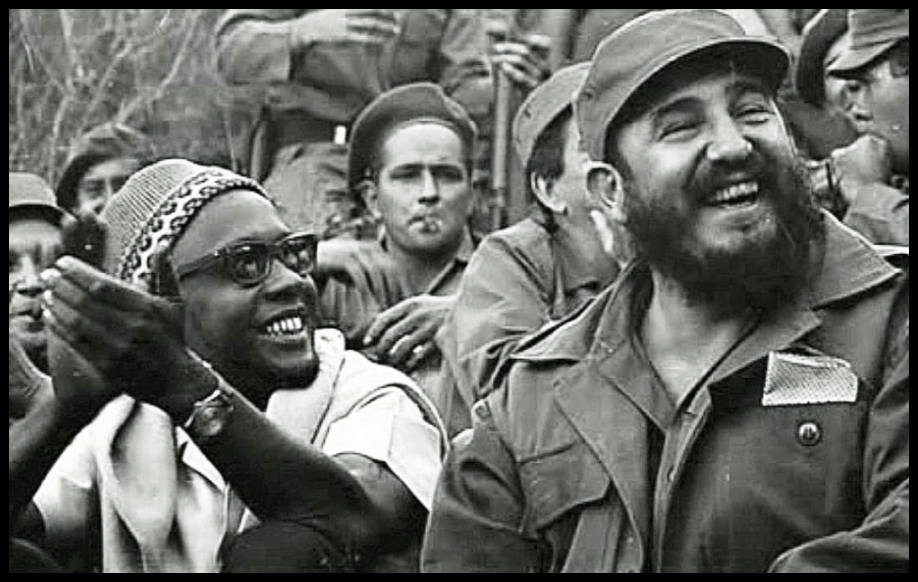
Amílcar Cabral desarrolló un respeto especial por la Revolución Cubana, especialmente después de reunirse con Fidel Castro Ruz y Ernesto Che Guevara en dos visitas distintas que hicieron a África. Desde el punto de vista de Cabral, Cuba se convirtió en el modelo de la lucha de liberación nacional en Cabo Verde y Guinea-Bissau.

Amílcar Cabral y Fidel Castro Ruz disfrutando de un momento en un campamento guerrillero.

Esa admiración fue más allá cuando Amílcar Cabral visitó La Habana, Cuba, para asistir a la Conferencia Tricontinental de 1966. Estuvieron presentes delegados de 82 países donde se produjo el levantamiento revolucionario. Estas naciones incluían Vietnam, Palestina, Sudáfrica, Haití, Irlanda, Chile y Puerto Rico.

Cuba expresó su solidaridad proporcionando al ejército guerrillero de Guinea-Bissau medicinas, armas, municiones y asesores técnicos. Después de 1965, Cuba también se comprometió a proporcionar miles de tropas de combate.

Fue la relación de Cabral con Cuba la que le ayudó a comprender por qué era necesaria una ruptura total con el modo económico capitalista del imperialismo si se quería lograr la independencia en Cabo Verde y Guinea. Estos sentimientos alimentaron su determinación de luchar por el socialismo en ambos países.

Amílcar Cabral preparando sus armas.

Y como resultado de los avances militares logrados por las guerrillas del PAIGC, el despreciado gobierno fascista de Portugal fue debilitado y finalmente derrocado durante la Revolución de los Claveles del 25 de abril de 1974. Ese evento demostró cómo las luchas en las colonias pueden impactar las situaciones políticas internas de los países colonizadores, especialmente si están plagados de abrumadoras contradicciones internas.

El sueño de Cabral de una Guinea-Bassau y un Cabo Verde independientes parecía eminentemente cierto. Pero el 20 de enero de 1973, un antiguo rival del PAIGC llamado Inocêncio Kani, considerado un agente pagado por la inteligencia portuguesa, disparó y mató al amado líder. El asesinato fue efectivamente una pérdida para el movimiento, pero la tragedia no impidió la derrota de Portugal en esta región del noroeste de África.

Inocêncio Kani y sus cómplices intentaron huir en un barco después de asesinar a Cabral. Sin embargo, los guerrilleros leales al líder caído los persiguieron y, con la ayuda de un destructor de la Armada soviética, Inocêncio Kani y sus compañeros traidores fueron capturados y llevados ante la justicia.

Mi homenaje artístico a Amilcar Cabral. 24″ X 30″, pintura acrílica sobre lienzo. Pintado en 2019.

Gracias al movimiento popular construido con el liderazgo de Amílcar Cabral, Cabo Verde y Guinea-Bissau obtuvieron su independencia a pesar de su asesinato. Será recordado como uno de los líderes revolucionarios legendarios de África en la clase icónica de Thomas Sankara, Patrice Lumumba, Steve Biko, Chris Hani, Nelson Mandela, Kwame Nkrumah y muchos otros.

Amílcar Cabral fue un nacionalista revolucionario porque amaba a su pueblo. También era un socialista devoto porque quería lo que consideraba indiscutiblemente lo mejor para África y todos los pueblos oprimidos.


¡VIVA EL LEGADO DE AMILCAR CABRAL!

Tribute to the Legacy of a Revolutionary: Amilcar Cabral

En español: https://carlitoboricua.blog/?p=10847&preview=true

______________________________________________

“One of the most serious errors, if not the most serious error, committed by colonial powers in Africa, may have been to ignore or underestimate the cultural strength of African peoples.” -Amilcar Cabral

______________________________________________

By Carlos “Carlito” Rovira

On the 100th anniversary of Amilcar Cabral’s birth, we salute this most exemplary revolutionary figure. Born on September 12, 1924, in Bafata, Guinea (Portuguese colony), Cabral grew up possessing the freedom of Africa at heart. He was a devoted Pan-Africanist, poet, agricultural engineer, organizer, intellectual, and Socialist theoretician.

Cabral was instrumental in organizing the PAIGC guerilla movement – the African Party for the Independence of Guinea-Bissau and Cape Verde, (in Portuguese) Partido Africano para a Independência da Guiné e Cabo Verde. This entity aimed to overthrow Portuguese colonialism by any means necessary.

COLONIALISM IS A CRIME AGAINST HUMANITY

For more than five centuries white European rulers became accustomed to enriching themselves by robbing Africa’s natural resources such as gold, silver, copper, diamonds, oil, agricultural products and more. They divided the continent among themselves without the consent or regard for the wishes of African people who were abused by enslavement, torture, rape, and death.

Amilcar Cabral (center) with his comrades from the PAIGC guerilla movement.

The permanent state of turmoil that Africa continues to experience is attributed to the subversive nature of imperialist states, operating as instigators in order to divide and conquer. Africa’s abundant natural resources make it the riches territorial region on Earth. Yet, the native population is the poorest in the world, with the constant threat of famine.

It is no wonder why the intelligence agencies of imperialism like the CIA are routinely on guard and ready to unleash its military forces of USAFRICOM and NATO against Africa’s liberation movements.

While studying at the Superior Institute of Agriculture (In Portuguese: Instituto Superior de Agronomia), in Lisbon, Portugal Amilcar Cabral met fellow students affiliated with nationalist movements in Algeria, Benin, Gabon, Ghana, Ivory Coast, Kenya, Mozambique, Namibia, Congo, Angola, and South Africa.

Cabral’s vision of an emancipated Africa motivated him to establish relations with nationalist movements everywhere on the continent. It was Cabral’s revolutionary world outlook that motivated him to join Angolese Pan-Africanist comrades to create the MPLA (People’s Movement for the Liberation of Angola).

No one can ever question the internationalist solidarity practiced among various African nationalist movements themselves. At the risk of reprisals from Portugal and other imperialist powers, Kwame Nkrumah who served as Prime Minister of the Gold Coast from 1952 to 1957, and then as Prime Minister and President of Ghana from 1957 until 1966, allowed PAIGC guerillas to establish a base of operations within that country’s territory.

The legendary Kwame Nkrumah
PAIGC guerillas conducting patrols.

SOCIALISM STANDS WITH NATIONAL LIBERATION

As a result of Amilcar Cabral’s relationship with the Soviet Union, People’s Republic of China, Democratic People’s Republic of Korea, Republic of Cuba and other countries in the Socialist Bloc the PAIGC movement benefitted politically and militarily.

Cabral lived during a period in history when African nationalist movements rose up like a volcanic eruption everywhere in the globe. European colonialism met its match with the rise of Pan-Africanism anxious to pick up arms and Socialist states willing to provide them. 

Member countries of the Socialist Bloc provided training with sophisticated weapons, such as anti-aircraft rocket launchers which diminished the Portuguese Airforce ability to dominate the skies over Guinea-Bissau & Cape Verde. 

In the Soviet Union alone there were secret encampments where thousands of PAIGC guerillas received training from Soviet Army Special Forces. Thanks to the solidarity received from Cuba and the Soviet Union PAIGC guerillas were able to inflict many casualties on the colonizing Portugues Army.

AMICAR CABRAL & THE CUBAN REVOLUTION

Amilcar Cabral developed a special respect for the Cuban Revolution, especially after meeting with Fidel Castro Ruz and Ernesto Che Guevara on two separate visits they made to Africa. From Cabral’s standpoint, Cuba became the blueprint for the national liberation struggle in Cape Verde and Guinea-Bissau.

Amilcar Cabral and Fidel Castro Ruz enjoying a moment at a guerilla encampment.

That admiration went further when Amilcar Cabral visited Havana, Cuba to attend the 1966 Tri-Continental Conference. Delegates from 82 countries where revolutionary upheaval occurred were present. These nations included Vietnam, Palestine, South Africa, Haiti, Ireland, Chile and Puerto Rico. 

Cuba expressed its solidarity by providing Guinea-Bissau’s guerilla army medicine, weapons, ammunition, and technical advisors. After 1965, Cuba also committed to provide thousands of combat troops.

It was Cabral’s relationship with Cuba that helped him understand why a complete break with imperialism’s capitalist economic mode was necessary if independence in Cape Verde and Guinea were to be attained. These sentiments fueled his determination to strive for Socialism in both countries.

Amilcar Cabral preparing his weapons.

And as a result of military gains made by the PAIGC guerillas, Portugal’s despised fascist government was weakened and ultimately overthrown during the Carnation Revolution of April 25, 1974. That event proved how the struggles in the colonies can impact the internal political situations of colonizing countries especially if they are plagued with overwhelming internal contradictions.

Cabral’s dream of an independent Guinea-Bassau and Cape Verde appeared eminently certain. But on January 20, 1973, a former PAIGC rival named Inocêncio Kani believed to be a paid operative for Portuguese intelligence, shot and killed the beloved leader. The assassination was indeed a loss for the movement, but the tragedy did not prevent Portugal’s defeat in this Northwestern region of Africa.

Inocêncio Kani and his accomplices attempted to flee on a sea vessel after assassinating Cabral. However, guerilla fighters loyal to the fallen leader gave chase, and with the help of a Soviet Navy destroyer Inocêncio Kani and his fellow traitors were captured and brought to justice.

My artist tribute to Amilcar Cabral. 24″ X 30″, acrylic paint on canvas. Painted in 2019.

Thanks to the people’s movement built with Amilcar Cabral’s leadership, Cape Verde and Guinea-Bissau won their independence despite his assassination. He will be remembered as one of Africa’s legendary revolutionary leaders in the iconic class of Thomas Sankara, Patrice Lumumba, Steve Biko, Chris Hani, Nelson Mandela, Kwame Nkrumah, and many others.

Amilcar Cabral was a revolutionary nationalist because he loved his people. He was also a devoted Socialist because he wanted what he viewed as indisputably the best for Africa and all oppressed people.

LONG LIVE THE LEGACY OF AMILCAR CABRAL!

National flags of Cape Verde and Guinea-Bissau.

TRIBUTE TO MARCUS GARVEY August 17, 1887 – June 10, 1940

Para la versión en español: https://carlitoboricua.blog/homenaje-a-marcus-garvey-17-de-agosto-de-1887-10-de-junio-de-1940/

By Carlos “Carlito” Rovira

—————————————————

“We are going to emancipate ourselves from mental slavery because whilst others might free the body, none but ourselves can free the mind. Mind is your only ruler, (it is) sovereign. The man who is not able to develop and use his mind is bound to be the slave of the other man who uses his mind” – Marcus Mosiah Garvey 

————————————————–

From a young age, Marcus Garvey became inquisitive about the causes of Black oppression. Coming into a world filled with anti-Black racist hatred, Garvey sought ways to achieve justice and equality for people of African origin. 

Garvey became the central figure of a social movement that developed at the early part of the 20th century in the United States. He was the founder and leader of the famous Universal Negro Improvement and African Communities League (UNIA-ACL) known as UNIA. 

August 1, 1920, thousands of Black people gathered at a parade in Harlem, NYC, called by Marcus Garvey.

Garvey’s life journey involved becoming the catalyst of Pan-Africanism, a movement of profound significance that came at the heels of slavery. This critical movement defined the aspirations and nationalist sentiments of Black people across the globe in the modern era. 

In many of his public speeches, Marcus Garvey prioritized expounding on Black pride to counter white supremacy’s historic psychological weapon against Blacks and other people of color internalized racism.

The famous Harlem Renaissance, which unveiled the beauty of African American culture while also shattering many racist myths, resulted from Marcus Garvey’s call for Black people to be profound with their identity in all areas of dignified expression. 

The Harlem Renaissance was a cultural explosion in the realm of the performing, literary and visual arts which served to discredit white supremacy’s assertions about “inferior” Black intellectuality. This was a movement that turned Harlem into the political and cultural center of the African American people.

Years later, on Aug 12, 1958, Harlem Renaissance artists posed together at 17 East 126th Street.

UNIA’s fundamental premise called for 1) the right of Black people to self-determination 2) the right to economic power 3) the right to have Black educational institutions 4) the right to be free from racist violence, and so on. For millions of Black people, UNIA’s vision was an attractive proposition considering the centuries of degradation, violence, disregard and legalized enslavement.  

UNIA’s ranks grew to enormous proportions by 1920 with 30 chapters in the United States and millions of members worldwide. The expansion of this movement deeply threatened the white supremacist ruling class who never saw such powerful organizing among Black people. Hundreds of thousands African Americans exerted their strength by uniting into a sophisticated and mighty force. 

Marcus Garvey believed that wearing uniforms projected power, discipline, and strength.

U.S. rulers had ample reason to feel apprehensive about the rising Garveyite movement. The colossal wealth in the hands of the capitalist class accumulated over the course of centuries from the suffering of enslaved Black labor. 

No one can deny how that apprehension resulted in violence Black people endured everywhere in the United States. Take for example, the horrors that occurred during the destruction of Black Wall Street on May 31 – June 1, 1921, in Tulsa, Oklahoma. Racist white citizens feverishly murdered Black people while burning to the ground their community of prosperous businesses.  

Garveyism Inherently Internationalist 

To the dislike of Washington officials, soon after the victorious 1917 Russian Socialist Revolution, Marcus Garvey dispatched a letter to Vladimir Ilyich Lenin expressing praises and congratulations. And following Lenin’s death on January 21, 1924, Garvey continued to express admiration for the achievements of the Communist leader.

In a speech presented in Harlem, NYC on January 27, 1924, Marcus Garvey stated: “One of Russia’s greatest men, one of the world’s greatest characters, and probably the greatest man in the world between 1917 and 1924, when he breathed his last and took his flight from this world. We as Negroes mourn for Lenin because Russia promised great hope not only for Negroes but to the weaker people of the world.”

Lenin speaking to working-class combatants of the Russian Revolution.

On July 27, 1919, Marcus Garvey expressed condemnation for the greatest U.S. ally British imperialism. At a massive gathering in Harlem’s Liberty Hall Garvey defiantly voiced solidarity for the Irish Citizen Army (ICA) who battled the British Army during the Easter Rising, in a courageous attempt to free Ireland from English colonial rule. 

Marcus Garvey boldly condemned England and compared the plight of the Irish people with Africans. Garvey also called the execution of James Connolly and his comrades by a British firing squad an appalling act of tyranny.  

In 1925, Garvey visited Puerto Rico to meet with the renowned Puerto Rican Nationalist leader, Dr. Pedro Albizu Campos. Campos’ outspoken oratory against the “racist practices in the house of the empire” caught Garvey’s attention. Despite their differences in goals and tactics, the meeting was highly symbolic. The two leaders proceeded in their separate line of march but with the highest respect for each other’s liberation struggle. 

Puerto Rico’s Dr. Pedro Albizu Campos and Vietnam’s Ho Chi Minh.

Vietnamese revolutionary leader Ho Chi Minh lived in Harlem during his youth and attended UNIA’s public meetings at Liberty Hall where he was impacted by Marcus Garvey’s speeches. Years later, Ho Chi Minh repeatedly spoke of the plight of Black people to shed light on the genesis of U.S. imperialism’s inhumanity. Thanks to being impressed by the Garveyite movement, in 1925 Ho Chi Minh authored his famous published essay titled “On Lynching and the Ku Klux Klan.” 

Marcus Garvey’s influence was widespread. He was undisputably an outspoken internationalist who identified with the suffering and struggles of other oppressed people. Black Puerto Rican Arturo Alfonso Schomburg, who originated from the struggle for independence of his homeland, understood quite well this empathetic quality of Marcus Garvey’s thinking.  Schomburg was one of Garvey’s loyal comrades.

Marcus Garvey, Arthuro Schomburg and other mourners at the grave of John E. Bruce

Persecution of Marcus Garvey 

Garvey’s political success and influence provoked scrutiny by the white supremacist U.S. Government. Garvey and UNIA became the targets of investigation and sabotage, carried out under the direction of the notorious J. Edgar Hoover and the Justice Department. 

Washington officials sought ways to exploit mistakes made to aggravate internal divisions within UNIA. The government’s efforts to stir chaos included using informants from the Harlem community as well as not-so-secret legal procedures, a precursor to COINTELPRO tactics, employed against the Black movement decades later. 

Due to the growing momentum of workers struggle for the eight-hour day in the U.S., and the impact the victorious 1917 Russian Socialist Revolution had on the world, Washington officials sensed a threat and reacted with frenzy. Consequently, the “Red Scare” effected the entire spectrum of the social and economic life in the United States.  

Two of my artwork pieces of Marcus Garvey. Both are acrylic paint on canvas.

Justice Department agents launched raids on public schools, universities, labor union offices, factories, homes, and places of worship. Far-reaching measures, in what became known in history as the “Palmer Raids”, were used to persecute immigrants, socialists, anarchists, and other pro-labor radicals.  

The government was not less vicious with Marcus Garvey and UNIA. In 1925 Garvey was convicted to five years in prison for a trumped-up criminal charge of mail fraud. But in 1927, the government chose commuting Garvey’s sentence to deport him. However, the Black liberation struggle continues to pose a political threat to the capitalist system.

Marcus Garvey unjustly in the custody of U.S. Marshals.

The Legacy of Marcus Garvey 

Years after Garvey’s death his influence never vanished. The militant fury of the Black liberation struggle that ignited in the 1960s-1970s with the demands for justice and reparations at the fore are attributed to the Garveyite movement. 

To accentuate the idea of Black people’s right to nationhood Marcus Garvey created a national symbol, the Red, Black, and Green, also known as the Black Liberation Flag. Today, it represents the aspirations and deepest sentiments connected to history, culture, and heritage of Black people. 

Figures like Carlos A. Cooks, Arturo Alfonso Schomberg, Queen Mother Moore, Malcolm X, the Black Panther Party, Republic of New Africa and others, made the meaning of Marcus Garvey relevant to other oppressed people. Latinos, Asians, Arabs, and Indigenous people have also been impacted, directly or indirectly, by the examples of this historic revolutionary giant.  

Marcus Garvey addressing an audience in Harlem.

Despite mistakes made, the Garveyite movement left us many lessons to be drawn in the interest of bringing about fundamental change in this society. Although oppression continues Marcus Garvey’s daring examples are part of what shall serve as a path to a better future world, free of white supremacy and capitalism.  

His love for Black people and willingness to do whatever necessary to achieve their emancipation has earned him a special place in Black history and the archives of the class struggle. 

LONG LIVE THE LEGACY OF MARCUS GARVEY! 

TRIBUTE TO DR. HELEN RODRIGUEZ TRIAS

“We need health, but above all we need to create a grounding for healthy public policy that redresses and salvages the growing inequities. We cannot achieve a healthier us without achieving a healthier, more equitable health care system, and ultimately, a more equitable society.”
– Dr. Helen Rodriguez Trias (July 7, 1929 – December 27, 2001) Pediatrician, Educator and Woman’s Rights Activist

——————————————————–

By Carlos “Carlito” Rovira

Below is my latest portrait of a true revolutionary in every sense of its meaning. Dr. Helen Rodriguez Trias’ life was filled with greatness. A passion for science and empathy for humanity. She always demonstrated an attraction for the anti-racist cause and Puerto Rico’s struggle for independence. Dr Rodriquez -Trias was also a proud feminist, always promoting the cause for the equality of women.

As a child, Dr. Rodriquez-Trias showed great academic abilities. However, despite having good grades and being bi-lingual, she was placed in a class for children with learning disabilities. The NYC public school system in the 1930s has many stories of open and systemic racism. It wasn’t until Helen participated in a poem recital, that a teacher realized how intellectually gifted she was.

As Dr. Rodriquez-Trias grew older, her interest in medicine became a priority. She moved to Puerto Rico and received a scholarship in Medicine from the University of Puerto Rico (UPR) . It was there where she became drawn to the Puerto Rican independence struggle and decided to join the student component of the Nationalist Party.

Despite family opposition to her political involvement, in 1960 having earned her doctorate in medicine with the highest honors, Dr. Rodriquez-Trias stayed in Puerto Rico for several years working to help eradicate the widespread community health issues due to the lack of basic health care.

My portrait of Dr. Helen Rodriguez Trias, 20″ X 24″, acrylic paint on canvas.

The decision to stay in Puerto Rico combined with her passion for justice defined the special kind of medical professional she became. Dr. Rodriguez-Trias is credited for establishing the first center for the care of newborn babies in Puerto Rico. As a result of her efforts, the death rate for newborns decreased by 50 percent within three years.

In another well documented genocidal act against the Puerto Rican people, between the 1930s and 1980s, one-third of the child-baring female population was secretly sterilized. This strategic genocidal project was designed by the notorious Dr. Cornelius P. Roades.

Dr. Rodriguez-Trias was an adamant, tireless and outspoken activist against United States colonialism using Puerto Rico for birth control pill experimentations as well.

After Dr. Rodriguez Trias moved back to New York City in 1970, she became active in the fight for patient-worker’s rights, specifically at Lincoln Hospital in the South Bronx where she was employed as head of its Pediatrics department.

Dr. Helen Rodriguez Trias caring for a child at Lincoln Hospital’s pediatrics unit.

Upon her arrival at Lincoln Hospital, Dr. Rodriquez Trias was so appalled to witness first-hand the racist healthcare reserved for poor, Black and Latino people that it inspired her to attend meetings of the Health Revolutionary Unity Movement (HRUM), an entity of hospital workers and community activists.

On July 14, 1970, the Young Lords staged the dramatic seizure of Lincoln Hospital. The aim was to expose the deplorable conditions there. Dr. Rodriguez Trias was among many doctors throughout the country who supported this action.

Dr. Helen Rodriguez Trias was recognized for her efforts by many in the medical profession, esteemed organizations and government entities. She was the first Latina director of the American Public Health Association. In January 8, 2001, Dr. Rodriquez Trias was awarded with the Presidential Citizen’s Medal.

Dr. Helen Rodriguez Trias received the Presidential Citizen’s Medal from President Bill Clinton.

This portrait is 20” X 24”, acrylic paint on canvas. It was inspired by my Queen, Lisa B. Jones who urged me to paint the image of Dr. Rodriguez -Trias for several years by educating me about this outstanding heroine.

I also wish to thank Sister Cleo Silvers who helped me with the facts of this article. Cleo Silvers was a member of HRUM and worked at Lincoln Hospital with Dr. Trias in the 1970s.

Long live the legacy of Dr. Helen Rodriguez Trias!

Dr. Ramon Emeterio Betances – Father of the Puerto Rican Nation

Tribute to Dr. Ramon Emeterio Betances-Father of the Puerto Rican Nation

April 8, 1827 – September 16, 1898

Tribute to Dr. Ramon Emeterio Betances – Father ofn the Puerto Rican Nation

Para la versión en español: https://carlitoboricua.blog/?p=9404&preview=true

By Carlos “Carlito” Rovira

Of all revolutionary leaders during the Nineteenth Century in Puerto Rico’s anti-colonial struggle Dr. Ramon Emeterio Betances is of profound significance. He is among the most recognized figures in Caribbean and Latin American history.

Ramon Emeterio Betances’ convictions provided a roadmap for future generations. Dr Pedro Albizu Campos and the Nationalist Party, Arturo Alfonso Schomberg, the Puerto Rican Socialist Party, Puerto Rican Independence Party, Los Macheteros, the Young Lords, and so many more, came about due to traditions in the national liberation struggle firmly established by him. Today, Betances’ legacy carries the title of honor, Father of the Puerto Rican Nation.

This legendary figure held several titles and professions, which he utilized as assets in the service of the liberation struggle. He was a poet, novelist, journalist, public health administrator, social hygienist, medical doctor, surgeon, ophthalmologist, scientist, diplomat, politician, in addition to being an abolitionist and revolutionary leader.

Dr. Ramon Emeterio Betances

The son of a White-Dominican father and an Afro-Puerto Rican mother, Betances was reared in a relatively wealthy and privileged family. However, as he became of age, Betances questioned the causes for the social and economic inequalities that existed under a slave-owning colonial system.

During his formative years, the young Ramon was educated by a private tutor. When Betances was 17 years old, his father sent him to study at the School of Medicine of Montpellier in Paris, France. It was there where he finished his degree in Medicine and Surgery.

While in France, Betances was influenced by the 1848 revolutionary upheaval in Europe. This period of historical unrest is when both the Monarchy and the Roman Catholic Church were losing political control as the masses rose to rebel against them.   

My portrait of Dr. Ramon Emeterio Betances.
24″ X 30″, acrylic paint on canvas.

Upon his return to Puerto Rico, Betances opened his medical practice. Being a physician and humanist, he was empathetic of the human suffering he witnessed.

During the cholera epidemic of 1856, Betances defiantly clashed with colonial officials in the city of Mayaguez. He risked arrest and imprisonment because he prioritized medical care for enslaved Africans over the colonizing white-Spanish born soldiers and officers, who were also infected by the widespread deadly disease.

Influence of the 1804 Haitian Revolution

Betances gradually evolved a contempt against foreign tyranny. He was influenced by the revolutionary storm of ideas in France but was profoundly impacted by the boldness of the Haitian Revolution.

The militant example of the Haitian people was a beacon of hope and inspiration for enslaved and colonized people throughout the Caribbean, Africa and United States similar to the Soviet Union in the early part of its history. As a result, Betances was motivated to become active in the clandestine movement for independence and the abolition of slavery.

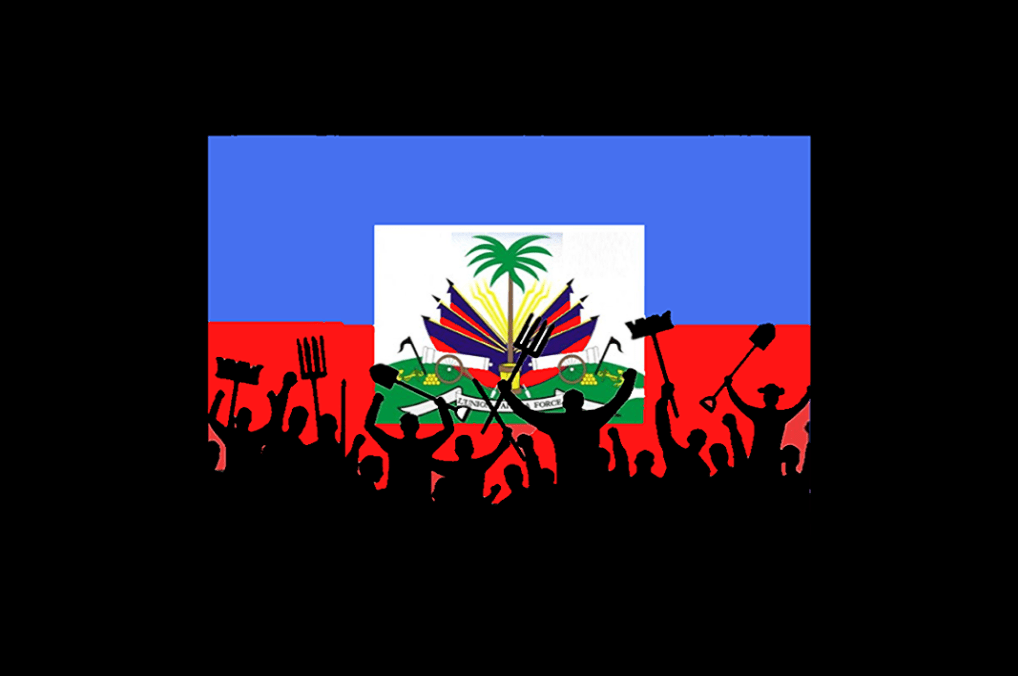
Haitian and Puerto Rican Flags

Haitian leaders understood quite well the necessity and benefits for oppressed people of different lands to forge unity, if they are to survive the onslaught of colonizing powers. This was a feature of the Haitian perspective that became most attractive to Betances.

In collaboration with fellow revolutionist Segundo Ruiz Belvis and others, Betances led an organizing effort to create the Revolutionary Committee, an organization devoted to the struggle for independence and the abolition of slavery in Puerto Rico by preparing for revolution there. Organizing these committees was most important in areas where enslaved Africans and other downtrodden sectors of the population were concentrated.

Monument in Lares, PR dedicated to Ramon Emeterio Betances.

Betances became the central figure in the movement which brought about the 1868 Grito De Lares, an uprising that attempted the overthrow of Spanish colonialism. El Grito De Lares is also an event that affirmed the existence of the Puerto Rican Nation.

It was with enthusiasm of the moment as Puerto Rican revolutionaries prepared to wage armed battle with Spanish colonialism when Betances and a woman leader of the movement named Mariana Bracetti, a professional Stitcher, collaborated to create the first Puerto Rican flag.

The first Puerto Rican flag, symbol used at El Grito De Lares uprising.

A few weeks before the scheduled date for the Lares uprising, Betances returned to Puerto Rico from the island of Española (Haiti and Dominican Republic) on a schooner filled weapons and ammunition for the battle. These were weapons confiscated from the French during the Haitian Revolution.

Unfortunately, the revolutionaries were betrayed by an informant in the group. As the schooner approached the Port of Arecibo with the much-needed cargo Betances and his crew found themselves surrounded by Spanish warships. After their apprehension Betances was exiled to France.

But Betances was unstoppable. Between 1869-1870, he visited Haiti with Jose A. Basora, a fellow leader of Puerto Rico’s Revolutionary Committee.  The two prominent Puerto Rican figures met with Haitian revolutionary leaders in an effort to collaborate for their mutual quest.

Ramón Emeterio Betances’ mausoleum located in Cabo Rojo, Puerto Rico.

In the truest internationalist spirit and despite the failure of the 1868 Grito De Lares uprising, Betances traveled throughout the Caribbean forging relations with Cuban, Haitian, Dominican and Jamaican revolutionaries. He was not deterred from striving to build a united federation of the Greater Antilles, a force capable of challenging the colonizing powers as the Haitian Revolution had envisioned.

Dr. Ramon Emeterio Betances paid close attention to socio-economic and political developments in the U.S., especially after it freed itself from the greatest hinderance to its growth, the system of chattel slavery. Based on his perceptions of U.S. expansionism Betances believed the U.S. was destined to become a tyrannical power posing a threat to Puerto Rico, all of Latin America and the Caribbean.

Weeks before his death and shortly after the U.S. military invasion on November 16, 1898, Dr. Ramon Emeterio Betances stated “I do not want to see Puerto Rico colonized by Spain nor the United States.”

QUE VIVA PUERTO RICO LIBRE!

Dr. Ramón Emeterio Betances – Padre de la Nación Puertorriqueña

Homenaje al Dr. Ramón Emeterio Betances-Padre de la Nación Puertorriqueña
8 de abril de 1827 – 16 de septiembre de 1898

For English version: https://carlitoboricua.blog/?p=9340&preview=true

Por Carlos “Carlito” Rovira

De todas las figuras revolucionarias en la historia de la lucha anticolonial de Puerto Rico en el siglo XIX, la del Dr. Ramón Emeterio Betances es la de mayor significado. Es una de las figuras revolucionarias más reconocidas de la historia del Caribe y América Latina.

Las convicciones de Ramón Emeterio Betances proporcionaron una hoja de ruta para la futura generación de revolucionarios. El Dr. Pedro Albizu Campos y el Partido Nacionalista, Arturo Alfonso Schomberg, el Partido Socialista Puertorriqueño, el Partido Independentista Puertorriqueño, Los Macheteros, los Young Lords y otros más, cumplieron con las debidas tradiciones en la lucha de liberación nacional firmemente establecidas por él. Hoy Betances es considerado Padre de la Nación Puertorriqueña.

Esta figura legendaria ostentó varios títulos y profesiones, que utilizó como activos al servicio de la lucha por la liberación. Fue poeta, novelista, periodista, administrador de salud pública, higienista social, médico, cirujano, oftalmólogo, científico, diplomático, político, además de un líder abolicionista y revolucionario.

Dr. Ramon Emeterio Betances

En los años de formación, el joven Ramón fue educado por un tutor privado. Cuando Betances tenía 17 años, su padre lo envió a estudiar a la Facultad de Medicina de Montpellier en París, Francia. Fue allí donde terminó la carrera de Medicina y Cirugía.

Durante su estancia en Francia, Ramon Emeterio Betances estuvo influenciado por el levantamiento revolucionario de 1948 que existía en Europa. Este período de agitación histórica donde tanto la Monarquía como la Iglesia Católica Romana estaban perdiendo control político a medida que las masas se rebelaban contra ellas.

Mi retrato del Dr. Ramón Emeterio Betances.
24″ X 30″, pintura acrílica sobre lienzo.

A su regreso a Puerto Rico, Betances abrió su práctica médica. Como médico y humanista, sentía empatía por el sufrimiento humano del que fue testigo.

Durante la epidemia de cólera de 1856, Betances se enfrentó desafiantemente con funcionarios coloniales en la ciudad de Mayagüez, arriesgándose a ser arrestado, porque priorizaba la atención médica para los esclavos africanos y los pobres sobre los soldados y oficiales colonizadores españoles, quienes también estaban infectados por la enfermedad mortal generalizada.

Influencia de la revolución haitiana de 1804

Betances desarrolló gradualmente un desprecio hacia la tiranía extranjera. Fue influenciado por la tormenta revolucionaria de ideas en Francia, pero profundamente impactado por la audacia de la Revolución Haitiana.

El ejemplo militante del pueblo haitiano fue un faro de esperanza e inspiración para los pueblos esclavizados y colonizados en todo el Caribe, África y Estados Unidos, similar a lo que ocurrió con la Unión Soviética en la primera parte de su historia. Como resultado, Betances se vio motivado a participar activamente en el movimiento clandestino por la independencia y la abolición de la esclavitud.

Banderas haitianas y puertorriqueñas.

Los líderes haitianos entendieron bastante bien la necesidad y los beneficios para los pueblos oprimidos de diferentes tierras de forjar la unidad si quieren sobrevivir al ataque de las potencias colonizadoras. Éste fue un rasgo de la perspectiva revolucionaria haitiana que resultó más atractivo para Betances.

En colaboración con su compañero revolucionario Segundo Ruiz Belvis y otros, Betances dirigió un esfuerzo organizativo para crear el Comité Revolucionario, una organización dedicada a la lucha por la independencia y la abolición de la esclavitud mediante la preparación para la revolución. La organización de estos comités fue más importante en las áreas de Puerto Rico donde se concentraban los esclavos africanos y otros sectores oprimidos de la población.

Monumento en Lares, PR dedicado a Ramón Emeterio Betances.

Betances se convirtió en la figura central del movimiento que provocó el Grito de Lares de 1868, un levantamiento que intentó derrocar el colonialismo español. El Grito De Lares también afirmó la existencia de la Nación Puertorriqueña.

Fue con el entusiasmo del momento mientras los revolucionarios puertorriqueños se preparaban para librar una batalla armada contra el colonialismo español cuando Betances y Mariana Bracetti, líder del movimiento y costurera profesional, colaboraron para crear la primera bandera puertorriqueña.

La primera bandera puertorriqueña, símbolo utilizado en el levantamiento de El Grito De Lares.

Unas semanas antes de la fecha prevista para el levantamiento de Lares, Betances zarpó hacia Puerto Rico desde la isla Española (Haití y República Dominicana) en un barco cargado de armas y municiones para la batalla. Estas eran armas confiscadas a los franceses durante la Revolución Haitiana.

Desafortunadamente, los revolucionarios fueron traicionados por un informante del grupo. Cuando la goleta se acercaba al puerto de Arecibo con la carga necesaria, Betances y su tripulación se encontraron rodeados por buques de guerra españoles. Tras su aprehensión, Betances fue exiliado a Francia.

Pero Betances era imparable. Entre 1869 y 1870, Betances visitó Haití con José A. Basora, otro líder del Comité Revolucionario de Puerto Rico. Las dos prominentes figuras puertorriqueñas se reunieron con líderes revolucionarios haitianos en un esfuerzo por colaborar en su búsqueda mutua.

Mausoleo de Ramón Emeterio Betances ubicado en Cabo Rojo, Puerto Rico.

Con el más auténtico espíritu internacionalista, a pesar del fracaso del levantamiento del Grito de Lares de 1868, Betances viajó por todo el Caribe forjando relaciones con revolucionarios cubanos, haitianos, dominicanos y jamaiquinos. Se vio disuadido de desempeñar un papel en la creación de una federación unida de las Antillas Mayores, una fuerza capaz de desafiar a las potencias colonizadoras como lo había previsto la Revolución haitiana.

El Dr. Ramón Emeterio Betances prestó gran atención a los acontecimientos socioeconómicos y políticos en Estados Unidos, especialmente después de que se liberara del mayor obstáculo para su crecimiento: la esclavitud. Basándose en sus percepciones del expansionismo estadounidense, Betances creía que Estados Unidos estaba destinado a convertirse en una potencia tiránica que representaba una amenaza para Puerto Rico, todo Latinoamérica y el Caribe.

Semanas antes de su muerte y poco después de la invasión militar estadounidense el 16 de noviembre de 1898, el Dr. Ramón Emeterio Betances afirmó “No quiero ver a Puerto Rico colonizado por España ni por Estados Unidos”.

¡QUE VIVA PUERTO RICO LIBRE!