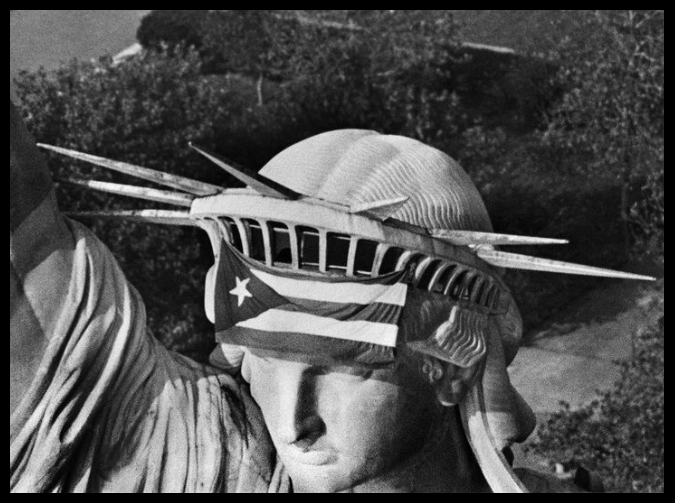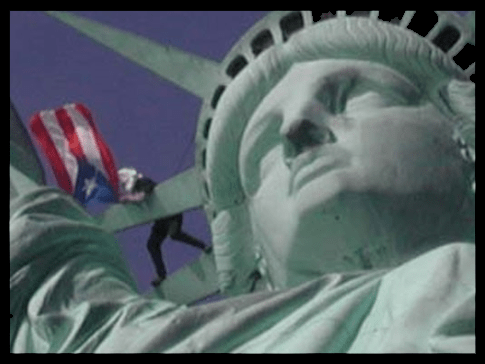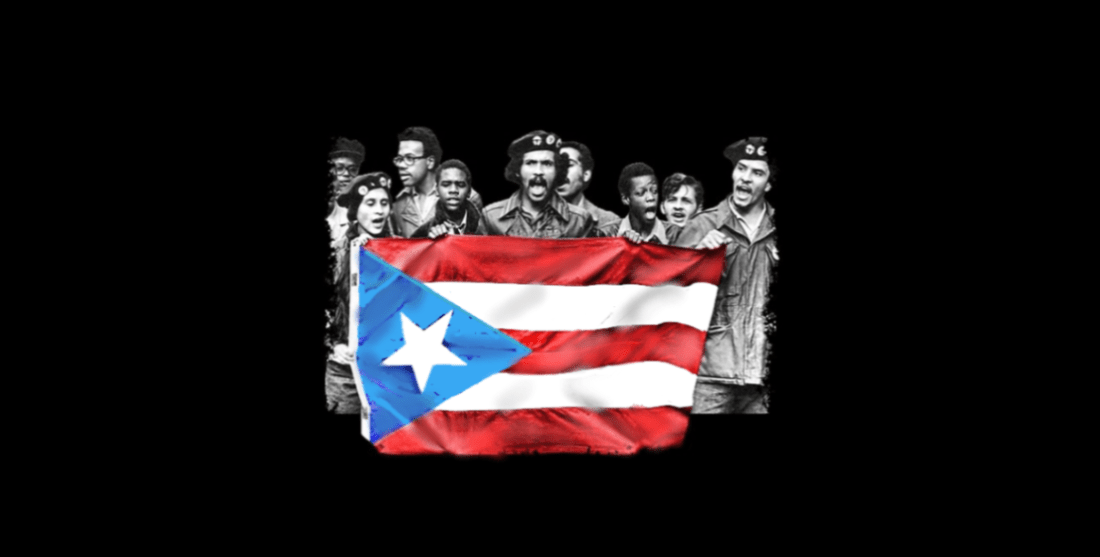
Salute to the martyrs of the October 30, 1950, Puerto Rican Nationalist Revolt

Para la versión en español: https://carlitoboricua.blog/p=6398&preview=true&_thumbnail_id=6414

___________________________________________________________________

“Military intervention is the most brutal and abusive act that can be committed against a nation and a people. We demanded then, as we do today, the retreat of United States armed forces from Puerto Rico in order to embrace the liberty we held all too briefly in 1868.” –Dr. Pedro Albizu Campos

_____________________________________________________________________

By Carlos “Carlito” Rovira

On October 30, 1950, 75 years ago, an armed battle took place in the municipality of Jayuya which spread throughout Puerto Rico. It became known as the Jayuya Uprising. It is an event in Puerto Rico which bourgeois apologists for U.S. colonialism would prefer to dilute or completely erase from history.

Men and women determined to bring about an independent Puerto Rican republic carried out daring armed confrontations with U.S.-trained police and the National Guard. The fury that ensued was due to U.S. colonial policy, which began with the 1898 military invasion. Leading up to October 1950 the U.S. colonizers were putting in place a brutal plan to crush the independence movement and all expressions of anti-colonialism.

The colonization of Puerto Rico was motivated by capitalist economic interests of giant banks and corporations. Countries like Great Britain, France, Germany, Italy, Belgium, Japan and the United States engaged in savage competition among themselves to obtain colonies. With the conquest of the Philippines, Guam, Cuba and Puerto Rico the U.S. became an imperialist power. U.S. rulers envisioned themselves controlling the world, especially Latin America where they had defined their intentions to make it their own in the 1823 Monroe Doctrine.

However, this historical trend did not go unchallenged. Millions of people resisted the savage onslaught by this system, especially after World War II and well into the 1960’s-70’s with the emergence of organized revolutionary nationalist movements in Africa, Asia and Latin America.

It was a momentous period in history with national liberation movements becoming an integral part of the global class struggle, which came to a head at the height of the so-called Cold War. At the political-military poles of this conflict were the United States on one side and the Soviet Union on the other.

Most notable in this historic turmoil were revolutions in Algeria (1954), Angola (1961), Bolivia (1952), Congo (1960), China (1949), Dominican Republic (1965), Egypt (1952), Iraq (1958), Vietnam (1945) and Cuba (1959), as well as the inspiring liberation movements of Palestine, South Africa and Northern Ireland. Imperialism did not foresee the resistance of its victims picking up arms in their quest for freedom. The Jayuya uprising occurred in the context of existing world circumstances.

The 1950 Nationalist Revolt

Under the leadership of Dr. Pedro Albizu Campos, the Nationalist Party of Puerto Rico proclaimed the inalienable right of the Puerto Rican people to independence. These freedom fighters gained the respect of multiple sectors of the population.

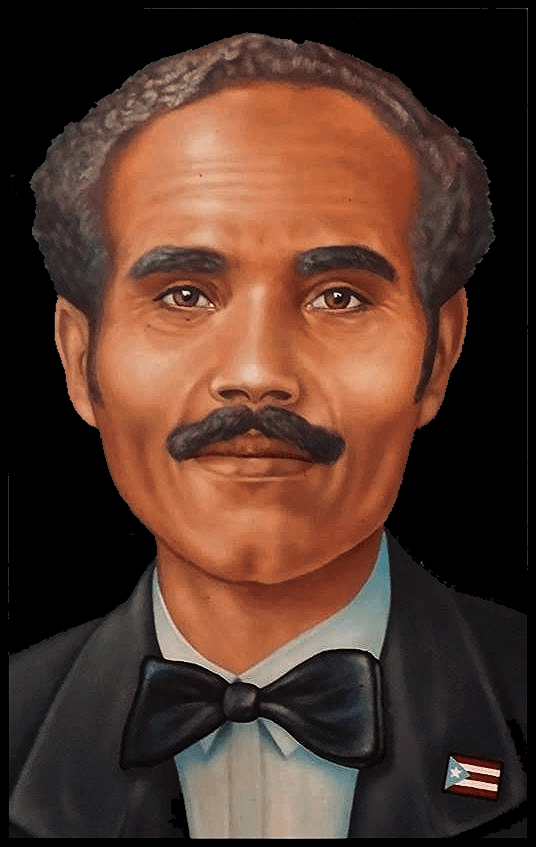
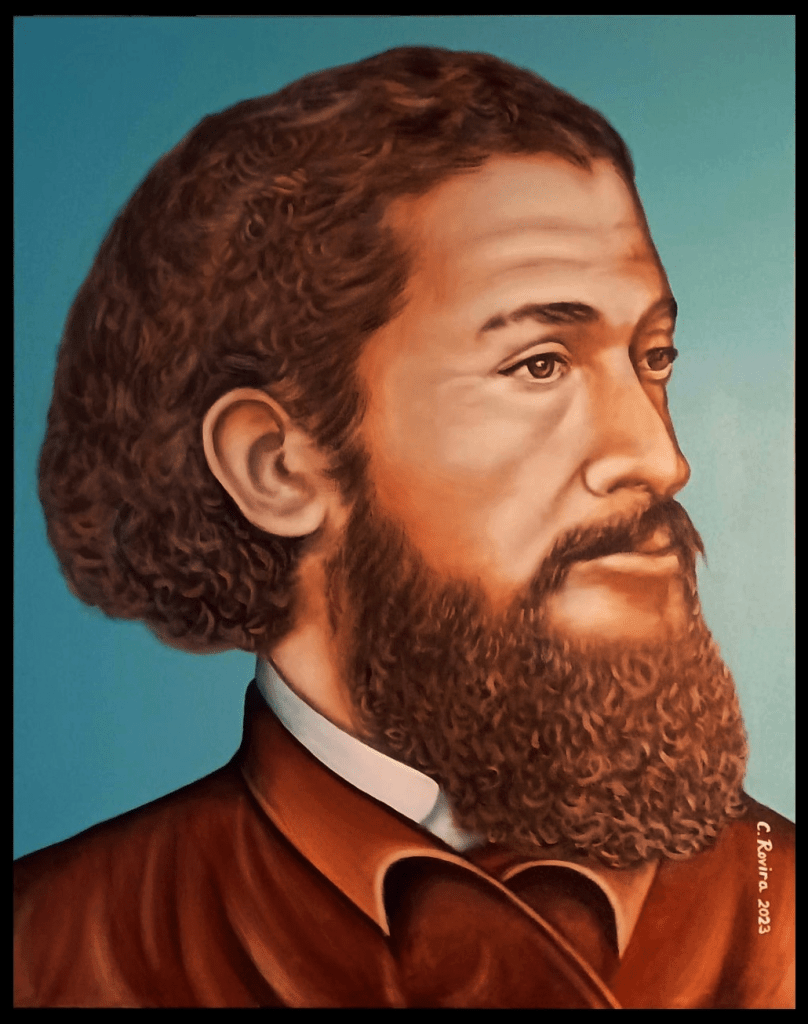
My portrait of Dr. Pedro Albizu Campos, painted in 2000.

The Nationalist Party also became known for advocating the right to use whatever means necessary to achieve liberation, including the use of armed force. This made them the primary target of colonialism’s repressive agencies that sought to destroy the independence movement.

When the political left in the United States was persecuted in the 1940-50’s, the result of an anti-communist witch-hunt spearheaded by the notorious Senator Joseph McCarthy, Puerto Ricans witnessed a harsher version of that despicable campaign. People in the U.S. hardly knew that Nationalists were systematically imprisoned and murdered.

Laws were created to justify killing Nationalists in plain view. The cause for independence was criminalized outright. Such was the nature of Law 53 of 1948, better known as the Gag Law, (Spanish: Ley de La Mordaza); it banned the Nationalist Party, prohibited possession and display of the Puerto Rican flag, outlawed public gatherings, prohibited criticism of the U.S. presence and mention of independence in literature, musical renditions and in all mass media. This vicious law aimed to destroy the Puerto Rican people’s self-identity by instilling fear.

U.S. news media outlets only told the false narrative of Washington officials who projected the uprising as an “internal matter among Puerto Ricans.” But nothing can dismiss the cold facts pointing to the contrary: the supposed “Government of Puerto Rico” did not come into existence by the will of the people, it was installed by U.S. colonial decree. Federal law mandates the U.S. President to take direct charge of matters there in cases of emergency. In addition, the governor of Puerto Rico is required by law to report and take directions from the White House.

Early in October 1950, Nationalist Party intelligence operatives obtained information of a secret government plan to eliminate the independence movement. The tactics to be used in the planned onslaught involved attacking offices and homes of Nationalist Party members. With knowledge of the imminent attack Party leadership chose to uphold national dignity and their right to armed self-defense. They decided that it was best to take the initiative by landing the first blow.

THE JAYUYA UPRISING

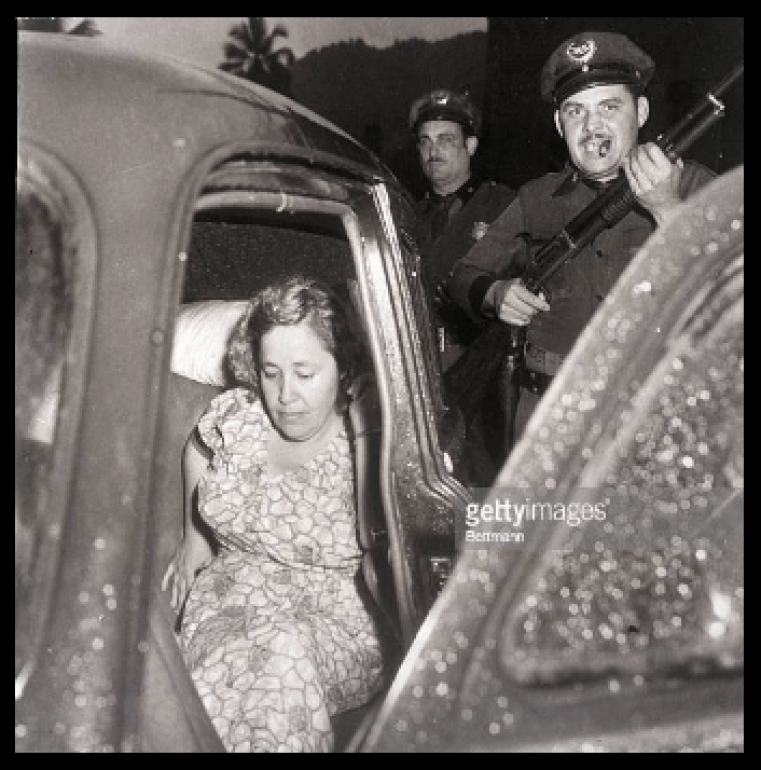
On the morning of October 30, 1950, a young woman named Blanca Canales led an armed contingency of Nationalists towards Jayuya. Once they arrived in the city the patriots launched their attack on the police headquarters. The Nationalists then surrounded the despised facility and a gun battle ensued.

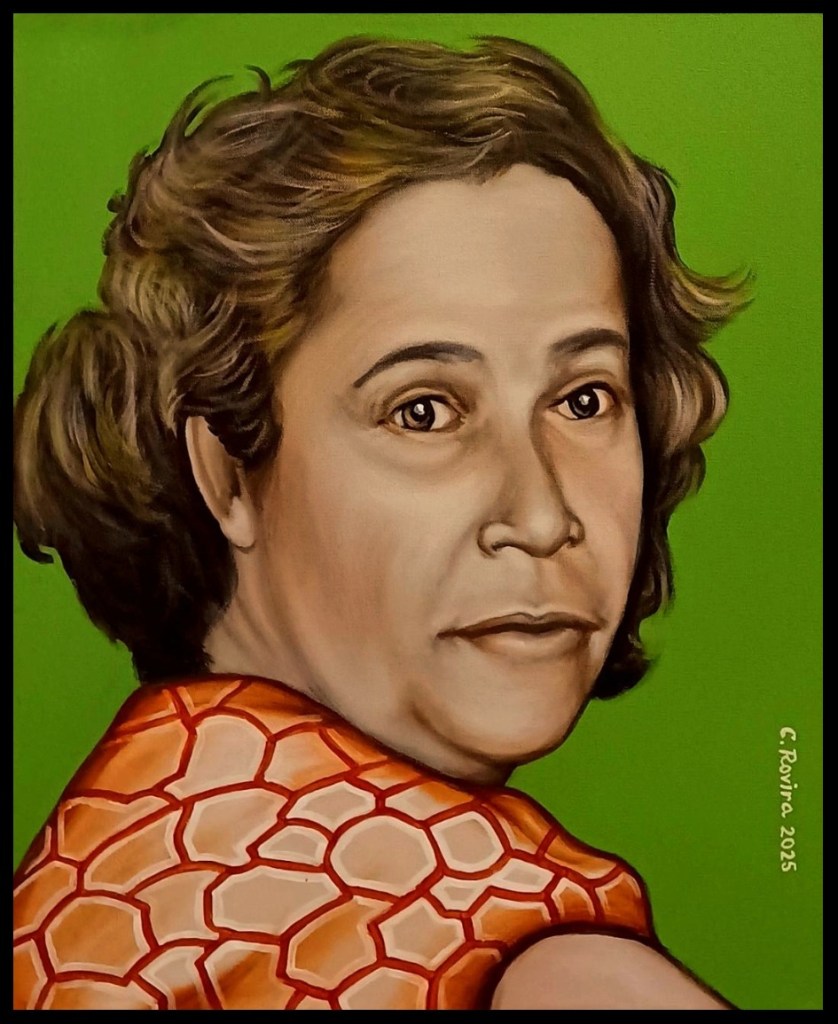
One of my canvas portraits of Blanca Canales. 20″ X 24″, acrylic paint on canvas.

Civil and police officials were shocked by the unexpected tenacity of the freedom fighters. The police were ordered to surrender and come out of the building with their hands raised. As soon as the Nationalists gained control of the situation Blanca Canales proceeded to give the command to burn down the building.

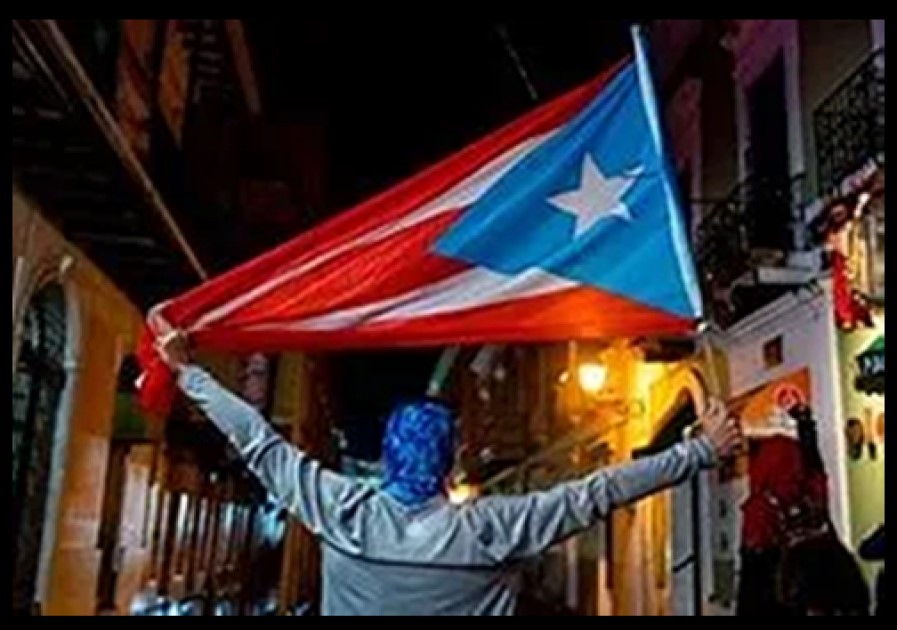
Surrounded by a large gathering of residents, the brave patriots raised the outlawed Puerto Rican flag. With her weapon raised in the air Blanca Canales agitated the onlookers by shouting the historic solemn words of the Puerto Rican liberation struggle: “QUE VIVA PUERTO RICO LIBRE!” She defiantly declared the independence of Puerto Rico!
Blanca Canales, unafraid in custody.

Violent clashes between police and nationalists also occurred in Utuado, Ponce, Mayagüez, Arecibo, Naranjito, Ciales, Peñuelas and other towns. In Arecibo a gun battle ensued at the site of the police station there in which several Nationalists were killed. Among the 12 patriots wounded was former political prisoner Carlos Feliciano.

Carlos Feliciano

In San Juan, colonial police and National Guard attacked the headquarters of the Nationalist Party. Dr. Pedro Albizu Campos, Isabel Rosado and others undertook defending their office with arms at hands until they were overwhelmed in the gun battle by tear gas.

PR Nationalist Isabel Rosado

Campos was then sentenced to life imprisonment. But U.S. puppet Governor Luis Muños Marin conveniently granted Campos a pardon a few months before his death in 1965. Many pro-independence activists, including medical experts, maintain that Campos’ physical deterioration was due to torture with secret radiation experiments.

Dr. Pedro Albizu Campos carried out after being overwhelmed by tear gas in gun battle with police.

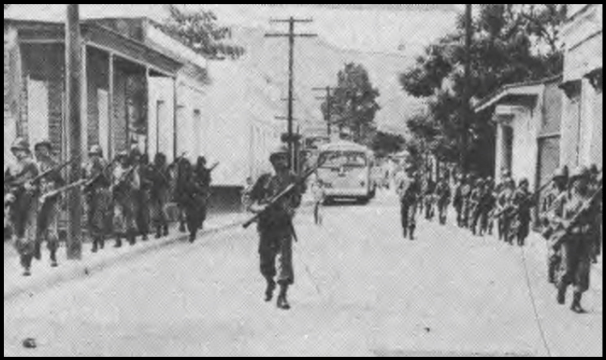
Military airplanes were deployed to bomb Jayuya and Utuado. in Jayuya 70 percent of the municipality was destroyed. The National Guard immediately pushed to suppress the uprising and regain control of the region. New repressive measures were imposed throughout the country, including martial law.

The repression came with the National Guard retaking the municipality of Jayuya.
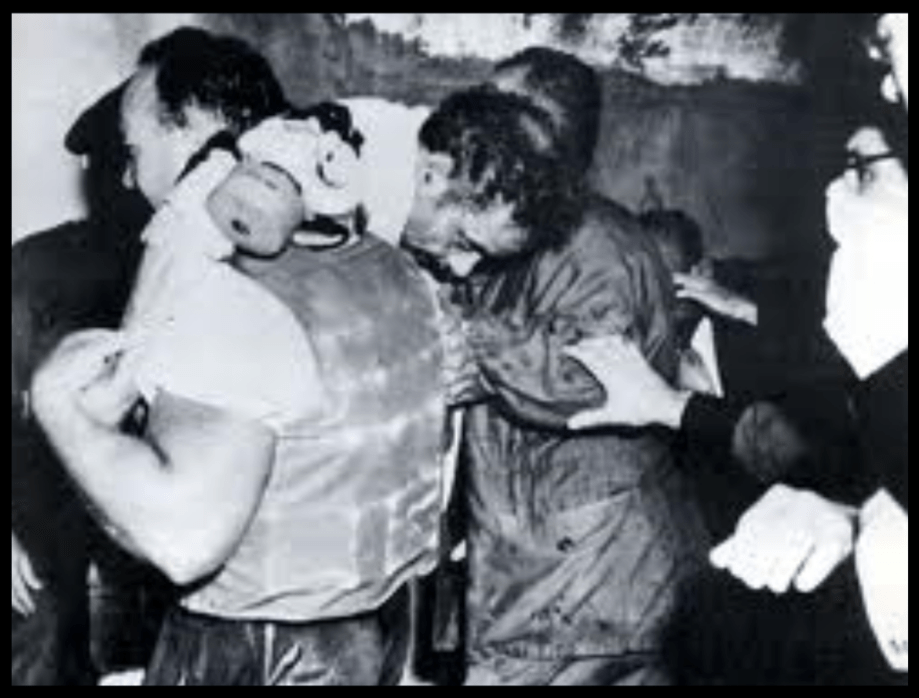
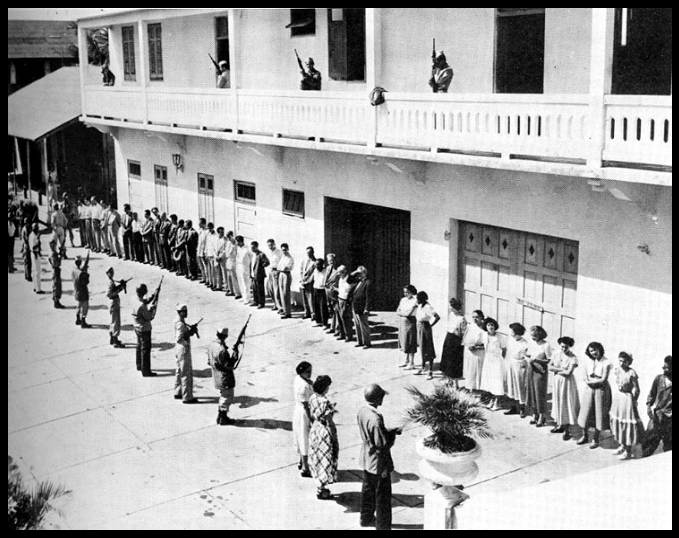
Nationalist Party members were ruthlessly treated by armed forces of U.S. colonialism.
Nationalist Party women fought alongside their male counterparts with conviction and valor.

A news blackout kept the events of the rebellion out of mainstream outlets in order to avoid the condemnation of colonialism in the court of public opinion. To guarantee silencing voices of the emerging struggle U.S. officials intensified their efforts to twist the facts. When the news media asked about the rebellion President Harry Truman falsely described the conflict as being among Puerto Ricans.

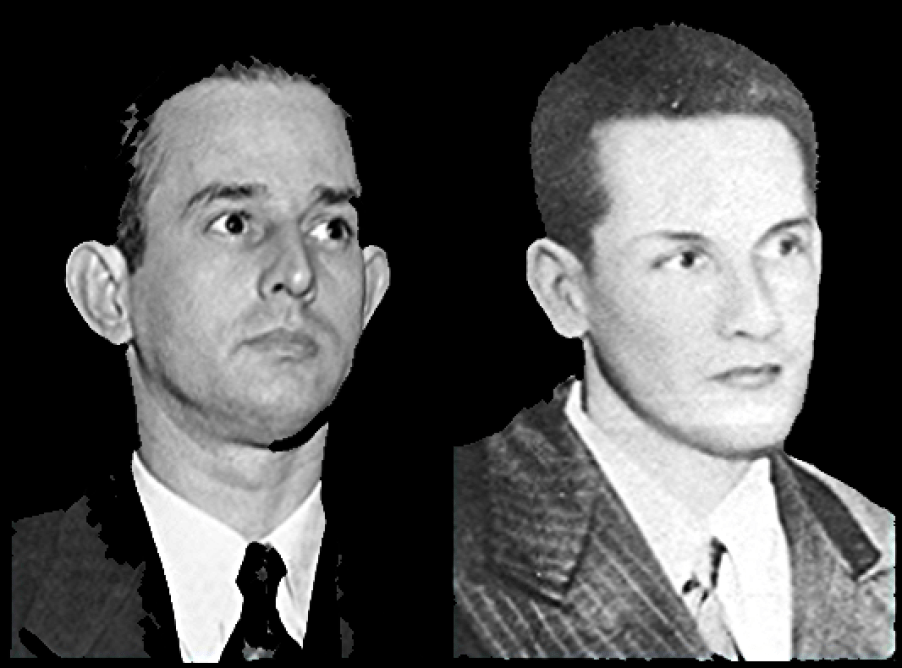
On November 1, 1950, Nationalist Party members Oscar Collazo and Griselio Torresola went to the Blair House in Washington, D.C. to assassinate President Harry Truman. Their intended purpose was to counter Washington’s lies about the conflict before the world. Torresola was killed and Collazo was critically wounded in a shootout with Capital Police and Truman’s Secret Service bodyguards. But the brave act of the two martyrs did bring about exposure to what was occurring in Puerto Rico.

Puerto Rican Nationalists Oscar Collazo (L) and Griselio Torresola (R).

The meaning of the Nationalist Revolt

As Puerto Ricans rebelled with guns in hand, anti-colonial struggles in Africa, Asia, the Caribbean and Latin America waged on. The Jayuya Uprising in Puerto Rico was part of that global resistance of oppressed and exploited people.

Although the Nationalist Party did not succeed to expel colonialism, a political victory was won, nevertheless. This chapter in Puerto Rican history proved that the colonizers would compel the people to rebel. It does not matter how great the repressive reach is it can never erase an oppressed people’s identity and revolutionary traditions.

The Jayuya Uprising did force U.S. rulers to change their administering form of domination. In 1952 the Governor of Puerto Rico was no longer a military high ranking official appointed by the U.S. President. Elections were introduced for the office of Governor, but only to disguise the colonizing nature of the U.S. presence. By 1957 Law 53 of 1948, (the Gag Law) was lifted. The removal of this notorious law also meant lifting a ban of the Puerto Rican flag.

If one were to examine the chronology of the atrocities committed by the U.S. in Puerto Rico, like the secret sterilization of women, the cancer epidemic caused by the U.S. Navy bombing destruction of Vieques, the thousands of deaths caused by neglect in the aftermath of Hurricane Maria, and other deliberate policies of genocide, points to why the 1950 revolt was justified.

For their own reasoning U.S. colonizers will also remember this event, as they recognize the potential threat Puerto Ricans pose once they rise up. And in that inevitable future moment the lessons gained from this experience shall prove decisive in fight for a free Puerto Rican republic.

QUE VIVA PUERTO RICO LIBRE!

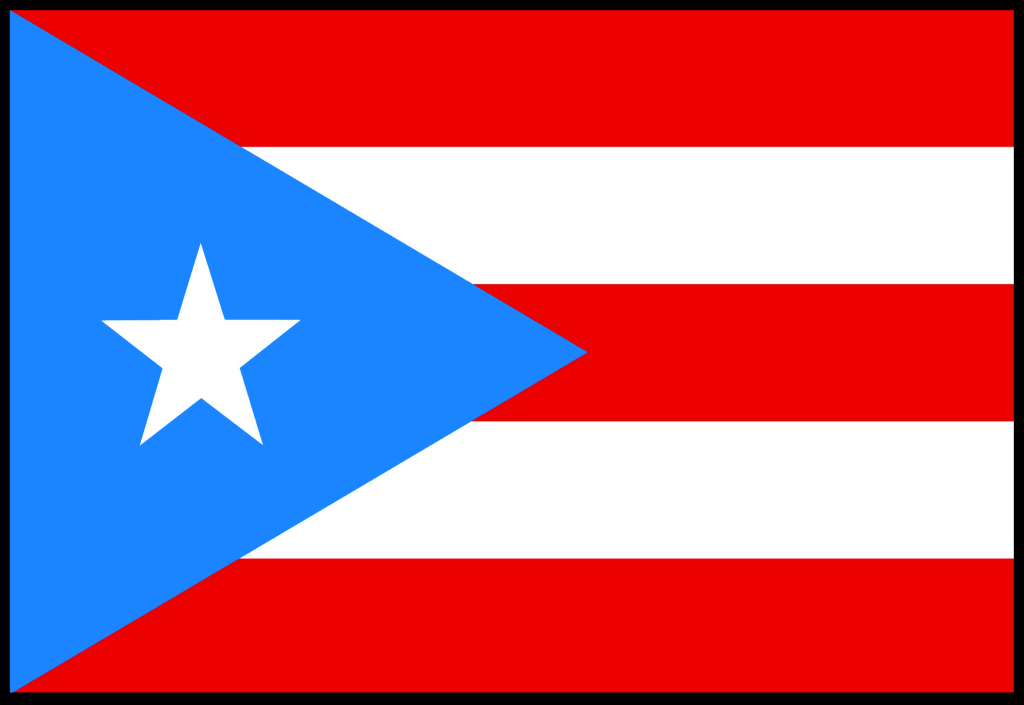
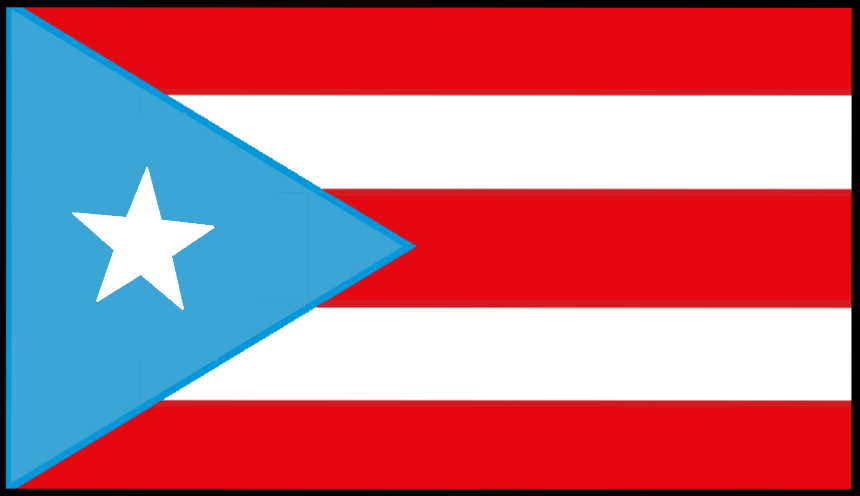
PR Flag.png

THE TRUMP PHENOMENA: A CONSEQUENCE OF CAPITALISM

By Carlito Rovira

Never before in the history of bourgeois electoral politics in the United States have we witnessed anything more bizarre than what has taken place throughout the 2016 presidential campaign. The U.S. rulers have had their share of absurd individual personalities run for the highest political office but never one who has been so recklessly open with his reactionary views as presidential candidate Donald Trump.

The revelation of a 2005 “hot-mic” tape of a recorded conversation from the NBC’s show Access Hollywood with Co-Hosts Nancy O’Neal and Billy Bush has proven to be disastrous for Trump. It involved Trump making lewd, vulgar, demeaning and degrading remarks about women and how he used his “star power” to assault them. This is the latest in Trump’s long list of self-damaging blunders.

But what is perhaps the thing that we should take notice about and examine is, how sectors of the ruling class are now making it a point to distance themselves from Donald Trump and the contents of his remarks, as if they have been pro-women all along. The Republican Party’s gradual coldness towards Donald Trump resulted once they saw that a Frankenstein was created instead of a winning candidate.

What should be most telling to progressive minded people is that the Donald Trump phenomena in this year’s race for the presidency is not isolated from the vile existence of capitalist culture, in particular, its misogynist, homophobic and white supremacist practices and perspective.

Can anyone really say that anti-Latino, anti-Black, anti-women and anti-Muslim sentiments began with Donald Trump? White supremacy and misogynism has always been fostered by both Democratic and Republican figures. These two aspects of our reality under capitalism will continue to be expressed as “norms” as long as this system exists.

What the news media will not focus on is how Donald Trump is not an isolated case but the consequence of long established traditions in this society.

The rallying call for Donald Trump to resign from the Republican presidential ticket came about once he severely embarrassed that grouping in the ruling class. A huge crack was made in the wall of pretentious morals and respectability for the Republican Party, and potentially for the credibility of all bourgeois politics as well.

It is also possible that key elements among the most powerful and influential members of the ruling class decided that Hillary Clinton was their preferred candidate for president. Using a loose cannon like Donald Trump who is unable to think strategically and abide by the discipline of politics, would clear the way for the first woman to take office in a traditionally male dominated post.

It undoubtedly appears that the capitalist owned mass media sought ways to destroy whatever respect Trump may have had even within his own feverish racist circles. And why would this possibility not be far fetched? Trump’s reckless comments have in every objective sense clashed with the desires of significant sectors of the ruling class who wish to maintain a false projection of fairness and decency, in order to preserve a “peaceful” exploitative capitalism.

What we need to ask now is, how much “better” than the Republicans will the Democrats be in the White House? Consider the increasing poverty, mass incarceration, police terror as well as attacks on women, that we have experienced while Democratic Party presidents and politicians of both parties continue to live comfortably in their own privileged world. It is an increasingly doubtful proposition.

The understandable expectation that women in the U.S. will benefit from a Hillary Clinton presidential administration in Washington is just as doubtful as Blacks and other people of color having benefited from an Obama presidential administration. Of course Hillary Clinton and the Democratic Party will benefit from this latest bombshell. There is no reason to believe otherwise. In fact, the discovery of the 2005 “hot mic” recording may have very well sealed a Clinton win in November.

But as oppressed and exploited people let’s not ignore or pretend otherwise, Hillary Clinton, like Donald Trump, is herself another prominent member of the capitalist class.

https://www.youtube.com/watch?v=44JzEs51mO8https://www.youtube.com/watch?v=44JzEs51mO8

The birth of Puerto Rico’s fight for independence & the affirmation of a nation — EL GRITO DE LARES

By Carlos “Carlito” Rovira

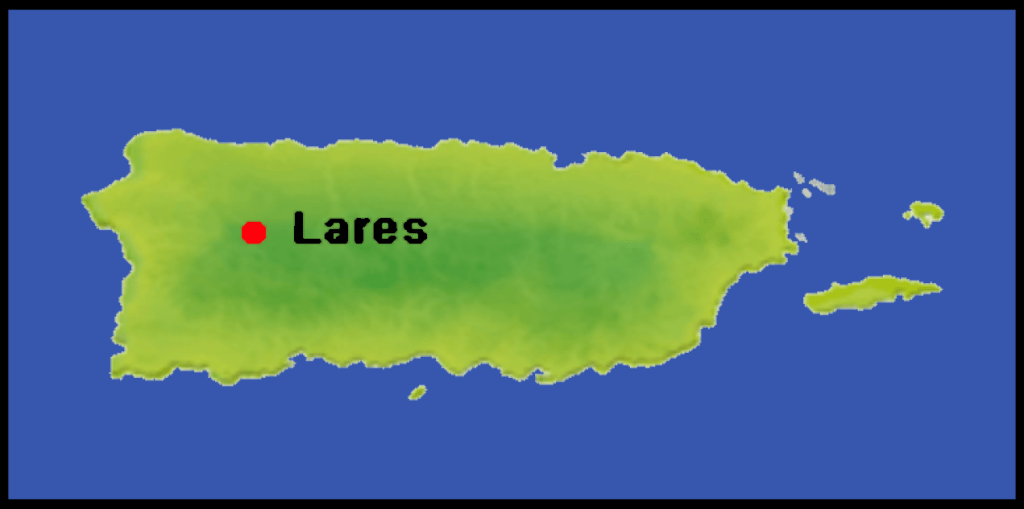
On September 23, 1868, in the city of Lares, Puerto Rico, was the historic site of an uprising against African chattel slavery under Spanish colonial domination. The event is known as “El Grito de Lares”—the outcry of Lares—which affirmed the existence of the Puerto Rican nation and its struggle for national liberation, first against Spanish and then U.S. colonialism. It is a struggle that continues to this day.

El Grito de Lares took place in a world context of bourgeois democratic revolutions against the remnants of feudalism in the dominant European powers. Feudal states like Spain, basing themselves on the wealth generated by large land holdings and colonial exploitation, were forcefully compelled to give way to the growing power of world capitalism.

The Haitian Revolution of 1802-04, coming in the wake of the French Revolution that began in 1789, marked the first Black republic in history. The victory of African slaves who rebelled and broke away from French colonial domination inspired millions throughout Latin America, the Caribbean and the world. Slave owners everywhere became apprehensive about this event, especially in the United States.

In 1810, Indigenous people in Mexico under the leadership of Miguel Hidalgo launched a drive to force the Spanish out of that country. Mexico won its independence from Spain in 1824.

Throughout the 1810s and 1820s, Simón Bolívar led an army of Indigenous people and former African slaves in an effort to win the independence of South American colonies from Spain. These successful military campaigns shattered the prestige of the Spanish Army. Puerto Rico and Cuba were Spain’s only remaining colonies in Latin America.

In the 1848 revolutionary wars that took place in France, Germany and Italy, workers took to the streets against the feudal monarchies. Despite the monarchies’ desperate efforts to hold on to political power, the development of capitalism and the rising of the working classes meant the end of the centuries-long rule of feudal states.

In the United States, the Civil War of 1861-65 led to the overthrow of the slave-owning class in the South. And because slavery in the U.S. was the most lucrative and brutal of all it’s defeat served as a death blow to that system everywhere. Due to the vigorous efforts by the African American masses, especially when they fought in organized, armed detachments of the Union Army, the final destruction of the slave system was certain.

In all these struggles, the political demands of freedom and independence were meant to benefit the growing capitalist class, although it was the most oppressed social layers in society that fought the battles to destroy feudalism and chattel slavery.

The Puerto Rican nation

Under Spanish colonialism, the people of Puerto Rico—like the people in the rest of the Caribbean and Latin America—also evolved with characteristics of self-identity typical of nationhood. The development of nations in the Americas inspired many to seek their freedom. Colonialism defined the class relationships that the newly formed nations would have to Spanish imperial power.

By 1867, there were close to 650,000 people in Puerto Rico. Half were of white Spanish background; the others were Black slaves, Tainos, mulattos and mixed-race mestizos. The economy was largely centered on sugar production and the sugar trade, with a capitalist mode of production that gave rise to the Puerto Rican working class.

Spanish colonial rule in Puerto Rico was harsh and allowed for little political participation by the local elites. All policies relating to politics and economy were dictated by the Spanish monarchy. Taxes were heavy. Any expressions for more autonomy—not to mention independence—were brutally put down.

El Grito de Lares took place in the context of increasing resistance to foreign oppression and the socioeconomic developments in the Western Hemisphere.

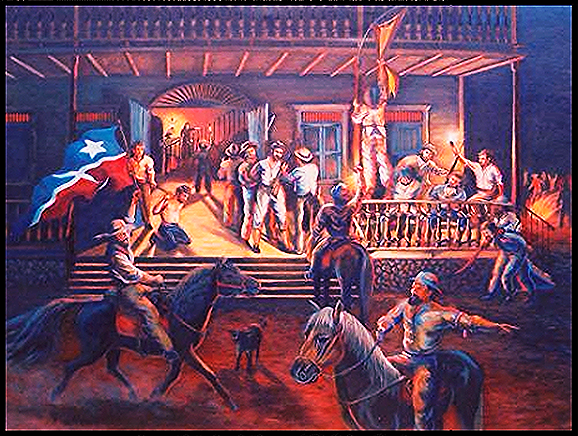
An artist’s depiction of El Grito De Lares.

The Revolutionary Committees

A central figure in El Grito de Lares uprising was Ramón Emeterio Betances. The son of an African mother and a white father, Betances was reared in a relatively wealthy and privileged family. However, Betances began to question the causes for the inequalities that existed under a slave-owning colonial system. He was active in the clandestine movement for independence and to abolish slavery. Today, Betances is considered the “father of the Puerto Rican nation”.

Betances and Segundo Ruiz Belvis founded the Revolutionary Committees of Puerto Rico on Jan. 6, 1868, while they were in exile in the Dominican Republic. Soon, Revolutionary Committees were formed throughout Puerto Rico to organize for an eventual revolt among all sectors of the population. Under the most secretive measures, organizers reached out to Africans slaves toiling the land. The punishment for slaves caught in seditious activity was harsh.

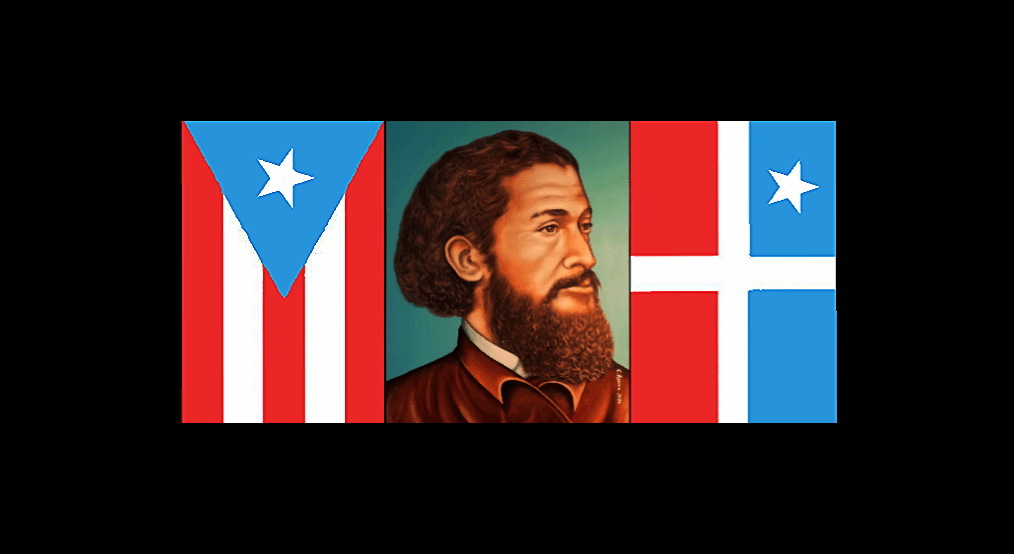
My portrait of Dr. Ramon Emeterio Betances. 24″ X 30″, acrylic paint on canvas.

A significant portion of the Puerto Rican combatants galvanized by the Revolutionary Committees were escaped African slaves living in hiding. In some cases slaves were granted freedom in exchange for partaking in the planned war; Some slave owners also desired to break away with Spain. But the class interest of this privileged sector was different from most people in Puerto Rico, their class aspirations were to develop capitalism free of hindrance by a  foreign power.

Other freedom fighters were Tainos, the original Indigenous people of Puerto Rico who were living in the mountains and working as day laborers in the towns. Haitians, Dominicans and Jamaicans were also among the insurgents who fought in Lares.

Women also played an important role in the leadership of this revolutionary movement, such as Mariana Bracetti Cuevas and Lola Rodriguez De Tio. Both of these women partook in organizing the clandestine Revolutionary Committees. Mariana Bracetti Cuevas created what the revolutionaries hoped would become the flag of an independent Puerto Rican republic. Lola Rodriguez De Tio was the author of the Puerto Rican National Anthem — not the revised, non-revolutionary version approved by the U.S. colonizers.

A portrait I made depicting Lola Rodriguez De Tio.
24″ X 30, acrylic paint on canvas.

Betances sailed on a ship with a cargo of rifles, cannons and other weapons from the island of Española (Haiti & Dominican Republic). These were weapons obtained during the Haitian Revolution’s defeat of French colonialism on January 1, 1804. Haiti had such an abundance of captured weapons that much of it was provided to other liberation struggles in the Western Hemisphere, especially to Simon Bolivar’s military campaign to expel Spanish colonialism.

But the Spanish colonial authorities discovered the plans. On his return from the neighboring island as he entered the harbor of Arecibo, the Spanish Navy surrounded the rebel ship, capturing the cargo and arresting the crew.

News of the ship’s capture reached the revolutionaries in the mountains who were preparing for the rebellion. With Betances in Spanish custody, the leading organizers of the movement decided to call for the rebellion ahead of schedule.

The Uprising Begins

At about 2 AM on September 23, 1868, 900 hundred insurgents on foot and horseback stormed the city of Lares. The army of freedom fighters entered the city, and as the sounds of shouts and gunfire were heard, the city awakened, crowds of people poured onto the streets, and the African slaves staged a revolt. The people were emboldened to fight which weakened the ability of the Spanish military forces to maintain control.

The principal demands of the revolutionaries were the abolition of chattel slavery, an end to the “libreta” (notebook) system and the independence of Puerto Rico. They called for the right to bear arms, the right to determine taxes and freedom of speech and of the press.

After an hour of gun battle, the Spanish authority was overwhelmed. Government and military officials were forced by the fury of the people to lay down their weapons and surrender. The rebels then declared the Republic of Puerto Rico.

The Spanish prisoners were then paraded and displayed for all to view as trophies of war. Colonial officials guilty of heinous crimes against the people were dealt with accordingly. What was unimaginable at one time—defeating by force an oppressor that projected itself as invincible—was now a reality.

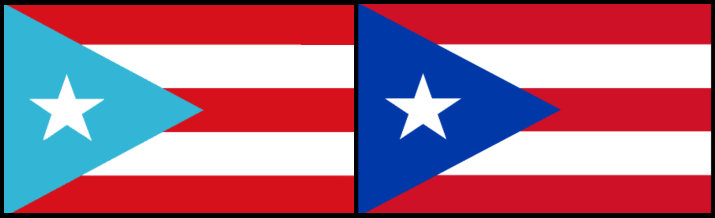
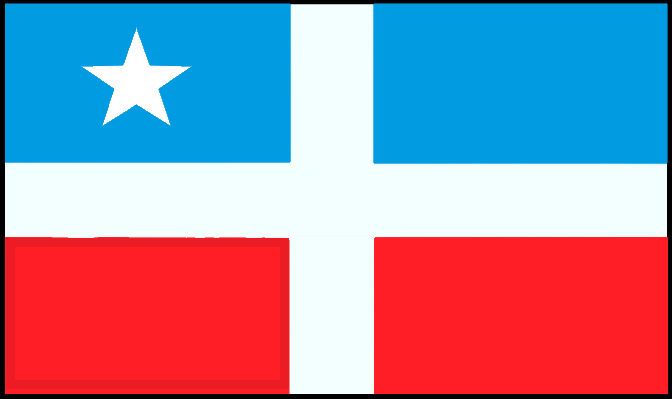
The people rejoiced at the power they now had over their oppressors. With jubilant emotions the revolutionaries held their weapons in the air as crowds gathered at the town plaza in the center of the city. The Spanish flag, the despised symbol of tyranny, was lowered, stepped on and burned. In its place, the flag of the newly proclaimed Puerto Rican republic (shown below) was raised on a pole at the municipal building.

It was on this occasion that the people heard for the first time the solemn words of the Puerto Rican liberation struggle: “¡QUE VIVA PUERTO RICO LIBRE!”—long live a free Puerto Rico!

The revolutionaries’ plans were to capture Lares, then attack the surrounding cities where other groups of revolutionaries awaited instructions. Lares was chosen for the initial attack because of what was believed to be a strategically advantageous location for a starting point, in the mountainous region.

But because the Spaniards were better equipped and more experienced in the techniques of war, the victory at Lares was short-lived. What followed was the suppression of the independence and abolitionist movement throughout Puerto Rico. Many were imprisoned, tortured and murdered. Madrid issued new decrees and sent troop reinforcements to secure its domination over the Puerto Rican people.

But the uprising did lead to some concessions. For example, amid continued turmoil over the question of slavery — something which politically troubled Madrid did not want — the Spanish National Assembly abolished the hated system on March 22, 1873. In addition, the Spanish government granted a limited form of home rule to Puerto Rico in 1897. But one year later, in the course of the Spanish-American war, U.S. troops invaded Puerto Rico which remains a U.S. colony to this day.

Before his death on September 16, 1898—a few months after the U.S. invasion—Betances stated, “I do not want to see Puerto Rico under the colonial domination of Spain nor the United States.”

A Symbol of Struggle

El Grito de Lares is today a celebrated and respected holiday in the U.S.-colonized Caribbean Island. Even the U.S.-installed colonial government recognizes El Grito de Lares as an official holiday, closing schools and government offices — while trying to strip the holiday of its revolutionary content.

Although the martyrs of Lares did not achieve their quest, they provided the movement today with a sense of the necessity to build a people’s movement that can defeat U.S. colonialism. Their fierce attempt to end slavery is a continuing model for anti-racist struggle as well.

Betances and his fellow revolutionaries also provided a living example of the internationalism of oppressed peoples against colonialism. The “Society for the Independence of Cuba & Puerto Rico,” founded in the 1860s by exiled revolutionaries living in New York City is such an example.

Many of the Lares combatants that managed to survive the Spanish onslaught chose to continue their efforts by retreating to join the struggle in Cuba. About 2000 Puerto Ricans seized Spanish vessels in order to set sail to join their Cuban comrades in “El Grito de Yara” uprising, three weeks after El Grito de Lares. Among the Puerto Ricans to join this venture was Juan Rius Rivera, who became a commander in the Cuban rebel army.

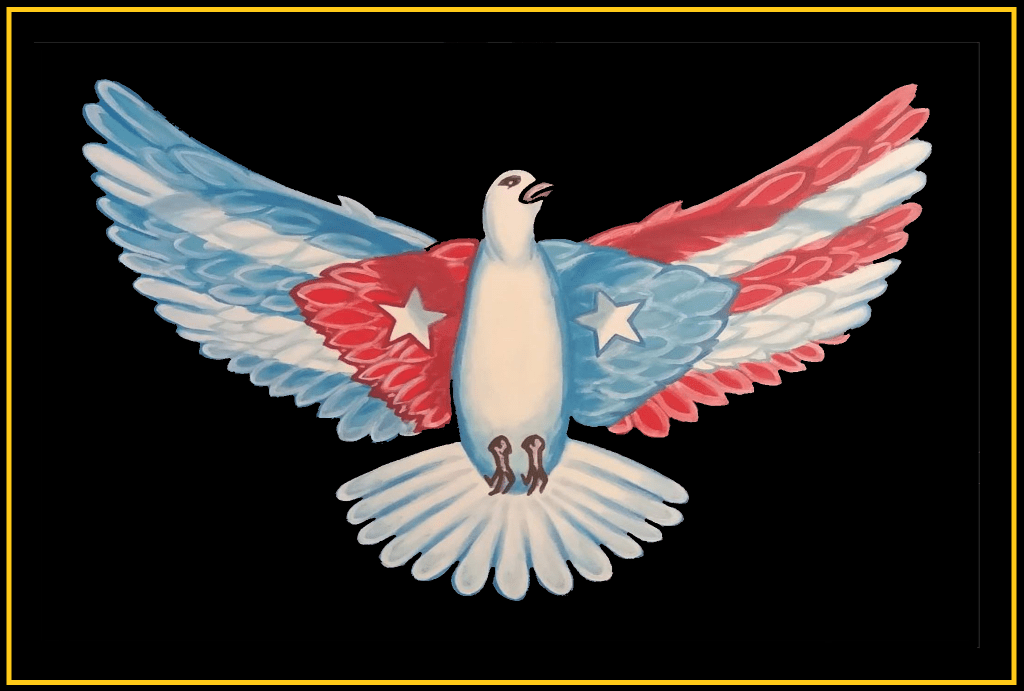
It was this act of solidarity that solidified the centuries-long relationship between Cuban and Puerto Rican revolutionaries. This special collaboration became tradition. It is what motivated Lola Rodriguez De Tio’s famous poetic expression “Two Wings of the Same Bird“.

For many Puerto Ricans, the experience of Lares emphasis that the national salvation and liberation of the people can only be achieved with total independence and absolute freedom from foreign interference.

Added Meaning of El Grito De Lares

On September 23, 2005, Filiberto Ojeda Rios was killed in a gun battle with Federal Bureau of Investigation (FBI) agents. Filiberto was leader of the clandestine armed group Los Macheteros. The FBI chose the date to launch this vicious attack on the revered leader as an attempt to shatter the fighting spirit of the independence movement.

But U.S. colonialism’s efforts of psychological warfare came short of it’s goal. All that Washington officials managed to do was to give the annual El Grito De Lares commemorations an added meaning. Boricuas continue to wage the liberation struggle.

Today, Puerto Rico’s hard social reality has defined many new forms of struggle but with its long fighting traditions kept well intact. Regardless of what Washington officials throw against the Puerto Rican people, the historic instinct to rebel cannot be destroyed. The passion that existed during El Grito De Lares continues to live on.

The continued struggle for an independent state is the only suitable direction. Having a free and self-determining republic is the only guarantee for freedom from colonial rule. The sacrifices and lessons made by the martyrs of El Grito De Lares shall one day prove to inspire a decisive battle that will bring about the defeat of U.S. colonialism in Puerto Rico.

¡QUE VIVA PUERTO RICO LIBRE!

Suicides spread as economic crisis deepens

By Carlos “Carlito” Rovira


Public disapproval for the wars in Iraq and Afghanistan has brought to light a growing problem with suicides committed by U.S. military personnel. Many of these men and women come from the working-class and oppressed nationalities, whose social plight is compounded by the abuses they endure from Pentagon military policy and the top brass.


But news reports rarely mention the growing crisis of suicides among the general U.S. population. According to a 2008 report from the Johns Hopkins Bloomberg School of Public Health, U.S. suicides are on the rise for the first time in a decade. A report by the American Association of Suicidology shows that suicides figures for 2005 outnumbered homicides by almost two to one, ranking suicides as the 11th cause of death in the United States.


The suicide of a loved one touches the deepest emotions of families and friends. The physical destruction of one’s own life, dismissing forever the least sense of hope, may seem like the most inconceivable of all human acts.


More often than not, suicide is reduced to an individual choice, a personal tragedy, removed from any social context. But the growing suicide epidemic has its obvious connections to the economic reality. It is not coincidental that the last significant jump in the rate of suicides in all U.S. history was during the Great Depression of the 1930s.

Rising suicides are not just a domestic phenomenon. In the last half century, suicides worldwide have increased by 60 percent. Imperialist penetration in subjugated countries, with all of its ugliest features, has had a devastating impact on millions of people around the world.

Studies have shown that most suicides do not spring from a desire to die, but a desire to escape overwhelming and irresolvable situations. African chattel slaves chose to take their own lives rather than continue experiencing the horrors inflicted upon them by the white overseers and masters. Similarly, today’s impoverished workers, losing their jobs and made homeless in growing numbers, may find no other way to cope with despair.

The JHBSPH report found that suicides have increased in the United States for the first time in 10 years. One of the main contributors to the increased statistic is a decline in the standard of living for white men and women between the ages of 40 and 64. The capitalist economic crisis has disrupted the more privileged social position the white population has enjoyed historically.

Native Americans, one of the most impoverished peoples in the United States, continue to suffer the highest rate of suicide, 32.4 per 100,000. Compare the rates of suicides among the different sectors of the population: 14.2 per 100,000 whites, 9.9 per 100,000 Latinos, 8.5 per 100,000 Asians and Pacific Islanders and 7.4 per 100,000 African Americans.

Widespread distress

The capitalist class has placed the burden of the economic crisis on the backs of the working class. Two million more unemployed within the last year, growing home foreclosures, families left without health coverage, a 25 percent rise in incidents of police brutality since 2001 and civil liberties blatantly diminished—no wonder there is widespread distress.

52063.jpg

The national suicide rate is 10.9 per 100,000 people. More than 90 percent of people who die from suicide live highly stressful lives attributed to financial situations. Among other causes stemming from economic-related deterioration of social life are family violence, divorce, and drug and alcohol abuse.

The economic deterioration has only intensified the plight of children. Millions of children in this country live parentless, with a 50 percent school drop-out rate, and an increasing number are incarcerated. Capitalism cannot guarantee working-class children a decent, well-paying job in their future, let alone a decent education, leaving many with a sense of uncertainty.


Not surprisingly, a Surgeon General report disclosed that suicide is the third leading cause of death for young people. Suicide rates are 1.3 per 100,000 for children ages 10 to 14, 8.2 per 100,000 for adolescents ages 14 to 19 and 12.5 per 100,000 for young adults ages 20 to 24. The last group beats the national average.

In a 2006 report by the Centers for Disease Control and Prevention (CDC), nearly one of every 12 adolescents in high school attempted suicide, and 17 percent considered making an attempt.


For older or retired workers, ages 65 and up, suicide rates are also high. A 2004 report by the National Strategy for Suicide Prevention revealed that the rate of suicide for people 65 years of age and older is 14.3 per 100,000.

Working-class seniors are often neglected. The capitalist system takes little interest in workers past the prime age for profitable exploitation. If they can stay in their jobs long enough to retire, they face many difficulties, including the threat of losing their retirement plans, medical insurance and other services.

Resources exist, pilfered by wealthy

With modern technological and scientific advancements, the means exist for a scientific approach to address these problems. In a society that has such an enormous number of resources and wealth, there is no reason for people to be in need. The resources to eradicate misery and want exist but capitalism perpetuates social and economic inequalities—the material conditions responsible for pushing the most vulnerable to the far depths of hopelessness.

Under capitalism, socially created wealth is pilfered by the rich. While government officials hand over the public treasury to the wealthy, the working poor must confront the consequences of this injustice. Hospitals are closed and health care is denied to working people. Psychiatric and psychological care is part of the comprehensive medical care which should be a right. The vast majority of people are left to suffer in various ways.

Capitalism is to blame for the suffering wrought upon working people day in and day out—the epidemic of suicides being one of its more extreme manifestations. Any system that compels so many to such drastic ends must be indicted, prosecuted, condemned and done away with. Only in a world without class exploitation can human beings progress in surroundings of solidarity and cooperation. Only then will human life be accorded the appreciation and respect it deserves and will all human beings live with dignity.

https://afsp.org/about-suicide/suicide-statistics/

https://www.theguardian.com/commentisfree/2016/apr/26/suicide-rate-rising-american-women-cdc-report

July 25, 1898 — Invasion of Puerto Rico & the Emergence of U.S. Imperialism

By Carlos “Carlito” Rovira

For the many people who have engaged in the struggle for Puerto Rico’s independence, July 25th has a special significance. On that date in 1898, U.S. troops invaded Puerto Rico, beginning a period of U.S. colonial domination on the island that continues to this day.

The United States invaded Puerto Rico, as well as the Philippines, Guam and Cuba, in the setting of the Spanish-American War. That military conflict was the opening of what would be the menacing role and predatory nature of U.S. imperialism in the Caribbean, Latin America and the entire world.

The seizure of Puerto Rico, Cuba, Guam and the Philippines signaled the quest of the U.S. capitalist class to become a world power. European powers had pursued a policy of colonial acquisitions since the end of the 15th century.

But only in the late 19th century had the mature and developed capitalist powers virtually colonized the entire planet. The projection of U.S. rulers outside of the North American mainland signified a rush not to be left behind in this global division of markets.

Imperialism was transforming from a policy into a global system. No capitalist power could stand on the sidelines. Eventually this scramble and competition for colonies led to the First World War in human history, from 1914 to 1918, involving all the major capitalist powers.

Vladimir Ilyich Lenin, the renowned leader of the 1917 Russian socialist revolution, noted this trend in the very first sentence of his classic 1916 work Imperialism the Highest Stage of Capitalism. Lenin wrote: “During the last 15 to 20 years, especially since the Spanish-American War (1898) and the Anglo-Boer War (1899-1902), the economic and also the political literature of the two hemispheres has more and more adopted the term ‘imperialism’ to describe the present era.”

My portrait of Vladamir Lenin. 24″ X 30″, acrylic paint on canvas.

Until the Spanish-American War, capitalism in the U.S. was focused on the Westward expansion within North America which came from the push to seize Indigenous/First Nation people’s lands and conquest of nearly half of Mexico’s territory in the 1846-1848 U.S.-Mexican War.

Following the overthrow of the system of African chattel slavery with the end of the Civil War in 1865, industrial capitalism was able to grow rapidly. Facilitating trade and the transfer of raw materials by laying railroad tracks throughout the entire stretch of the U.S. territory. Mining of raw materials increased. Factories, ports, bridges and dams were constructed at a greater pace.

Beneath this supposed “progress” in U.S. society, there was a tremendous cost in human suffering. The consolidation and expansion of capitalism in the country could be measured by the many horrific acts of genocide on Indigenous/First Nation people. 

What began at Plymouth Rock proceeded to become a tradition and custom of white supremacy. Outright murder, theft and rape became a requirement for U.S. capitalism’s further development. By the late 1890’s, Indigenous people were virtually annihilated within continental United States, as the so-called “Indian Wars” came to a close.

However, the westward expansionist drive by the white supremacist policies of Washington officials encountered the resistance of many Indigenous tribal nations. Their fighting spirit shall forever be exemplary to the freedom struggles of oppressed people everywhere. Tribal figures like Chief Joseph, Crazy Horse, Captain Jack, Red Cloud, Cochise, Sitting Bull and Geronimo, all stood up with dignity and led their people in many fierce battles against the encroaching white racist conquerors.

The legendary Apache  leader Geronimo (far right) with three of his most trusted warriors.

Eventually the dynamism of capitalism meant that the home market was insufficient. New markets, raw materials and cheaper labor were increasingly required for continuation of a vast increase in productive forces. Capitalist development began to be propelled in the direction of a new kind of expansionism, aimed at subordinating the economies of other lands.

COMPETITION BETWEEN THE UNITED STATES & SPAIN

The more benefits that U.S.-based companies derived from economic investments made in the Spanish colonies of Cuba and Puerto Rico before the war—amounting to $50 million in 1897—the more that U.S. manufacturers and bankers desired direct control of these markets.

Throughout the 1890’s, there was a growing war fever among U.S. capitalists. Prominent bourgeois figures, politicians, journalists and the clergy openly encouraged the military seizure of Spain’s remaining colonies. “Democracy” and “freedom” became the banner for all sorts of demagogic warmongers.

Militarism and racist arrogance, in the centuries of campaigns to expel Indigenous people from their lands and enforce a genocidal system, were now utilized to justify imperialist expansion. The use of brutal force against people in the invaded lands was justified as “divine will” or “manifest destiny.”

With mounting tensions between Washington and Madrid, the U.S. Navy targeted and harassed any vessel flying the Spanish flag in the open sea. U.S. Navy warships were instructed to stop Spanish freighters, carry out searches, and in many cases seize the cargo. This was despite the fact that a state of war did not yet exist.

Spain was a crumbling feudal power facing severe internal political strife. It no longer had the empire status that it enjoyed centuries ago. The Spanish government was not in a position to engage in hostilities with any country — especially the United States, which was demonstrating its industrial might and was eager to test its military ability.

A PRETEXT FOR WAR

On the evening of February 15, 1898, the battleship USS Maine exploded while docked in the Port of Havana, Cuba. 266 sailors were killed as they slept in their quarters. The ship’s captain and his close officers ironically were not on board.

Washington officials were quick to blame the Spanish government, claiming that the explosion was caused by a floating mine. The fact that many eyewitnesses saw the force of the explosion coming from within the bow of the ship did not matter to U.S. investigators. Whatever the cause, the Spanish government was in no way responsible.

Artist’s depiction of the U.S. Battleship Maine explosion in the Port of Havana, Cuba.

Despite Spain’s repeated diplomatic efforts and willingness to compensate for the loss of life and the destroyed ship, the U.S. government exploited the situation as a perfect excuse for war.

On April 25, 1898, the notorious U.S. President William McKinley, with the consent of the U.S. Congress, made his infamous declaration of war against Spain. The United States would now be recognized as a world imperialist power.

The military campaigns that followed impacted the lives of millions of people in the Philippines, Guam, Cuba and Puerto Rico. They were now to become subjects of a new colonial oppressor.

THE U.S. MILITARY INVASION & COLONIZATION OF PUERTO RICO

In the early morning hours of May 12, 1898 a fleet consisting of several U.S. Navy warship began the military campaign for the conquest of Puerto Rico. These warships conducted a devastating bombardment on the port city of San Juan, by firing a volley totaling 1,360 shells. Several Spanish Navy vessels were sunk while in the interior of the municipality many buildings were destroyed. What came after was a naval blockade of Puerto Rico’s principal ports.

On May 12, 1898 a fleet of U.S. Navy warships bombarded San Juan, Puerto Rico.

On July 25, 1898, 26,000 U.S. soldiers stormed the shores of Guanica, Puerto Rico — the stepping-stone to the invasion of the entire island nation. The invasion was led by the war criminal U.S. Army General Nelson A. Miles — a reliable servant of the U.S. capitalist westward expansion.

Miles was infamous for his role in the vicious suppression of the 1894 Pullman strike and other labor struggles fighting for the eight-hour day as well as workers right to unionize. He was also known for his capture and mistreatment of Indigenous leaders like Geronimo and Sitting Bull. But among Miles’ most outstanding crimes was the December 29, 1890, brutal massacre of 300 Indigenous men, women and children at Wounded Knee, South Dakota.

troops2.png
PP
Invasion X.png

While American troops began their onslaught on Guanica, U.S. warships entered the Bay of Ponce. These vessels threaten to use their destructive heavy guns on the city if the inhabitants did not surrender.

As the U.S. Army marched through the mountains, they encountered peasants who had been forewarned of the invasion’s brutality. These mountain people (Jibaros), armed solely with machetes, valiantly attacked the U.S. soldiers. The peasants who were captured by the invading forces were often bound to trees and shot by firing squad.

The U.S. military occupations in the Philippines, Guam, Cuba and Puerto Rico were the opening shots of a wave of imperialist invasions over the next decades in the Western Hemisphere and other parts of the world.

U.S. troops were sent to Nicaragua in 1898 and again in 1899, 1907 and 1910, and from 1912 through 1933; Panama from 1901 through 1914 and again in 1989; Honduras in 1903 and again in 1911; the Dominican Republic in 1903 and again in 1965; Korea in 1904 and again in 1950; China in 1911; Mexico from 1914 through 1918; Haiti from 1914 through 1934; Cuba in 1898, 1906 to 1909, 1912 and again from 1917 through 1933; the Soviet Union from 1918 through 1922; Guatemala in 1920; Vietnam from 1955 through 1975; Grenada in 1983, Afghanistan in 2001, Iraq in Mar 20, 2003 and so on.

The list of U.S. military invasions continued throughout the 20th and 21st Centuries. With hundreds of military bases and interventions around the world it became a constant feature of world affairs to the present day.

CONTINUED ANTI-COLONIAL STRUGGLE

The corporate media has always made every effort to disguise the foreign subjugation of Puerto Rico. But events occasionally occur that push the truth to the surface, especially when the colonized people are driven to rise up and rebel.

Due to colonial circumstances Puerto Rico is one of the most plundered inhabited territorial entities on the globe. Giant U.S. corporations extract an average of $30 billion dollars annually in profits. For a country with a population less than 4 million makes the rate of exploitation one of the highest per capita in the world. This is why Puerto Rico continues to suffer economic devastation, especially after Hurricane Maria and since the COVID pandemic.

Because the United States is the most advanced capitalist country in the world, for it to use the oldest form of foreign subjugation dating back to the Assyrian, Greek and Roman Empires, says volumes about the barbarity of U.S. colonial policy.

Denying the right of self-determination and independence justifies the continued people’s resistance, in Puerto Rico and throughout the diaspora. And with growing discontent throughout the world, the Puerto Rican liberation struggle shall inevitably contribute to the global elimination of the imperialist system.

QUE VIVA PUERTO RICO LIBRE!

A SALUTE TO JOHN BROWN ON THE ANNIVERSARY OF HIS BIRTH — May 9, 1800

By Carlos “Carlito” Rovira

On May 9, 1800 one of the greatest representatives of oppressed and exploited people was born in Torrington, Connecticut. His name was John Brown.

John Brown did not perceive himself as a revolutionary, but was instead, according to him “doing the work of God”. However, his resolute stance against the widely accepted and legally sanctioned system of slavery made him in every sense a revolutionary.

Brown was a very religious man who saw the enslavement, torture and rape of Black people as an abomination of Christian beliefs and doctrine. The slave owning class used religion as an ideological pillar to justify their cruel practice, while most of organized religions were silent or supported slavery outright.

The exemplary acts of courage as well as the humanity John Brown exerted has secured him an eternal place of honor in the archives of the class struggle of the United States. His militant disposition towards the practices of this system contrasted tremendously from other abolitionists who tended to be non-threatening with their passive, reformist approach towards slavery.

John Brown sincerely believed that since slavery was upheld with violent force it was absolutely necessary to overthrow it with the same intention. He led a number of attacks such as the Battle of Black Jack and the Battle of Osawatomie, in which slave owners and supporters of slavery were confronted for their heinous actions.

CC.png
Tragic Prelude, a mural at the Kansas State Capital. By artist John Steuart Curry. 

On October 16, 1859, Brown and a large group of men, that included two of his sons and former slaves, launched a raid at the U.S. Army Harper’s Ferry armory in Virginia. The site became known later in history as “John Brown’s Fort”. The plan was to capture the large stockpile of weapons and distribute them to Black people throughout the region in preparation for battle.

The legendary Harriet Tubman, who had intricate familiarity with the Harper’s Ferry region, provided Brown with detailed information about the armory. Harriet Tubman and John Brown had become friends and had great mutual respect for one another.  Tubman eventually helped to recruit brave and willing men for Brown’s planned raid at Harper’s Ferry. As a ode to her leadership skills, Brown gave Tubman  the nickname “General Tubman”.

Tragically, due to many tactical mistakes made by the liberators, the local white militia was allowed time to galvanized forces in response to the attack. Under the leadership of the U.S. Army Brevet Colonel Robert E. Lee, they surrounded the armory. Soon after a bloody gun battle ensued for two days. Due to Robert E. Lee’s skills in military tactics and the superior weaponry of the U.S. Army, John Brown and his men were overtaken and arrested despite many casualties on both sides.

Brown's Fort.png
An engraving depicting John Brown and his men under siege at the Harper’s Ferry Armory.
tt.png
The site of the Harper’s Ferry armory, later in history named “John Brown’s Fort”.

John Brown’s eventual execution by hanging ultimately proved to be the beginning of the end for slavery in the United States.  Brown succeeded in legitimizing the use of armed force as a viable option to end slavery. The story of John Brown and the Battle of Harper’s Ferry become a critical point in U.S. history, in which the country came to the opening gates of the Civil War.

Similarly, this courageous act was arguably mirrored by Cuba in the 1953 Attack on the Moncada Barracks led by Fidel Castro Ruz. Although both battles ended with the loss of many courageous fighters, each of these events ignited the flames of a revolution.

JB.png
The Last Moments of John Brown (1884) by Thomas Hovenden 

To this day, John Brown’s persona continues to be the target of vilification and ridiculed by bourgeois historians. Many historians depict Brown as fanatical and unstable. John Brown’s life is often distorted to seemingly discredit his passion for the abolitionist cause and dilute his relevance to American history, especially the circumstances of race relations today.

The ruling class in this country fear more than anything the prospect of mass rebellion. The Black struggle has inspired every oppressed and exploited sector of the population. It is no wonder why the Black Panther Party and other African American political expressions were targets of repression whenever they became recognized among broad sectors of the population.

It makes sense why the ruling class today would continue to dread the memory of John Brown as they would with revolutionaries like Malcolm X, Ernesto Che Guevara, Harriet Tubman, Lolita Lebron, Fidel Castro or V.I. Lenin.

John Brown tomb in North Elba, New York, at the John Brown Farm State Historic Site. 

John Brown was never critical nor was he defensive about the emancipation aspirations and self-identity of Black people. These sentiments which developed to become the ideological pillars of Black nationalism were deeply rooted in the horrific experiences of slavery. By all historical accounts, John Brown did his part to defend and enhance these sentiments.

Brown set the bar for White people to embrace their obligation to the fight for Black emancipation, if they were to honestly consider themselves revolutionaries or socialists. White privilege also existed during John Brown’s lifetime in the form of slavery. Although conditions have somewhat changed from that era, the obligations of white progressives to fight white supremacy has not.

Claiming to be “anti-racist” is not enough if there is not action to match. In other words, being anti-racist today means engaging in an uncompromising struggle against all forms of white privilege. Because of historical circumstances, there cannot be equal responsibility among the races.

In order for the first steps to be taken against racism in the U.S., the white population must raise the anti-racist banner as their very own. This disposition is precisely what John Brown was committed to live by. The standards required for white progressives in the struggle for fundamental change do not have to be re-created but updated based upon the blueprint established long ago by John Brown.

 LONG LIVE THE REVOLUTIONARY LEGACY OF JOHN BROWN!
My portrait of John Brown. 24″ X 36″, acrylic paint on canvas.

Remembering the BLACK PANTHER PARTY

An example of revolutionary defiance and militancy

By Carlos “Carlito” Rovira

On October 15, 1966, the Black Panther Party was born. It is one of the highlights in the history of the U.S. revolutionary movement, and the Black liberation struggle in particular.

Young African Americans dared to stand up and challenge the reins of the capitalist state, to the point of arming themselves to demand an end to Black oppression. Their vision of Black emancipation evolved into a vision of the liberation of all oppressed people and the smashing of the capitalist system.

The U.S. government, terrified by the potential for revolution and the influence these Black leaders and freedom fighters were gaining, resorted to the most extreme violence to destroy the BPP. It is a campaign that is still felt today.

The Black Panther Party for Self-Defense, as the party was first called, was formed in Oakland, Calif., by Huey P. Newton and Bobby Seale. The name—and the famous panther logo—came from the Lowndes Country Freedom Organization in Alabama, that which organized for independent Black political action with the help of Stokely Carmichael and the Student Nonviolent Coordinating Committee.

BPP Chairman Bobby Seales and Minister of Defense Huey P Newton

The formation of the Black Panther Party was the culmination of a resistance over a long history that characterizes the oppression of African Americans in the United States, from the lashes of slavery to the beatings and murders by the police in modern times.

The BPP grew up in the aftermath of the 1965 assassination of Malcolm X — a powerful voice for militant Black self-determination and liberation. It drew inspiration from the Deacons for Defense and Justice, organized for African American self-defense against racist Klan and police terror in the South.

The Panthers recognized the need for an organization that was capable of addressing the racist violence that the Black masses faced. Every gain made by the Civil Rights movement was being matched by violence and lynching by racist cops and the Ku Klux Klan, in the North and South alike.

The Right to Armed Self-Defense

The Panthers won respect and admiration for their militancy and defiance in the face of the racist police state. For example, less than a year after their founding, on May 2, 1967, a group of 30 Black Panthers walked into the California state capitol building armed with shotguns and automatic rifles. The armed but peaceful demonstration was to protest the Mulford Act, aimed at prohibiting citizens from carrying firearms on their persons or in their vehicles.

The Black Panthers aspired to become a discipline revolutionary vanguard entity with military structure.

As the Panthers walked towards the entrance of the capitol building, they were approached by television and other news media. They used the occasion to call upon African Americans everywhere to arm themselves against the systematic brutality and terror practiced by the power structure.

But the party’s efforts went far beyond their call for armed self-defense and their patrols of racist cops. They also carried out consistent community work, gaining the confidence of the people not only in the Black community but among other oppressed nationalities as well.

Panther chapters sprung up in the African American communities of major cities from coast to coast. Wherever they established branches, they tried to set up outreach programs like free breakfast for children and free clothing drives. They used every one of these opportunities to expose the avaricious nature of the rich and powerful who exist at the expense of the poor.

The Panthers were influenced by Malcolm X’s rejection of “turn the other cheek” pacifism for the Black liberation struggle, as well as by the socialist movement in the United States and around the world. Their “Black Power” salute combined with street corner sales of Mao Zedong’s “Little Red Books” of quotations.

The international situation during this period also contributed to the birth of the Panthers. The 1949 Chinese Revolution, the 1959 Cuban Revolution, the Vietnamese Revolution and the heroic struggle of south Vietnam’s National Liberation Front against U.S. imperialism, along with the other national liberation struggles in Africa, Latin America and Asia had a great impact in inspiring revolutionaries in the United States, including the Black Panthers.

Women of the Black Panther Party.

Their militancy and revolutionary politics quickly put them in the center of the African American liberation struggle, as well as in the growing mass movements that were sweeping the country.

Capitalism is the Problem

More and more, the party put the blame for the plight of the African American people on the capitalist system. It rejected the view that the problems of racism could be solved within the confines of the exploitative system, or that it was possible to accumulate enough capital in the Black community to rival capitalism with “Black capital.” Instead, Panther speakers called for socialist revolution within the context of the Civil Rights era.

Their uncompromisingly revolutionary and anti-capitalist stance was the most prominent in what became a new trend within the Black liberation struggle of the 1950s and 1960s.

Black Panther Party co-founder and Chairman Bobby Seale.

As part of the political training of its membership, the BPP studied Marxist literature like the Communist Manifesto and the writings of Mao Zedong.

The Black Panther Party was a disciplined and organized revolutionary political entity. The Panthers put forward the need for professional, organizational sophistication in building a revolutionary political party.

While the party’s Ten-Point Program reflected its political views and line of march, it was the membership rules that ensured the internal discipline of the organization. Membership rules touched a range of matters, including mandatory collective study of revolutionary theory; respect for women inside and outside the BPP; and respect for the property of the poor.

Revolutionary Multinational Alliances

The Panthers advocated a united front of revolutionary organizations to guarantee the success of a struggle in the United States. Their organizing efforts extended to Puerto Ricans, Chicanos, Asians, other nationally oppressed people, and the white working class.

They forged alliances of various kinds, such as with the American Indian Movement as well as Cesar Chavez and the farm workers’ movement. The Panthers stood in solidarity with the struggle for women’s equality, especially supporting those sectors of the women’s movement that were anti-imperialist and anti-racist. To the surprise of many, on the heels of the Stonewall rebellion, Panther leader Huey P. Newton publicly supported the struggle to end LGBTQ oppression.

The Panthers perspective was toward building a multinational alliance. Their most notable effort was the Rainbow Coalition, organized in June 1969 in Chicago by Panther leader Fred Hampton, which consisted of the Black Panther Party; the Young Lords, a U.S. organization of Puerto Rican revolutionary youth; and organizations representing Chicanos, Asians, and poor whites. Hampton’s vision was to eventually merge these allied organizations into a single entity, to forge a revolutionary organization with representation from the full spectrum of the working class.

Wherever their agitation work was conducted, on the streets, on campuses, or at public events, the Panthers upheld the principle of solidarity with the liberation movements in the oppressed and colonized countries. At the height of the Vietnam War, the Black Panther leadership made an open gesture of internationalism by offering to send party members to fight alongside the National Liberation Front in their struggle against U.S imperialism.

Fierce U.S. Repression

Faced with the Black Panther Party’s tremendous growth and revolutionary orientation, the U.S. government struck back. It organized a massive political-military campaign, involving the FBI and police departments around the country, to destroy the Panthers’ leadership.

In a now-well-documented campaign called “Operation: COINTELPRO,” the FBI orchestrated covert operations—personally overseen by FBI Director J. Edgar Hoover—to provoke conflicts between Black Panthers and other organizations. They employed a network of infiltrators and provocateurs to disrupt the party’s discipline and leadership.

Police attacks were common. Cops routinely raided party offices and the homes of Panther members. Dozens of Panthers were killed outright, often in cold blood. The most notable of these cop assassinations was the December 4, 1969, murder of Fred Hampton and Mark Clark in Chicago while they slept. Hampton was 21 and Clark was 22 years old.

Black Panther leaders Mark Clark (left) and Chairman Fred Hampton.

Dozens more Panther members and leaders spent years in prison. The campaign to jail Panther leaders and activists long outlived the organization itself. Mumia Abu-Jamal, who at 16- years -old had been the Minister of Information in the party’s Philadelphia branch, was framed up and sentenced to death in 1981. He has been in prison ever since despite a worldwide effort calling for his release.

The Black Panther Party ultimately could not withstand the government onslaught. The combined police attacks and covert operations compounded internal differences. Unable to withstand the tremendous repression, by the mid-1970s the Black Panther Party was essentially defunct.

Ericka Huggins (far left) next to Huey P Newton.

Lessons for today

Bourgeois historians often try to downplay the role of the state in the destruction of the Panthers. At best, they point to the Panthers as a lesson to revolutionaries, especially from the oppressed nationalities: “Do not dare to struggle, you cannot stand up to the power of the capitalist state.”

However, the rulers were not then and are not now invincible. The fact that the U.S. government relentlessly attacked the Panthers before they had a chance to steel the discipline of their rank & file only points to the need for a disciplined organization of professional revolutionaries today.

As long as capitalist oppression exists, the rise of movements, like the one that gave rise to the Black Panther Party, is a historical inevitability. The Panthers showed that revolutionary ideology and organization, embraced by the most oppressed sectors of the working class, is what the ruling class fears the most.

On August 20, 2023, a street in Harlem, New York City was co-named to honor the legacy of the BPP.

Everything they did and sacrificed will not be in vain. Eventually, those who aim in the sincerest sense, for socialism, Black emancipation and the liberation of all oppressed people in the United States must strive to embrace and emulate the revolutionary spirit of the Black Panther Party.

LONG LIVE THE LEGACY OF THE BLACK PANTHER PARTY!

Impact of the African American Struggle on Puerto Ricans

Para la version en español: https://carlitoboricua.blog/?p=7385&preview=true&_thumbnail_id=7386

by Carlos “Carlito” Rovira

Racist Oppression Gives Rise to Solidarity

The historical struggle of the African American people was the inevitable consequence of the introduction of slavery by capitalists in the Western Hemisphere. The collective experience of the African American people over the course of many generations ran parallel to the development of U.S. capitalism at every stage. Their plight, from the era of the slave trade to the present day, reveals inherent oppression within capitalism.

Racist terror, degradation, and discrimination were the objective circumstances that compelled into existence the militant traditions of resistance among the African American masses. Their steadfastness in many key moments in history proved exemplary to the U.S. working-class movement, and particularly to other oppressed nationalities. African American history is replete with displays of genuine solidarity with other liberation struggles.

The Spanish-American War had a significant impact on African Americans, especially Black soldiers who were sent to wage colonial conquest on behalf of U.S. imperialism. Black troops resented their white officers using racial slurs against Filipino people, which were reminiscent of their own experience in the United States. Many Black soldiers defected to join the anti-colonial Filipino guerrilla army. The most notable of them was David Fagan, of the 24th Infantry Division. Fagan won the admiration and respect of the Filipino people and was made a commander in their guerrilla army.

David Fagan, of the 24th Infantry Division

The Black press, the Black church and outspoken African American figures such as W.E.B. DuBois, openly condemned the motives behind the 1898 Spanish-American War. The U.S. government and giant banking enterprises sought military conflict with Spain to win colonial control of Guam, the Philippines, Cuba, and Puerto Rico.

Black Puerto Rican scholar Arturo Alfonso Schomburg devoted his entire life to compiling vast collections of writings documenting significant events in Black history. Before moving to New York City’s Harlem community, Schomburg was a member of the clandestine Revolutionary Committees of Puerto Rico, which organized the famous 1868 Grito de Lares uprising — a revolt that called for the abolition of slavery and the independence of Puerto Rico. Schomburg eventually became a prominent figure during the Harlem Renaissance, which challenged the ideological facets of white supremacy through the literary, visual and performing arts.

Arturo Alfonso Schomburg

At many of his performance appearances, renowned African American singer, actor and Communist Paul Robeson would call upon his audience for a moment of silence to express solidarity for the incarcerated Puerto Rican revolutionary Nationalist leader, Dr. Pedro Albizu Campos.

The young Pedro Albizu Campos gained recognition among African American figures for being very critical of the racism in the United States. Campos’s mother was Black, which gave him first-hand insight into the impact of racist oppression. Campos’s outspoken oratory against the “racist practices in the house of the empire” caught the attention of renown Pan-Africanist leader Marcus Garvey, who traveled to Puerto Rico to meet the Puerto Rican Nationalist leader.

Despite their differences in goals and tactics, this meeting was highly symbolic for that period in history. The Russian Revolution emboldened workers’ struggles and nationalist movements throughout the world, including the United States and Puerto Rico, and instilled a sense of vulnerability in the U.S. capitalist class.

Black Struggle Inspires Puerto Rican Militancy

Puerto Ricans have migrated to New York City and surrounding counties since the mid-1800s—in most cases, to escape Spanish colonial persecution. But in the years after World War II and well into the 1960s, Puerto Ricans migrated to U.S. industrial centers at an annual average rate of 63,000 due to economic hardships caused by U.S. colonial policy.

What the Puerto Rican migrants encountered was not what they expected when uprooting in search of a better life. In addition to the agony of coming to a strange land where an unfamiliar English language was spoken, the Puerto Rican experience now included greedy racist landlords, housing and job discrimination, cultural stigma by the mass media, police brutality and the terror of racist white gangs.

While Puerto Ricans began their exodus in the late 1940s African Americans were already in their “Great Migration” from southern states where they had been historically concentrated. Fleeing racist Jim Crow laws and Ku Klux Klan terror, more than 5 million Black people migrated to the North, Northeast and California between the 1920s and the 1960s.

The instinct of any oppressed people is to seek allies and find ways to resist. Puerto Ricans facing the realities of colonialism and impoverishment were able to relate to the demands of the Civil Rights movement and became attracted to its boldness.

The experiences of these two distinct oppressed communities came together in the social and cultural realms as well, especially in the performing arts. This phenomenon was most notable among Black and Puerto Rican musicians. No one can dispute the African American influence in the rise of Latino musical genres which the Puerto Rican diaspora of New York City developed during the 1960s & 70s, like Latin Jazz, Boogaloo, and Salsa. The affinities the two ethnicities had for each other was also attributed to their mutual historic connections to African culture.

The Nation of Islam, under Malcolm X’s leadership, began to approach the newly arrived immigrants with the aim of politicizing them. And when the Black Panther Party began organizing in the Puerto Rican community of Chicago, it transformed a street “gang” known as the Young Lords.

The Young Lords were the first Puerto Rican revolutionary organization to rise up based on the concrete circumstances of oppression in this country. They were a decisive factor in the spread of militancy in Puerto Rican communities of various U.S. cities. Like the Black Panthers, they advocated for a multinational revolution in the United States.

As this movement gained momentum, Puerto Ricans gained a sense of hope and became inspired to fight for their political and economic rights. By the second half of the 1960s, Puerto Ricans in the United States had become much more politically adept, thanks to the struggles of the African American masses.

African Americans and Puerto Ricans gained affinity to one another based on resistance to racist oppression. In cities like Chicago, Philadelphia and New York, at street demonstrations and on college campuses, African American and Puerto Rican masses instinctively aligned in common struggle. It was not unusual for the Black liberation flag (red, black & green) to be accompanied by the Puerto Rican flag.

A significant example of this solidarity that alarmed the ruling class, was the April 1969 student takeover of City College in Harlem, New York City and renamed it “University of Harlem.” Black and Puerto Rican students shocked many throughout the U.S. by defiantly uniting to seize control of 17 campus buildings to demand free tuition for all in the City University system. To further demonstrate their boldness, these students lowered the U.S. flag from a flagpole and hoisted the Black Liberation Flag and the Puerto Rican Flag. It was an imagery of resistance never before seen in this country.

Black and Puerto Rican students seized control of 17 buildings at City College in Harlem, NYC.

The great lessons gained from these experiences are still relevant today. Black oppression was instrumental in the economic rise of U.S. capitalism, and African Americans have confronted it head-on. The Black liberation struggle will continue to be a source of inspiration to all working people and shall be instrumental in forging genuine unity required for the fight against this system.

LONG LIVE BLACK & PUERTO RICAN SOLIDARITY

Y!

Bernie Sanders is no damn Socialist! He opposes Reparations, for Africa and the decedents of African chattel slavery!

By Carlos “Carlito” Rovira

The demand for Reparations for centuries of African chattel slavery has always been dreaded by the capitalist ruling class and argued against with contempt by every form of white supremacy, both hidden and open. Bernie Sanders who makes every attempt to project himself as a “socialist” can very easily be proven a complete hypocrite on just the topic of reparations.

Socialists who truly uphold their convictions for an uncompromising struggle against capitalism cannot speak of ending capitalist oppression without fighting for reparations for African Americans, Africa and the entire African diaspora.

The unimaginable colossal wealth in the hands of the capitalist class today was initially created by enslaved African labor centuries ago. The racial injustices that exist today in this country against African Americans, Latinos and all people of color is rooted in this question.

For Bernie Sanders to speak of reparations with indifference only brings to light why his circles of support continue to be just as predominantly white as his fellow contenders in both the Democratic and Republican parties. Reparations for the historically super-exploited sectors of the population is a fundamental matter for those who call themselves Socialist.

Reparations will not just mean economic compensation; its implementation will also require incarcerating those who inherited wealth and their position of social privilege at the expense of Black people. Reparations cannot avoid also addressing putting an end to white privilege and entitlement by decree. A theme that the followers of the Sanders campaign, Bernie Sanders himself, as well as other supposed “Socialists” in the Democratic Party are by their very nature unable to grapple with.

Bernie Sanders’ “sincerity” or “insincerity” is irrelevant. There are many things which he has critiqued about this system which are true, such as the greed of the banks and the entire capitalist class. However, Mr. Sanders is embedded in the surroundings of white privilege. The progress and salvation of working-class people, especially people of color, cannot co-exist in this society with tyrants, exploiters and racists.

Given the social dynamics and historical circumstances of the United States and the extreme reliance on racism by the ruling class, reparations for oppressed people automatically imply the complete expropriation of the capitalist class. Expropriating the expropriators.

If Sanders is opposed to reparations for the descendent of African slavery and the African continent, then he is no different than his colleagues in the U.S. government who serve as safeguards for a system that plunders while brutalizing those who resist from Puerto Rico to Palestine and beyond.

Changing the circumstances of capitalist oppression, including Reparations for the victims of this system, will require a mass movement capable of launching revolution. This is the line of departure between revolutionary socialists and Sanders-type of apologists who speak of a “harmless” kind of socialism, which means something that is acceptable to our oppressors.

http://www.theatlantic.com/politics/archive/2016/01/bernie-sanders-reparations/424602/

REPARATIONS FOR BLACKS & ALL OPPRESSED PEOPLE

DONALD TRUMP, RACISM & CAPITALIST ELECTIONS

By Carlos “Carlito” Rovira

What may very well distinguish the 2016 Presidential race from others in many decades is the media sensationalism the Republican candidate Donald Trump has received. Many people, especially people of color, have been angered or distressed by Trump’s openly racist speeches at campaign rallies and comments made to the news media. African Americans, Mexicans and other non-white people, along with Muslims and immigrants, have been the targets of Donald Trump’s vile depictions and slanders disguised as “speaking truth” or “freedom of speech.”

As a real estate giant, Trump is clear where his social class interests lay. He is a member of the capitalist class. In the numerous hotels and condominiums, he owns, many of the employees are Black, Latino and women. It is precisely these wage workers who are the ones to have created the $4.5 Billion net worth Trump has accumulated through decades of exploitation.

The way the media has featured Trump’s arrogant hate speech, one might easily believe that Donald Trump is the only racist among all of the 2016 presidential candidates, both Republicans and Democrats. If we were to take into consideration the overall picture of U.S. history and the role played by white privilege and entitlement today, we can then come to the conclusion of how there is so much more hidden behind Trump’s theatrical style campaign.

In a society founded on racist hatred and genocide centuries ago, where white supremacy came to define many habits, customs and traditions in which it operates in the general culture like an unofficial religion, can we honestly say that Trump’s remarks are the exception?

Whichever candidate wins the presidential election, the reins of political and economic power will continue to be in the hands of the various groupings of multi-billionaires. It is precisely the views and interests of these billionaires that decide the thinking and actions of these politicians.

Capitalist democracy is designed to hide the iron-clad dictatorship of these billionaires. Bourgeois politics consists precisely in fronting professional politicians—more or less reactionary, more or less populist—to convince the working class first of all that they have a choice in their oppression, and second that the outcome of the political cycle reflects “the people’s will.”

What a big lie

No matter what happens on Election Day 2016 our oppressors will continue to rule. The police will continue to murder poor, working class youths, especially people of color; the prison system will continue to enslave Blacks and Latinos in prison industries; public officials (“elected”) will continue to pass legislation that allow the closing of hospitals, schools, daycare centers while granting landlords greater powers to increase the push to gentrify our communities.

Manipulating public concerns by projecting worst case scenario is one of the oldest psychological tactics the ruling class has learned to master. They have dominated this society with the politics of deception, especially when they present to us the “good cop-bad cop” scenario. Highlighting constantly the latest racist and misogynist comments made by Donald Trump serves this purpose.

Take for example the strategy government and transportation officials use whenever they wish to raise bus and subway fares, as well as bridge and tunnel tolls. They will announce outrageous and unaffordable fare hikes in order to scare the public into accepting a lesser increase amount.

Shamefully, many progressives, including some on the “socialist” political Left, have allowed themselves to be drawn into the widespread Trump panic. These are people who should be quite familiar with the purpose and nature of the bourgeois elections.

These political forces fail to realize how the rulers use extremist figures like Donald Trump as a ploy to divert attention away from the actual political strategy of the ruling class. Some have even characterized Trump as some sort of a representative of a new U.S. fascism, as if the other candidates were not subordinated to the wishes of the most exploitative and racist sectors of the ruling class.

 Of course, those who disrupt Trump’s campaign appearances to denounce his racist bigotry deserve our applause. So do the young Black Lives Matter activists who have disrupted “socialist” Democratic candidate Bernie Sanders’ events.

But “dump Trump” protests that focus on this one politician as “worse than” the others , however well-intentioned, fall into the pitfall of bourgeois electoralism. Absent a militant and class-conscious struggle, the political orientation of these protests leads directly toward the deception of bourgeois elections. New York City Council Speaker Melissa Mark-Viverito is quite conscious of the political trajectory, which is why she organized her own City Hall protest against the “disgusting, racist demagogue”—as she presides over a city plagued by racist police violence and abuses by billionaire landlords.

What is downplayed and kept away from the general public is the intricate mandate handed to whoever wins the presidential election. Whether it be Hillary Clinton, Bernie Sanders, Jeff Bush, Carly Fiorina, Ben Carson, Ted Cruz, Mark Rubio or Donald Trump, the winner in 2016 will be obligated to follow a strict set of protocols which are written into Federal Law and set-up to protect the capitalist system.

The Donald Trump campaign does not reveal anything new about the U.S. ruling class. It is not a turn toward fascism, where the ruling class mobilizes other class forces to do battle with the working class in the streets. Rather, the Trump campaign shows the inherent racism of the whole ruling class and the bankruptcy of bourgeois “democracy.”

The bottom line is this: the main objective of the bourgeois elections and capitalist politicians, from Trump to Sanders, is to provide oppressed and exploited people with the illusion of “democracy” in order to better exploit us. Fundamental change can only come about with the force of a people’s movement engaged in revolutionary struggle.